
THE EVOLUTION OF THE HORSE Equus 2016 Paul


- Slides: 10
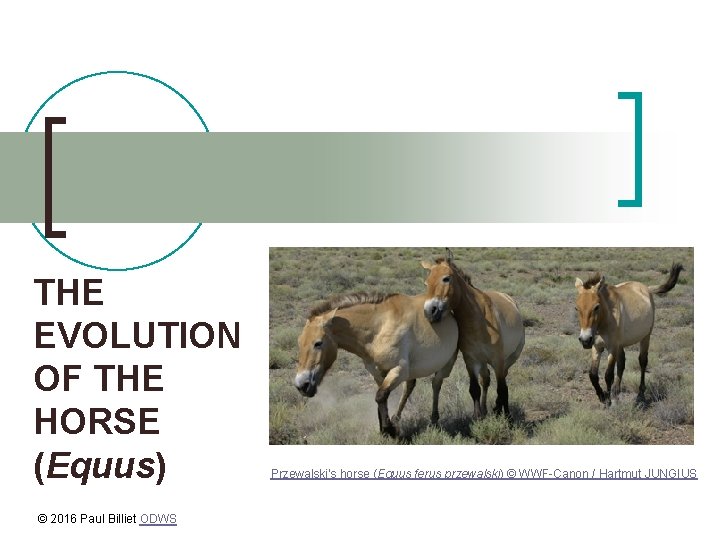
THE EVOLUTION OF THE HORSE (Equus) © 2016 Paul Billiet ODWS Przewalski's horse (Equus ferus przewalski) © WWF-Canon / Hartmut JUNGIUS
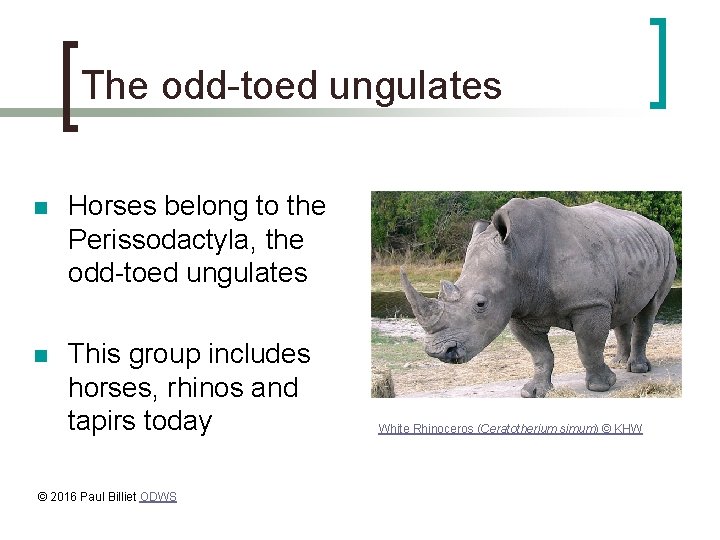
The odd-toed ungulates n Horses belong to the Perissodactyla, the odd-toed ungulates n This group includes horses, rhinos and tapirs today © 2016 Paul Billiet ODWS White Rhinoceros (Ceratotherium simum) © KHW
Equus n n n The genus Equus includes horses, zebra and asses The last remaining branch of a diverse group of equids Similar to the status of Homo sapiens, the last remaining species of a once diverse group of Hominids The evolution of the horse is much better documented than ours The fossil record is very complete © 2016 Paul Billiet ODWS
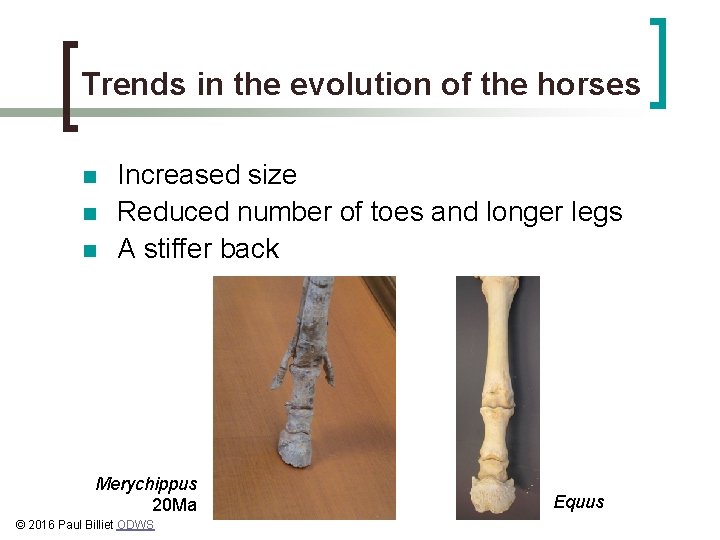
Trends in the evolution of the horses n n n Increased size Reduced number of toes and longer legs A stiffer back Merychippus 20 Ma © 2016 Paul Billiet ODWS Equus
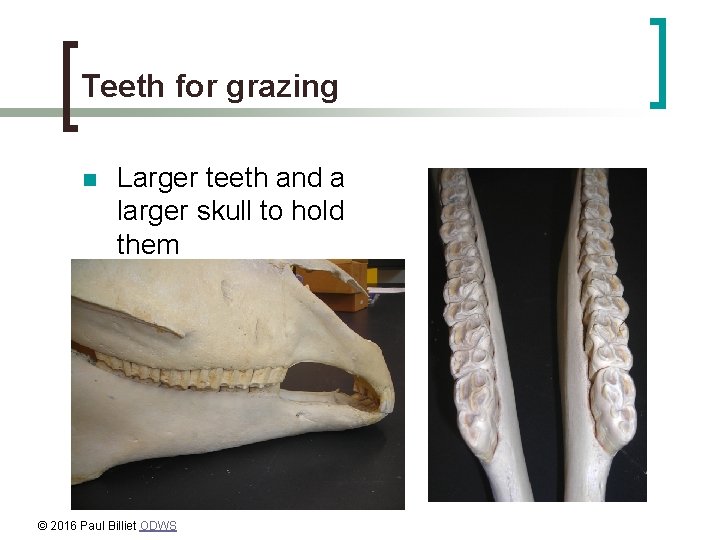
Teeth for grazing n Larger teeth and a larger skull to hold them © 2016 Paul Billiet ODWS
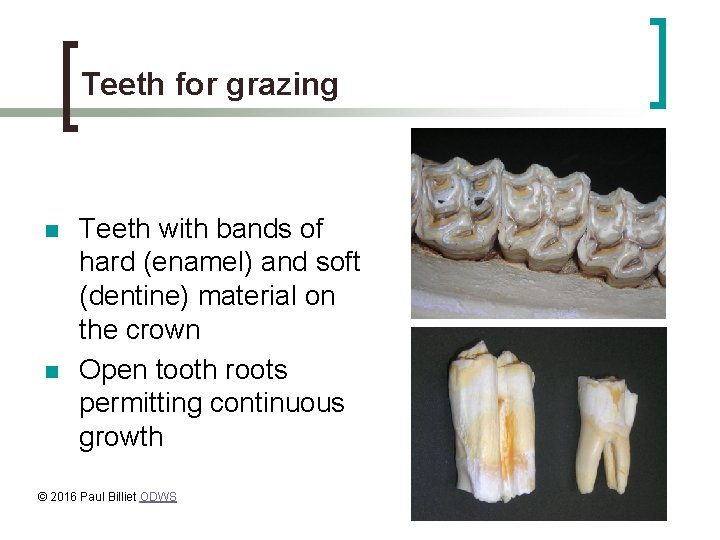
Teeth for grazing n n Teeth with bands of hard (enamel) and soft (dentine) material on the crown Open tooth roots permitting continuous growth © 2016 Paul Billiet ODWS
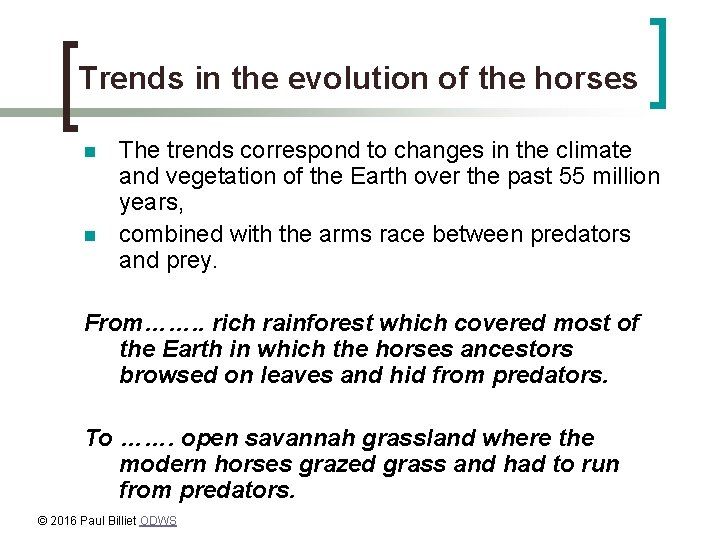
Trends in the evolution of the horses n n The trends correspond to changes in the climate and vegetation of the Earth over the past 55 million years, combined with the arms race between predators and prey. From……. . rich rainforest which covered most of the Earth in which the horses ancestors browsed on leaves and hid from predators. To ……. open savannah grassland where the modern horses grazed grass and had to run from predators. © 2016 Paul Billiet ODWS
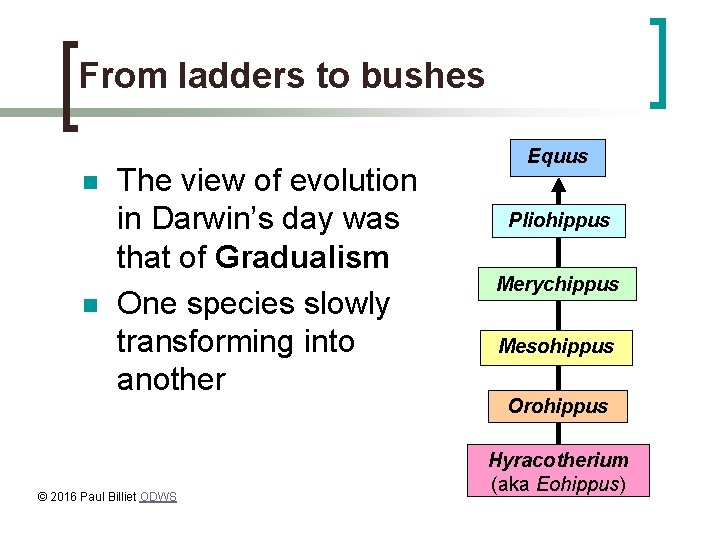
From ladders to bushes n n The view of evolution in Darwin’s day was that of Gradualism One species slowly transforming into another © 2016 Paul Billiet ODWS Equus Pliohippus Merychippus Mesohippus Orohippus Hyracotherium (aka Eohippus)
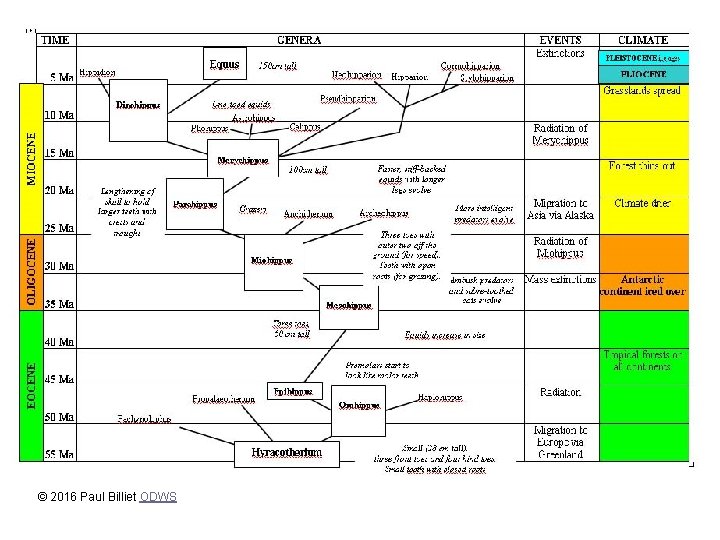
From ladders to bushes n n n The modern fossil record reveals a different picture Periods of radiation where species diversify and fill different niches Species giving rise to new species whilst they still thrive Species do not “turn into” new species and completely disappear The result is a more bushy appearance of the pathway of evolution not a linear ladder An irregular rate of evolution © 2016 Paul Billiet ODWS
© 2016 Paul Billiet ODWS