
The Evolution of Populations Population genetics Population a

- Slides: 23
The Evolution of Populations
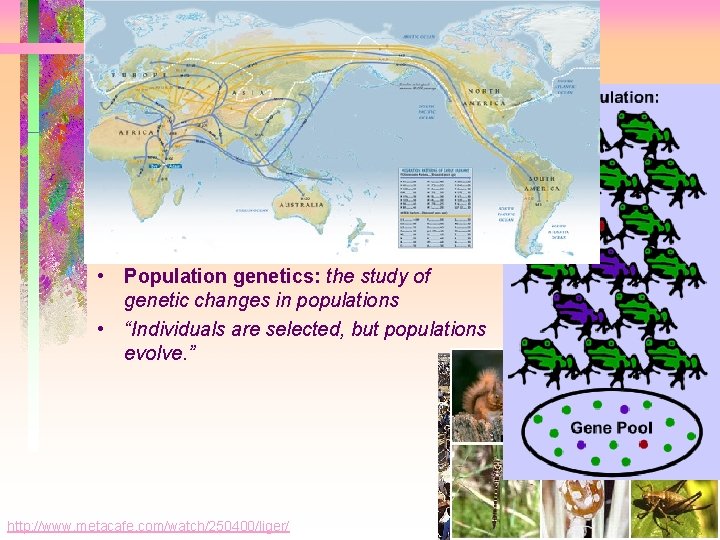
Population genetics • Population: a localized group of individuals belonging to the same species • Species: a group of populations whose individuals have the potential to interbreed and produce fertile offspring • Gene pool: the total aggregate of genes in a population at any one time • Population genetics: the study of genetic changes in populations • “Individuals are selected, but populations evolve. ” http: //www. metacafe. com/watch/250400/liger/
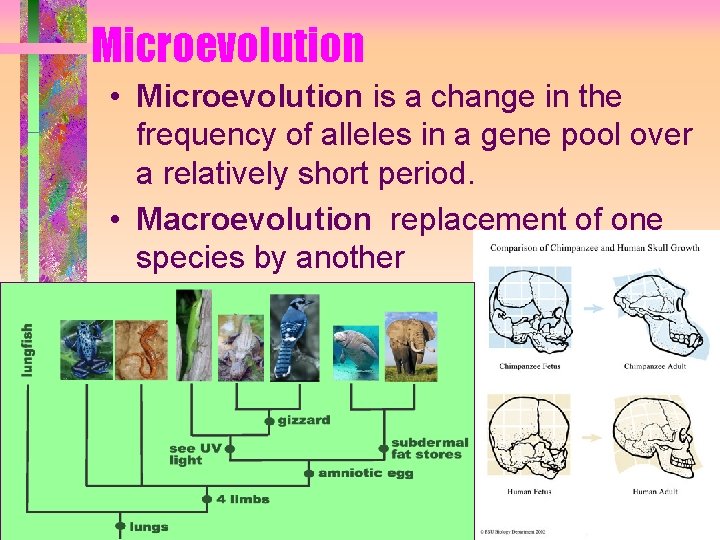
Microevolution • Microevolution is a change in the frequency of alleles in a gene pool over a relatively short period. • Macroevolution replacement of one species by another http: //www. biologycorner. com/worksheets/pepperedmoth. html
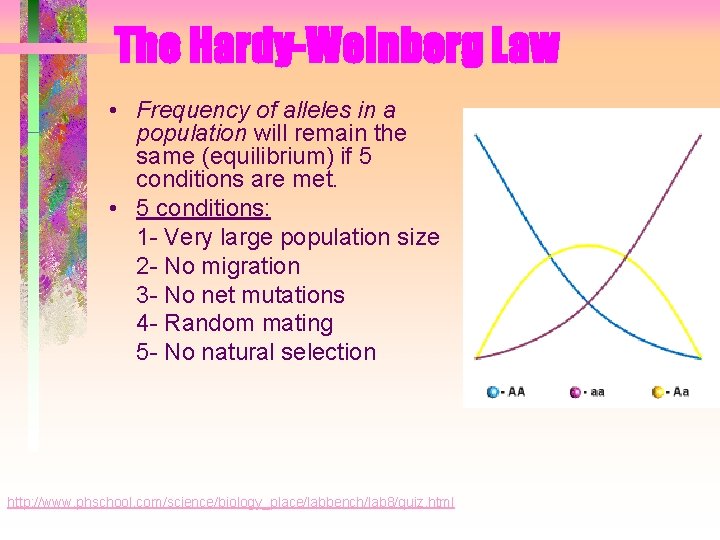
The Hardy-Weinberg Law • Frequency of alleles in a population will remain the same (equilibrium) if 5 conditions are met. • 5 conditions: 1 - Very large population size 2 - No migration 3 - No net mutations 4 - Random mating 5 - No natural selection http: //www. phschool. com/science/biology_place/labbench/lab 8/quiz. html
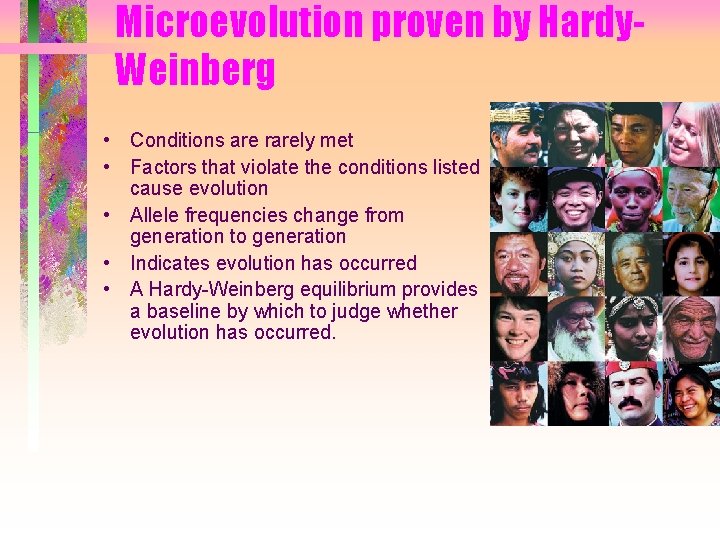
Microevolution proven by Hardy. Weinberg • Conditions are rarely met • Factors that violate the conditions listed cause evolution • Allele frequencies change from generation to generation • Indicates evolution has occurred • A Hardy-Weinberg equilibrium provides a baseline by which to judge whether evolution has occurred.
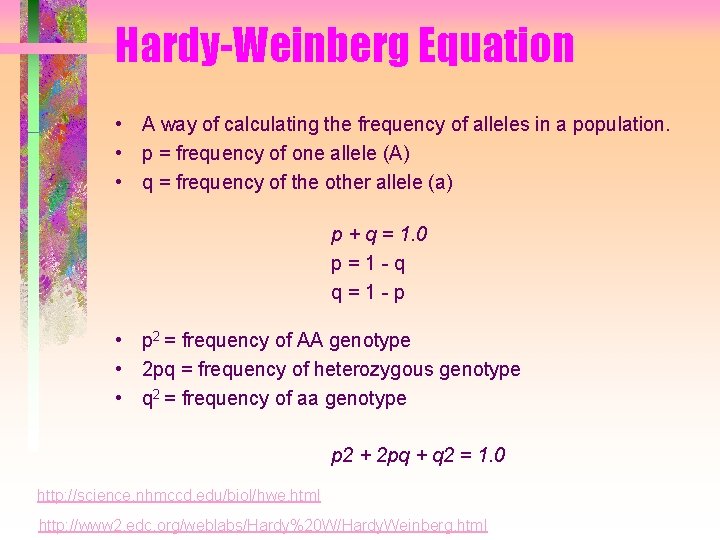
Hardy-Weinberg Equation • A way of calculating the frequency of alleles in a population. • p = frequency of one allele (A) • q = frequency of the other allele (a) p + q = 1. 0 p=1 -q q=1 -p • p 2 = frequency of AA genotype • 2 pq = frequency of heterozygous genotype • q 2 = frequency of aa genotype p 2 + 2 pq + q 2 = 1. 0 http: //science. nhmccd. edu/biol/hwe. html http: //www 2. edc. org/weblabs/Hardy%20 W/Hardy. Weinberg. html
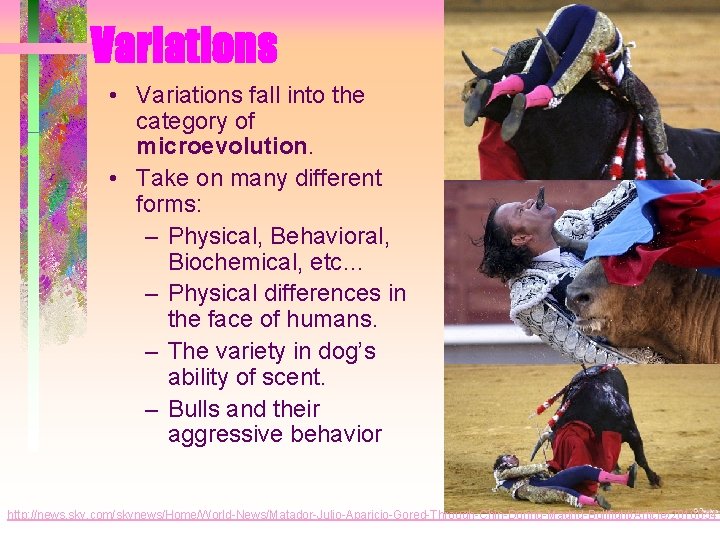
Variations • Variations fall into the category of microevolution. • Take on many different forms: – Physical, Behavioral, Biochemical, etc… – Physical differences in the face of humans. – The variety in dog’s ability of scent. – Bulls and their aggressive behavior http: //news. sky. com/skynews/Home/World-News/Matador-Julio-Aparicio-Gored-Through-Chin-During-Madrid-Bullfight/Article/20100541
Sources of variation? • • Mutation Genetic Drift Bottleneck Founder effect Gene flow Genetic recombination Natural Selection
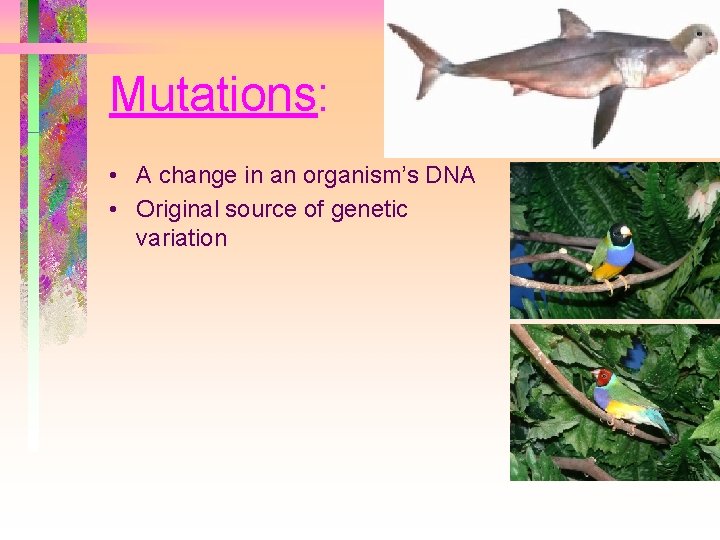
Mutations: • A change in an organism’s DNA • Original source of genetic variation
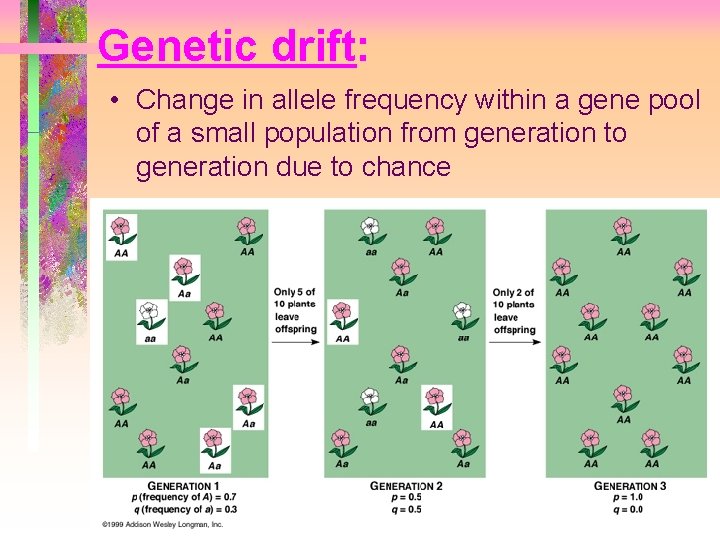
Genetic drift: • Change in allele frequency within a gene pool of a small population from generation to generation due to chance
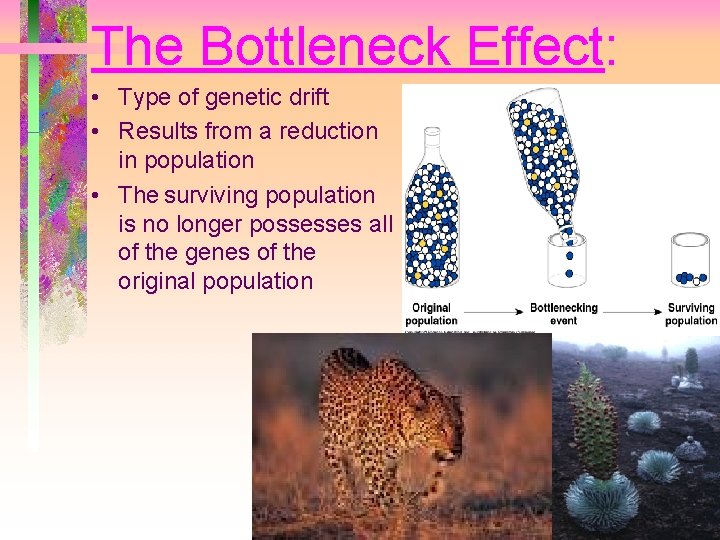
The Bottleneck Effect: • Type of genetic drift • Results from a reduction in population • The surviving population is no longer possesses all of the genes of the original population
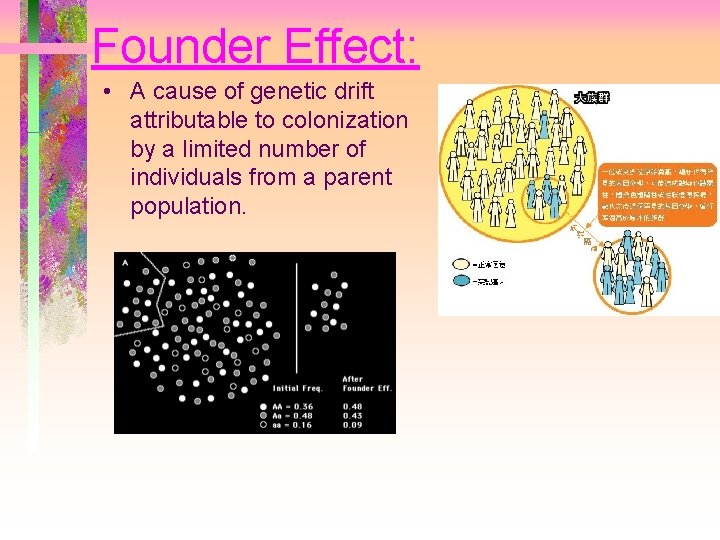
Founder Effect: • A cause of genetic drift attributable to colonization by a limited number of individuals from a parent population.
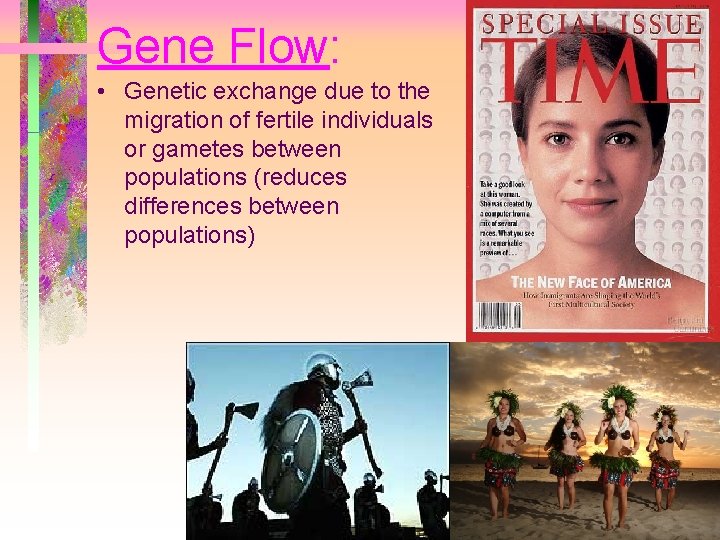
Gene Flow: • Genetic exchange due to the migration of fertile individuals or gametes between populations (reduces differences between populations)
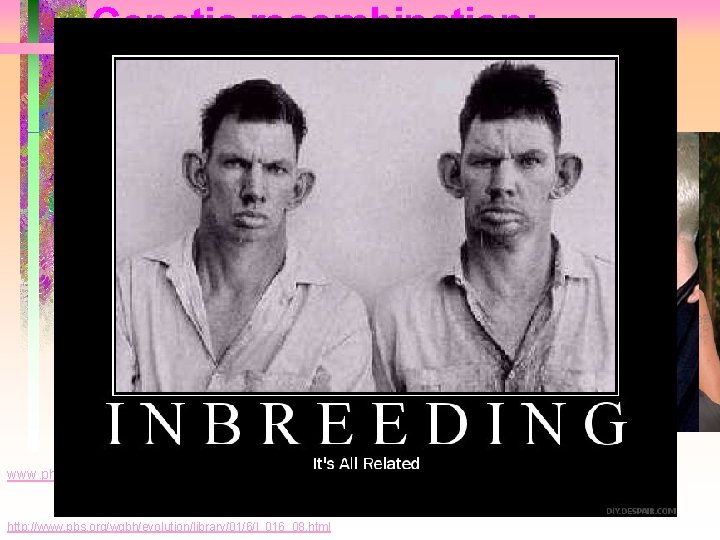
Genetic recombination: (Sexual Reproduction) • Inc. variation by reshuffling genetic info • Random mating involves individuals pairing by chance – Trees releasing pollen • Nonrandom mating involves individuals selecting a mate – Inbreeding can occur if options of mates are limited – Allows normally hidden genes to be expressed in the phenotype due to recessive mutations coming together www. phschool. com/. . . /lab 8/images/randmat. gif http: //www. pbs. org/wgbh/evolution/library/01/6/l_016_08. html
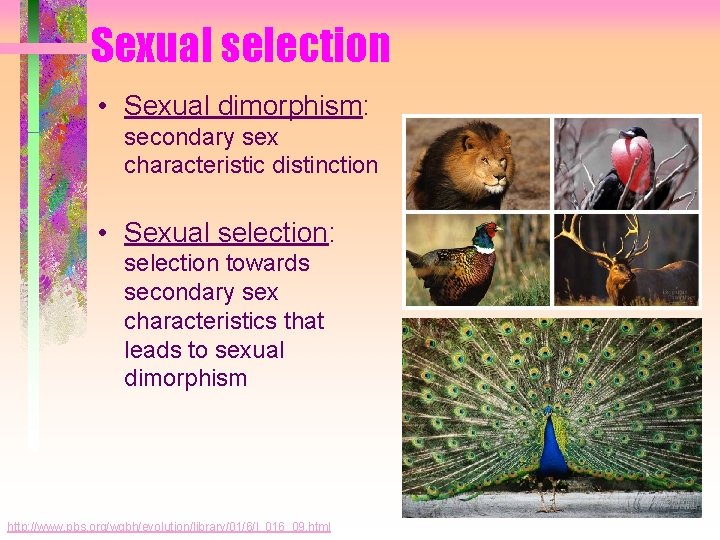
Sexual selection • Sexual dimorphism: secondary sex characteristic distinction • Sexual selection: selection towards secondary sex characteristics that leads to sexual dimorphism http: //www. pbs. org/wgbh/evolution/library/01/6/l_016_09. html
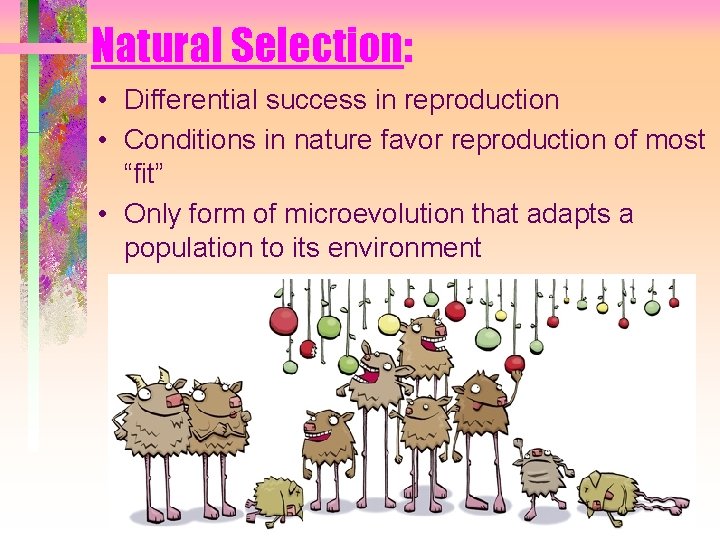
Natural Selection: • Differential success in reproduction • Conditions in nature favor reproduction of most “fit” • Only form of microevolution that adapts a population to its environment
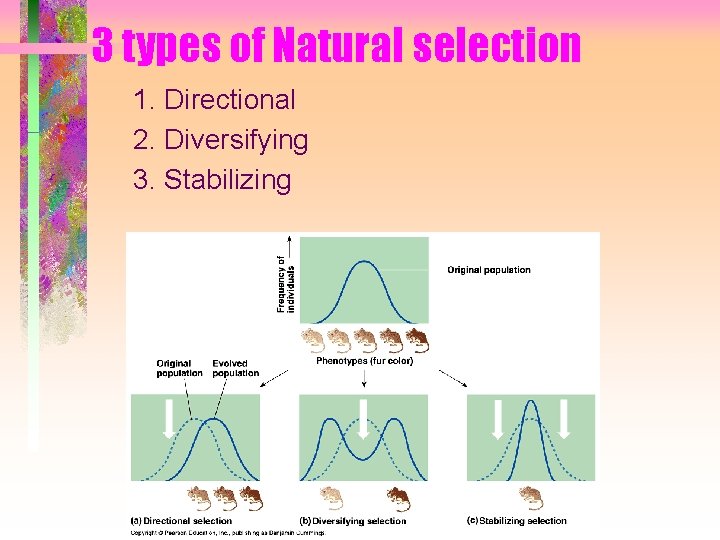
3 types of Natural selection 1. Directional 2. Diversifying 3. Stabilizing
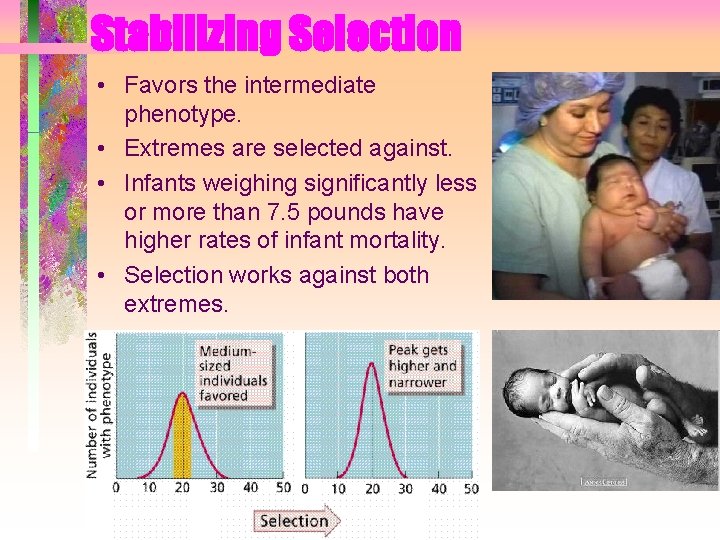
Stabilizing Selection • Favors the intermediate phenotype. • Extremes are selected against. • Infants weighing significantly less or more than 7. 5 pounds have higher rates of infant mortality. • Selection works against both extremes.
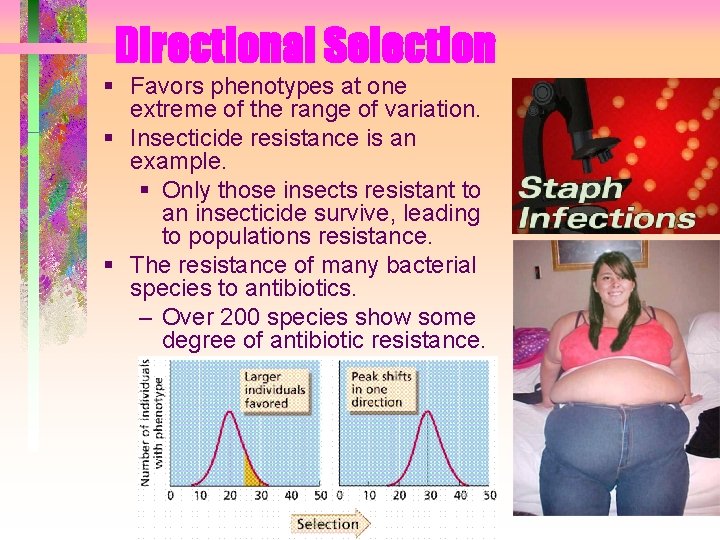
Directional Selection Favors phenotypes at one extreme of the range of variation. Insecticide resistance is an example. Only those insects resistant to an insecticide survive, leading to populations resistance. The resistance of many bacterial species to antibiotics. – Over 200 species show some degree of antibiotic resistance.
Disruptive Selection • Favors extremes of variation: selection is against the middle of the curve. • Causing two or more distinct phenotypes. • The African swallowtail butterfly (Papilo dardanus) produces two distinct morphs, both resemble brightly colored but distasteful butterflies of other species. • Each morph gains protection from predation although it is in fact quite edible.
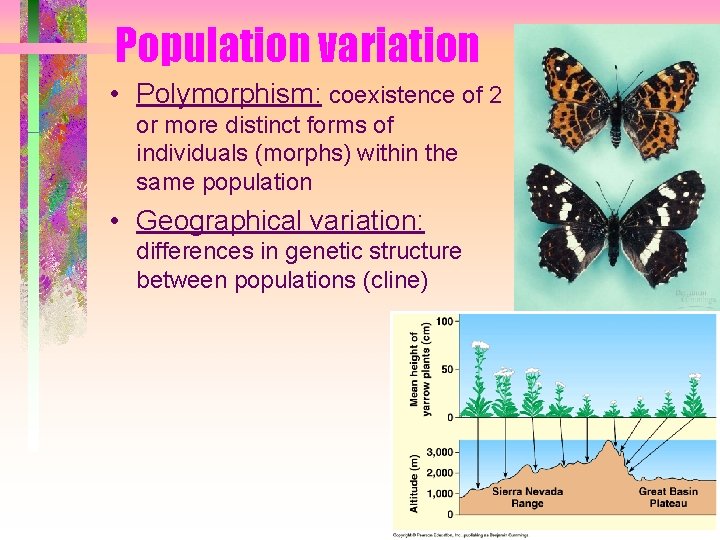
Population variation • Polymorphism: coexistence of 2 or more distinct forms of individuals (morphs) within the same population • Geographical variation: differences in genetic structure between populations (cline)
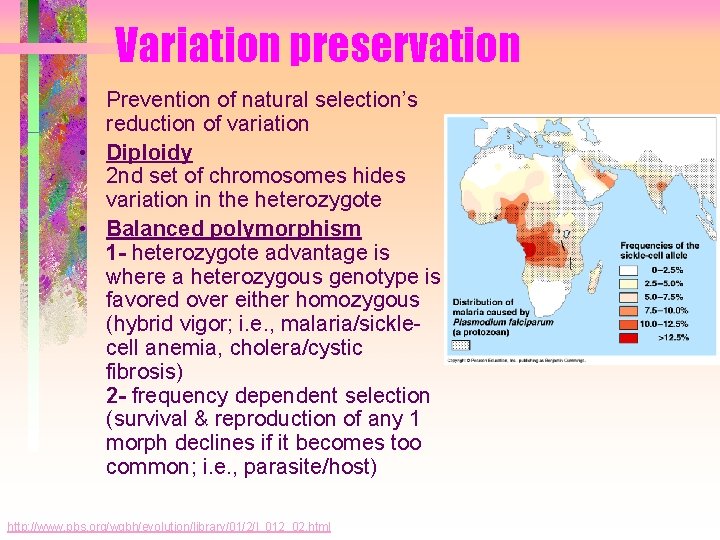
Variation preservation • Prevention of natural selection’s reduction of variation • Diploidy 2 nd set of chromosomes hides variation in the heterozygote • Balanced polymorphism 1 - heterozygote advantage is where a heterozygous genotype is favored over either homozygous (hybrid vigor; i. e. , malaria/sicklecell anemia, cholera/cystic fibrosis) 2 - frequency dependent selection (survival & reproduction of any 1 morph declines if it becomes too common; i. e. , parasite/host) http: //www. pbs. org/wgbh/evolution/library/01/2/l_012_02. html