
The Evolution Of Personal Home Computers 1980 Current



- Slides: 11
The Evolution Of Personal Home Computers 1980 -Current TRS 80 Model 4 P By Joshua Brutzkus
Key Computer Definitions • • ROM- Read-only memory RAM- Random access memory CPU- Central Processing Unit MHz- Megahertz-One MHz represents one million cycles per second • KB- KB represents 1, 000 bytes. • MB- short for megabyte 1, 000 or bytes
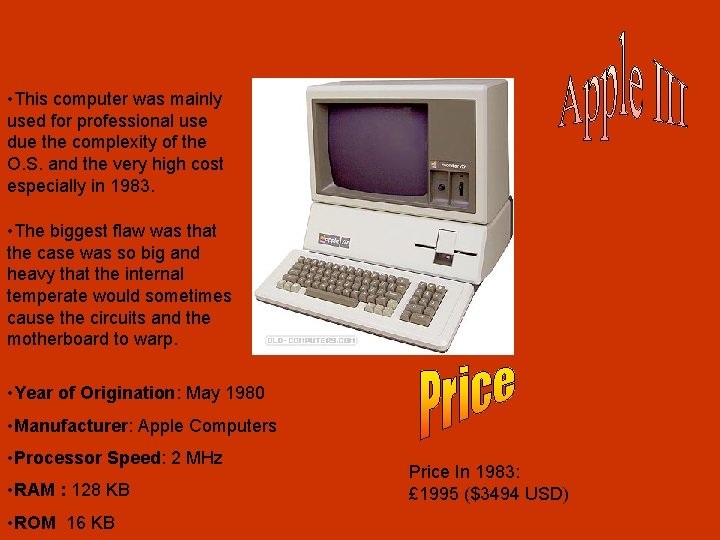
Apple III • This computer was mainly used for professional use due the complexity of the O. S. and the very high cost especially in 1983. • The biggest flaw was that the case was so big and heavy that the internal temperate would sometimes cause the circuits and the motherboard to warp. • Year of Origination: May 1980 • Manufacturer: Apple Computers • Processor Speed: 2 MHz • RAM : 128 KB • ROM 16 KB Price In 1983: £ 1995 ($3494 USD)
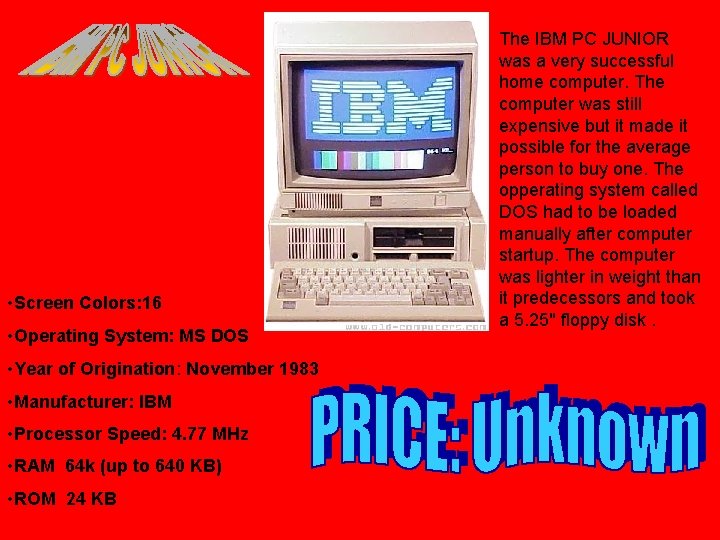
• Screen Colors: 16 • Operating System: MS DOS • Year of Origination: November 1983 • Manufacturer: IBM • Processor Speed: 4. 77 MHz • RAM 64 k (up to 640 KB) • ROM 24 KB The IBM PC JUNIOR was a very successful home computer. The computer was still expensive but it made it possible for the average person to buy one. The opperating system called DOS had to be loaded manually after computer startup. The computer was lighter in weight than it predecessors and took a 5. 25" floppy disk.
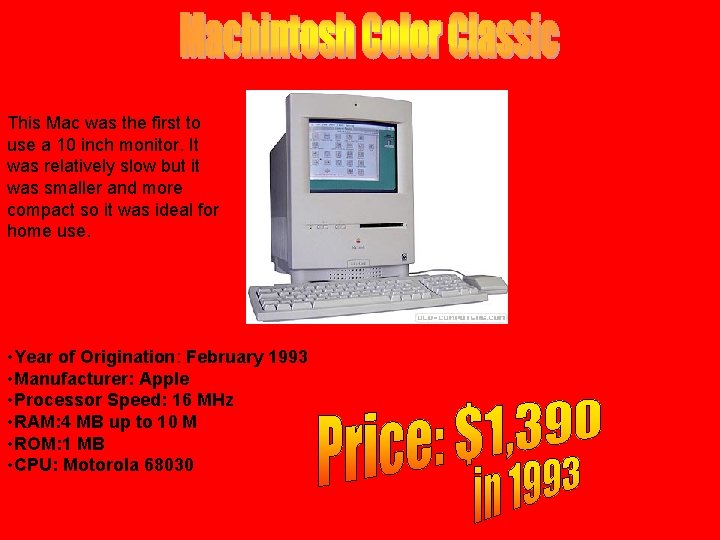
This Mac was the first to use a 10 inch monitor. It was relatively slow but it was smaller and more compact so it was ideal for home use. • Year of Origination: February 1993 • Manufacturer: Apple • Processor Speed: 16 MHz • RAM: 4 MB up to 10 M • ROM: 1 MB • CPU: Motorola 68030
• Manufacturer: Sony Corp. • Processor speed: 3. 2 GHz • RAM: expandable to: 2 GB • Hard drive size: 250 GB • 1 GB of DDR RAM This modern day Sony computer is capable of high speed gaming, surfing the internet, storing 250 GB of memory which equates to 250, 000 times the amount of storage that a early 80’s computer could hold. This Computer can process at 3. 2 GHz which is over 3000 faster than the early 80’s computers. Also modern day computers have easier software to manage.
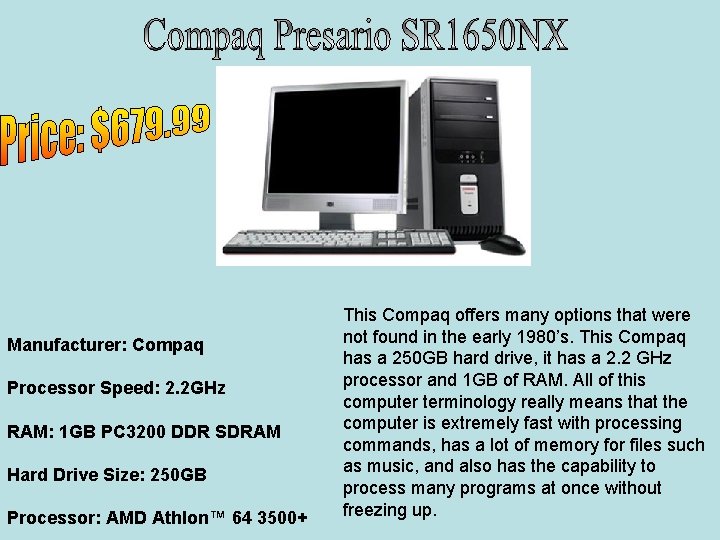
Manufacturer: Compaq Processor Speed: 2. 2 GHz RAM: 1 GB PC 3200 DDR SDRAM Hard Drive Size: 250 GB Processor: AMD Athlon™ 64 3500+ This Compaq offers many options that were not found in the early 1980’s. This Compaq has a 250 GB hard drive, it has a 2. 2 GHz processor and 1 GB of RAM. All of this computer terminology really means that the computer is extremely fast with processing commands, has a lot of memory for files such as music, and also has the capability to process many programs at once without freezing up.
Old vs. New • Relative cost of the computer has come down tremendously. • Modern day computers are faster, smaller, and lighter. • New computers can surf the web, do word processing programs, Power. Point, download music, store big files, run many programs at once, ETC. • Many 1980’s computers has integrated screens and CPU’S. Modern day computers, for the most part, have separate screen and CPU’S. • The biggest and most important aspect is that modern day computers can be used by almost anyone. They are user friendly and are made so you do not need a PHD to operate one.
Bibliography • www. old-computers. com/museum • www. circuitcity. com