
The Evolution of Living Things Chapter 7 Notes
- Slides: 18
The Evolution of Living Things Chapter 7 Notes
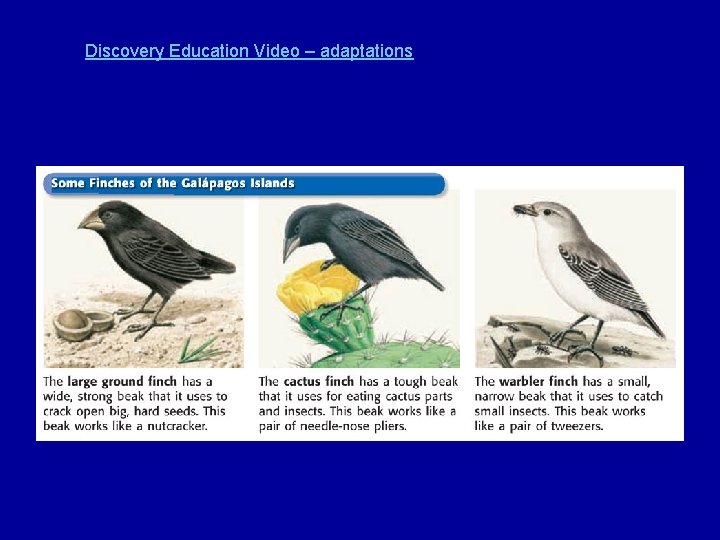
Section 1 – Change over Time • Adaptation – A characteristic that improves an individual’s ability to survive and reproduce in a particular environment – Physical – beak on a bird, fur on a bear, camouflage, blubber, warning coloration – Behavioral – bird calls, migration, hibernation, nocturnal
• Species – a group of organisms that are closely related and can mate to produce fertile offspring – Species can change over time. New species can descend from older species. • Evolution – The process in which inherited characteristics within a population change over time and new species arise.
• Fossil – The remains or physical evidence of an organism preserved by geological process. – Can be complete organisms, parts of organisms, or a set of footprints. – Formed when dead animals are covered by sediment, which are layers of sand, dust, or soil and then preserved.
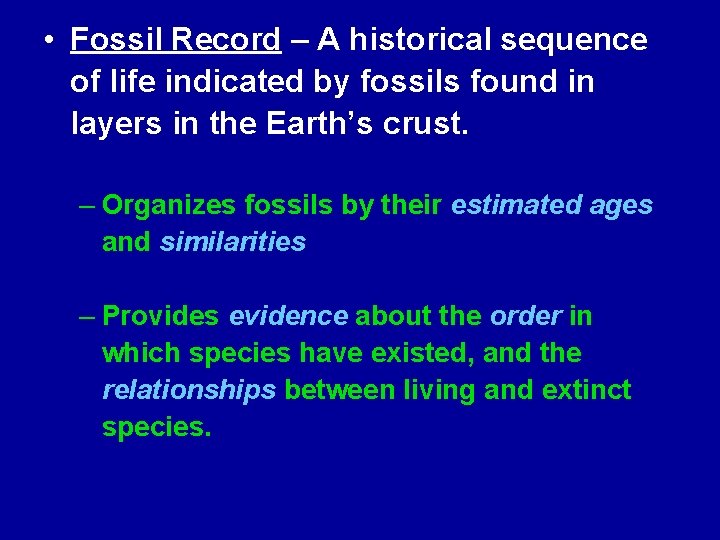
• Fossil Record – A historical sequence of life indicated by fossils found in layers in the Earth’s crust. – Organizes fossils by their estimated ages and similarities – Provides evidence about the order in which species have existed, and the relationships between living and extinct species.
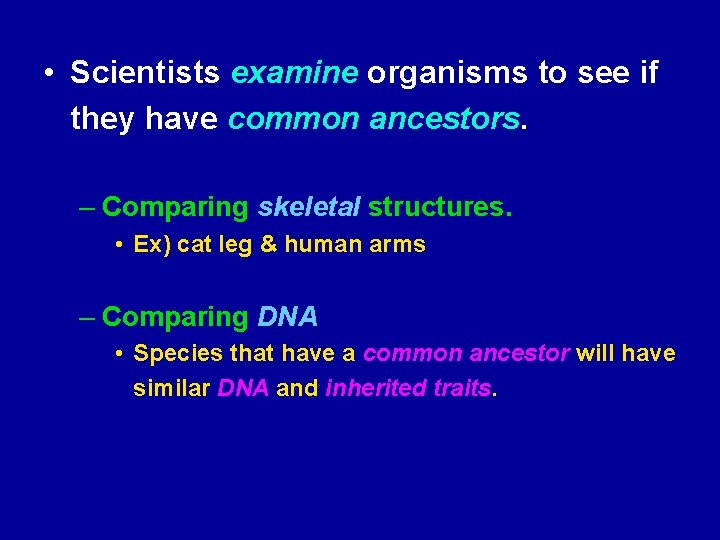
• Scientists examine organisms to see if they have common ancestors. – Comparing skeletal structures. • Ex) cat leg & human arms – Comparing DNA • Species that have a common ancestor will have similar DNA and inherited traits.
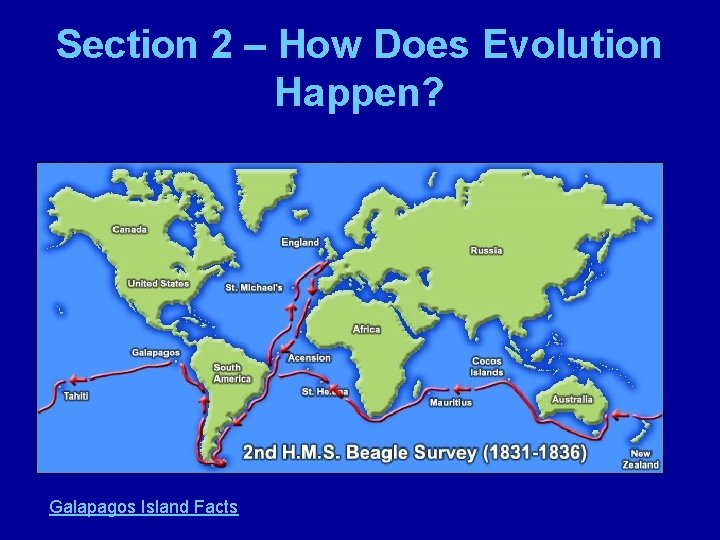
Section 2 – How Does Evolution Happen? Galapagos Island Facts
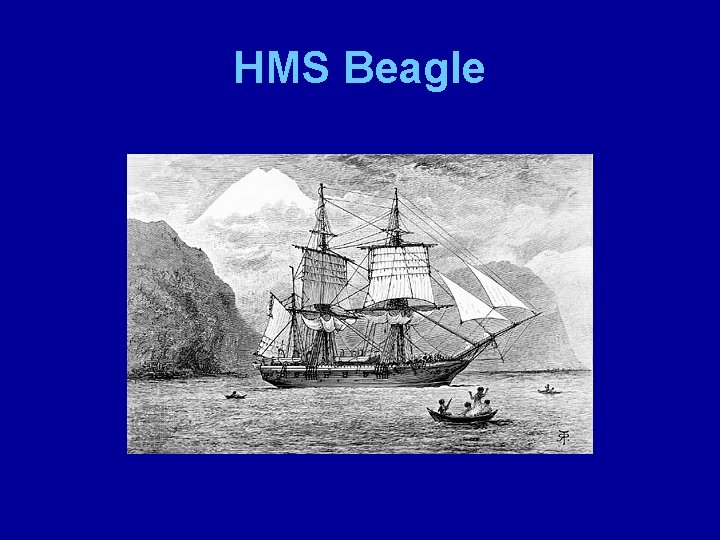
HMS Beagle
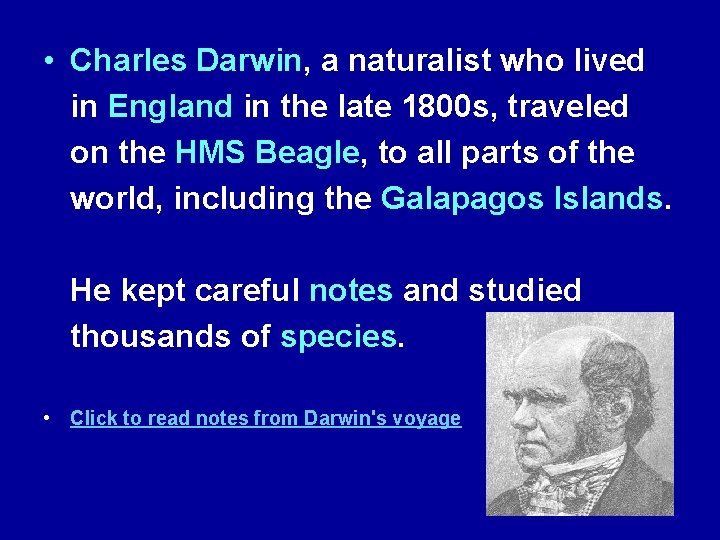
• Charles Darwin, a naturalist who lived in England in the late 1800 s, traveled on the HMS Beagle, to all parts of the world, including the Galapagos Islands. He kept careful notes and studied thousands of species. • Click to read notes from Darwin's voyage
Discovery Education Video – adaptations
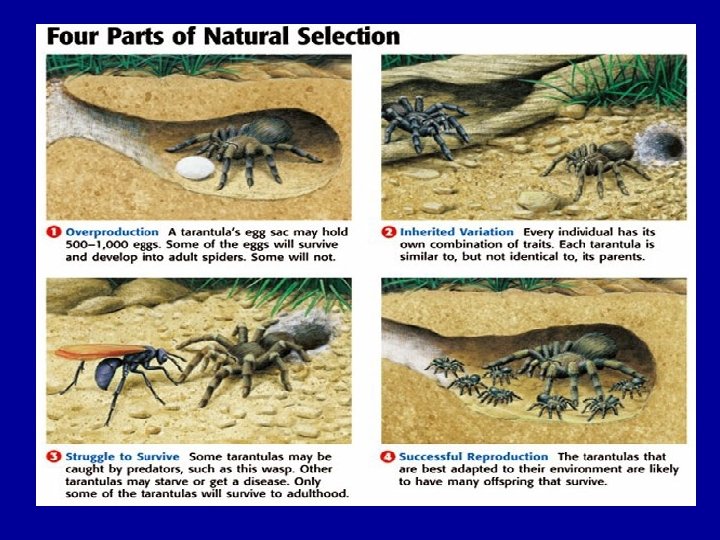
• Trait – a characteristic determined by genetics • Natural selection – The process by which individuals that are better suited to their environment survive and reproduce
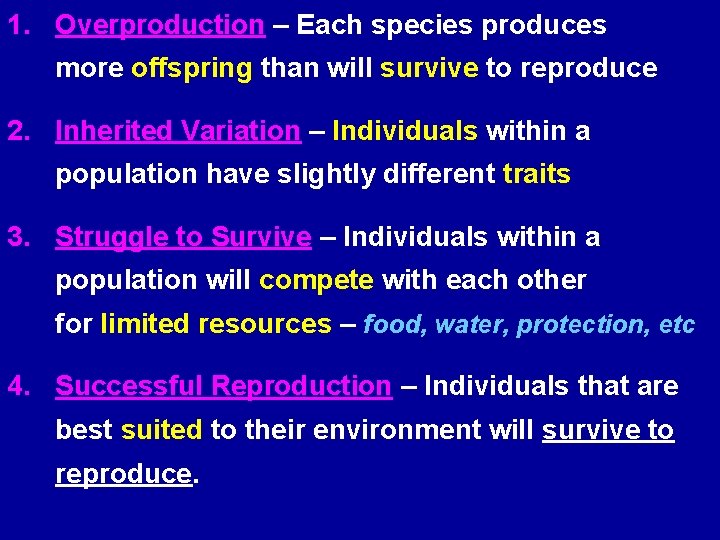
1. Overproduction – Each species produces more offspring than will survive to reproduce 2. Inherited Variation – Individuals within a population have slightly different traits 3. Struggle to Survive – Individuals within a population will compete with each other for limited resources – food, water, protection, etc 4. Successful Reproduction – Individuals that are best suited to their environment will survive to reproduce.
Animals of the Galapagos Islands • National Geographic
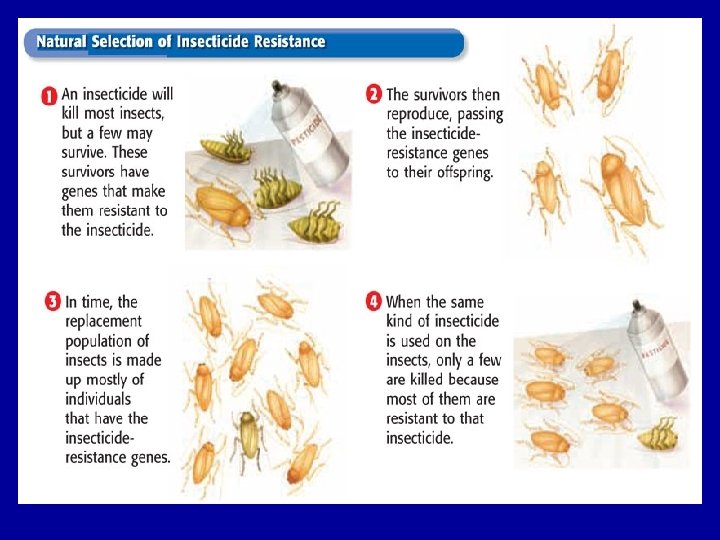
Section 3 – Natural Selection in Action • An example of natural selection is insecticide resistance. Species of insects are able to resist certain insecticides because they produce many offspring and have short generation time – the average time between one generation and the next.
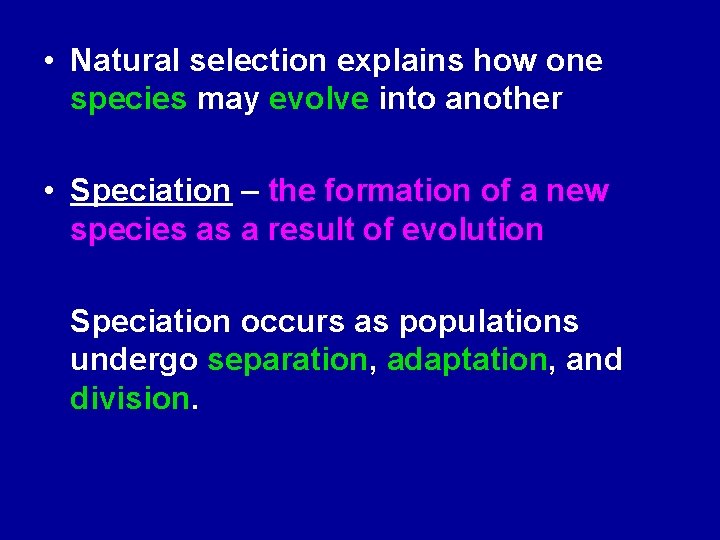
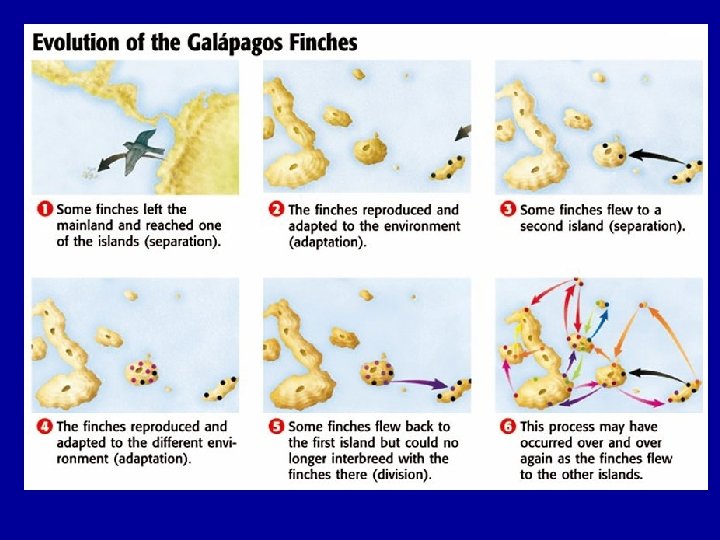
• Natural selection explains how one species may evolve into another • Speciation – the formation of a new species as a result of evolution Speciation occurs as populations undergo separation, adaptation, and division.