
The Evolution of Leisure Recreation and Play Chapter






- Slides: 30
The Evolution of Leisure, Recreation, and Play Chapter 2 HPR 200 Spring 2011
Quiz • Name three components of leisure. (2 pts) • Name three ways to conceptualize leisure. (2 pts) • Identify the three components of play. (1 pt)
Defining Leisure • Elements • Conceptualizations – Perceived freedom – Autotelic activity – Beneficial outcome – Time – Activity – State of mind
Play • Spontaneity • Expressive • Done for its own sake
Questions
Evolution • Continuous change • Worse to better • Simple to more complex
Evolutionary Continuum • • • Early societies Old world societies New world societies Middle-era societies Modern societies
Lets talk history… • In early cultures and societies, would recreation have been valued? Why or why not? In what forms? How might religion and social hierarchy have been factors? As societies diversified, how did recreation change? • “the life of every man…solitary, poor, nasty, brutish, and short. ” —Hobbes – How might this have applied to the ability to recreate?
In the earliest societies • Recreation was reserved for the general populations only on special occasions such as religious holidays or feast days. • More wealthy members in more complex class systems may have been members of leisure classes.
Early Societies • Fire • Tribes and chiefdoms – Rituals – Taboos – Religion • Primitive states – Leisure class – Amusive leisure
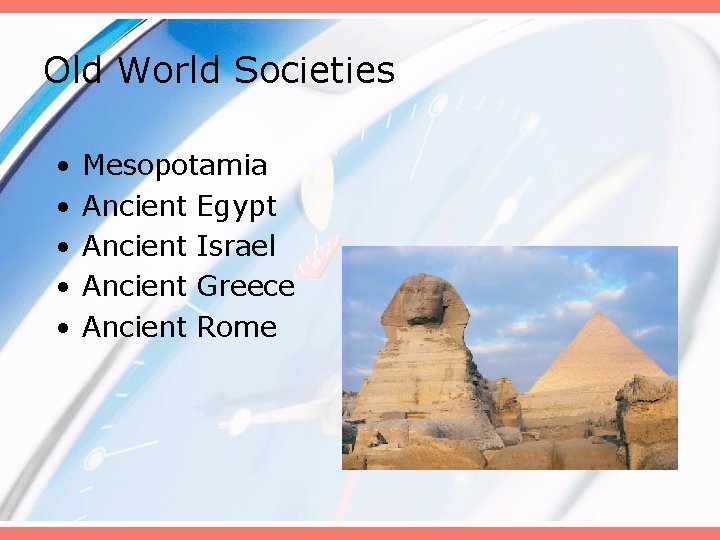
Old World Societies • • • Mesopotamia Ancient Egypt Ancient Israel Ancient Greece Ancient Rome
Mesopotamia • • • Written communication Wheel 60 -minute hour 360 degree circle Code of law Hanging Gardens of Babylon (key development)
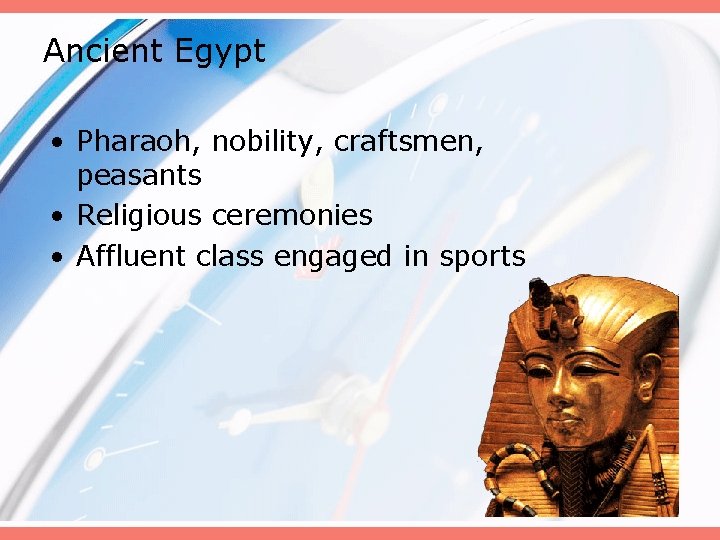
Ancient Egypt • Pharaoh, nobility, craftsmen, peasants • Religious ceremonies • Affluent class engaged in sports
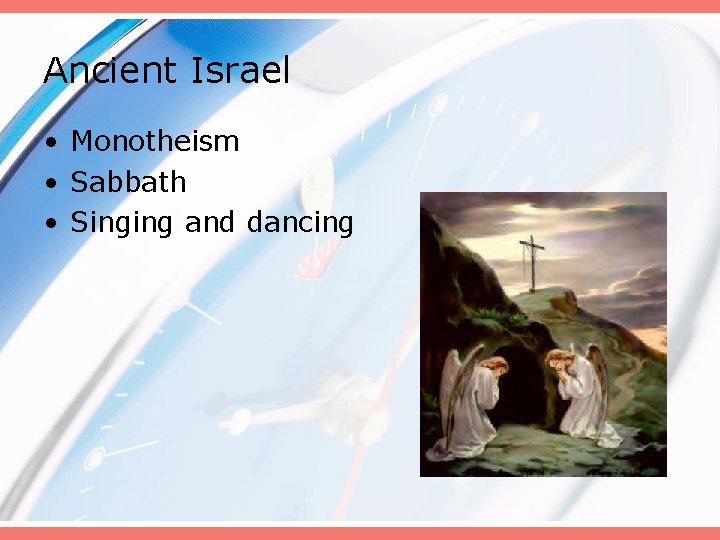
Ancient Israel • Monotheism • Sabbath • Singing and dancing
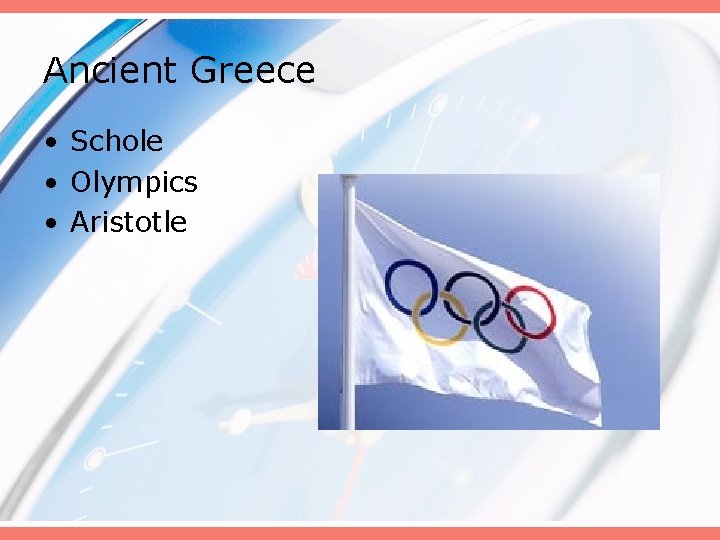
Ancient Greece • Schole • Olympics • Aristotle
Aristotle’s Three Levels of Leisure Contemplation Recreation Amusement
Ancient Rome • Seized captives • Upper class • 50 to 175 holidays
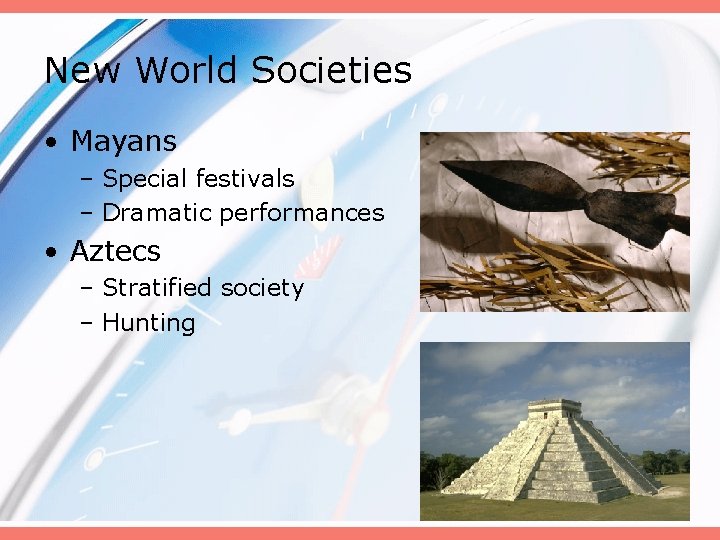
New World Societies • Mayans – Special festivals – Dramatic performances • Aztecs – Stratified society – Hunting
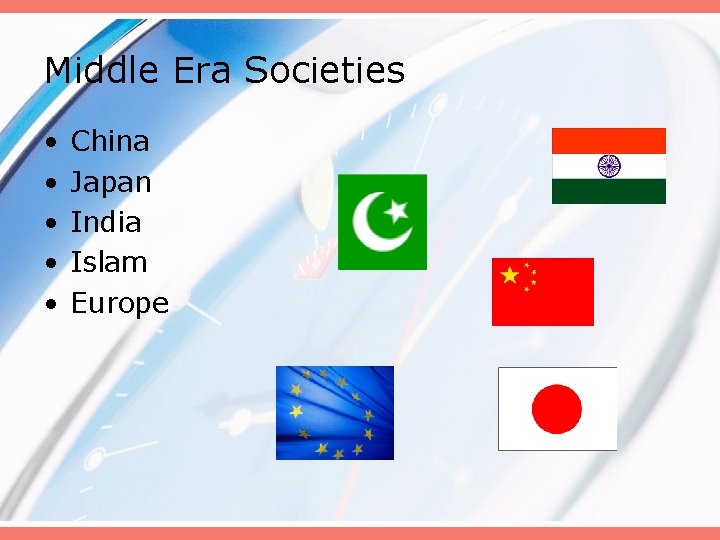
Middle Era Societies • • • China Japan India Islam Europe
China • • • Affluent class Peasant class Leisure class Fireworks Novels
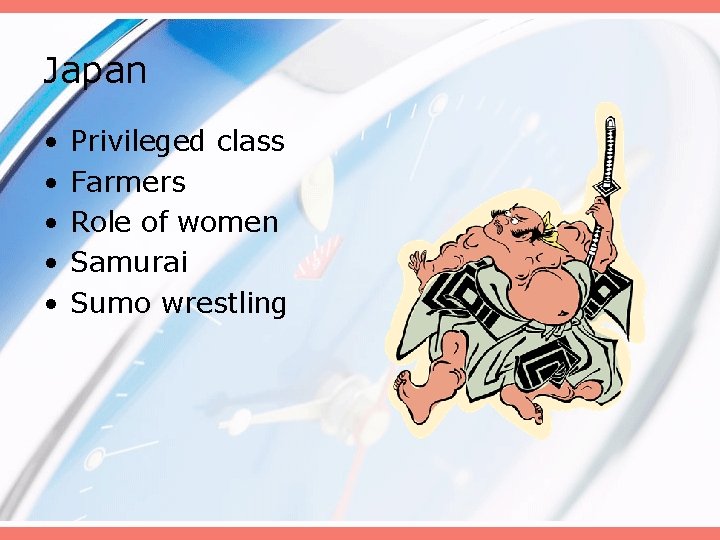
Japan • • • Privileged class Farmers Role of women Samurai Sumo wrestling
India • Caste system • Wealth = leisure
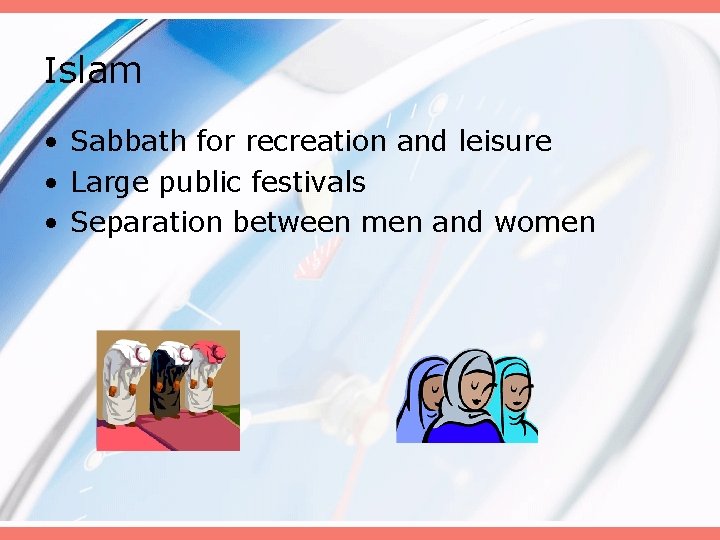
Islam • Sabbath for recreation and leisure • Large public festivals • Separation between men and women
Europe • European revival – Merchant class • European renaissance – Church of Rome lost power – Exploration by wealthy
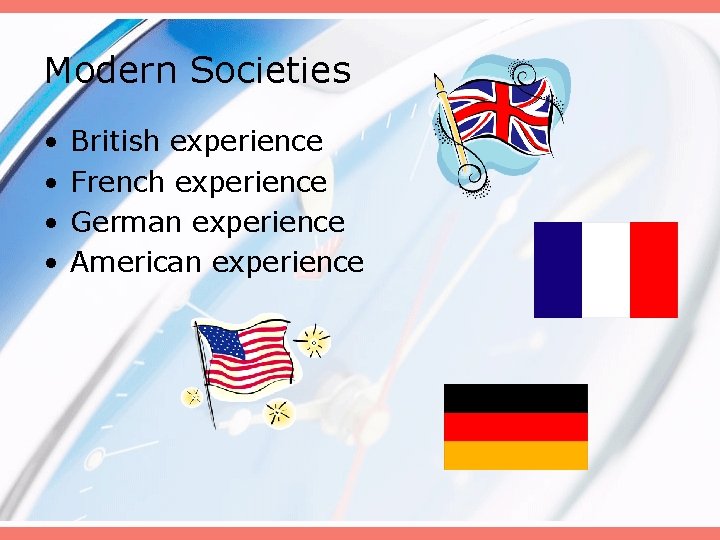
Modern Societies • • British experience French experience German experience American experience
British • • Royalty, aristocrats, and commoners Second home for leisure Vacations Sports
French • • • 52 sabbaths 90 rest days 38 holidays Monarchy restricted leisure time Granted public access to estates
German • • Turnen Turnplatz Christian and pagan holidays Oktoberfest
American • • • Puritans Revolutionary War YMCA/YMHA Unique American holidays Television Travel