
The Evolution of Baleen from the Ancient Toothed
The Evolution of Baleen from the Ancient Toothed Whale Amber Fitzgerald Morgan Hinson Tom Lesinski
Our Smithsonian Adventure • We were drawn to the ocean area of the museum • We noticed whales have a huge evolutionary background so we chose whales as a topic • We were interested as to why some had teeth and why some had baleen
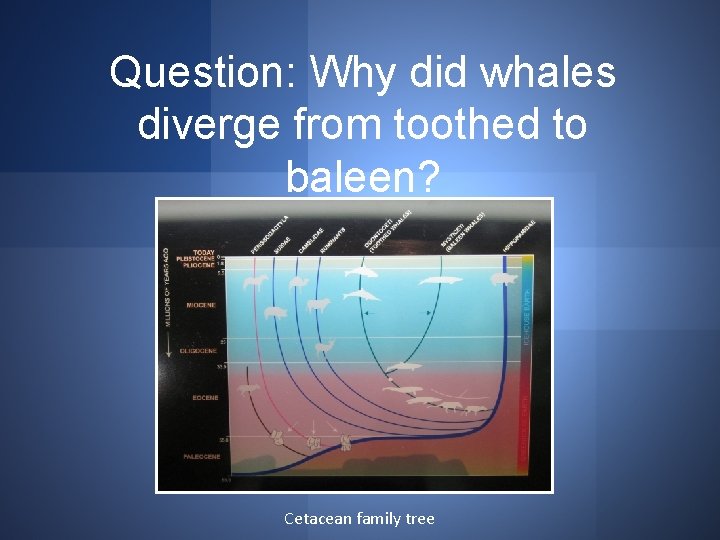
Question: Why did whales diverge from toothed to baleen? Cetacean family tree
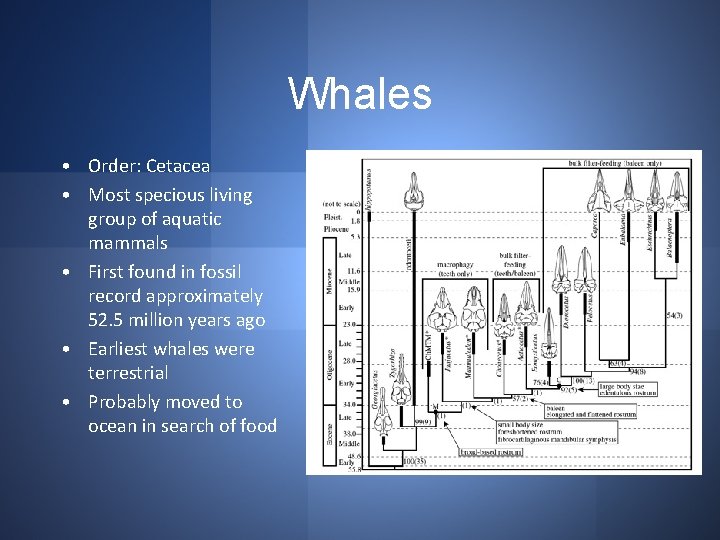
Whales • Order: Cetacea • Most specious living group of aquatic mammals • First found in fossil record approximately 52. 5 million years ago • Earliest whales were terrestrial • Probably moved to ocean in search of food
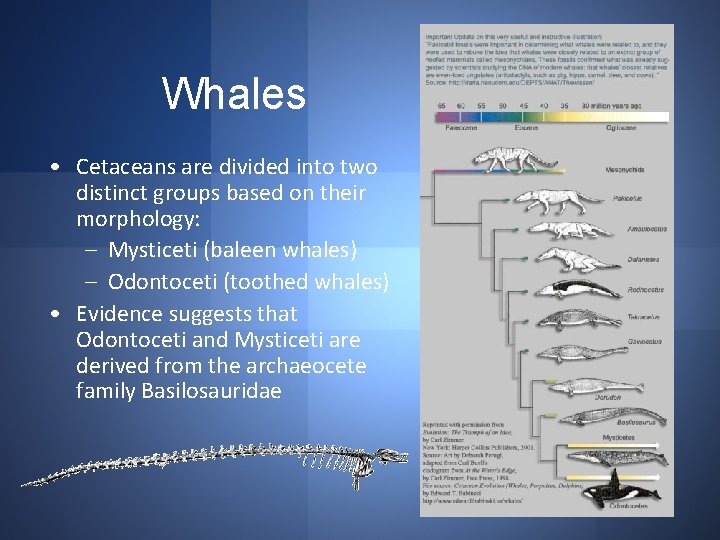
Whales • Cetaceans are divided into two distinct groups based on their morphology: – Mysticeti (baleen whales) – Odontoceti (toothed whales) • Evidence suggests that Odontoceti and Mysticeti are derived from the archaeocete family Basilosauridae

Baleen Whales Wait a minute, what is baleen?
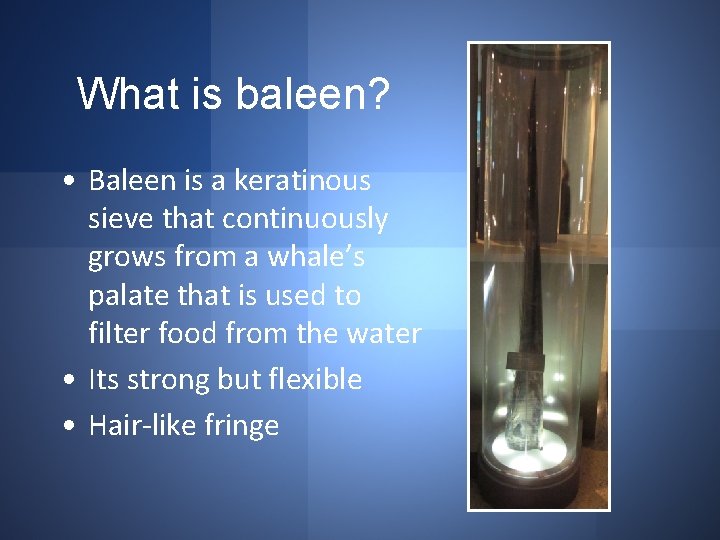
What is baleen? • Baleen is a keratinous sieve that continuously grows from a whale’s palate that is used to filter food from the water • Its strong but flexible • Hair-like fringe
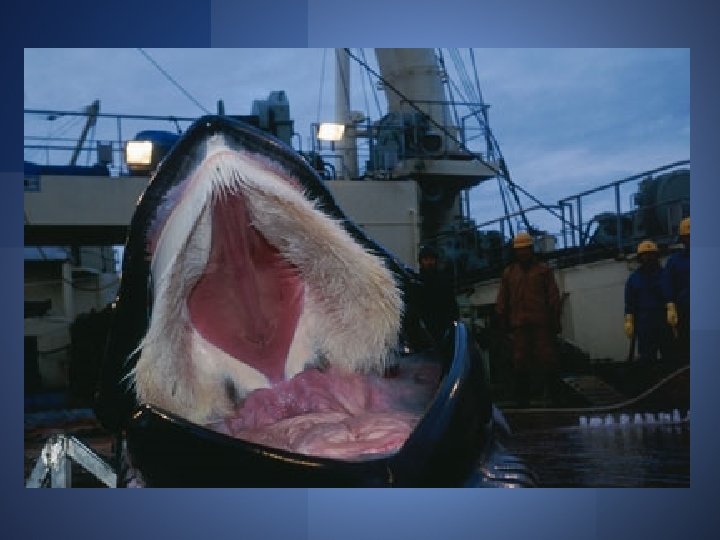
Baleen Whales (Mysticeti) • Use baleen to filter feed • Some had both teeth and baleen (intermediate species) • Today all mysticetes have baleen and lack teeth • Huge head and jaw allow baleen whales to hold long baleen plates – A Right whale’s head takes up about 1/4 of it’s length
Baleen Whales (cont. ) • Baleen whales lunge through schools of fish filtering plankton as they swim with their mouths wide open • The whale closes its mouth and forces water out through the baleen strainers • This traps food and the whale swallows • http: //www. youtube. com/watch? v=H 0 yy. Ri fop. TA
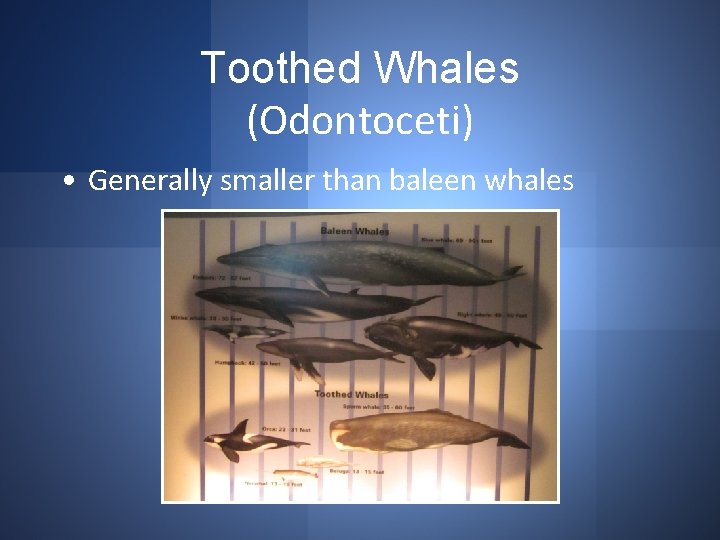
Toothed Whales (Odontoceti) • Generally smaller than baleen whales
Toothed Whales (cont. ) • Use echolocation to find prey – Produce specialized sounds and receive and process these echoes to navigate, find food and avoid predators – Take individual prey, which consists mainly of fishes and squids
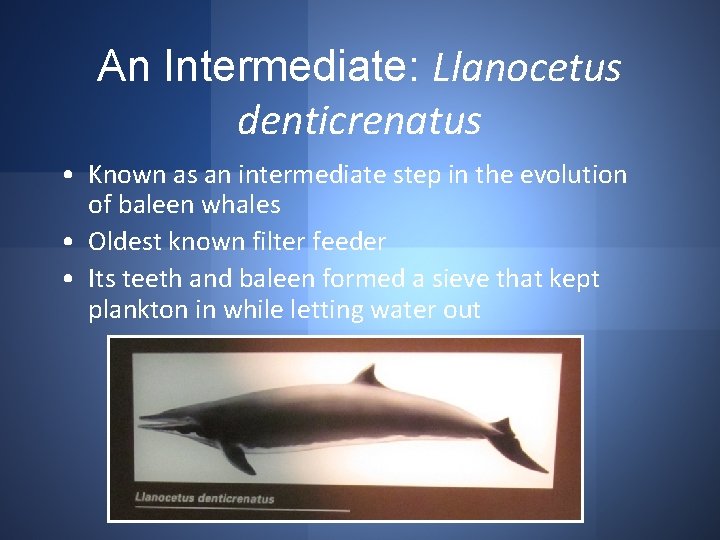
An Intermediate: Llanocetus denticrenatus • Known as an intermediate step in the evolution of baleen whales • Oldest known filter feeder • Its teeth and baleen formed a sieve that kept plankton in while letting water out
Why did some whales lose their teeth? • About 38 million years ago, whales developed baleen as a new way to eat • Decreased ocean temperatures • Upwelling of nutrients • Increase in plankton • Increase in krill Baleen whales may have evolved to take advantage of this rich new food supply
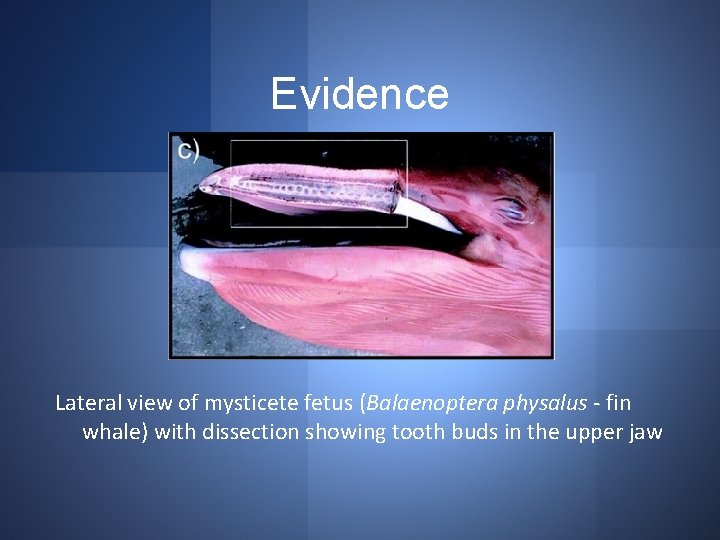
Evidence Lateral view of mysticete fetus (Balaenoptera physalus - fin whale) with dissection showing tooth buds in the upper jaw
New Avenues… • Evolution will continue to occur, will another method of feeding eventually develop for whales? • Will one morph become extinct?
- Slides: 16