
The Evolution of an IDEA 1 2 3

- Slides: 22
The Evolution of an IDEA!!! 1. 2. 3. Objectives: Describe the contributions of early scientists to modern theories of evolution Explain the fundamental theory of evolution Discuss some questions and ideas that shaped Darwin’s thinking
In your own words, describe what YOU think theory of evolution means…
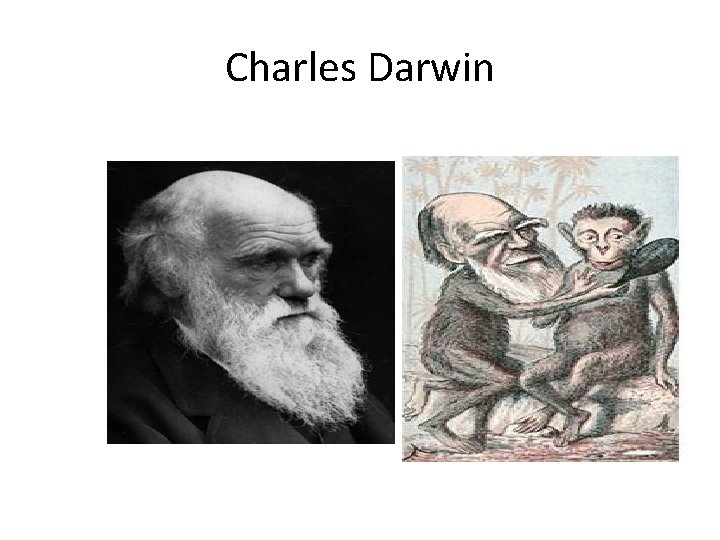
Charles Darwin
Darwin’s Theory of Evolution • Evolution, or change over time, is the process by which modern organisms have descended from ancient organisms. • A scientific theory is a well-supported testable explanation of phenomena that have occurred in the natural world.
How did Darwin came up with his theory? • …well first we have to have a look at those who came before Darwin. • These people changed the way we look at the world around us. • Darwin’s theory was greatly influenced by the following people.
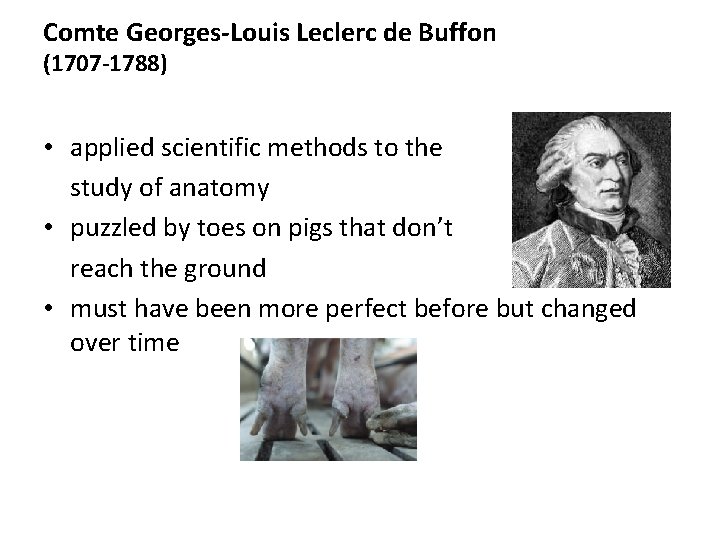
Comte Georges-Louis Leclerc de Buffon (1707 -1788) • applied scientific methods to the study of anatomy • puzzled by toes on pigs that don’t reach the ground • must have been more perfect before but changed over time
Carrolus Linnaeus (1707 -1778) and Erasmus Darwin (1731 -1802) • around the same time as Buffon, these two scientists proposed life changed over time • Erasmus Darwin, Charles’s grandfather, even went as far as to suggest all life evolved from a single original source
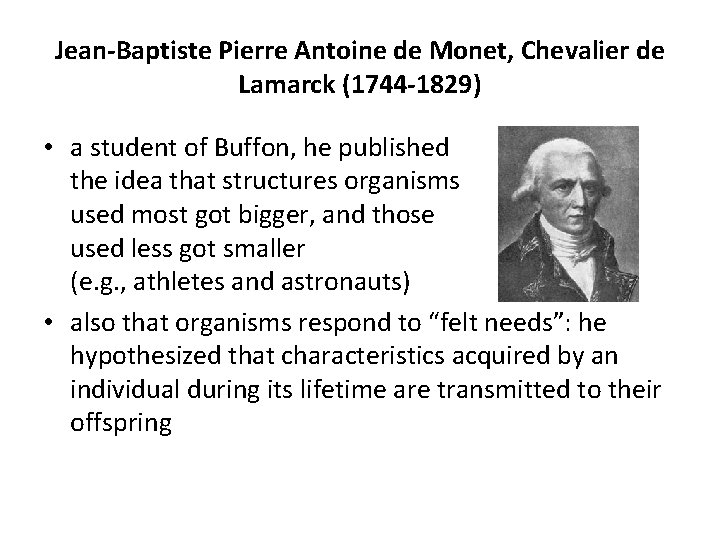
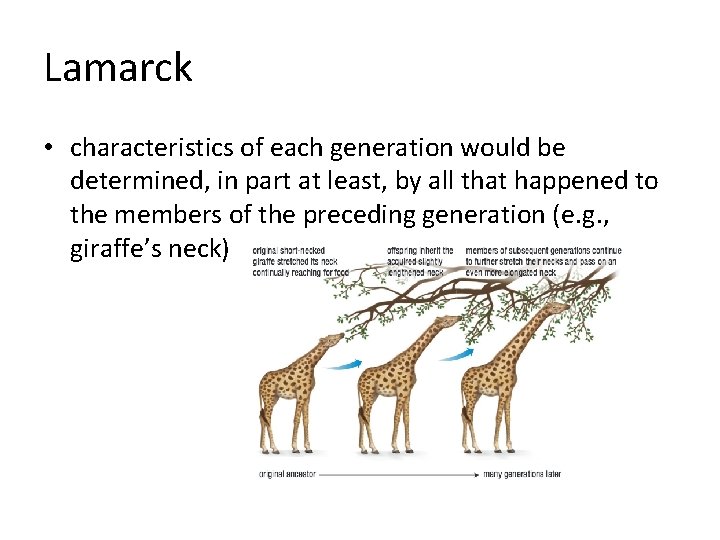
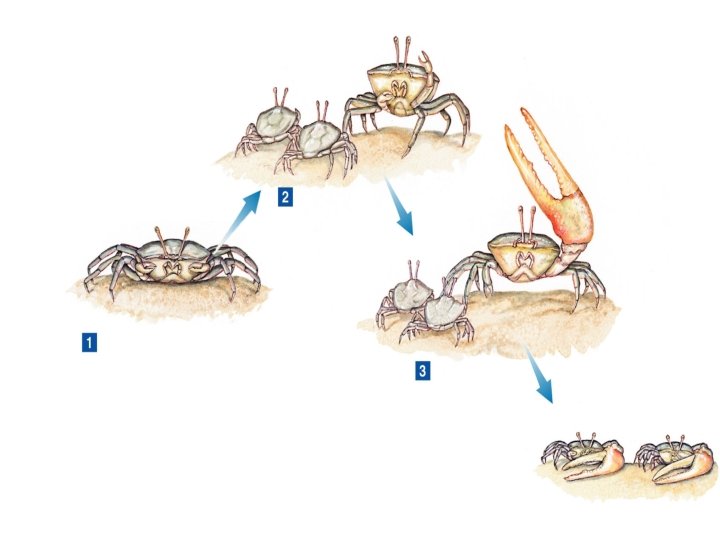
Jean-Baptiste Pierre Antoine de Monet, Chevalier de Lamarck (1744 -1829) • a student of Buffon, he published the idea that structures organisms used most got bigger, and those used less got smaller (e. g. , athletes and astronauts) • also that organisms respond to “felt needs”: he hypothesized that characteristics acquired by an individual during its lifetime are transmitted to their offspring
Lamarck • characteristics of each generation would be determined, in part at least, by all that happened to the members of the preceding generation (e. g. , giraffe’s neck)
Lamarck • Proposed that evolution resulted from two principles 1. Use and Disuse 2. Inheritance of acquired traits • although some of Lamarck’s ideas were flawed he did contribute important ideas which generated much discussion: • all species evolve over time • all species evolve in response to their environment and thus become better adapted to their environment • changes are passed on from generation to generation
The Patterns of Change • People who didn’t think science was correct were finding evidence that was hard to explain • The evidence was in the form of fossils • Definition = ancient remains, impressions, and other traces of organisms that have been preserved in rocks
The Fossils • preserved remains of an organism or its activity • hard body parts more common; e. g. , bones and teeth • more rare impressions of burrows, footprints and chemical remains • even more rare whole bodies (found in tar pits, bogs, permafrozen ground amber) • fossilization is extremely rare think of the number of fossils we have compared to the number of living organisms we have had on Earth! • microfossils, e. g. , pollen and foramifera (a type of protist), are the most abundant
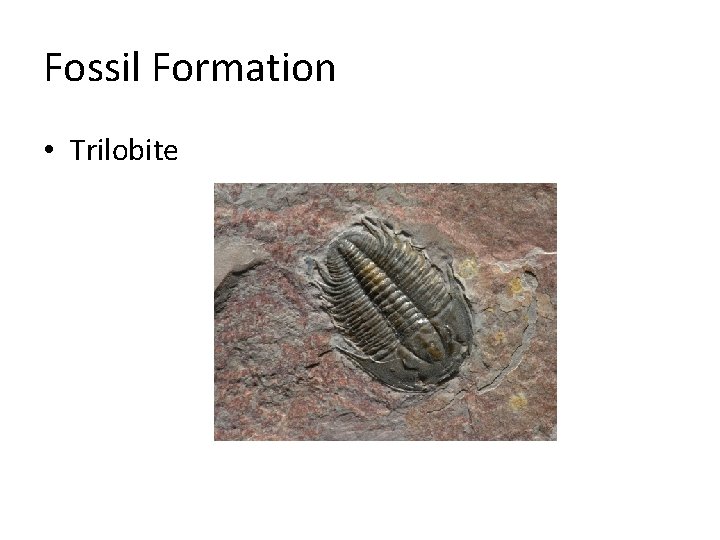
Fossil Formation • Dead organism sinks to bottom of a body of water and is covered in sediment; therefore, due to lack of oxygen, it does not decompose • Sediment accumulates and compresses the body • High pressure causes the sediment to harden and form sedimentary rock • Chemical reactions and pressure change the organism into a mineralized form
Fossil Formation • Trilobite
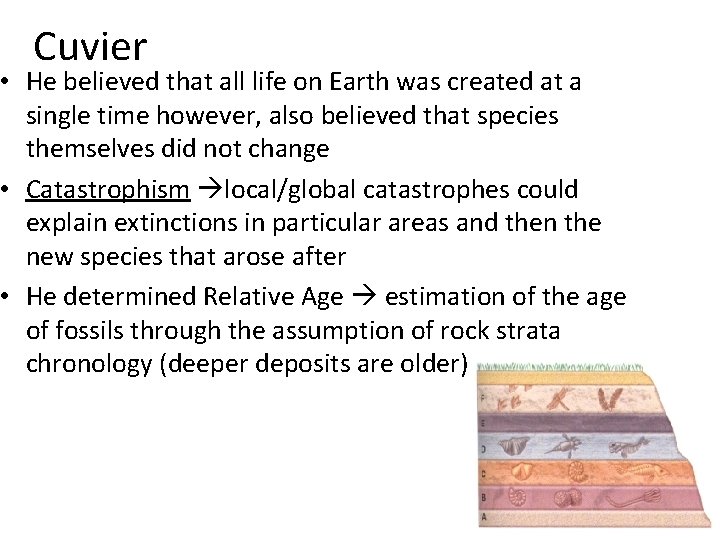
Baron Georges Cuvier (1769 -1832) • • named the study of fossils paleontology he realized that many fossils are of extinct species also realized the strata/fossil relationship he discovered that the most complex organisms are found closer to the top of the strata and that these were more likely to resemble living organisms
Cuvier • He believed that all life on Earth was created at a single time however, also believed that species themselves did not change • Catastrophism local/global catastrophes could explain extinctions in particular areas and then the new species that arose after • He determined Relative Age estimation of the age of fossils through the assumption of rock strata chronology (deeper deposits are older)
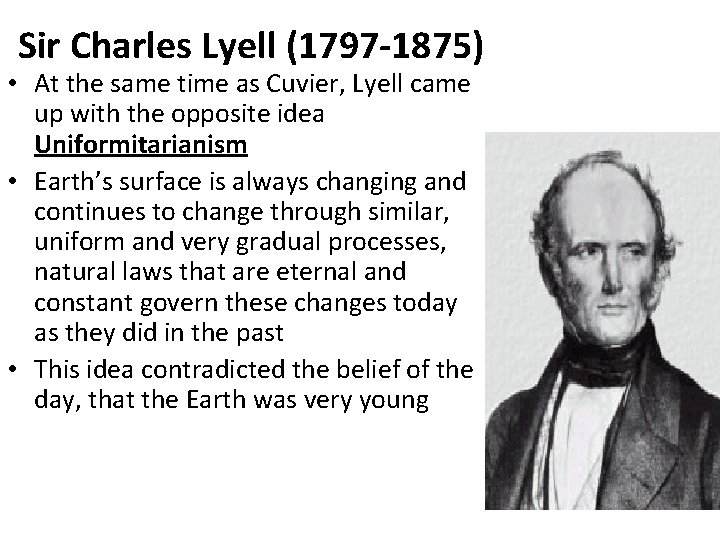
Sir Charles Lyell (1797 -1875) • At the same time as Cuvier, Lyell came up with the opposite idea Uniformitarianism • Earth’s surface is always changing and continues to change through similar, uniform and very gradual processes, natural laws that are eternal and constant govern these changes today as they did in the past • This idea contradicted the belief of the day, that the Earth was very young
Radical Ideas • Cuvier’s and Lyell’s ideas lead to: the Earth is extremely old dramatic change can occur if given enough time
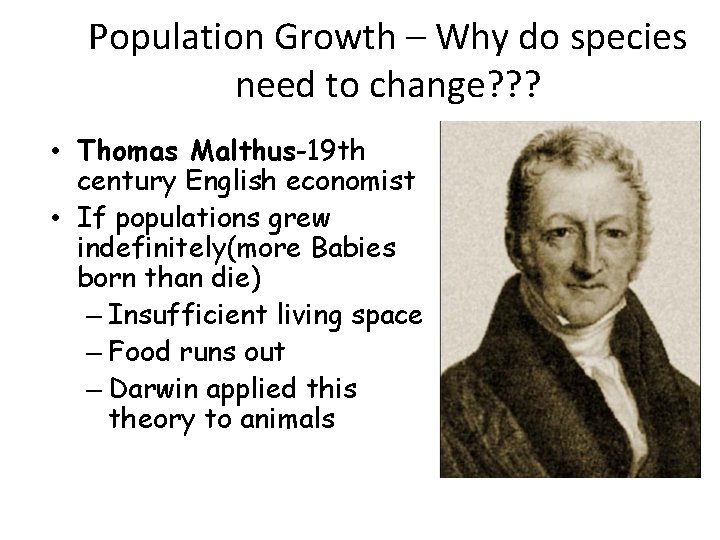
Population Growth – Why do species need to change? ? ? • Thomas Malthus-19 th century English economist • If populations grew indefinitely(more Babies born than die) – Insufficient living space – Food runs out – Darwin applied this theory to animals
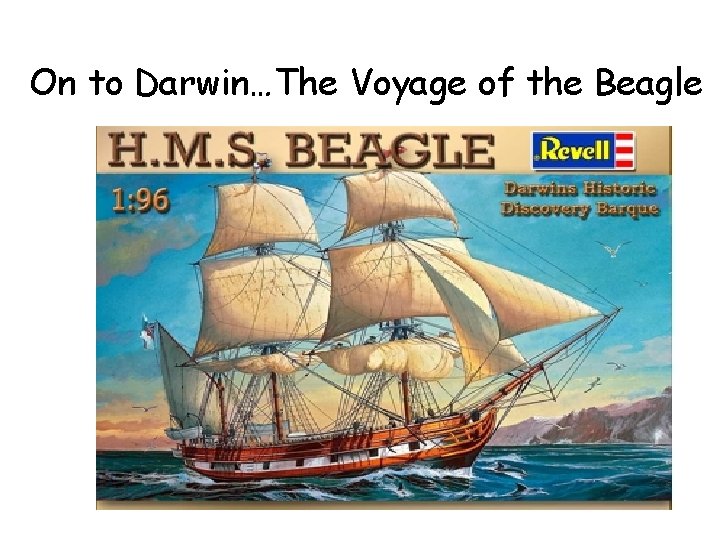
On to Darwin…The Voyage of the Beagle
Your Task • Read pages 288 -293 • Do Questions 1 -10