
The Evolution of Academic Advising in Higher Education
- Slides: 39
The Evolution of Academic Advising in Higher Education October 11, 2017 1
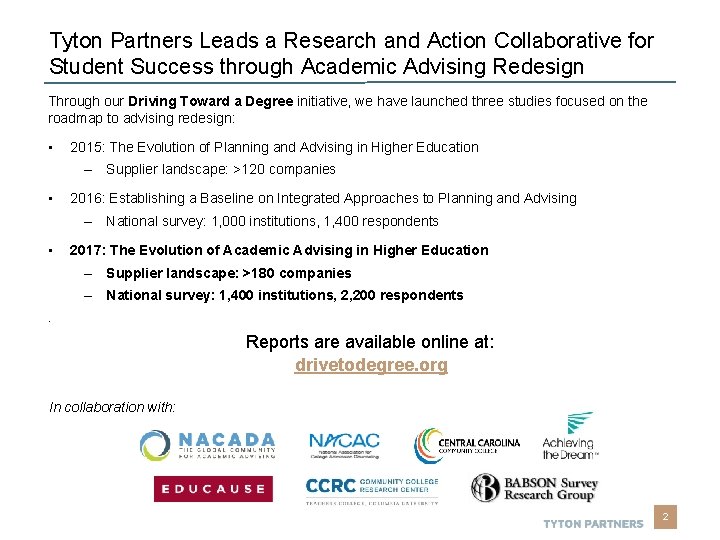
Tyton Partners Leads a Research and Action Collaborative for Student Success through Academic Advising Redesign Through our Driving Toward a Degree initiative, we have launched three studies focused on the roadmap to advising redesign: • 2015: The Evolution of Planning and Advising in Higher Education ‒ Supplier landscape: >120 companies • 2016: Establishing a Baseline on Integrated Approaches to Planning and Advising ‒ National survey: 1, 000 institutions, 1, 400 respondents • 2017: The Evolution of Academic Advising in Higher Education ‒ Supplier landscape: >180 companies ‒ National survey: 1, 400 institutions, 2, 200 respondents. Reports are available online at: drivetodegree. org In collaboration with: 2
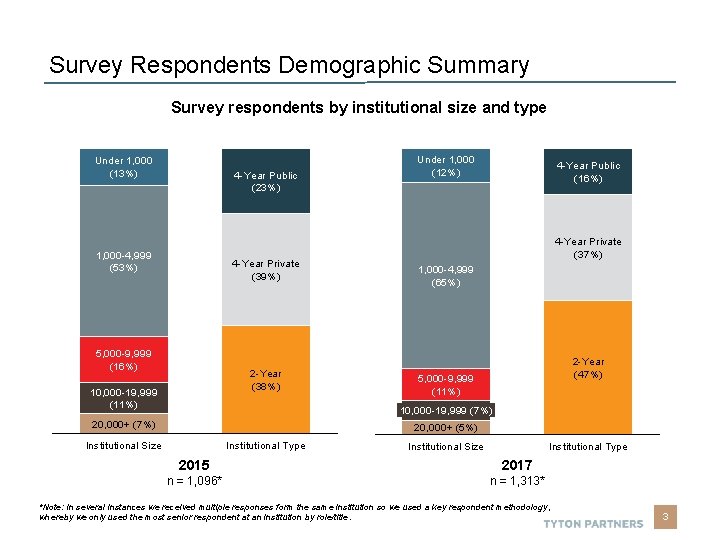
Survey Respondents Demographic Summary Survey respondents by institutional size and type Under 1, 000 (13%) 4 -Year Public (23%) 1, 000 -4, 999 (53%) 4 -Year Private (39%) 5, 000 -9, 999 (16%) 2 -Year (38%) 10, 000 -19, 999 (11%) Under 1, 000 (12%) 4 -Year Public (16%) 4 -Year Private (37%) 1, 000 -4, 999 (65%) 2 -Year (47%) 5, 000 -9, 999 (11%) 10, 000 -19, 999 (7%) 20, 000+ (5%) Institutional Size Institutional Type 2015 2017 n = 1, 096* n = 1, 313* *Note: In several instances we received multiple responses form the same institution so we used a key respondent methodology, whereby we only used the most senior respondent at an institution by role/title. 3
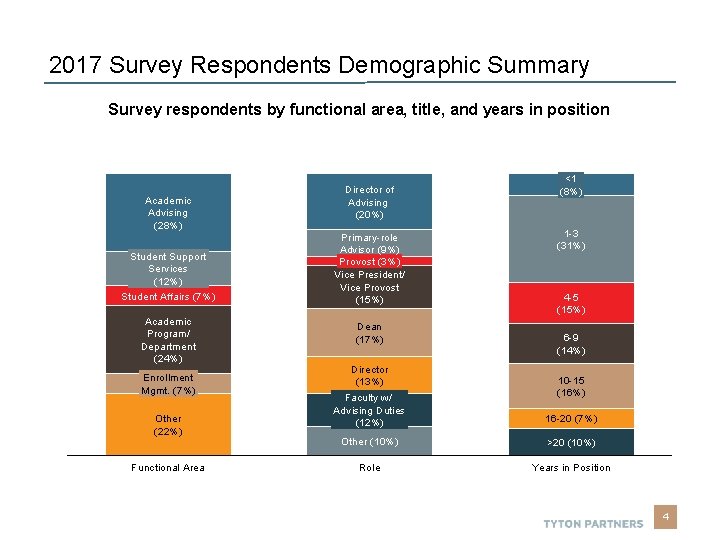
2017 Survey Respondents Demographic Summary Survey respondents by functional area, title, and years in position Academic Advising (28%) Student Support Services (12%) Student Affairs (7%) Academic Program/ Department (24%) Enrollment Mgmt. (7%) Other (22%) Functional Area Director of Advising (20%) Primary-role Advisor (9%) Provost (3%) Vice President/ Vice Provost (15%) Dean (17%) Director (13%) <1 (8%) 1 -3 (31%) 4 -5 (15%) 6 -9 (14%) 10 -15 (16%) Faculty w/ Advising Duties (12%) 16 -20 (7%) Other (10%) >20 (10%) Role Years in Position 4
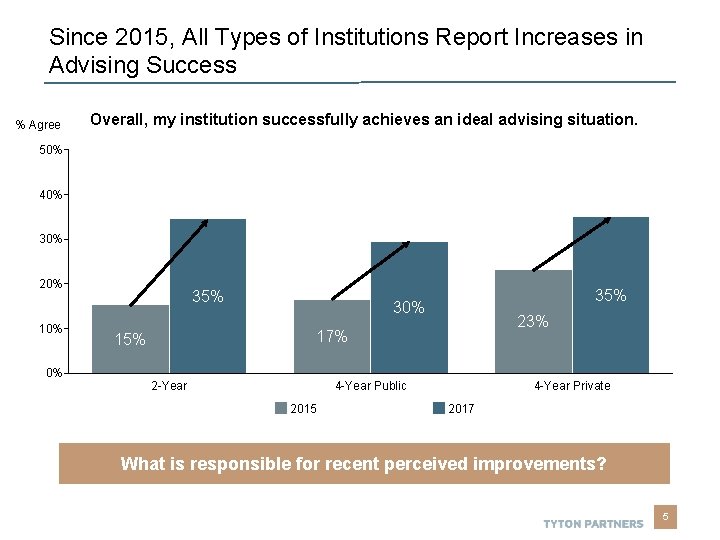
Since 2015, All Types of Institutions Report Increases in Advising Success % Agree Overall, my institution successfully achieves an ideal advising situation. 50% 40% 30% 20% 10% 0% 35% 30% 23% 17% 15% 2 -Year 4 -Year Public 2015 4 -Year Private 2017 What is responsible for recent perceived improvements? 5
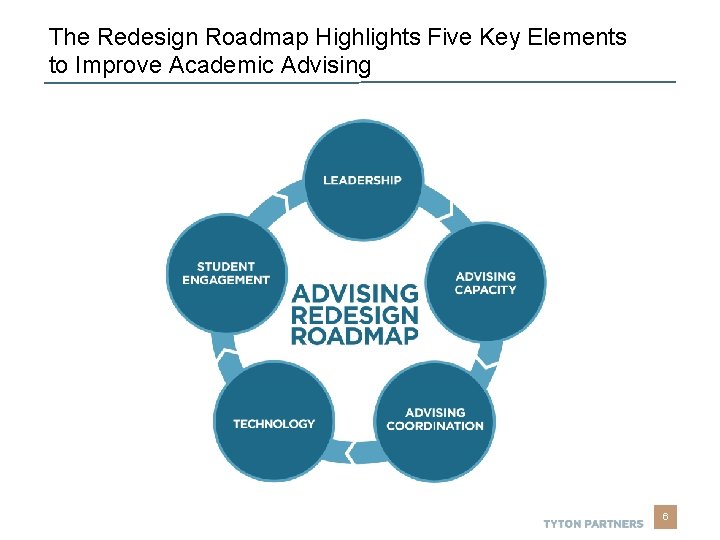
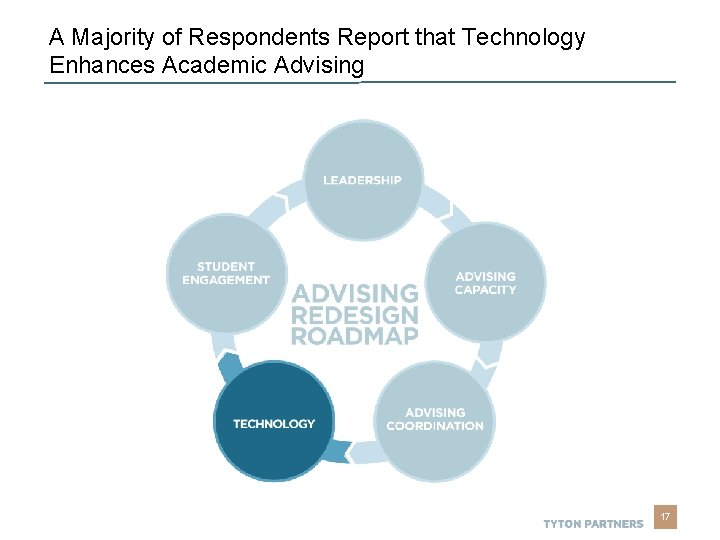
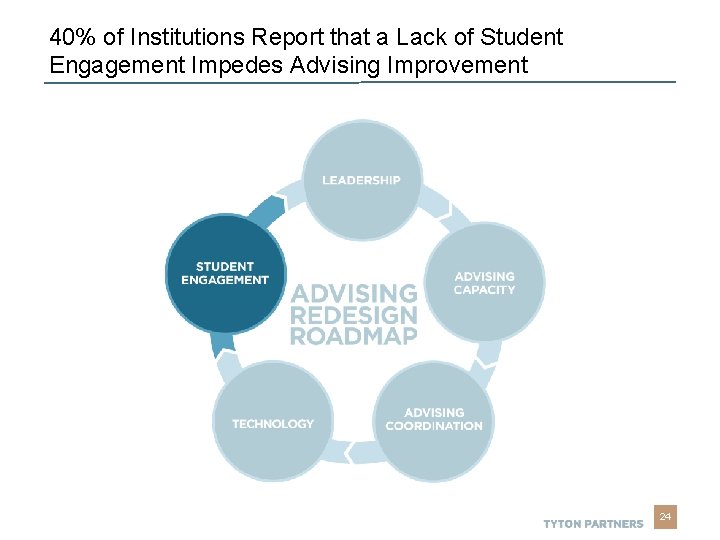
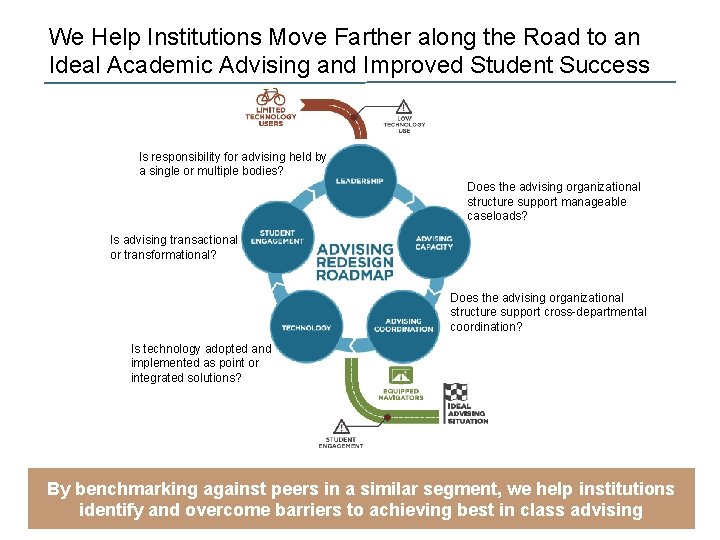
Thought Leadership The Redesign Roadmap Highlights Five Key Elements to Improve Academic Advising 6
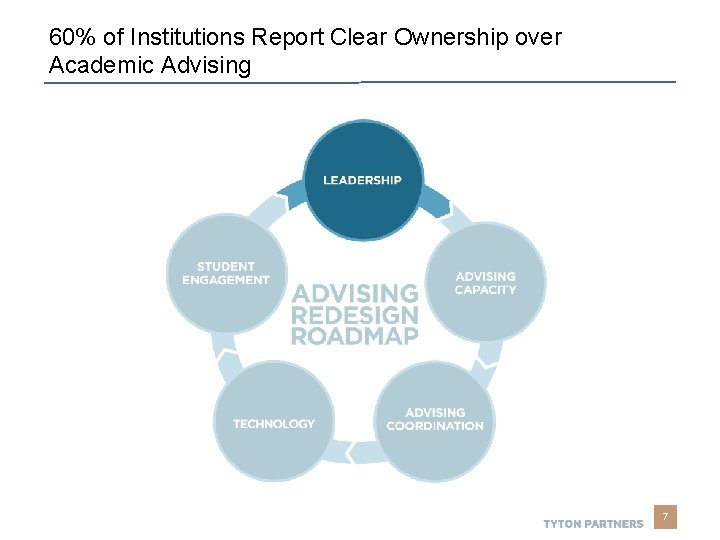
Thought Leadership 60% of Institutions Report Clear Ownership over Academic Advising 7
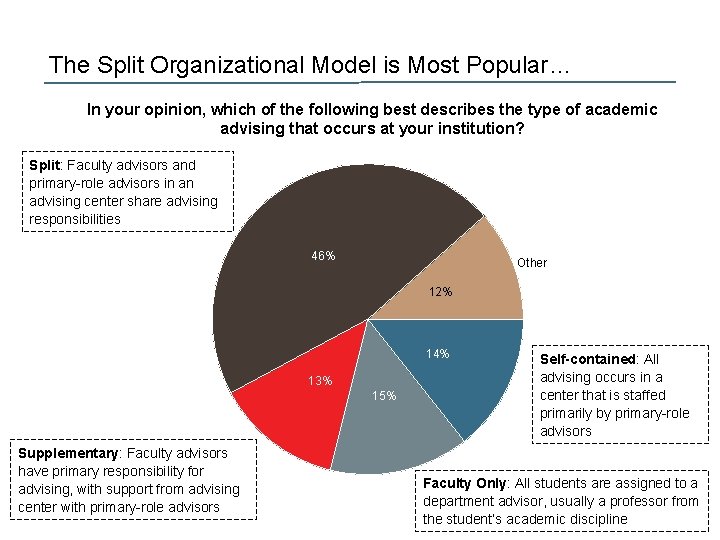
The Split Organizational Model is Most Popular… In your opinion, which of the following best describes the type of academic advising that occurs at your institution? Split: Faculty advisors and primary-role advisors in an advising center share advising responsibilities 46% Other 12% 14% 13% 15% Supplementary: Faculty advisors have primary responsibility for advising, with support from advising center with primary-role advisors Self-contained: All advising occurs in a center that is staffed primarily by primary-role advisors Faculty Only: All students are assigned to a department advisor, usually a professor from 8 the student’s academic discipline
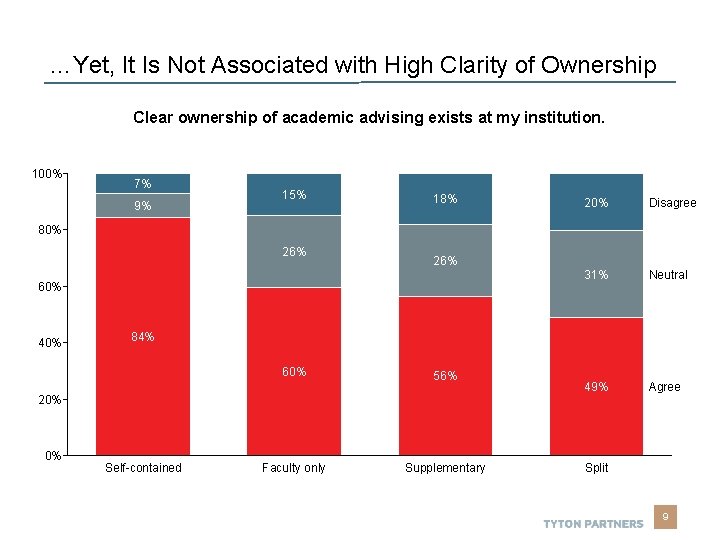
…Yet, It Is Not Associated with High Clarity of Ownership Clear ownership of academic advising exists at my institution. 100% 7% 9% 15% 18% 20% Disagree 31% Neutral 49% Agree 80% 26% 60% 40% 84% 60% 56% 20% 0% Self-contained Faculty only Supplementary Split 9
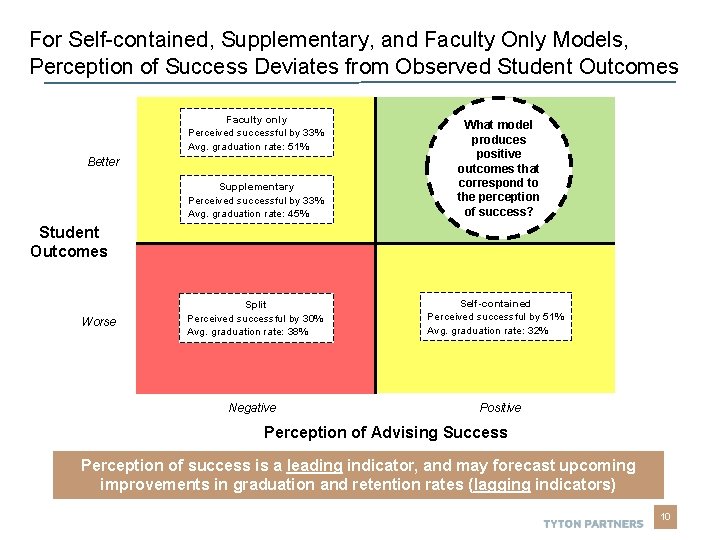
For Self-contained, Supplementary, and Faculty Only Models, Perception of Success Deviates from Observed Student Outcomes Faculty only Perceived successful by 33% Avg. graduation rate: 51% Better Supplementary Perceived successful by 33% Avg. graduation rate: 45% What model produces positive outcomes that correspond to the perception of success? Student Outcomes Worse Split Perceived successful by 30% Avg. graduation rate: 38% Negative Self-contained Perceived successful by 51% Avg. graduation rate: 32% Positive Perception of Advising Success Perception of success is a leading indicator, and may forecast upcoming improvements in graduation and retention rates (lagging indicators) 10
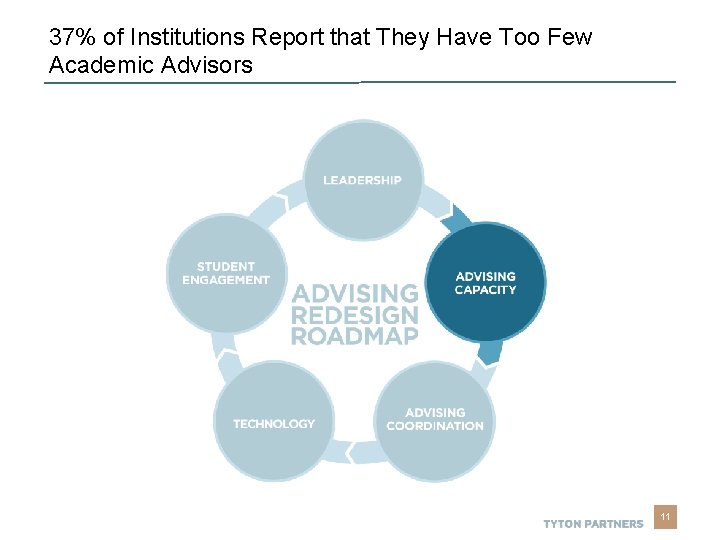
Thought Leadership 37% of Institutions Report that They Have Too Few Academic Advisors 11
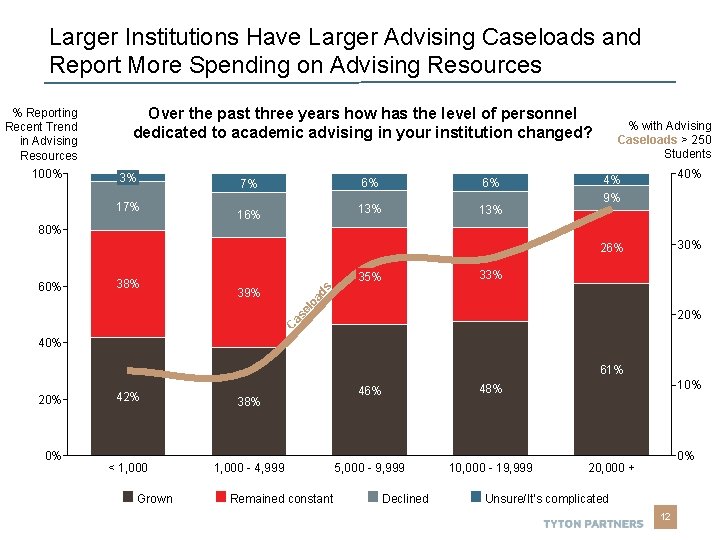
Larger Institutions Have Larger Advising Caseloads and Report More Spending on Advising Resources % Reporting Recent Trend in Advising Resources 100% Over the past three years how has the level of personnel dedicated to academic advising in your institution changed? 3% 17% 7% 6% 6% 13% 13% % with Advising Caseloads > 250 Students 40% 4% 9% 80% 30% 26% 33% 35% ds 39% oa 38% se l 60% Ca 20% 40% 61% 20% 0% 42% < 1, 000 Grown 38% 1, 000 - 4, 999 Remained constant 10% 48% 46% 5, 000 - 9, 999 Declined 10, 000 - 19, 999 0% 20, 000 + Unsure/It's complicated 12
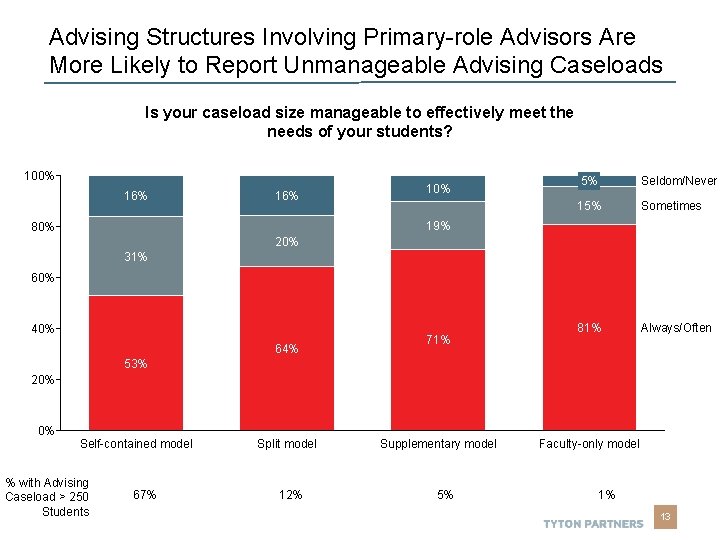
Advising Structures Involving Primary-role Advisors Are More Likely to Report Unmanageable Advising Caseloads Is your caseload size manageable to effectively meet the needs of your students? 100% 16% 10% 5% Seldom/Never 15% Sometimes 81% Always/Often 19% 80% 20% 31% 60% 40% 64% 71% 53% 20% 0% Self-contained model % with Advising Caseload > 250 Students 67% Split model 12% Supplementary model 5% Faculty-only model 1% 13
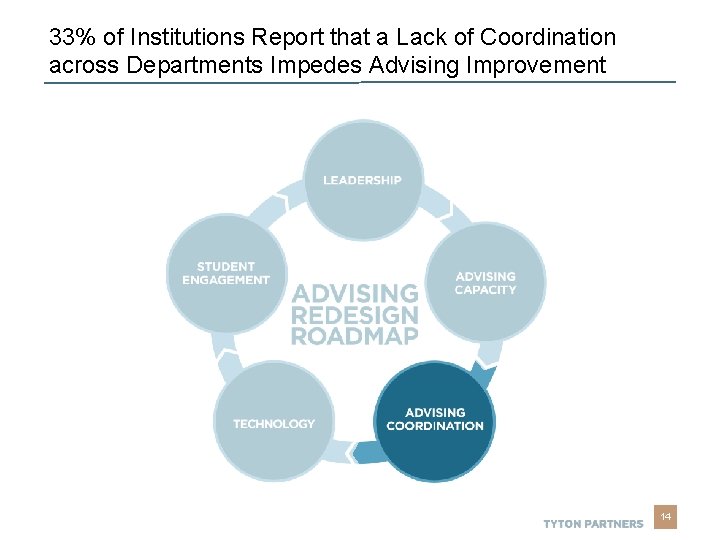
Thought Leadership 33% of Institutions Report that a Lack of Coordination across Departments Impedes Advising Improvement 14
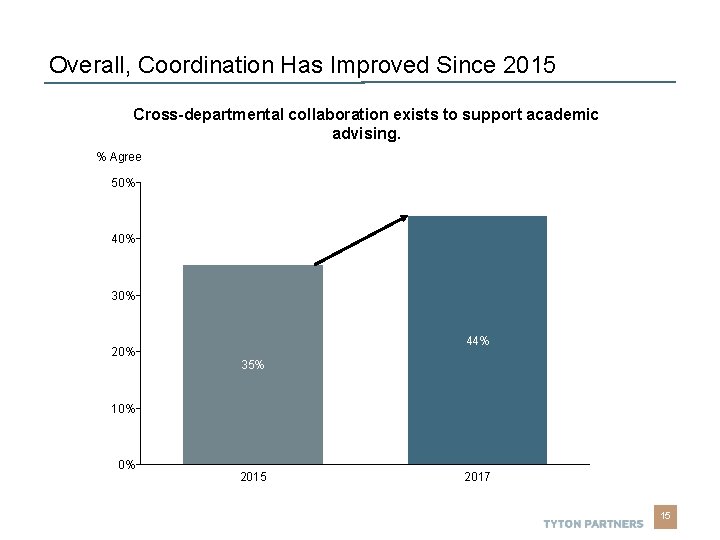
Overall, Coordination Has Improved Since 2015 Cross-departmental collaboration exists to support academic advising. % Agree 50% 40% 30% 20% 44% 35% 10% 0% 2015 2017 15
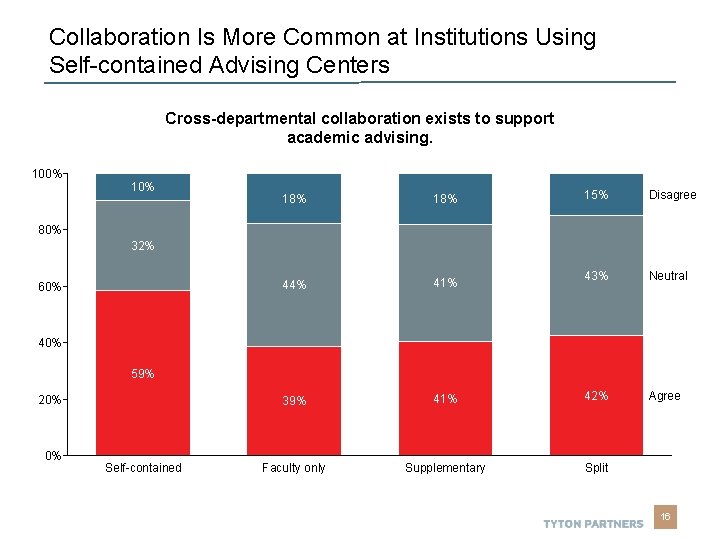
Collaboration Is More Common at Institutions Using Self-contained Advising Centers Cross-departmental collaboration exists to support academic advising. 100% 15% Disagree 43% Neutral 41% 42% Agree Supplementary Split 18% 44% 41% 39% Faculty only 80% 32% 60% 40% 59% 20% 0% Self-contained 16
Thought Leadership A Majority of Respondents Report that Technology Enhances Academic Advising 17
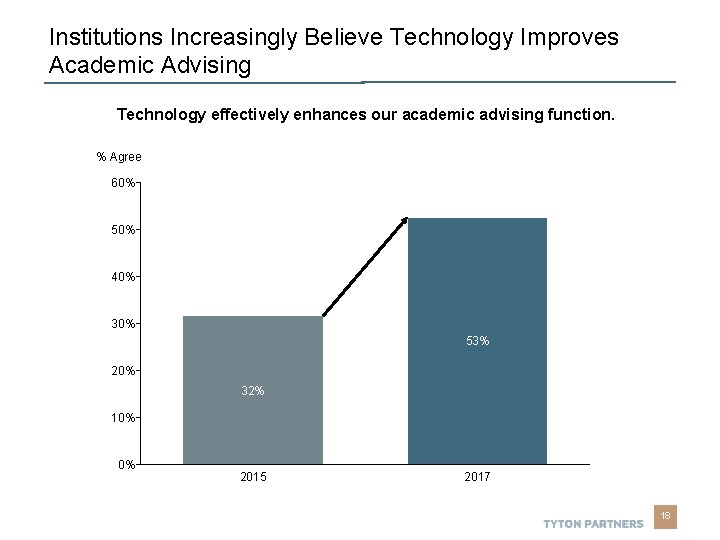
Institutions Increasingly Believe Technology Improves Academic Advising Technology effectively enhances our academic advising function. % Agree 60% 50% 40% 30% 53% 20% 32% 10% 0% 2015 2017 18
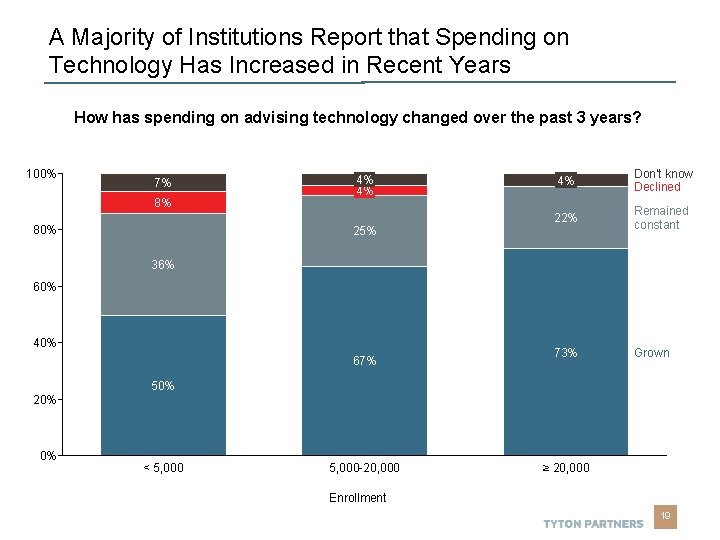
A Majority of Institutions Report that Spending on Technology Has Increased in Recent Years How has spending on advising technology changed over the past 3 years? 100% 7% 8% 80% 4% 4% 25% 4% Don't know Declined 22% Remained constant 73% Grown 36% 60% 40% 67% 50% 20% 0% < 5, 000 -20, 000 ≥ 20, 000 Enrollment 19
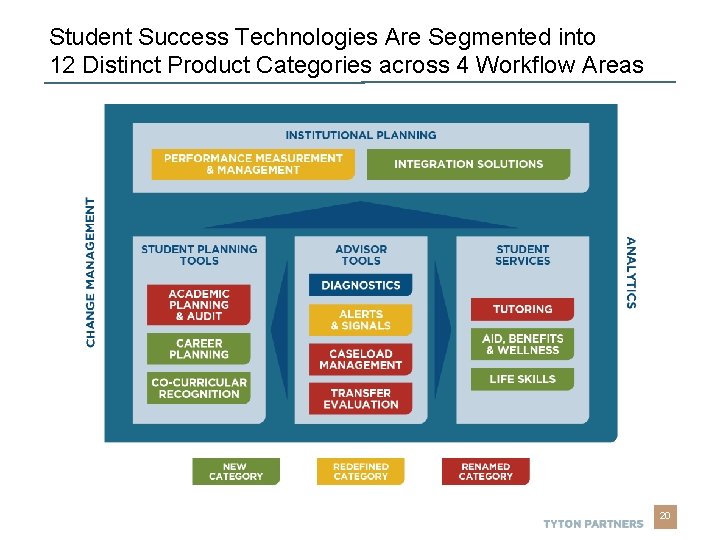
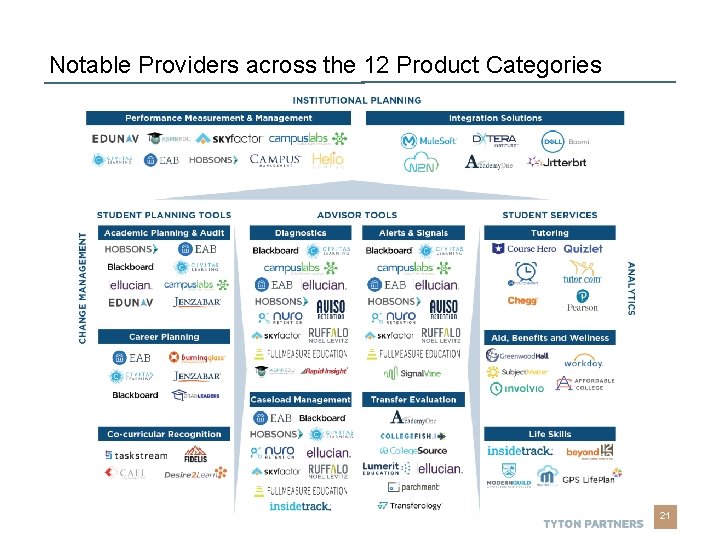
Student Success Technologies Are Segmented into 12 Distinct Product Categories across 4 Workflow Areas 20
Notable Providers across the 12 Product Categories 21
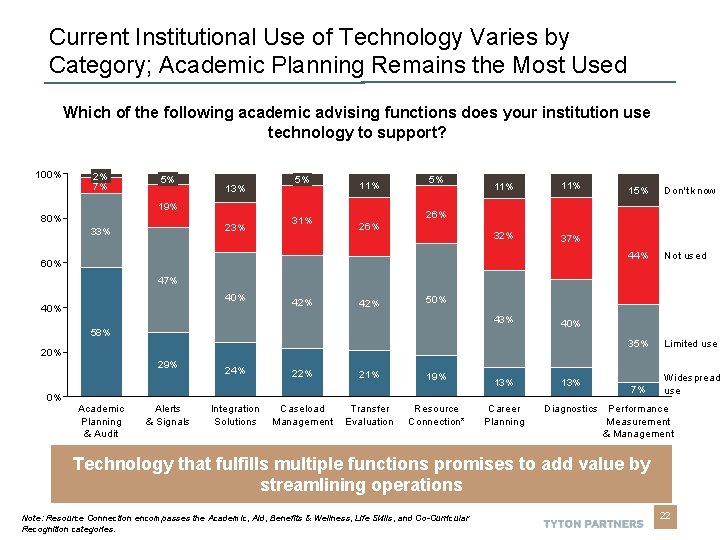
Current Institutional Use of Technology Varies by Category; Academic Planning Remains the Most Used Which of the following academic advising functions does your institution use technology to support? 100% 2% 7% 5% 13% 5% 11% 19% 80% 23% 31% 5% 11% 32% 37% 15% Don't know 44% Not used 35% Limited use 7% Widespread use 26% 60% 47% 40% 42% 50% 43% 58% 40% 29% 0% Academic Planning & Audit Alerts & Signals 24% Integration Solutions 22% Caseload Management 21% Transfer Evaluation 19% Resource Connection* 13% Career Planning 13% Diagnostics Performance Measurement & Management Technology that fulfills multiple functions promises to add value by streamlining operations Note: Resource Connection encompasses the Academic, Aid, Benefits & Wellness, Life Skills, and Co-Curricular Recognition categories. 22
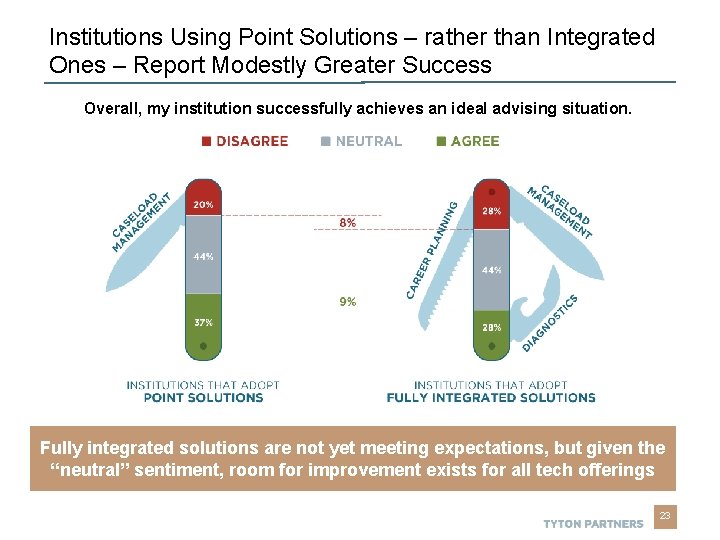
Institutions Using Point Solutions – rather than Integrated Ones – Report Modestly Greater Success Overall, my institution successfully achieves an ideal advising situation. Fully integrated solutions are not yet meeting expectations, but given the “neutral” sentiment, room for improvement exists for all tech offerings 23
Thought Leadership 40% of Institutions Report that a Lack of Student Engagement Impedes Advising Improvement 24
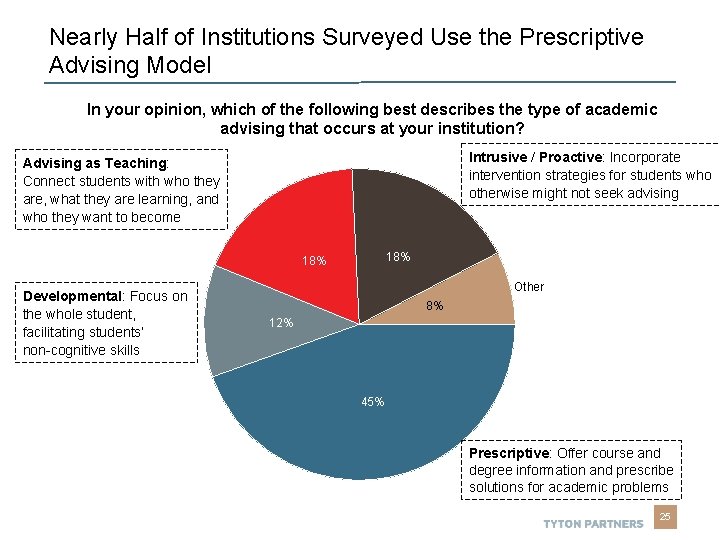
Nearly Half of Institutions Surveyed Use the Prescriptive Advising Model In your opinion, which of the following best describes the type of academic advising that occurs at your institution? Intrusive / Proactive: Incorporate intervention strategies for students who otherwise might not seek advising Advising as Teaching: Connect students with who they are, what they are learning, and who they want to become 18% Developmental: Focus on the whole student, facilitating students’ non-cognitive skills Other 8% 12% 45% Prescriptive: Offer course and degree information and prescribe solutions for academic problems 25
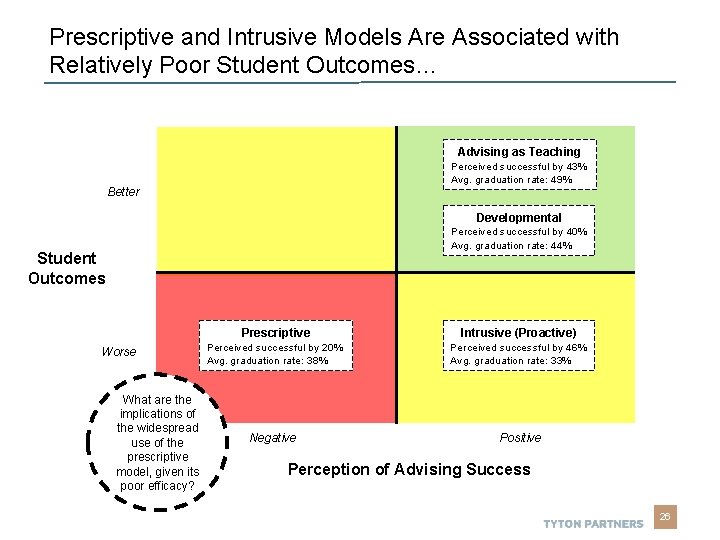
Prescriptive and Intrusive Models Are Associated with Relatively Poor Student Outcomes… Advising as Teaching Perceived successful by 43% Avg. graduation rate: 49% Better Developmental Perceived successful by 40% Avg. graduation rate: 44% Student Outcomes Worse What are the implications of the widespread use of the prescriptive model, given its poor efficacy? Prescriptive Intrusive (Proactive) Perceived successful by 20% Avg. graduation rate: 38% Perceived successful by 46% Avg. graduation rate: 33% Negative Positive Perception of Advising Success 26
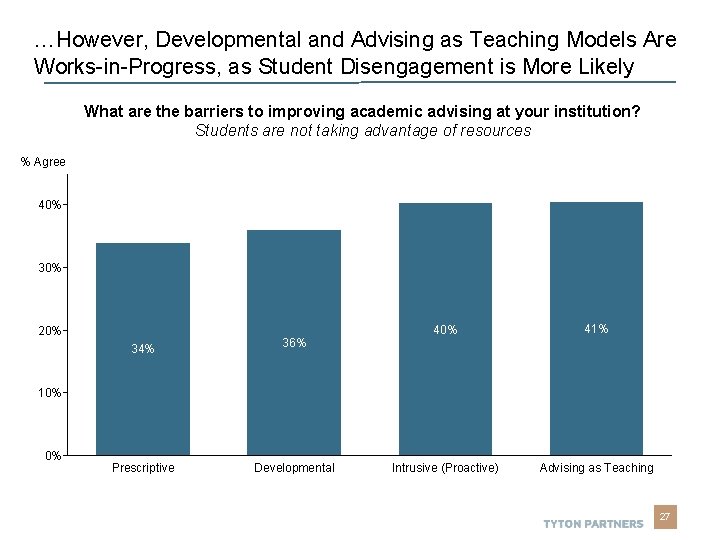
…However, Developmental and Advising as Teaching Models Are Works-in-Progress, as Student Disengagement is More Likely What are the barriers to improving academic advising at your institution? Students are not taking advantage of resources % Agree 40% 30% 20% 34% 40% 41% Intrusive (Proactive) Advising as Teaching 36% 10% 0% Prescriptive Developmental 27
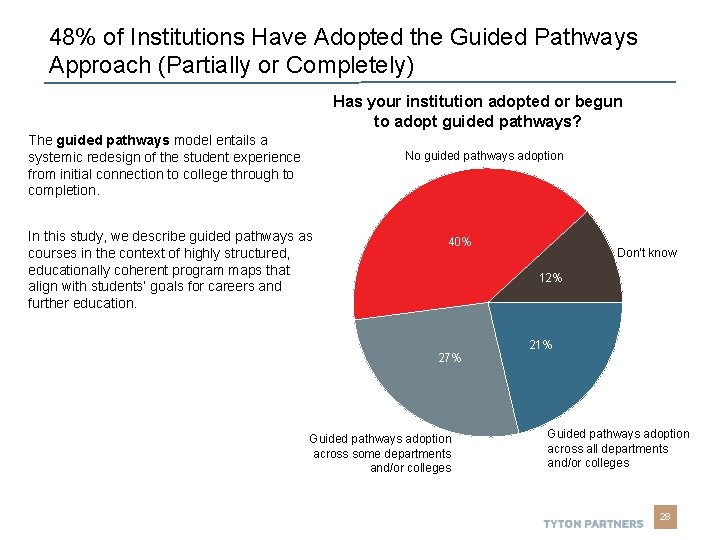
48% of Institutions Have Adopted the Guided Pathways Approach (Partially or Completely) Has your institution adopted or begun to adopt guided pathways? The guided pathways model entails a systemic redesign of the student experience from initial connection to college through to completion. No guided pathways adoption In this study, we describe guided pathways as courses in the context of highly structured, educationally coherent program maps that align with students’ goals for careers and further education. 40% Don't know 12% 21% 27% Guided pathways adoption across some departments and/or colleges Guided pathways adoption across all departments and/or colleges 28
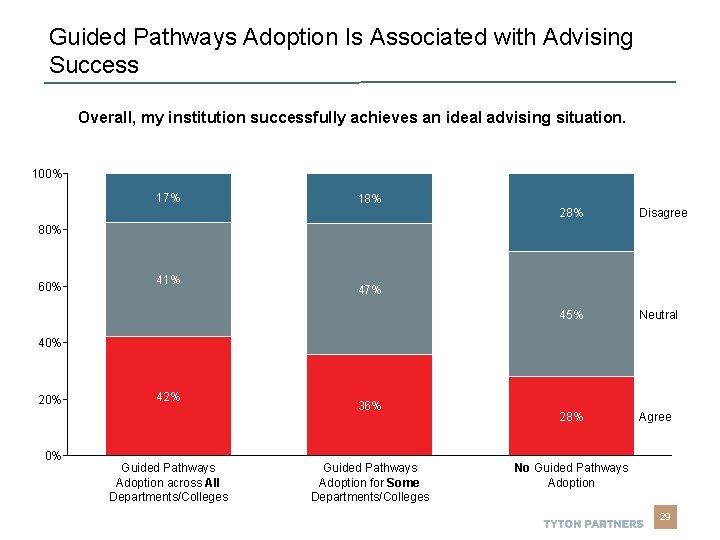
Guided Pathways Adoption Is Associated with Advising Success Overall, my institution successfully achieves an ideal advising situation. 100% 17% 18% 28% Disagree 45% Neutral 28% Agree 80% 60% 41% 47% 40% 20% 0% 42% Guided Pathways Adoption across All Departments/Colleges 36% Guided Pathways Adoption for Some Departments/Colleges No Guided Pathways Adoption 29
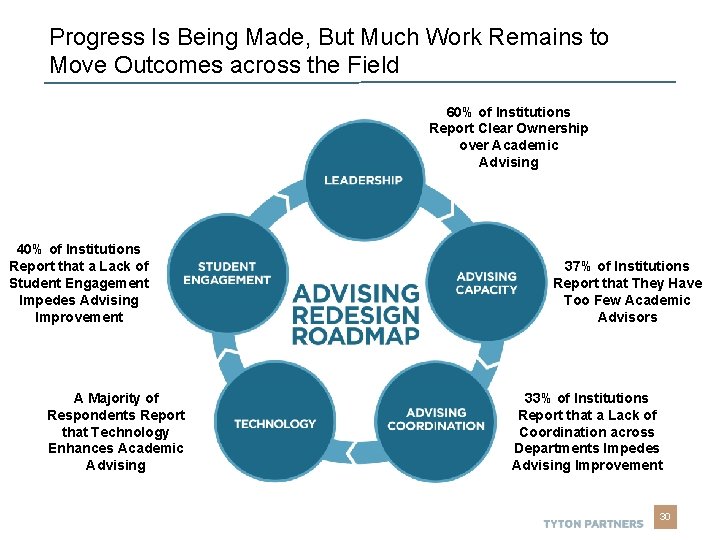
Thought Leadership Progress Is Being Made, But Much Work Remains to Move Outcomes across the Field 60% of Institutions Report Clear Ownership over Academic Advising 40% of Institutions Report that a Lack of Student Engagement Impedes Advising Improvement A Majority of Respondents Report that Technology Enhances Academic Advising 37% of Institutions Report that They Have Too Few Academic Advisors 33% of Institutions Report that a Lack of Coordination across Departments Impedes Advising Improvement 30
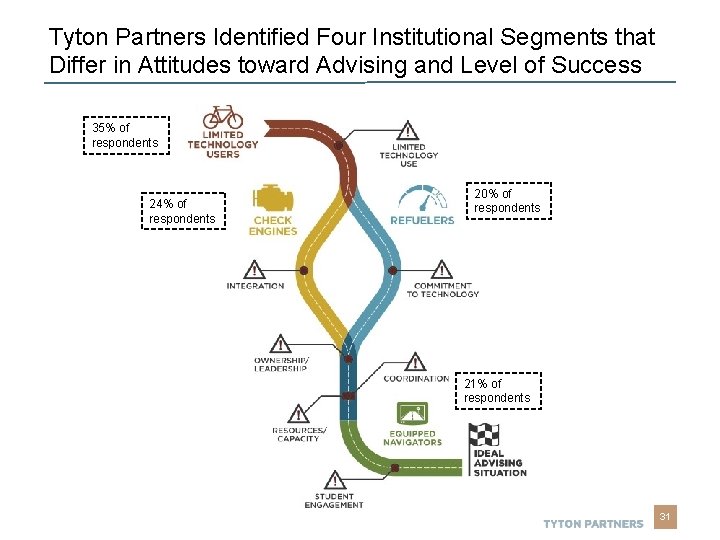
Tyton Partners Identified Four Institutional Segments that Differ in Attitudes toward Advising and Level of Success 35% of respondents 24% of respondents 20% of respondents 21% of respondents 31
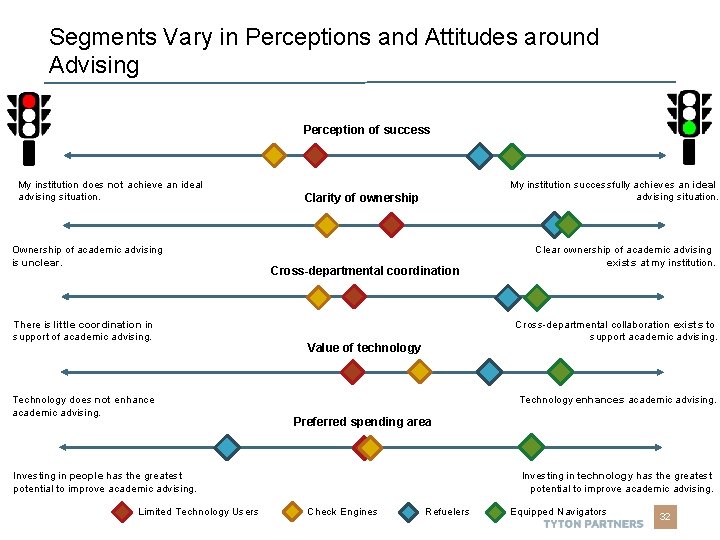
Segments Vary in Perceptions and Attitudes around Advising Perception of success My institution does not achieve an ideal advising situation. Ownership of academic advising is unclear. There is little coordination in support of academic advising. Technology does not enhance academic advising. My institution successfully achieves an ideal advising situation. Clarity of ownership Cross-departmental coordination Cross-departmental collaboration exists to support academic advising. Value of technology Technology enhances academic advising. Preferred spending area Investing in people has the greatest potential to improve academic advising. Limited Technology Users Clear ownership of academic advising exists at my institution. Investing in technology has the greatest potential to improve academic advising. Check Engines Refuelers Equipped Navigators 32
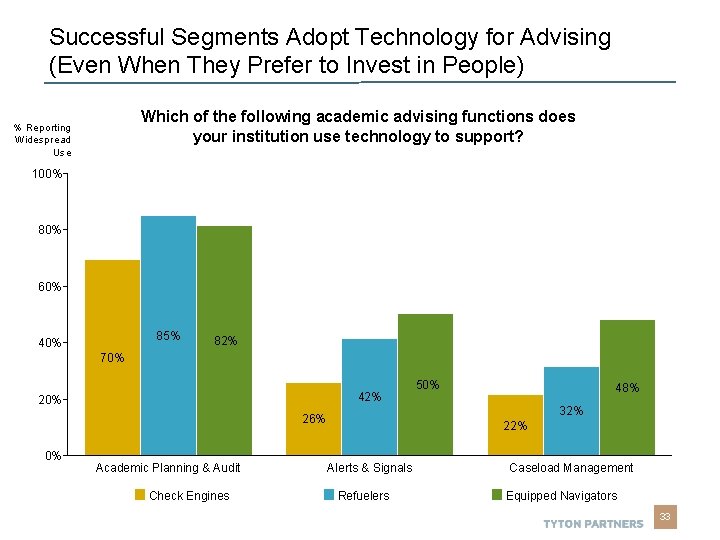
Successful Segments Adopt Technology for Advising (Even When They Prefer to Invest in People) Which of the following academic advising functions does your institution use technology to support? % Reporting Widespread Use 100% 80% 60% 85% 40% 82% 70% 42% 20% Academic Planning & Audit Check Engines 48% 32% 26% 0% 50% 22% Alerts & Signals Refuelers Caseload Management Equipped Navigators 33
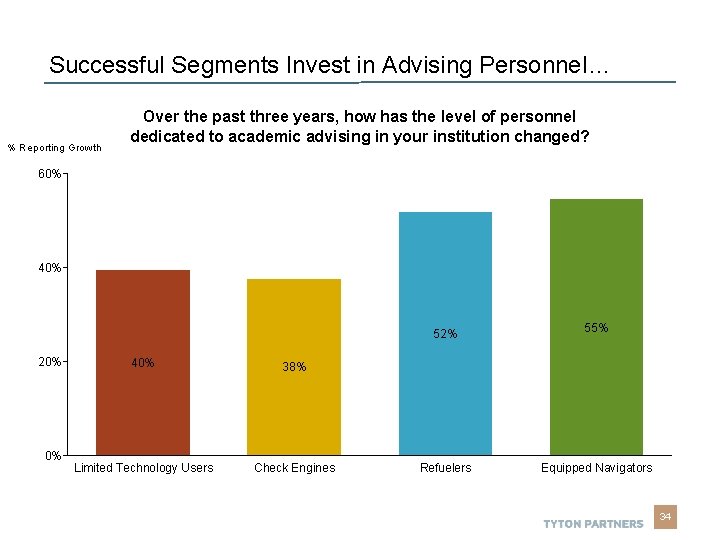
Successful Segments Invest in Advising Personnel… % Reporting Growth Over the past three years, how has the level of personnel dedicated to academic advising in your institution changed? 60% 40% 52% 20% 0% 40% 38% Limited Technology Users Check Engines Refuelers 55% Equipped Navigators 34
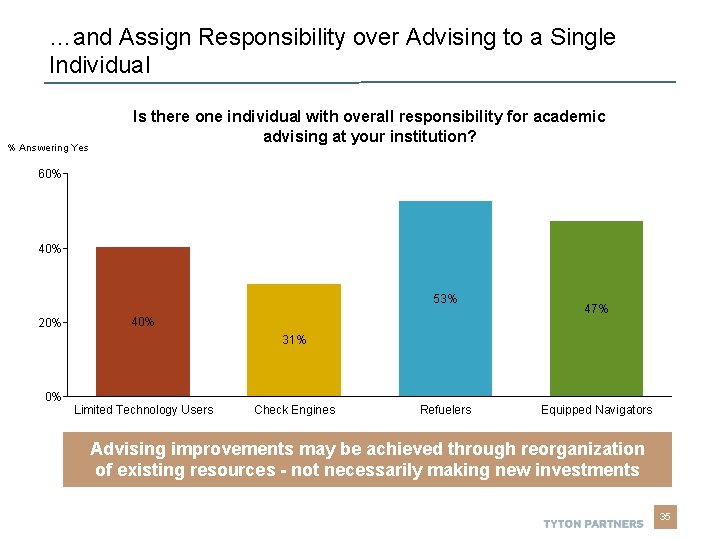
…and Assign Responsibility over Advising to a Single Individual % Answering Yes Is there one individual with overall responsibility for academic advising at your institution? 60% 40% 53% 20% 47% 31% 0% Limited Technology Users Check Engines Refuelers Equipped Navigators Advising improvements may be achieved through reorganization of existing resources - not necessarily making new investments 35
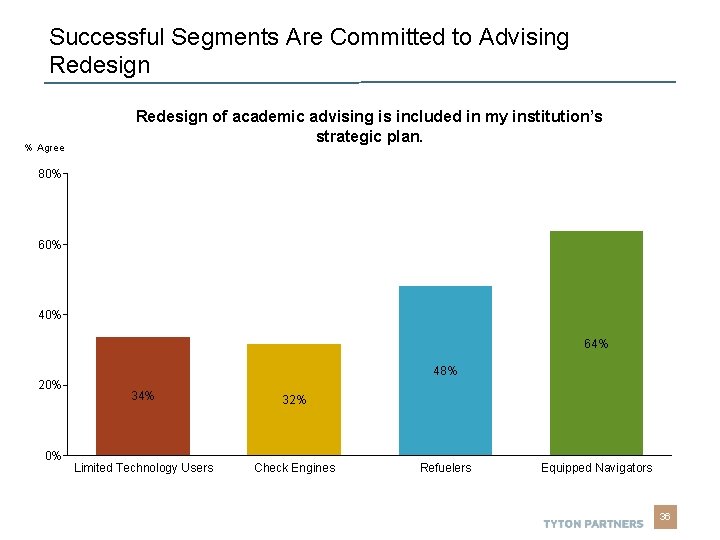
Successful Segments Are Committed to Advising Redesign % Agree Redesign of academic advising is included in my institution’s strategic plan. 80% 60% 40% 64% 48% 20% 0% 34% 32% Limited Technology Users Check Engines Refuelers Equipped Navigators 36
We Help Institutions Move Farther along the Road to an Ideal Academic Advising and Improved Student Success Is responsibility for advising held by a single or multiple bodies? Does the advising organizational structure support manageable caseloads? Is advising transactional or transformational? Does the advising organizational structure support cross-departmental coordination? Is technology adopted and implemented as point or integrated solutions? By benchmarking against peers in a similar segment, we help institutions identify and overcome barriers to achieving best in class advising 37
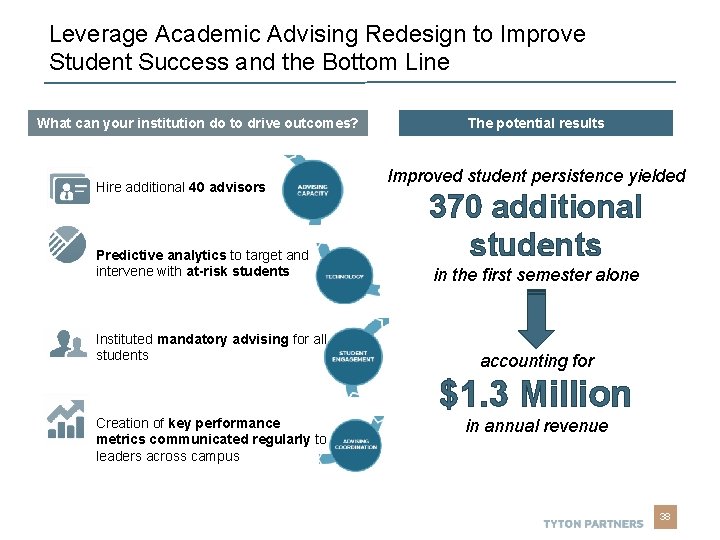
Leverage Academic Advising Redesign to Improve Student Success and the Bottom Line What can your institution do to drive outcomes? ü Hire additional 40 advisors ü Predictive analytics to target and intervene with at-risk students ü Instituted mandatory advising for all students The potential results Improved student persistence yielded 370 additional students in the first semester alone accounting for $1. 3 Million ü Creation of key performance metrics communicated regularly to leaders across campus in annual revenue 38
Brand Exposure Want to Learn More? • Start a conversation about how advising redesign might look on your campus: - Gates Bryant (gbryant@tytonpartners. com) - Nicholas Java (njava@tytonpartners. com) • Download our 2017 Driving Toward a Degree reports, including the data presented here, at drivetodegree. org - While you’re there, use our self-assessment to determine where your institution is on the road to advising success. • Sign up for our monthly “snapshot” at tytonpartners. com • Follow us on @tytonpartners • Upcoming events: Tyton Partners will be presenting in Philadelphia, PA, for the 2017 EDUCAUSE Annual Conference, October 31 st to November 3 rd 39