
The evolution development of Unani Medicine Education Practice

- Slides: 37
The evolution development of Unani Medicine: Education, Practice, Research, Future Development and Challenges Prof. Rais-ur-Rahman Advisor (Unani) Ministry of AYUSH Govt. of India
Tibb is the knowledge of the states of human body in health and decline in health. Its purpose is to preserve health and endeavour to restore it whenever lost. (Avicenna)
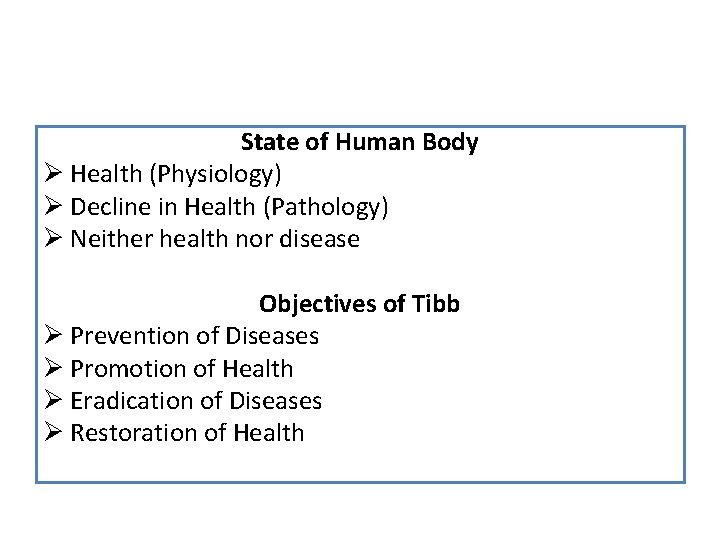
State of Human Body Ø Health (Physiology) Ø Decline in Health (Pathology) Ø Neither health nor disease Objectives of Tibb Ø Prevention of Diseases Ø Promotion of Health Ø Eradication of Diseases Ø Restoration of Health
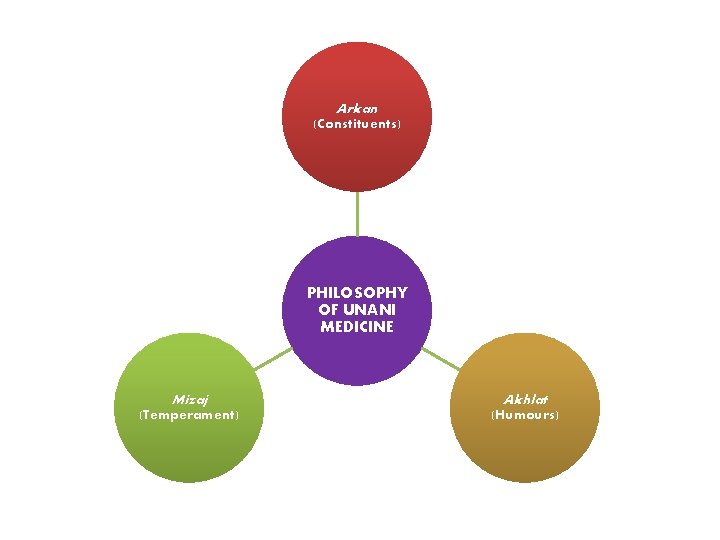
Arkan (Constituents) PHILOSOPHY OF UNANI MEDICINE Mizaj Akhlat (Temperament) (Humours)
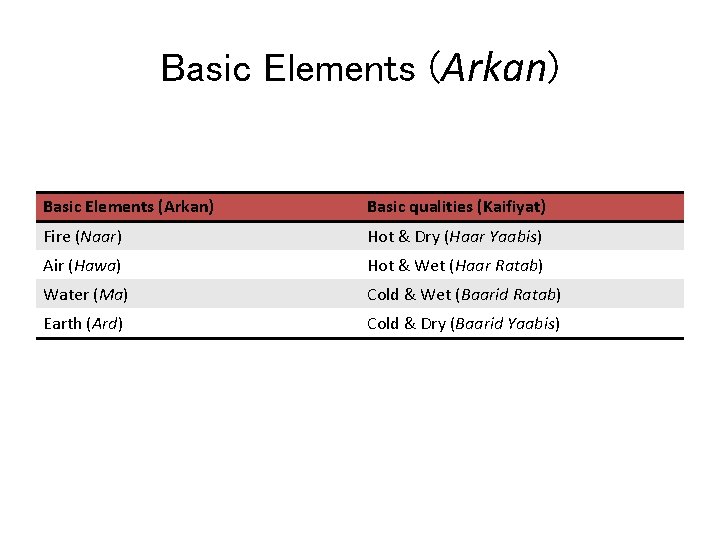
Basic Elements (Arkan) Basic qualities (Kaifiyat) Fire (Naar) Hot & Dry (Haar Yaabis) Air (Hawa) Hot & Wet (Haar Ratab) Water (Ma) Cold & Wet (Baarid Ratab) Earth (Ard) Cold & Dry (Baarid Yaabis)
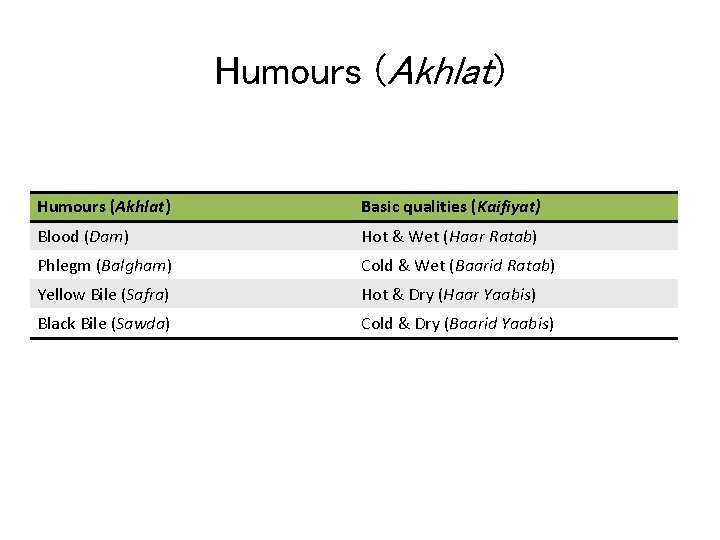
Humours (Akhlat) Basic qualities (Kaifiyat) Blood (Dam) Hot & Wet (Haar Ratab) Phlegm (Balgham) Cold & Wet (Baarid Ratab) Yellow Bile (Safra) Hot & Dry (Haar Yaabis) Black Bile (Sawda) Cold & Dry (Baarid Yaabis)
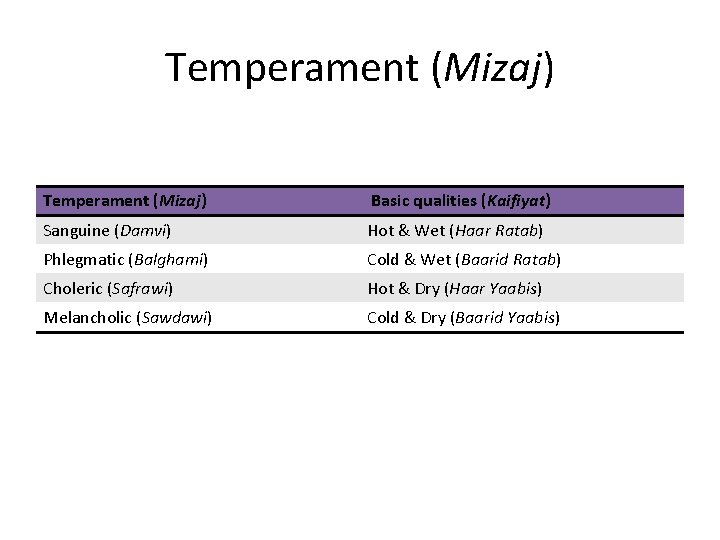
Temperament (Mizaj) Basic qualities (Kaifiyat) Sanguine (Damvi) Hot & Wet (Haar Ratab) Phlegmatic (Balghami) Cold & Wet (Baarid Ratab) Choleric (Safrawi) Hot & Dry (Haar Yaabis) Melancholic (Sawdawi) Cold & Dry (Baarid Yaabis)
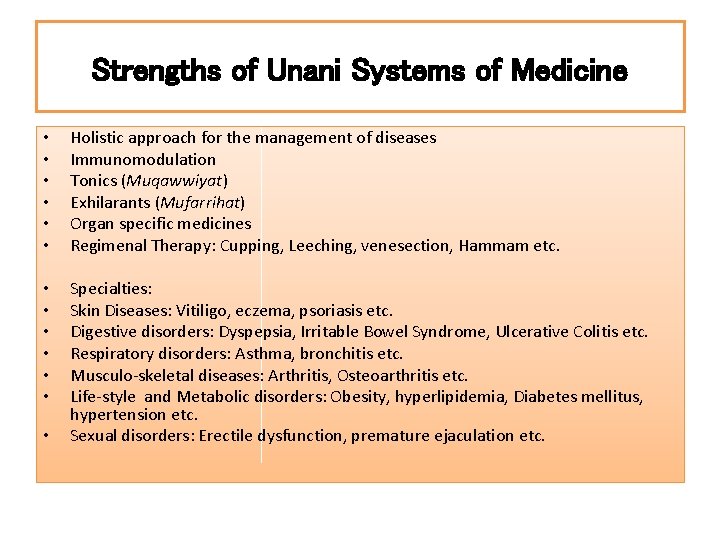
Strengths of Unani Systems of Medicine • • • Holistic approach for the management of diseases Immunomodulation Tonics (Muqawwiyat) Exhilarants (Mufarrihat) Organ specific medicines Regimenal Therapy: Cupping, Leeching, venesection, Hammam etc. • • • Specialties: Skin Diseases: Vitiligo, eczema, psoriasis etc. Digestive disorders: Dyspepsia, Irritable Bowel Syndrome, Ulcerative Colitis etc. Respiratory disorders: Asthma, bronchitis etc. Musculo-skeletal diseases: Arthritis, Osteoarthritis etc. Life-style and Metabolic disorders: Obesity, hyperlipidemia, Diabetes mellitus, hypertension etc. Sexual disorders: Erectile dysfunction, premature ejaculation etc. •
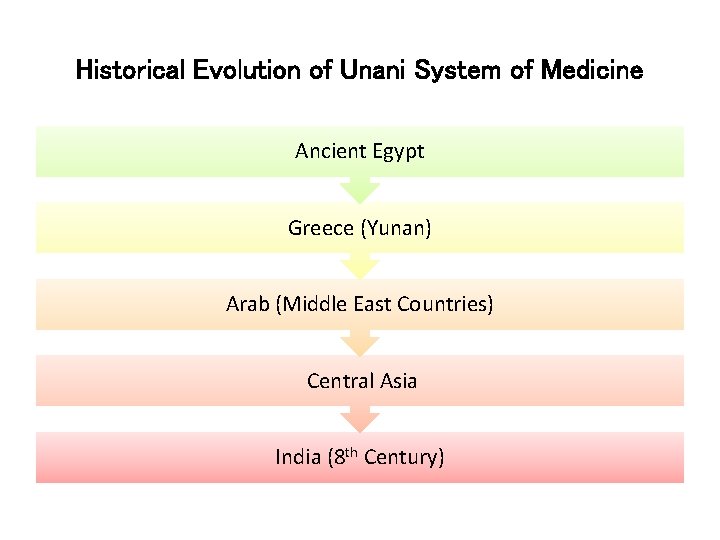
Historical Evolution of Unani System of Medicine Ancient Egypt Greece (Yunan) Arab (Middle East Countries) Central Asia India (8 th Century)
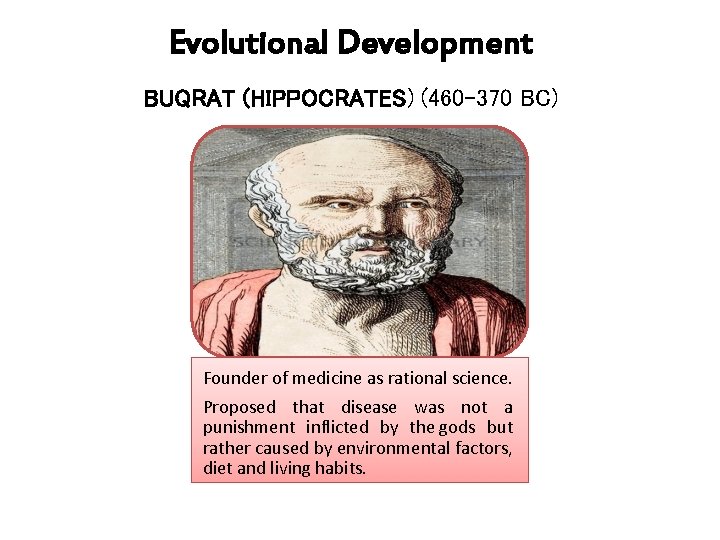
Evolutional Development BUQRAT (HIPPOCRATES) (460 -370 BC) Founder of medicine as rational science. Proposed that disease was not a punishment inflicted by the gods but rather caused by environmental factors, diet and living habits.
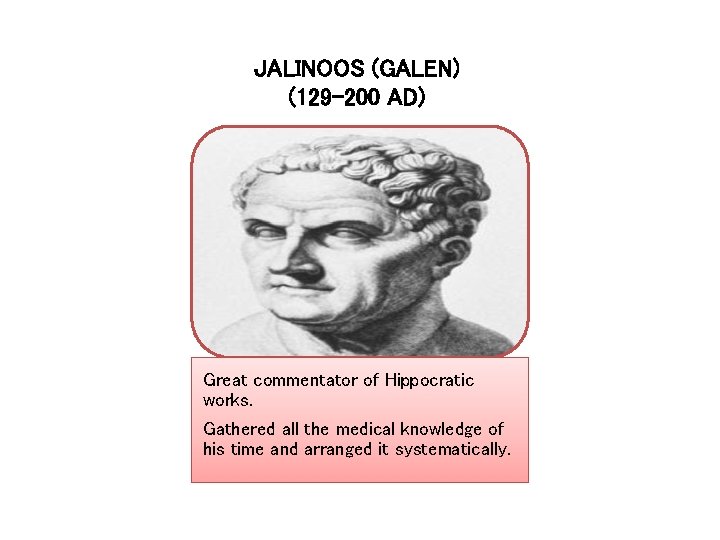
JALINOOS (GALEN) (129 -200 AD) Great commentator of Hippocratic works. Gathered all the medical knowledge of his time and arranged it systematically.
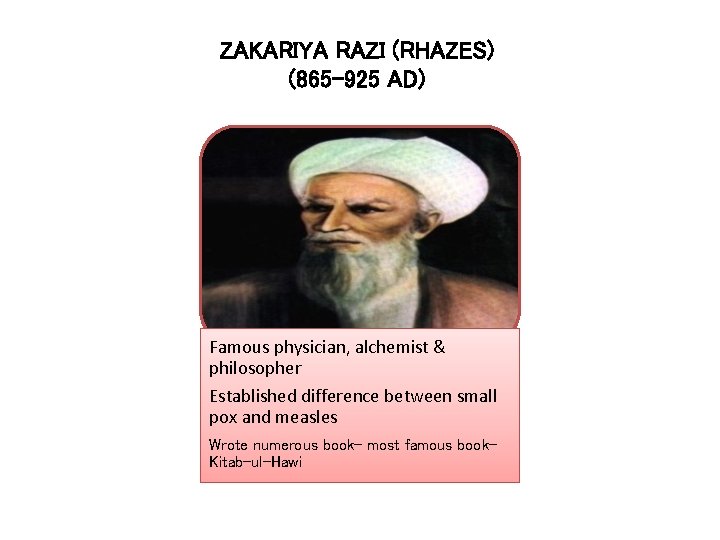
ZAKARIYA RAZI (RHAZES) (865 -925 AD) Famous physician, alchemist & philosopher Established difference between small pox and measles Wrote numerous book- most famous book. Kitab-ul-Hawi
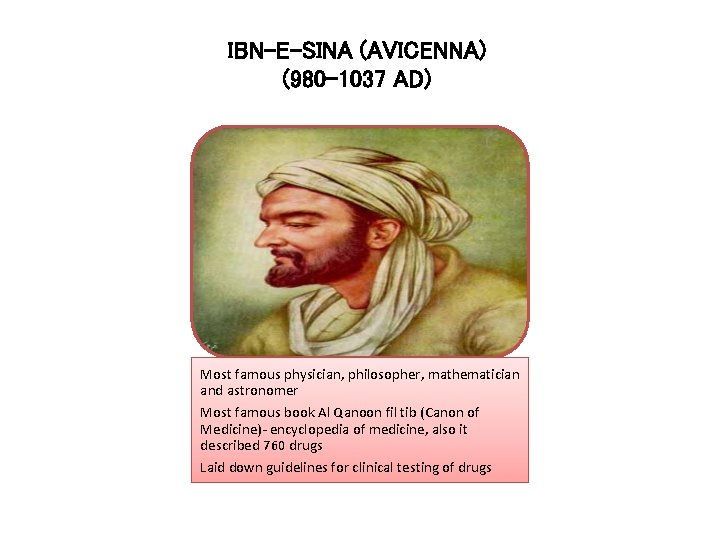
IBN-E-SINA (AVICENNA) (980 -1037 AD) Most famous physician, philosopher, mathematician and astronomer Most famous book Al Qanoon fil tib (Canon of Medicine)- encyclopedia of medicine, also it described 760 drugs Laid down guidelines for clinical testing of drugs
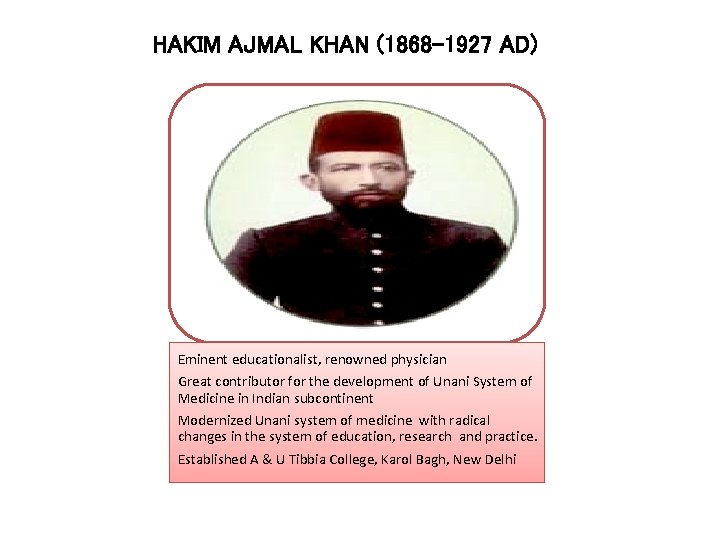
HAKIM AJMAL KHAN (1868 -1927 AD) Eminent educationalist, renowned physician Great contributor for the development of Unani System of Medicine in Indian subcontinent Modernized Unani system of medicine with radical changes in the system of education, research and practice. Established A & U Tibbia College, Karol Bagh, New Delhi
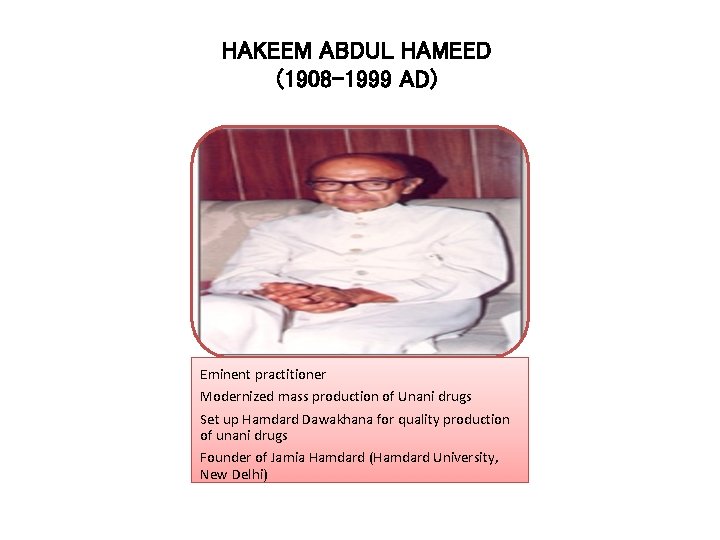
HAKEEM ABDUL HAMEED (1908 -1999 AD) Eminent practitioner Modernized mass production of Unani drugs Set up Hamdard Dawakhana for quality production of unani drugs Founder of Jamia Hamdard (Hamdard University, New Delhi)
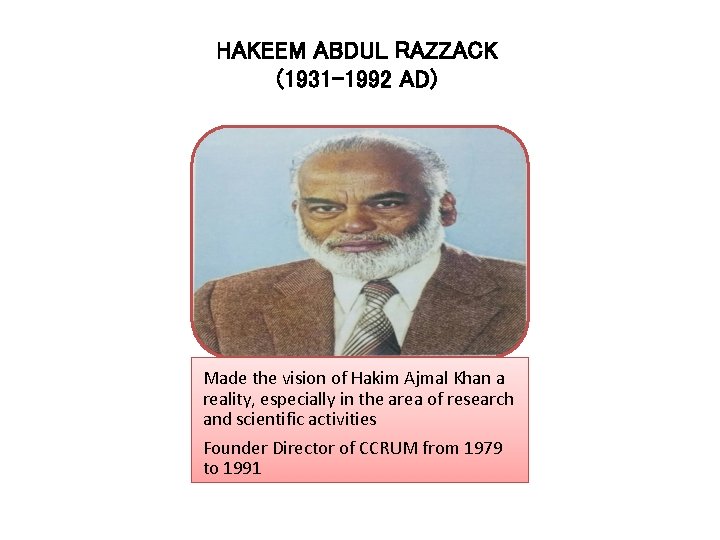
HAKEEM ABDUL RAZZACK (1931 -1992 AD) Made the vision of Hakim Ajmal Khan a reality, especially in the area of research and scientific activities Founder Director of CCRUM from 1979 to 1991
Education Central Council of Indian Medicine (CCIM) is the regulatory authority for education in Ayurveda, Unani and Siddha Systems of Medicine. The Central Council of Indian Medicine is the statutory body constituted under the Indian Medicine Central Council Act, 1970 vide gazette notification extraordinary part (ii) section 3(ii) dated 10. 8. 71.
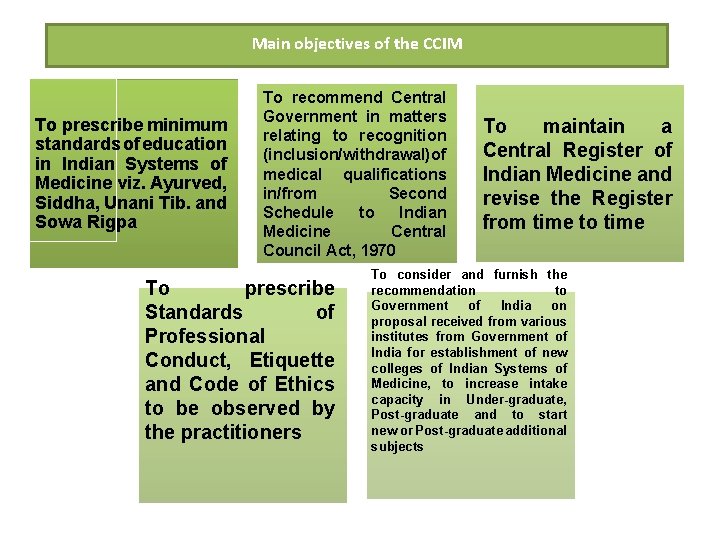
Main objectives of the CCIM To prescribe minimum standards of education in Indian Systems of Medicine viz. Ayurved, Siddha, Unani Tib. and Sowa Rigpa To recommend Central Government in matters relating to recognition (inclusion/withdrawal) of medical qualifications in/from Second Schedule to Indian Medicine Central Council Act, 1970 To prescribe Standards of Professional Conduct, Etiquette and Code of Ethics to be observed by the practitioners To maintain a Central Register of Indian Medicine and revise the Register from time to time To consider and furnish the recommendation to Government of India on proposal received from various institutes from Government of India for establishment of new colleges of Indian Systems of Medicine, to increase intake capacity in Under-graduate, Post-graduate and to start new or Post-graduate additional subjects
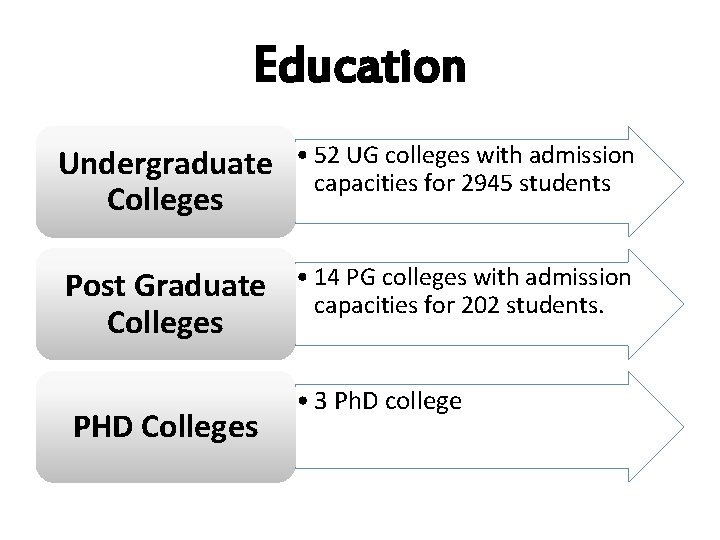
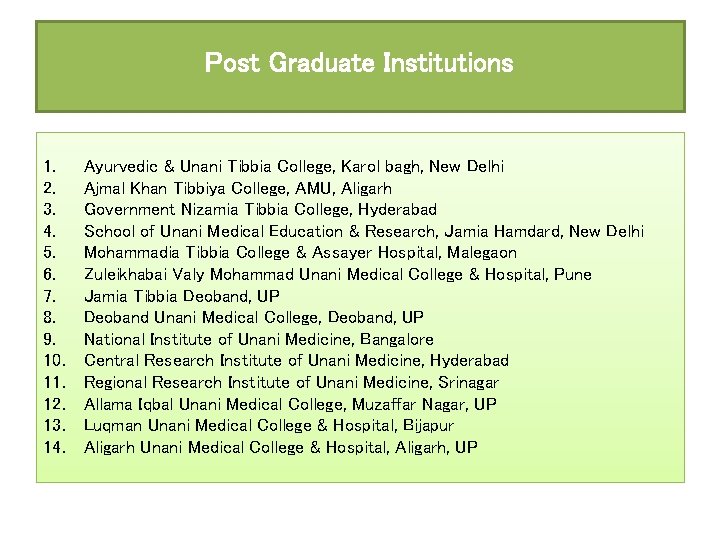
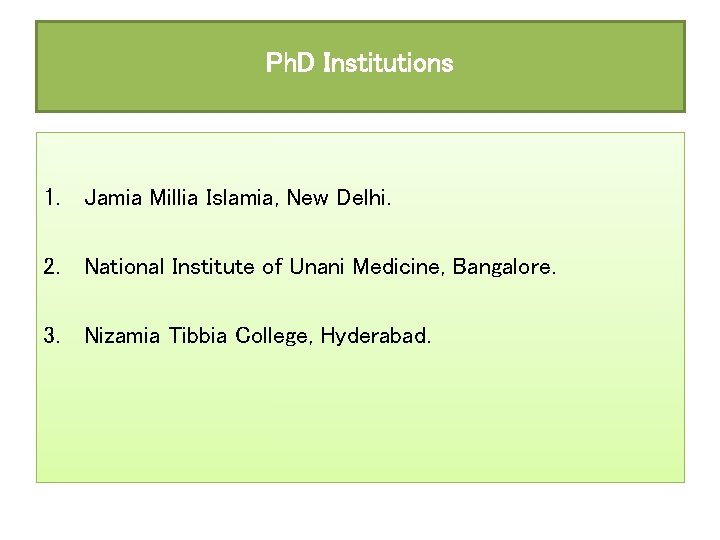
Education Undergraduate Colleges • 52 UG colleges with admission capacities for 2945 students Post Graduate Colleges • 14 PG colleges with admission capacities for 202 students. PHD Colleges • 3 Ph. D college
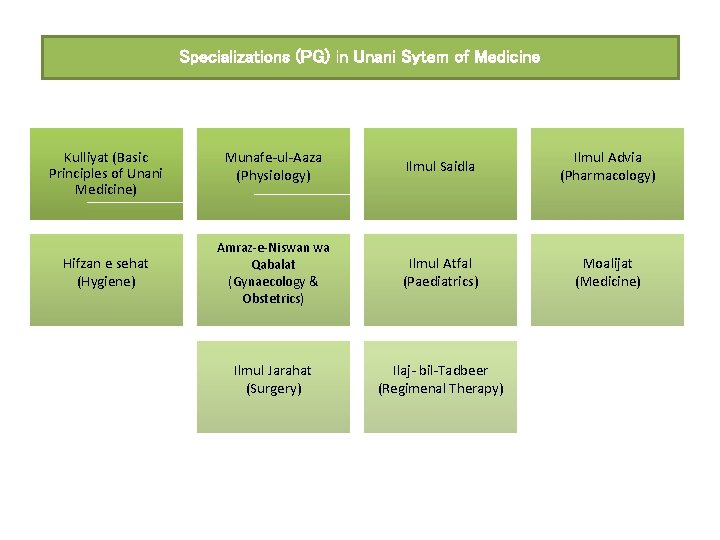
Specializations (PG) in Unani Sytem of Medicine Kulliyat (Basic Principles of Unani Medicine) Hifzan e sehat (Hygiene) Munafe-ul-Aaza (Physiology) Ilmul Saidla Ilmul Advia (Pharmacology) Amraz-e-Niswan wa Qabalat (Gynaecology & Obstetrics) Ilmul Atfal (Paediatrics) Moalijat (Medicine) Ilmul Jarahat (Surgery) Ilaj- bil-Tadbeer (Regimenal Therapy)
Post Graduate Institutions 1. 2. 3. 4. 5. 6. 7. 8. 9. 10. 11. 12. 13. 14. Ayurvedic & Unani Tibbia College, Karol bagh, New Delhi Ajmal Khan Tibbiya College, AMU, Aligarh Government Nizamia Tibbia College, Hyderabad School of Unani Medical Education & Research, Jamia Hamdard, New Delhi Mohammadia Tibbia College & Assayer Hospital, Malegaon Zuleikhabai Valy Mohammad Unani Medical College & Hospital, Pune Jamia Tibbia Deoband, UP Deoband Unani Medical College, Deoband, UP National Institute of Unani Medicine, Bangalore Central Research Institute of Unani Medicine, Hyderabad Regional Research Institute of Unani Medicine, Srinagar Allama Iqbal Unani Medical College, Muzaffar Nagar, UP Luqman Unani Medical College & Hospital, Bijapur Aligarh Unani Medical College & Hospital, Aligarh, UP
Ph. D Institutions 1. Jamia Millia Islamia, New Delhi. 2. National Institute of Unani Medicine, Bangalore. 3. Nizamia Tibbia College, Hyderabad.
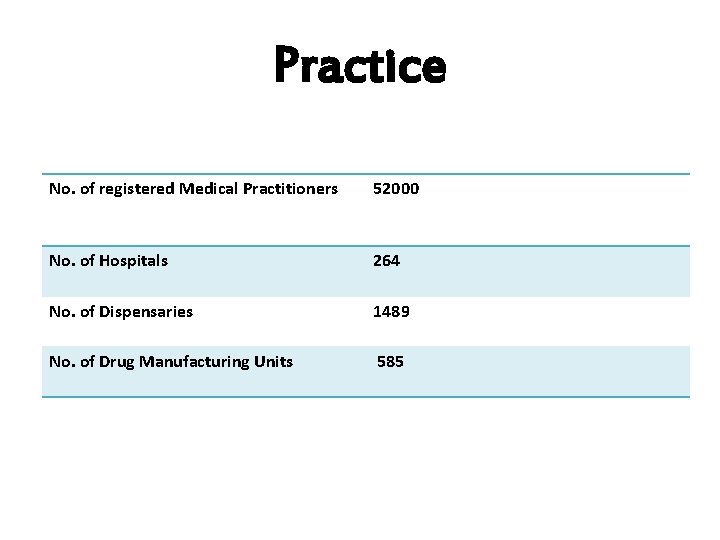
Practice No. of registered Medical Practitioners 52000 No. of Hospitals 264 No. of Dispensaries 1489 No. of Drug Manufacturing Units 585
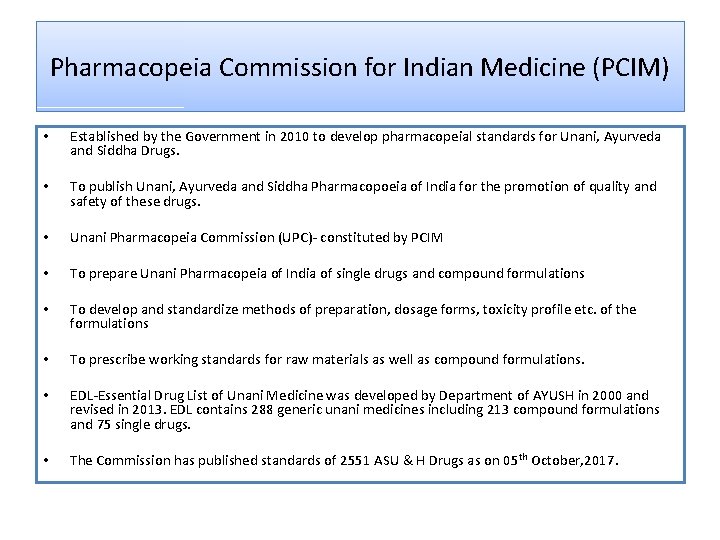
Pharmacopeia Commission for Indian Medicine (PCIM) • Established by the Government in 2010 to develop pharmacopeial standards for Unani, Ayurveda and Siddha Drugs. • To publish Unani, Ayurveda and Siddha Pharmacopoeia of India for the promotion of quality and safety of these drugs. • Unani Pharmacopeia Commission (UPC)- constituted by PCIM • To prepare Unani Pharmacopeia of India of single drugs and compound formulations • To develop and standardize methods of preparation, dosage forms, toxicity profile etc. of the formulations • To prescribe working standards for raw materials as well as compound formulations. • EDL-Essential Drug List of Unani Medicine was developed by Department of AYUSH in 2000 and revised in 2013. EDL contains 288 generic unani medicines including 213 compound formulations and 75 single drugs. • The Commission has published standards of 2551 ASU & H Drugs as on 05 th October, 2017.
Pharmacopeial Laboratory for Indian Medicine (PLIM) PLIM, Ghaziabad, Uttar Pradesh is a subordinate office of the Ministry of AYUSH, Govt. of India Objectives: • To lay down standards of single drugs to be incorporated in Ayurveda, Unani and Siddha Pharmacopoeia. • To lay down standards of compound formulations included in Ayurveda, Unani and Siddha Formularies. • To analyse the survey, official samples and samples received from drug control authorities. • To maintain Medicinal Plants Garden and find out indigenous substitutes for exotic plants. • To preserve standard and authentic specimens in herbarium and museum.
Unani Pharmacopoeia Committee (UPC) • Pharmacopoeial standards in respect of single and compound Unani drugs are developed by the Unani Pharmacopoeia Committee (UPC). • The UPC consist of experts of Unani System of Medicine, Chemistry, Botany and Pharmacology. The CCRUM has been designated as Secretariat for the UPC. • Six Volumes of National Formulary of Unani Medicine has been published by CCRUM containing total 1179 Unani Formulations. • CCRUM has also published Unani Pharmacopoeia of India {Part-I for single drugs containing 298 drugs (Six Volumes) and Part-II for compound drugs containing 150 monographs (Three Volumes)}
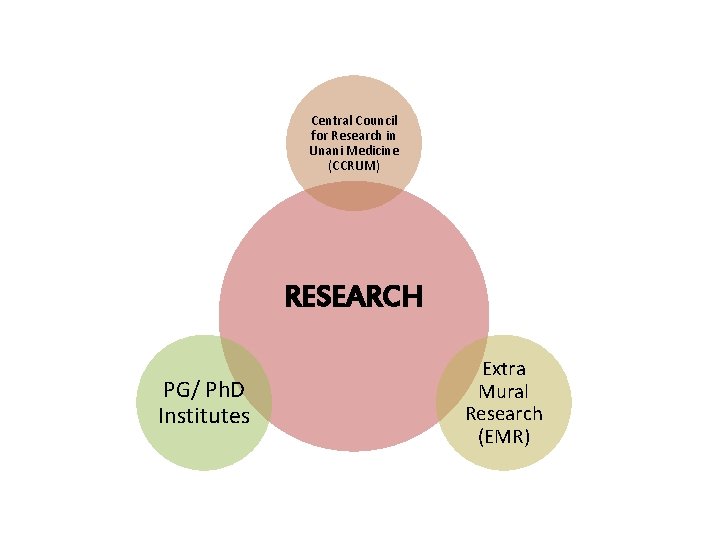
Central Council for Research in Unani Medicine (CCRUM) RESEARCH PG/ Ph. D Institutes Extra Mural Research (EMR)
Central Council for Research in Unani Medicine (CCRUM) • CCRUM is an apex autonomous research organization functioning under the Ministry of AYUSH. • Set up in 1979 to build a research base for Unani with focused objectives and plans. • The Council has its headquarters in New Delhi with 23 centres functioning in different parts of the country
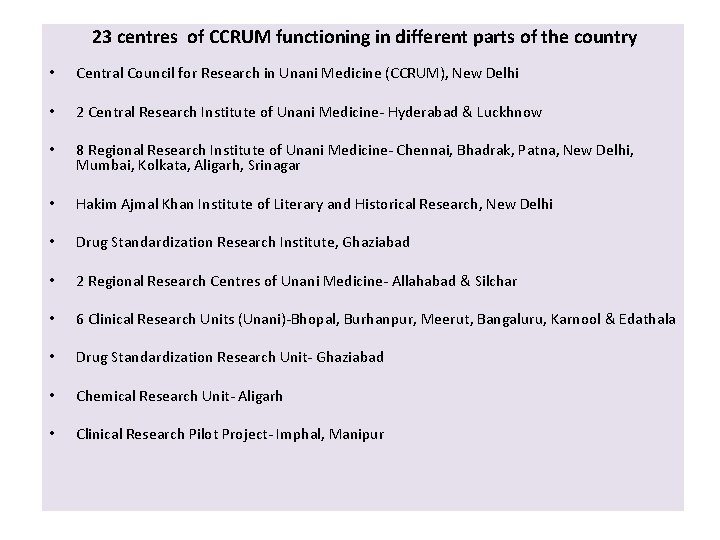
23 centres of CCRUM functioning in different parts of the country • Central Council for Research in Unani Medicine (CCRUM), New Delhi • 2 Central Research Institute of Unani Medicine- Hyderabad & Luckhnow • 8 Regional Research Institute of Unani Medicine- Chennai, Bhadrak, Patna, New Delhi, Mumbai, Kolkata, Aligarh, Srinagar • Hakim Ajmal Khan Institute of Literary and Historical Research, New Delhi • Drug Standardization Research Institute, Ghaziabad • 2 Regional Research Centres of Unani Medicine- Allahabad & Silchar • 6 Clinical Research Units (Unani)-Bhopal, Burhanpur, Meerut, Bangaluru, Karnool & Edathala • Drug Standardization Research Unit- Ghaziabad • Chemical Research Unit- Aligarh • Clinical Research Pilot Project- Imphal, Manipur
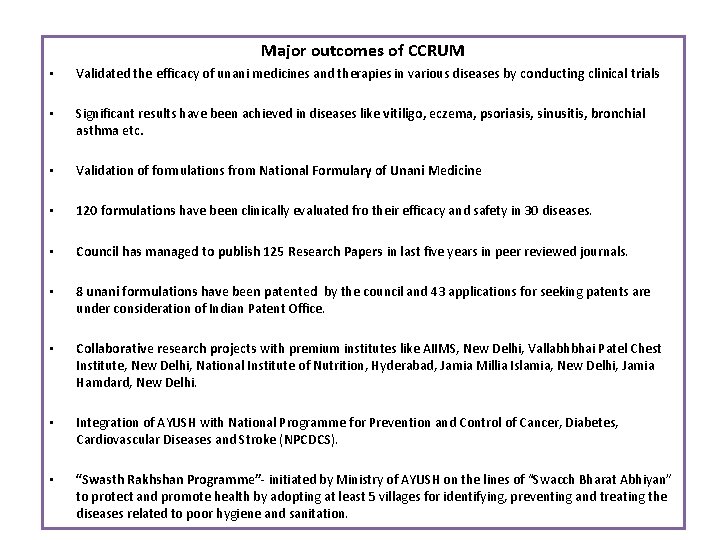
Major outcomes of CCRUM • Validated the efficacy of unani medicines and therapies in various diseases by conducting clinical trials • Significant results have been achieved in diseases like vitiligo, eczema, psoriasis, sinusitis, bronchial asthma etc. • Validation of formulations from National Formulary of Unani Medicine • 120 formulations have been clinically evaluated fro their efficacy and safety in 30 diseases. • Council has managed to publish 125 Research Papers in last five years in peer reviewed journals. • 8 unani formulations have been patented by the council and 43 applications for seeking patents are under consideration of Indian Patent Office. • Collaborative research projects with premium institutes like AIIMS, New Delhi, Vallabhbhai Patel Chest Institute, New Delhi, National Institute of Nutrition, Hyderabad, Jamia Millia Islamia, New Delhi, Jamia Hamdard, New Delhi. • Integration of AYUSH with National Programme for Prevention and Control of Cancer, Diabetes, Cardiovascular Diseases and Stroke (NPCDCS). • “Swasth Rakhshan Programme”- initiated by Ministry of AYUSH on the lines of “Swacch Bharat Abhiyan” to protect and promote health by adopting at least 5 villages for identifying, preventing and treating the diseases related to poor hygiene and sanitation.
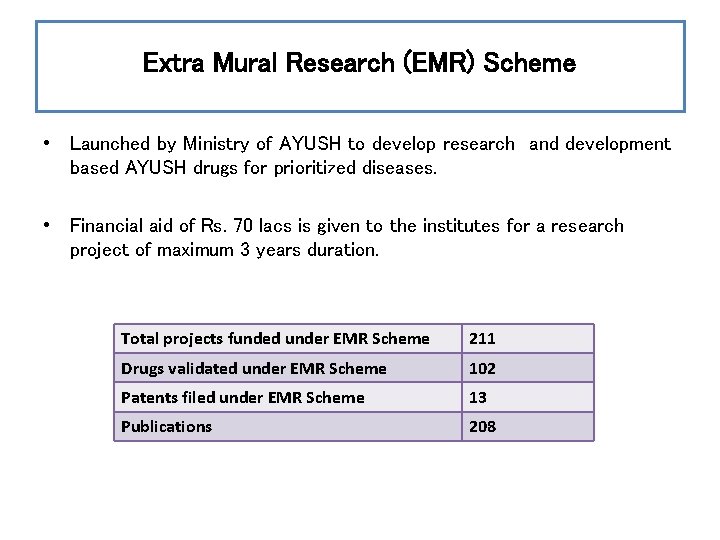
Extra Mural Research (EMR) Scheme • Launched by Ministry of AYUSH to develop research and development based AYUSH drugs for prioritized diseases. • Financial aid of Rs. 70 lacs is given to the institutes for a research project of maximum 3 years duration. Total projects funded under EMR Scheme 211 Drugs validated under EMR Scheme 102 Patents filed under EMR Scheme 13 Publications 208
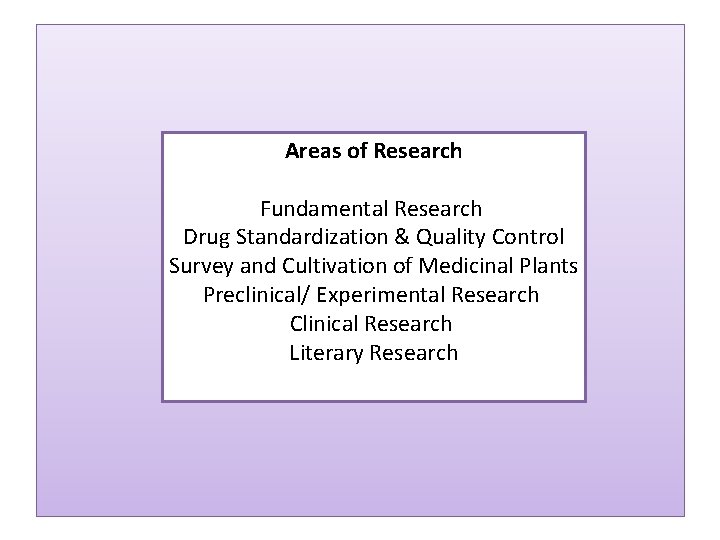
Areas of Research Fundamental Research Drug Standardization & Quality Control Survey and Cultivation of Medicinal Plants Preclinical/ Experimental Research Clinical Research Literary Research
Future Development All India Institute of Unani Medicine (AIIUM), Ghaziabad • First ever institute for tertiary healthcare in Unani Medicine • Establishment work is in progress • Impart PG and Doctoral education in Unani System of Medicine
Future Development • It is proposed to establish new research institutes under CCRUM in various parts of Country. • Ministry of AYUSH is planning to increase number of Unani Dispensaries under CGHS throughout the Country. • Ministry of AYUSH is also planning to establish National Institute for Research in Non. Communicable Diseases in Faridabad.
Challenges • Batch to batch variation of drugs • Shelf life of the Unani Drugs • Redesigning of the dosage forms- to make it convenient and easy to take. • Toxicity/ Safety evaluation of Unani Drugs
• Conduction of Randomized Controlled Trial • Educational Reforms ü Continuous revision of syllabus and curriculum ü National Eligibility Test for teachers ü Bridge course of Unani system of Medicine for other Systems of Medicine
THANK YOU