
The Evolution and Adaptations of Deep Sea Animals


- Slides: 14
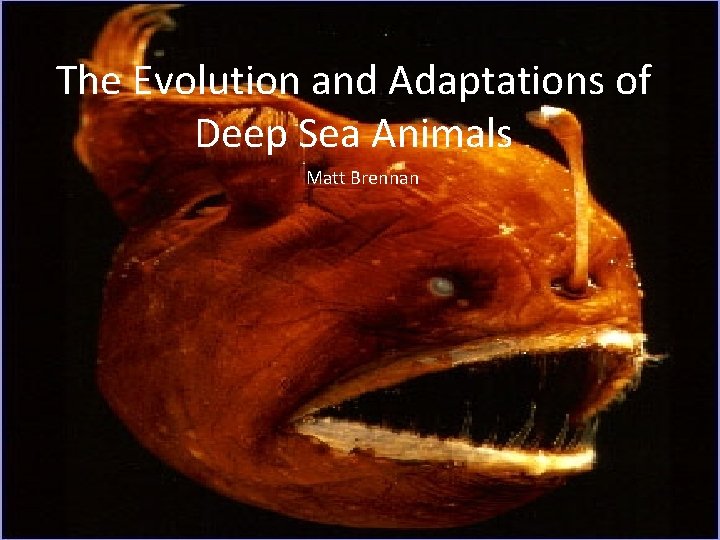
The Evolution and Adaptations of Deep Sea Animals Matt Brennan
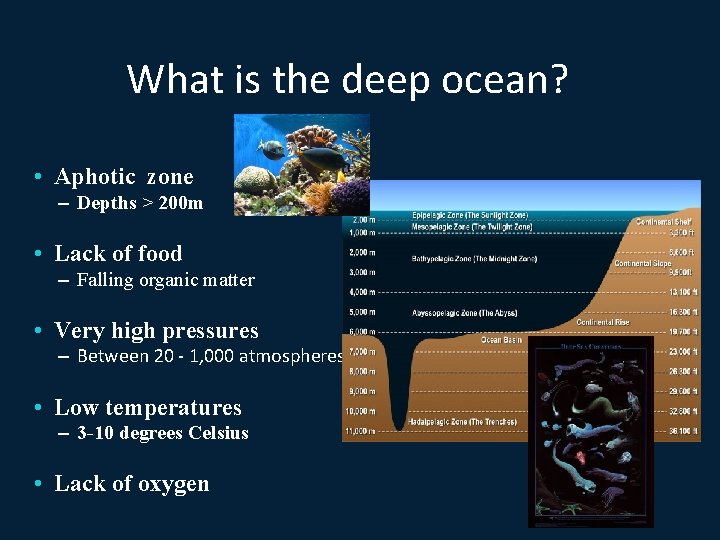
What is the deep ocean? • Aphotic zone – Depths > 200 m • Lack of food – Falling organic matter • Very high pressures – Between 20 - 1, 000 atmospheres • Low temperatures – 3 -10 degrees Celsius • Lack of oxygen
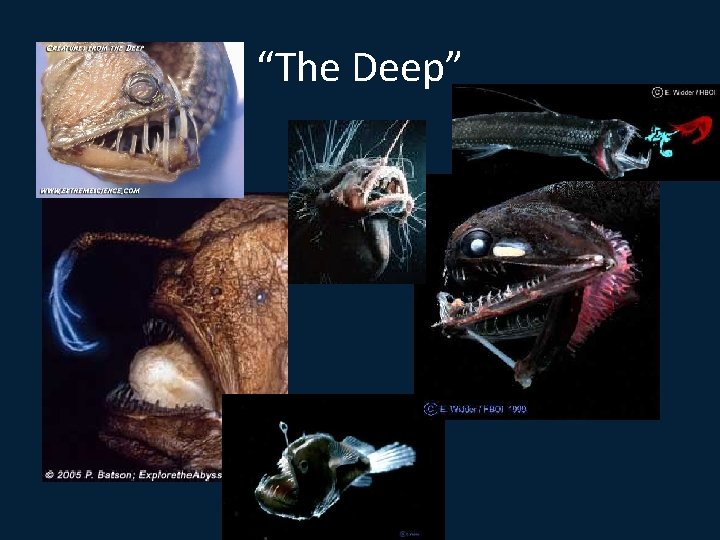
“The Deep”
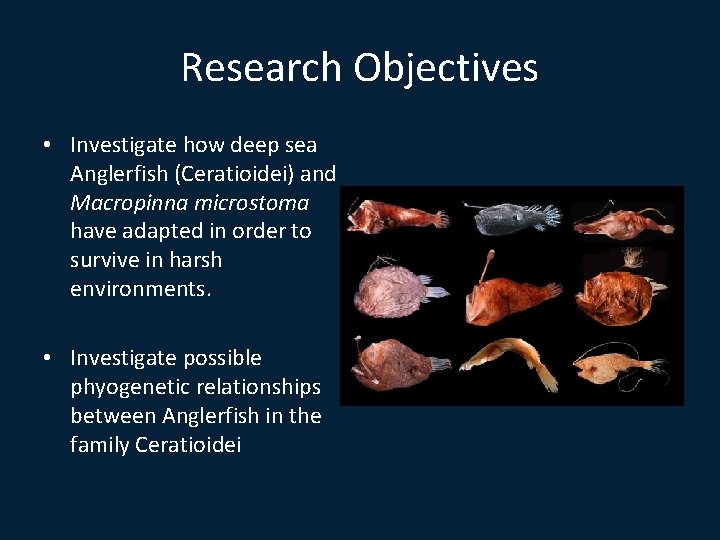
Research Objectives • Investigate how deep sea Anglerfish (Ceratioidei) and Macropinna microstoma have adapted in order to survive in harsh environments. • Investigate possible phyogenetic relationships between Anglerfish in the family Ceratioidei
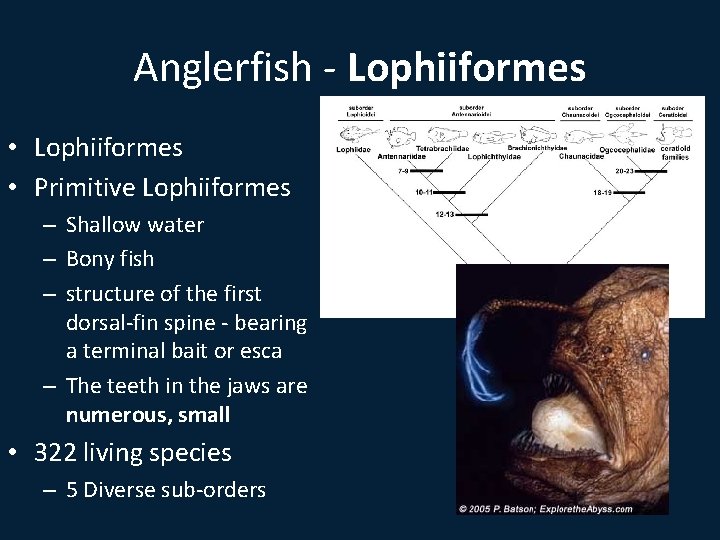
Anglerfish - Lophiiformes • Primitive Lophiiformes – Shallow water – Bony fish – structure of the first dorsal-fin spine - bearing a terminal bait or esca – The teeth in the jaws are numerous, small • 322 living species – 5 Diverse sub-orders
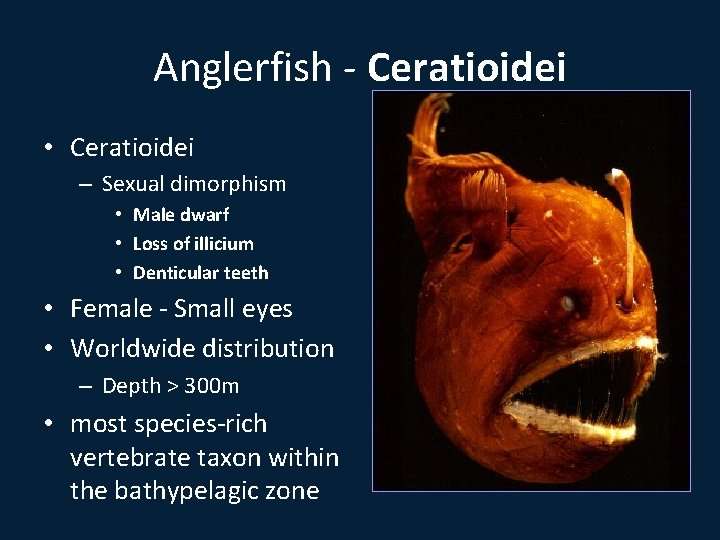
Anglerfish - Ceratioidei • Ceratioidei – Sexual dimorphism • Male dwarf • Loss of illicium • Denticular teeth • Female - Small eyes • Worldwide distribution – Depth > 300 m • most species-rich vertebrate taxon within the bathypelagic zone
Bioluminescence • Chemical reaction where energy is released in the form of light • Bioluminescence in ceratioid – escae w/ bacteria filled vesicles • Used to – lure predators – Attract males http: //www. youtube. com /watch? v=UXl 8 F-e. Ioi. M Solution to Lack of light?
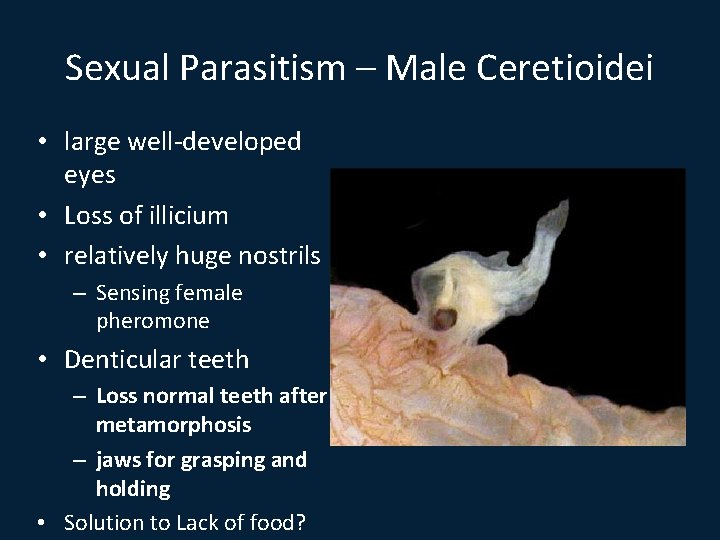
Sexual Parasitism – Male Ceretioidei • large well-developed eyes • Loss of illicium • relatively huge nostrils – Sensing female pheromone • Denticular teeth – Loss normal teeth after metamorphosis – jaws for grasping and holding • Solution to Lack of food?
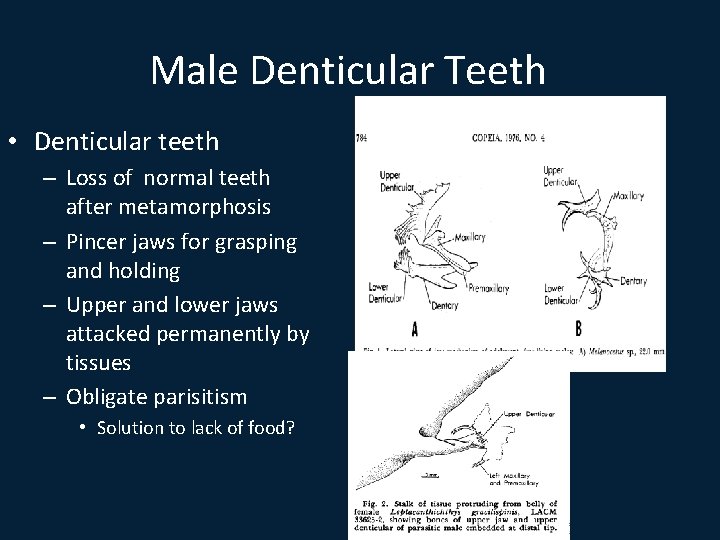
Male Denticular Teeth • Denticular teeth – Loss of normal teeth after metamorphosis – Pincer jaws for grasping and holding – Upper and lower jaws attacked permanently by tissues – Obligate parisitism • Solution to lack of food?
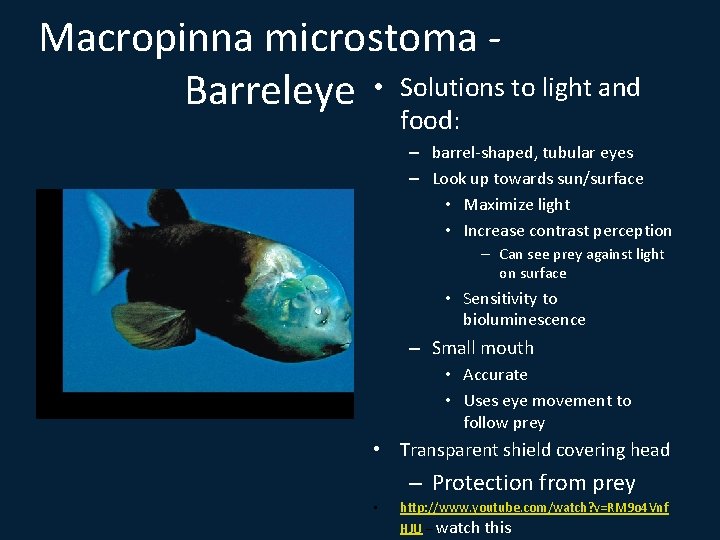
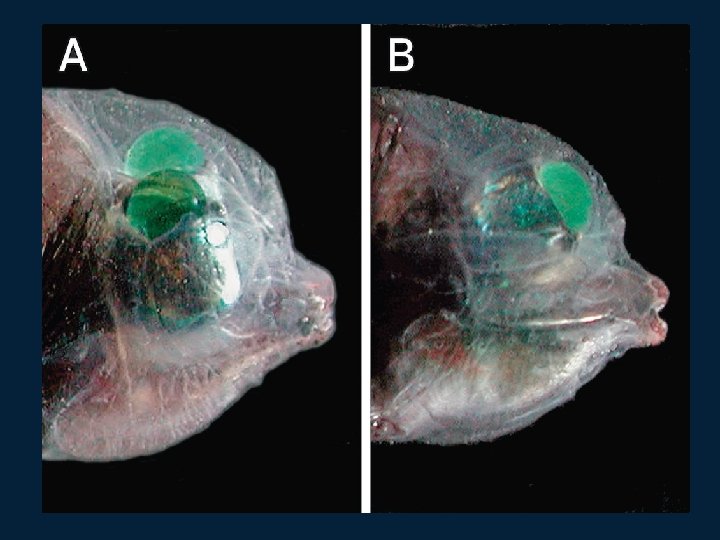
Macropinna microstoma Barreleye • Solutions to light and food: – barrel-shaped, tubular eyes – Look up towards sun/surface • Maximize light • Increase contrast perception – Can see prey against light on surface • Sensitivity to bioluminescence – Small mouth • Accurate • Uses eye movement to follow prey • Transparent shield covering head – Protection from prey • http: //www. youtube. com/watch? v=RM 9 o 4 Vnf HJU – watch this
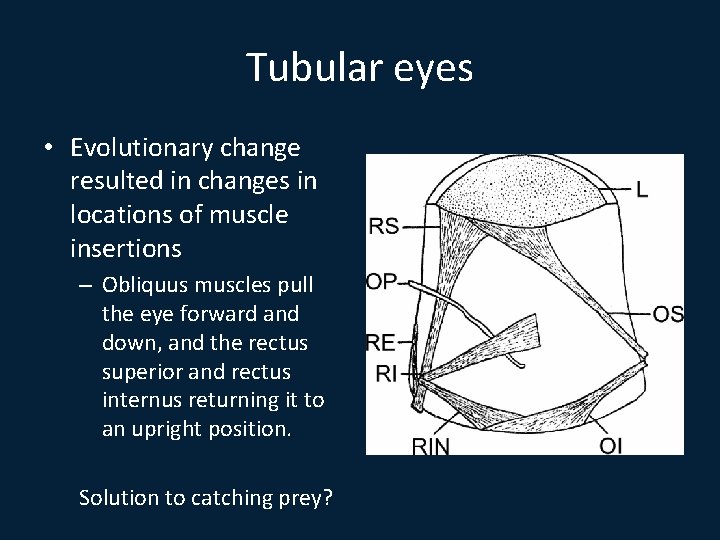
Tubular eyes • Evolutionary change resulted in changes in locations of muscle insertions – Obliquus muscles pull the eye forward and down, and the rectus superior and rectus internus returning it to an upright position. Solution to catching prey?
Conclusions • Lots of research needs to be done – Relativelely new science! – Environmental factors are harsh for humans too! – Lack of live specimen • A need for the new Generation scientists
Works cited • • • Robison, B. and K. R. Reisenbichler (2008). Macropinna microstoma and the paradox of its tubular eyes. Copeia, 4: 780 -784. http: //marinebio. org/Oceans/structures-adaptations. asp http: //www. seasky. org/deep-sea/anglerfish. html Robison, B. H. , K. R. Reisenbichler, J. C. Hunt, and S. H. D. Haddock (2003). Light production by the arm tips of the deep-sea cephalopod Vampyroteuthis infernalis. Biological Bulletin, 205: 102– 109. Maddison, D. R. and K. -S. Schulz (eds. ) 2007. The Tree of Life Web Project. Internet address: http: //tolweb. org