
The evidence base for an ideal care pathway
The evidence base for an ideal care pathway for frail multi-morbid elderly: A combined scoping and systematic intervention review Gro K Rosvold Berntsen MD Professor 1, 2, Frode Strisland Dr. Ing. 3, Kristian Malm-Nicolaisen 1, Berglind Smaradottir Ph. D 4, 5, Rune Fensli Professor 4, Mette Røhne, Ph. D 3 1 Norwegian Centre for E-health Research, University Hospital of North Norway, Tromsø, Norway 2 Unit of primary care, Institute of Community Medicine, Ui. T – The arctic university of Norway, Tromsø, Norway 3 Sintef Digital, Oslo, Norway 4 Centre for e. Health, University of Agder, Grimstad, Norway 5 Research Department, Sørlandet Hospital, Kristiansand, Norway
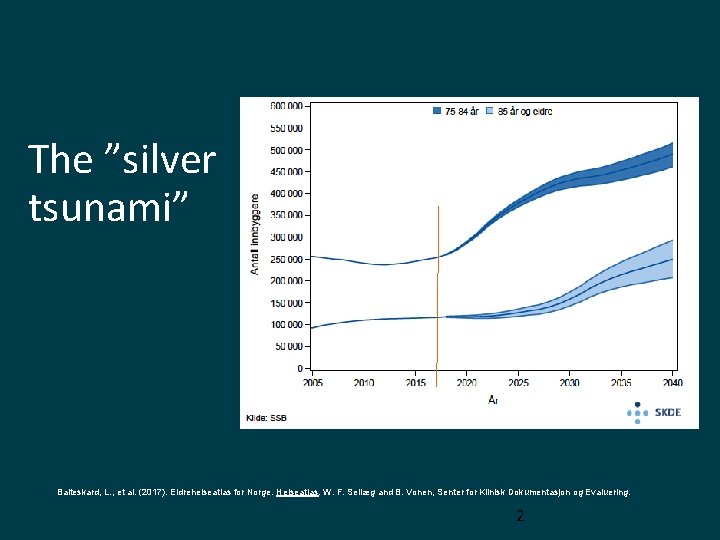
The ”silver tsunami” Balteskard, L. , et al. (2017). Eldrehelseatlas for Norge. Helseatlas. W. F. Sellæg and B. Vonen, Senter for Klinisk Dokumentasjon og Evaluering. 2
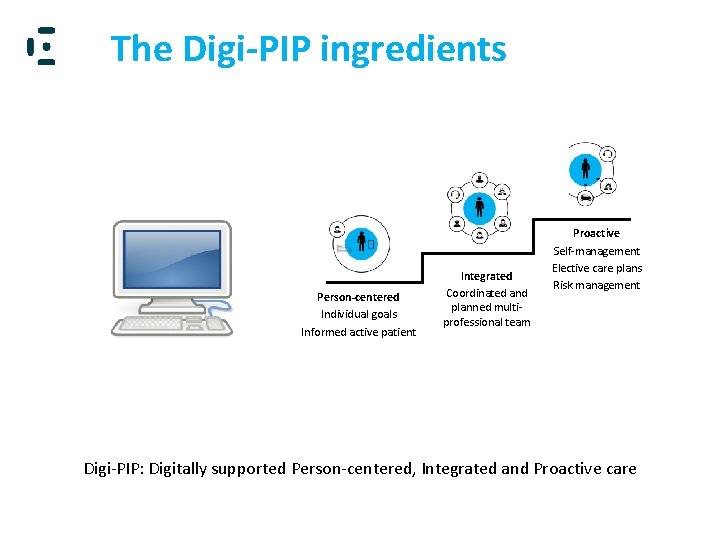
The Digi-PIP ingredients Person-centered Individual goals Informed active patient Integrated Coordinated and planned multiprofessional team Proactive Self-management Elective care plans Risk management Digi-PIP: Digitally supported Person-centered, Integrated and Proactive care
Background • Each Digi-PIP-component has promising, but inconsistent support in literature • Maturity and synergies are neglected? • Objective • To describe how the literature on whole system complex transformations directed at frail multi-morbid elderly reflect 1) operationalization of intervention, 2) maturity, 3) evaluation methodology, and 4) effect on outcomes.
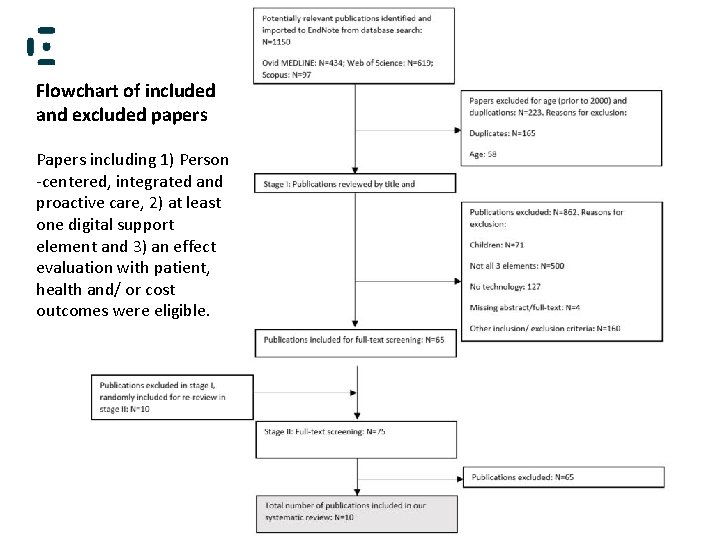
Flowchart of included and excluded papers Papers including 1) Person -centered, integrated and proactive care, 2) at least one digital support element and 3) an effect evaluation with patient, health and/ or cost outcomes were eligible.
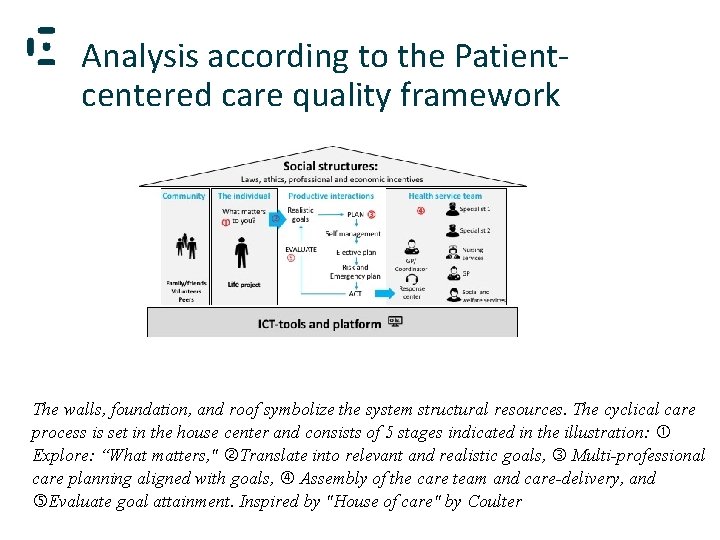
Analysis according to the Patientcentered care quality framework The walls, foundation, and roof symbolize the system structural resources. The cyclical care process is set in the house center and consists of 5 stages indicated in the illustration: Explore: “What matters, " Translate into relevant and realistic goals, Multi-professional care planning aligned with goals, Assembly of the care team and care-delivery, and Evaluate goal attainment. Inspired by "House of care" by Coulter
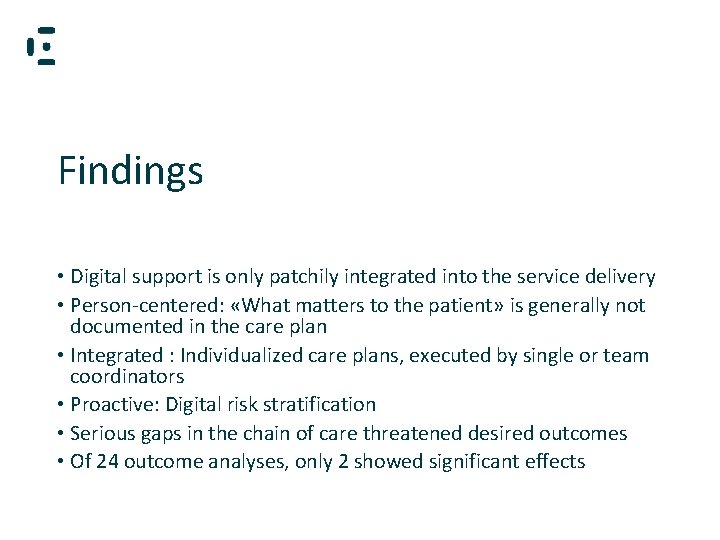
Findings • Digital support is only patchily integrated into the service delivery • Person-centered: «What matters to the patient» is generally not documented in the care plan • Integrated : Individualized care plans, executed by single or team coordinators • Proactive: Digital risk stratification • Serious gaps in the chain of care threatened desired outcomes • Of 24 outcome analyses, only 2 showed significant effects
Conclusions Digi-PIP interventions were immature Interventions were narrowly focused on single elements There is a paucity of studies that meet complex needs with digitally supported flexible and adaptive teamwork
- Slides: 8