
The European Spallation Source John Womersley Director General
- Slides: 25
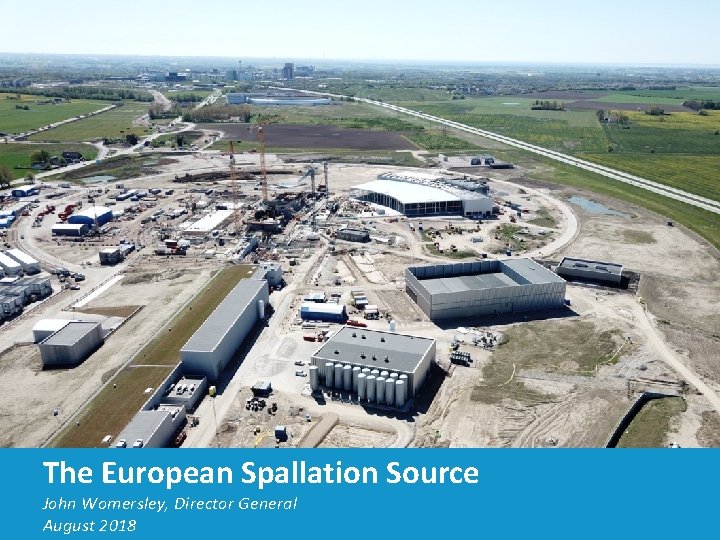
The European Spallation Source John Womersley, Director General August 2018
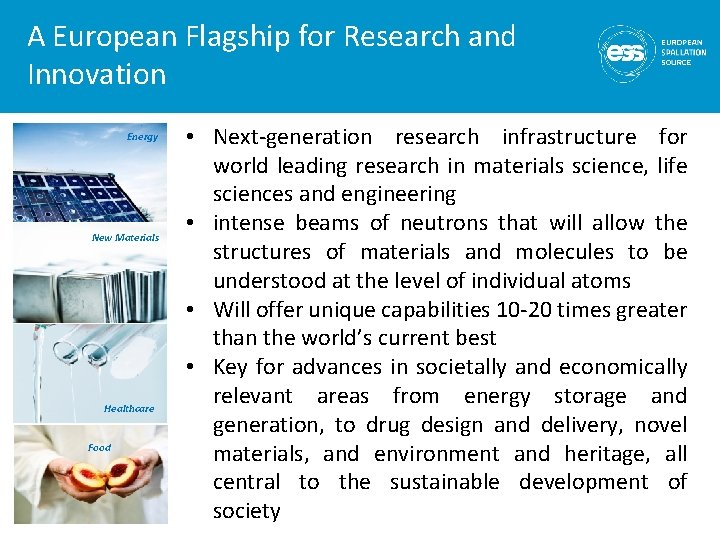
A European Flagship for Research and Innovation Energy New Materials Healthcare Food • Next-generation research infrastructure for world leading research in materials science, life sciences and engineering • intense beams of neutrons that will allow the structures of materials and molecules to be understood at the level of individual atoms • Will offer unique capabilities 10 -20 times greater than the world’s current best • Key for advances in societally and economically relevant areas from energy storage and generation, to drug design and delivery, novel materials, and environment and heritage, all central to the sustainable development of society
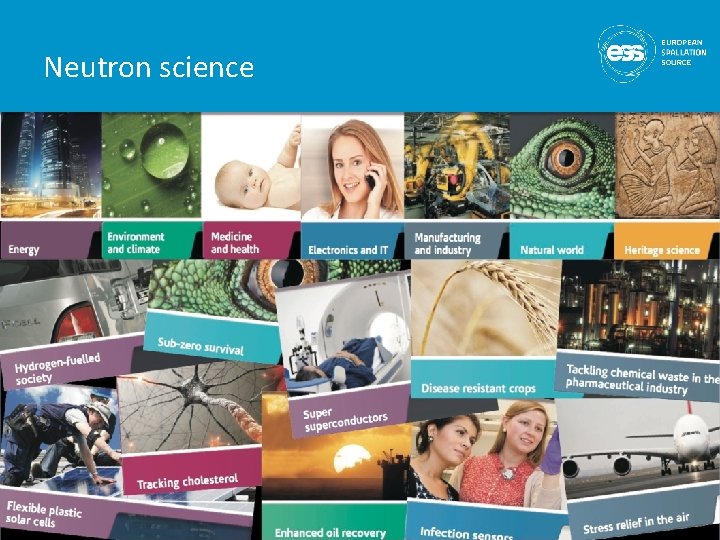
Neutron science 3
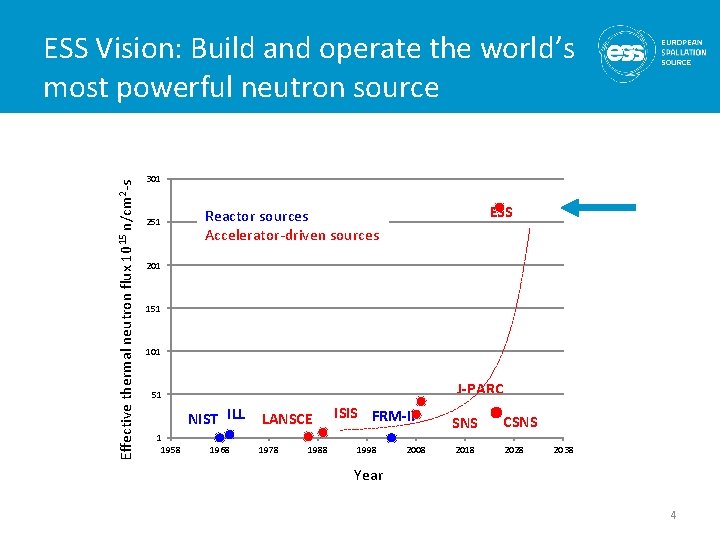
Effective thermal neutron flux 1015 n/cm 2 -s ESS Vision: Build and operate the world’s most powerful neutron source 301 251 ESS Reactor sources Accelerator-driven sources 201 151 101 J-PARC 51 NIST ILL 1 1958 1968 LANSCE 1978 1988 ISIS FRM-II 1998 2008 SNS 2018 CSNS 2028 2038 Year 4
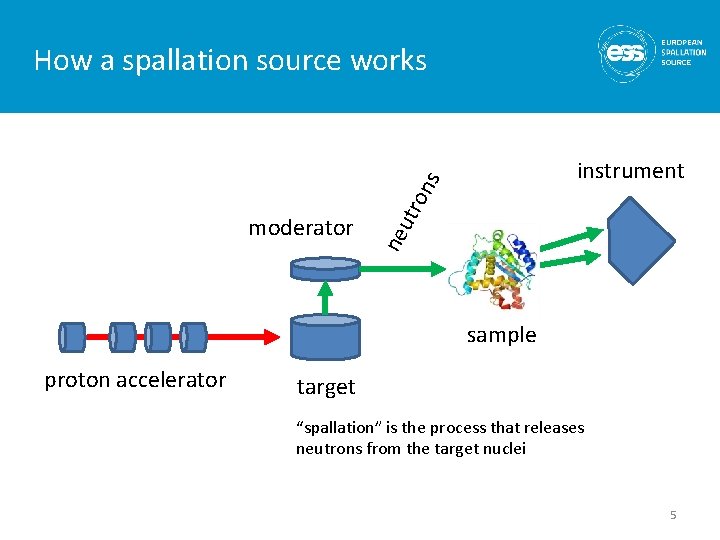
How a spallation source works ne moderator utr o ns instrument sample proton accelerator target “spallation” is the process that releases neutrons from the target nuclei 5
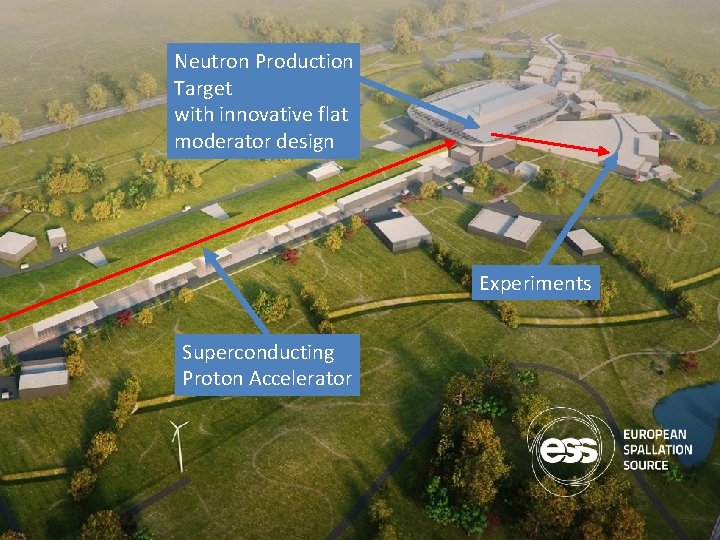
Neutron Production Target with innovative flat moderator design Experiments Superconducting Proton Accelerator 6
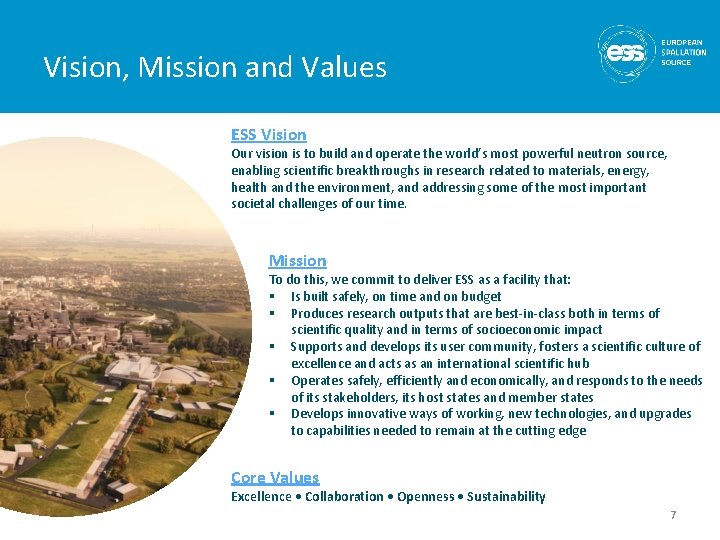
Vision, Mission and Values ESS Vision Our vision is to build and operate the world’s most powerful neutron source, enabling scientific breakthroughs in research related to materials, energy, health and the environment, and addressing some of the most important societal challenges of our time. Mission To do this, we commit to deliver ESS as a facility that: § Is built safely, on time and on budget § Produces research outputs that are best-in-class both in terms of scientific quality and in terms of socioeconomic impact § Supports and develops its user community, fosters a scientific culture of excellence and acts as an international scientific hub § Operates safely, efficiently and economically, and responds to the needs of its stakeholders, its host states and member states § Develops innovative ways of working, new technologies, and upgrades to capabilities needed to remain at the cutting edge Core Values Excellence • Collaboration • Openness • Sustainability 7
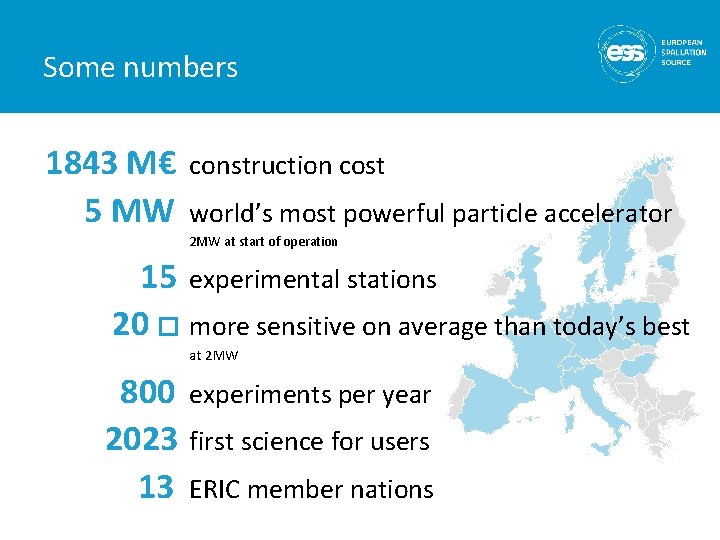
Some numbers 1843 M€ 5 MW construction cost world’s most powerful particle accelerator 2 MW at start of operation 15 experimental stations 20 � more sensitive on average than today’s best at 2 MW 800 2023 13 experiments per year first science for users ERIC member nations
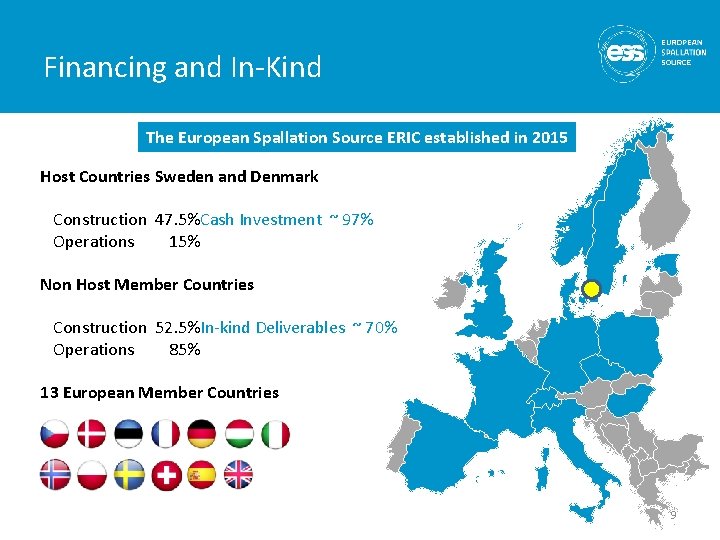
Financing and In-Kind The European Spallation Source ERIC established in 2015 Host Countries Sweden and Denmark Construction 47. 5%Cash Investment ~ 97% Operations 15% Non Host Member Countries Construction 52. 5%In-kind Deliverables ~ 70% Operations 85% 13 European Member Countries 9
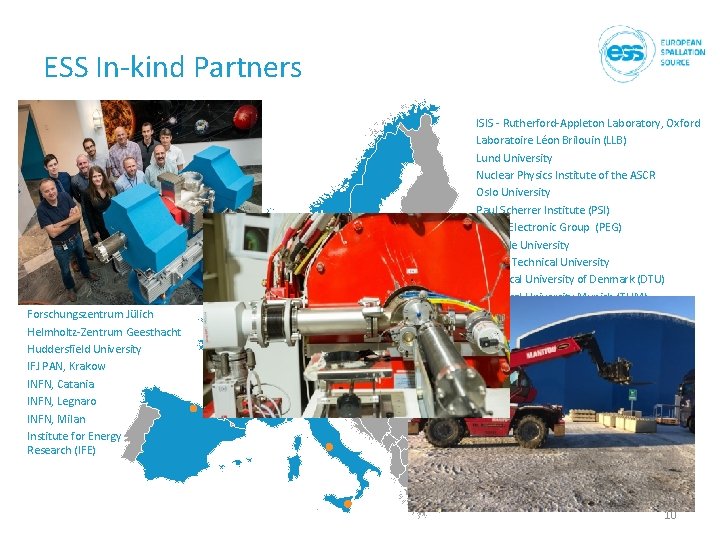
ESS In-kind Partners Aarhus University Atomki - Institute for Nuclear Research Bergen University CEA Saclay, Paris Centre for Energy Research, Budapest Centre for Nuclear Research, Poland, (NCBJ) CNR, Rome CNRS Orsay, Paris Cockcroft Institute, Daresbury Elettra – Sincrotrone Trieste ESS Bilbao Forschungszentrum Jülich Helmholtz-Zentrum Geesthacht Huddersfield University IFJ PAN, Krakow INFN, Catania INFN, Legnaro INFN, Milan Institute for Energy Research (IFE) ISIS - Rutherford-Appleton Laboratory, Oxford Laboratoire Léon Brilouin (LLB) Lund University Nuclear Physics Institute of the ASCR Oslo University Paul Scherrer Institute (PSI) Polish Electronic Group (PEG) Roskilde University Tallinn Technical University of Denmark (DTU) Technical University Munich (TUM) Science and Technology Facilities Council University of Copenhagen (KU) University of Tartu Uppsala University Wigner Research Centre for Physics Wroclaw University of Technology Warsaw University of Technology Zurich University of Applied Sciences (ZHAW) 10
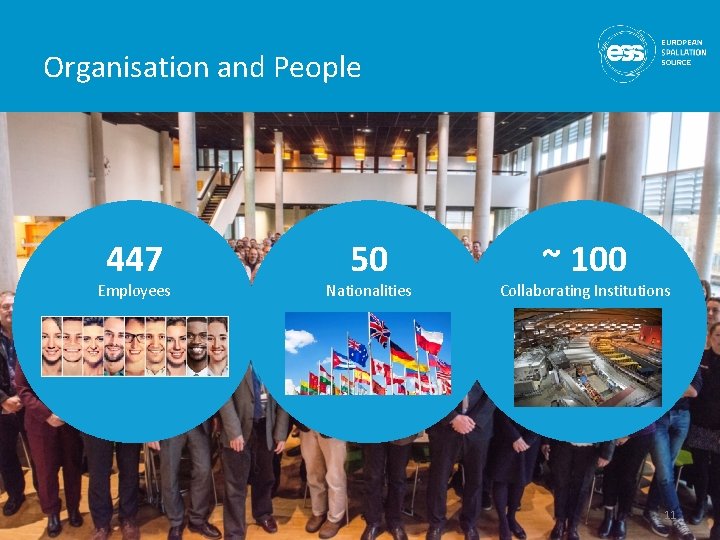
Organisation and People 447 Employees 50 Nationalities ~ 100 Collaborating Institutions 11
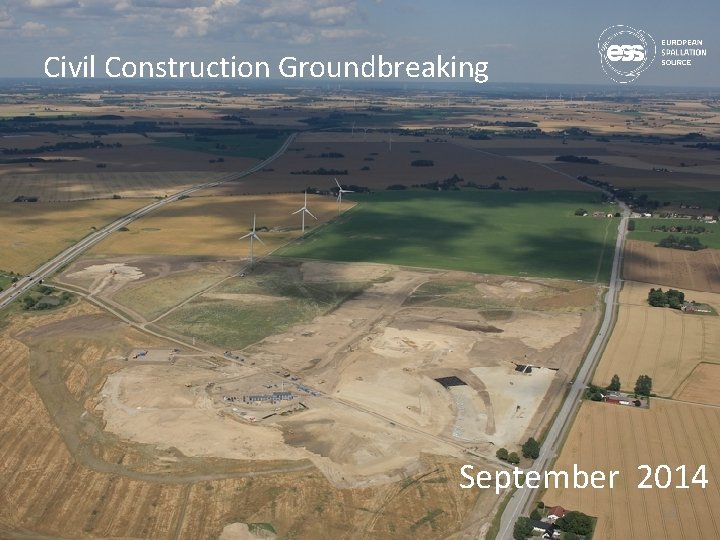
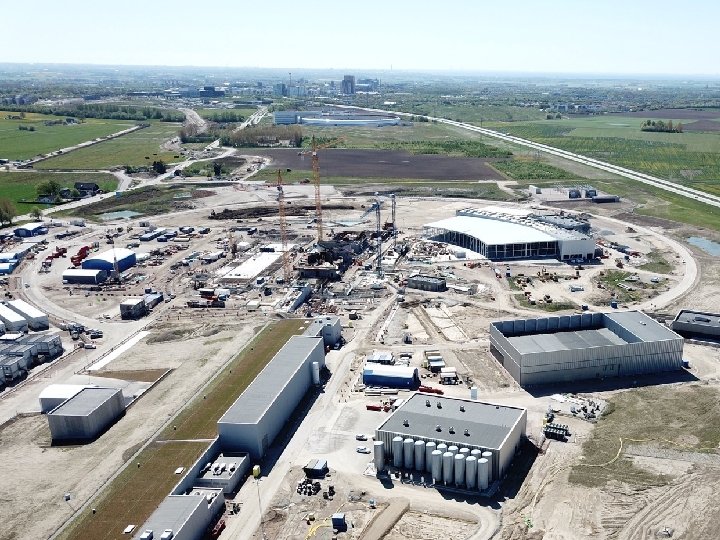
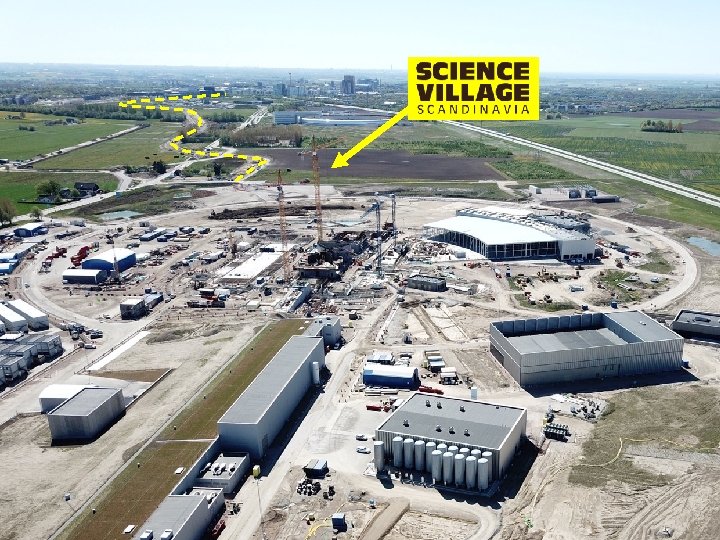
Civil Construction Groundbreaking September 2014 12
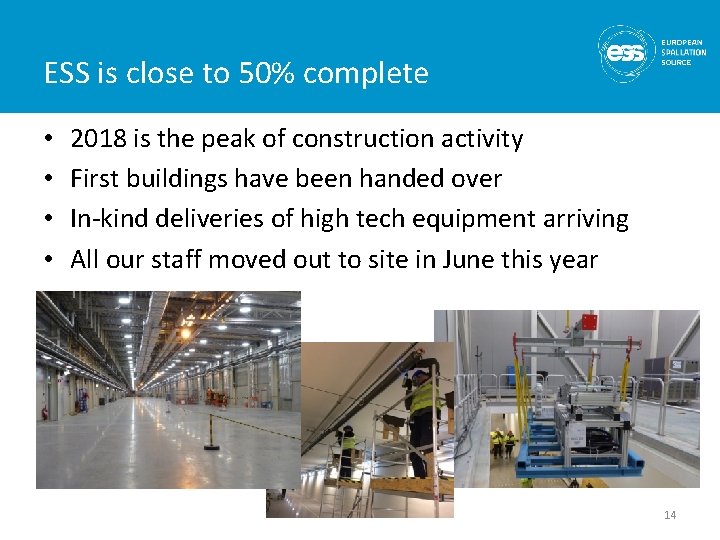
ESS is close to 50% complete • • 2018 is the peak of construction activity First buildings have been handed over In-kind deliveries of high tech equipment arriving All our staff moved out to site in June this year 14
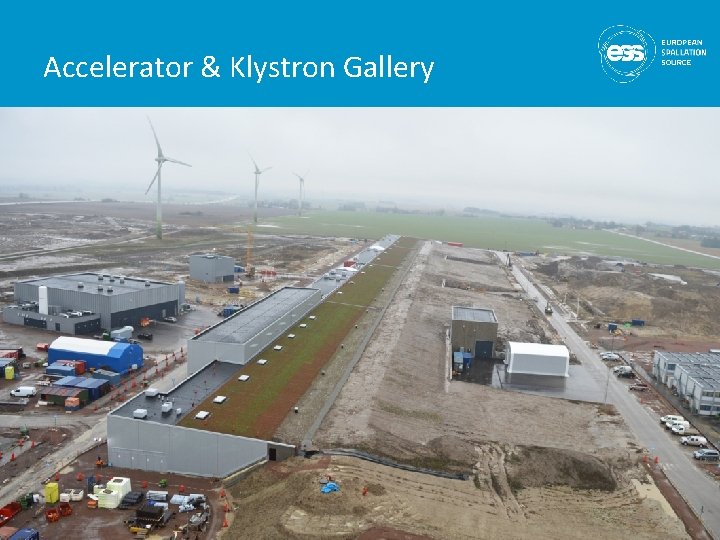
Accelerator & Klystron Gallery 15
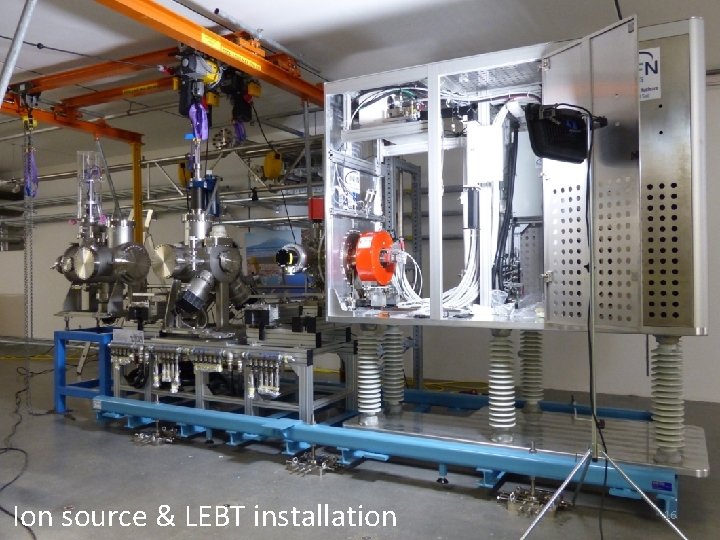
Ion source & LEBT installation 16
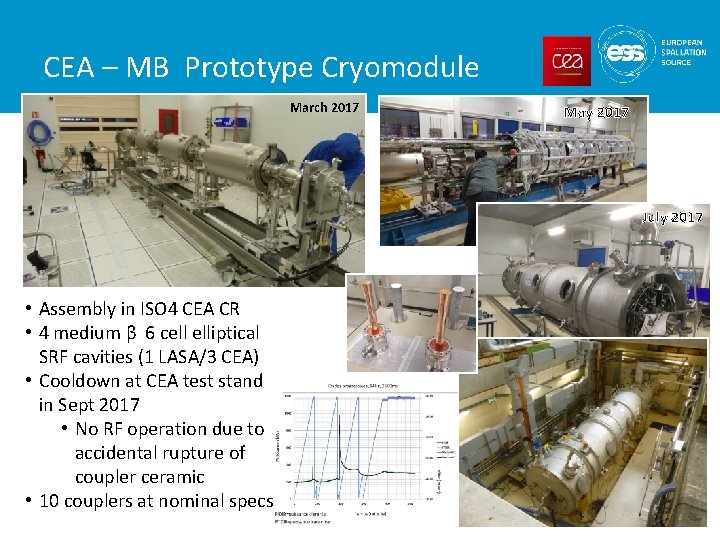
CEA – MB Prototype Cryomodule March 2017 May 2017 July 2017 • Assembly in ISO 4 CEA CR • 4 medium β 6 cell elliptical SRF cavities (1 LASA/3 CEA) • Cooldown at CEA test stand in Sept 2017 • No RF operation due to accidental rupture of coupler ceramic • 10 couplers at nominal specs 17
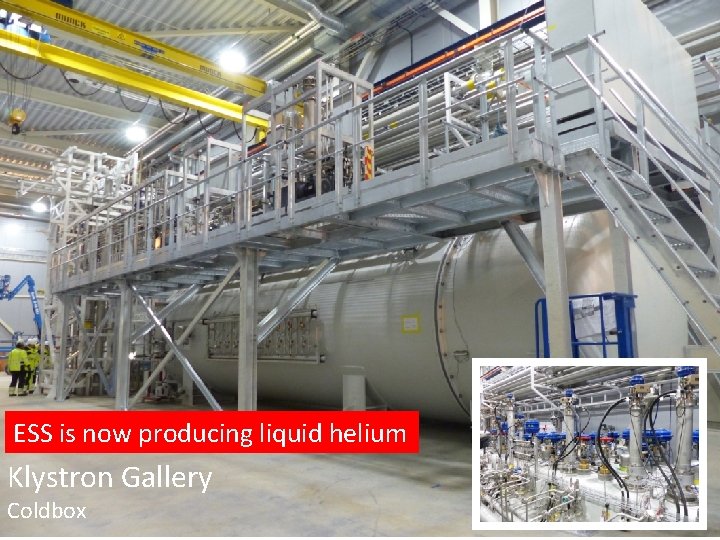
ESS is now producing liquid helium Klystron Gallery Coldbox 18
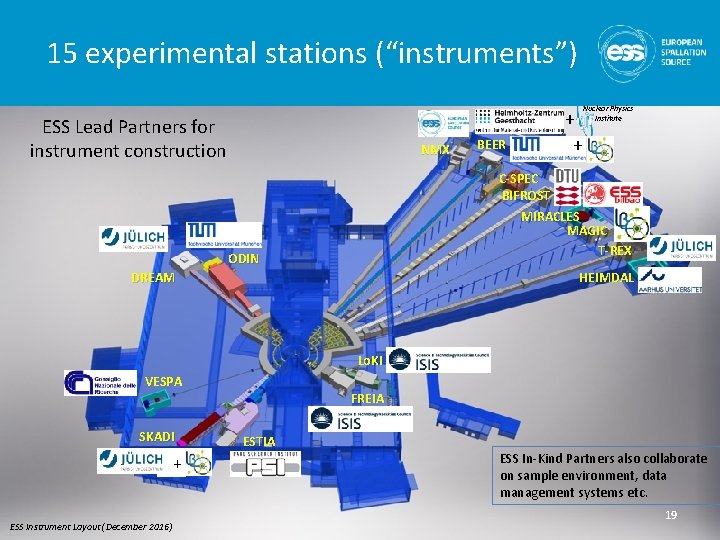
15 experimental stations (“instruments”) Nuclear Physics Institute ESS Lead Partners for instrument construction NMX BEER + + C-SPEC BIFROST MIRACLES MAGIC T-REX ODIN HEIMDAL DREAM Lo. KI VESPA SKADI + ESS Instrument Layout (December 2016) FREIA ESTIA ESS In-Kind Partners also collaborate on sample environment, data management systems etc. 19
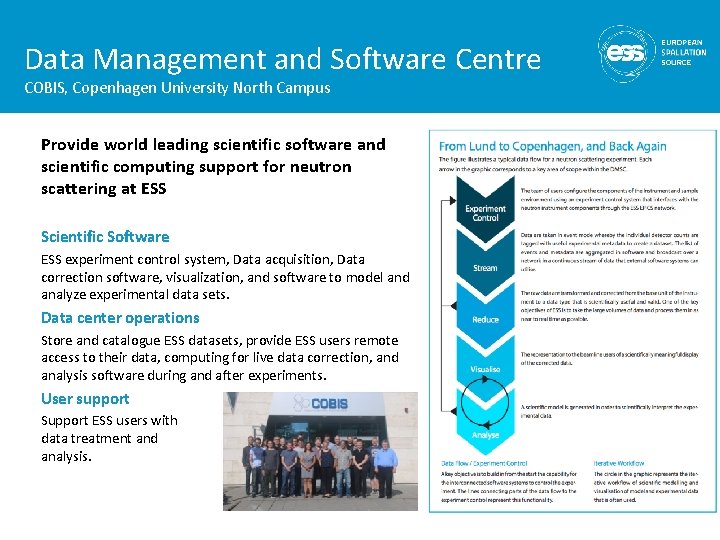
Data Management and Software Centre COBIS, Copenhagen University North Campus Provide world leading scientific software and scientific computing support for neutron scattering at ESS Scientific Software ESS experiment control system, Data acquisition, Data correction software, visualization, and software to model and analyze experimental data sets. Data center operations Store and catalogue ESS datasets, provide ESS users remote access to their data, computing for live data correction, and analysis software during and after experiments. User support Support ESS users with data treatment and analysis. 20
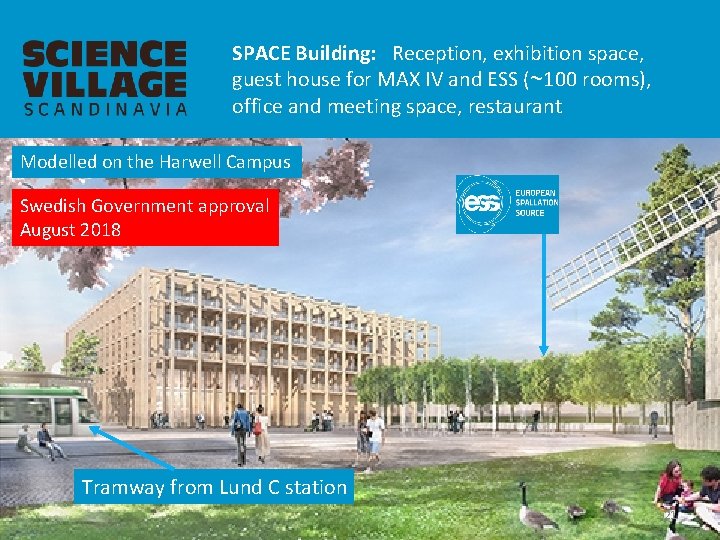
SPACE Building: Reception, exhibition space, guest house for MAX IV and ESS (~100 rooms), office and meeting space, restaurant Modelled on the Harwell Campus Swedish Government approval August 2018 Tramway from Lund C station 21
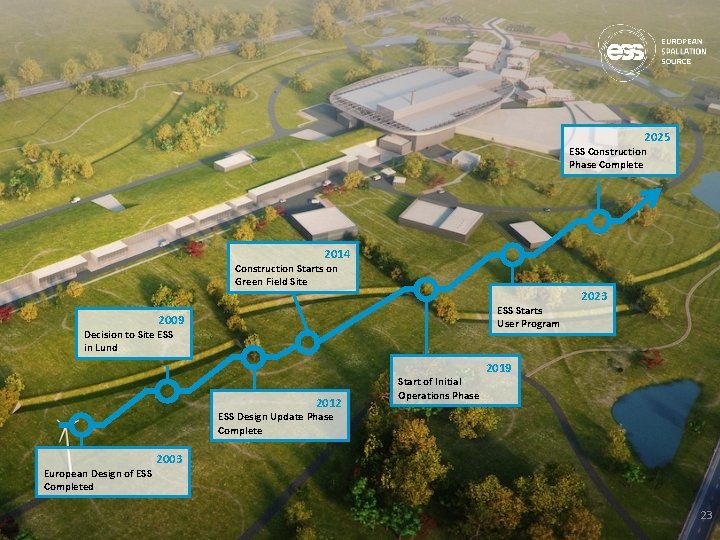
Journey to deliver the world’s leading facility for research using neutrons 2025 ESS Construction Phase Complete 2014 Construction Starts on Green Field Site ESS Starts User Program 2009 Decision to Site ESS in Lund 2012 Start of Initial Operations Phase 2023 2019 ESS Design Update Phase Complete European Design of ESS Completed 2003 23
ESS shows how particle accelerator technology helps to address pressing issues for the planet and society • energy and the environment • health • future economic competitiveness 24
Thank you! @johnwomersley @essneutron europeanspallationsource. se