
THE EUROPEAN DANUBE REGION STRATEGY A macroregion in
THE EUROPEAN DANUBE REGION STRATEGY A macro-region in action ESPON 2013 SEMINAR, GÖDÖLLŐ, 21 -22 JUNE 2011
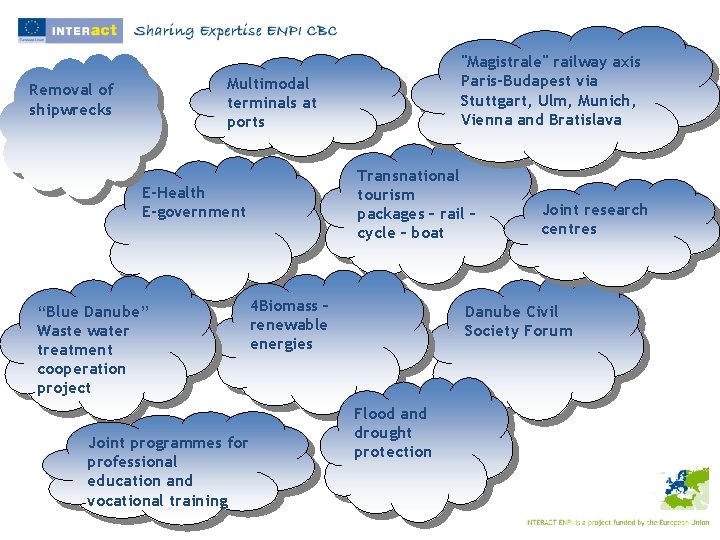
"Magistrale" railway axis Paris-Budapest via Stuttgart, Ulm, Munich, Vienna and Bratislava Multimodal terminals at ports Removal of shipwrecks Transnational tourism packages – rail – cycle – boat E-Health E-government “Blue Danube” Waste water treatment cooperation project Joint programmes for professional education and vocational training 4 Biomass – renewable energies Joint research centres Danube Civil Society Forum Flood and drought protection

What is a macro region? • No standard definition • A working method - Pilot initiative of MS • Cooperation and coordination ØShared solutions ØBetter use of potential ØBetter quality of life 2 existing strategies Baltic and Danube region
What is a macro regional strategy? « a framework for common action » ØIdentified common needs ØCommitment for shared and integrated solutions, new ideas ØPolicy coordination ØAlignment of financial sources Covers several regions in several countries Smaller then the EU
Why macro regional strategies? “Many of the region's challenges know no borders: flooding, transport and energy links, environmental protection and security, all require a united approach” A sustainable framework for policy integration ¬Commonly agreed priority actions ¬Aligned funding ¬Region specific challenges and opportunities ¬Community aquis; ¬Reinforcing major EU policy initiatives
The preparation of the EUSDR § Wide consultation process - Involvement of stakeholders § national and local authorities, NGOs, regions and cities, etc. § 14 countries: 8 EU Member States and 6 non-MS § Output: Communication from the EU Commission to other EU Institutions / Action Plan
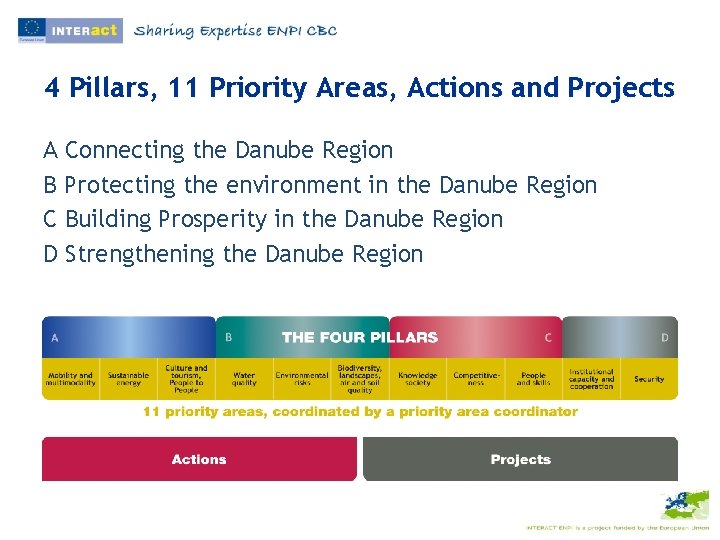
4 Pillars, 11 Priority Areas, Actions and Projects A Connecting the Danube Region B Protecting the environment in the Danube Region C Building Prosperity in the Danube Region D Strengthening the Danube Region
Key topics • Mobility: movement of people and goods, corridors across Europe • Energy: secure sources, diversification, especially renewable, reduction in emissions, efficiency • Water: quality (pollution, ecosystems) and quantity (navigation, risk prevention and management) • Biodiversity: precious natural heritage as a source of well-being and prosperity
Key topics • Socio-economic development: jobs, welfare, framework for creativity and investments, IT potential • Education and capacity: schools and universities, training, modern administration, inclusion of all citizens • Culture and identity: rich cultural heritage, tourism potential • Safety: personal safety and protection, fight against organised crime, corruption
Timetable § June 2009: European Council Conclusions § 2010: Wide consultation process - 5 preparatory conferences and public consultation process § December 2010: Commission presents Action Plan and Communication: definition of the main pillars, types of actions envisaged, identification of projects and actions and coordination of existing initiatives § February 2011: Designation of priority area coordinators § 13 April 2011: Adoption by the General Affairs Council § 14 June 2011: Endorsement by the Heads of State at the European Council – start of the implementation phase
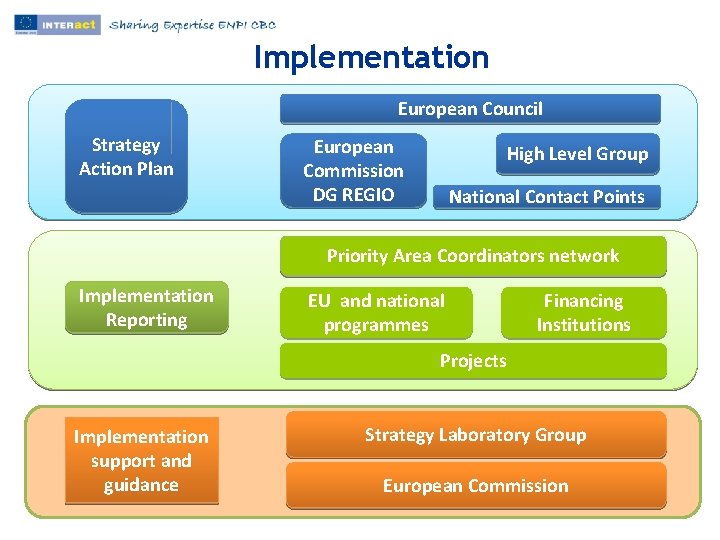
Implementation European Council Strategy Action Plan European Commission DG REGIO High Level Group National Contact Points Priority Area Coordinators network Implementation Reporting EU and national programmes Financing Institutions Projects Implementation support and guidance Strategy Laboratory Group European Commission
IN Thank you for your attention!
- Slides: 13