The European Commissions Proposal on Digital tools and
- Slides: 14
The European Commission’s Proposal on Digital tools and processes in Company Law
Context (1) • Digital Single Market Strategy • e-Government Action Plan
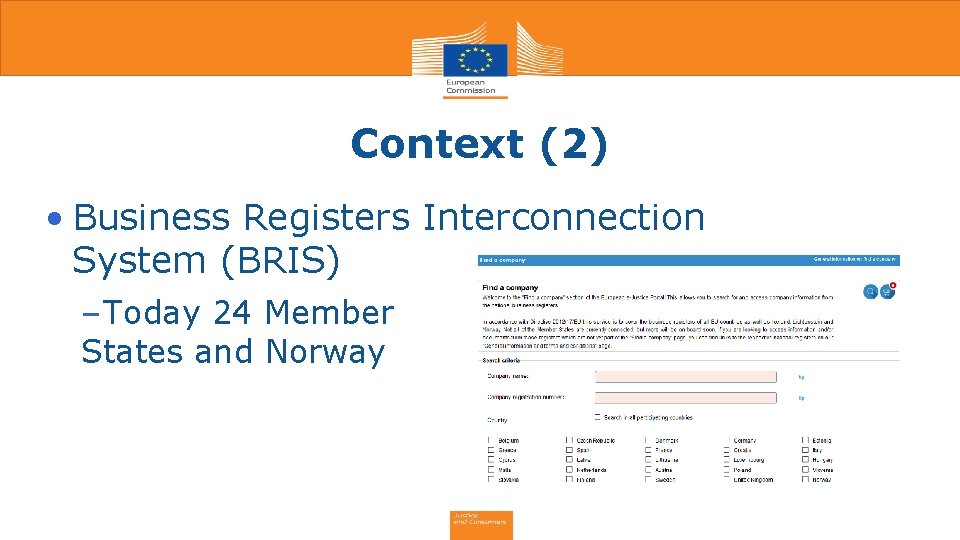
Context (2) • Business Registers Interconnection System (BRIS) ‒ Today 24 Member States and Norway
Issues • Divergence in the availability of online tools • Only 17 EU Member States provide full online registration of companies • Multiple submissions by companies of the same information
Objectives • More use of digital tools and processes in company law • More level playing field for companies in the EU • Flexibility for the Member States to fit into their national systems.
Main Elements of the Proposal 1. Electronic identification means 2. Online registration and filing 3. Templates 4. Information requirements 5. Disclosure 6. Exchange of information between business registers 7. Extended list of free of charge documents
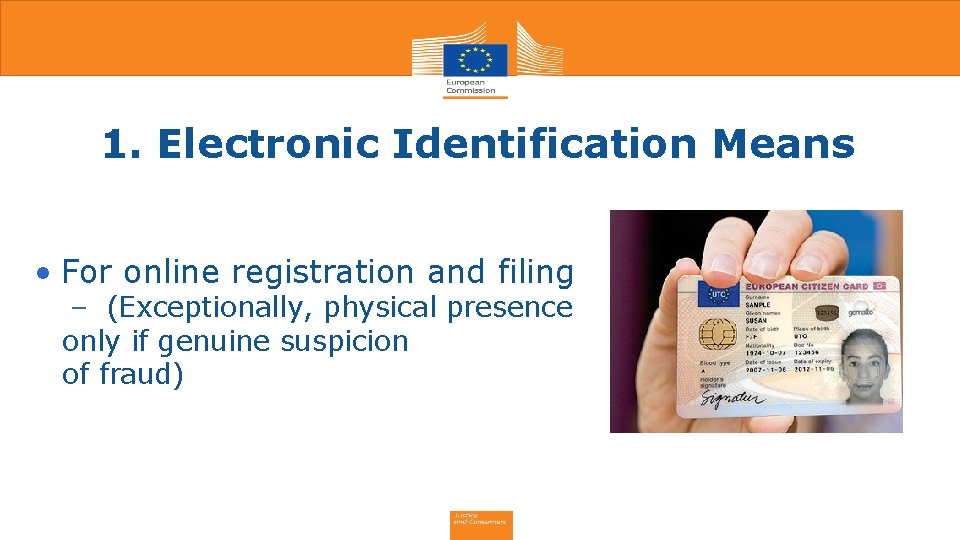
1. Electronic Identification Means • For online registration and filing ‒ (Exceptionally, physical presence only if genuine suspicion of fraud)
2. Full Online Registration and Filing • For limited liability companies and branches ‒ (Possibility for Member States to opt out for public liability companies) • Notaries’ or other legal professionals’ roles can be maintained
3. Templates • Provided by Member States • For the registration of private limited liability companies ‒ (optionally, for public limited liability companies) • At least in one additional official EU language ‒ (broadly understood by the largest possible number of cross-border users)
4. Information Requirements • Free of charge information on requirements and formalities • More detailed information on private limited liability companies • At least in one additional official EU language on top of national language
5. Disclosure • Company data becomes legally effective once in the business register • Optional publication in national gazette • Business registers send data to the national gazette
6. Exchange of Information Between Business Registers • Through BRIS • About disqualified directors • About changes of information on companies ‒ for the registers of branches abroad ‒ Once Only Principle
7. Extended List of Free of Charge Documents • Names of the company • EUID (identification number) • Legal status of the company (e. g. closed, struck off) • Object of the company (where available) • Number of employees (where available) • Persons authorised to represent the company • Information on branches
• Thank you for your attention