
The Eukaryotic Cell Cycle Essential Question What are
- Slides: 54
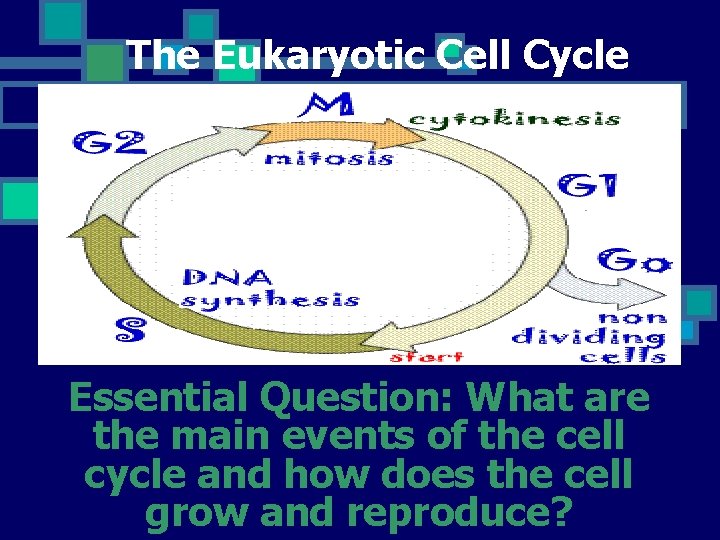
The Eukaryotic Cell Cycle Essential Question: What are the main events of the cell cycle and how does the cell grow and reproduce?
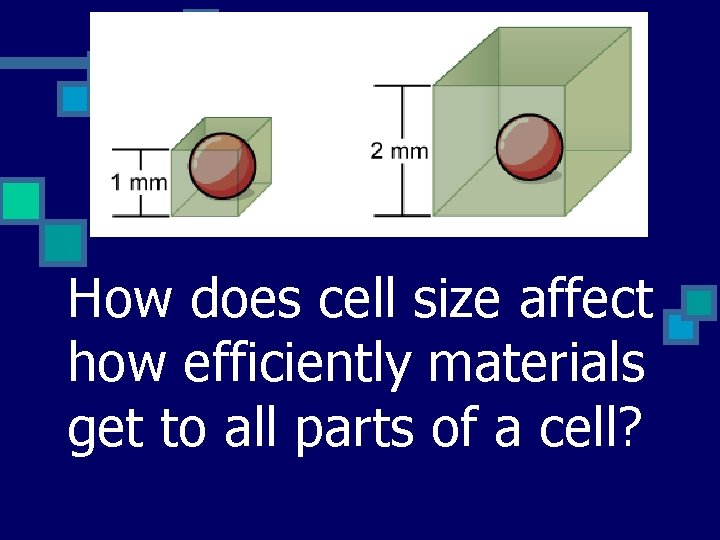
How does cell size affect how efficiently materials get to all parts of a cell?
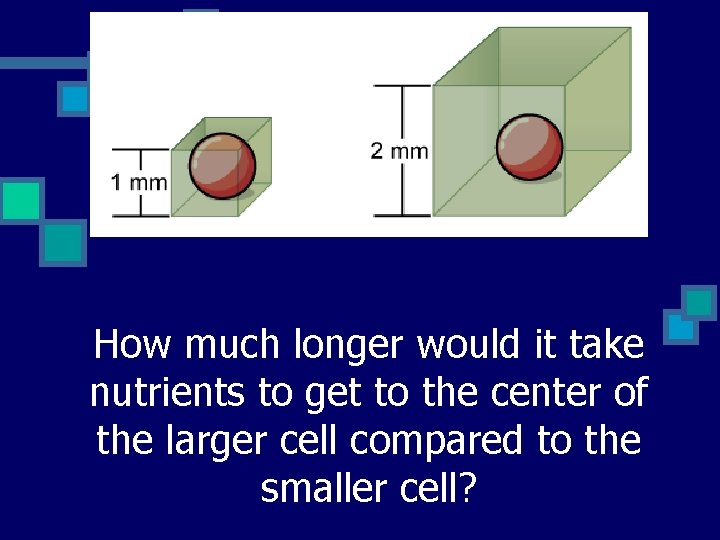
How much longer would it take nutrients to get to the center of the larger cell compared to the smaller cell?
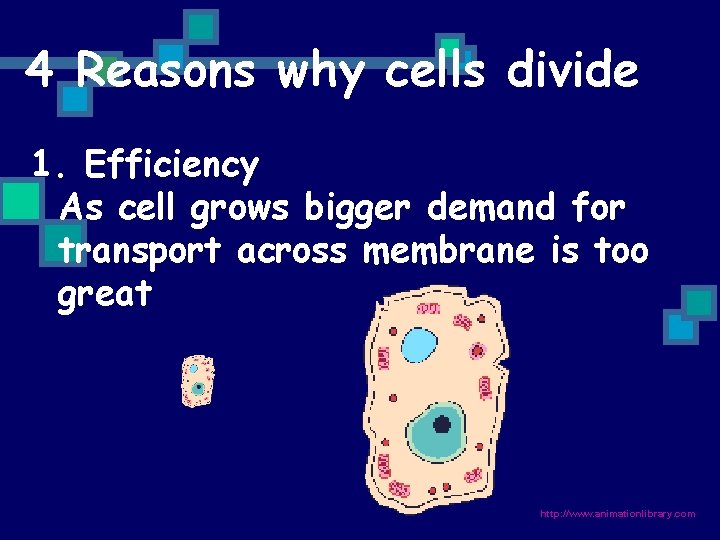
4 Reasons why cells divide 1. Efficiency As cell grows bigger demand for transport across membrane is too great http: //www. animationlibrary. com
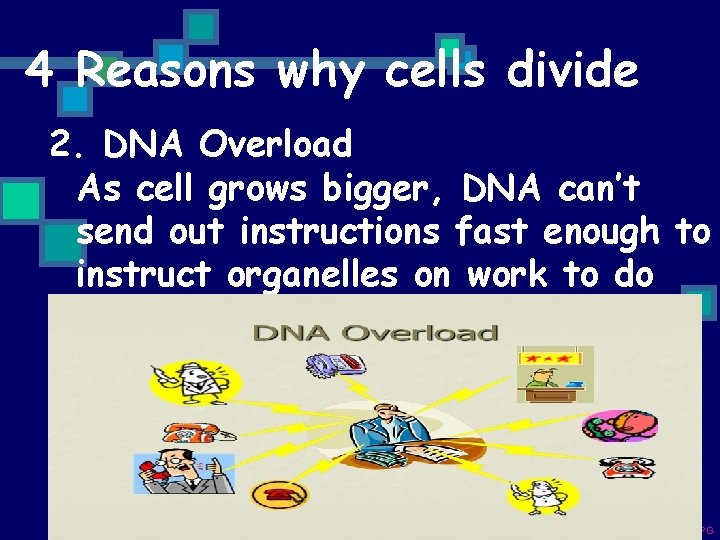
4 Reasons why cells divide 2. DNA Overload As cell grows bigger, DNA can’t send out instructions fast enough to instruct organelles on work to do http: //www. adc. state. az. us/images/Off-Library. JPG
4 Reasons why cells divide 3) Growth 4) Cells divide to replace worn out or damaged cells http: //www. adc. state. az. us/images/Off-Library. JPG
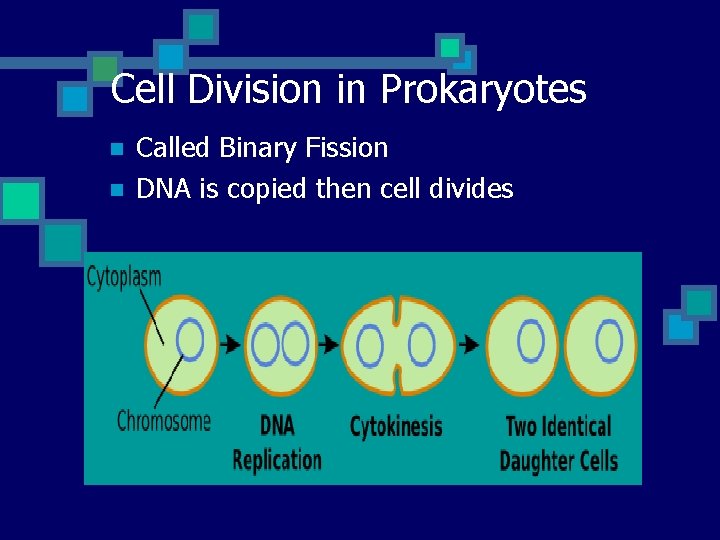
Cell Division in Prokaryotes n n Called Binary Fission DNA is copied then cell divides
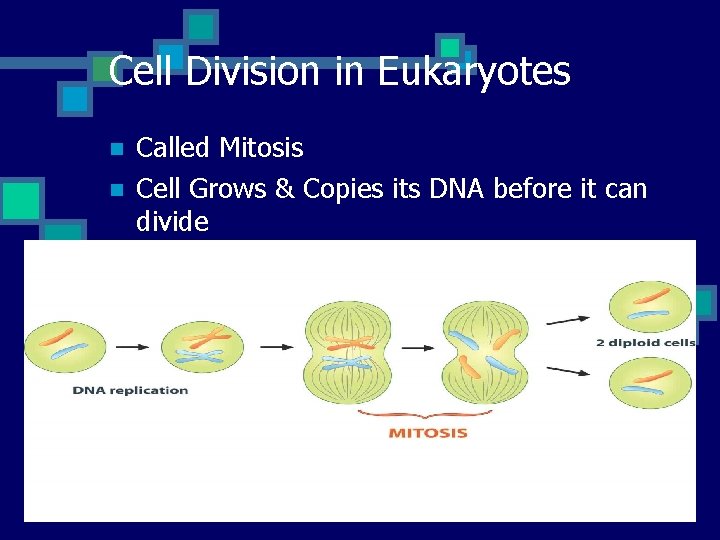
Cell Division in Eukaryotes n n Called Mitosis Cell Grows & Copies its DNA before it can divide
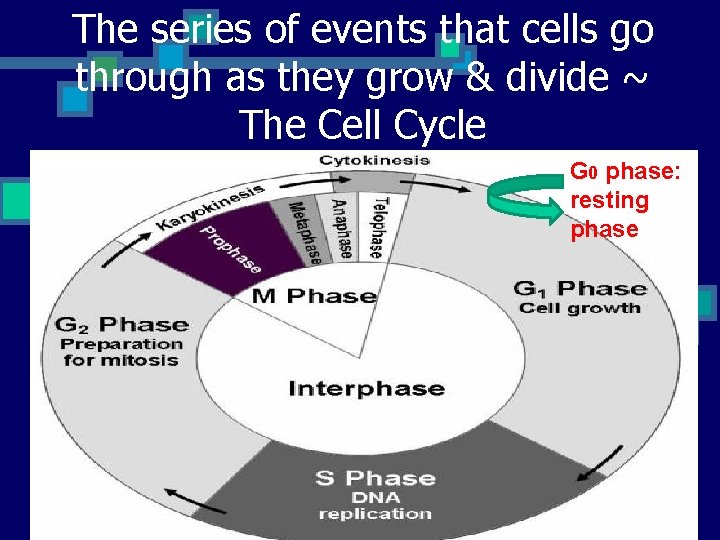
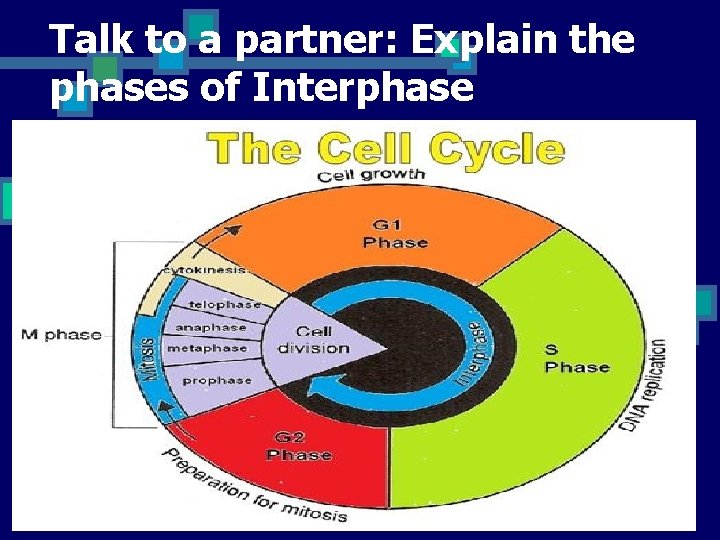
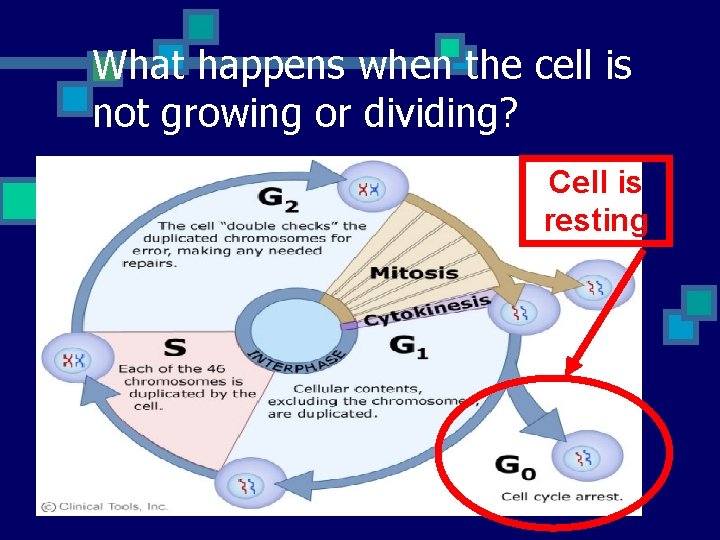
The series of events that cells go through as they grow & divide ~ The Cell Cycle G 0 phase: resting phase
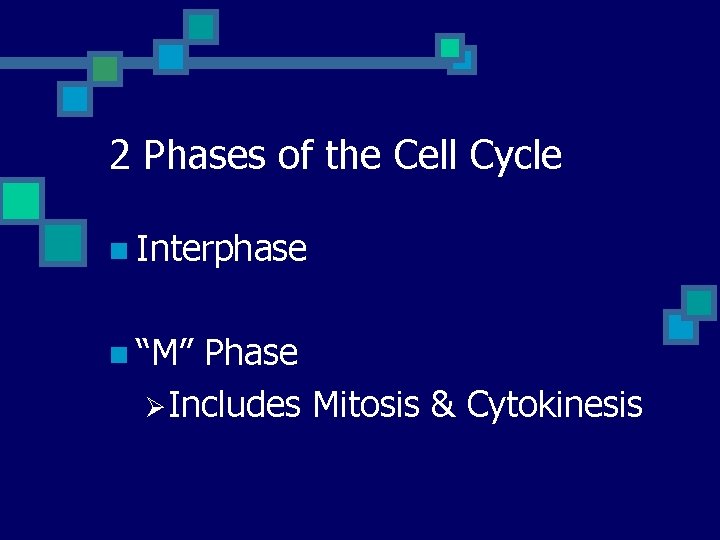
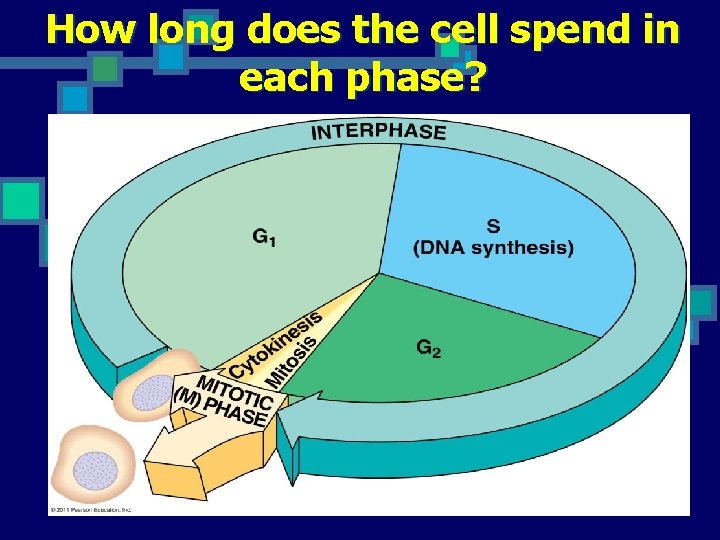
2 Phases of the Cell Cycle n Interphase n “M” Phase ØIncludes Mitosis & Cytokinesis
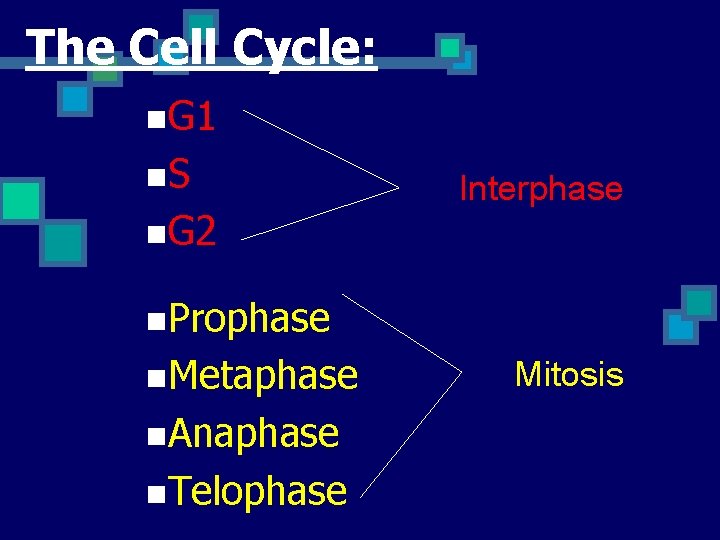
The Cell Cycle: n. G 1 n. S n. G 2 Interphase n. Prophase n. Metaphase n. Anaphase n. Telophase Mitosis
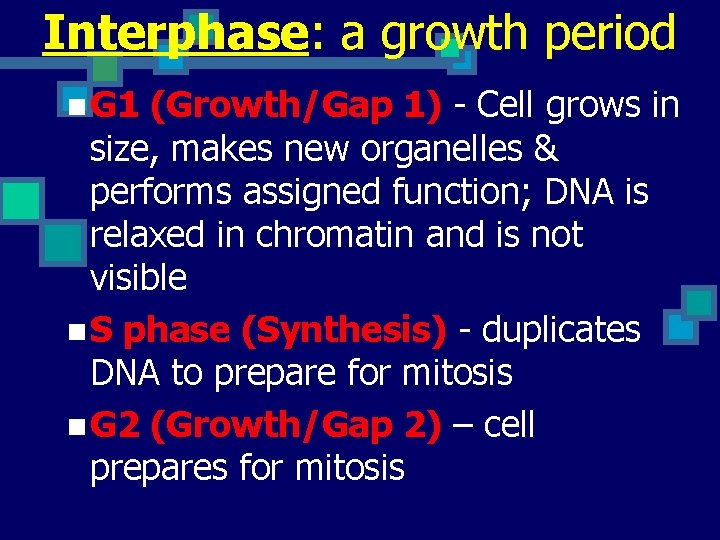
Interphase: a growth period n G 1 (Growth/Gap 1) - Cell grows in size, makes new organelles & performs assigned function; DNA is relaxed in chromatin and is not visible n S phase (Synthesis) - duplicates DNA to prepare for mitosis n G 2 (Growth/Gap 2) – cell prepares for mitosis
Talk to a partner: Explain the phases of Interphase
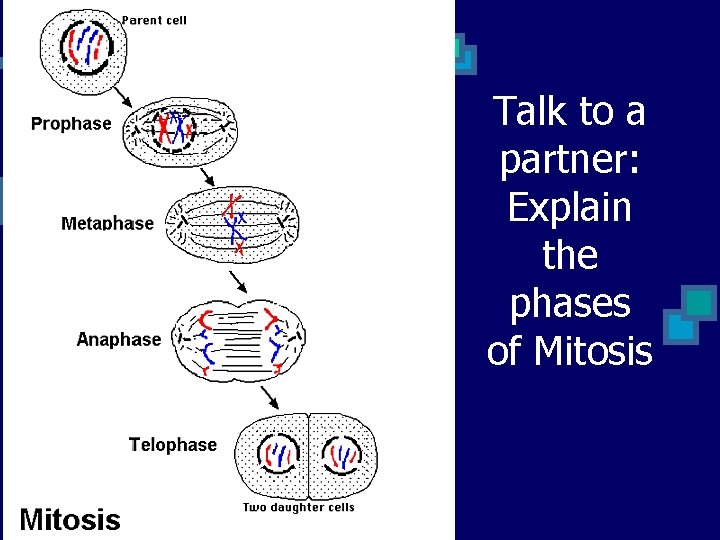
Mitosis occurs in 4 phases 1. 2. 3. 4. Prophase Metaphase Anaphase Telophase
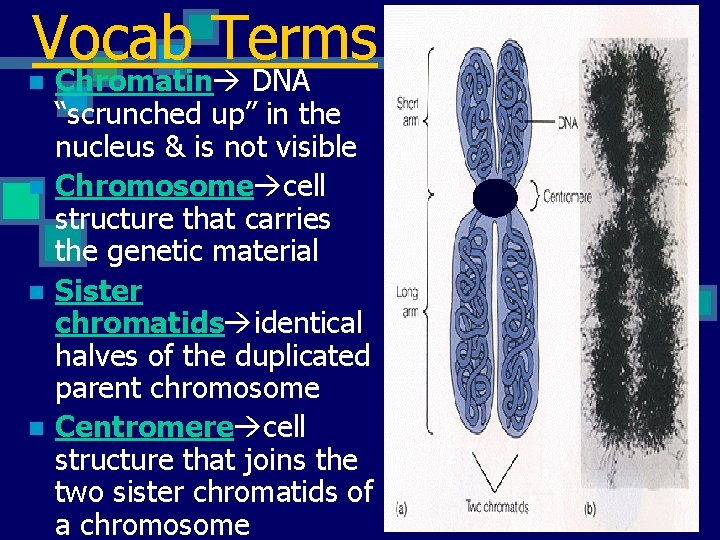
Vocab Terms n n Chromatin DNA “scrunched up” in the nucleus & is not visible Chromosome cell structure that carries the genetic material Sister chromatids identical halves of the duplicated parent chromosome Centromere cell structure that joins the two sister chromatids of a chromosome
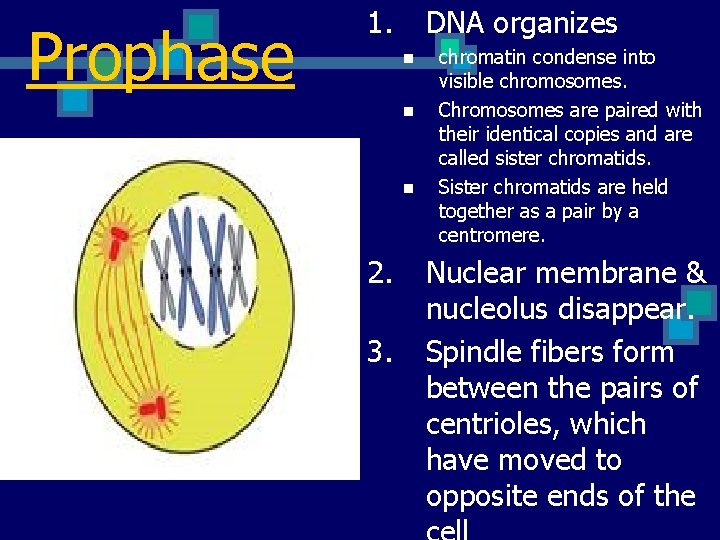
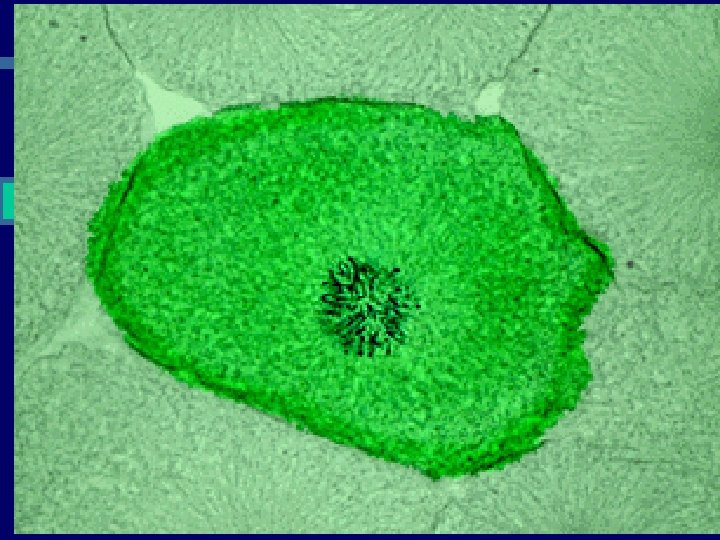
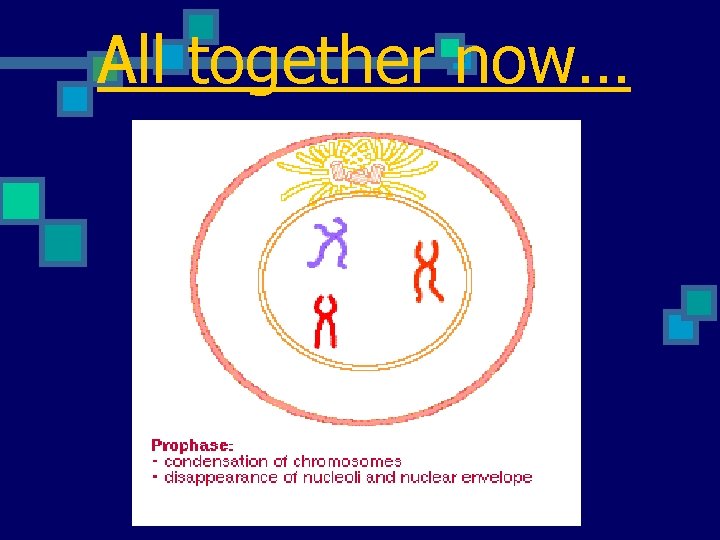
Prophase 1. DNA organizes n n n 2. 3. chromatin condense into visible chromosomes. Chromosomes are paired with their identical copies and are called sister chromatids. Sister chromatids are held together as a pair by a centromere. Nuclear membrane & nucleolus disappear. Spindle fibers form between the pairs of centrioles, which have moved to opposite ends of the
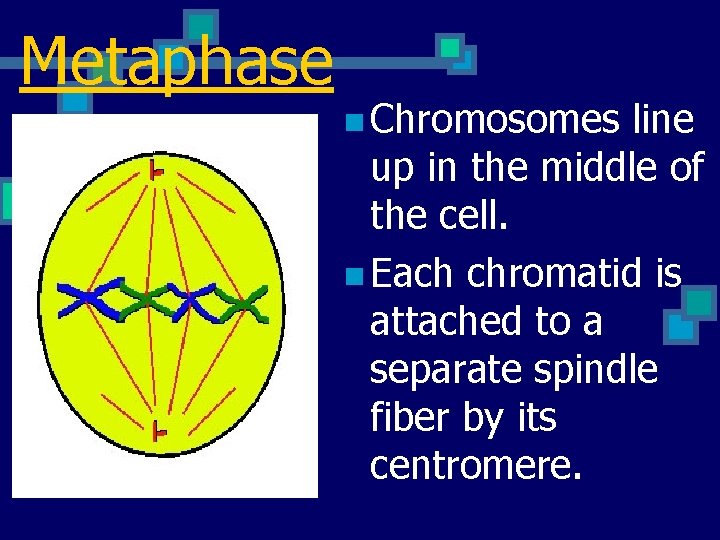
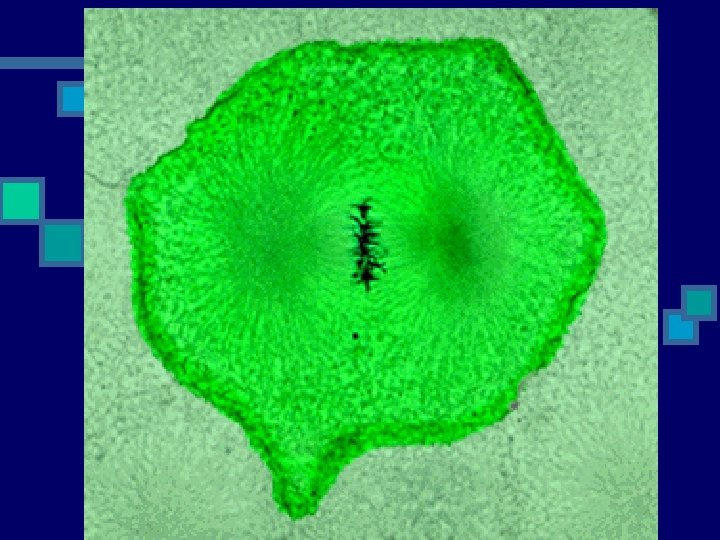
Metaphase n Chromosomes line up in the middle of the cell. n Each chromatid is attached to a separate spindle fiber by its centromere.
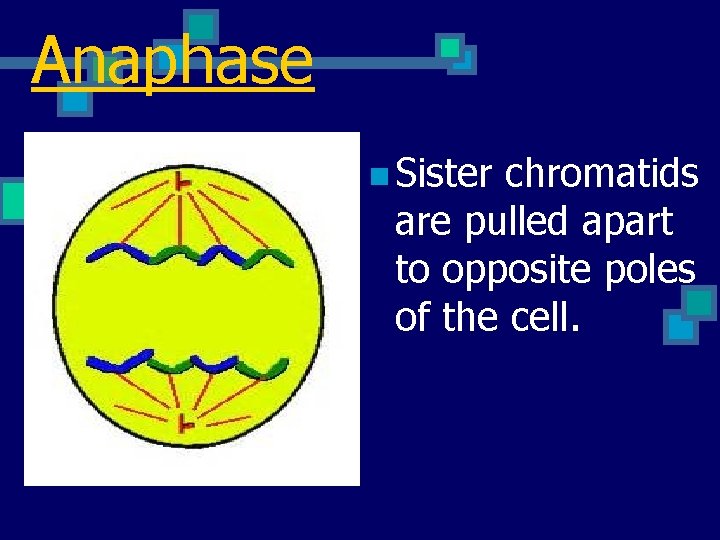
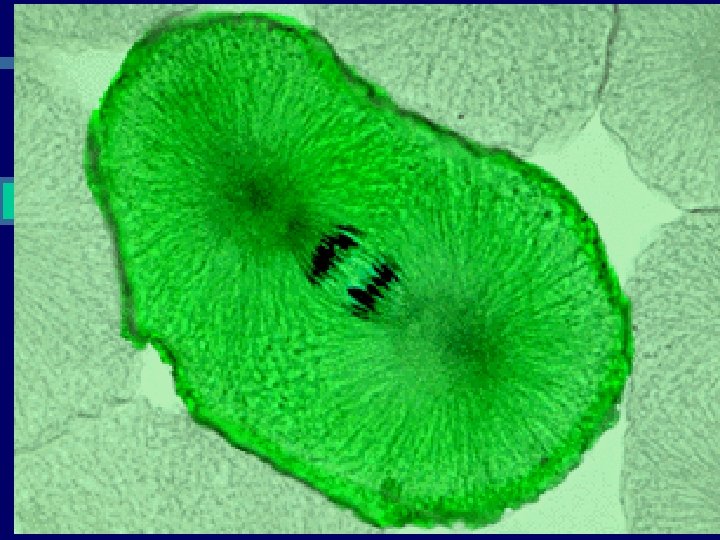
Anaphase n Sister chromatids are pulled apart to opposite poles of the cell.
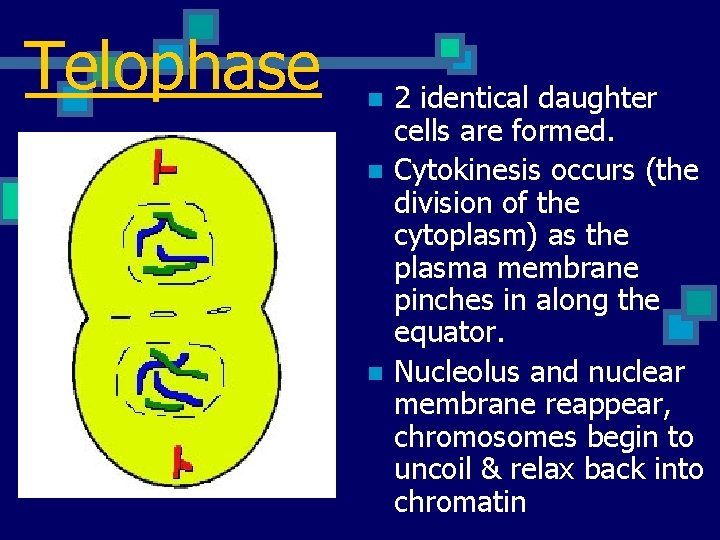
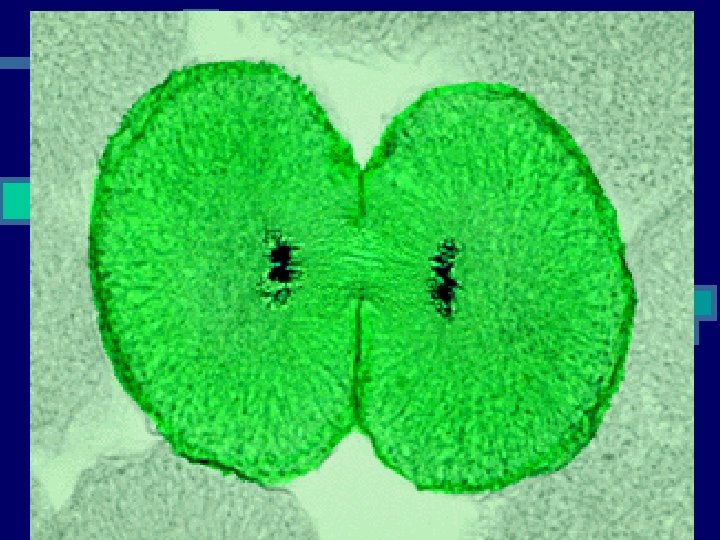
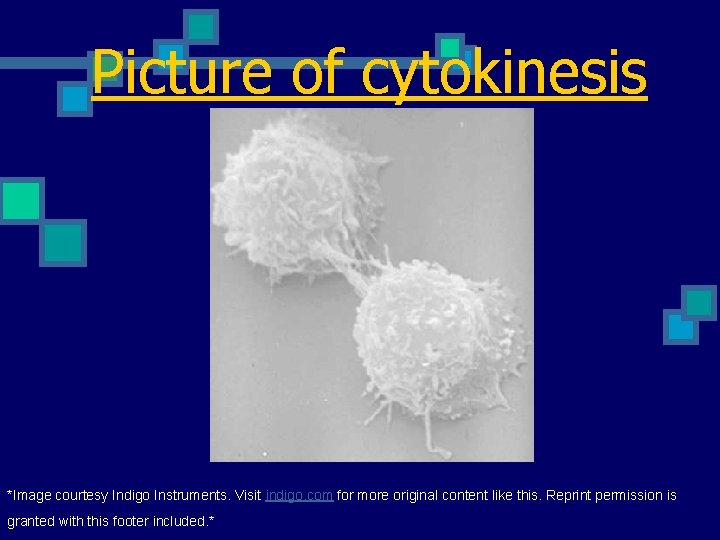
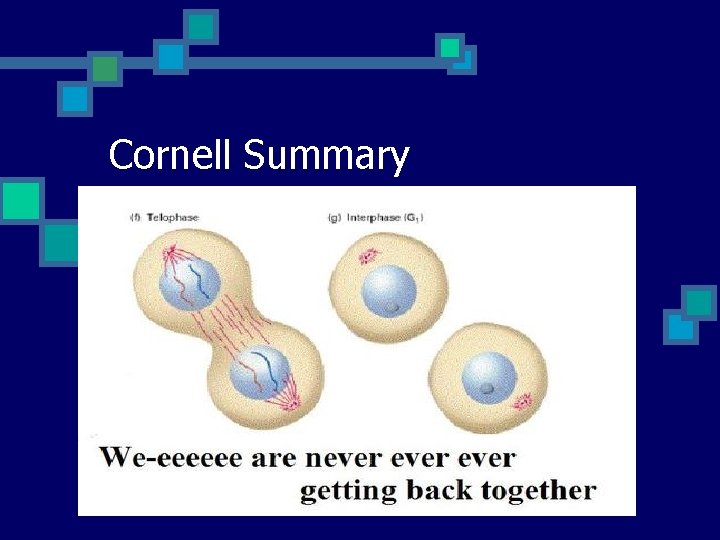
Telophase n n n 2 identical daughter cells are formed. Cytokinesis occurs (the division of the cytoplasm) as the plasma membrane pinches in along the equator. Nucleolus and nuclear membrane reappear, chromosomes begin to uncoil & relax back into chromatin
Picture of cytokinesis *Image courtesy Indigo Instruments. Visit indigo. com for more original content like this. Reprint permission is granted with this footer included. *
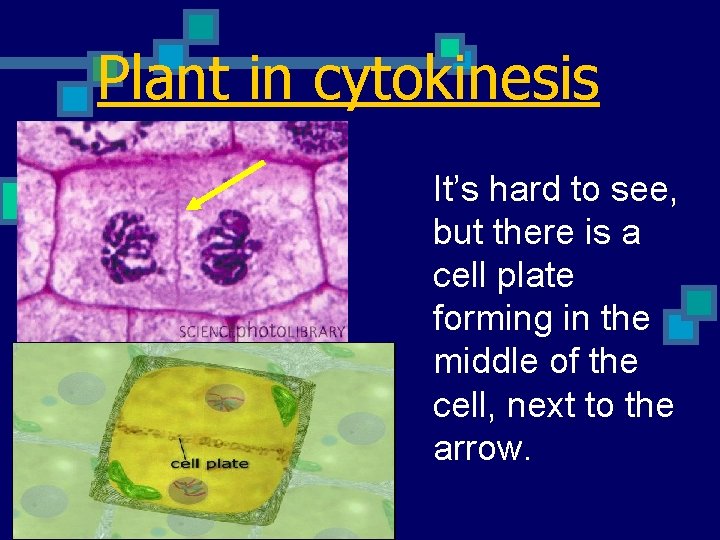
In plants… n Because plant cells have a cell wall, the plasma membrane does not pinch in. n Rather a structure known as the cell plate forms across the cell’s equator.
Plant in cytokinesis It’s hard to see, but there is a cell plate forming in the middle of the cell, next to the arrow.
Finally… n After mitosis is complete, each new daughter cell is an identical copy of the parent cell. Both cells enter interphase to carry out their assigned function until they are ready to divide.
All together now…
Talk to a partner: Explain the phases of Mitosis
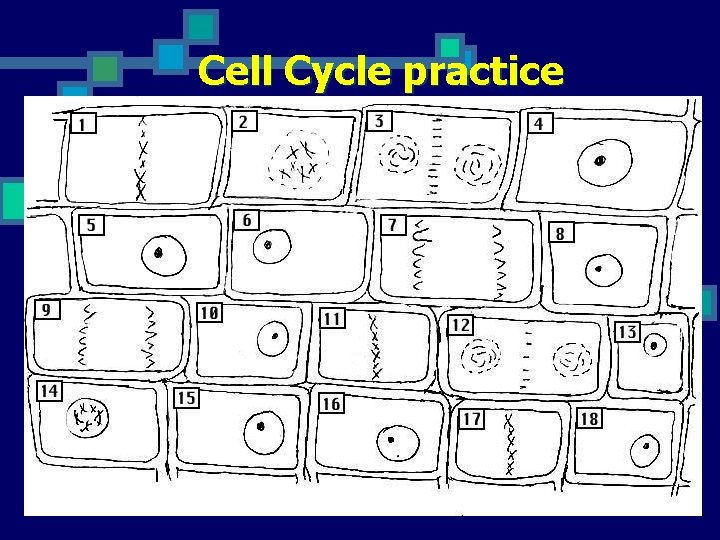
Cell Cycle practice
Cell Cycle Video Lingering Questions…. n n How long does the cell spend in each phase? How does the cell know when it is ready to proceed to the next phase? n What happens when the cell is NOT growing or dividing? n n What is the life span of human cells? Does the cell continue in the cell cycle indefinitely?
How long does the cell spend in each phase?
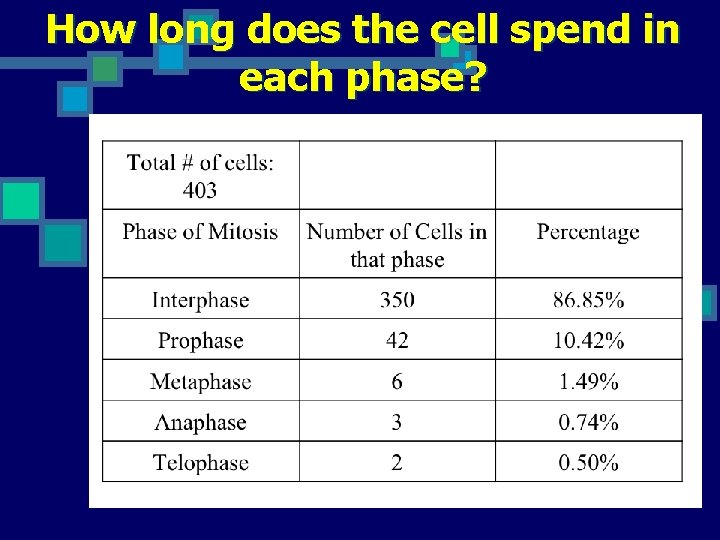
How long does the cell spend in each phase?
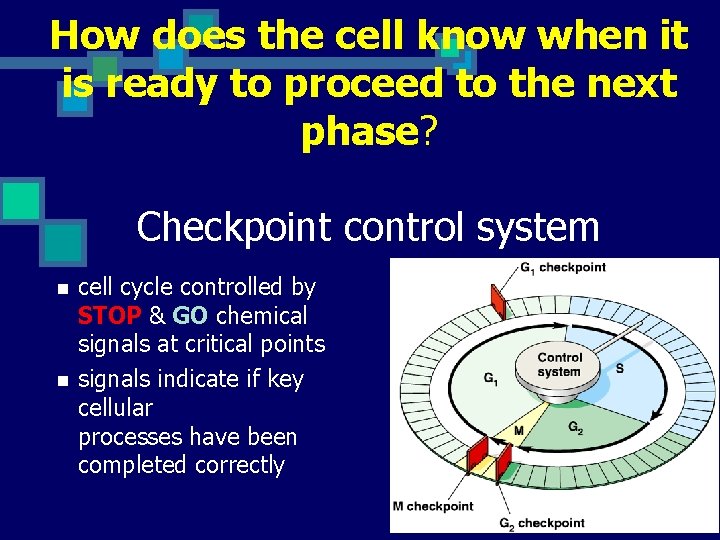
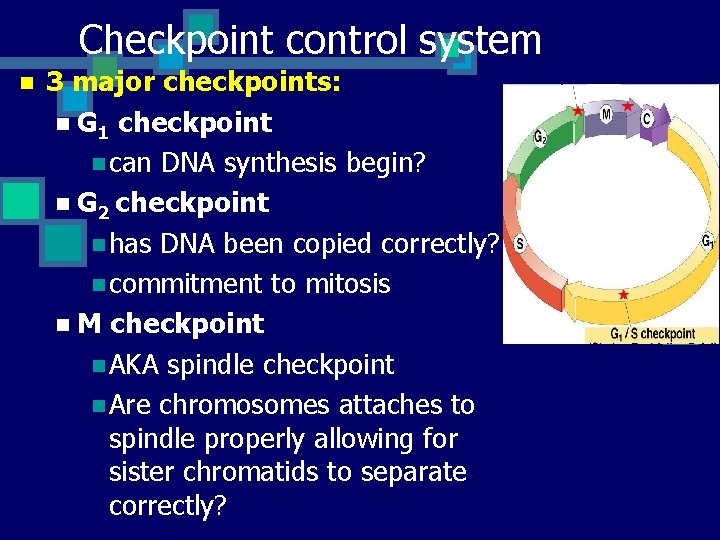
How does the cell know when it is ready to proceed to the next phase? Checkpoint control system n n cell cycle controlled by STOP & GO chemical signals at critical points signals indicate if key cellular processes have been completed correctly
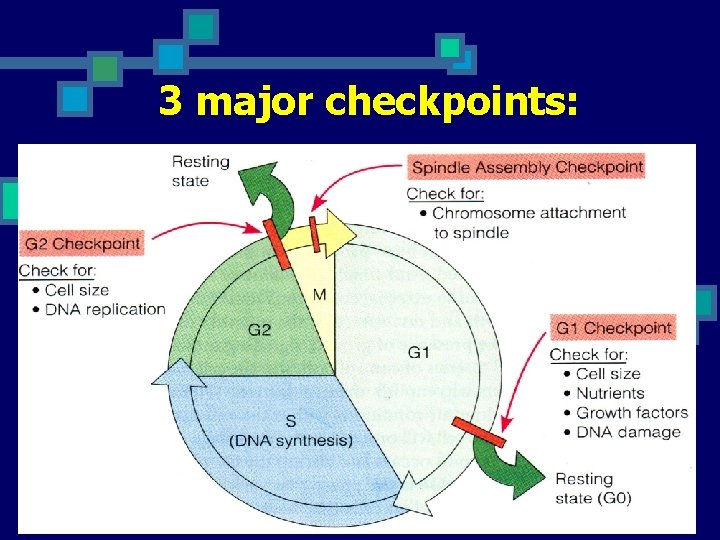
3 major checkpoints:
Checkpoint control system n 3 major checkpoints: n G 1 checkpoint n can DNA synthesis begin? n G 2 checkpoint n has DNA been copied correctly? n commitment to mitosis n M checkpoint n AKA spindle checkpoint n Are chromosomes attaches to spindle properly allowing for sister chromatids to separate correctly?
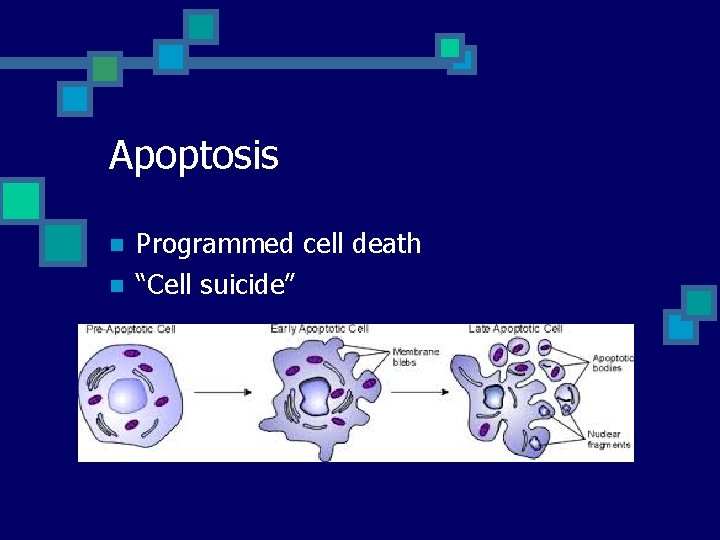
Apoptosis n n Programmed cell death “Cell suicide”
What happens when the cell is not growing or dividing? Cell is resting
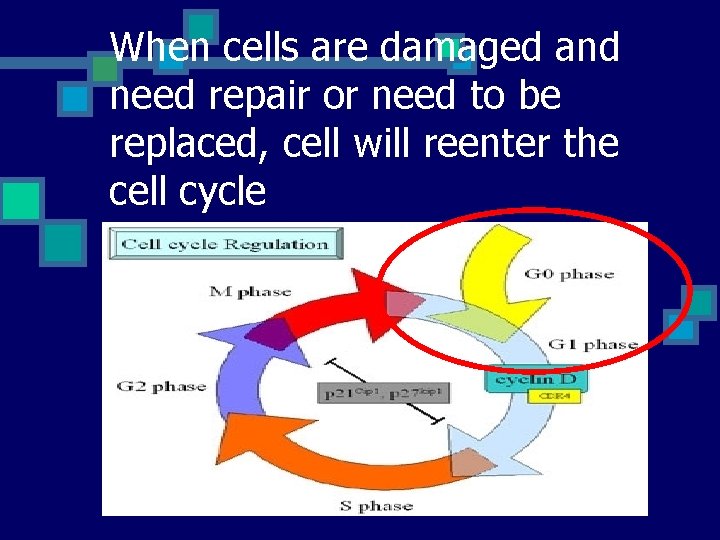
When cells are damaged and need repair or need to be replaced, cell will reenter the cell cycle
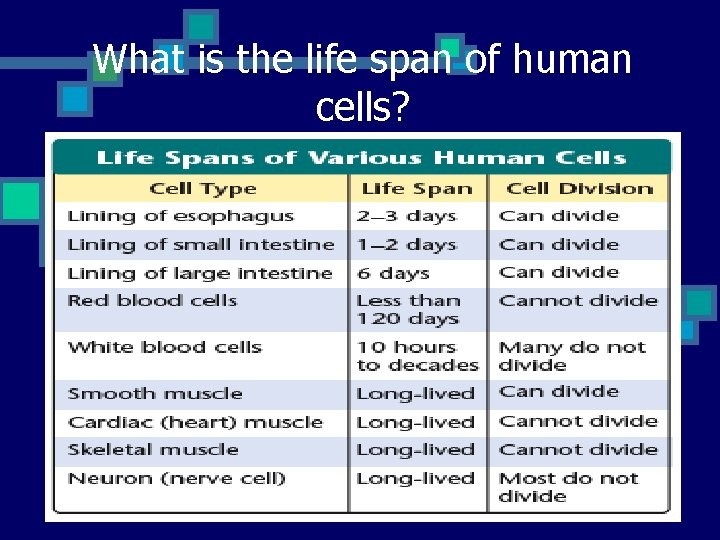
What is the life span of human cells?
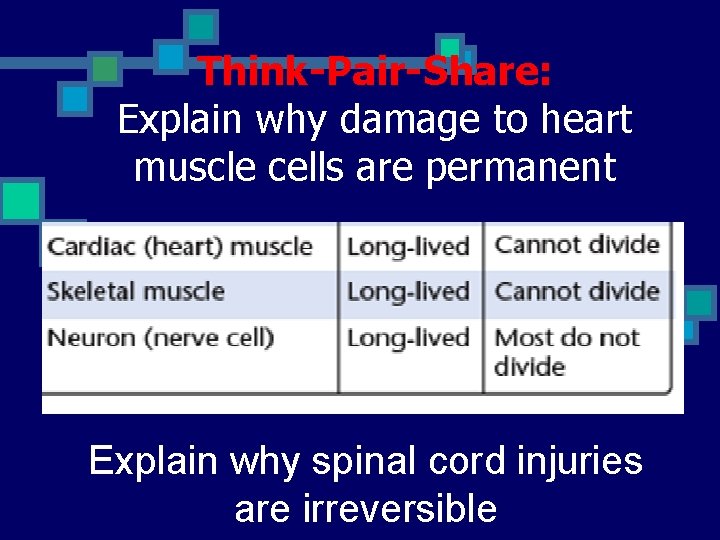
Think-Pair-Share: Explain why damage to heart muscle cells are permanent Explain why spinal cord injuries are irreversible
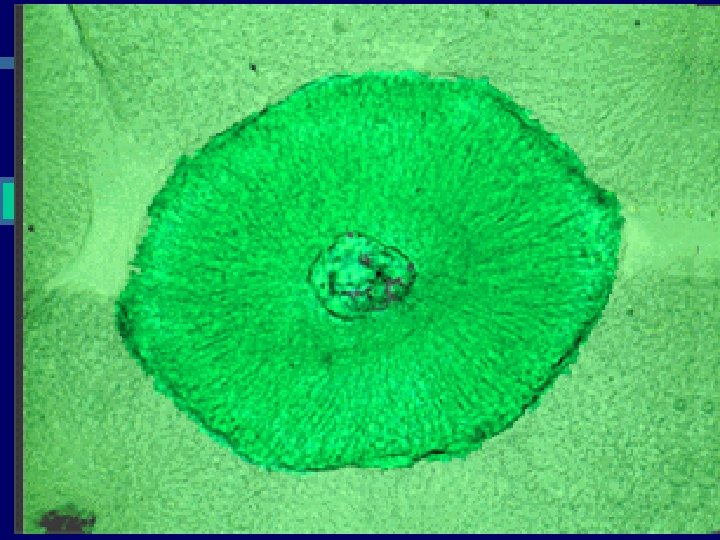
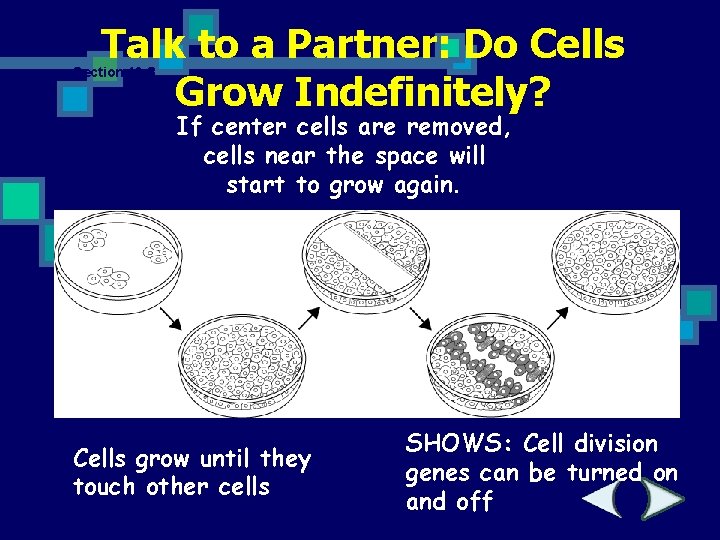
Talk to a Partner: Do Cells Grow Indefinitely? Section 10 -3 If center cells are removed, cells near the space will start to grow again. Cells grow until they touch other cells SHOWS: Cell division genes can be turned on and off
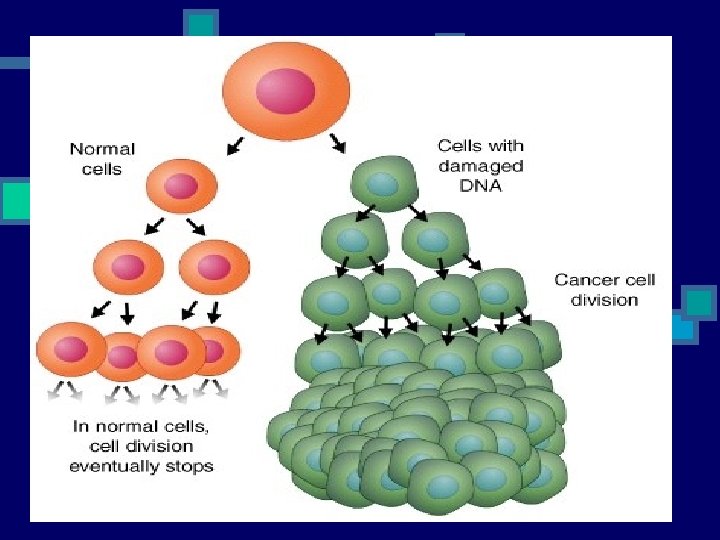
Controlling Cell Growth Through Cell Signals (Gene Regulation) n Cell division stops when cells touch n Can resume if space is available (injury) n Cell division stops when they cannot absorb enough nutrients
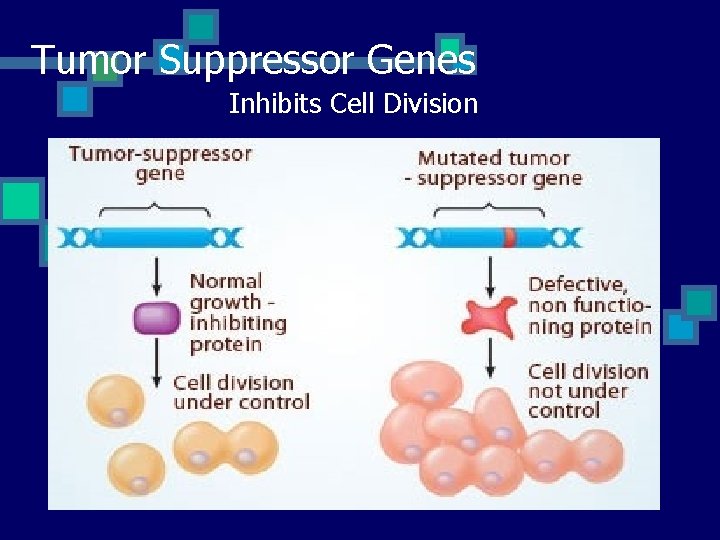
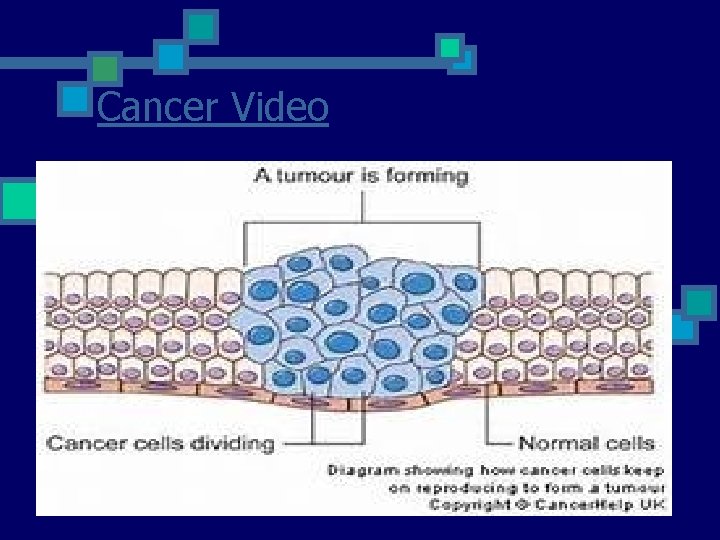
What happens when the cell signal genes that control cell division become damaged? § Some cells do not respond to the signals that regulate the growth § Result ~ uncontrolled cell growth: cancer § Causes of cancer: Ø cigarette & tobacco use Ø radiation exposure (X-ray & UV light) Ø genetics Ø some viruses
Cell Cycle Regulation Genes n Cyclin Kinases n Cyclin Dependent Kinases n Tumor Suppressor Genes
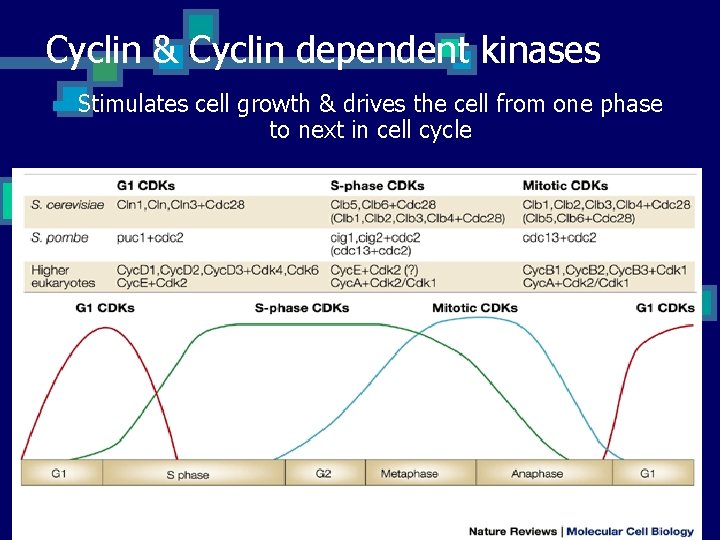
Cyclin & Cyclin dependent kinases n Stimulates cell growth & drives the cell from one phase to next in cell cycle
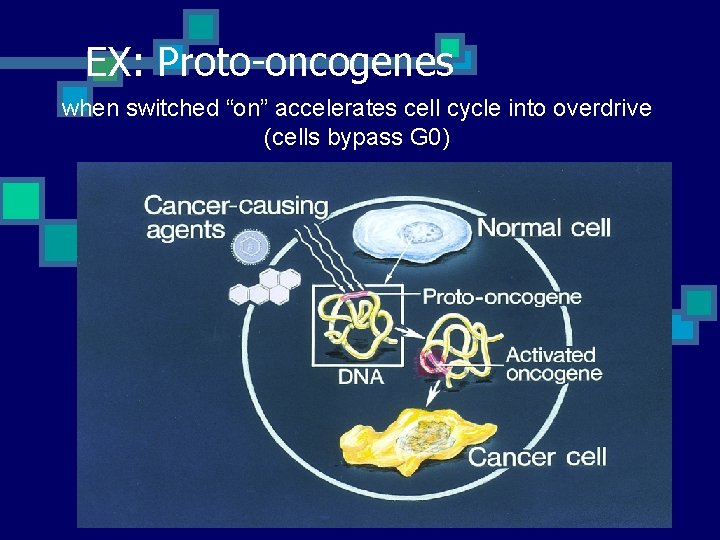
EX: Proto-oncogenes when switched “on” accelerates cell cycle into overdrive (cells bypass G 0)
Tumor Suppressor Genes Inhibits Cell Division
Cancer Video
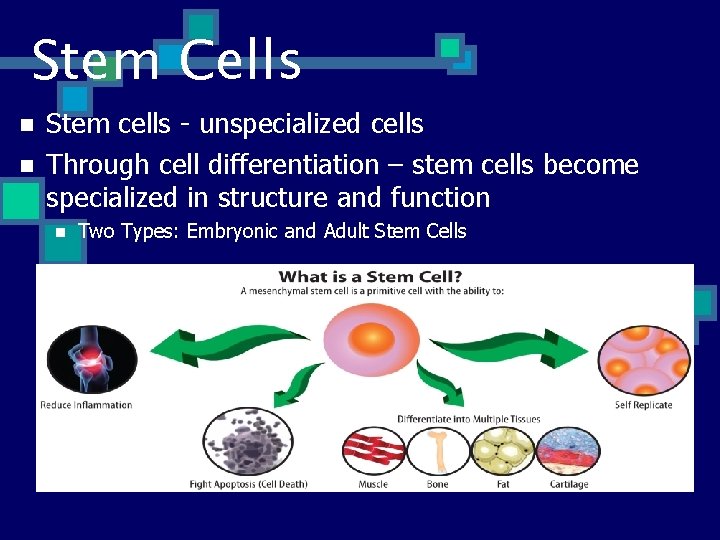
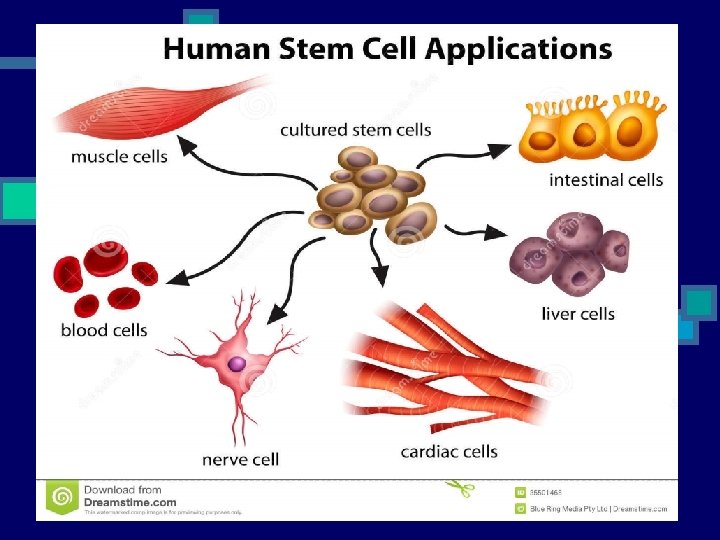
Stem Cells n n Stem cells - unspecialized cells Through cell differentiation – stem cells become specialized in structure and function n Two Types: Embryonic and Adult Stem Cells
Cornell Summary