
The Eukaryotes What makes a eukaryote Why are


- Slides: 64
The Eukaryotes What makes a eukaryote? Why are these infestations/infections important?
• • • Fungi Algae Protozoa Helminths Arthropods
Fungi • Mycology is the study of fungi. • Fungal infections are increasing • Are aerobic or facultatively anaerobic Chemoheterotrophs. • Decomposers that are parasites of plants.
Fungi Characteristics • Thallus consists of filaments called hyphae, a mass of hyphae is mycelium. • Yeasts are unicellular fungi. • Some yeast can change morphology are mold like at 25’C • Classified according to the sexual structure that is formed. • Grow in acidic, low moisture aerobic environments. • Can metabolize complex carbs.
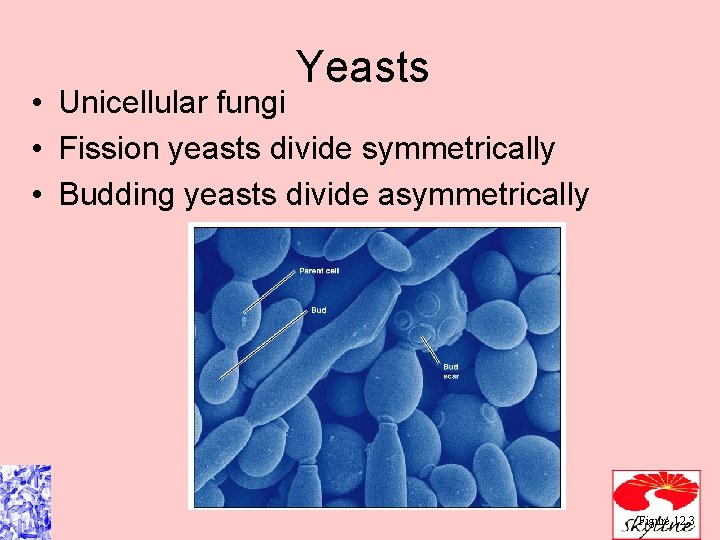
Yeasts • Unicellular fungi • Fission yeasts divide symmetrically • Budding yeasts divide asymmetrically Figure 12. 3
• Pathogenic dimorphic fungi are yeastlike at 37°C and moldlike at 25°C Dimorphism Figure 12. 4
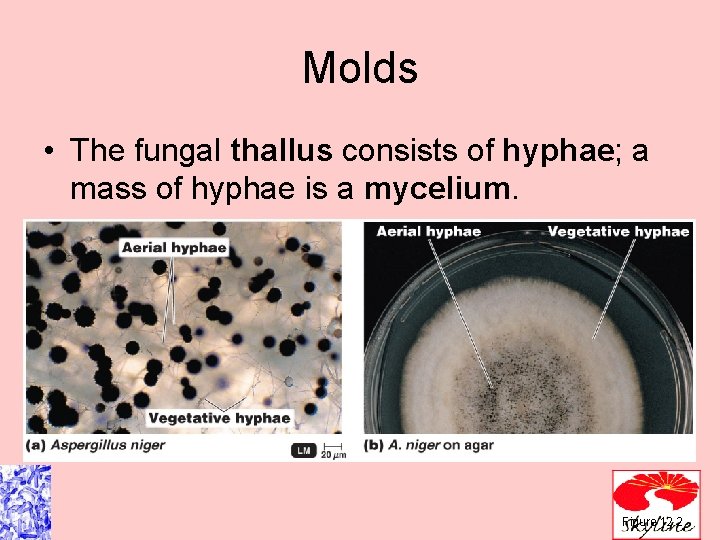
Molds • The fungal thallus consists of hyphae; a mass of hyphae is a mycelium. Figure 12. 2
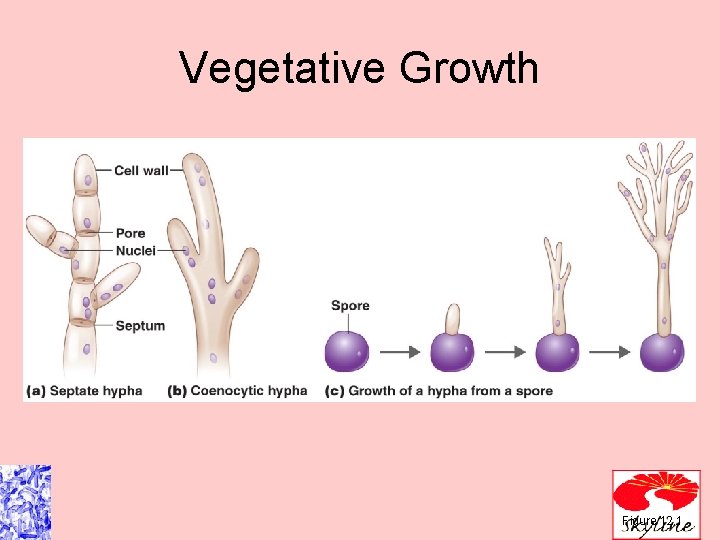
Vegetative Growth Figure 12. 1
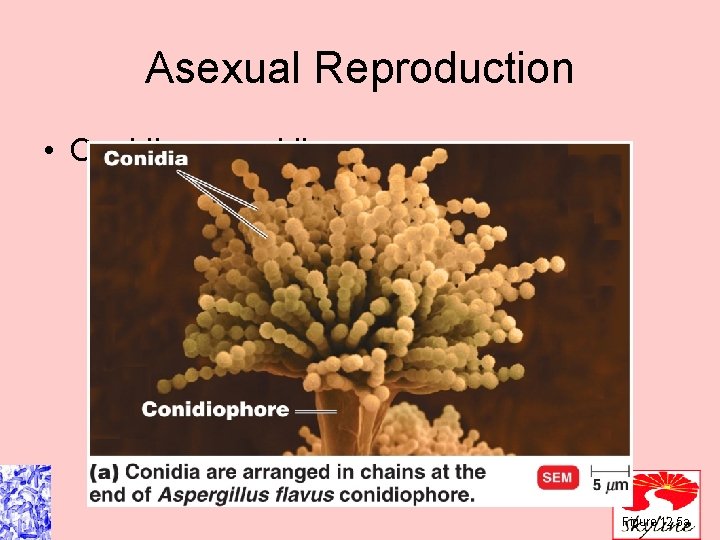
Asexual Reproduction • Conidia or conidiospores Figure 12. 5 a
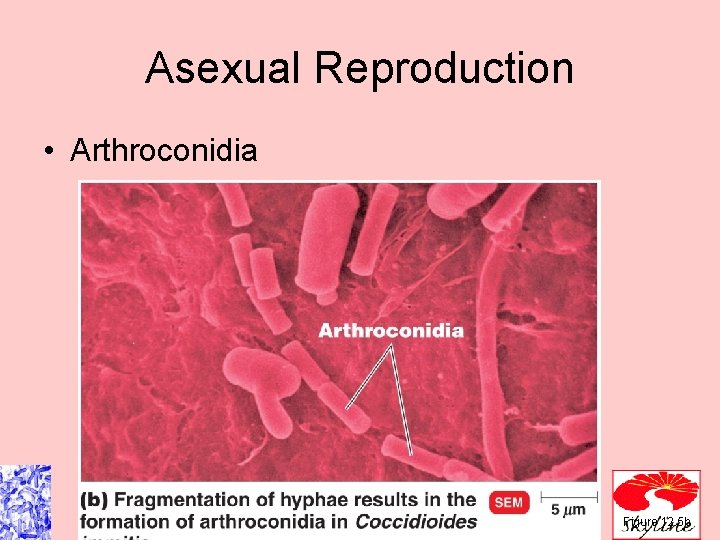
Asexual Reproduction • Arthroconidia Figure 12. 5 b
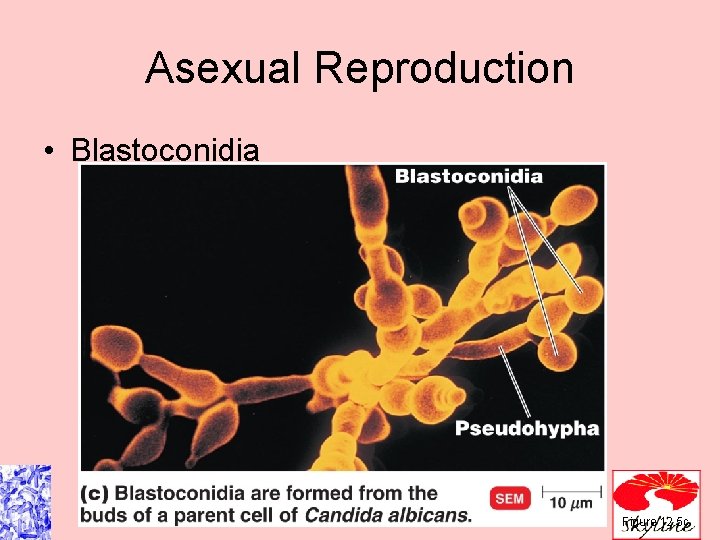
Asexual Reproduction • Blastoconidia Figure 12. 5 c
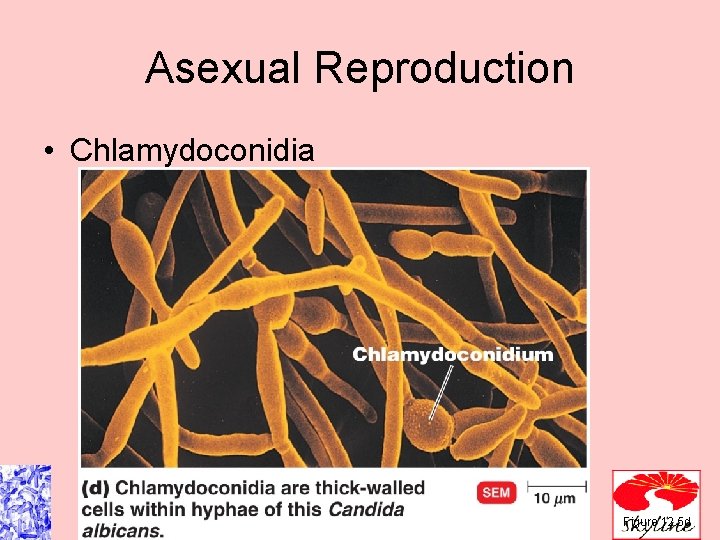
Asexual Reproduction • Chlamydoconidia Figure 12. 5 d
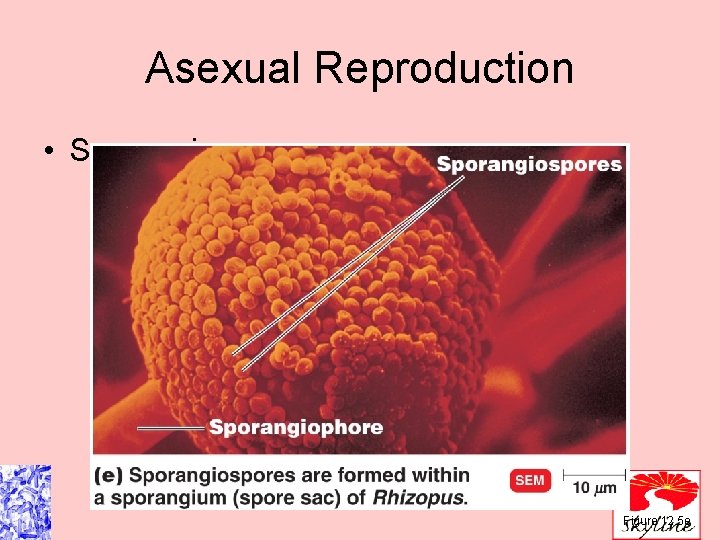
Asexual Reproduction • Sporangiospores Figure 12. 5 e
Sexual Reproduction • Three phases: – Plasmogamy: Haploid donor cell nucleus (+) penetrates cytoplasm of recipient cell (–) – Karyogamy: + and – nuclei fuse – Meiosis: Diploid nucleus produces haploid nuclei (sexual spores)
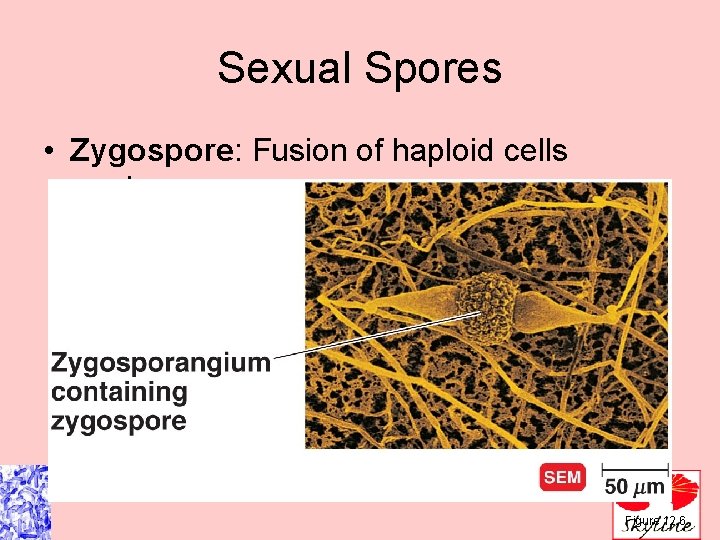
Sexual Spores • Zygospore: Fusion of haploid cells produces one zygospore Figure 12. 6
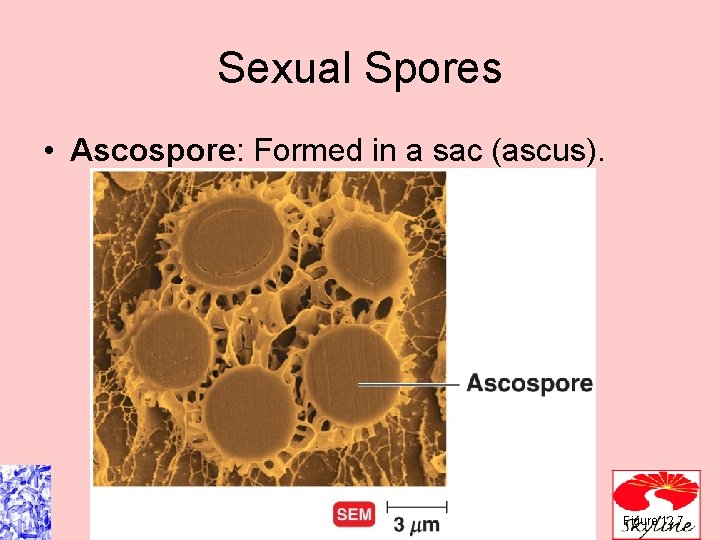
Sexual Spores • Ascospore: Formed in a sac (ascus). Figure 12. 7
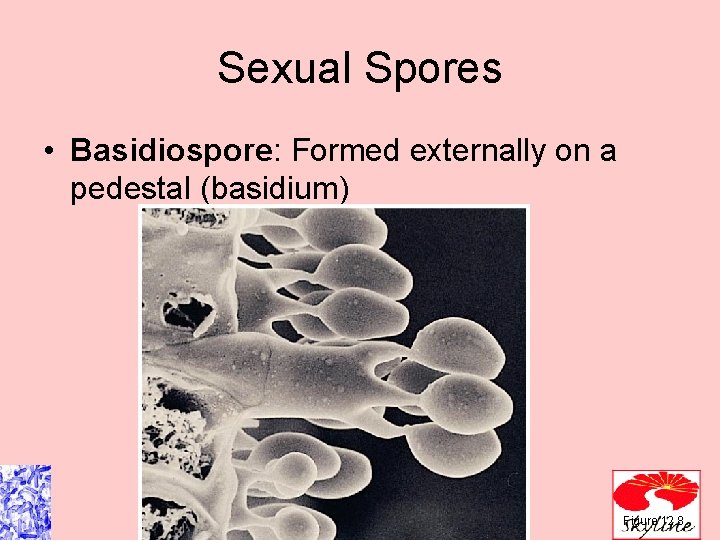
Sexual Spores • Basidiospore: Formed externally on a pedestal (basidium) Figure 12. 8
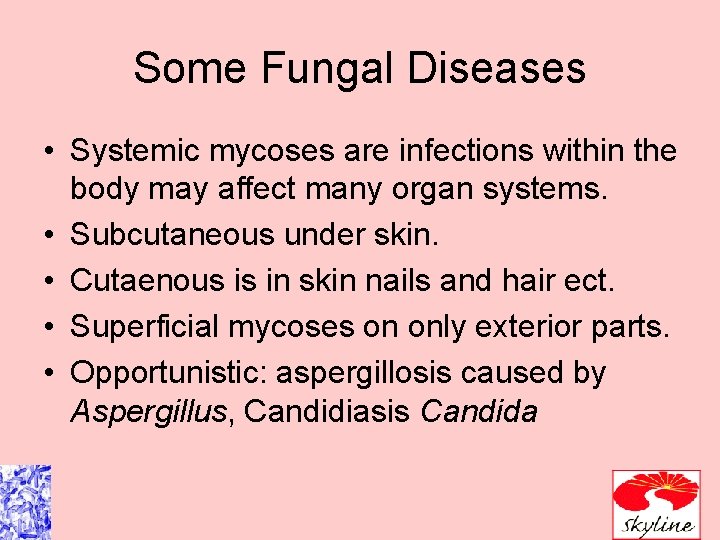
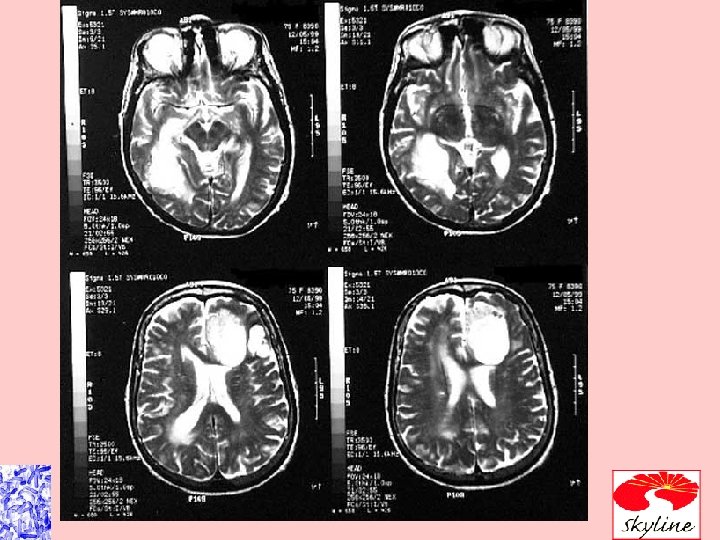
Some Fungal Diseases • Systemic mycoses are infections within the body may affect many organ systems. • Subcutaneous under skin. • Cutaenous is in skin nails and hair ect. • Superficial mycoses on only exterior parts. • Opportunistic: aspergillosis caused by Aspergillus, Candidiasis Candida
Economic Effects of Fungi. • Many are used for production of food and beverages. • Biological control of pests. • Mold spoilage of fruits grains and vegetables. • Diseases in plants. • Infections in fuel lines fungal mats. • Degradation of cellulose materials.
Treatments of Fungal Infections • Amphotericin B destroys membrane used on Systemic fungal infections. • Griseofulvin (inhibit mitotic microtubules) on many skin fungi. • Tolnaftate (Athletes foot) • Can you think of any others?
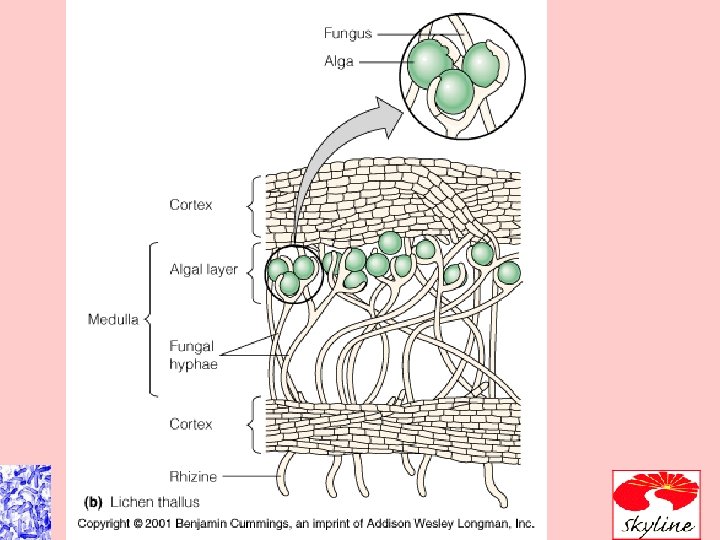
Lichens • Mutualistic combination of alga and fungus. • One is photosynthetic, on is the holdfast absorber. • Colonize habitats that are unsuitable for either the alga or the fungus alone. • Used for pigments and air quality indicators.
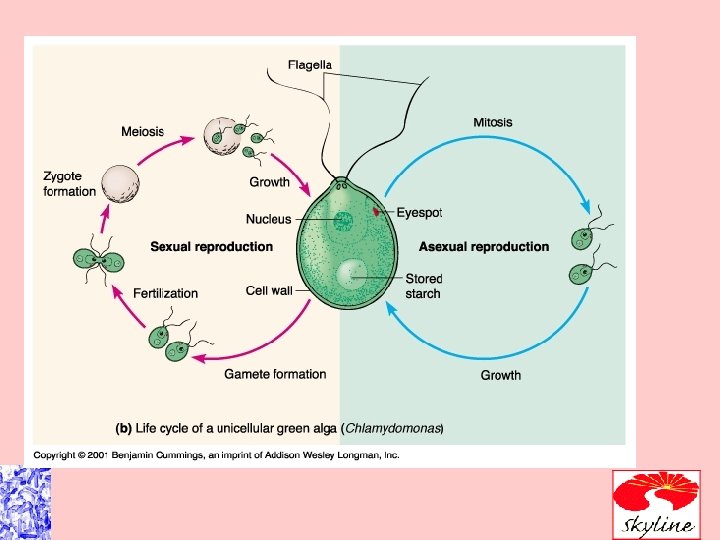
Algae • Unicellular filamentous are Multicellular. • Most algae live in aquatic environments.
Characteristics • Eukaryotic photoautotrophs. • Thallus or body is stipe, holdfast and blades. • Reproduce sexually and asexually by fragmentation. • Most reproduce sexually. • Photoautrophs that produce oxygen. • Classified by structure and pigments.
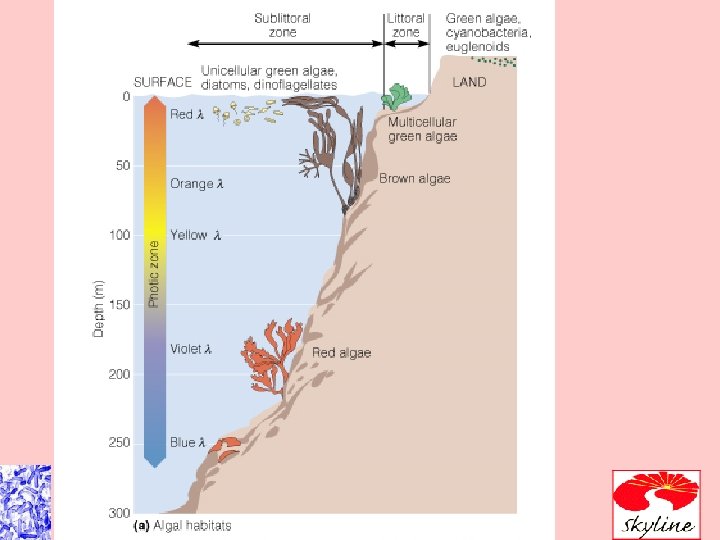
Characterized by color • • • Brown algae (kelp) Red algae grow at deeper levels. Green algae similar to plants. Diatoms unicellular produce neurotoxins. Dinoflagellates also cause neurotoxins.
Role in Nature • Primary producers in aquatic food chains. • Produce most of molecular oxygen • Much of our petroleum is fossil remains of plankton. • Many unicellular algae are symbionts in animals.
Protozoa • Are unicellular eukaryotic Chemoheterotrophs. • Found in soil, water and as normal microbiota
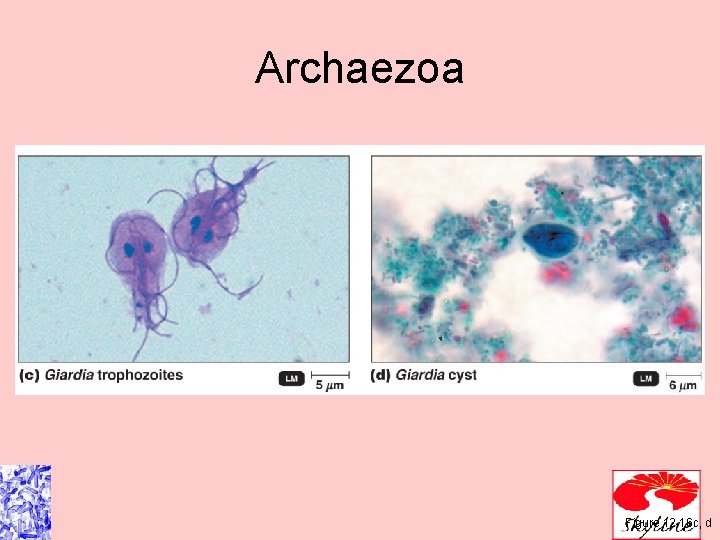
Some that cause disease. • Archaezoa lack mitochondria and have flagella. Trichomonas and Giardia • Microsporidia lack mitochondria and microtubules cause diarrhea in AIDS patients • Rhizopodia are amoeba, include Entamoeba and Acanthamoeba
More Disease • Apicomplexa can penetrate host tissue include Plasmodium and Cryptosporidium • Ciliophora move by means of cilia Balantidium coli is a human parasitic ciliate • Euglenozoa move by means of flagella and lack sexual reproduction include Trypanosoma
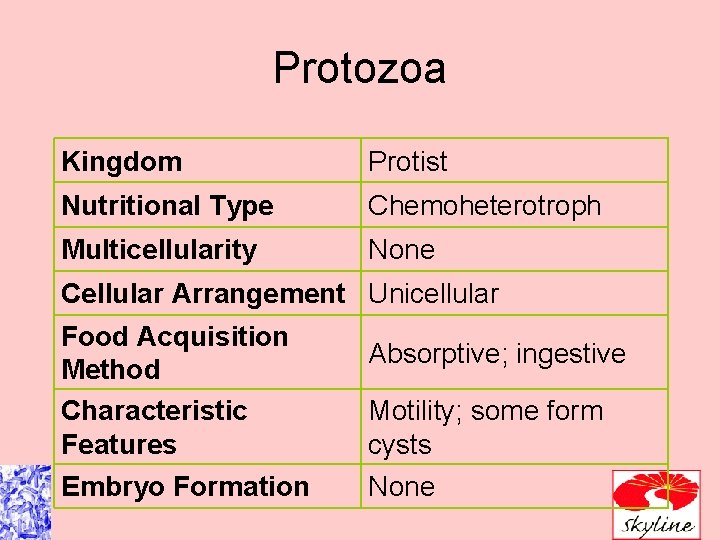
Protozoa Kingdom Protist Nutritional Type Chemoheterotroph Multicellularity None Cellular Arrangement Unicellular Food Acquisition Method Characteristic Features Embryo Formation Absorptive; ingestive Motility; some form cysts None
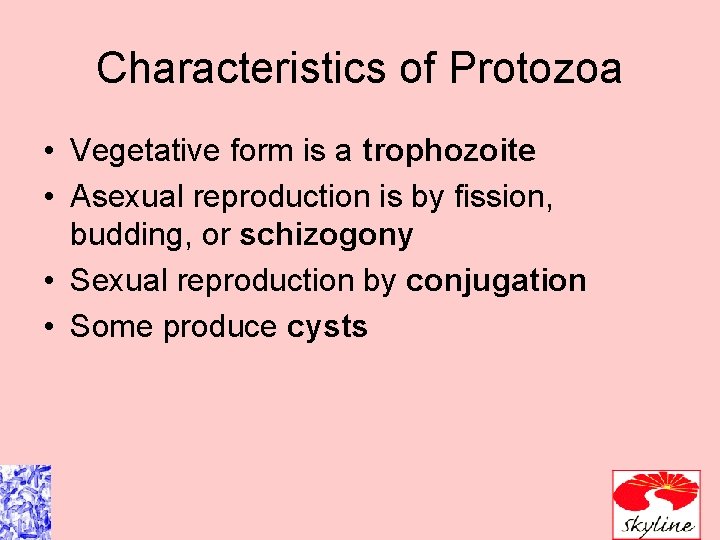
Characteristics of Protozoa • Vegetative form is a trophozoite • Asexual reproduction is by fission, budding, or schizogony • Sexual reproduction by conjugation • Some produce cysts
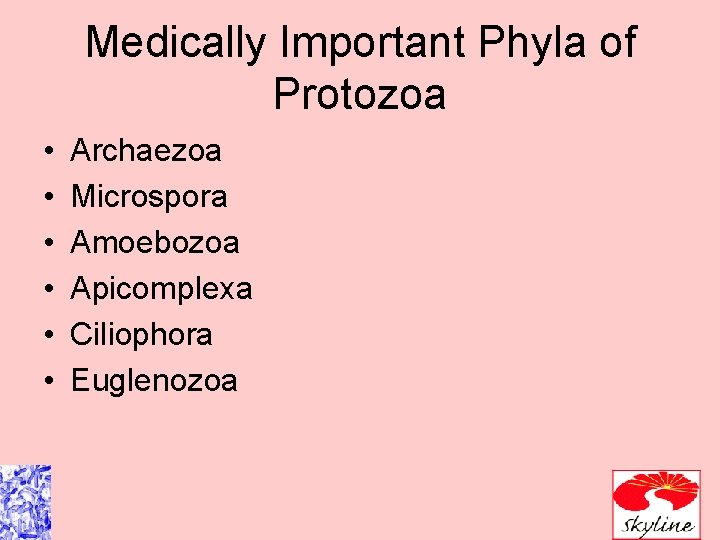
Medically Important Phyla of Protozoa • • • Archaezoa Microspora Amoebozoa Apicomplexa Ciliophora Euglenozoa
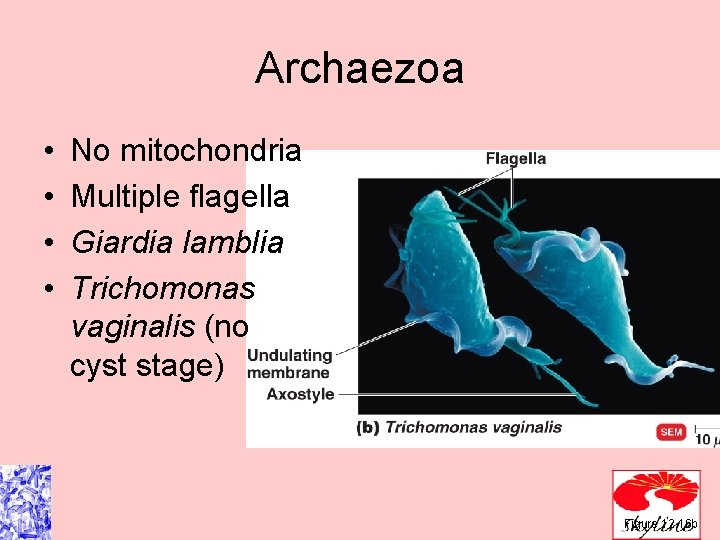
Archaezoa • • No mitochondria Multiple flagella Giardia lamblia Trichomonas vaginalis (no cyst stage) Figure 12. 16 b
Archaezoa Figure 12. 16 c, d
Microspora • • No mitochondria Nonmotile Intracellular parasites Nosema
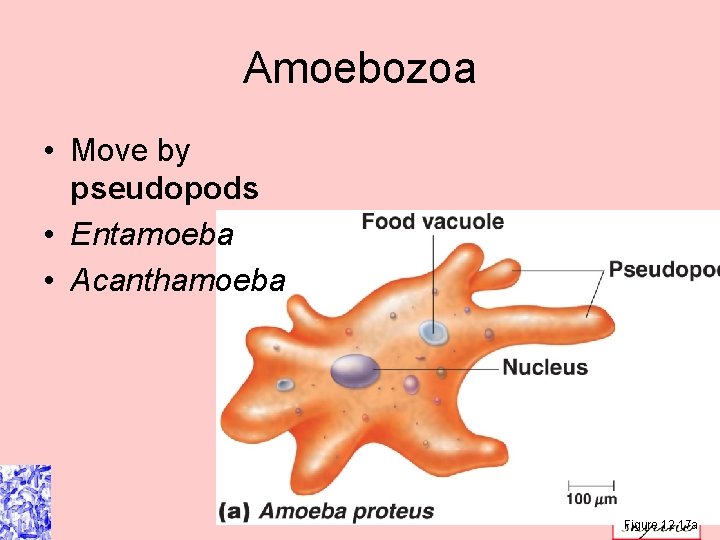
Amoebozoa • Move by pseudopods • Entamoeba • Acanthamoeba Figure 12. 17 a
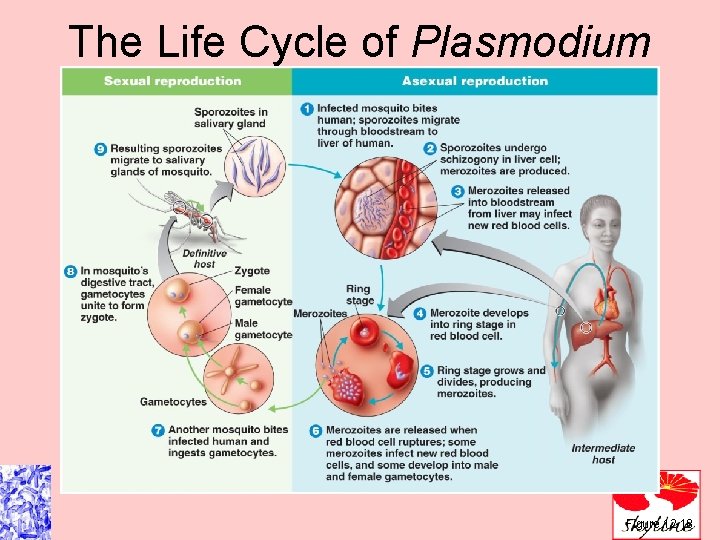
Apicomplexa • • Nonmotile Intracellular parasites Complex life cycles Plasmodium Babesia Cryptosporidium Cyclospora
The Life Cycle of Plasmodium vivax 2 3 8 7 6 Figure 12. 18
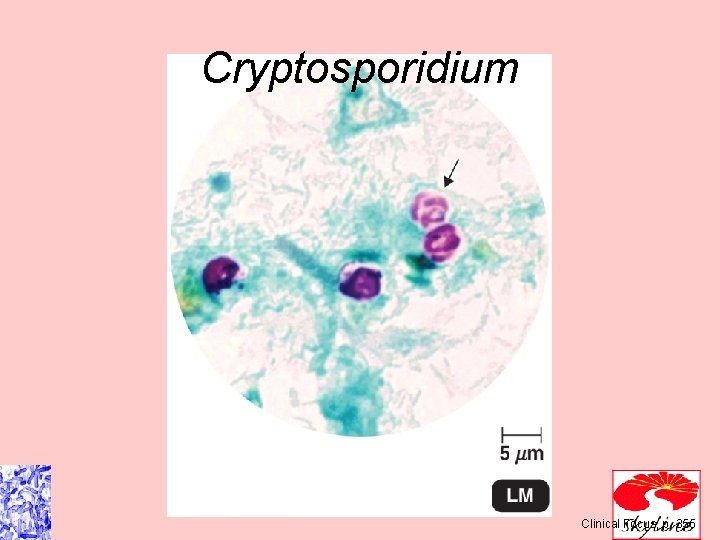
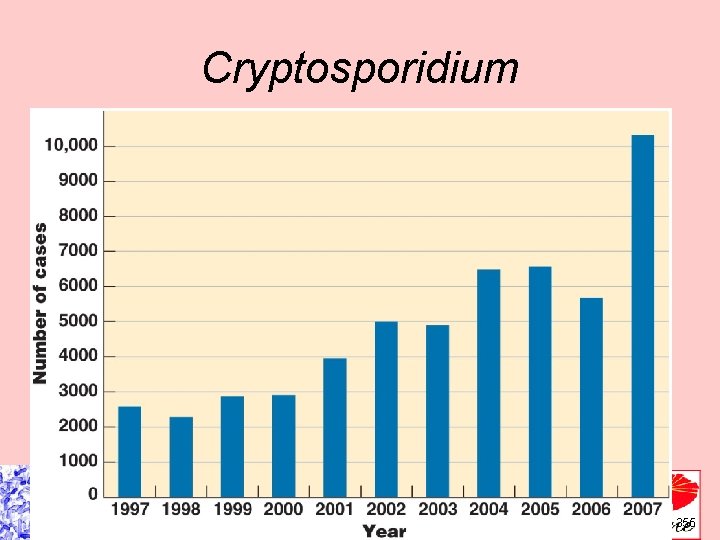
Cryptosporidium Clinical Focus, p. 355
Cryptosporidium Clinical Focus, p. 355
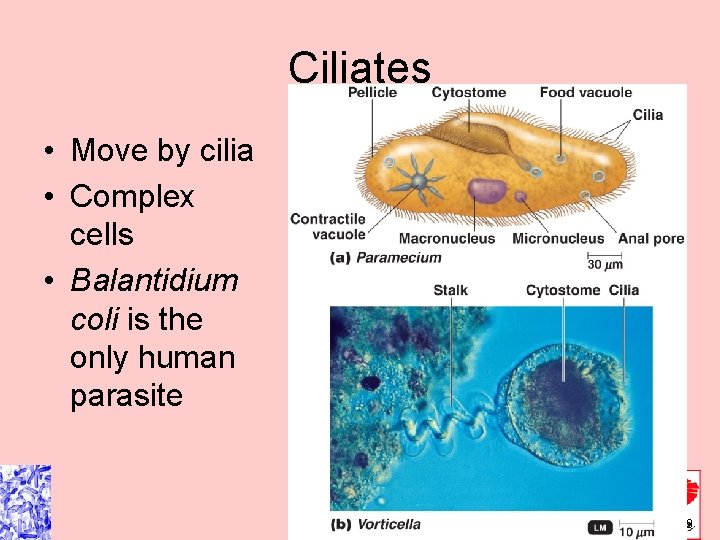
Ciliates • Move by cilia • Complex cells • Balantidium coli is the only human parasite Figure 12. 19
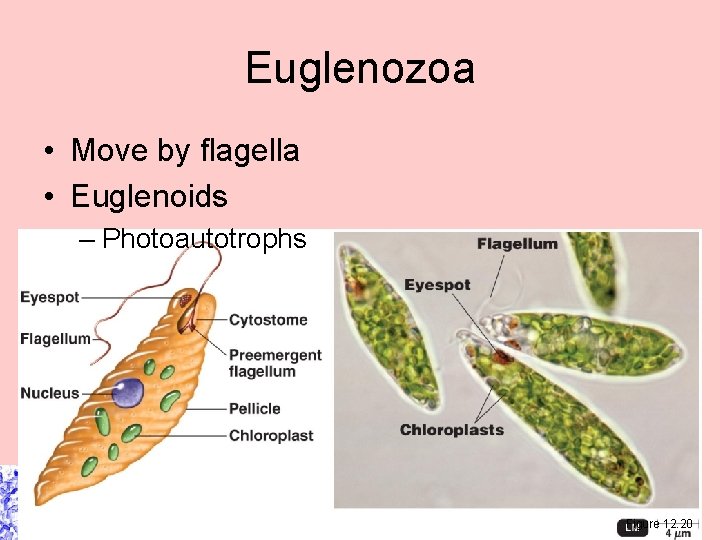
Euglenozoa • Move by flagella • Euglenoids – Photoautotrophs Figure 12. 20
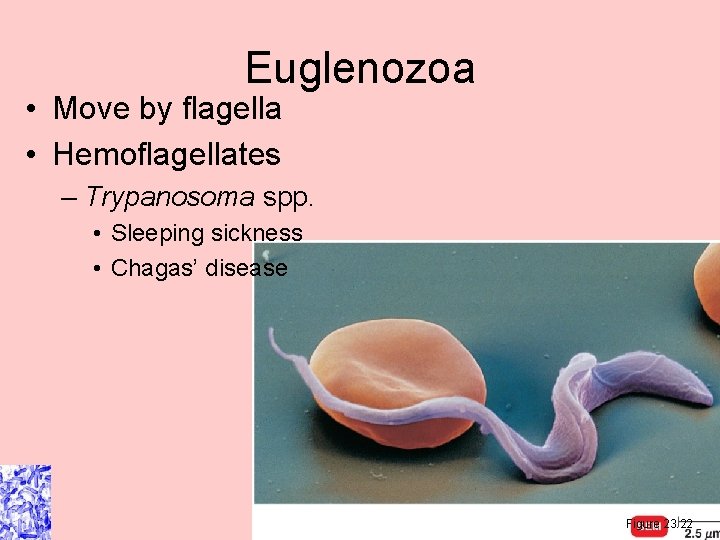
Euglenozoa • Move by flagella • Hemoflagellates – Trypanosoma spp. • Sleeping sickness • Chagas’ disease Figure 23. 22
Euglenozoa Move by flagella • • Photoautotrophs – Euglenoids • Chemoheterotrophs – Naegleria • Flagellated and amoeboid forms, meningoencephalitis – Trypanosoma • Undulating membrane, transmitted by vectors – Leishmania • Flagellated form in sand fly vector, ovoid form in vertebrate host
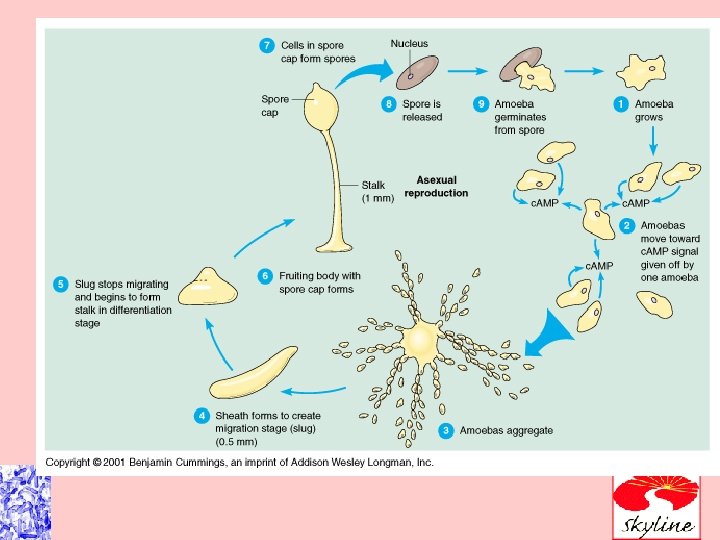
Slime Molds • Not obvious pathogens. • Cellular slime molds resemble amoebas and ingest bacteria by phagocytosis. • Plasmodial slime molds consist of multinucleated mass of protoplasm that engulfs organic debris and bacteria as it moves. • All can produce large fruiting bodies.
Helminths • Parasitic flatworms belong to the Phylum Platyhelminthes. • Parasitic roundworms belong to the Phylum Nematoda
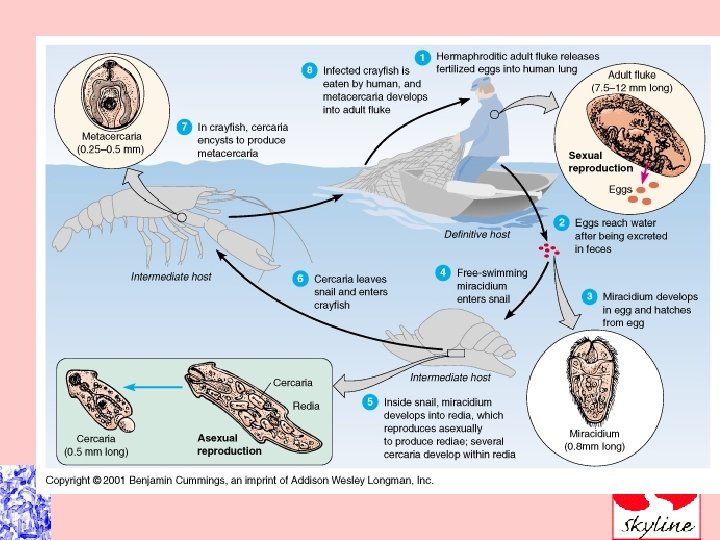
Characteristics of Helminths • Are Multicellular animals, few are parasites. • Parasites have modified life cycles – Only the adult is found in the definitive host. – Larval stage requires an intermediate host. • Can be monoecious or dioecious
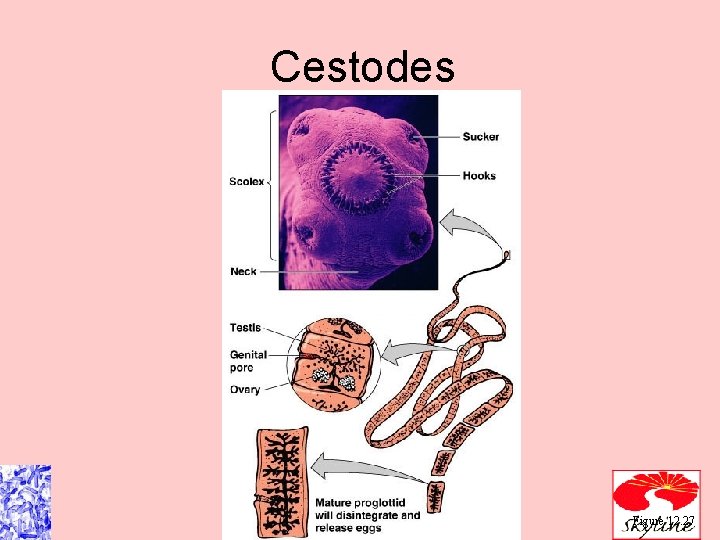
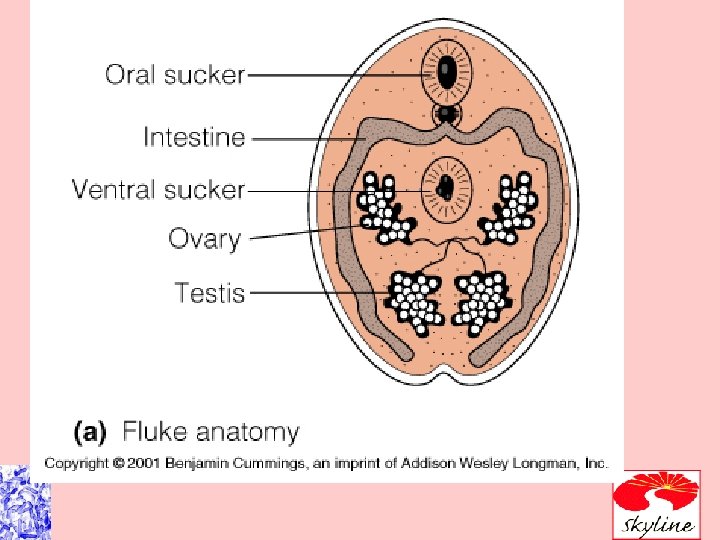
Platyhelminths • Flatworms, lack a digestive system obtain food by absorption across the outer surface. • Flukes and trematodes have suckers that help them attach and feed on host tissue. • Cestode or tapeworm consists of scolex and proglottids.
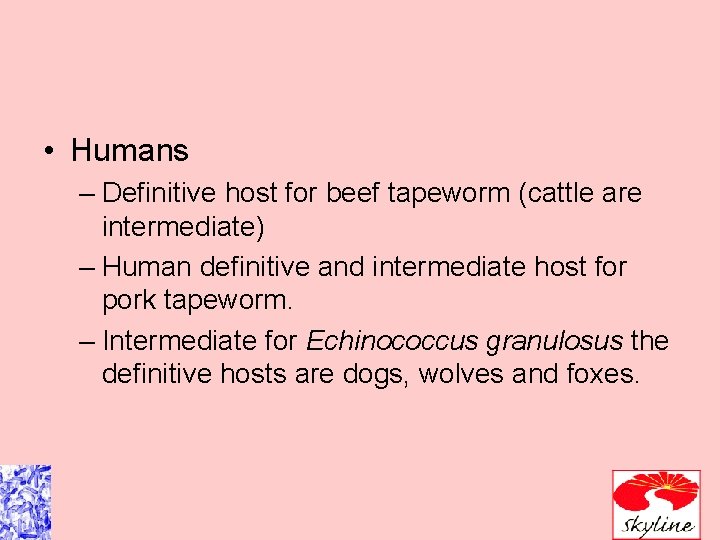
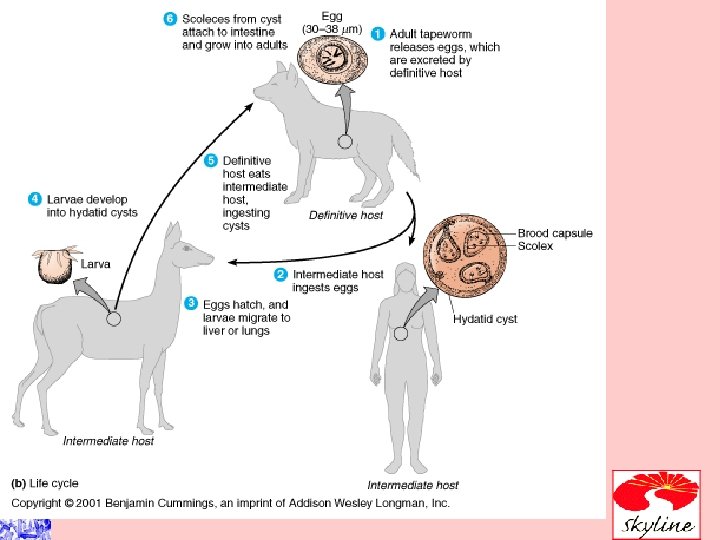
• Humans – Definitive host for beef tapeworm (cattle are intermediate) – Human definitive and intermediate host for pork tapeworm. – Intermediate for Echinococcus granulosus the definitive hosts are dogs, wolves and foxes.
Cestodes Figure 12. 27
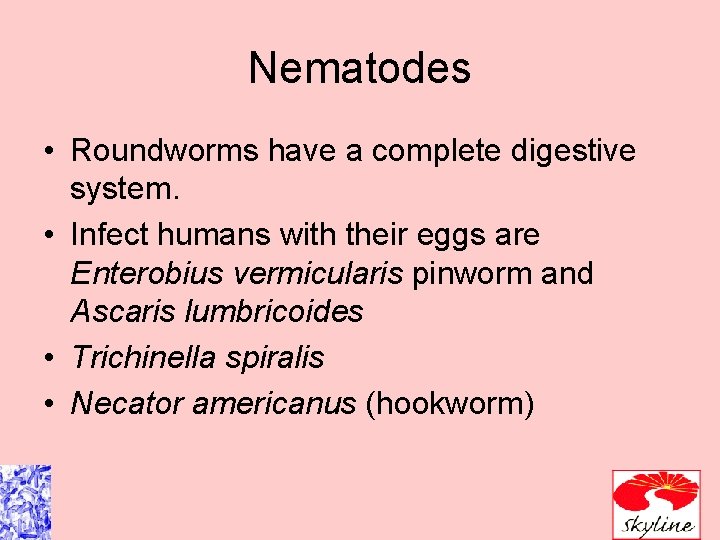
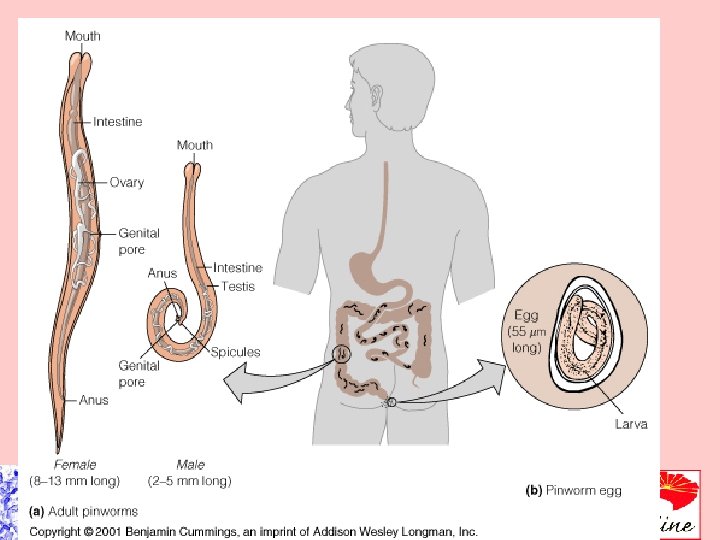
Nematodes • Roundworms have a complete digestive system. • Infect humans with their eggs are Enterobius vermicularis pinworm and Ascaris lumbricoides • Trichinella spiralis • Necator americanus (hookworm)
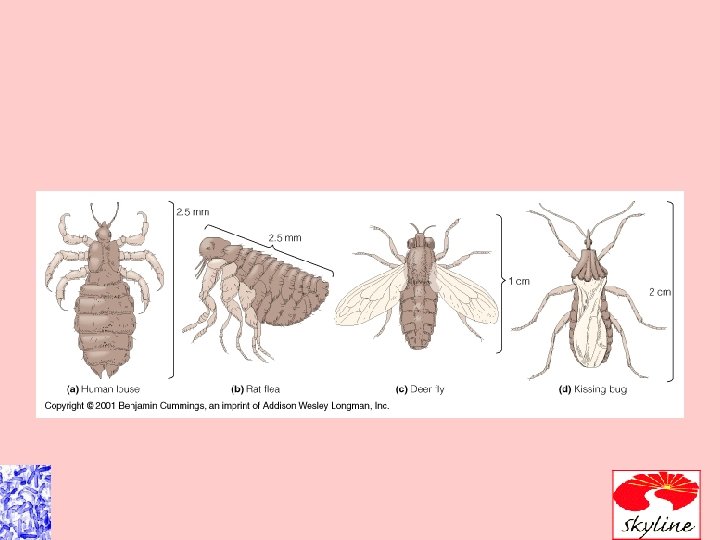
Arthropods • Jointed legged animals, including ticks and insects belong to the Phylum Arthropoda • Ones that carry disease are called vectors • Can eliminate disease be eliminating vectors.
• Antiprotozoan Drugs – Chloroquine inhibits DNA synthesis, Malaria – Metronidazole, damages DNA, Entamoeba, Trichomonas • Antihelminthic Drugs – Niclosamide, prevents ATP generation in mitochondria, Tapeworm infections.