
The Etiology and Treatment of Eating Disorders By
The Etiology and Treatment of Eating Disorders By Kay Kosak Abrams, Ph. D. Abrams & Associates, LLC www. kayabrams. com 301 -949 -2098 • My work with eating disorders • Where my interest began • My practice: adolescent groups, parent coaching, families, behavioral assessments for children and adolescents • Tell me about you
Summary of Presentation Today • Disordered Eating Behaviors Along a Spectrum • Underlying Biological, Sociocultural, Familial Factors • Intervention: Who Gets Better and How • A Personal Sharing about Recovery • Question and Answer

Disordered Eating Behaviors Along a Spectrum Anorexia Nervosa Chronic Restrictors Compulsive Overeaters Yo-Yo Dieters Binge Eaters Bulimia Nervosa Obesity
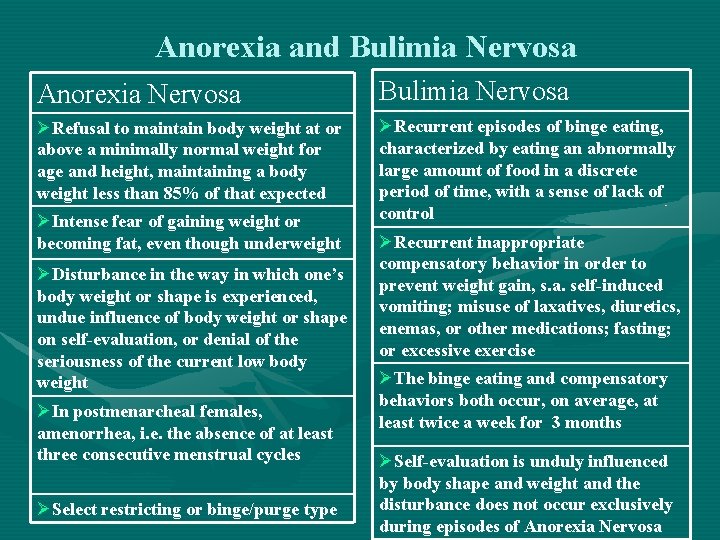
Anorexia and Bulimia Nervosa Anorexia Nervosa Bulimia Nervosa ØRefusal to maintain body weight at or above a minimally normal weight for age and height, maintaining a body weight less than 85% of that expected ØRecurrent episodes of binge eating, characterized by eating an abnormally large amount of food in a discrete period of time, with a sense of lack of control ØIntense fear of gaining weight or becoming fat, even though underweight ØDisturbance in the way in which one’s body weight or shape is experienced, undue influence of body weight or shape on self-evaluation, or denial of the seriousness of the current low body weight ØIn postmenarcheal females, amenorrhea, i. e. the absence of at least three consecutive menstrual cycles ØSelect restricting or binge/purge type ØRecurrent inappropriate compensatory behavior in order to prevent weight gain, s. a. self-induced vomiting; misuse of laxatives, diuretics, enemas, or other medications; fasting; or excessive exercise ØThe binge eating and compensatory behaviors both occur, on average, at least twice a week for 3 months ØSelf-evaluation is unduly influenced by body shape and weight and the disturbance does not occur exclusively during episodes of Anorexia Nervosa

Etiology • Biological – Addictions Model and Subtype – Craig Johnson’s research • Turtles: anxious and fearful, inflexible, shy, neophobic, perfectionistic, orderly, cognitively concrete, harsh selfevaluation, control junkies, addicted to self-control • Hares: dramatic, erratic, impulsive and chaotic, novelty seeking, easily bored, extraverted, oppositional • The Spoiler: no experience of feeling okay, shame, attachment to abusers, self-defeating disorder
Etiology • Socio-Cultural Factors – Definitions of Attractiveness and Beauty – $40 billion dollar diet industry – Snack Food Industry – Loss of Mealtime Structure – Fear of Hunger – Increased Sedentary Lifestyle – Push for Independence and Autonomy – Fashion, Body Exposure and the Media
Etiology • Developmental Crises – Transition to Adolescence at the time of puberty – Transition to Young Adulthood – Familial Crisis, such as divorce, depressed parent or significant loss – Trauma and needs for control – History of teasing and social isolation – Dramatic physical change
Etiology • Familial – Separation/Individuation – Enmeshed and overcontrolling parents – Addictions – Dieting History – Teasing History – Sexual Trauma – Divorce or Marital Conflict – Hyperachievement orientation
Personal Sharing • Before we move on to Intervention and a discussion about who gets better and how, we will take a short break and then listen to a story of recovery
Intervention • Who Gets Better? Depends Upon: – – – – – Positive Alliance between therapist and patient Trust in Therapist’s expertise Motivation/Accountability Insurance Coverage Readiness Observing Ego Reduced Anxiety/Depression/OCD Ability to channel or divert compulsivity for the AN Ability to temper or regulate impulsivity and affect for the BN
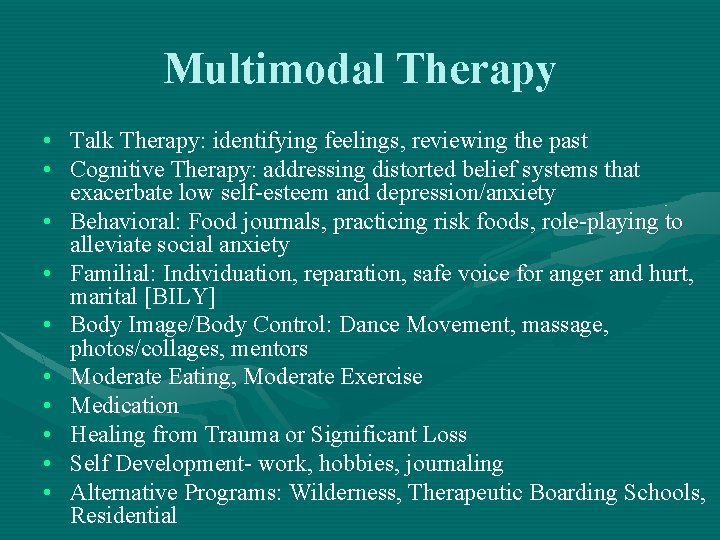
Multimodal Therapy • Talk Therapy: identifying feelings, reviewing the past • Cognitive Therapy: addressing distorted belief systems that exacerbate low self-esteem and depression/anxiety • Behavioral: Food journals, practicing risk foods, role-playing to alleviate social anxiety • Familial: Individuation, reparation, safe voice for anger and hurt, marital [BILY] • Body Image/Body Control: Dance Movement, massage, photos/collages, mentors • Moderate Eating, Moderate Exercise • Medication • Healing from Trauma or Significant Loss • Self Development- work, hobbies, journaling • Alternative Programs: Wilderness, Therapeutic Boarding Schools, Residential

Question and Answer Time
- Slides: 12