
The ESF and YEI support to migrants Costas
- Slides: 14
The ESF and YEI support to migrants Costas Voyiatzis DG Employment, Social Affairs and Inclusion Evaluation and Impact Assessment Unit ESF Evaluation Partnership meeting, Brussels, 12 November 2019
Structure of presentation • • Definitions Context Support to migrants through the EU Outputs Specific target groups Type of operations Conclusions
Who is being supported? • “Non-national permanent residents in a country, people with a foreign background or nationals from a minority (according to national definitions)” Source: Monitoring and Evaluation Guidance • Numbers likely to be underreported.
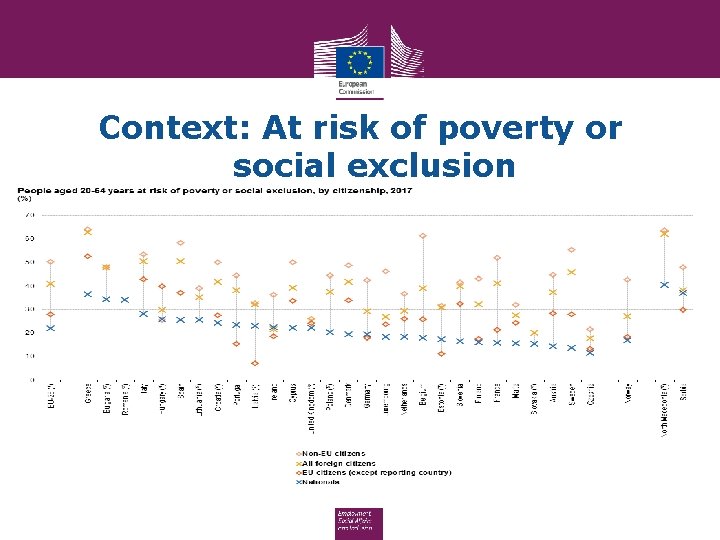
Context: At risk of poverty or social exclusion
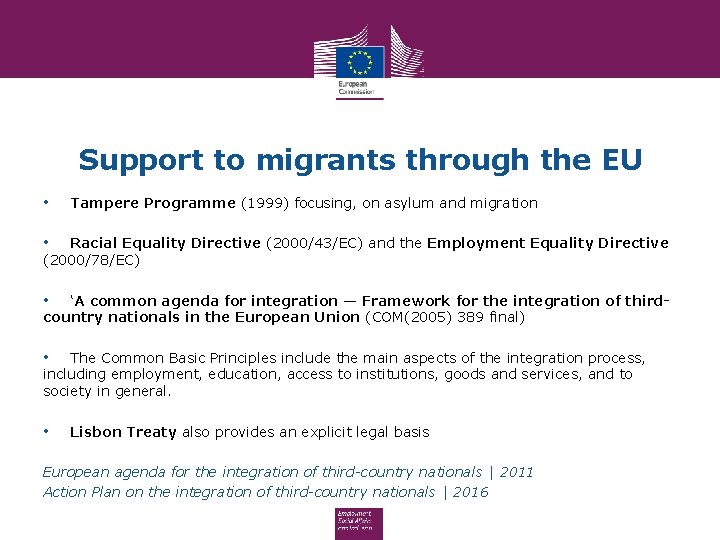
Support to migrants through the EU • Tampere Programme (1999) focusing, on asylum and migration • Racial Equality Directive (2000/43/EC) and the Employment Equality Directive (2000/78/EC) • ‘A common agenda for integration — Framework for the integration of thirdcountry nationals in the European Union (COM(2005) 389 final) • The Common Basic Principles include the main aspects of the integration process, including employment, education, access to institutions, goods and services, and to society in general. • Lisbon Treaty also provides an explicit legal basis European agenda for the integration of third-country nationals | 2011 Action Plan on the integration of third-country nationals | 2016
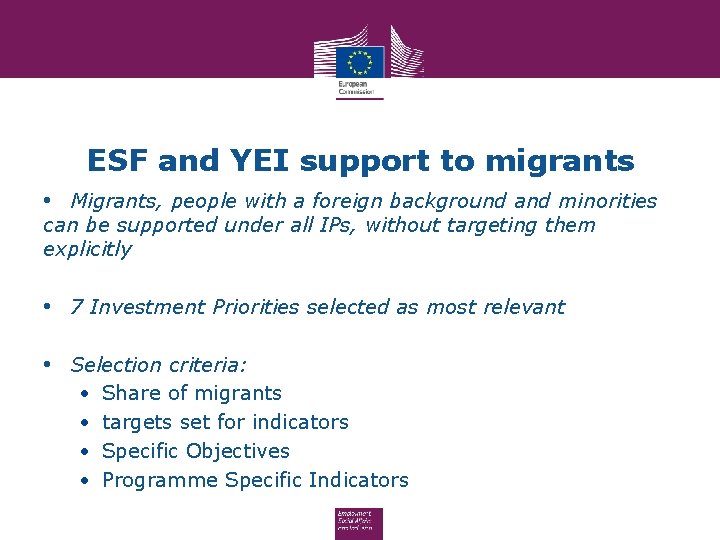
ESF and YEI support to migrants • Migrants, people with a foreign background and minorities can be supported under all IPs, without targeting them explicitly • 7 Investment Priorities selected as most relevant • Selection criteria: • • Share of migrants targets set for indicators Specific Objectives Programme Specific Indicators
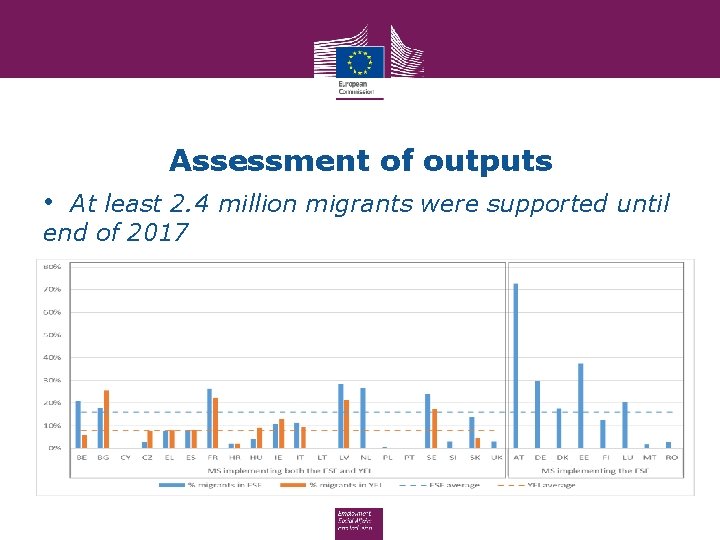
Assessment of outputs • At least 2. 4 million migrants were supported until end of 2017
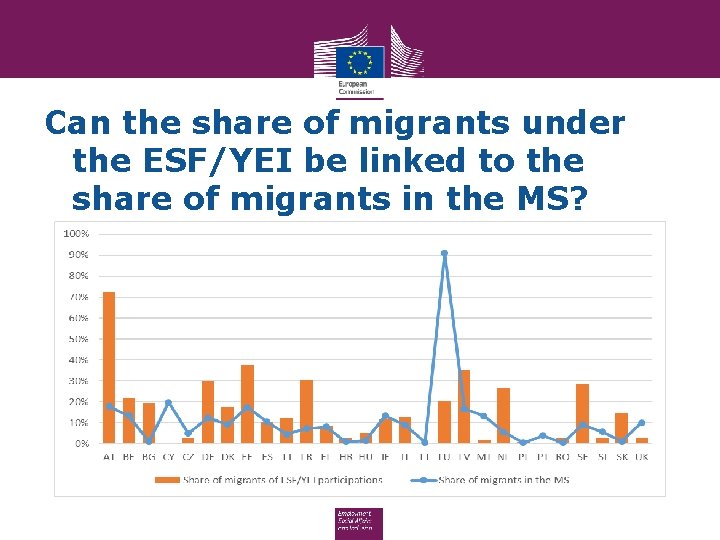
Can the share of migrants under the ESF/YEI be linked to the share of migrants in the MS?
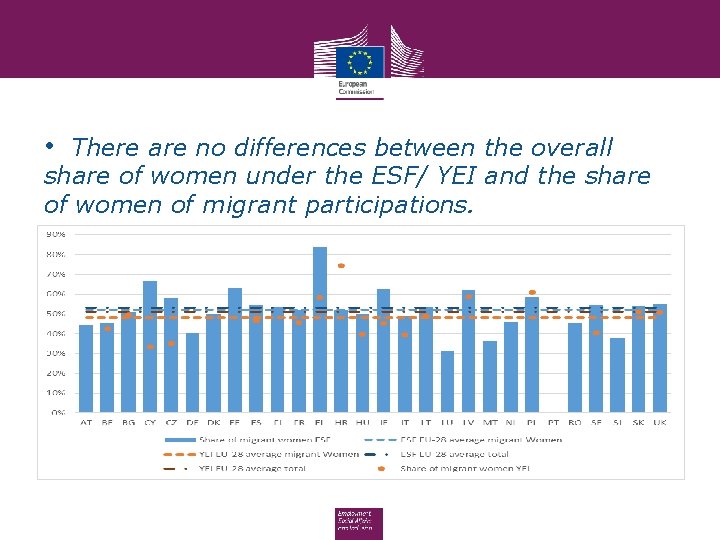
• There are no differences between the overall share of women under the ESF/ YEI and the share of women of migrant participations.
Achievements • No common result indicator specifically for migrants was programmed • Results of migrants are subsumed under Common Result Indicator 5 referring to all kinds of disadvantaged participants. • Nine MS programmed a total of 94 programme specific result indicators (90 ESF, 4 YEI) related to migrants. • Two thirds related to Roma • Only a few indicators related to specific sub-groups, e. g. asylum seekers. • Average achievement rate: 98%
Specific target groups supported • Refugees and/ or asylum seekers • Female migrants • Migrant children and pupils • Young migrants • Minorities
Type of operations (1/2) • Counselling, guidance, individual support (in 13 MS) • Language courses (in 12 MS) • Access to employment, getting people closer to the Labour Market (in 20 MS)
Type of operations (2/2) • Equal access to education, measures fighting Early School Leaving, recognition of competences (in 14 MS) • Measures targeting specifically female migrants (6) • Additionally, some MS followed a more holistic approach, implementing measures related to several clusters
Conclusions • Targeting migrants differs largely across the EU 28 • There are specific IPs most relevant to migrants • Large variety of measures implemented in the MS • ESF/ YEI funding is relevant