
The Ericsson Coaxial Cable Project a preliminary To
The Ericsson Coaxial Cable Project —a preliminary • To design a high-frequency, low-loss, structurally-strong coaxial cable that will survive freezing into the ice. • Cable should allow fast nanosecond pulses to be transmitted over lengths up to 1000 meters with minimal amplitude and phase distortion • Ericsson designed the Ice. Cube cables.
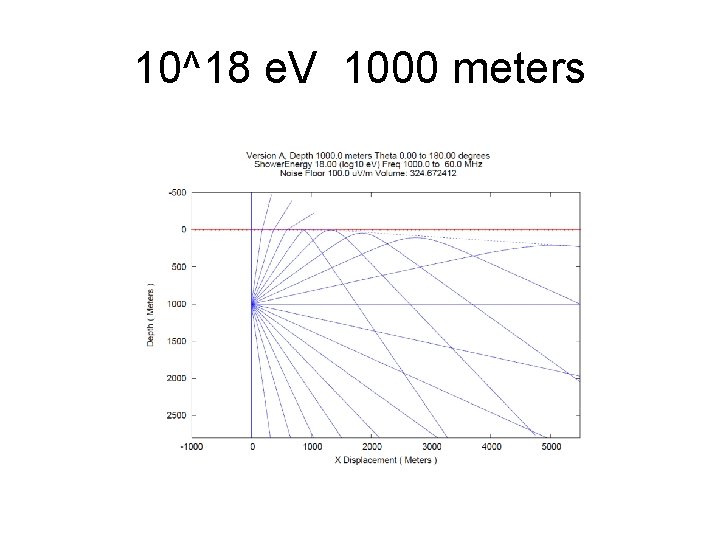
10^18 e. V 1000 meters
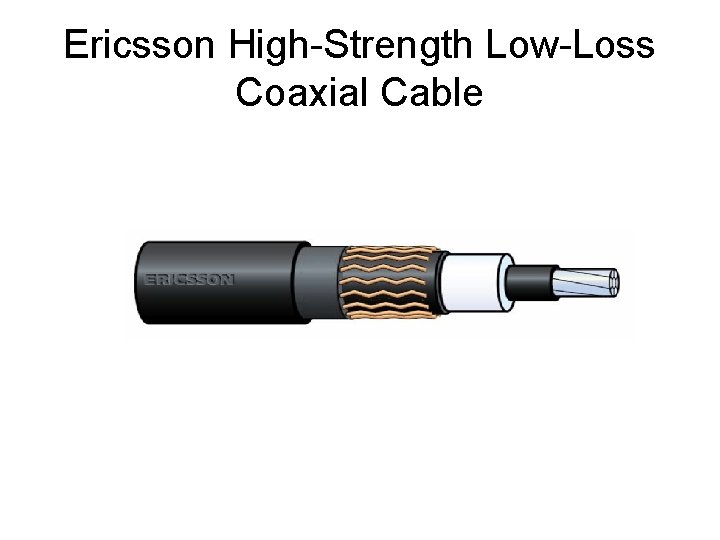
Ericsson High-Strength Low-Loss Coaxial Cable
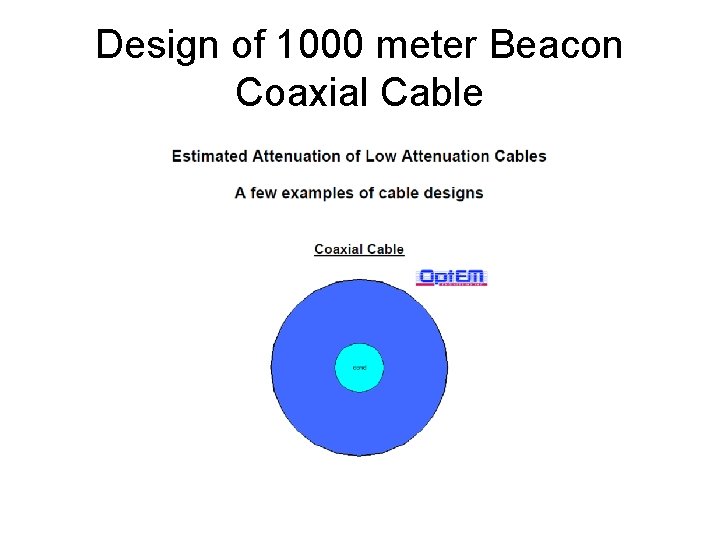
Design of 1000 meter Beacon Coaxial Cable
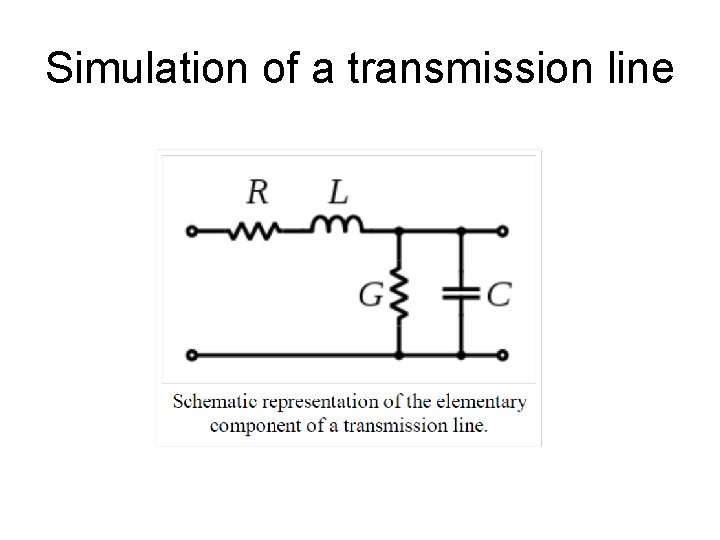
Simulation of a transmission line

Attenuation/Phase Factors
Cable Losses—attenuation and phase shifts • Resistance (energy) losses, mostly skin effect which scales as sqrt(frequency). Use big conductors • Conduction (charge losses). Design cable to have a high impedance. Scales linearly with frequency and tan-delta. • You can have dispersion without attenuation, BUT you cannot have attenuation without dispersion! • Cables and Ice, etc…all have transfer functions and impulse system response (delta-fcn excitations) which imply causality requirements, h(t)=0 for t<0. • The relationship between attenuation and phase shift or velocity vs frequency effects are tightly constrained.
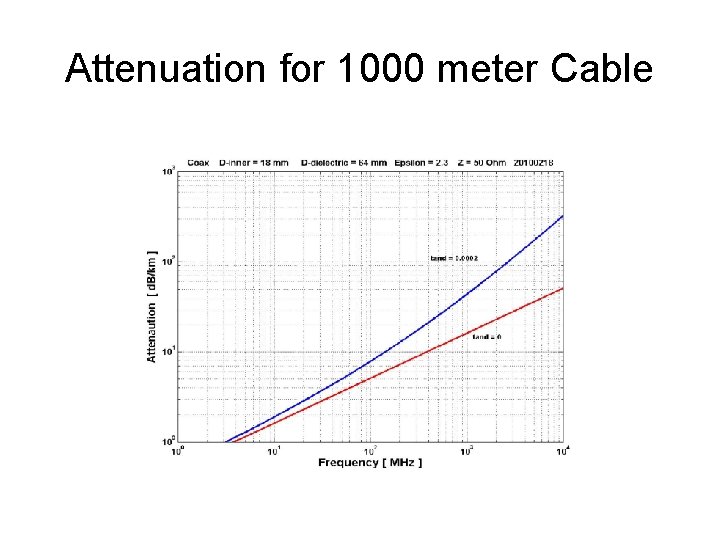
Attenuation for 1000 meter Cable
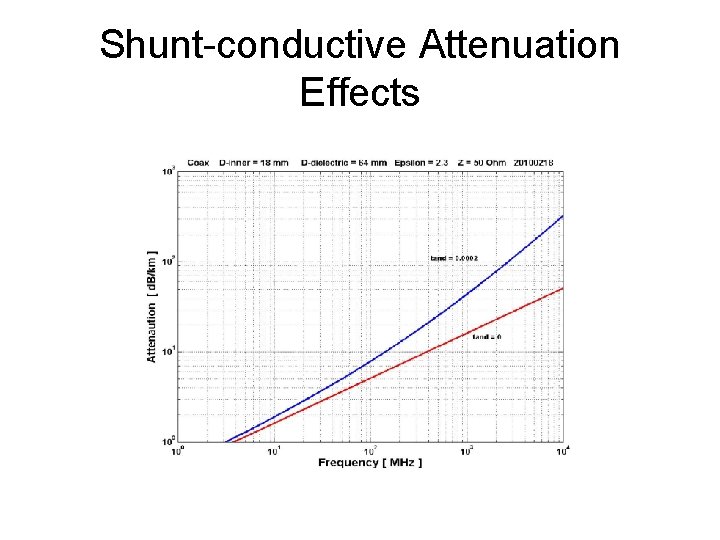
Shunt-conductive Attenuation Effects
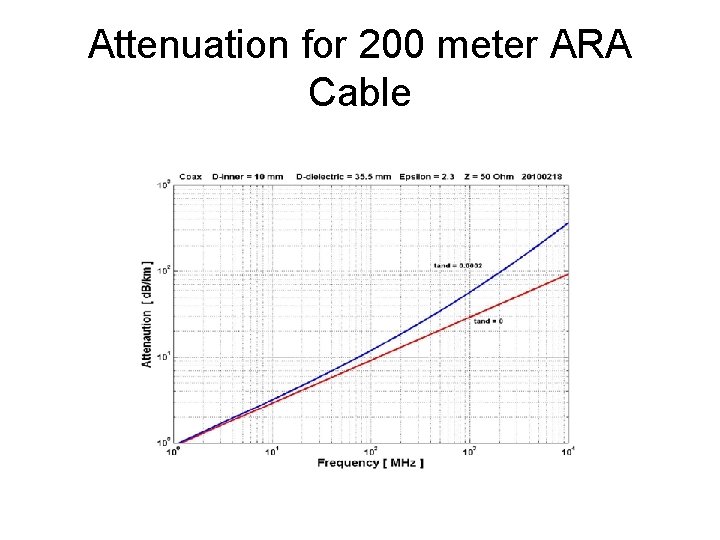
Attenuation for 200 meter ARA Cable
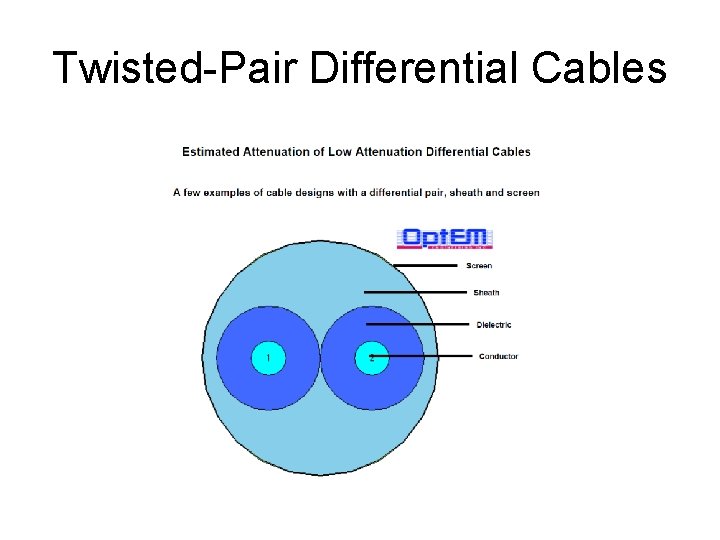
Twisted-Pair Differential Cables
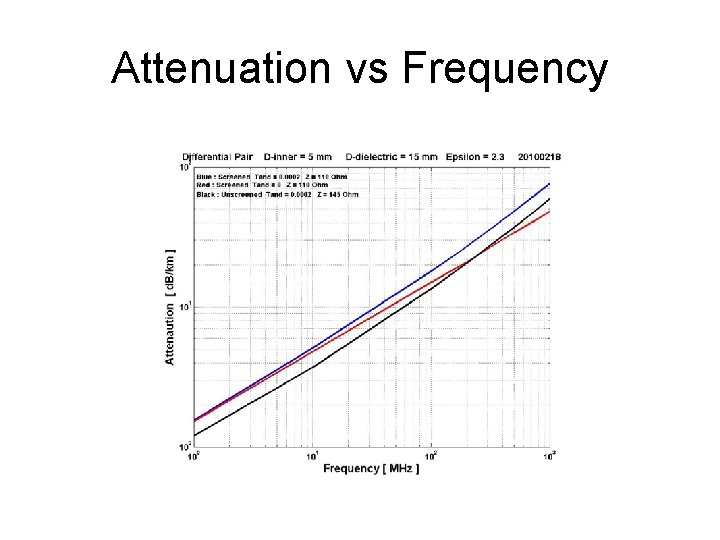
Attenuation vs Frequency
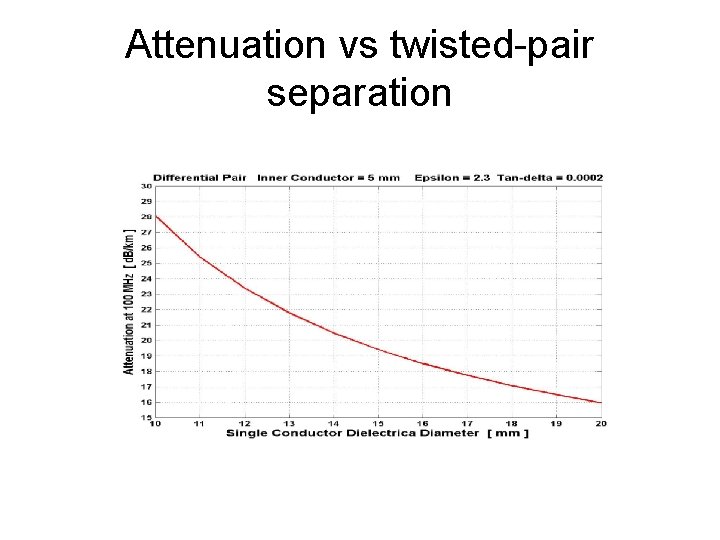
Attenuation vs twisted-pair separation
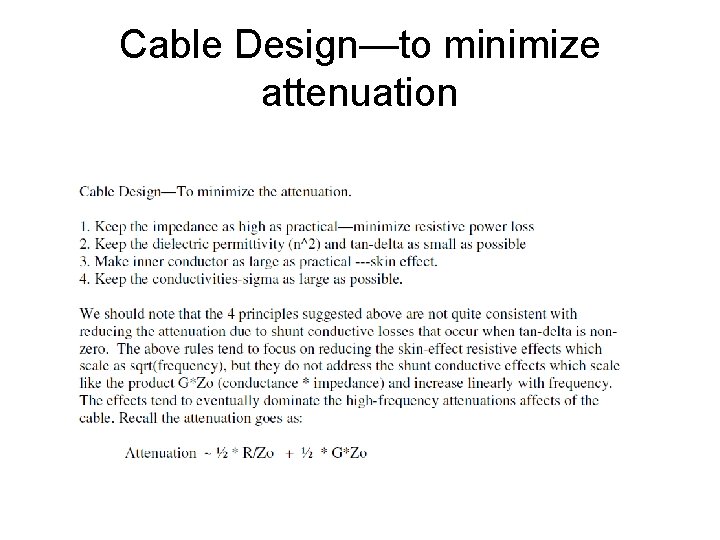
Cable Design—to minimize attenuation
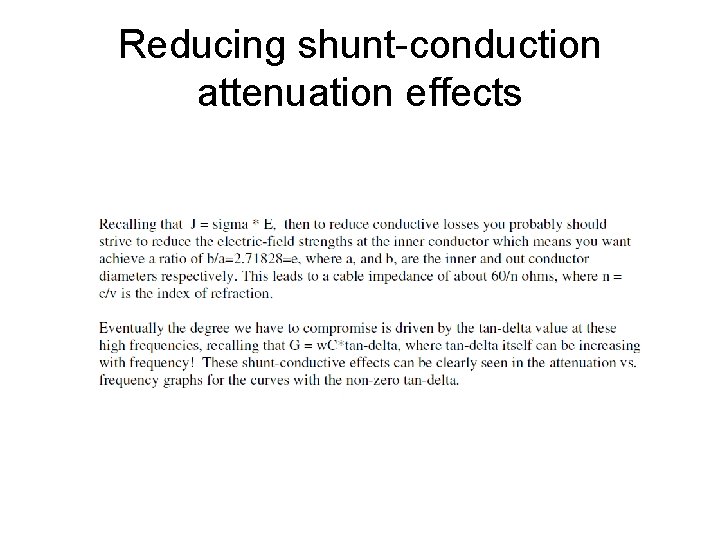
Reducing shunt-conduction attenuation effects
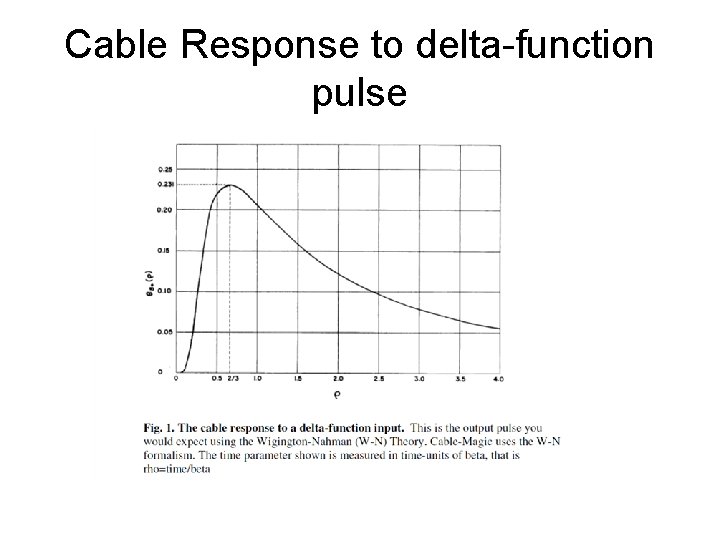
Cable Response to delta-function pulse
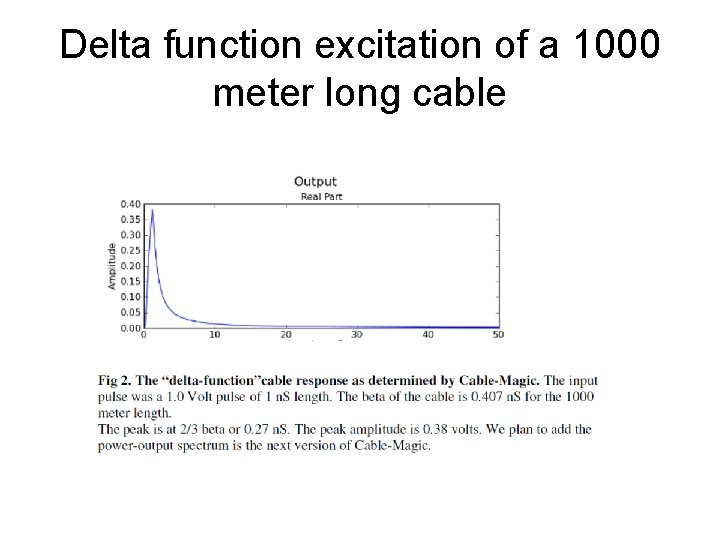
Delta function excitation of a 1000 meter long cable
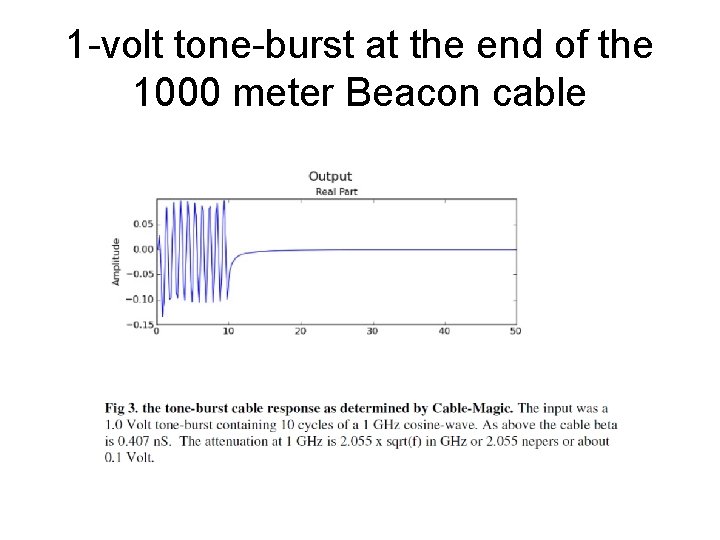
1 -volt tone-burst at the end of the 1000 meter Beacon cable
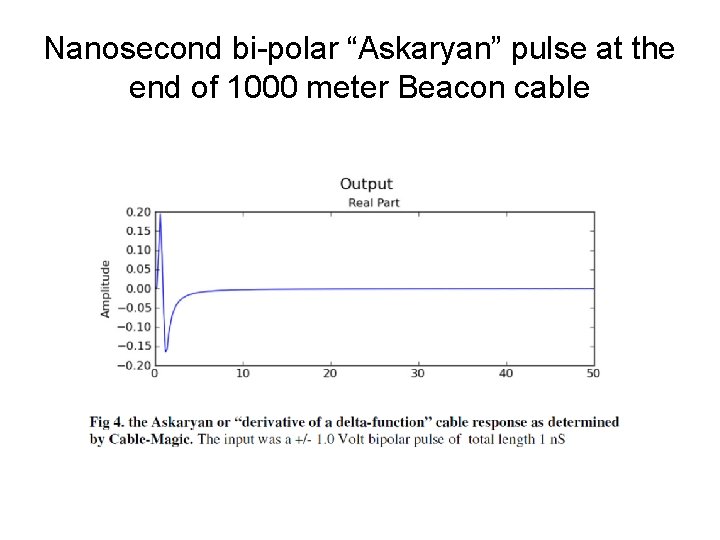
Nanosecond bi-polar “Askaryan” pulse at the end of 1000 meter Beacon cable
- Slides: 19