
The Era of the Common Man The Jacksonian
- Slides: 28
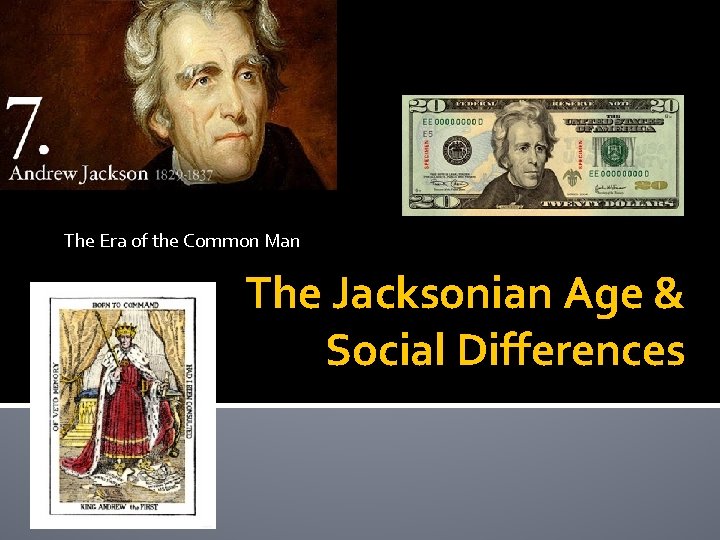
The Era of the Common Man The Jacksonian Age & Social Differences
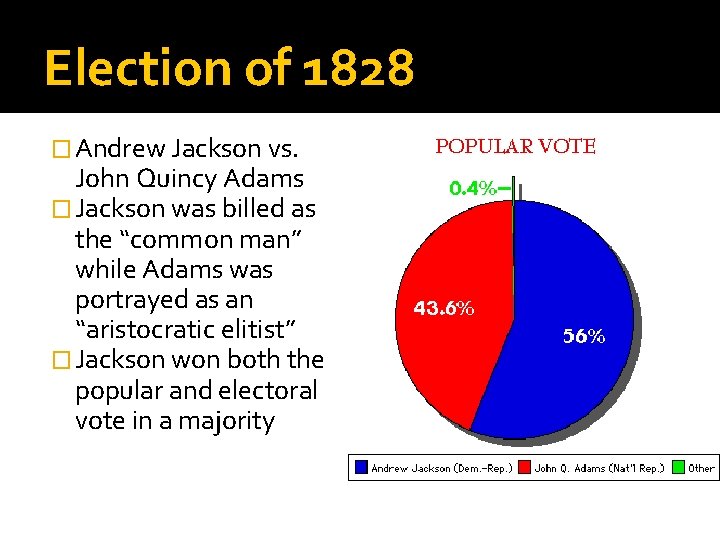
Election of 1828 � Andrew Jackson vs. John Quincy Adams � Jackson was billed as the “common man” while Adams was portrayed as an “aristocratic elitist” � Jackson won both the popular and electoral vote in a majority
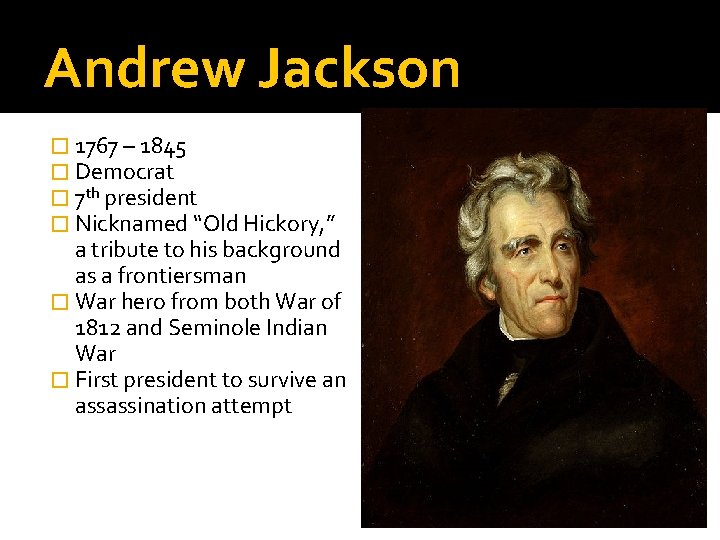
Andrew Jackson � 1767 – 1845 � Democrat � 7 th president � Nicknamed “Old Hickory, ” a tribute to his background as a frontiersman � War hero from both War of 1812 and Seminole Indian War � First president to survive an assassination attempt
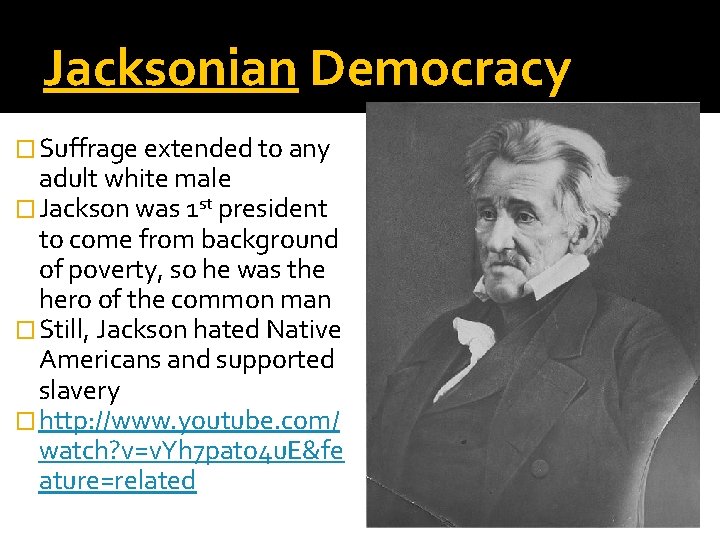
Jacksonian Democracy � Suffrage extended to any adult white male � Jackson was 1 st president to come from background of poverty, so he was the hero of the common man � Still, Jackson hated Native Americans and supported slavery � http: //www. youtube. com/ watch? v=v. Yh 7 pato 4 u. E&fe ature=related
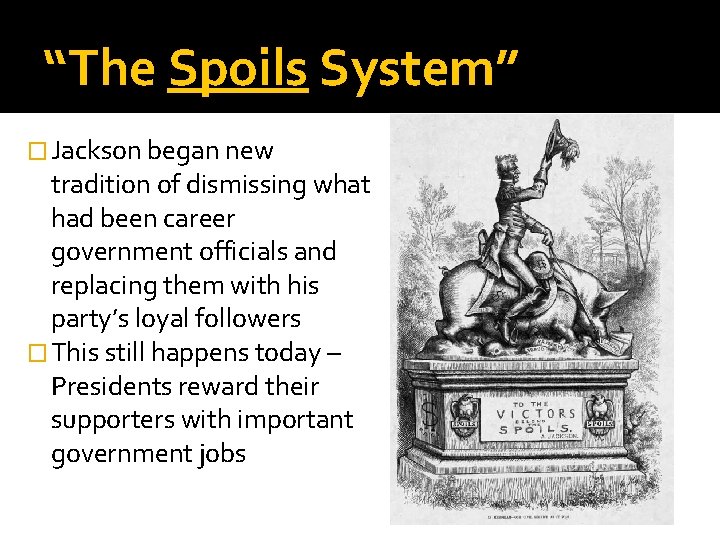
“The Spoils System” � Jackson began new tradition of dismissing what had been career government officials and replacing them with his party’s loyal followers � This still happens today – Presidents reward their supporters with important government jobs
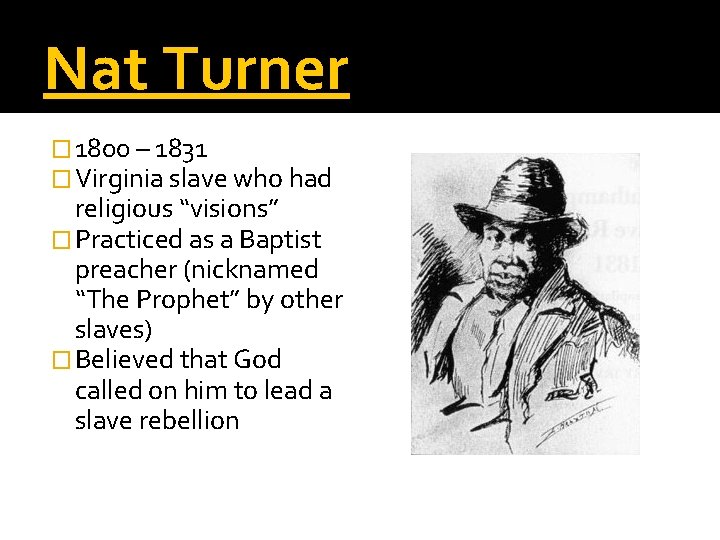
Nat Turner � 1800 – 1831 � Virginia slave who had religious “visions” � Practiced as a Baptist preacher (nicknamed “The Prophet” by other slaves) � Believed that God called on him to lead a slave rebellion
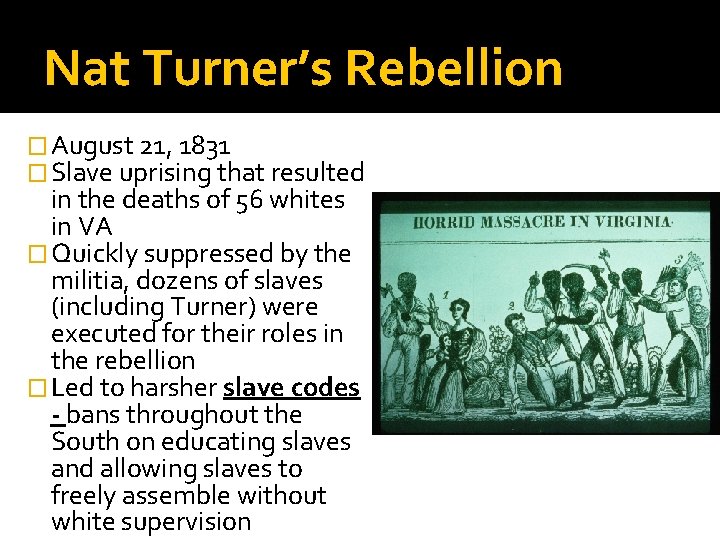
Nat Turner’s Rebellion � August 21, 1831 � Slave uprising that resulted in the deaths of 56 whites in VA � Quickly suppressed by the militia, dozens of slaves (including Turner) were executed for their roles in the rebellion � Led to harsher slave codes - bans throughout the South on educating slaves and allowing slaves to freely assemble without white supervision
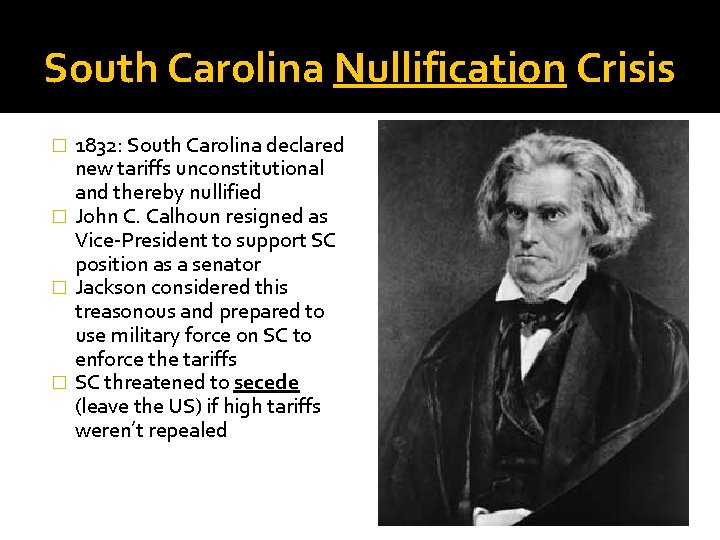
South Carolina Nullification Crisis 1832: South Carolina declared new tariffs unconstitutional and thereby nullified � John C. Calhoun resigned as Vice-President to support SC position as a senator � Jackson considered this treasonous and prepared to use military force on SC to enforce the tariffs � SC threatened to secede (leave the US) if high tariffs weren’t repealed �
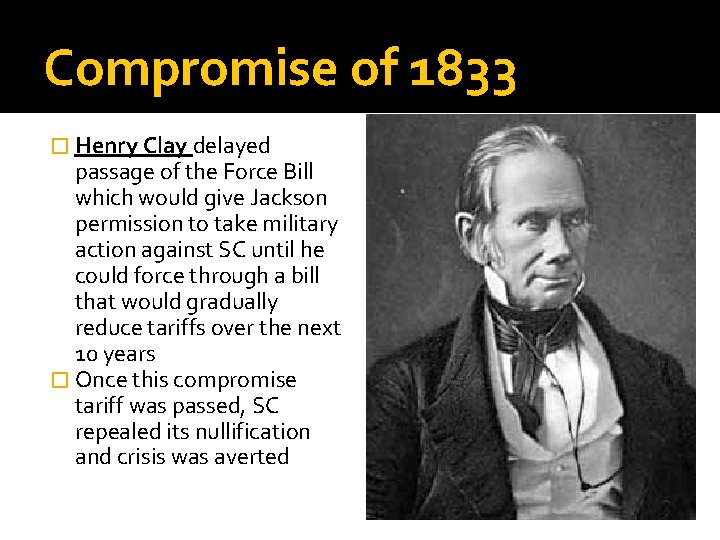
Compromise of 1833 � Henry Clay delayed passage of the Force Bill which would give Jackson permission to take military action against SC until he could force through a bill that would gradually reduce tariffs over the next 10 years � Once this compromise tariff was passed, SC repealed its nullification and crisis was averted
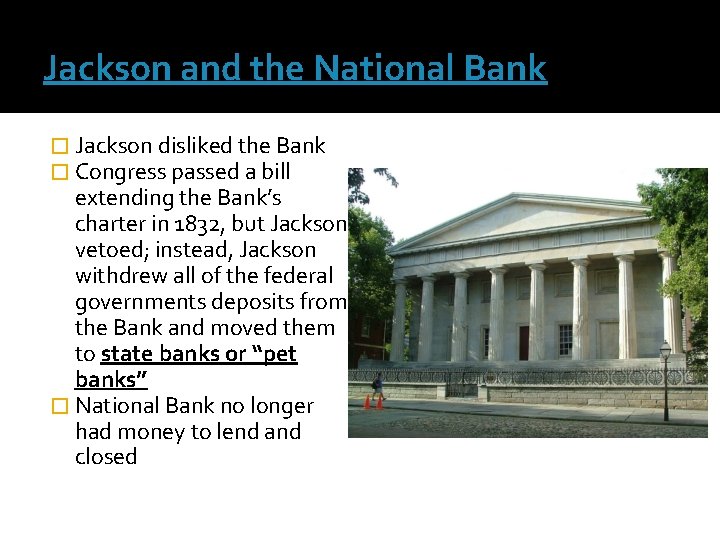
Jackson and the National Bank � Jackson disliked the Bank � Congress passed a bill extending the Bank’s charter in 1832, but Jackson vetoed; instead, Jackson withdrew all of the federal governments deposits from the Bank and moved them to state banks or “pet banks” � National Bank no longer had money to lend and closed
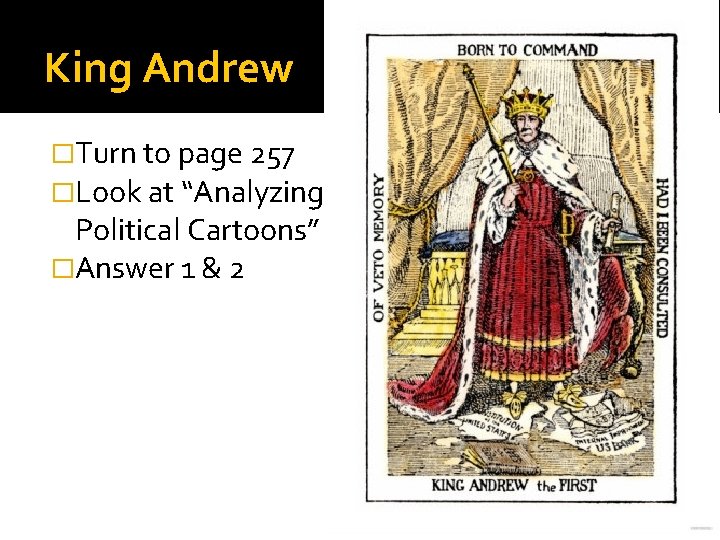
King Andrew �Turn to page 257 �Look at “Analyzing Political Cartoons” �Answer 1 & 2
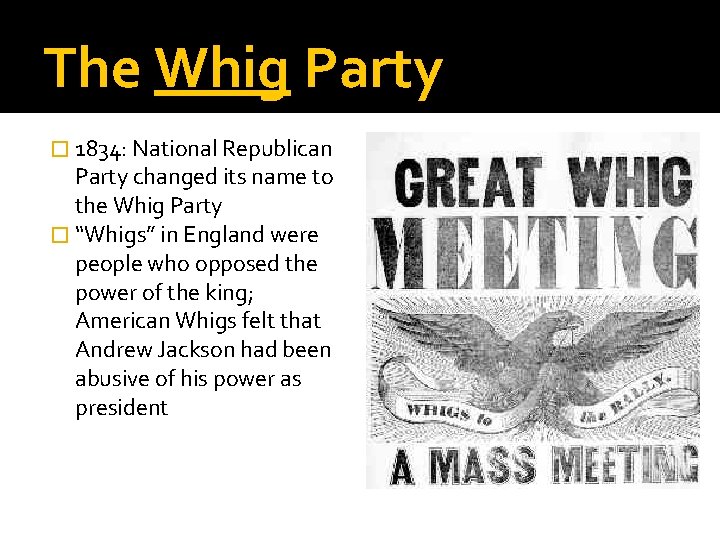
The Whig Party � 1834: National Republican Party changed its name to the Whig Party � “Whigs” in England were people who opposed the power of the king; American Whigs felt that Andrew Jackson had been abusive of his power as president
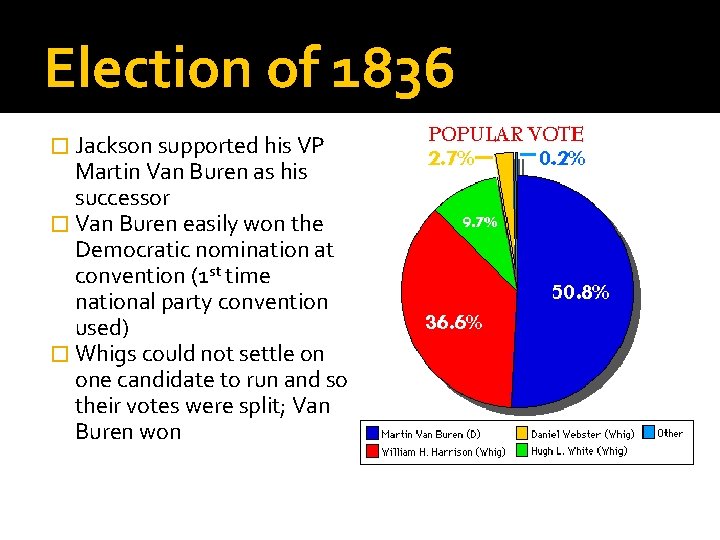
Election of 1836 � Jackson supported his VP Martin Van Buren as his successor � Van Buren easily won the Democratic nomination at convention (1 st time national party convention used) � Whigs could not settle on one candidate to run and so their votes were split; Van Buren won
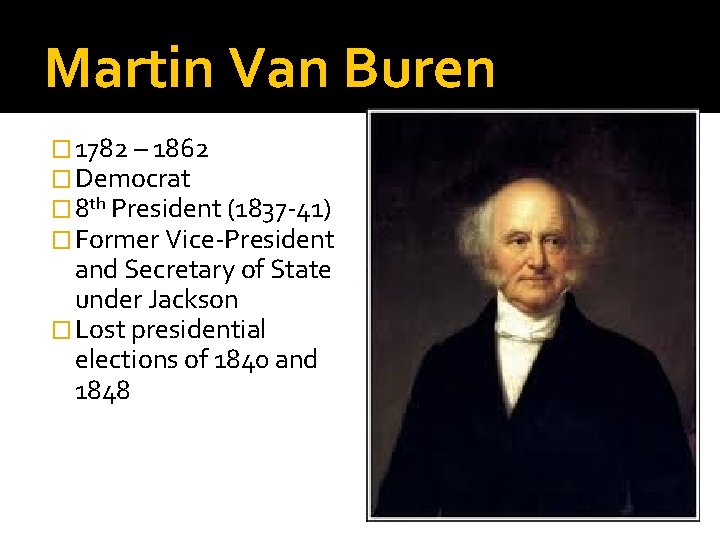
Martin Van Buren � 1782 – 1862 � Democrat � 8 th President (1837 -41) � Former Vice-President and Secretary of State under Jackson � Lost presidential elections of 1840 and 1848
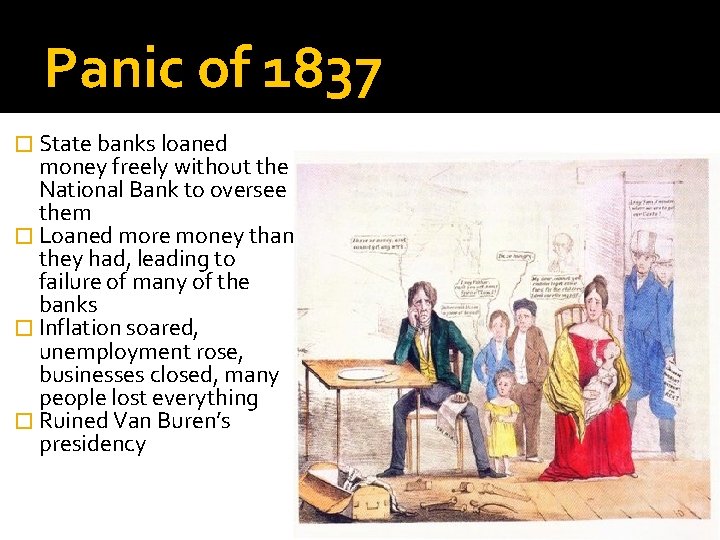
Panic of 1837 � State banks loaned money freely without the National Bank to oversee them � Loaned more money than they had, leading to failure of many of the banks � Inflation soared, unemployment rose, businesses closed, many people lost everything � Ruined Van Buren’s presidency
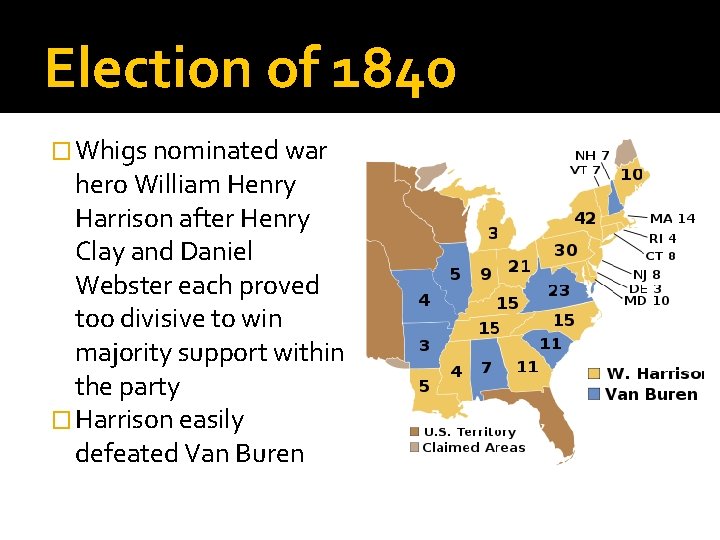
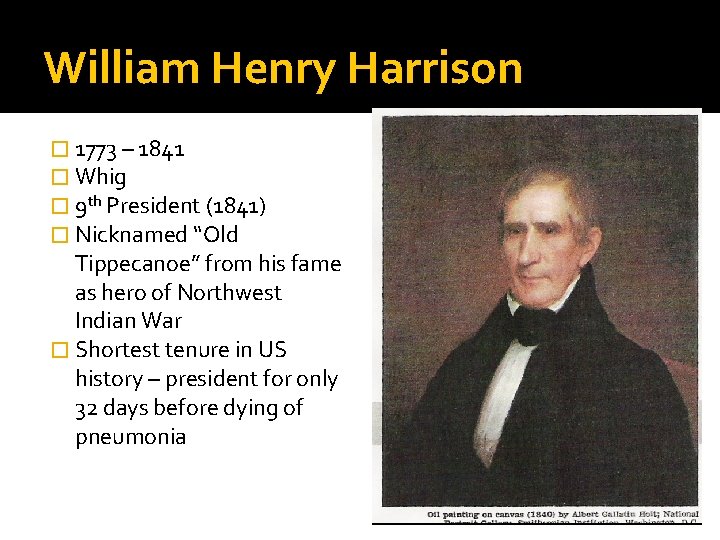
Election of 1840 � Whigs nominated war hero William Henry Harrison after Henry Clay and Daniel Webster each proved too divisive to win majority support within the party � Harrison easily defeated Van Buren
William Henry Harrison � 1773 – 1841 � Whig � 9 th President (1841) � Nicknamed “Old Tippecanoe” from his fame as hero of Northwest Indian War � Shortest tenure in US history – president for only 32 days before dying of pneumonia
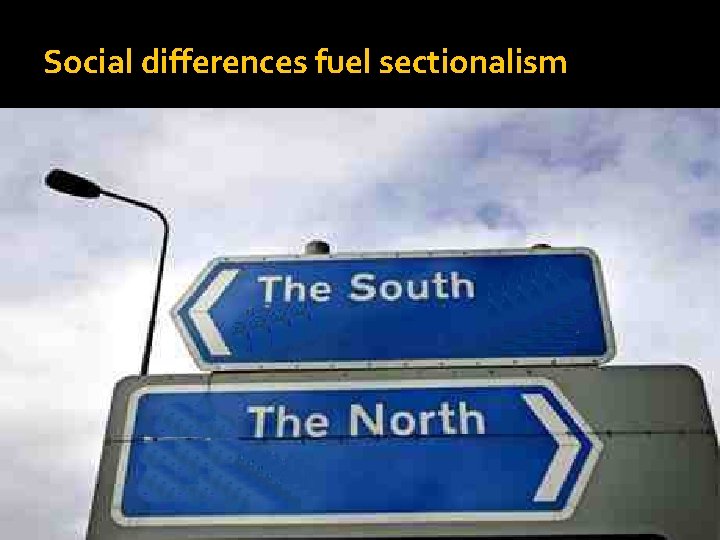
Social differences fuel sectionalism
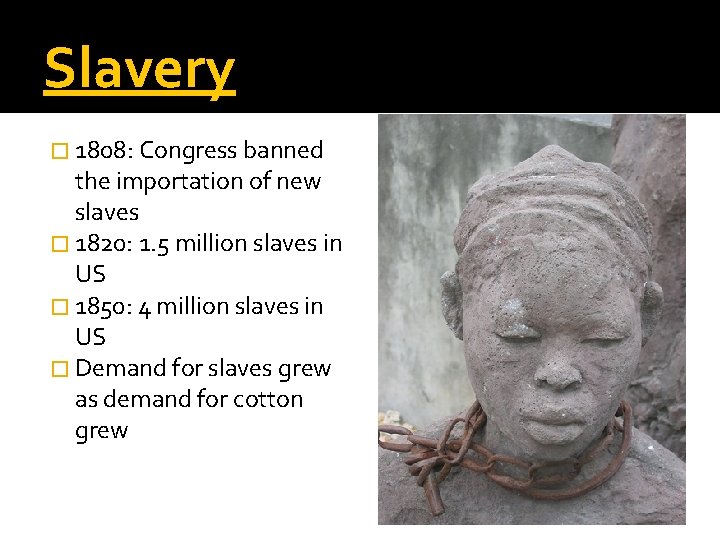
Slavery � 1808: Congress banned the importation of new slaves � 1820: 1. 5 million slaves in US � 1850: 4 million slaves in US � Demand for slaves grew as demand for cotton grew
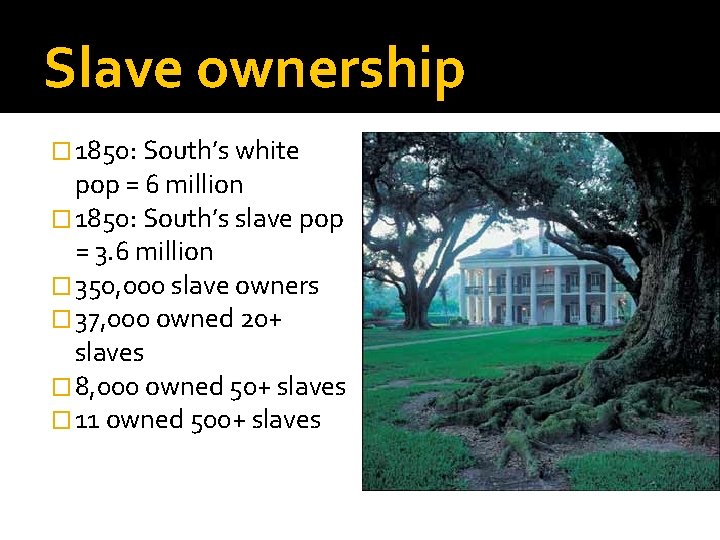
Slave ownership � 1850: South’s white pop = 6 million � 1850: South’s slave pop = 3. 6 million � 350, 000 slave owners � 37, 000 owned 20+ slaves � 8, 000 owned 50+ slaves � 11 owned 500+ slaves
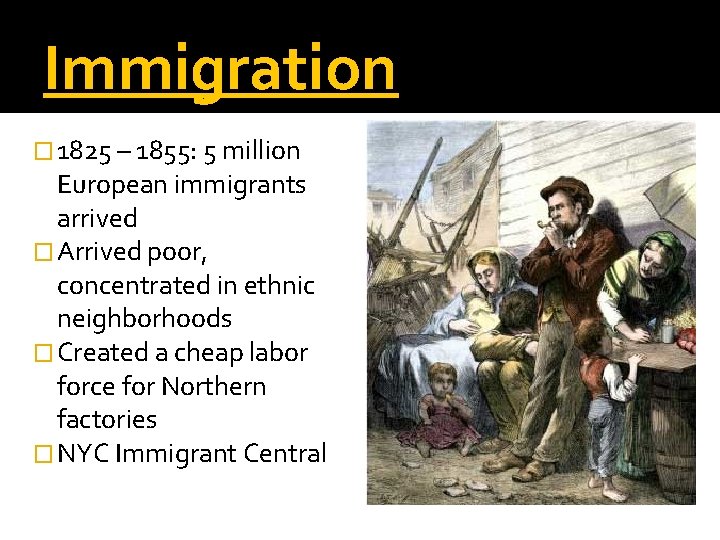
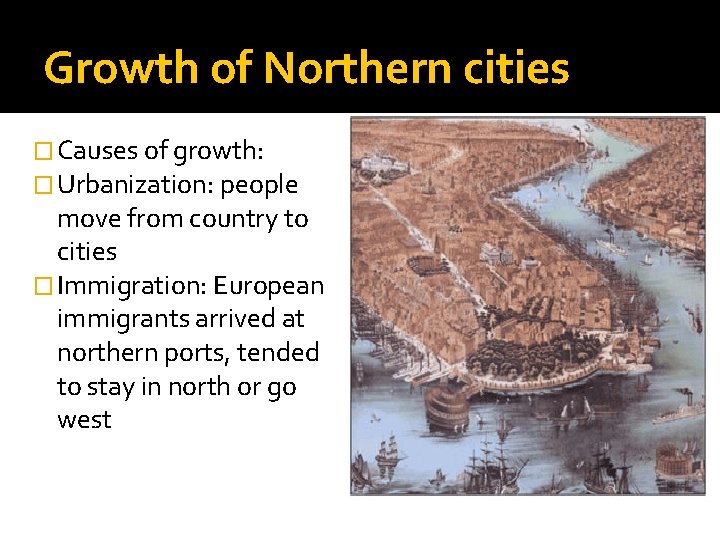
Immigration � 1825 – 1855: 5 million European immigrants arrived � Arrived poor, concentrated in ethnic neighborhoods � Created a cheap labor force for Northern factories � NYC Immigrant Central
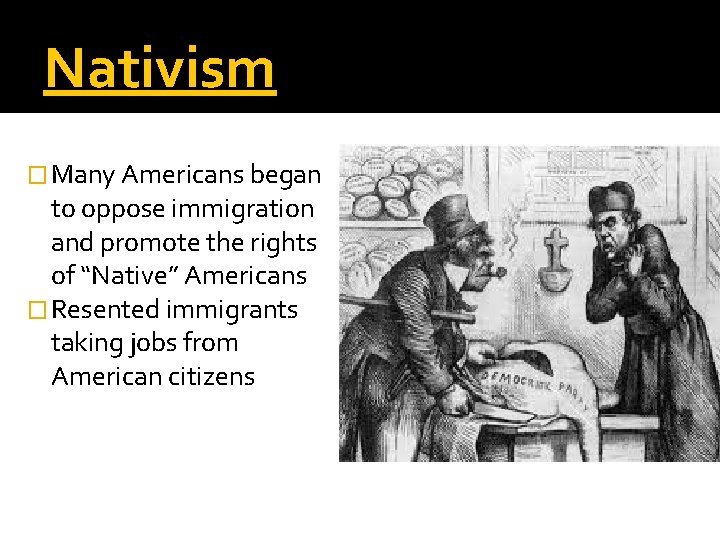
Nativism � Many Americans began to oppose immigration and promote the rights of “Native” Americans � Resented immigrants taking jobs from American citizens
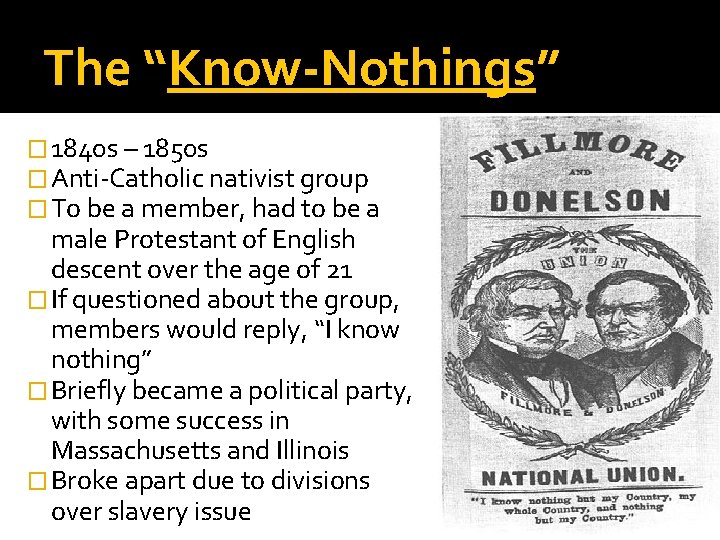
The “Know-Nothings” � 1840 s – 1850 s � Anti-Catholic nativist group � To be a member, had to be a male Protestant of English descent over the age of 21 � If questioned about the group, members would reply, “I know nothing” � Briefly became a political party, with some success in Massachusetts and Illinois � Broke apart due to divisions over slavery issue
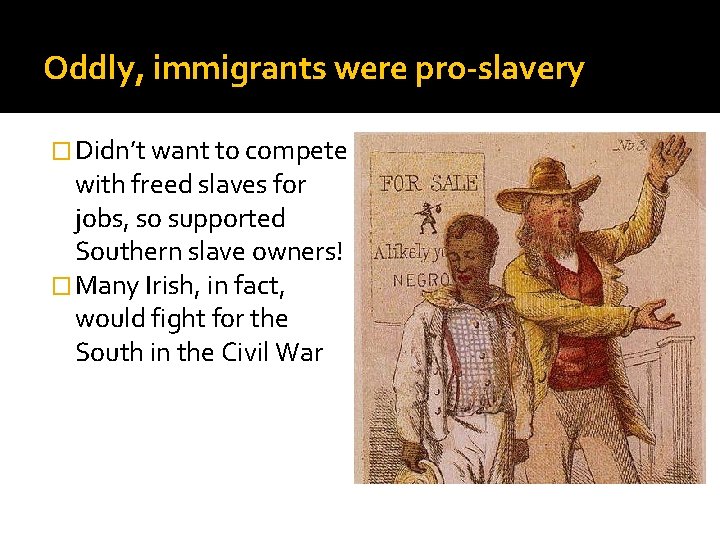
Oddly, immigrants were pro-slavery � Didn’t want to compete with freed slaves for jobs, so supported Southern slave owners! � Many Irish, in fact, would fight for the South in the Civil War
Growth of Northern cities � Causes of growth: � Urbanization: people move from country to cities � Immigration: European immigrants arrived at northern ports, tended to stay in north or go west
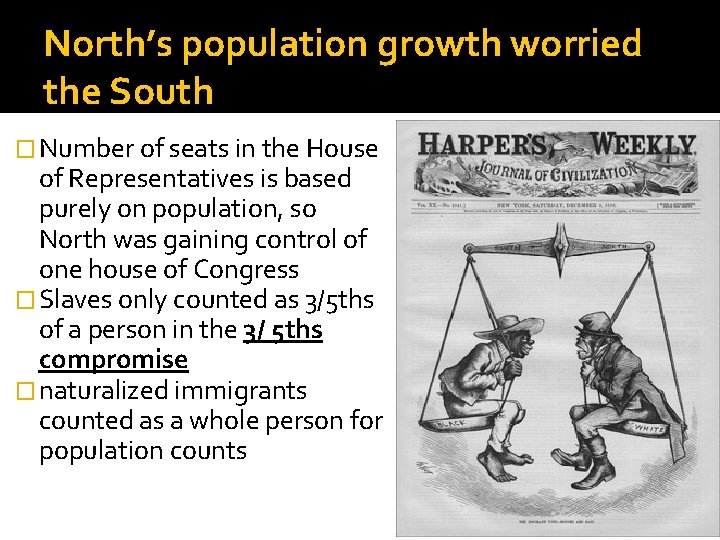
North’s population growth worried the South � Number of seats in the House of Representatives is based purely on population, so North was gaining control of one house of Congress � Slaves only counted as 3/5 ths of a person in the 3/ 5 ths compromise � naturalized immigrants counted as a whole person for population counts
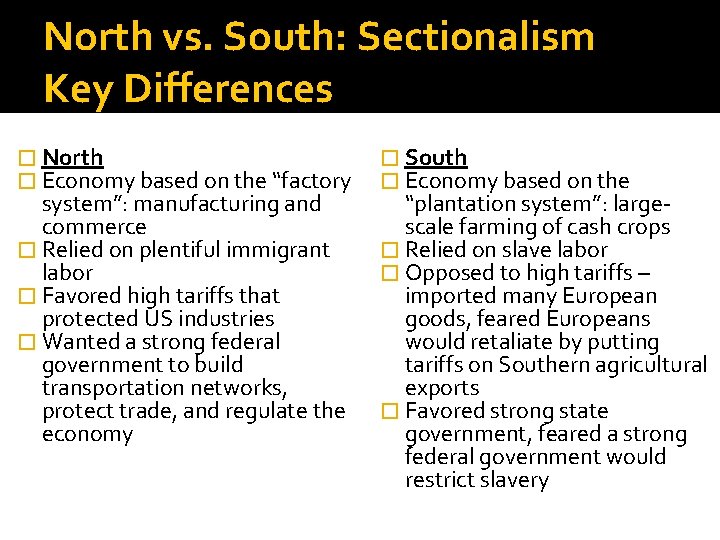
North vs. South: Sectionalism Key Differences � North � Economy based on the “factory system”: manufacturing and commerce � Relied on plentiful immigrant labor � Favored high tariffs that protected US industries � Wanted a strong federal government to build transportation networks, protect trade, and regulate the economy � South � Economy based on the “plantation system”: largescale farming of cash crops � Relied on slave labor � Opposed to high tariffs – imported many European goods, feared Europeans would retaliate by putting tariffs on Southern agricultural exports � Favored strong state government, feared a strong federal government would restrict slavery
Exit Ticket 3. 2. 1 � 3 events/people that promoted nationalism. � 2 events/people that promoted sectionalism. � 1 example of how nativism brought division to the country