
The Epic Poem Honors English 9 What is
- Slides: 22
The Epic Poem Honors English 9
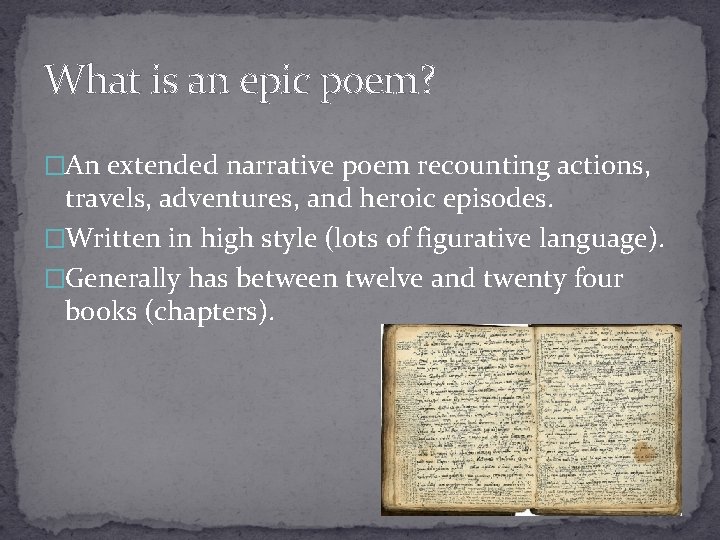
What is an epic poem? �An extended narrative poem recounting actions, travels, adventures, and heroic episodes. �Written in high style (lots of figurative language). �Generally has between twelve and twenty four books (chapters).
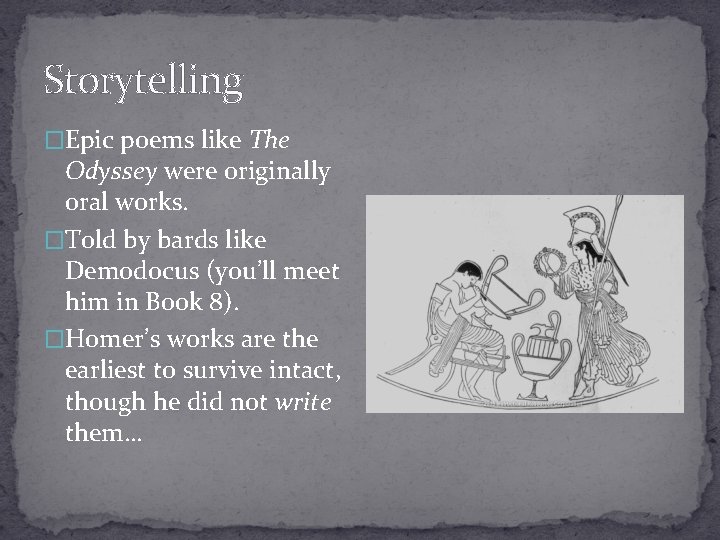
Storytelling �Epic poems like The Odyssey were originally oral works. �Told by bards like Demodocus (you’ll meet him in Book 8). �Homer’s works are the earliest to survive intact, though he did not write them…
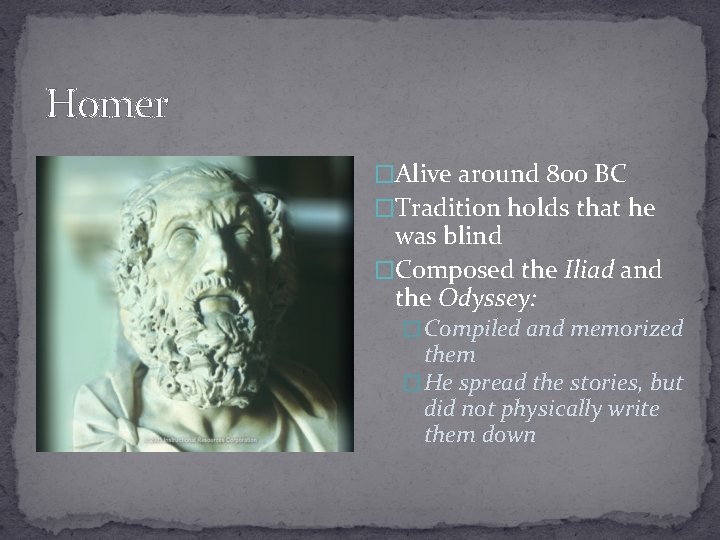
Homer �Alive around 800 BC �Tradition holds that he was blind �Composed the Iliad and the Odyssey: � Compiled and memorized them � He spread the stories, but did not physically write them down
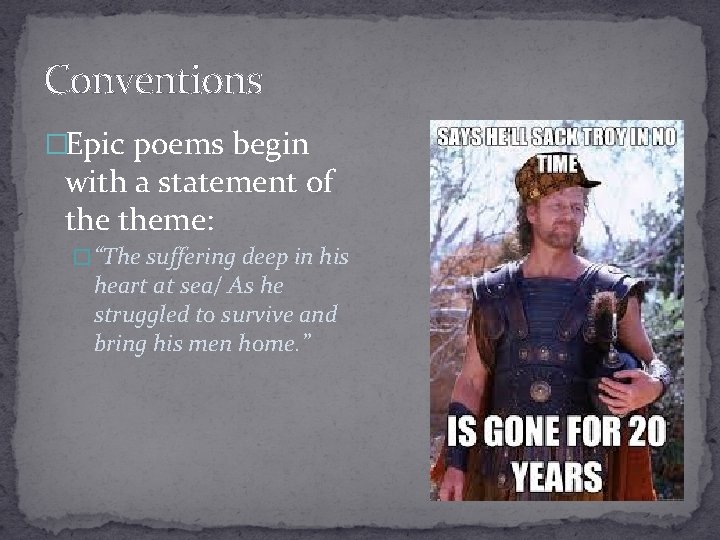
Conventions �Epic poems begin with a statement of theme: � “The suffering deep in his heart at sea/ As he struggled to survive and bring his men home. ”
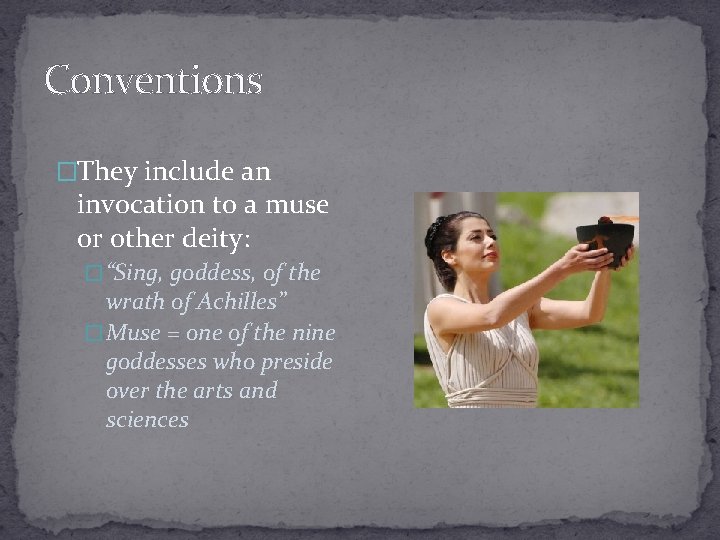
Conventions �They include an invocation to a muse or other deity: � “Sing, goddess, of the wrath of Achilles” � Muse = one of the nine goddesses who preside over the arts and sciences
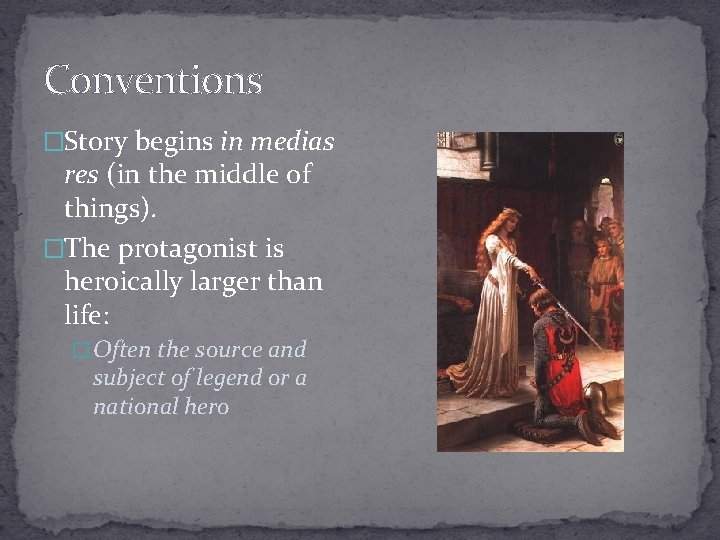
Conventions �Story begins in medias res (in the middle of things). �The protagonist is heroically larger than life: � Often the source and subject of legend or a national hero
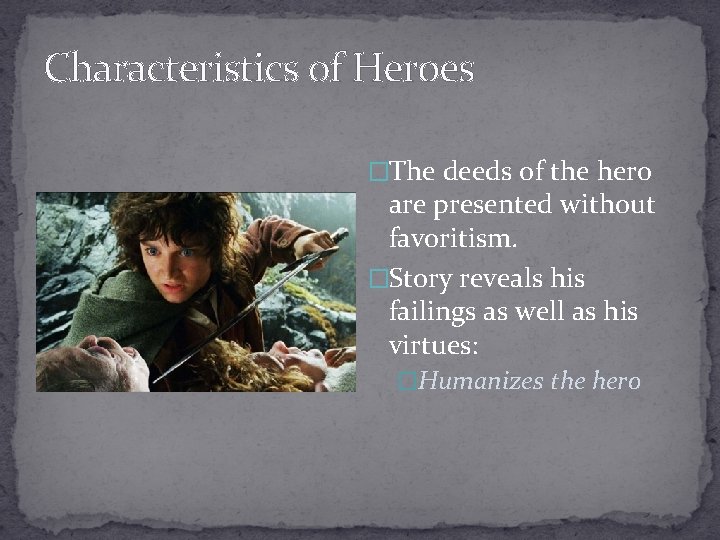
Characteristics of Heroes �The deeds of the hero are presented without favoritism. �Story reveals his failings as well as his virtues: �Humanizes the hero
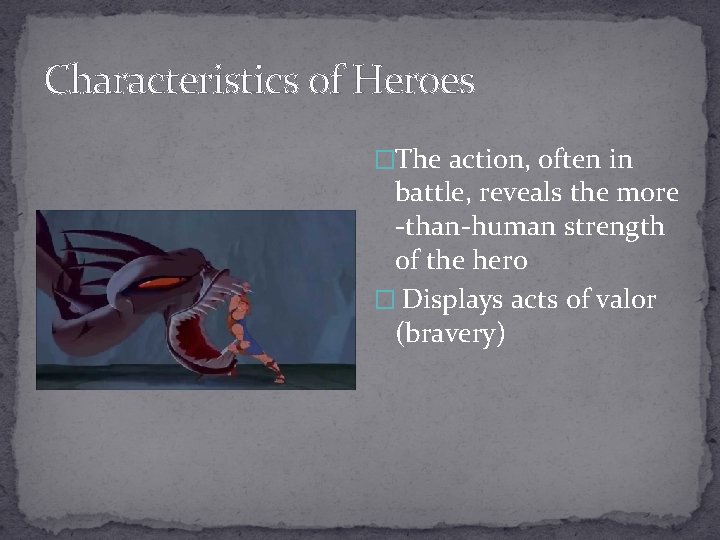
Characteristics of Heroes �The action, often in battle, reveals the more -than-human strength of the hero � Displays acts of valor (bravery)
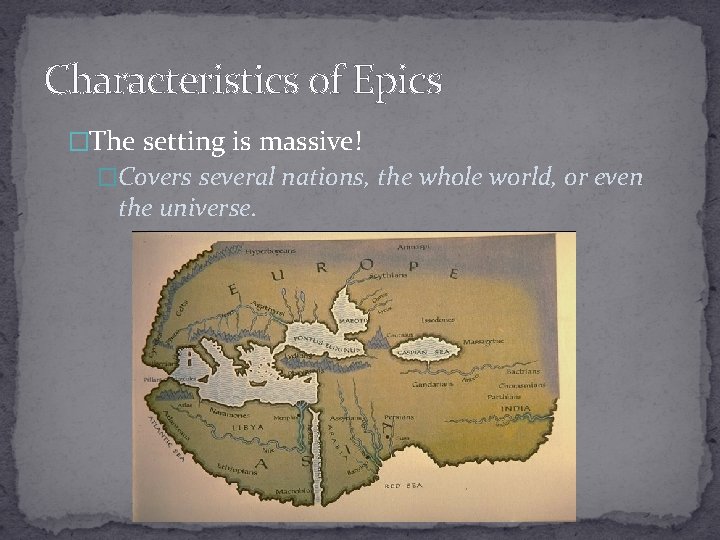
Characteristics of Epics �The setting is massive! �Covers several nations, the whole world, or even the universe.
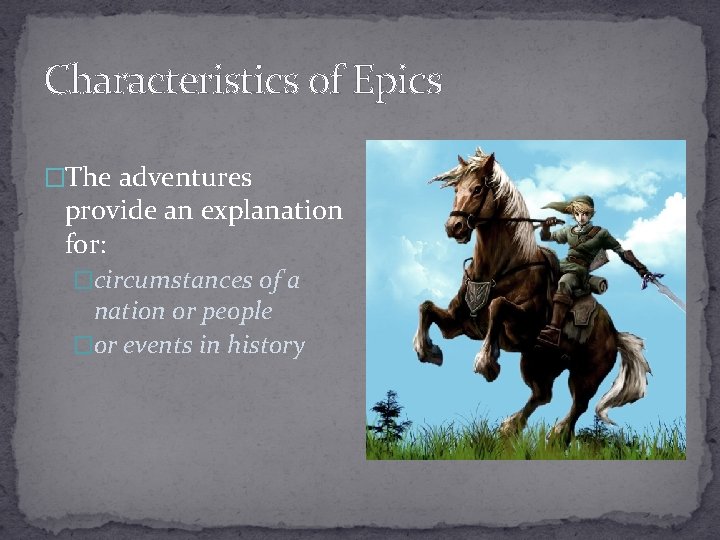
Characteristics of Epics �The adventures provide an explanation for: �circumstances of a nation or people �or events in history
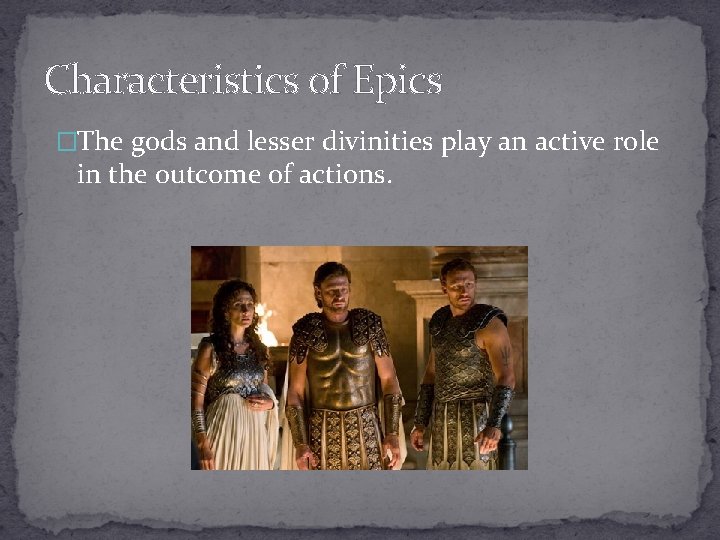
Characteristics of Epics �The gods and lesser divinities play an active role in the outcome of actions.
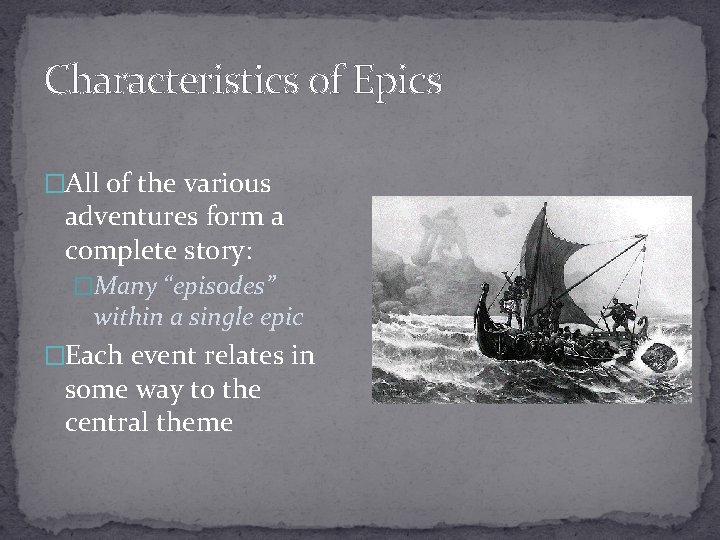
Characteristics of Epics �All of the various adventures form a complete story: �Many “episodes” within a single epic �Each event relates in some way to the central theme
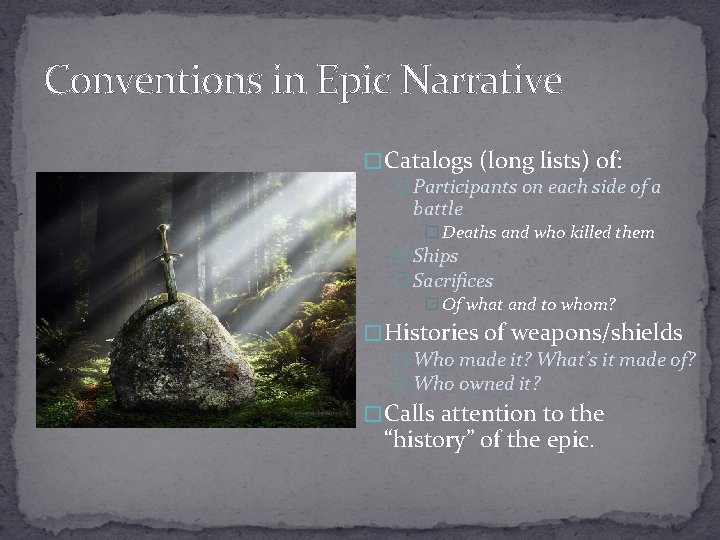
Conventions in Epic Narrative � Catalogs (long lists) of: � Participants on each side of a battle � Deaths and who killed them � Ships � Sacrifices � Of what and to whom? � Histories of weapons/shields � Who made it? What’s it made of? � Who owned it? � Calls attention to the “history” of the epic.
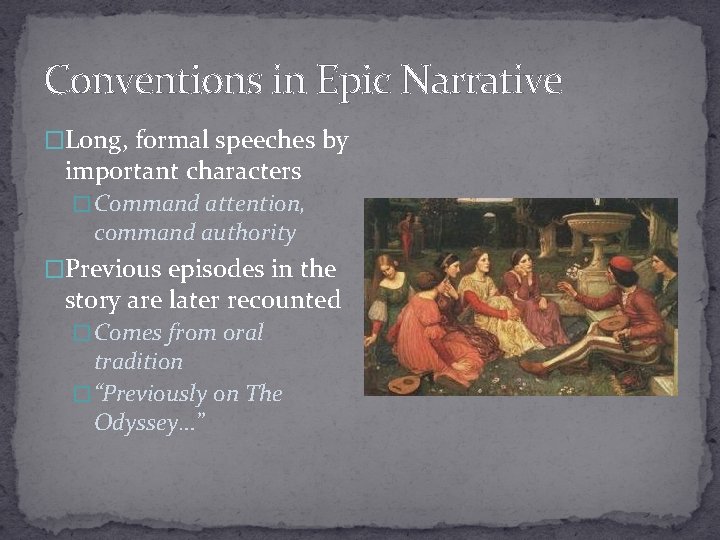
Conventions in Epic Narrative �Long, formal speeches by important characters � Command attention, command authority �Previous episodes in the story are later recounted � Comes from oral tradition � “Previously on The Odyssey…”
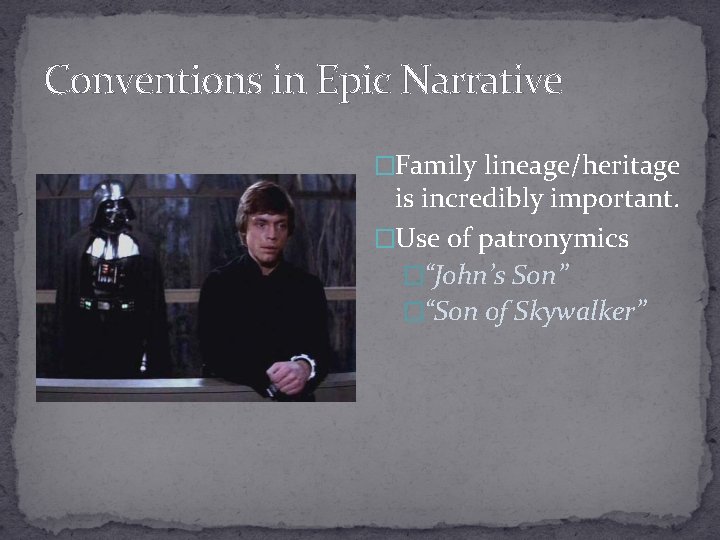
Conventions in Epic Narrative �Family lineage/heritage is incredibly important. �Use of patronymics �“John’s Son” �“Son of Skywalker”
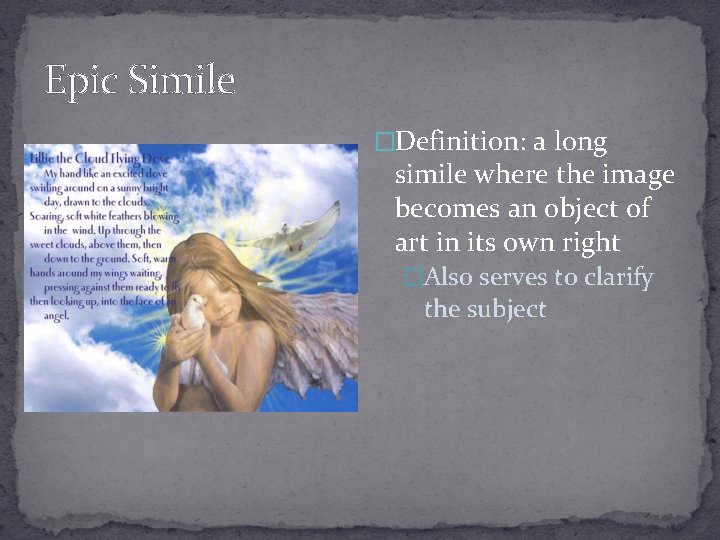
Epic Simile �Definition: a long simile where the image becomes an object of art in its own right �Also serves to clarify the subject
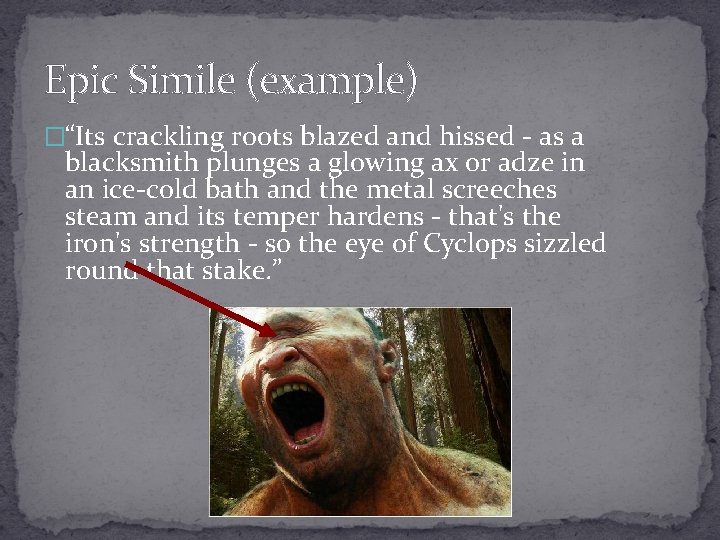
Epic Simile (example) �“Its crackling roots blazed and hissed - as a blacksmith plunges a glowing ax or adze in an ice-cold bath and the metal screeches steam and its temper hardens - that's the iron's strength - so the eye of Cyclops sizzled round that stake. ”
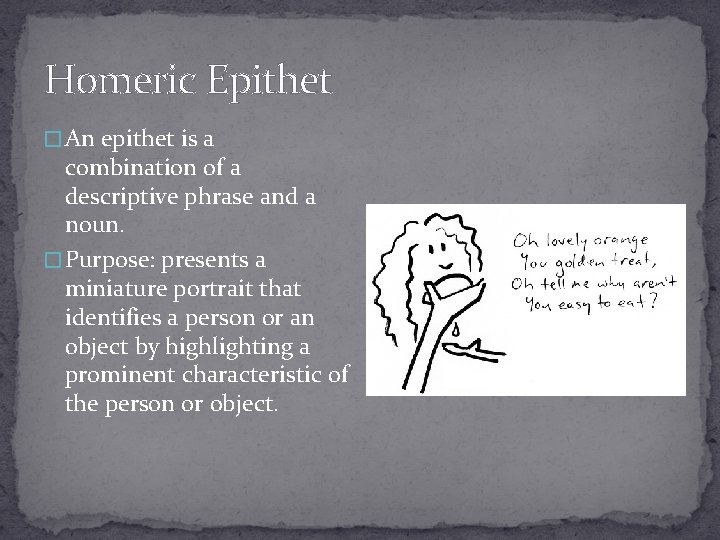
Homeric Epithet � An epithet is a combination of a descriptive phrase and a noun. � Purpose: presents a miniature portrait that identifies a person or an object by highlighting a prominent characteristic of the person or object.
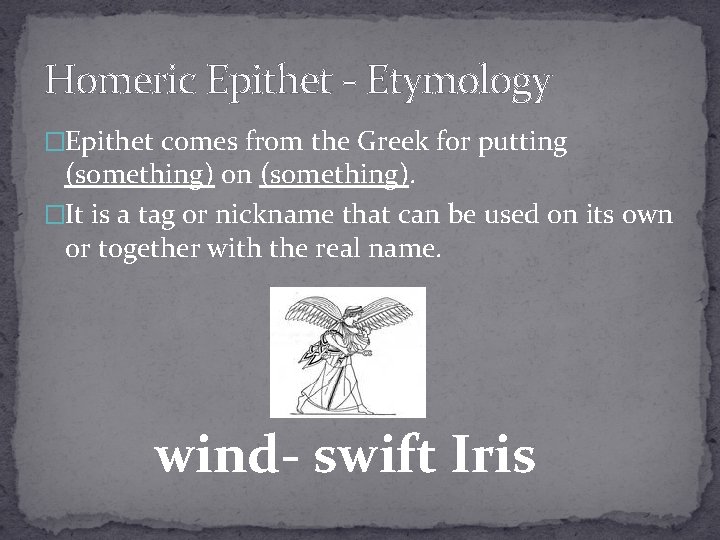
Homeric Epithet - Etymology �Epithet comes from the Greek for putting (something) on (something). �It is a tag or nickname that can be used on its own or together with the real name. wind- swift Iris
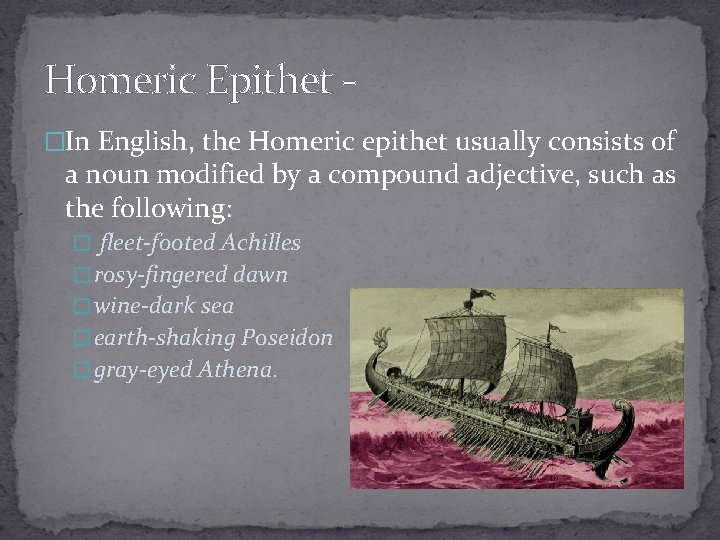
Homeric Epithet �In English, the Homeric epithet usually consists of a noun modified by a compound adjective, such as the following: � fleet-footed Achilles � rosy-fingered dawn � wine-dark sea � earth-shaking Poseidon � gray-eyed Athena.
Fox-witted Bryant Le. Doux The Destroyer of Certainty What is your epithet? Follow the structure, and create your own epithet. Bearded-charmer Smith