
The Enlightenment Transition from the Scientific Revolution to



- Slides: 31
The Enlightenment Transition from the Scientific Revolution to new ideas in Philosophy, Art, Economics, & Government
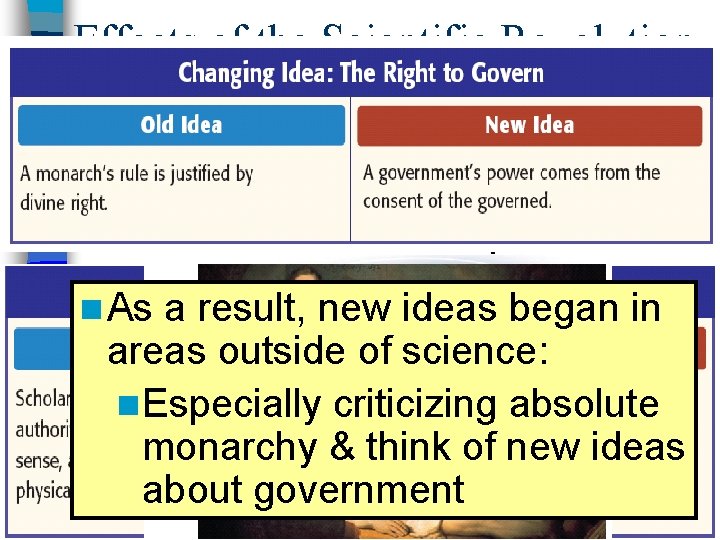
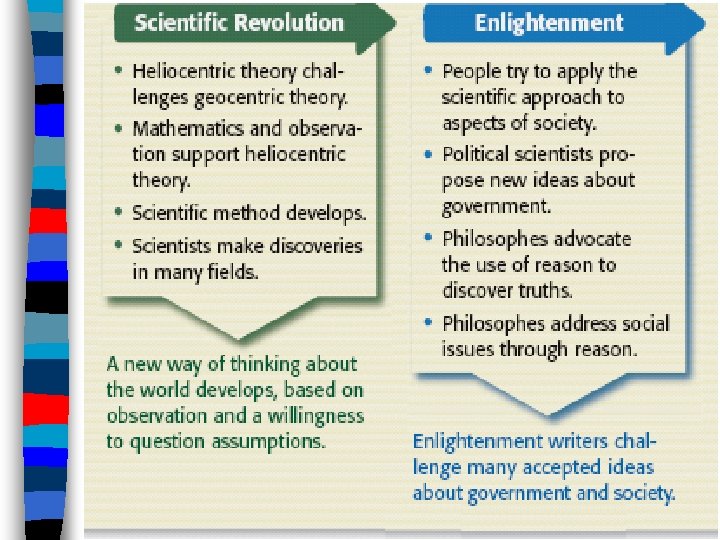
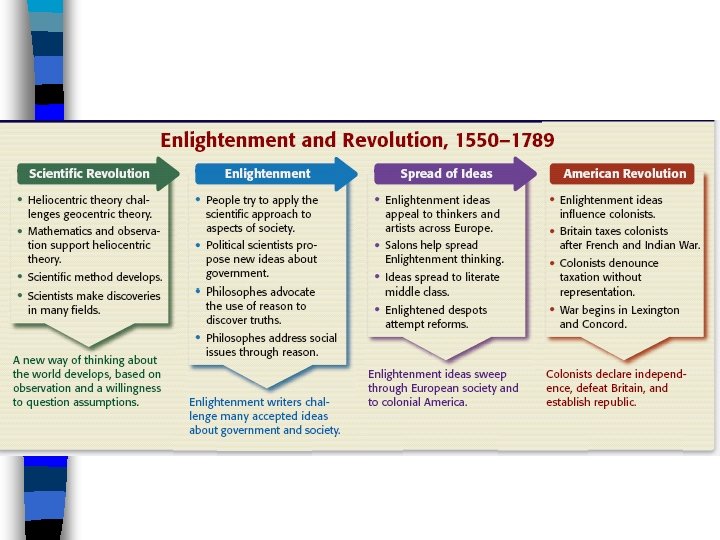
Effects of the Scientific Revolution n During the Scientific Revolution, people began to believe that the scientific method allowed them to find answers to their questions n As a result, new ideas began in areas outside of science: n Especially criticizing absolute monarchy & think of new ideas about government
What is the Enlightenment? n The intellectuals of the Enlightenment (called Philosophes) believed: –The universe could be understood through reason –Everything in nature could be explained by natural laws— laws universal truths found through observation (Religion is not necessary to understand the world)
What is the Enlightenment? –The belief in progress—the progress world can be improved upon & perfected –People have natural rights— rights personal freedoms that allow people to enjoy liberty (no restrictions on speech, religion, or the economy)
Political Thinkers of the Enlightenment Hobbes, Locke, Jefferson, Montesquieu, Rousseau, Voltaire
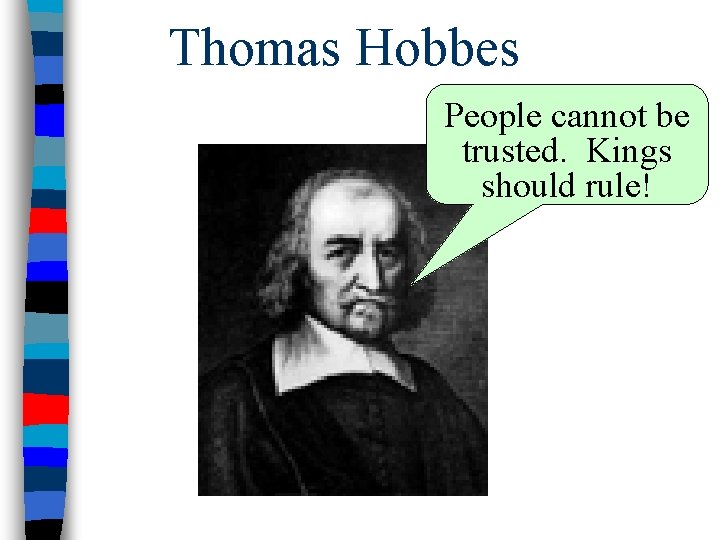
Thomas Hobbes People cannot be trusted. Kings should rule!
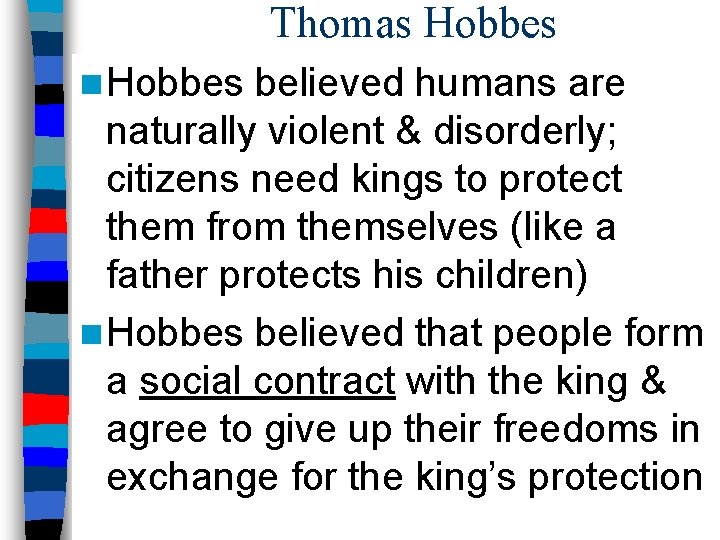
Thomas Hobbes n Hobbes believed humans are naturally violent & disorderly; citizens need kings to protect them from themselves (like a father protects his children) n Hobbes believed that people form a social contract with the king & agree to give up their freedoms in exchange for the king’s protection
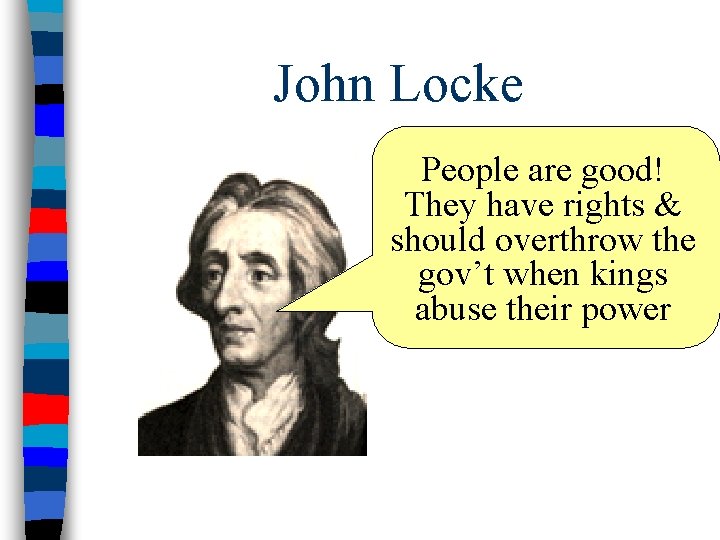
John Locke People are good! They have rights & should overthrow the gov’t when kings abuse their power
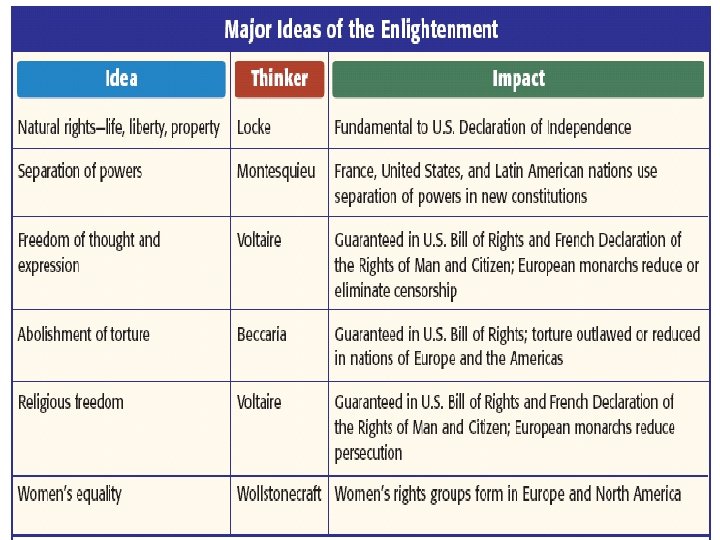
John Locke believed that all people have natural rights (rights to life, liberty, & ownership of property) n He added to Hobbes’ Social Contract Theory saying that people can break the “contract” when a king become corrupt n The best government has limited powers & listens to the people
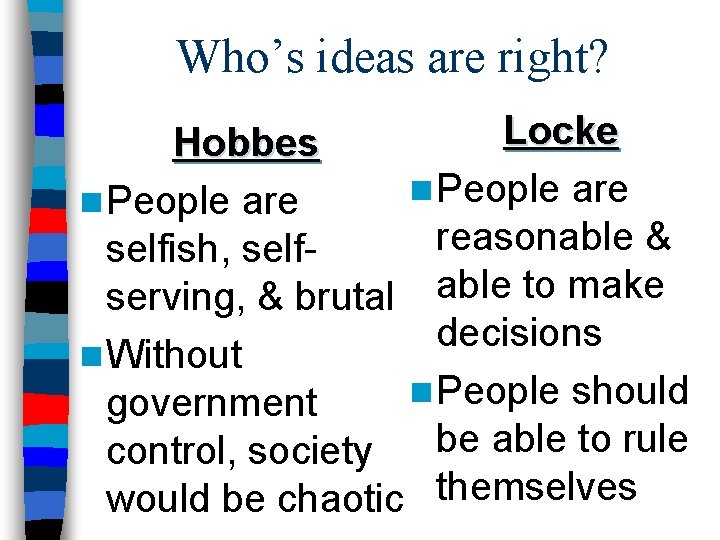
Who’s ideas are right? Locke Hobbes n People are reasonable & selfish, selfserving, & brutal able to make decisions n Without n People should government be able to rule control, society would be chaotic themselves
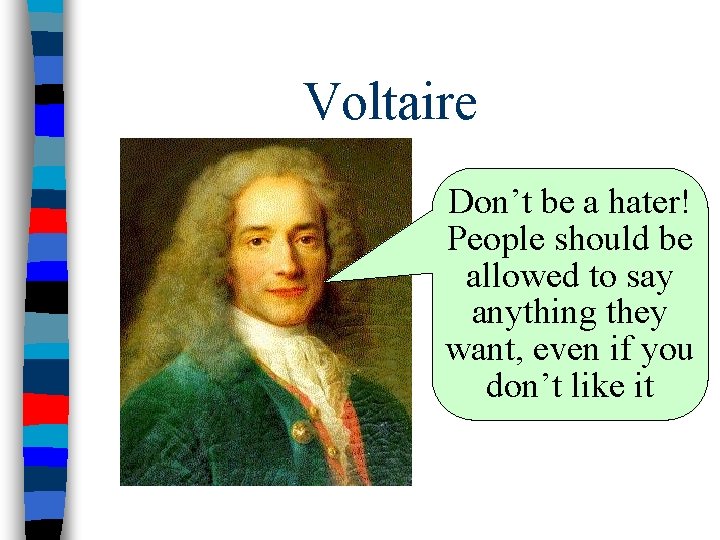
Voltaire Don’t be a hater! People should be allowed to say anything they want, even if you don’t like it
Voltaire n Voltaire demanded that kings offer their people freedoms of thought, speech, & religion n He fought against prejudice & pushed for the French king to be more tolerant
Questions for discussion: n. Voltaire said: “I may disapprove of what you say, but I will defend to the death your right to say it. ” n. What does this statement indicate about Voltaire’s views on free speech?
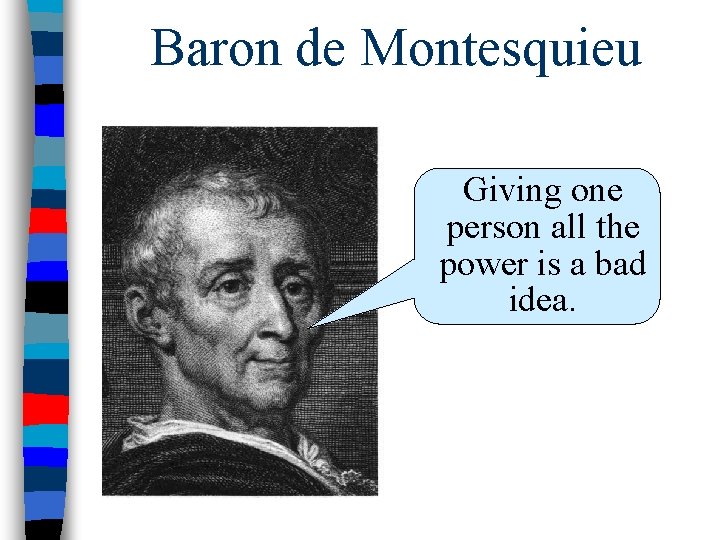
Baron de Montesquieu Giving one person all the power is a bad idea.
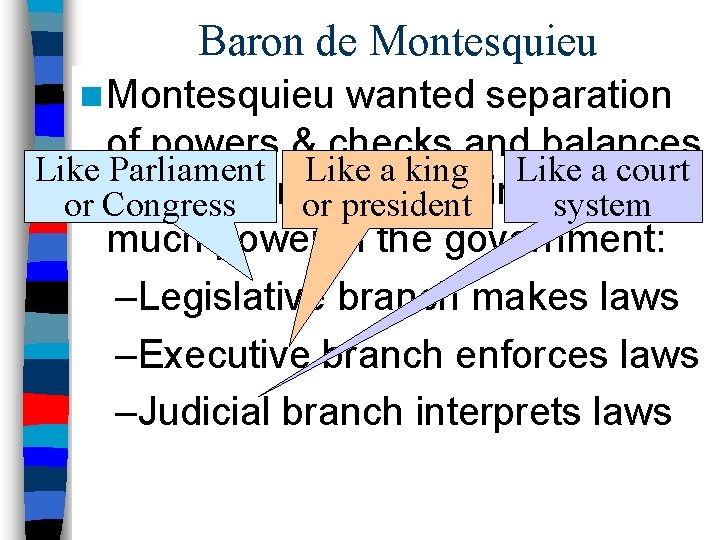
Baron de Montesquieu n Montesquieu wanted separation of powers & checks and balances Like Parliament Like a king Like a court to keep kings from gainingsystem too or Congress or president much power in the government: –Legislative branch makes laws –Executive branch enforces laws –Judicial branch interprets laws
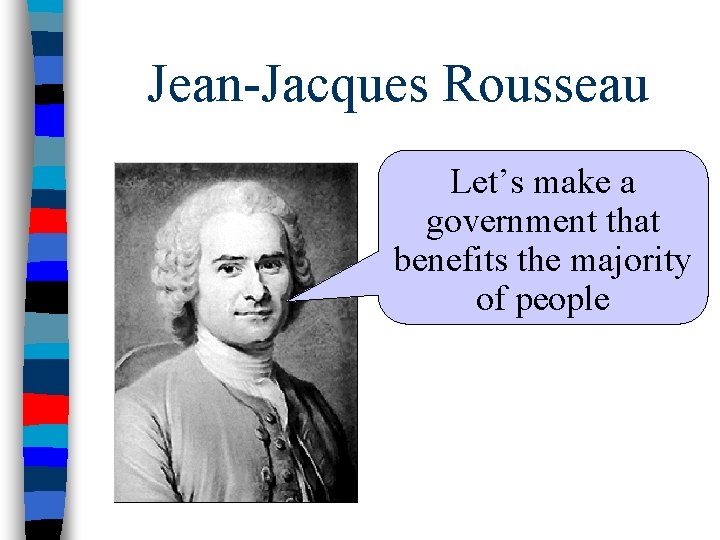
Jean-Jacques Rousseau Let’s make a government that benefits the majority of people
Jean-Jacques Rousseau What the majority wants, n Believed people are naturally the majority gets good, but power corrupts them n The best form of government is direct democracy that Likeatheir choice if they disagree with the majority promotes the opinion common good of the majority n People give up some of their individual rights to be ruled by the general will of the majority
Enlightened Despots n Some absolute monarchs (despots) throughout Europe were influenced by Enlightenment ideas & became known as Enlightened Despots n These monarchs ruled by trying to do what is best for citizens: –They favored religious tolerance, economic reforms, give more people legal rights
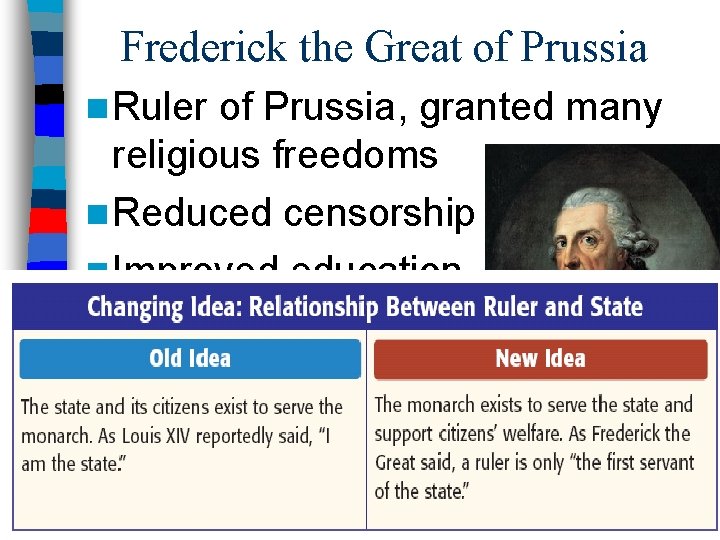
Frederick the Great of Prussia n Ruler of Prussia, granted many religious freedoms n Reduced censorship n Improved education & justice system n Abolished torture n Thought he was “the 1 st servant of the state”
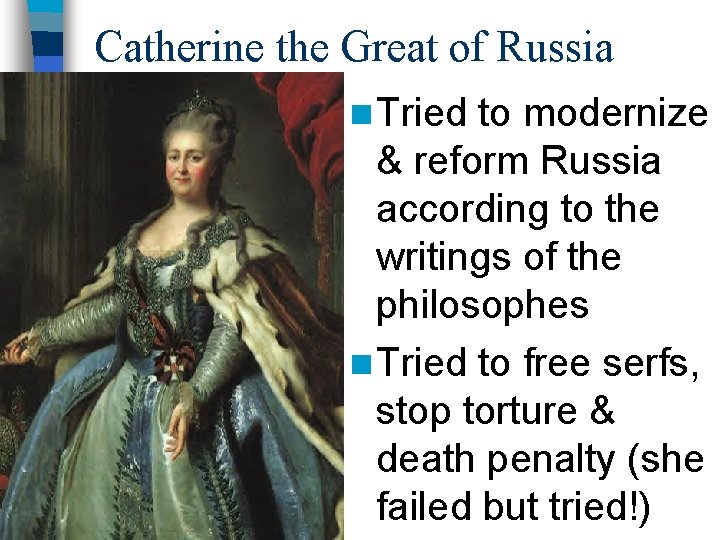
Catherine the Great of Russia n Tried to modernize & reform Russia according to the writings of the philosophes n Tried to free serfs, stop torture & death penalty (she failed but tried!)
How did Enlightenment writers and thinkers set the stage for revolutionary movements? n Philosophes encouraged people to judge for themselves what they thought was right or wrong n People began to rely on reason to solve their social problems n These ideas led to violent revolutions in America & France to overthrow “corrupt kings”
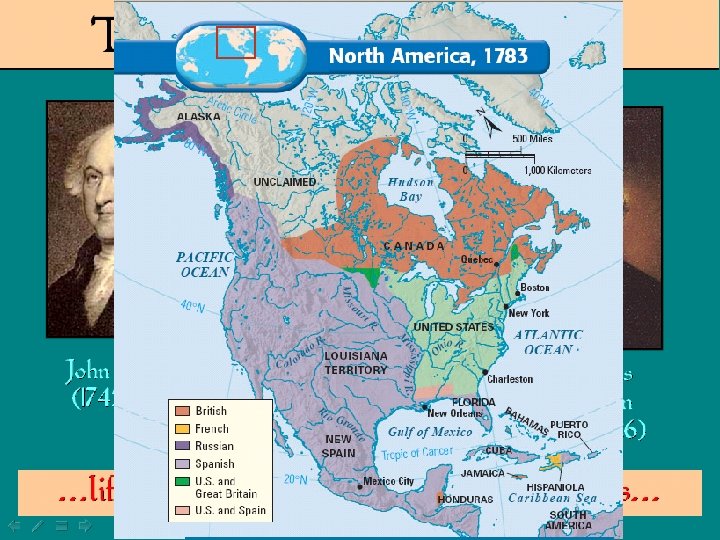
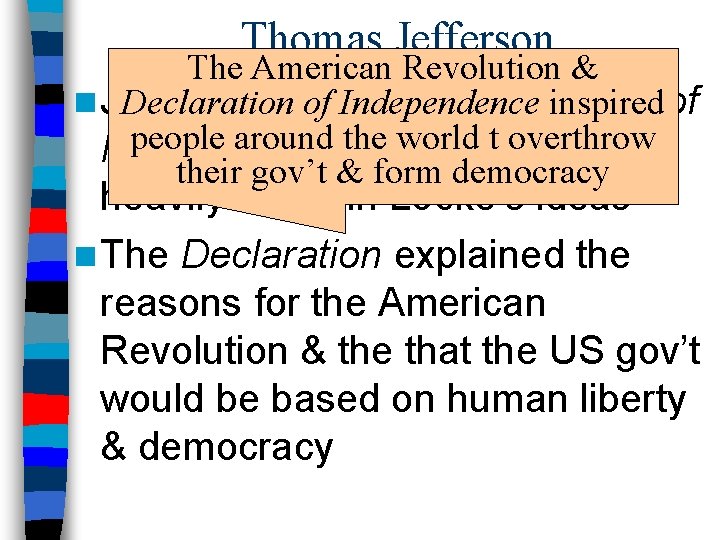
Thomas Jefferson The American Revolution & Declaration of Independence inspiredof n Jefferson wrote the Declaration people around the world t&overthrow Independence (1776) based it their gov’t & form democracy heavily on John Locke’s ideas n The Declaration explained the reasons for the American Revolution & the that the US gov’t would be based on human liberty & democracy
n Think about each of the following Enlightenment philosophes & identify one way each of them would try to improve some aspect of NHS –Thomas Hobbes –John Locke –Voltaire –Montesquieu –Rousseau