
The Enlightenment Time Period 1720 1790 Definition Evolved
- Slides: 24
The Enlightenment Time Period: 1720 - 1790 Definition: Evolved from ideas of the Renaissance and the Scientific Revolution
Government and Economics • • John Locke Thomas Hobbes Adam Smith Karl Marx
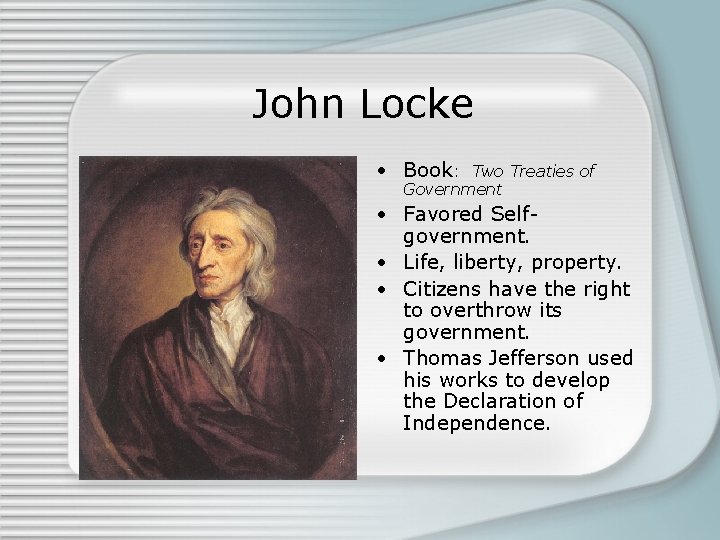
John Locke • Book: Two Treaties of Government • Favored Selfgovernment. • Life, liberty, property. • Citizens have the right to overthrow its government. • Thomas Jefferson used his works to develop the Declaration of Independence.
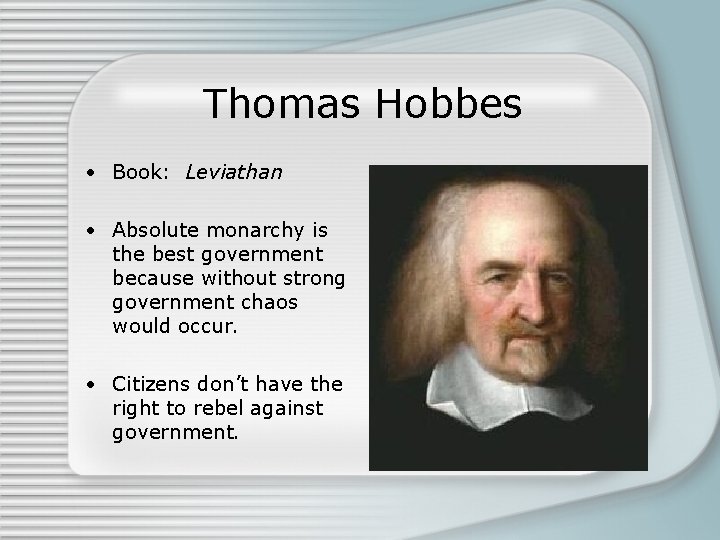
Thomas Hobbes • Book: Leviathan • Absolute monarchy is the best government because without strong government chaos would occur. • Citizens don’t have the right to rebel against government.
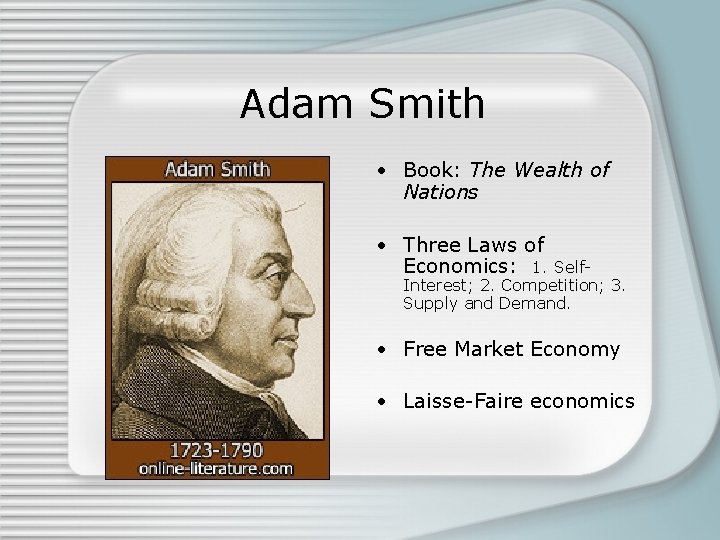
Adam Smith • Book: The Wealth of Nations • Three Laws of Economics: 1. Self- Interest; 2. Competition; 3. Supply and Demand. • Free Market Economy • Laisse-Faire economics
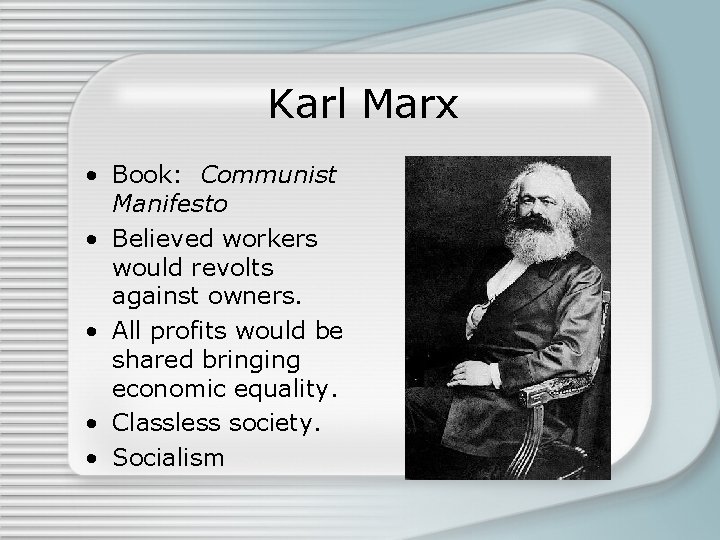
Karl Marx • Book: Communist Manifesto • Believed workers would revolts against owners. • All profits would be shared bringing economic equality. • Classless society. • Socialism
Cast of Characters • • • Voltaire Montesquieu Rousseau Diderot Madame Geoffrin
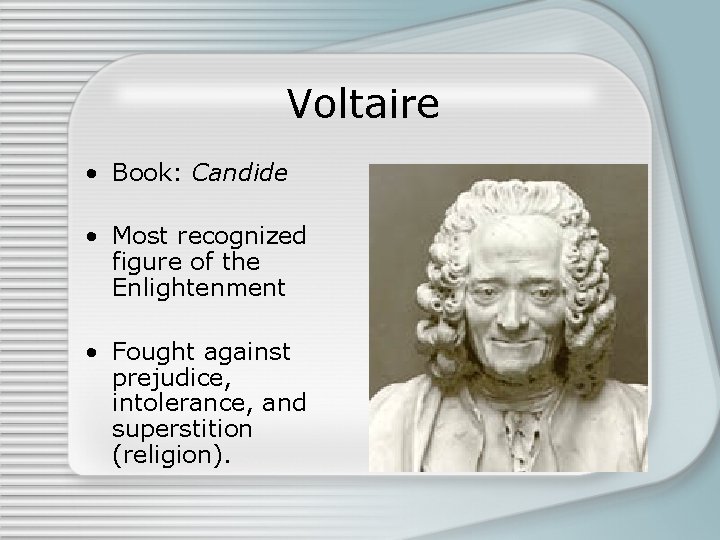
Voltaire • Book: Candide • Most recognized figure of the Enlightenment • Fought against prejudice, intolerance, and superstition (religion).
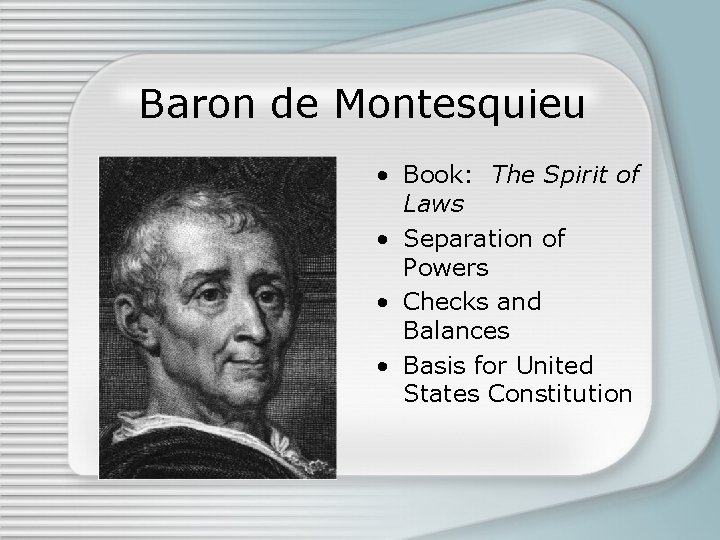
Baron de Montesquieu • Book: The Spirit of Laws • Separation of Powers • Checks and Balances • Basis for United States Constitution
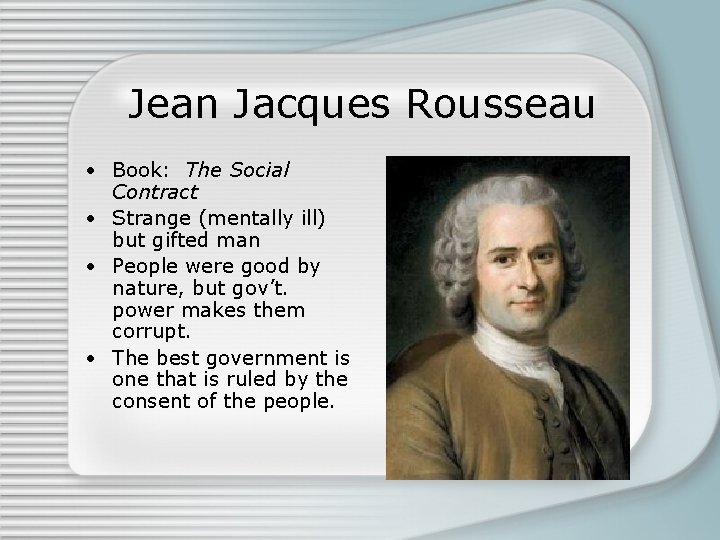
Jean Jacques Rousseau • Book: The Social Contract • Strange (mentally ill) but gifted man • People were good by nature, but gov’t. power makes them corrupt. • The best government is one that is ruled by the consent of the people.
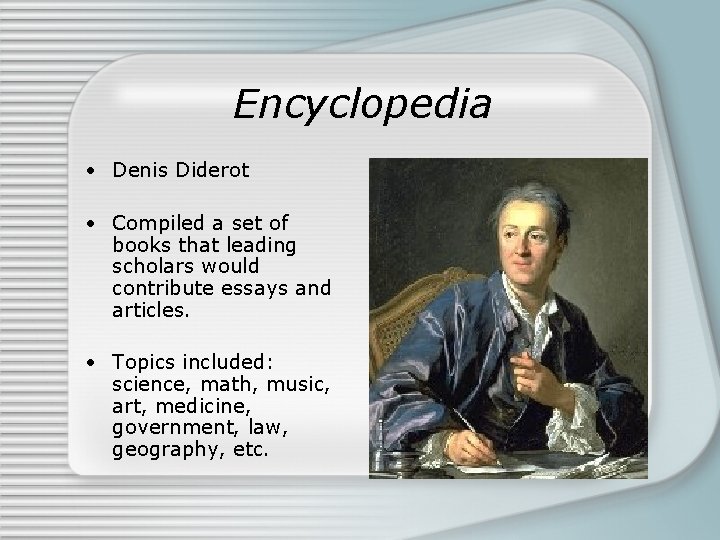
Encyclopedia • Denis Diderot • Compiled a set of books that leading scholars would contribute essays and articles. • Topics included: science, math, music, art, medicine, government, law, geography, etc.
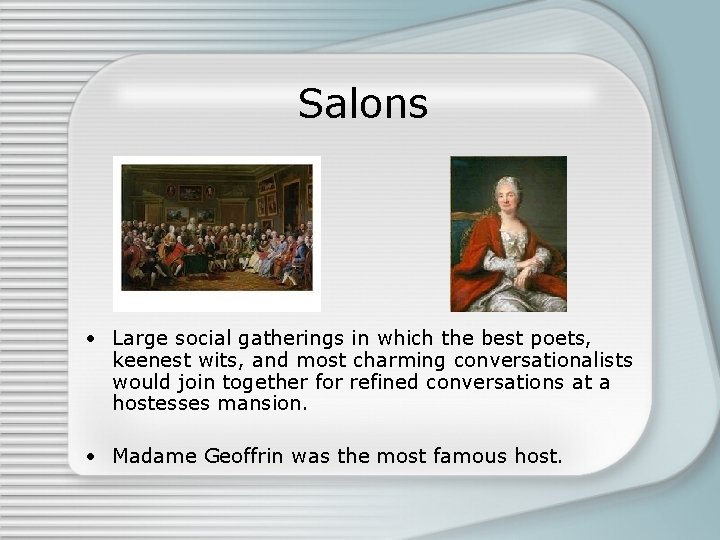
Salons • Large social gatherings in which the best poets, keenest wits, and most charming conversationalists would join together for refined conversations at a hostesses mansion. • Madame Geoffrin was the most famous host.
Enlightened Despots • Frederick the Great • Catherine the Great • Emperor Joseph II
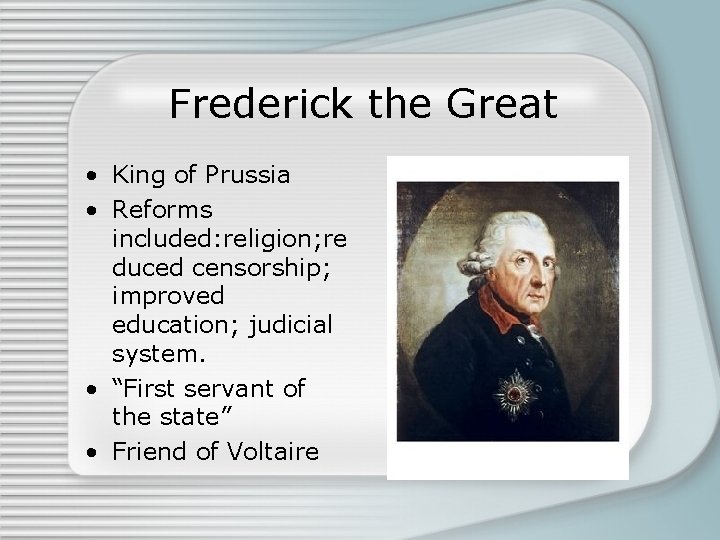
Frederick the Great • King of Prussia • Reforms included: religion; re duced censorship; improved education; judicial system. • “First servant of the state” • Friend of Voltaire
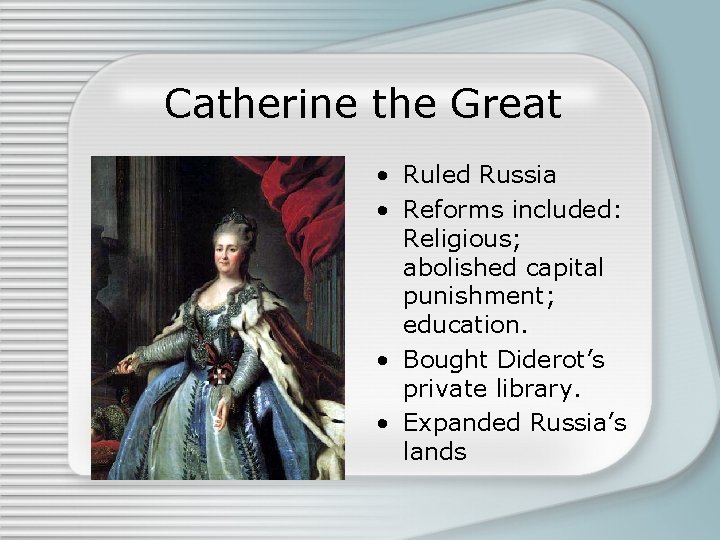
Catherine the Great • Ruled Russia • Reforms included: Religious; abolished capital punishment; education. • Bought Diderot’s private library. • Expanded Russia’s lands
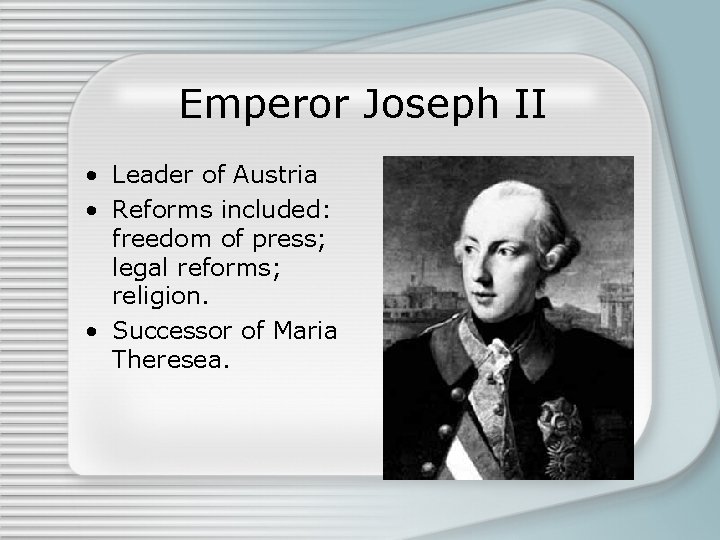
Emperor Joseph II • Leader of Austria • Reforms included: freedom of press; legal reforms; religion. • Successor of Maria Theresea.
Baroque & Classical Music • • • Bach Handel Haydn Mozart Beethoven
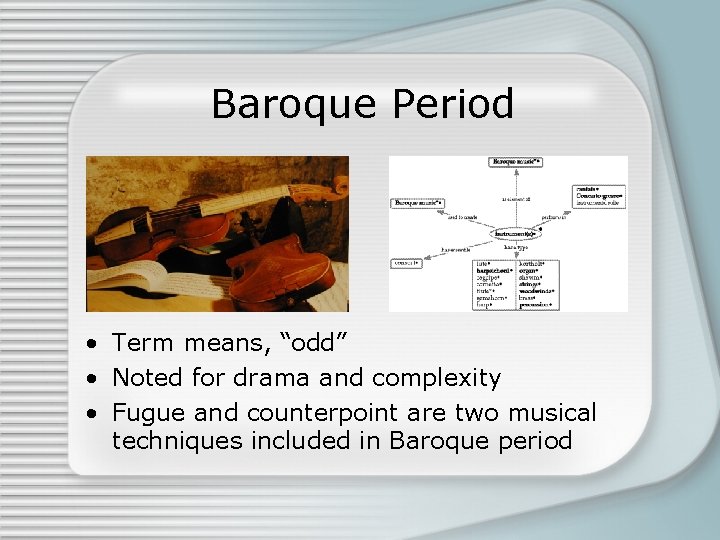
Baroque Period • Term means, “odd” • Noted for drama and complexity • Fugue and counterpoint are two musical techniques included in Baroque period
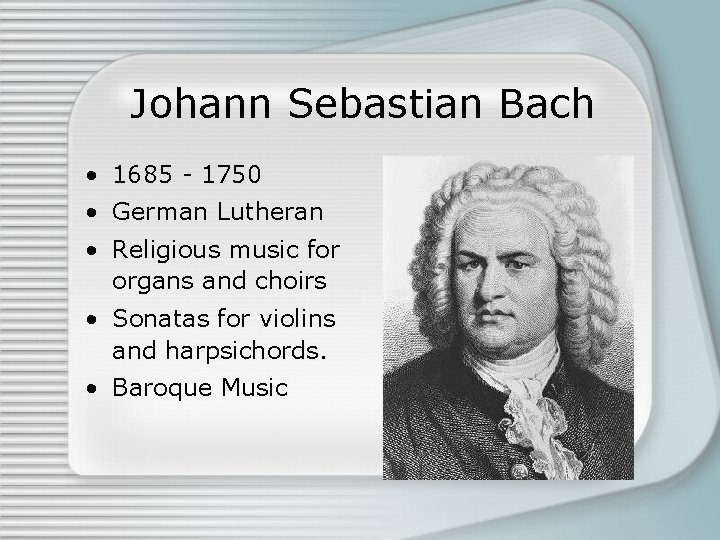
Johann Sebastian Bach • 1685 - 1750 • German Lutheran • Religious music for organs and choirs • Sonatas for violins and harpsichords. • Baroque Music
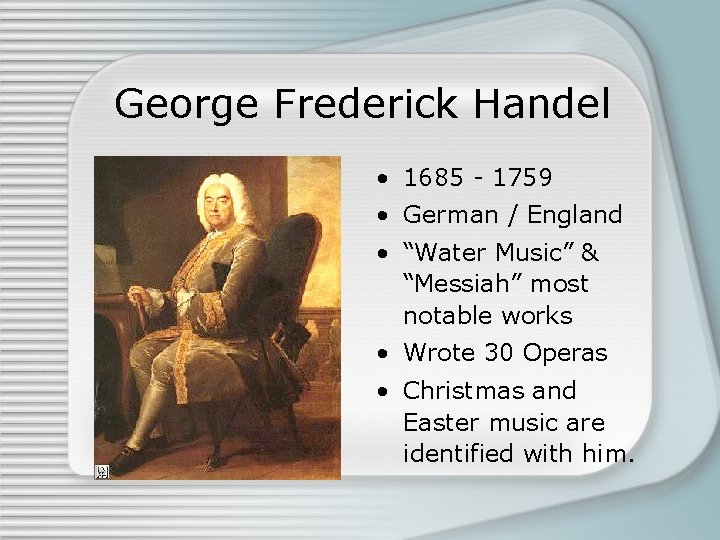
George Frederick Handel • 1685 - 1759 • German / England • “Water Music” & “Messiah” most notable works • Wrote 30 Operas • Christmas and Easter music are identified with him.
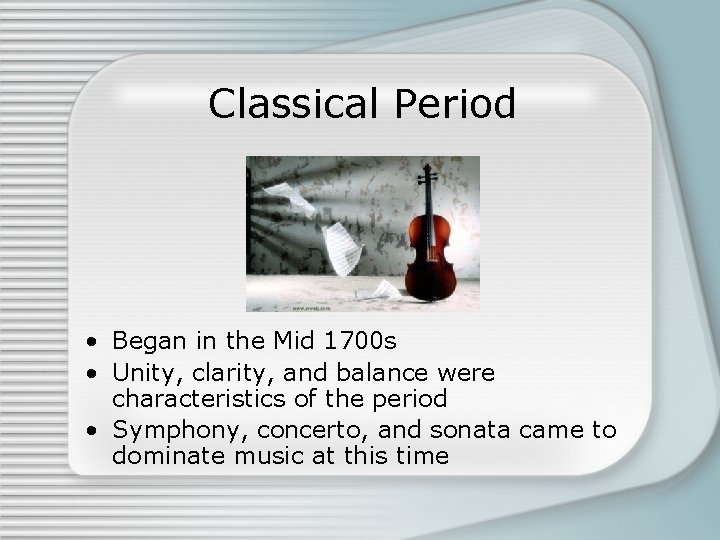
Classical Period • Began in the Mid 1700 s • Unity, clarity, and balance were characteristics of the period • Symphony, concerto, and sonata came to dominate music at this time
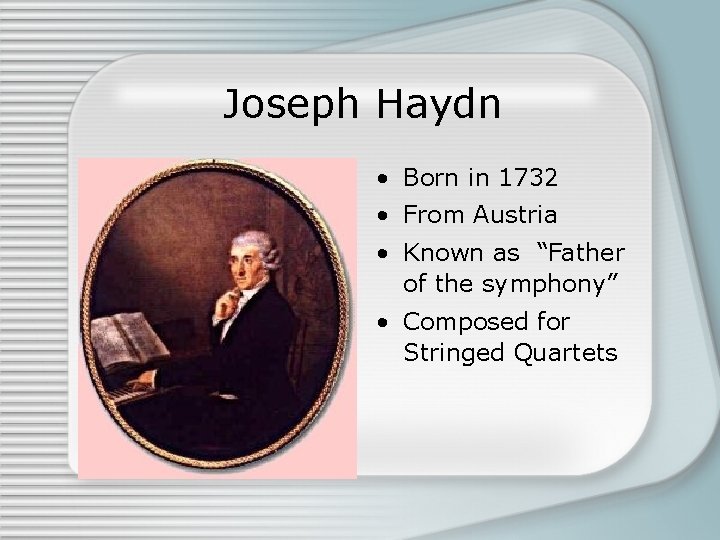
Joseph Haydn • Born in 1732 • From Austria • Known as “Father of the symphony” • Composed for Stringed Quartets
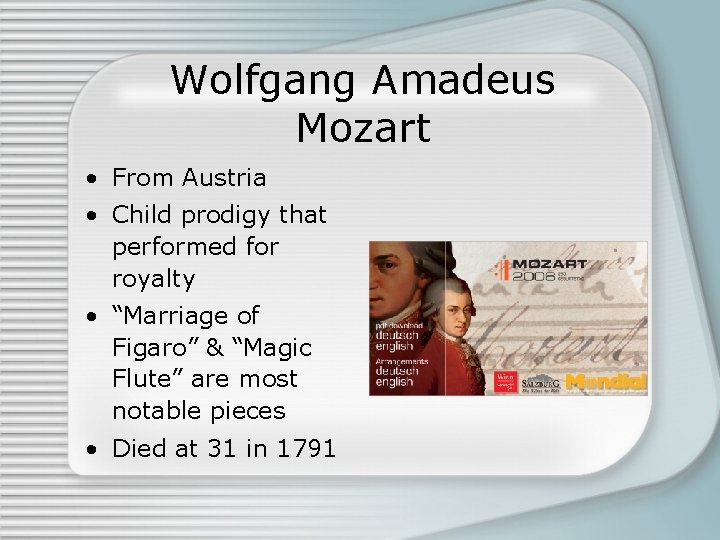
Wolfgang Amadeus Mozart • From Austria • Child prodigy that performed for royalty • “Marriage of Figaro” & “Magic Flute” are most notable pieces • Died at 31 in 1791
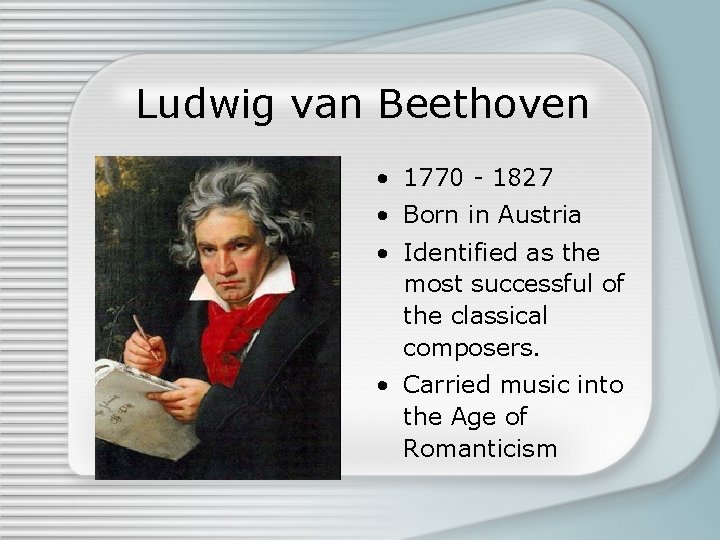
Ludwig van Beethoven • 1770 - 1827 • Born in Austria • Identified as the most successful of the classical composers. • Carried music into the Age of Romanticism