
The Enlightenment The Scientific Revolution applied to Human

- Slides: 12
The Enlightenment The Scientific Revolution applied to Human Society 1670 -1776
Application of Science and Reason n n If Newton could discover laws to explain the workings of the universe, why not use the scientific method to uncover laws about humankind? Development of “Social Sciences”
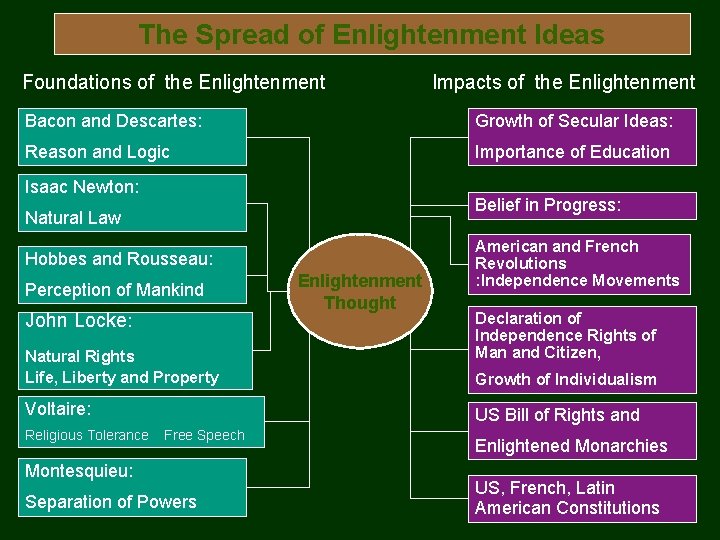
Early “Social Scientists” continued n Thomas Hobbes (English) <people inherently selfish, evil <people left to themselves would cause chaos/disorder/anarchy <Social contract with government <The best type of government =absolute monarchy
Early “Social Scientists” continued n John Locke (1690) – Agreed with Hobbes that the purpose of government was to create order –If the ruler becomes a tyrant, the people have the right to rebel <Order for the sake of the people
Locke continued –People inherently good <deserved natural rights –life, liberty, property <Government was responsible for protecting those rights, not taking them away
French Philosophes Believed in the application of science and reason to social thought n Believed in Locke’s treatises: – Natural rights: Religious belief, Press, end of slavery, encouraged education n
Philosophes continued n Montesquieu: <Encouraged separation of powers/checks and balances –No branch more powerful than another
Philosophes continued n Voltaire – The best way to ensure the natural rights was through Kings/Queens who s protect ed natural rights of the people – Freedom of speech – Believed that there should be separation between the state/government and religion
Philosophes continued n Jean Jacques Rousseau: <Believed that all men are born free and equal –Government based on majority rule through consensus (agreement despite differences) –voting
The Spread of Enlightenment Ideas Foundations of the Enlightenment Impacts of the Enlightenment Bacon and Descartes: Growth of Secular Ideas: Reason and Logic Importance of Education Isaac Newton: Belief in Progress: Natural Law Hobbes and Rousseau: Perception of Mankind John Locke: Natural Rights Life, Liberty and Property Voltaire: Religious Tolerance Enlightenment Thought American and French Revolutions : Independence Movements Declaration of Independence Rights of Man and Citizen, Growth of Individualism US Bill of Rights and Free Speech Montesquieu: Separation of Powers Enlightened Monarchies US, French, Latin American Constitutions
Foundations of the_______ Impacts of the _______
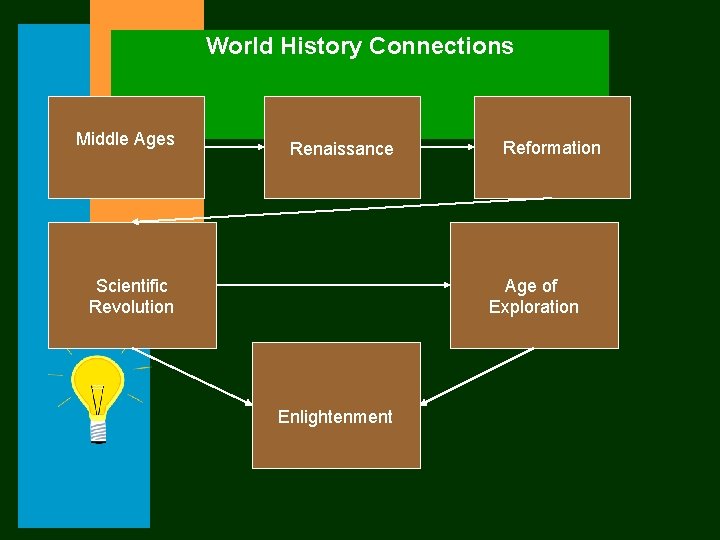
World History Connections Middle Ages Renaissance Scientific Revolution Reformation Age of Exploration Enlightenment