
The Enlightenment the American Revolution Linkage of the




- Slides: 25
The Enlightenment & the American Revolution
Linkage of the Scientific Revolution to the Enlightenment • Belief in Progress – The successes of the Scientific Revolution gave philosophes the confidence that human reason could solve social problems. • More secular Perspective – Scientists made discoveries that contradicted & challenged religious teachings. • Importance of the Individual – People turned away from the Church & royalty for guidance - looked to themselves. – Encouraged to use their own abilities & reason to problem solve
Core Values of the Philosophes • 1. Reason – truth could be discovered through reason • 2. Happiness – rejected medieval belief that people should concentrate on finding happiness in the hereafter rather than finding contentment & joy in this world • 3. Progress – Humankind could improve • 4. Liberty – called for liberties achieve from the Glorious Revolution in the English Bill of Rights
“I do not agree with a word you say but will defend to the death your right to say it” Voltaire
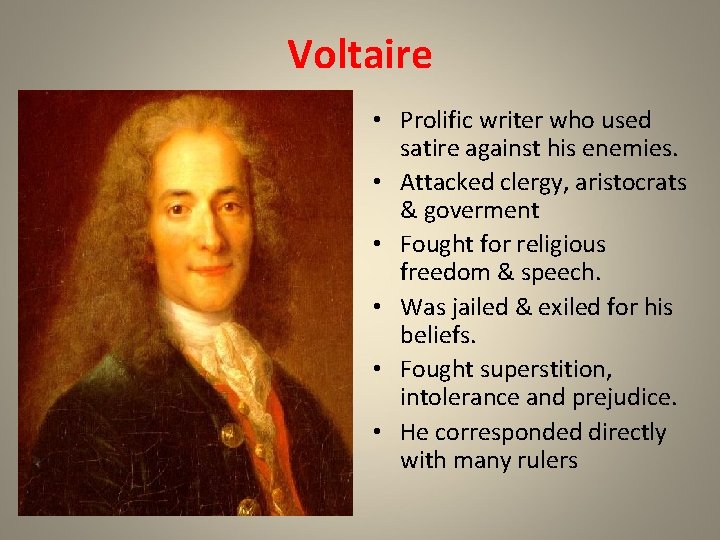
Voltaire • Prolific writer who used satire against his enemies. • Attacked clergy, aristocrats & goverment • Fought for religious freedom & speech. • Was jailed & exiled for his beliefs. • Fought superstition, intolerance and prejudice. • He corresponded directly with many rulers
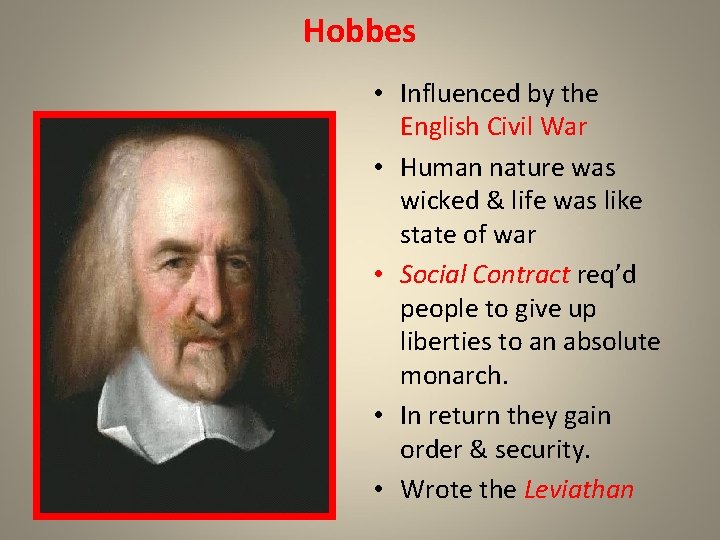
Hobbes • Influenced by the English Civil War • Human nature was wicked & life was like state of war • Social Contract req’d people to give up liberties to an absolute monarch. • In return they gain order & security. • Wrote the Leviathan
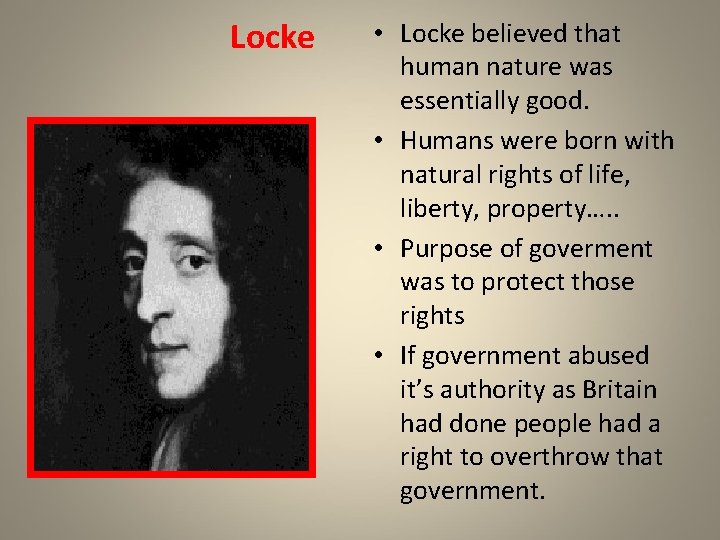
Locke • Locke believed that human nature was essentially good. • Humans were born with natural rights of life, liberty, property…. . • Purpose of goverment was to protect those rights • If government abused it’s authority as Britain had done people had a right to overthrow that government.
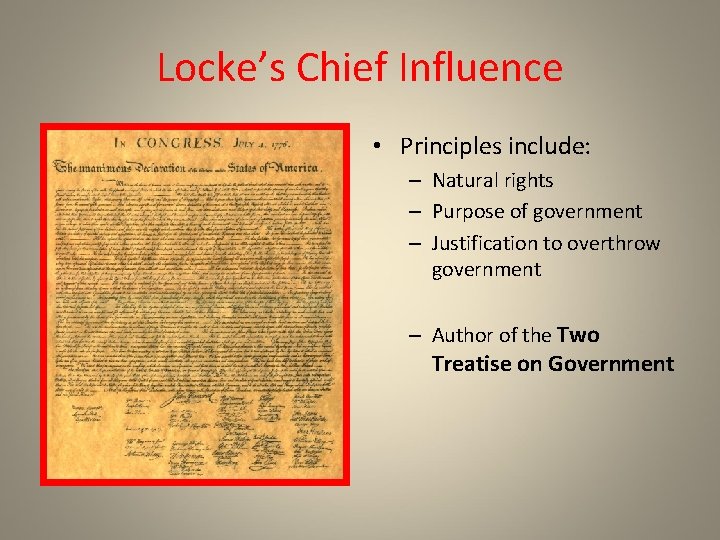
Locke’s Chief Influence • Principles include: – Natural rights – Purpose of government – Justification to overthrow government – Author of the Two Treatise on Government
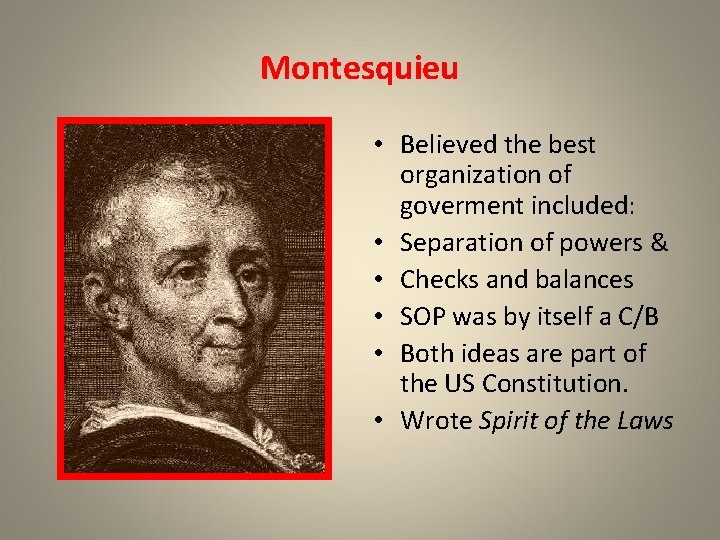
Montesquieu • Believed the best organization of goverment included: • Separation of powers & • Checks and balances • SOP was by itself a C/B • Both ideas are part of the US Constitution. • Wrote Spirit of the Laws
“Man is born free and everywhere he is in chains. ” Rousseau
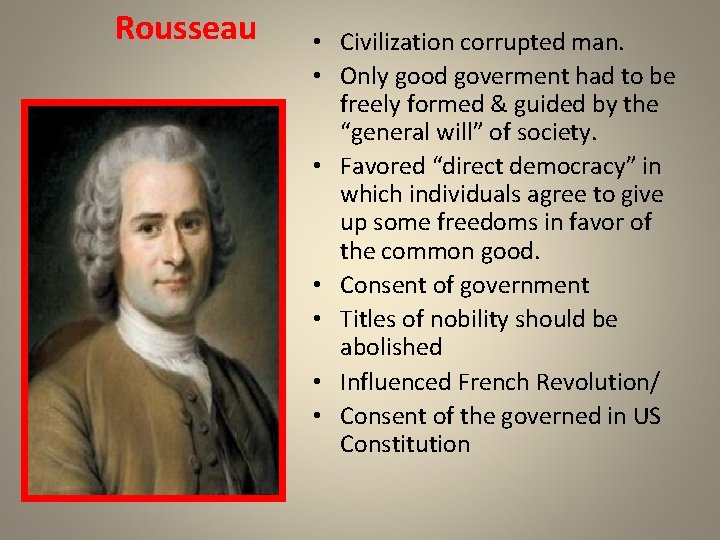
Rousseau • Civilization corrupted man. • Only good goverment had to be freely formed & guided by the “general will” of society. • Favored “direct democracy” in which individuals agree to give up some freedoms in favor of the common good. • Consent of government • Titles of nobility should be abolished • Influenced French Revolution/ • Consent of the governed in US Constitution
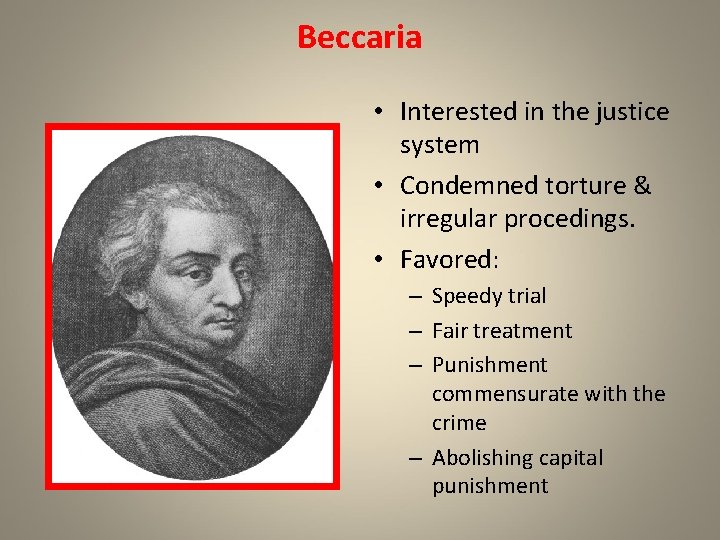
Beccaria • Interested in the justice system • Condemned torture & irregular procedings. • Favored: – Speedy trial – Fair treatment – Punishment commensurate with the crime – Abolishing capital punishment
How did Enlightenment Ideas Spread?
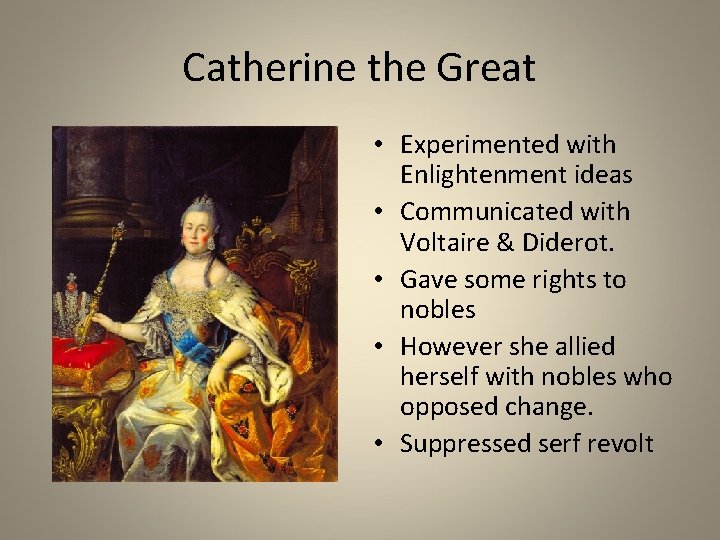
Catherine the Great • Experimented with Enlightenment ideas • Communicated with Voltaire & Diderot. • Gave some rights to nobles • However she allied herself with nobles who opposed change. • Suppressed serf revolt
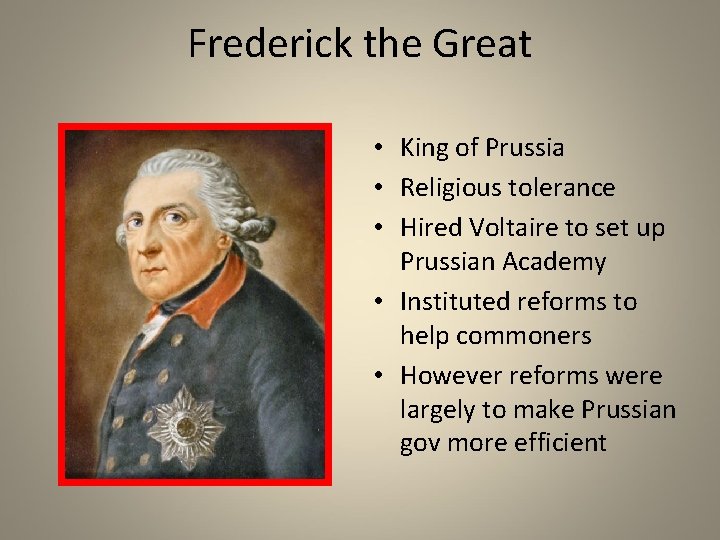
Frederick the Great • King of Prussia • Religious tolerance • Hired Voltaire to set up Prussian Academy • Instituted reforms to help commoners • However reforms were largely to make Prussian gov more efficient
Music, Literature and Architectural Changes during the Enlightenment
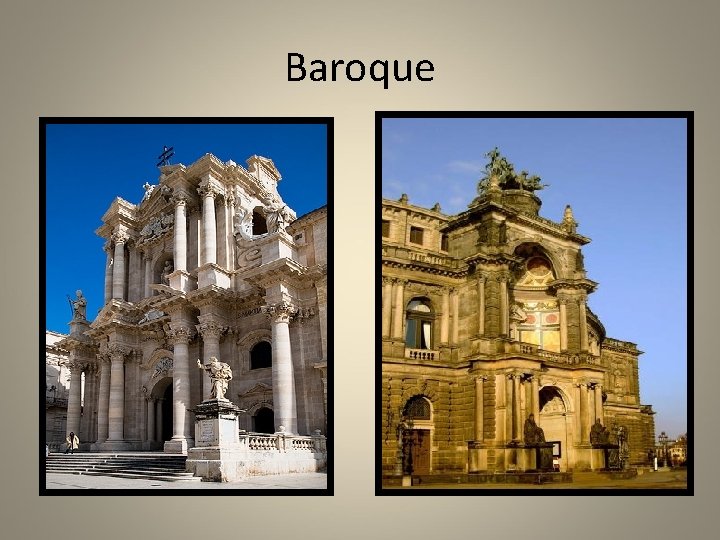
Baroque
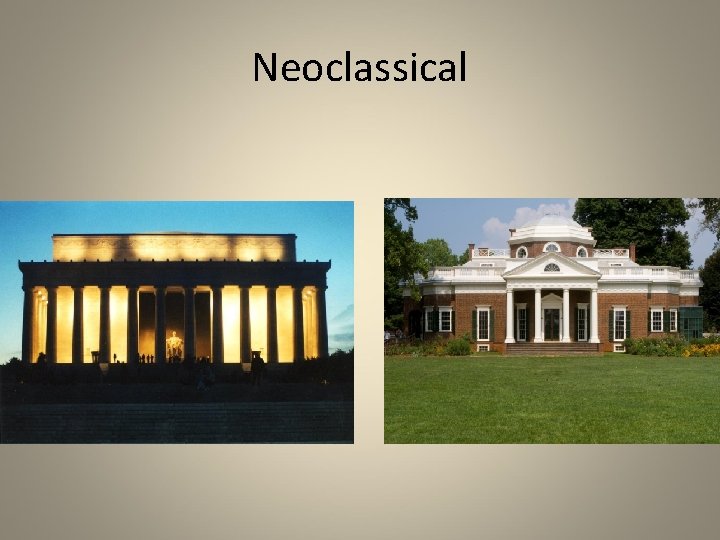
Neoclassical
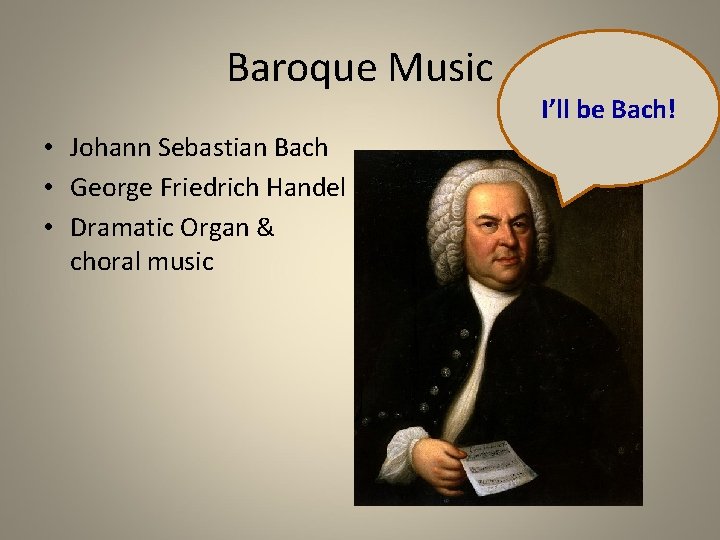
Baroque Music • Johann Sebastian Bach • George Friedrich Handel • Dramatic Organ & choral music I’ll be Bach!
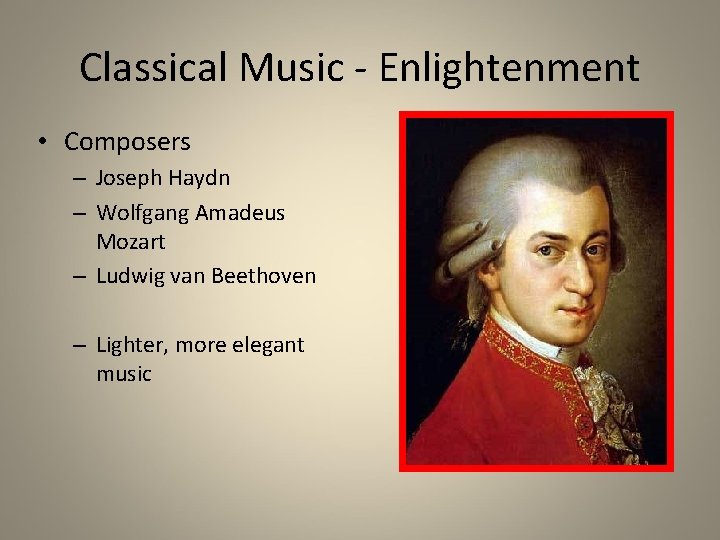
Classical Music - Enlightenment • Composers – Joseph Haydn – Wolfgang Amadeus Mozart – Ludwig van Beethoven – Lighter, more elegant music
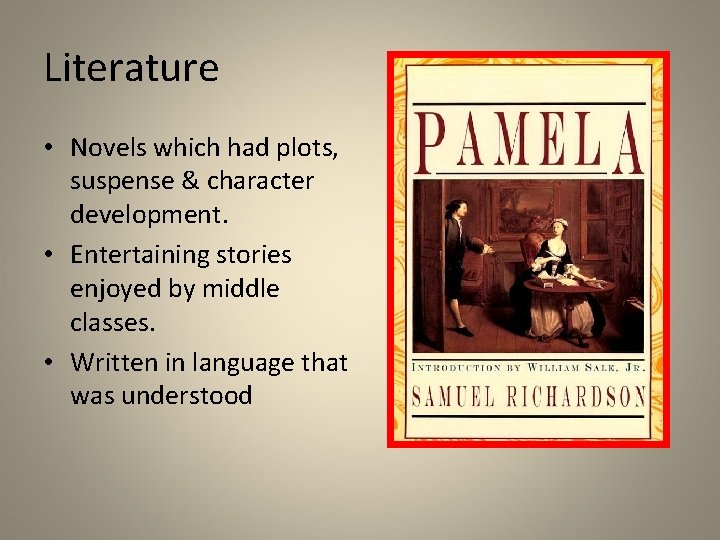
Literature • Novels which had plots, suspense & character development. • Entertaining stories enjoyed by middle classes. • Written in language that was understood
Mercantilism vs. Laissez-Faire • Government regulated • Restricted trade – Tariffs – Navigation Acts • Regulated by the market • Liberal free trade
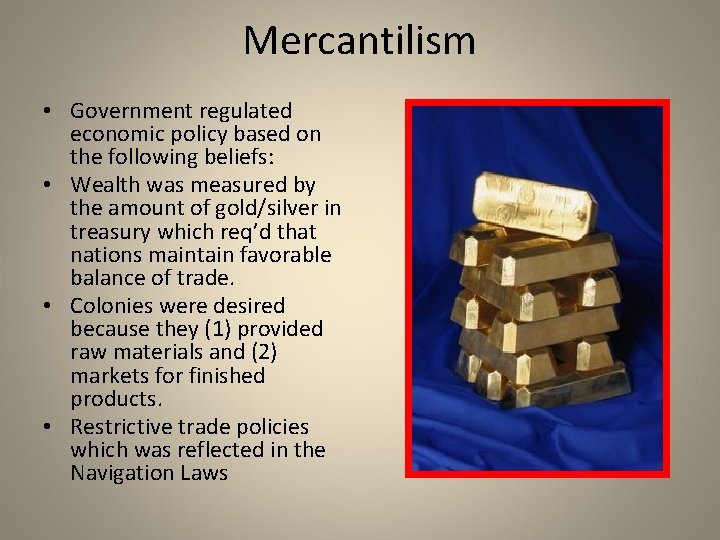
Mercantilism • Government regulated economic policy based on the following beliefs: • Wealth was measured by the amount of gold/silver in treasury which req’d that nations maintain favorable balance of trade. • Colonies were desired because they (1) provided raw materials and (2) markets for finished products. • Restrictive trade policies which was reflected in the Navigation Laws
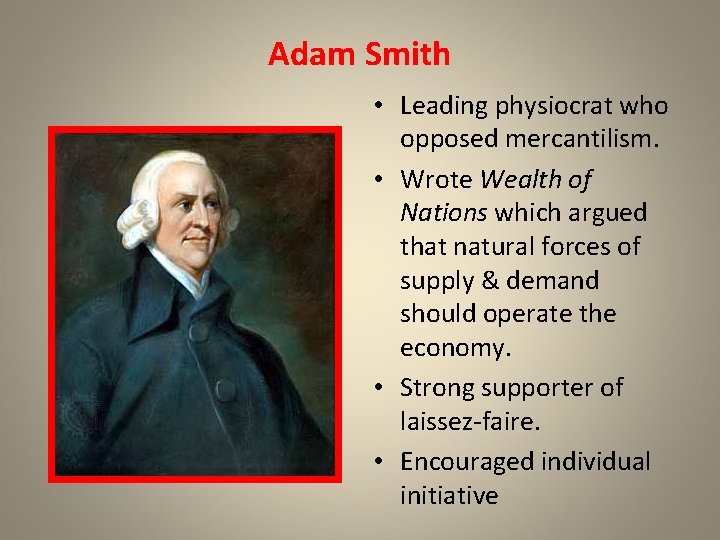
Adam Smith • Leading physiocrat who opposed mercantilism. • Wrote Wealth of Nations which argued that natural forces of supply & demand should operate the economy. • Strong supporter of laissez-faire. • Encouraged individual initiative