
The Enlightenment Spreads France Made it illegal to



- Slides: 13
The Enlightenment Spreads
France • Made it illegal to criticize the Catholic Church or the government – Many philosophes landed in jail or were exiled
Encyclopedia • A large set of books created by Diderot • Many philosophes contributed articles and essays • The Encyclopedia as well as salons helped spread Enlightenment ideas to educated people all over Europe • Soon ideas were being spread to the growing middle class through newspapers, pamphlets, and political songs
Enlightened Despots • Monarchs who embraced the new ideas and made reforms that reflected the Enlightenment ideas • Supported the philosophes’ ideas, but had no intention of giving up any power
Enlightened Despots, cont. • Changes they made were motivated by two desires: – They wanted to make their own countries stronger – They wanted to make their own rule more effective
Frederick the Great • King of Prussia from 1740 -1786 • Committed himself to reforming Prussia – Granted many religious freedoms, reduced censorship, improved education, reformed the justice system, and abolished the use of torture – Believed that serfdom was wrong, but did nothing to end it
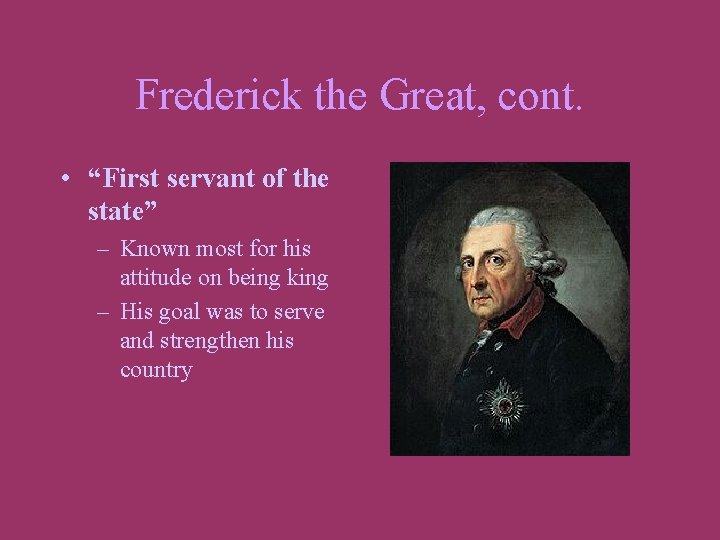
Frederick the Great, cont. • “First servant of the state” – Known most for his attitude on being king – His goal was to serve and strengthen his country
Joseph II • Ruled Austria from 1780 -1790 • Most radical reformer • Introduced legal reforms, freedom of the press, and freedom of worship (even for Protestants, Orthodox Christians, and Jews)
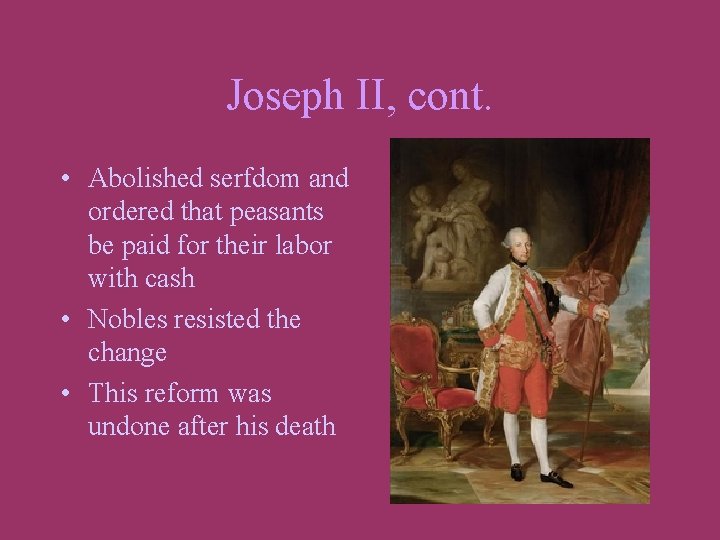
Joseph II, cont. • Abolished serfdom and ordered that peasants be paid for their labor with cash • Nobles resisted the change • This reform was undone after his death
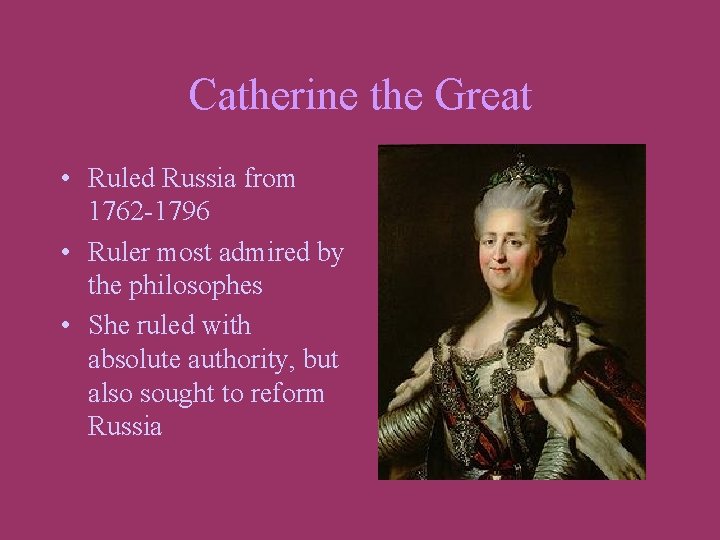
Catherine the Great • Ruled Russia from 1762 -1796 • Ruler most admired by the philosophes • She ruled with absolute authority, but also sought to reform Russia
Catherine the Great, cont. • Formed a commission to reform Russia’s laws – Based on the ideas of Montesquieu and Beccaria – Recommended allowing religious tolerance and abolishing torture and capital punishment • Commission did not accomplish any of these goals
Catherine the Great, cont. • She did little to improve the life of peasants, so there was a massive uprising of serfs – Very brutal – Catherine’s army crushed the rebellion – The uprising changed her views on the Enlightenment idea of abolishing serfdom – She ended up giving the nobles absolute power over the serfs
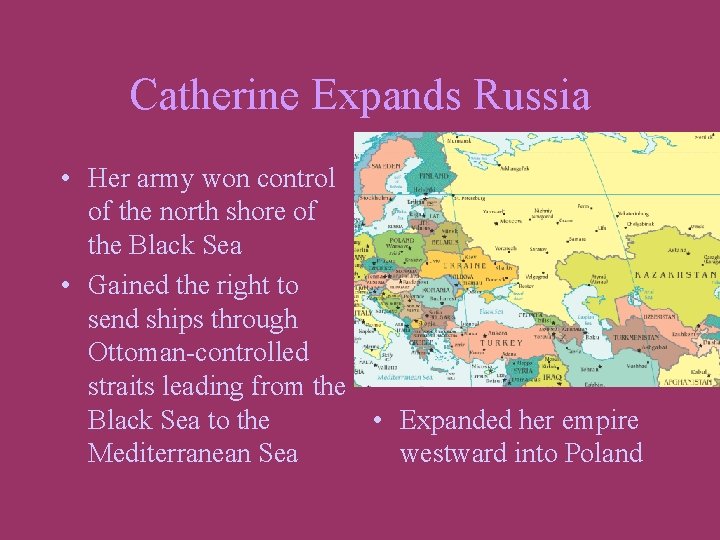
Catherine Expands Russia • Her army won control of the north shore of the Black Sea • Gained the right to send ships through Ottoman-controlled straits leading from the Black Sea to the • Expanded her empire Mediterranean Sea westward into Poland