
The Enlightenment Rationalism is the belief in reason

The Enlightenment

�Rationalism - is the belief in reason and logic as the main path to knowledge
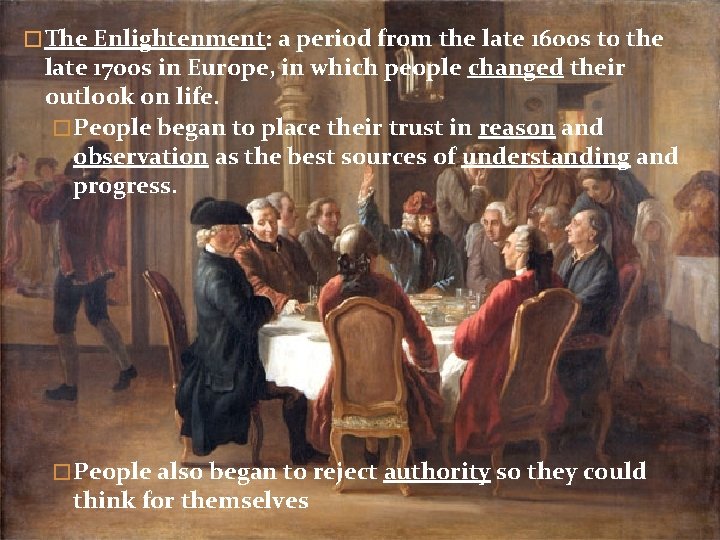
� The Enlightenment: a period from the late 1600 s to the late 1700 s in Europe, in which people changed their outlook on life. � People began to place their trust in reason and observation as the best sources of understanding and progress. � People also began to reject authority so they could think for themselves

�Enlightenment philosophers preferred rational thought to faith based on the Bible, though most of them continued to believe in God.
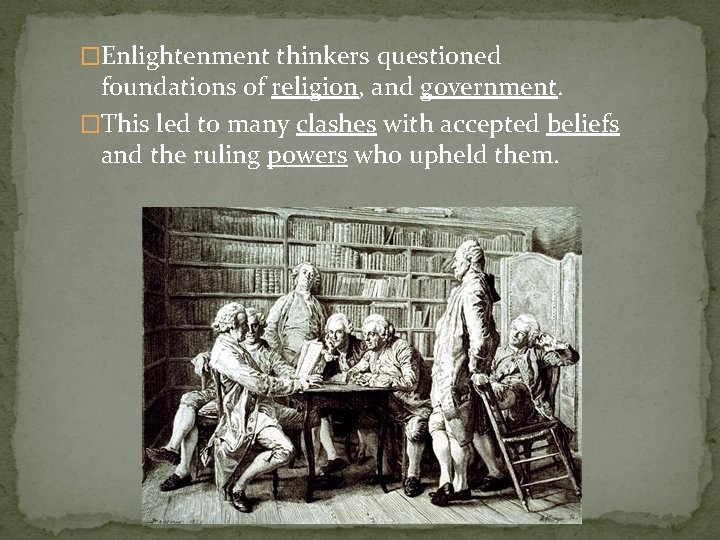
�Enlightenment thinkers questioned foundations of religion, and government. �This led to many clashes with accepted beliefs and the ruling powers who upheld them.

� Christian faith was based on trust in the Bible as God’s word. Enlightenment thinkers believed that humans were able to discover truth for themselves.
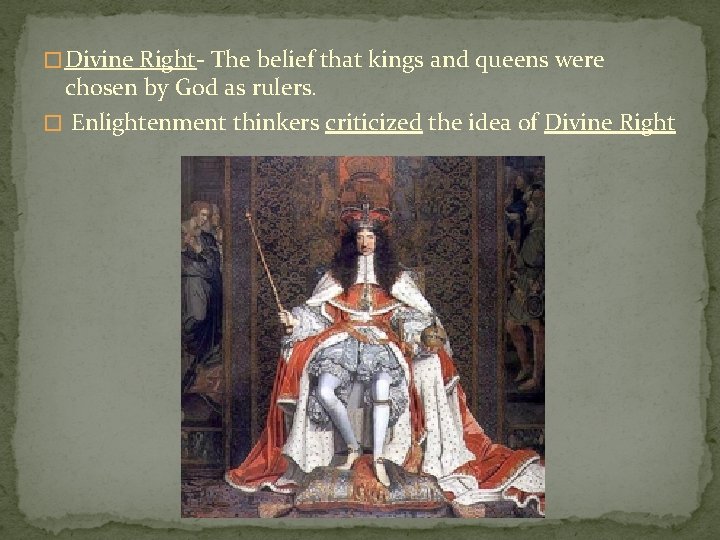
� Divine Right- The belief that kings and queens were chosen by God as rulers. � Enlightenment thinkers criticized the idea of Divine Right
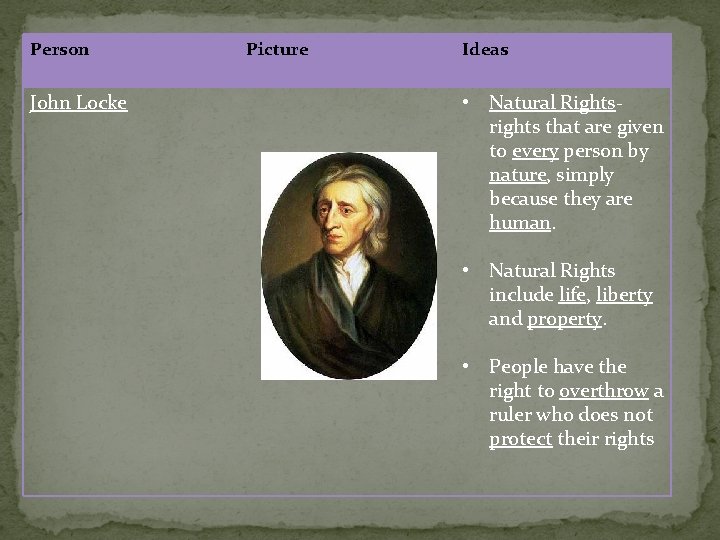
Person John Locke Picture Ideas • Natural Rightsrights that are given to every person by nature, simply because they are human. • Natural Rights include life, liberty and property. • People have the right to overthrow a ruler who does not protect their rights
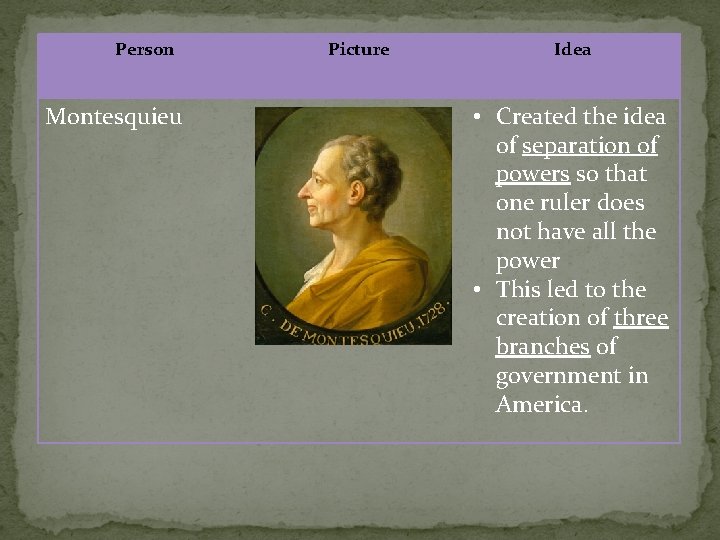
Person Montesquieu Picture Idea • Created the idea of separation of powers so that one ruler does not have all the power • This led to the creation of three branches of government in America.

Mon te squieu Bar B Que 1 2 3 Branches of government
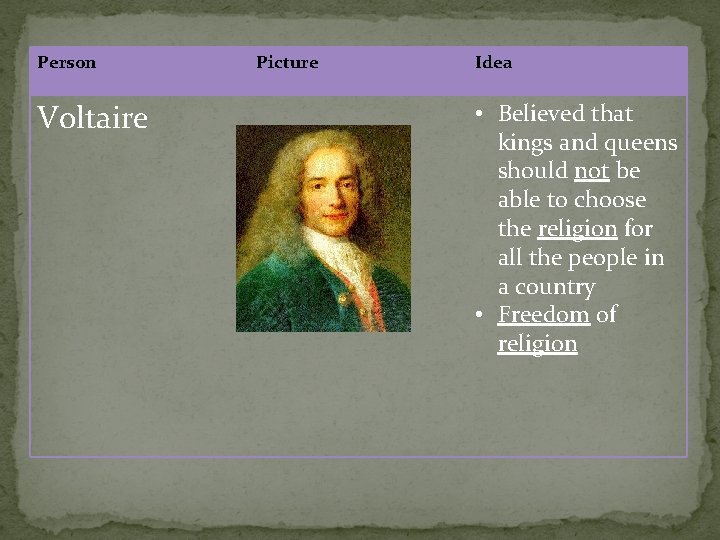
Person Voltaire Picture Idea • Believed that kings and queens should not be able to choose the religion for all the people in a country • Freedom of religion
�The ideas of the Enlightenment greatly influenced leaders of the American Revolution. �The Declaration of Independence echoed Locke’s ideas on natural rights and the social contract. �The U. S. Constitution also contains ideas from the Enlightenment. The Constitution includes Montesquieu’s idea of separation of powers. �The Bill of Rights protects the freedoms of religion and speech championed by Voltaire.
- Slides: 12