
The Enlightenment Philosophers Enlightenment Era of freethinking individualism
- Slides: 9
The Enlightenment Philosophers • Enlightenment = Era of free-thinking individualism. • This period saw the development of new philosophies that dealt with areas such as government, religion, and relationships between people and the government.
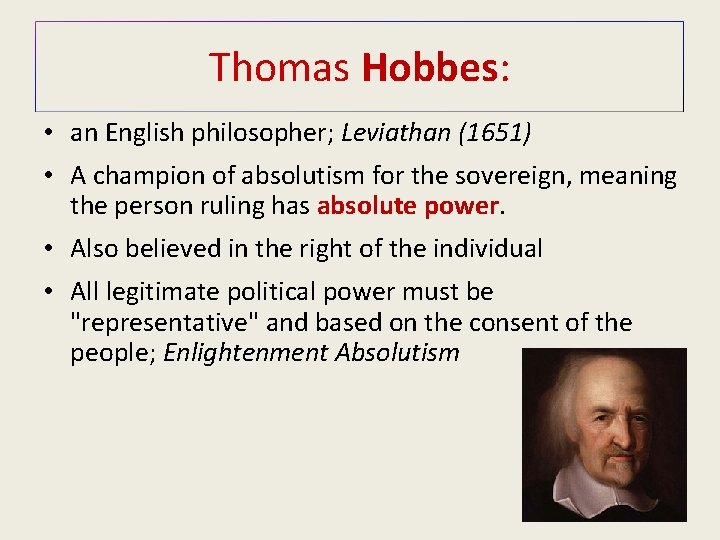
Thomas Hobbes: • an English philosopher; Leviathan (1651) • A champion of absolutism for the sovereign, meaning the person ruling has absolute power. • Also believed in the right of the individual • All legitimate political power must be "representative" and based on the consent of the people; Enlightenment Absolutism
Thomas Hobbes: • Believed that conflict is a part of human nature. • Quote: “Life is nasty, brutish, and short” • Believed we make a contract with the government to keep the peace. In this contract people give up some of their rights to achieve order. (social contract)
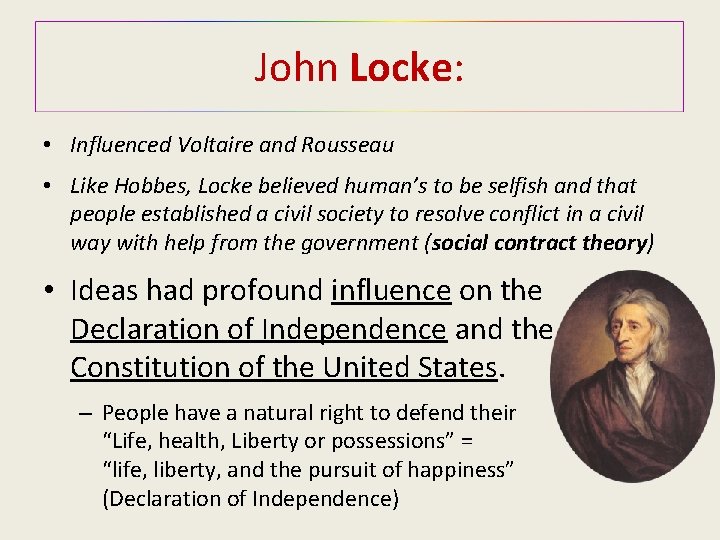
John Locke: • Influenced Voltaire and Rousseau • Like Hobbes, Locke believed human’s to be selfish and that people established a civil society to resolve conflict in a civil way with help from the government (social contract theory) • Ideas had profound influence on the Declaration of Independence and the Constitution of the United States. – People have a natural right to defend their “Life, health, Liberty or possessions” = “life, liberty, and the pursuit of happiness” (Declaration of Independence)
John Locke: – Advocated governmental separation of powers & believed that revolution is not only a right but an obligation in some circumstances. • The purpose of government is to protect these rights.
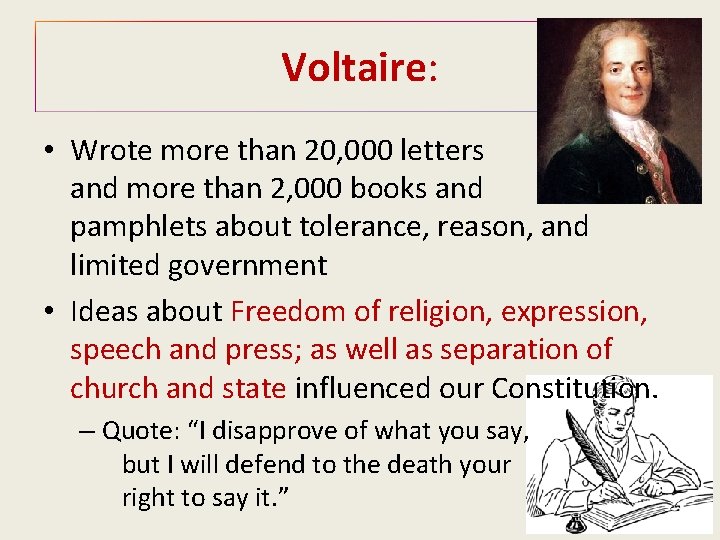
Voltaire: • Wrote more than 20, 000 letters and more than 2, 000 books and pamphlets about tolerance, reason, and limited government • Ideas about Freedom of religion, expression, speech and press; as well as separation of church and state influenced our Constitution. – Quote: “I disapprove of what you say, but I will defend to the death your right to say it. ”
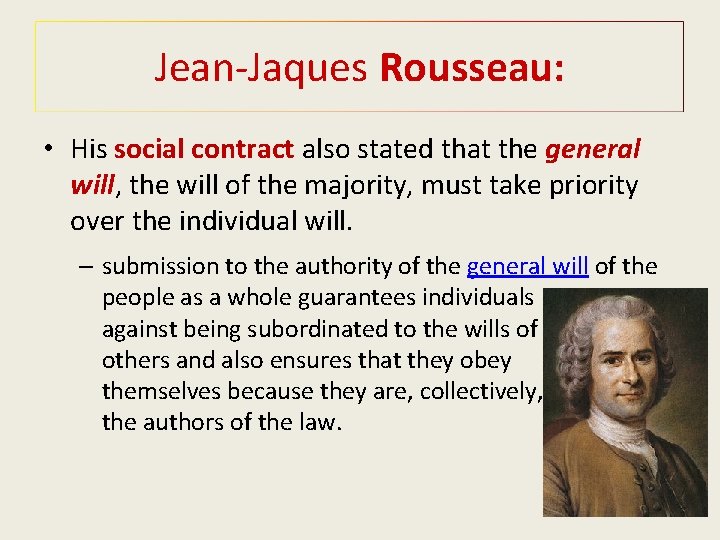
Jean-Jaques Rousseau: • His social contract also stated that the general will, the will of the majority, must take priority over the individual will. – submission to the authority of the general will of the people as a whole guarantees individuals against being subordinated to the wills of others and also ensures that they obey themselves because they are, collectively, the authors of the law.
Jean-Jaques Rousseau: • Rousseau was opposed to the idea that the people should exercise sovereignty via a representative assembly • Sovereignty (or the power to make the laws) should be in the hands of the people
Montesquieu: • Believed in a separation of powers in the government. • 3 branches: legislative, executive, judicial • Believed that the liberty of the people must be guarded from corrupt leaders.