
The Enlightenment Background and Origins EQ Where did
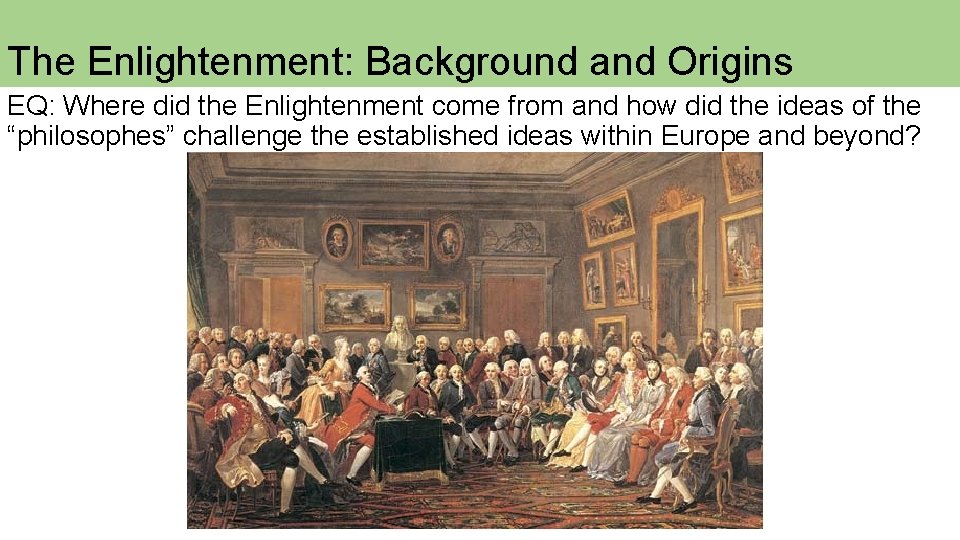
The Enlightenment: Background and Origins EQ: Where did the Enlightenment come from and how did the ideas of the “philosophes” challenge the established ideas within Europe and beyond?
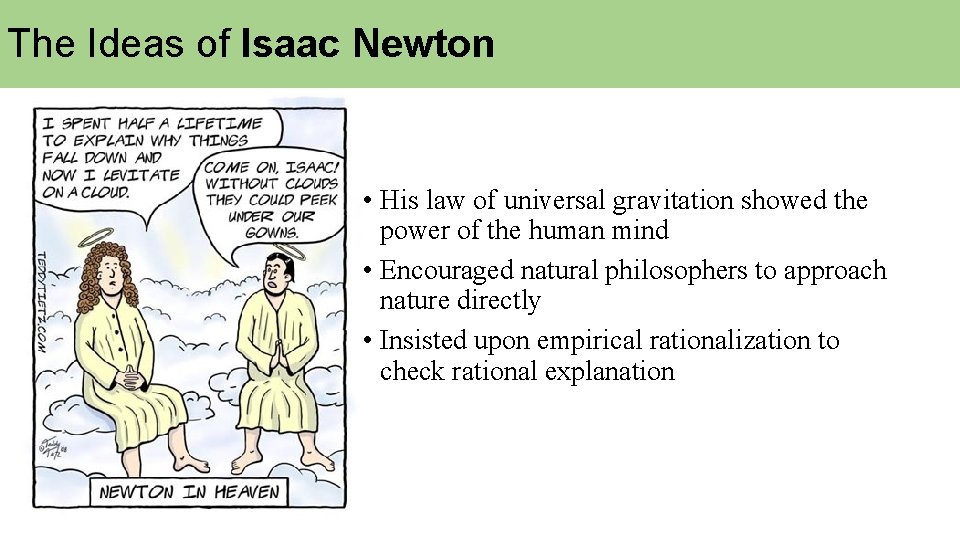
The Ideas of Isaac Newton • His law of universal gravitation showed the power of the human mind • Encouraged natural philosophers to approach nature directly • Insisted upon empirical rationalization to check rational explanation
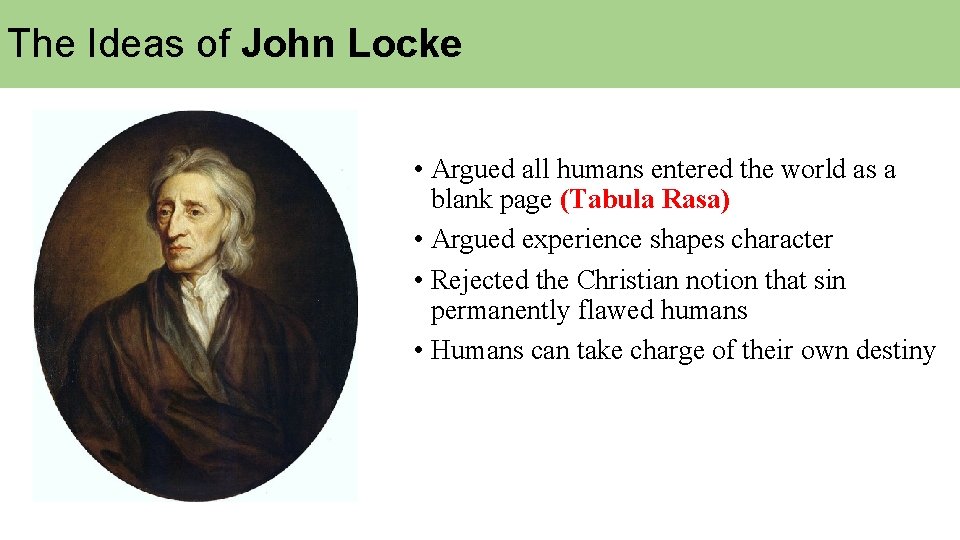
The Ideas of John Locke • Argued all humans entered the world as a blank page (Tabula Rasa) • Argued experience shapes character • Rejected the Christian notion that sin permanently flawed humans • Humans can take charge of their own destiny
The Example of British Toleration and Political Stability • Bill of Rights • Religious toleration • Freedom of speech and press • Limited monarchy • Courts protect citizens from arbitrary government action
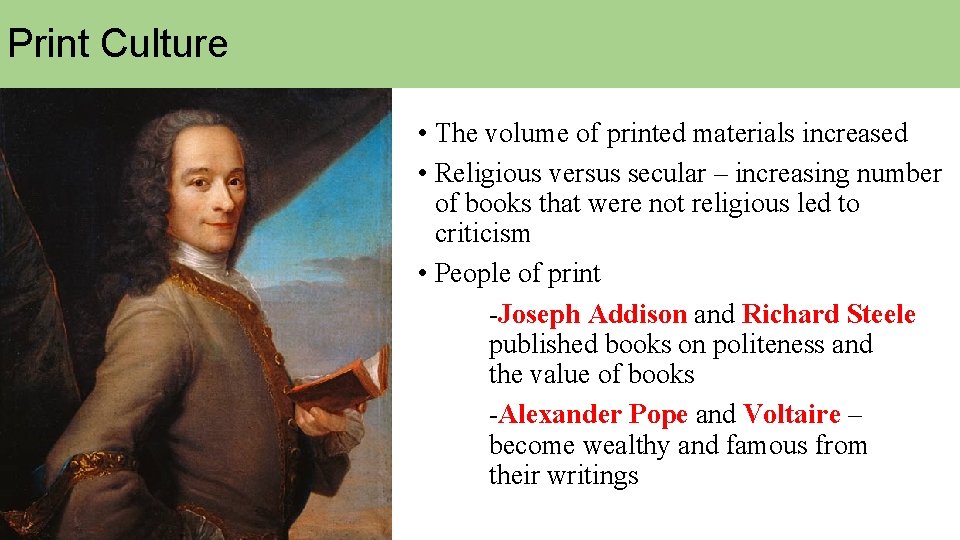
Print Culture • The volume of printed materials increased • Religious versus secular – increasing number of books that were not religious led to criticism • People of print -Joseph Addison and Richard Steele published books on politeness and the value of books -Alexander Pope and Voltaire – become wealthy and famous from their writings
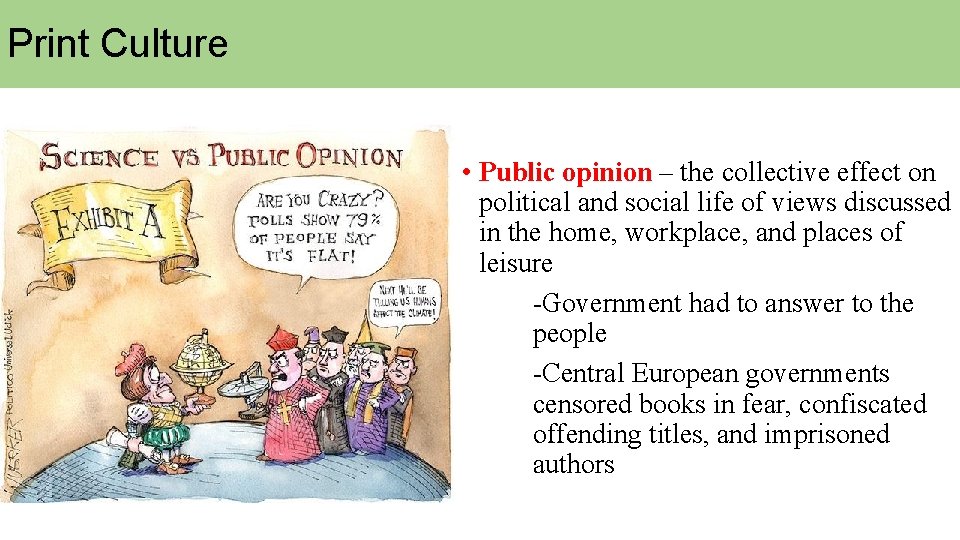
Print Culture • Public opinion – the collective effect on political and social life of views discussed in the home, workplace, and places of leisure -Government had to answer to the people -Central European governments censored books in fear, confiscated offending titles, and imprisoned authors
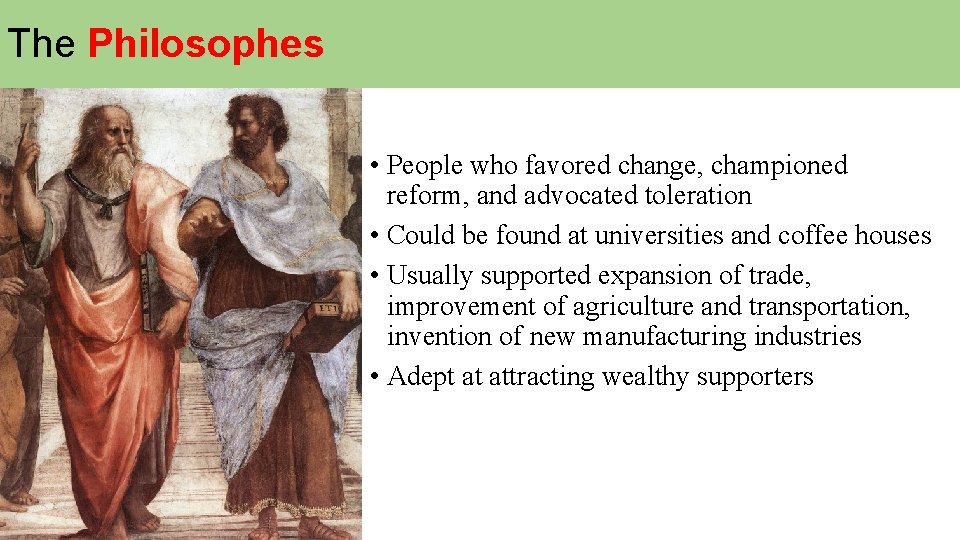
The Philosophes • People who favored change, championed reform, and advocated toleration • Could be found at universities and coffee houses • Usually supported expansion of trade, improvement of agriculture and transportation, invention of new manufacturing industries • Adept at attracting wealthy supporters
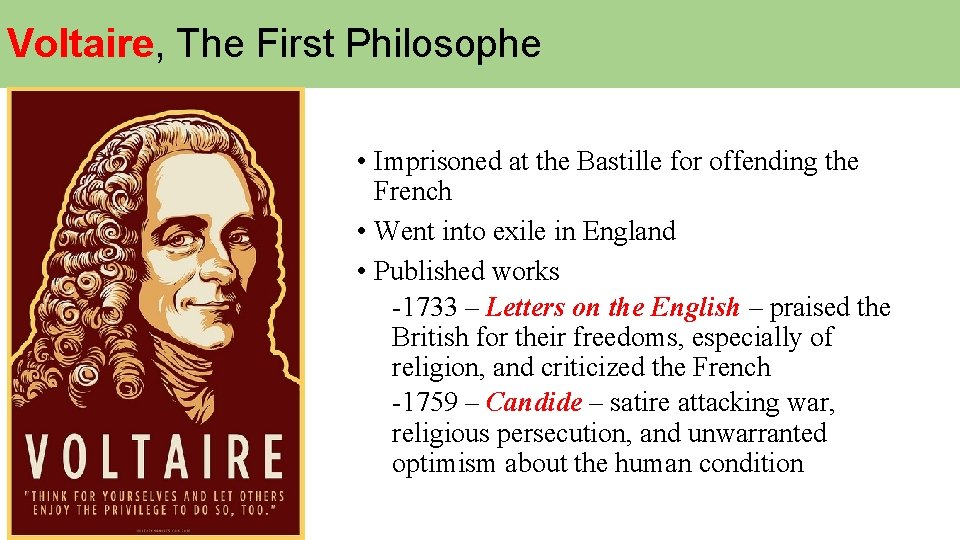
Voltaire, The First Philosophe • Imprisoned at the Bastille for offending the French • Went into exile in England • Published works -1733 – Letters on the English – praised the British for their freedoms, especially of religion, and criticized the French -1759 – Candide – satire attacking war, religious persecution, and unwarranted optimism about the human condition
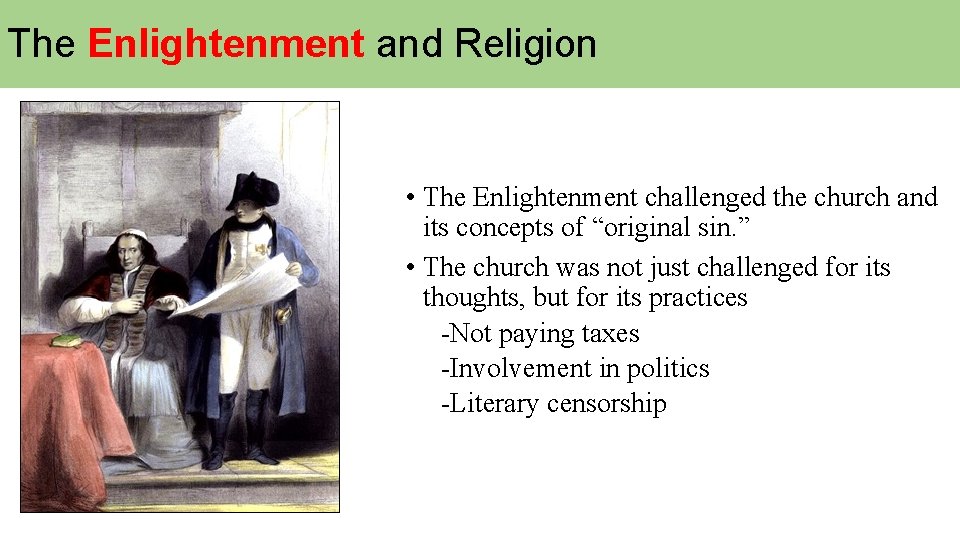
The Enlightenment and Religion • The Enlightenment challenged the church and its concepts of “original sin. ” • The church was not just challenged for its thoughts, but for its practices -Not paying taxes -Involvement in politics -Literary censorship
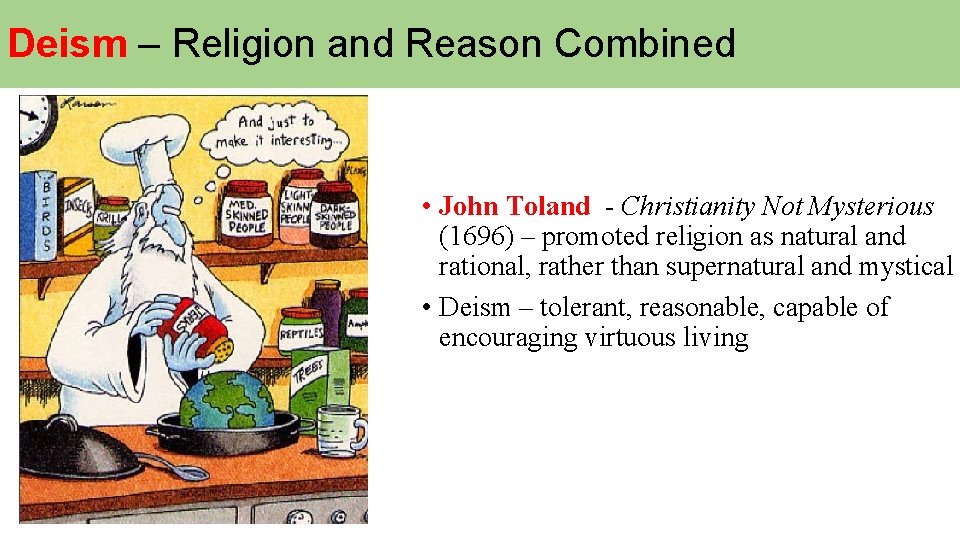
Deism – Religion and Reason Combined • John Toland - Christianity Not Mysterious (1696) – promoted religion as natural and rational, rather than supernatural and mystical • Deism – tolerant, reasonable, capable of encouraging virtuous living
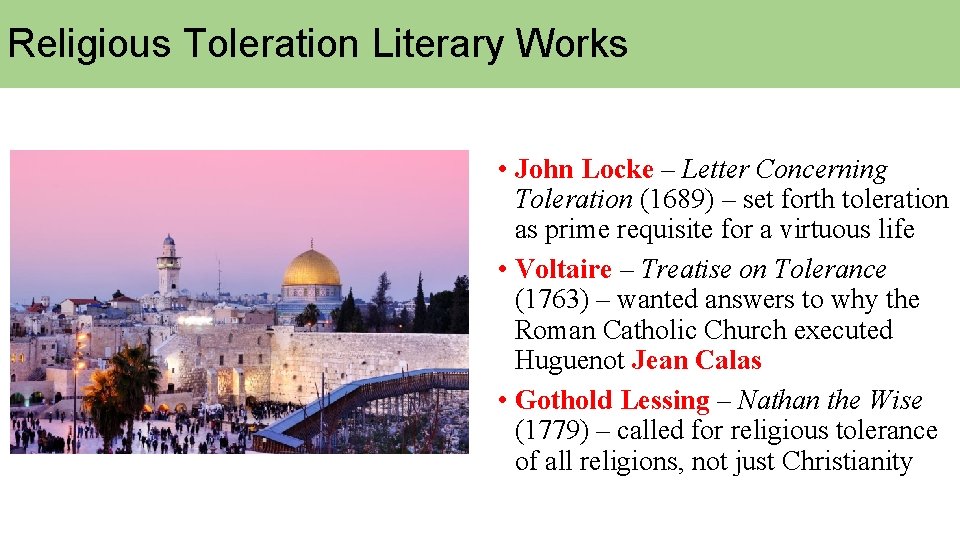
Religious Toleration Literary Works • John Locke – Letter Concerning Toleration (1689) – set forth toleration as prime requisite for a virtuous life • Voltaire – Treatise on Tolerance (1763) – wanted answers to why the Roman Catholic Church executed Huguenot Jean Calas • Gothold Lessing – Nathan the Wise (1779) – called for religious tolerance of all religions, not just Christianity
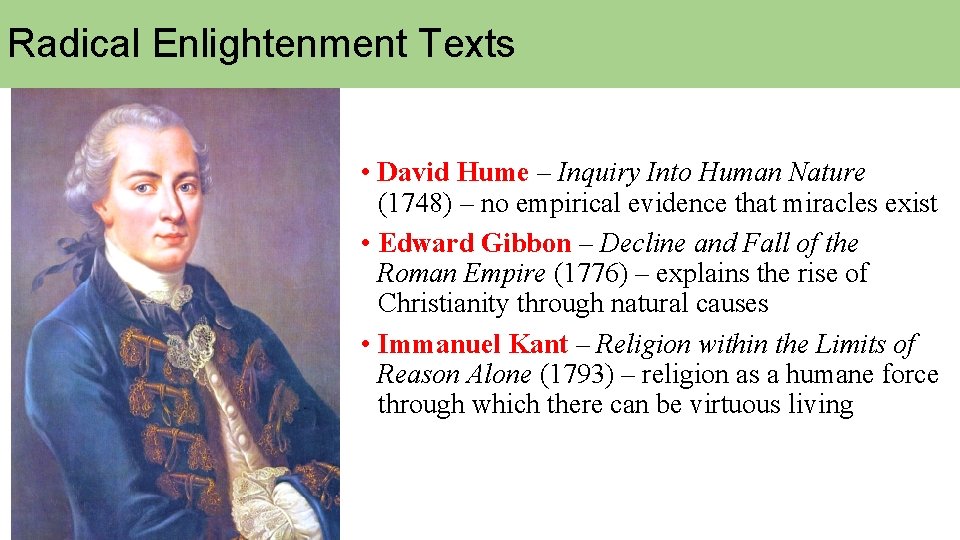
Radical Enlightenment Texts • David Hume – Inquiry Into Human Nature (1748) – no empirical evidence that miracles exist • Edward Gibbon – Decline and Fall of the Roman Empire (1776) – explains the rise of Christianity through natural causes • Immanuel Kant – Religion within the Limits of Reason Alone (1793) – religion as a humane force through which there can be virtuous living
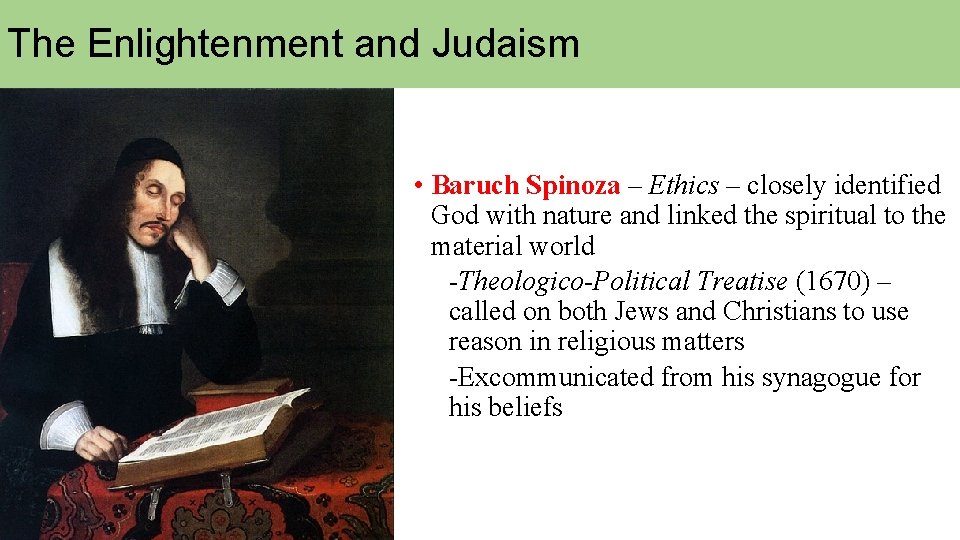
The Enlightenment and Judaism • Baruch Spinoza – Ethics – closely identified God with nature and linked the spiritual to the material world -Theologico-Political Treatise (1670) – called on both Jews and Christians to use reason in religious matters -Excommunicated from his synagogue for his beliefs
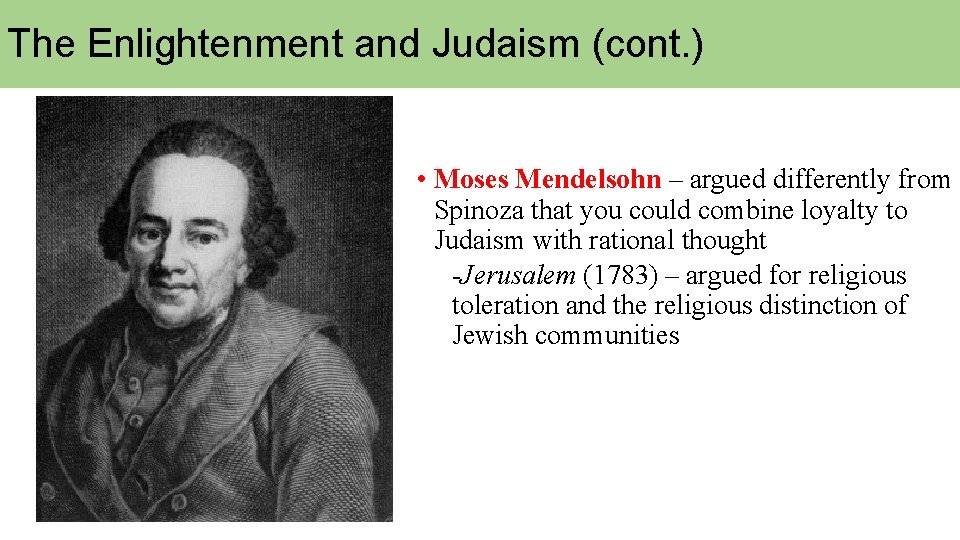
The Enlightenment and Judaism (cont. ) • Moses Mendelsohn – argued differently from Spinoza that you could combine loyalty to Judaism with rational thought -Jerusalem (1783) – argued for religious toleration and the religious distinction of Jewish communities
Islam in Enlightenment Thought • Christians viewed Islam as a false religion and its founder Muhammad as an imposter -Voltaire’s Fanaticism (1742) – cited Islam as one more example of religious fanaticism -Charles de Montesquieu – Spirit of the Law (1748) – stated Islam’s passivity made it subject to political despotism -Deists Toland Gibbon viewed Islam in a positive light -Lady Mary Wortley Montagu – Turkish Embassy Letters (1716 -1718) – praised Ottoman society / felt women were freer
- Slides: 15