
The enlightenment and the history of medicine Elaine
- Slides: 22
The enlightenment and the history of medicine Elaine Denny Community Health and Social Work
The Enlightenment ¡ ¡ ¡ Refers to the period spanning most of the eighteenth century Promoted new philosophical systems for understanding the natural and human worlds Move towards secular explanations Reason replaced myth and superstition ‘Have the courage to use your own mind’ Kant Humanity was governed by free will
How do we characterise enlightenment ¡ ¡ The gaining of knowledge by the use of reason, critical questioning (Descartes) The belief that all knowledge comes from experience (John Lock) The new knowledge should be disseminated and debated Logic – deductive and inductive argument l l Induction is concerned with making generalisations about the world based on observation Deduction starts with a theory and applies it to the empirical situation
Why did this change occur? By the middle of the 17 th century in Britain events such as the Civil War, and the Reformation had made some question the inevitability of traditional teaching. Experimentation and discovery was contradicting previously held beliefs – e. g. to do with the universe, chemistry etc.
Conditions for the industrial revolution ¡ ¡ ¡ England was a nation of production of goods for sale England had become a monetary rather than a bartering nation for those goods The development of the market meant communities did not have to produce all goods, but could purchase them in shops Self sufficient peasants had largely died out As the division of labour developed more specialised, skilled and inventive production occurred
Cotton ¡ ¡ Pre-industrialisation spinning of cloth was a cottage industry where clothes were made for the household. A surplus population in the countryside which had to move into the new towns and cities for worked provided labour for factories where cotton could be produced cheaply. Those who were left in the country could not compete with the new factories, as the productivity was lower, and therefore cost was much higher. As the handloomers in the factories were replaced by machines, they too were forced out of work
Industrialisation and urbanisation ¡ ¡ ¡ ¡ Population increase between 1750 and 1830 - 6 m -18 m Move from rural areas to the new and expanding cities Migration mainly young people 15 -30 years From 1850 there was an increase of births over deaths Cities were designed to segregate rich from poor Industrialisation took place in a haphazard way Overall the 19 th century saw a growth in living standards, but there were peaks and troughs
Results of industrialisation ¡ ¡ ¡ Population growth Urbanisation Segregation between rich and poor Rising prosperity – but not for all Emergence of the middle classes Changes to the role of women
Population changes ¡ ¡ Between 1750 and 1850 the population of England rose from 6 -18 million By the 1901 census it was 32, 527, 843 The proportion of the population living in urban areas rose from 33. 8% in 1801 to 78% in 1901 The population of Birmingham grew fro 60, 000 in 1800 to 260, 000 in 1851
Rural areas ¡ ¡ ¡ The most obvious feature was depopulation, especially after 1850 Agricultural work was declining, and wages were low People left to work in industries, and in domestic service Land ownership meant that one family could control whole villages and the behaviour of tenants Conditions were often as insanitary as in towns, but without the density of population
Changes in patterns of ill health ¡ Mainly caused by the conditions in the emerging cities l Overcrowding l Poor sanitation l Poverty l Poor working conditions
Changes to ideas on health and medicine ¡ ¡ ¡ The enlightenment changed ideas about examination of the body, and led to doctors and scientists questioning traditional ideas – e. g. sin and sickness Health and illness were not ‘god given’ and could be controlled Doctors collaborated and exchanged ideas The growth of science and industrialisation led to the developments and discoveries of 19 th century The development of social investigation enabled statistics to be collected and studied Urbanisation led to the growth of hospitals and many poor patients to experiment on
Results ¡ ¡ ¡ Dissection and post-mortem Collection of social statistics (births, marriages and deaths) and epidemiological data The institutionalisation of ill health The development of alloys for surgical instruments, and discovery of gases for anaesthetics led to rapid growth in surgery Therapeutic optimism
Provision of health and welfare ¡ ¡ ¡ Poor Law - publicly funded Public health measures - a mixture of private and public funding Philanthropic - voluntary hospitals, visiting societies Private - fee for service Provident - self help
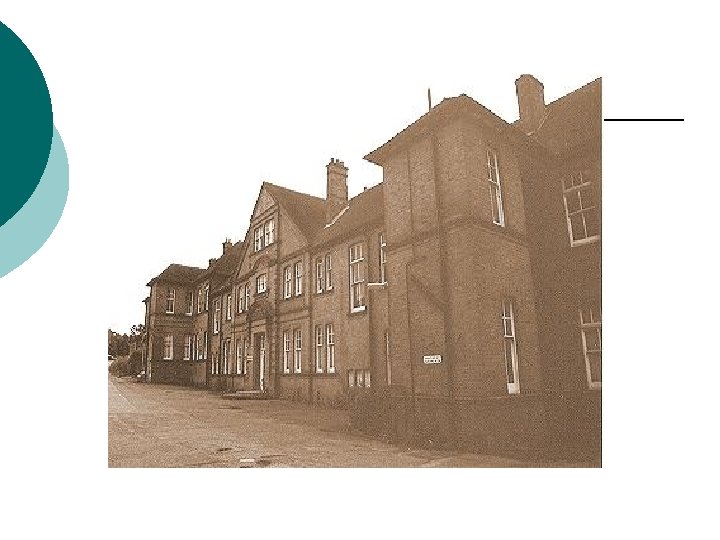
Poor Law health ¡ ¡ ¡ Outdoor relief was believed to create dependency In an era of enlightenment help should only be given to the deserving poor 1834 Poor Law Amendment Act created the class ‘pauper’ by the doctrine of less eligibility From 1848 workhouse infirmaries built In 1869 inmates were on average: 6, 000 ordinary sick - including lying in 1, 700 imbeciles 2, 400 children 10, 500 healthy old people 3, 000 able bodied - circa 10%
Philanthropic provision ¡ Charity - the giving of material aid in times of misery ¡ philanthropy - centred around advice in the hope of averting expense by encouraging behaviour change - encouraged self help - reflected enlightenment theory
Philanthropy ¡ ¡ ¡ Felt to be superior to state provision as aid could be channelled where the donor wanted it Could discriminate between the deserving and the non deserving poor Could set conditions for giving aid Could monitor the use to which aid was put Demonstrated the superiority of the giver over the receiver Many philanthropists were committed to helping the poor
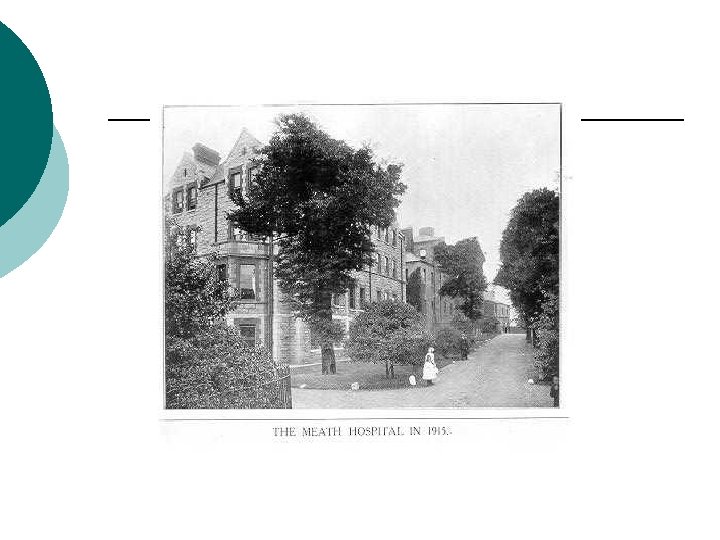
Examples of philanthropic societies ¡ Voluntary hospitals - subscribers had tickets for admissions ¡ Ranyard mission - an evangelical bible society and nursing mission ¡ Charity Organisation Society (COS) - forerunner of social work, used casework with deserving clients
Provident societies ¡ ¡ Especially important for those just above the poor, who were not helped by charities Organised by trade unions, friendly societies, and epitomised the doctrine of self help People would pay small weekly sums to receive help from a doctor or dispensary when needed Provident societies were also available for savings and pensions
Summary ¡ ¡ The enlightenment period changed the way ‘men’ viewed the world This led to more rational development of knowledge and the idea that humanity had free will The ensuing scientific and technological developments meant greater industrialisation of production and urbanisation of the population Medicine became more scientific and health care more institutional