
The Enlightenment An Overview of the 18 c
- Slides: 40
The Enlightenment
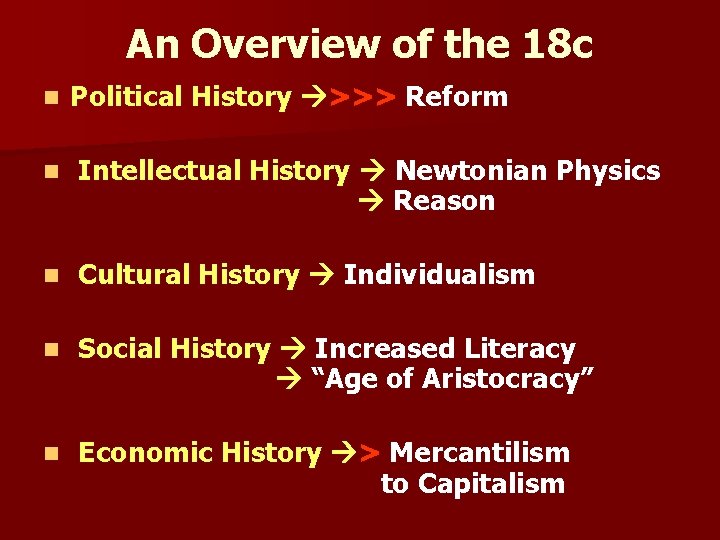
An Overview of the 18 c n Political History >>> Reform n Intellectual History Newtonian Physics Reason n Cultural History Individualism n Social History Increased Literacy “Age of Aristocracy” n Economic History > Mercantilism to Capitalism
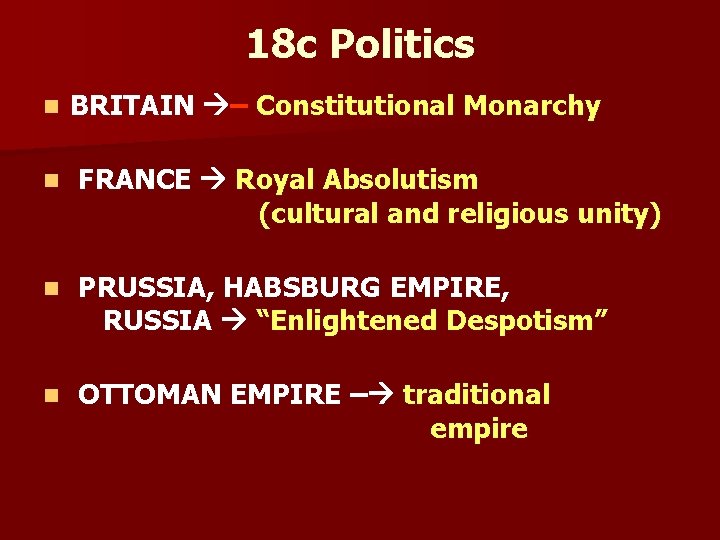
18 c Politics n BRITAIN – Constitutional Monarchy n FRANCE Royal Absolutism (cultural and religious unity) n PRUSSIA, HABSBURG EMPIRE, RUSSIA “Enlightened Despotism” n OTTOMAN EMPIRE – – traditional empire
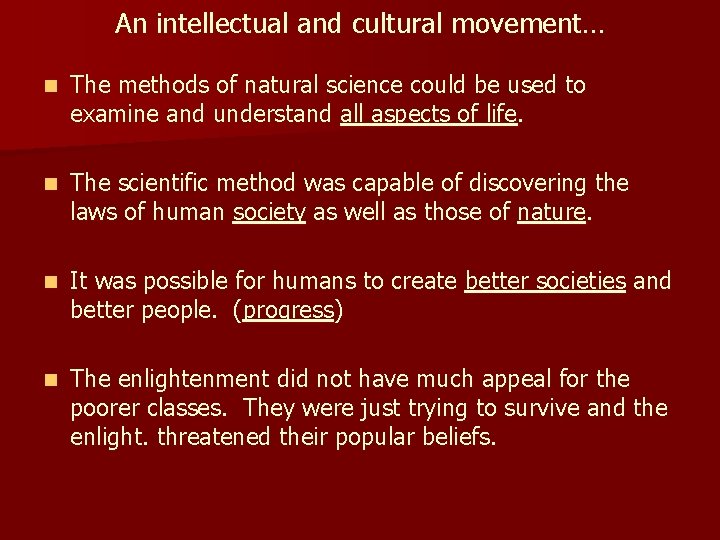
An intellectual and cultural movement… n The methods of natural science could be used to examine and understand all aspects of life. n The scientific method was capable of discovering the laws of human society as well as those of nature. n It was possible for humans to create better societies and better people. (progress) n The enlightenment did not have much appeal for the poorer classes. They were just trying to survive and the enlight. threatened their popular beliefs.
The Characteristics of the Enlightenment n Rationalism reason is the arbiter of all things. n Cosmology a new concept of man, his existence on earth, & the place of the earth in the universe. n Secularism application of the methods of science to religion & philosophy.
n Scientific Method – – – n Mathematical analysis Experimentation Inductive reasoning. Tolerance No opinion is worth burning your neighbor for.
n Optimism & Self-Confidence – The belief that man is intrinsically good. – The belief in social progress. n Freedom – – n Of thought and expression. Bring liberty to all men (modern battle against absolutism). Education of the Masses
n Legal Reforms – Justice, kindness, and charity no torture or indiscriminant incarceration. – Due process of law. n Constitutionalism – Written constitutions listing citizens, rights.
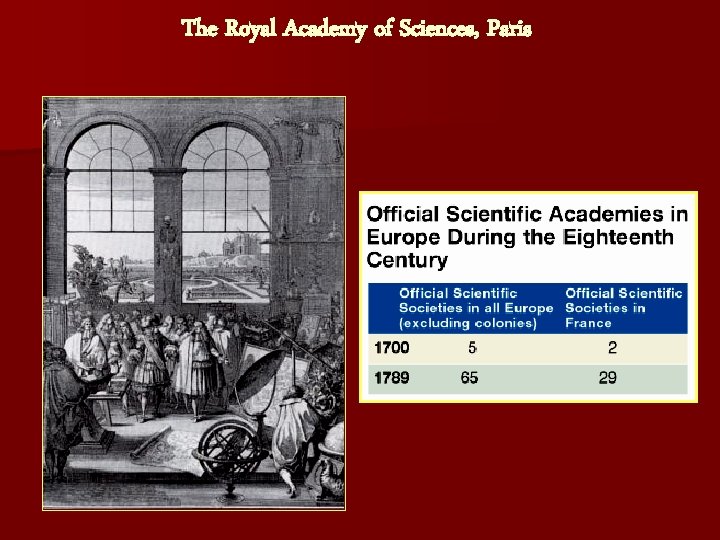
The Royal Academy of Sciences, Paris
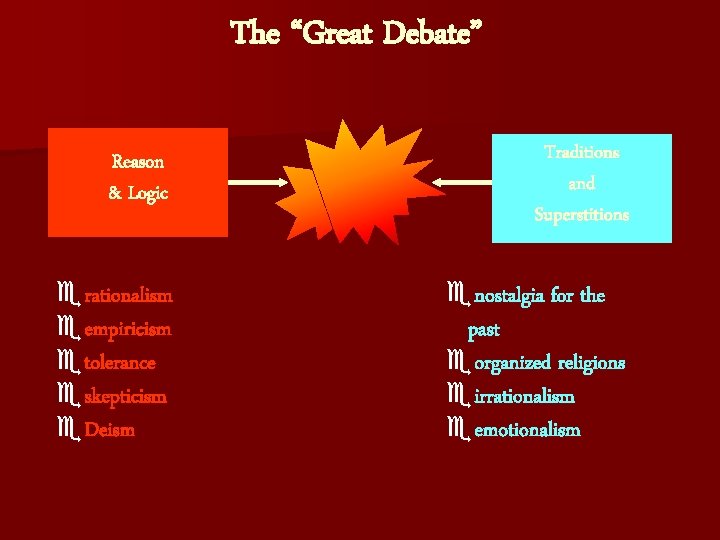
The “Great Debate” Reason & Logic Traditions and Superstitions erationalism eempiricism etolerance eskepticism e. Deism enostalgia for the past eorganized religions eirrationalism eemotionalism
The Philosophes n French term for philosopher n They were an influential group of intellectuals. n Asked philosophical questions about the meaning of life, God, human nature, good and evil, cause and effect n The philosophes brought Enlightenment ideas to the ignorant people and brought the Enlightenment to its highest stage of development in France. video
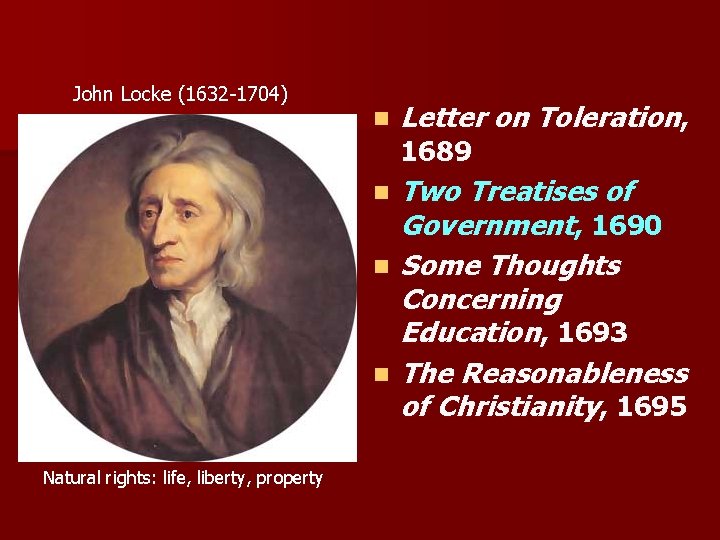
John Locke (1632 -1704) n Letter on Toleration, n Two Treatises of Government, 1690 Some Thoughts Concerning Education, 1693 The Reasonableness of Christianity, 1695 n n Natural rights: life, liberty, property 1689
John Locke’s Philosophy ► The individual must become a “rational creature. ” ► Virtue can be learned and practiced. ► Human beings possess free will. § they should be prepared for freedom. § obedience should be out of conviction, not out of fear.
n Legislators owe their power to a contract with the people. n Neither kings nor wealth are divinely ordained. n There are certain natural rights that are endowed by God to all human beings. – life, liberty, property!
John Locke’s Philosophy con’t ► The doctrine of the Divine Right of Kings was nonsense. ► He favored a republic as the best form of government.
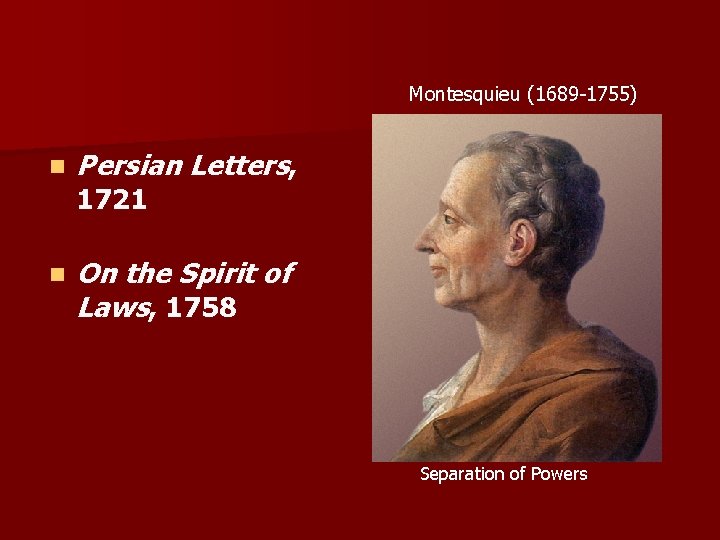
Montesquieu (1689 -1755) n Persian Letters, n On the Spirit of Laws, 1758 1721 Separation of Powers
Montesquieu’s Philosophy ► Three types of government: § Monarchy. § Republic. § Despotism. A separation of political powers ensured freedom and liberty.
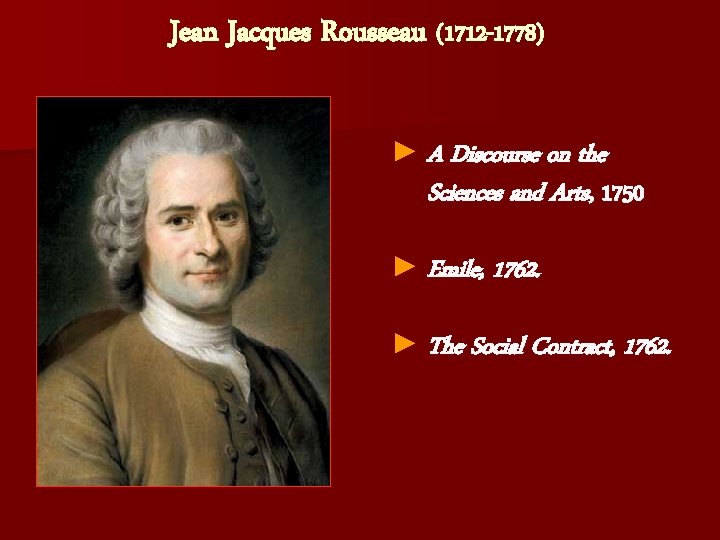
Jean Jacques Rousseau (1712 -1778) ► A Discourse on the Sciences and Arts, 1750 ► Emile, 1762. ► The Social Contract, 1762.
n Rousseau attacked rationalism and civilization n claimed that children must develop naturally and spontaneously n The Social Contract argued that the general will of the people is sacred and absolute.
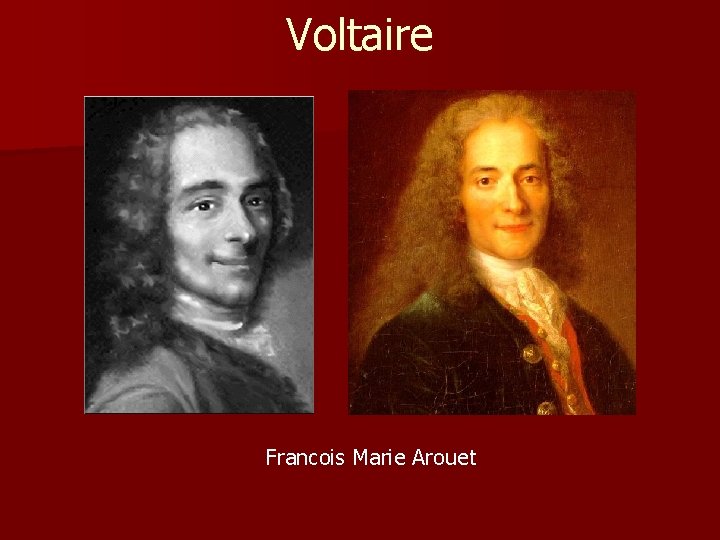
Voltaire Francois Marie Arouet
n Voltaire challenged traditional Catholic theology and exhibited a characteristic philosophe belief in a distant God who let human affairs take their own course. Deism n He opposed legal injustice and unequal treatment before the law. n He was skeptical of social and economic equality; he hated religious intolerance. ► “I may not agree with what you have to say, but I will defend to the death your right to say it. ” VideoVoltaire__1694_1778_. asf
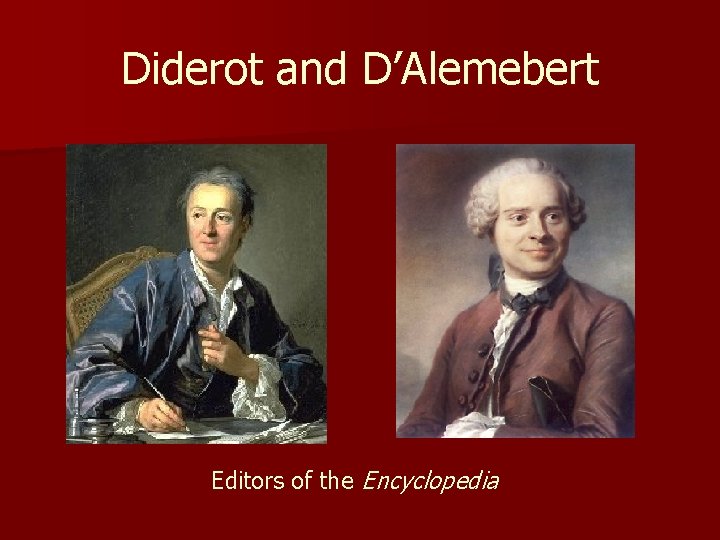
Diderot and D’Alemebert Editors of the Encyclopedia
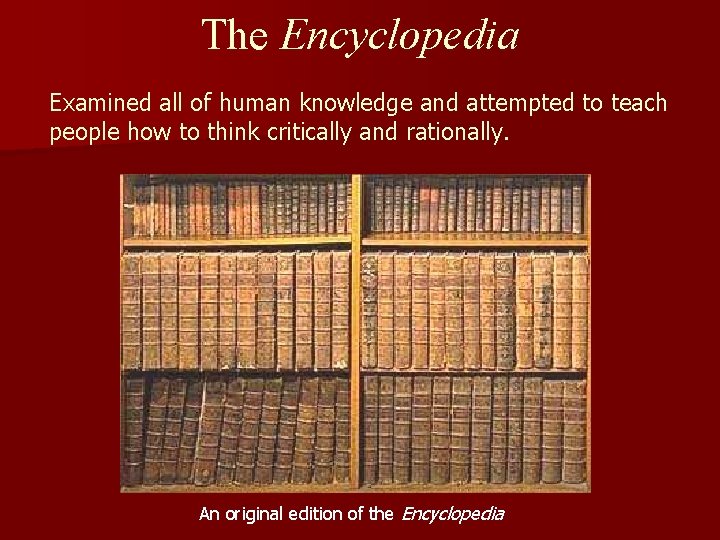
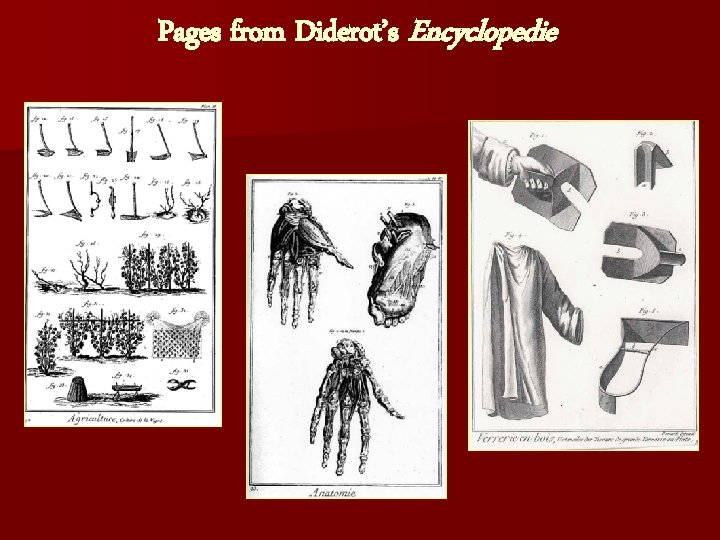
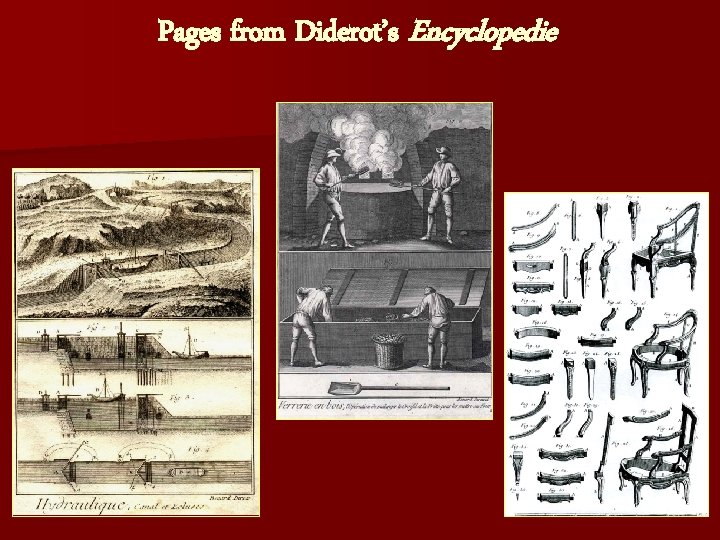
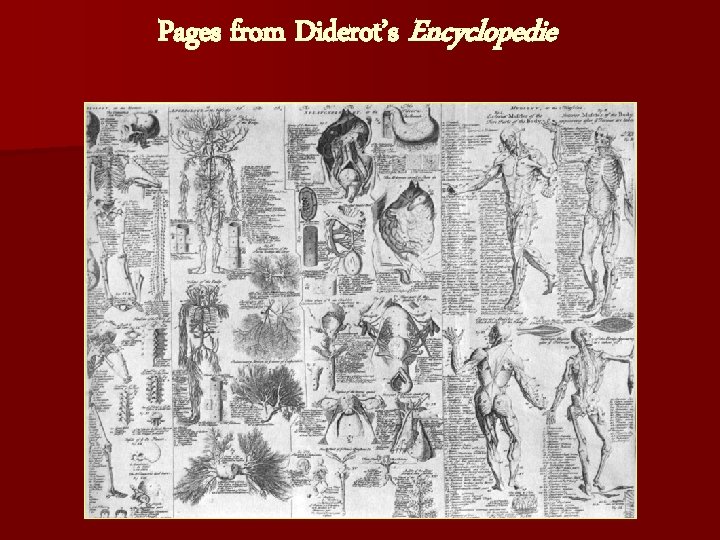
The Encyclopedia Examined all of human knowledge and attempted to teach people how to think critically and rationally. An original edition of the Encyclopedia
n 28 volumes. n Alphabetical, cross-referenced, illustrated. n First published in 1751. n 1500 livres a set.
Pages from Diderot’s Encyclopedie
Pages from Diderot’s Encyclopedie
Pages from Diderot’s Encyclopedie
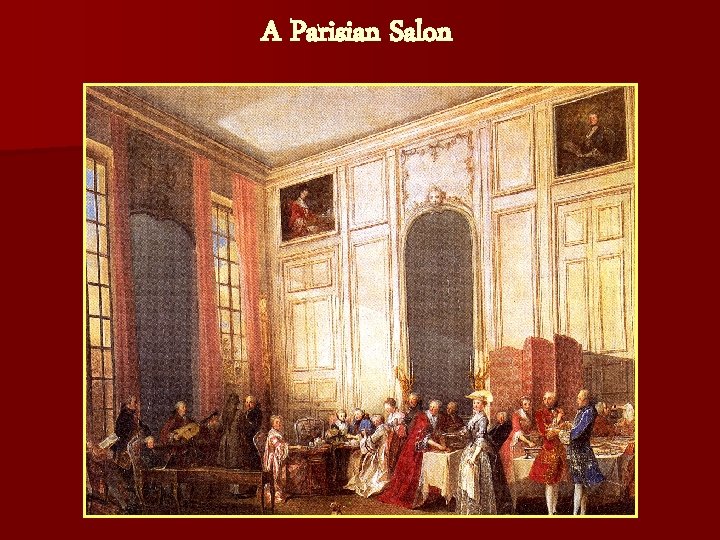
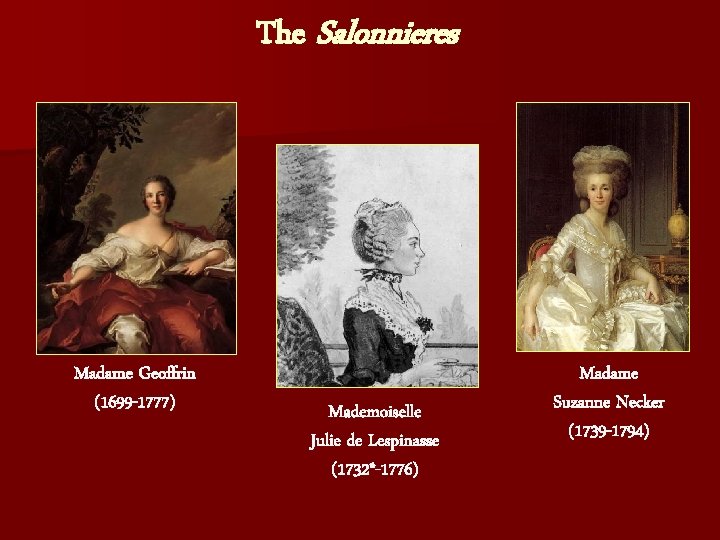
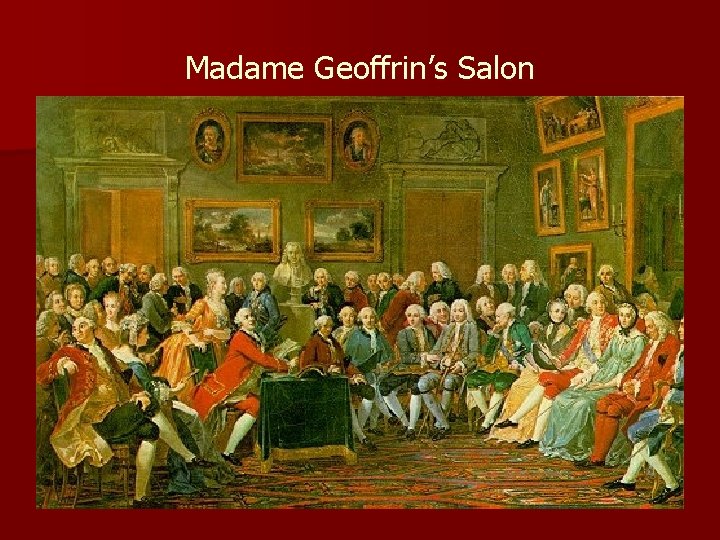
Spreading Enlightenment Ideas n Enlightenment ideas--including new ideas about women's rights--were spread in the salons of upperclass women. n Madame Geoffrin's salon was famous; she was the unofficial godmother of the Encyclopedia. n These salons seemed to have functioned as informal "schools" for women.
A Parisian Salon
The Salonnieres Madame Geoffrin (1699 -1777) Mademoiselle Julie de Lespinasse (1732*-1776) Madame Suzanne Necker (1739 -1794)
Madame Geoffrin’s Salon
Enlightened Despots n Many philosophes believed that "enlightened" reform would come by way of "enlightened" monarchs. n The rulers seemed to seek the philosophes' advice. n The philosophes distrusted the masses and believed that change had to come from above. n The most influential of the new style monarchs were in Prussia, Russia, and Austria.
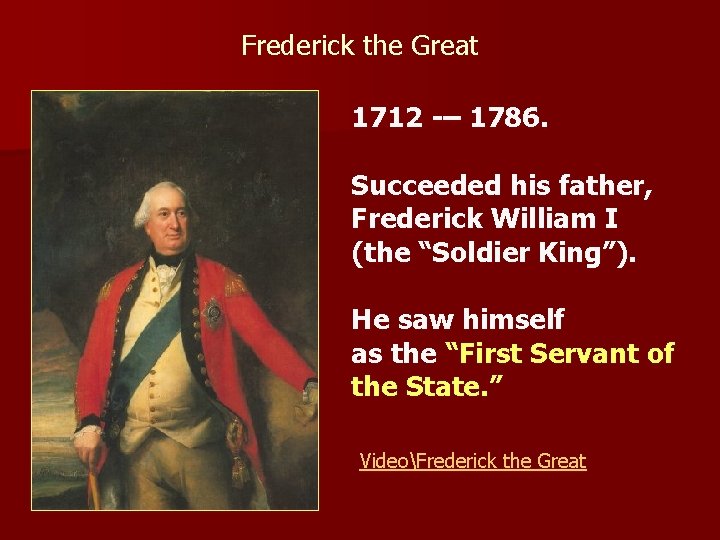
Frederick the Great 1712 -– 1786. Succeeded his father, Frederick William I (the “Soldier King”). He saw himself as the “First Servant of the State. ” VideoFrederick the Great
n Frederick allowed religious freedom and promoted education, legal reform, and economic growth n Allowed the Junker nobility to keep the middle-class from power in government. n Frederick allowed the repression of Prussian Jews--who were confined to overcrowded ghettos.
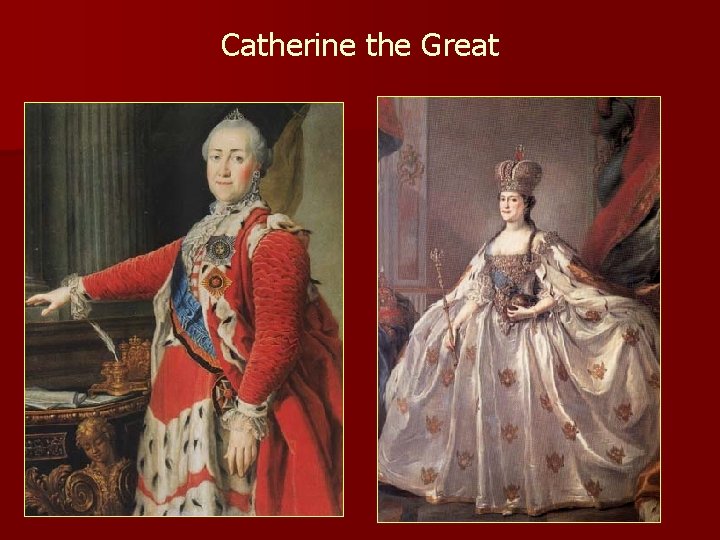
Catherine the Great
n German Princess Sophie Friederike Auguste of Anhalt-Zerbst. 1729 – 1796 n Catherine II imported Western culture to Russia, supported the philosophes, and began a program of domestic reform. n The Pugachev uprising in 1773 led her to reverse the trend toward reform of serfdom and give nobles absolute control of their serfs.
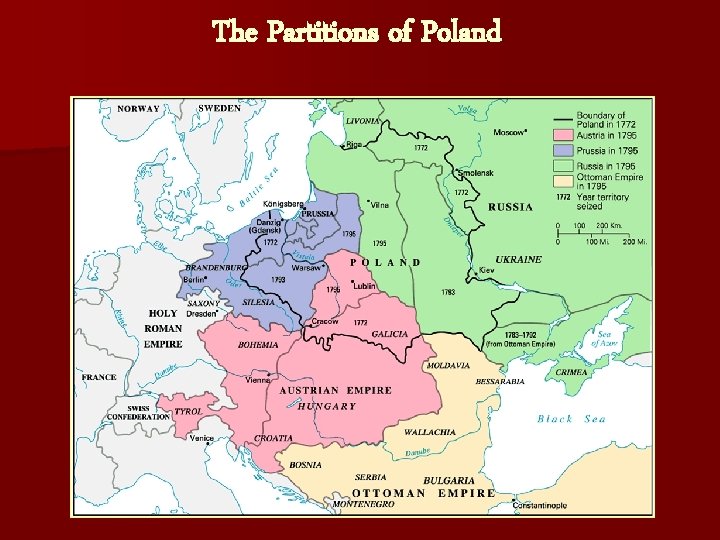
The Partitions of Poland - 1772 - 1793 - 1795
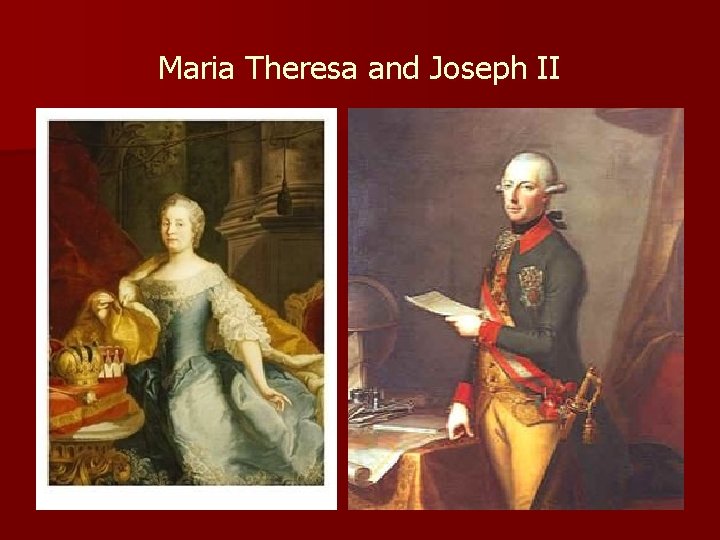
Maria Theresa and Joseph II
The Austrian Habsburgs n Maria Theresa introduced reforms – – – limited church power revised the tax system and bureaucracy reduced the power of the lords over the serfs. n Her successor, Joseph II, was a dedicated reformer who abolished serfdom, taxed all equally, and granted religious freedom. n Because of opposition from both the nobles and the peasants, Joseph's reforms were short lived.
Influence of the Enlightenment n In France, the rise of judicial and aristocratic opposition combined with liberalism put absolutism on the defensive. n In eastern Europe, the results of enlightened absolutism were modest and absolutism remained strong. n By combining state building with the culture and critical thinking of the Enlightenment, absolute monarchs succeeded in expanding the role of the state in the life of society