
The Enhanced Classroom Development Process Standards and Practices

- Slides: 36
The Enhanced Classroom Development Process: Standards and Practices Andrew Faunce, Dartmouth College Michael Ney, Gettysburg College 1
The Enhanced Classroom Development Process: Standards and Practices Part I Design Theory Andrew Faunce 2
Large Screen Presentation Human Factors Design Principles Design Deliverables 3
Human Factors Visual Perception Aural Perception Body Size and Movement 4
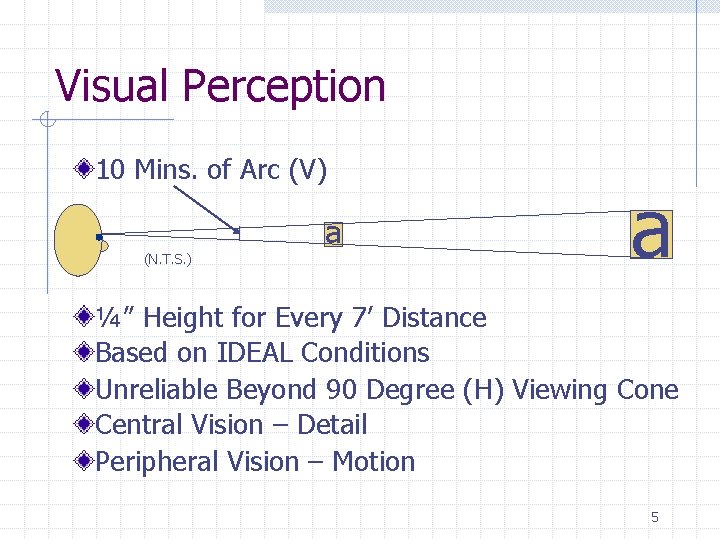
Visual Perception 10 Mins. of Arc (V) a (N. T. S. ) a ¼” Height for Every 7’ Distance Based on IDEAL Conditions Unreliable Beyond 90 Degree (H) Viewing Cone Central Vision – Detail Peripheral Vision – Motion 5
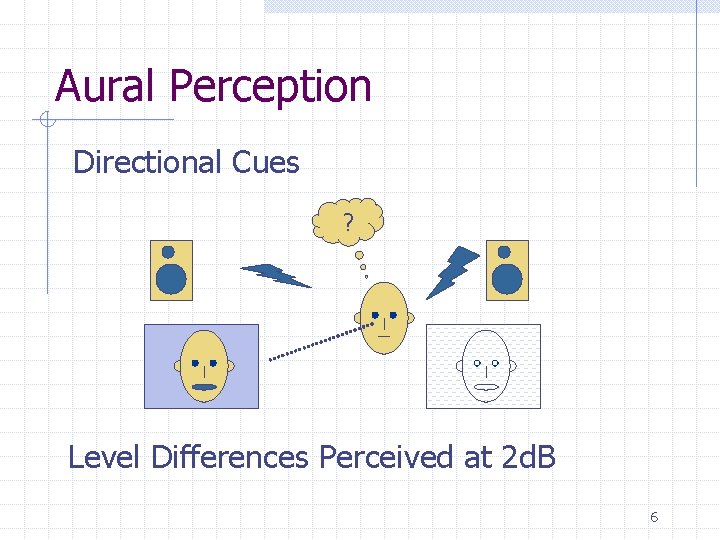
Aural Perception Directional Cues ? Level Differences Perceived at 2 d. B 6
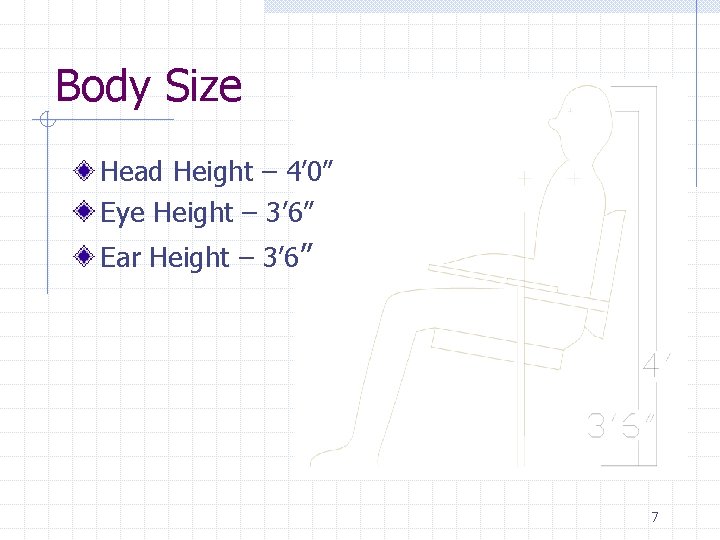
Body Size Head Height – 4’ 0” Eye Height – 3’ 6” Ear Height – 3’ 6” 7
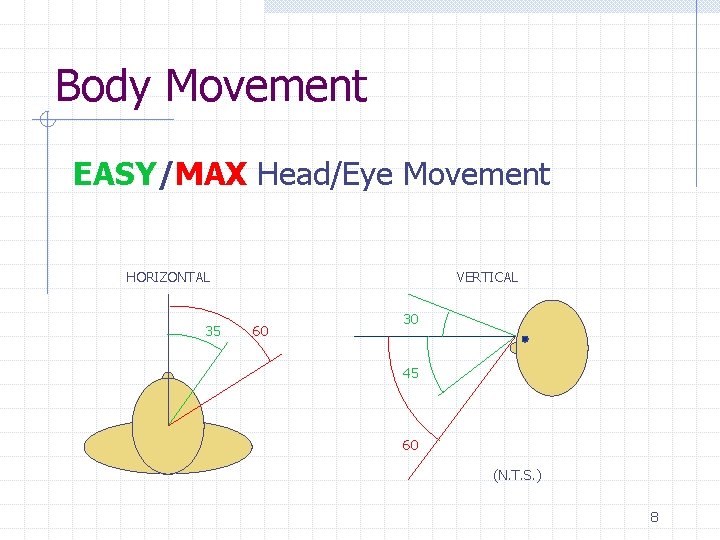
Body Movement EASY/MAX Head/Eye Movement HORIZONTAL 35 VERTICAL 60 30 45 60 (N. T. S. ) 8
Design Principles Viewing Distances Image Size Angles of View Line of Sight Sound System Requirements Speaker Performance and Placement 9
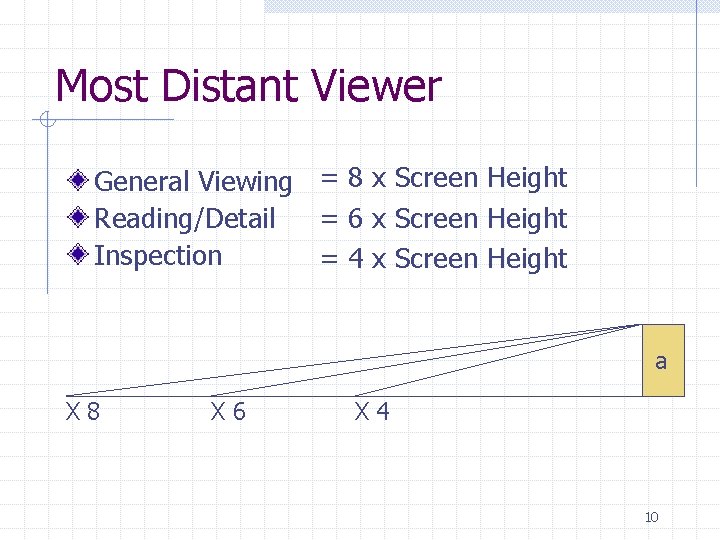
Most Distant Viewer General Viewing = 8 x Screen Height Reading/Detail = 6 x Screen Height Inspection = 4 x Screen Height a X 8 X 6 X 4 10
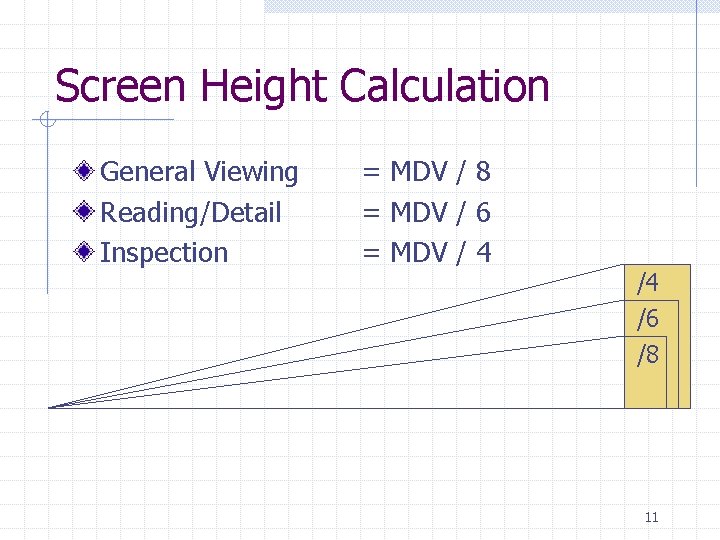
Screen Height Calculation General Viewing Reading/Detail Inspection = MDV / 8 = MDV / 6 = MDV / 4 /4 /6 /8 11
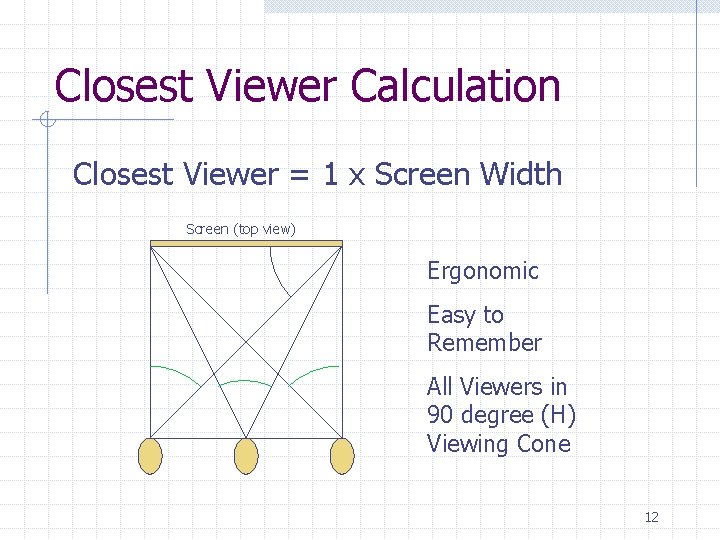
Closest Viewer Calculation Closest Viewer = 1 x Screen Width Screen (top view) Ergonomic Easy to Remember All Viewers in 90 degree (H) Viewing Cone 12
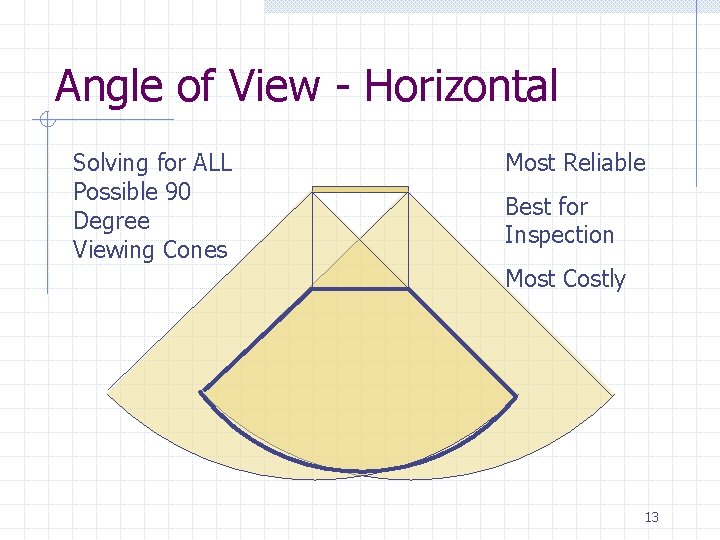
Angle of View - Horizontal Solving for ALL Possible 90 Degree Viewing Cones Most Reliable Best for Inspection Most Costly 13
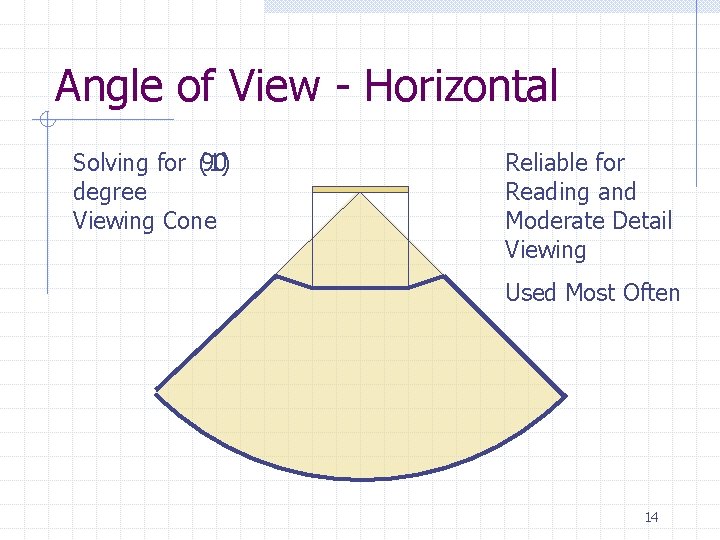
Angle of View - Horizontal Solving for (1) 90 degree Viewing Cone Reliable for Reading and Moderate Detail Viewing Used Most Often 14
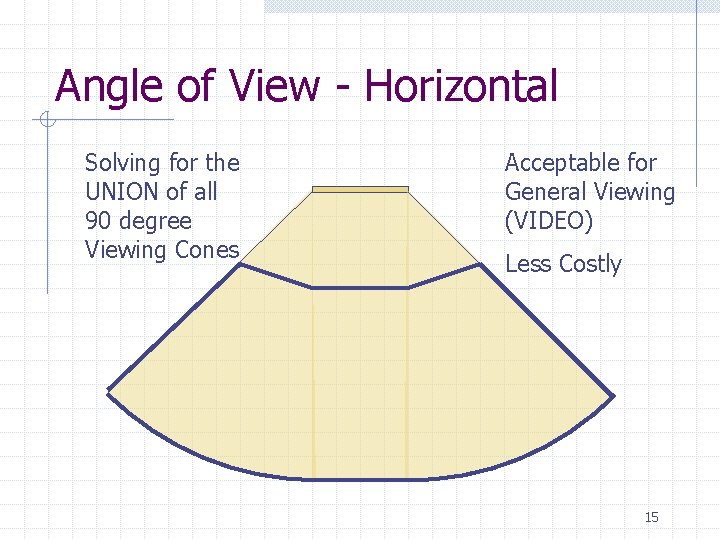
Angle of View - Horizontal Solving for the UNION of all 90 degree Viewing Cones Acceptable for General Viewing (VIDEO) Less Costly 15
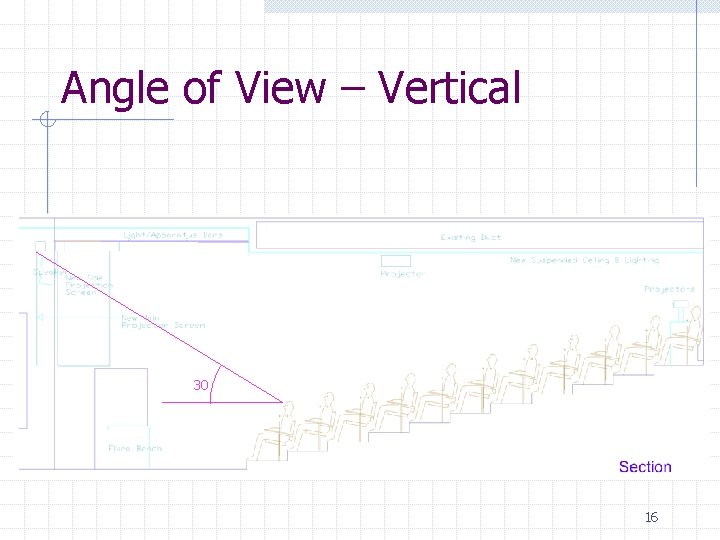
Angle of View – Vertical 30 16
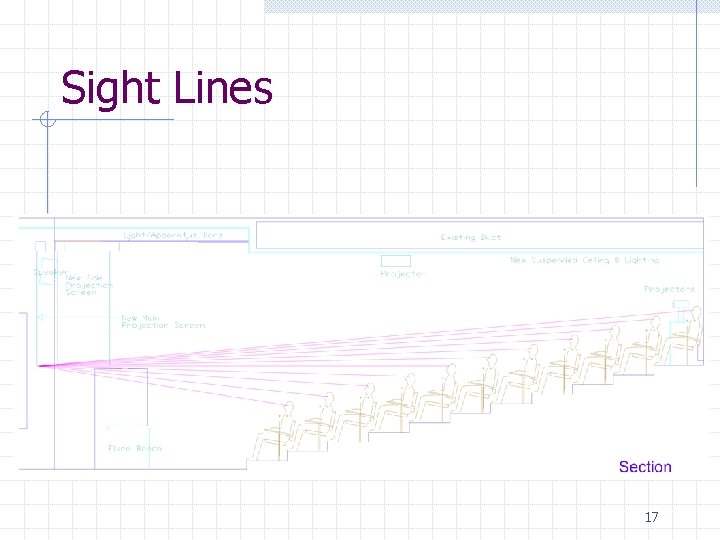
Sight Lines 17
Sound System Requirements Speaker Performance Speaker Location 18
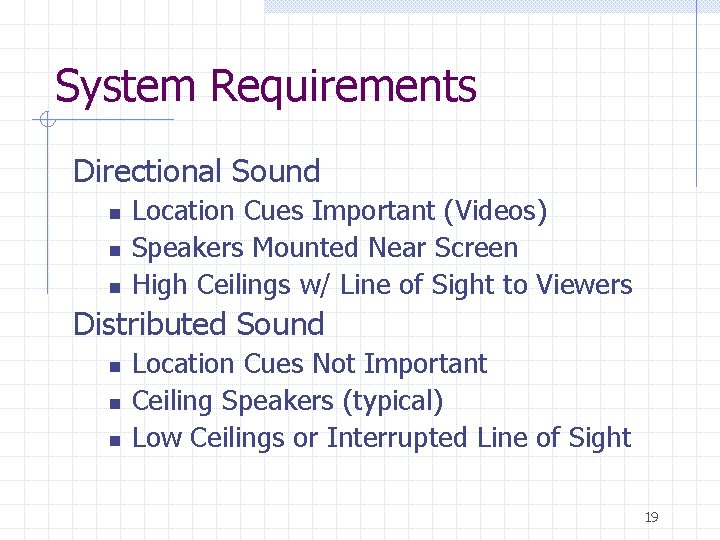
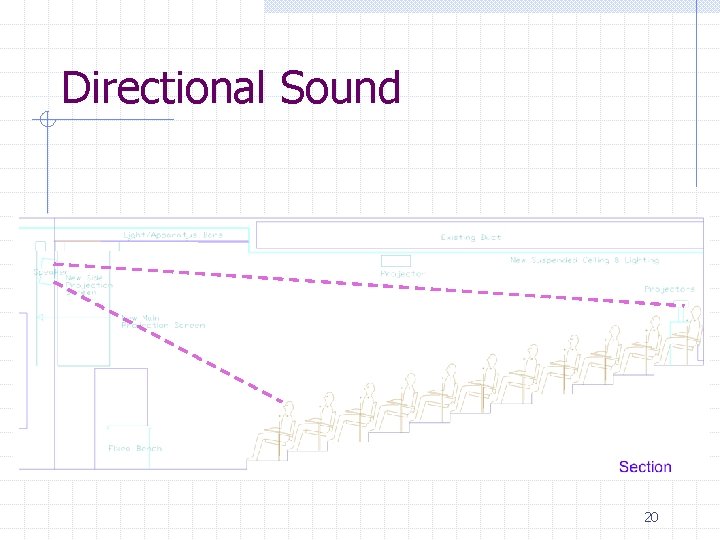
System Requirements Directional Sound n n n Location Cues Important (Videos) Speakers Mounted Near Screen High Ceilings w/ Line of Sight to Viewers Distributed Sound n n n Location Cues Not Important Ceiling Speakers (typical) Low Ceilings or Interrupted Line of Sight 19
Directional Sound 20
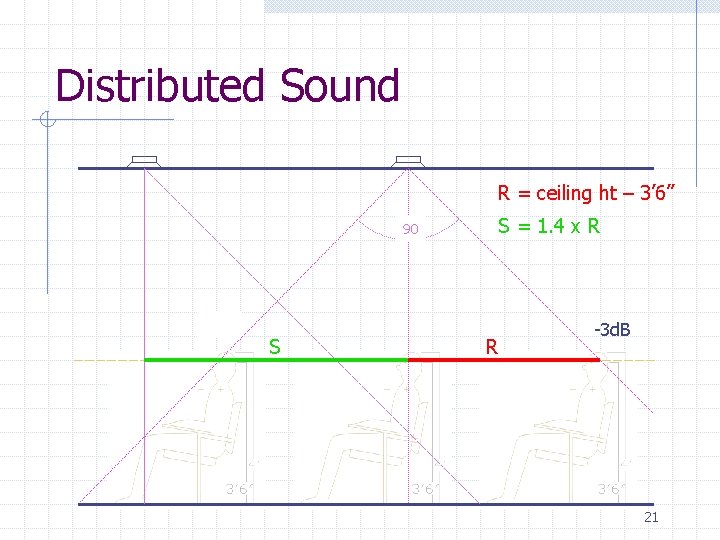
Distributed Sound R = ceiling ht – 3’ 6” S = 1. 4 x R 90 -3 d. B S R -3 d. B 21
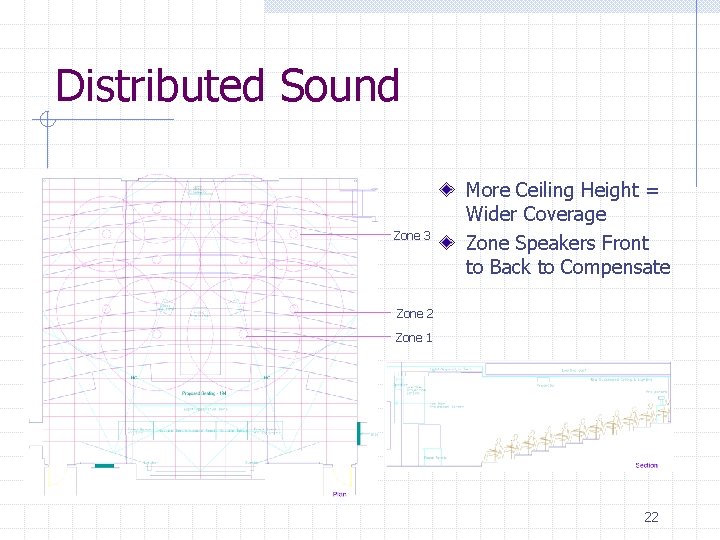
Distributed Sound Zone 3 More Ceiling Height = Wider Coverage Zone Speakers Front to Back to Compensate Zone 2 Zone 1 22
Design Deliverables Programming: n “Program Statement” Design: n n “Design Package” “Not for Construction” Docs Construction: n n “Build Package” “Construction” Docs 23
Program Statement Text Description of Requirements Room Functions Seat Count/Arrangement Logistics of Use System Performance Provide Examples and as Much Detail as Possible 24
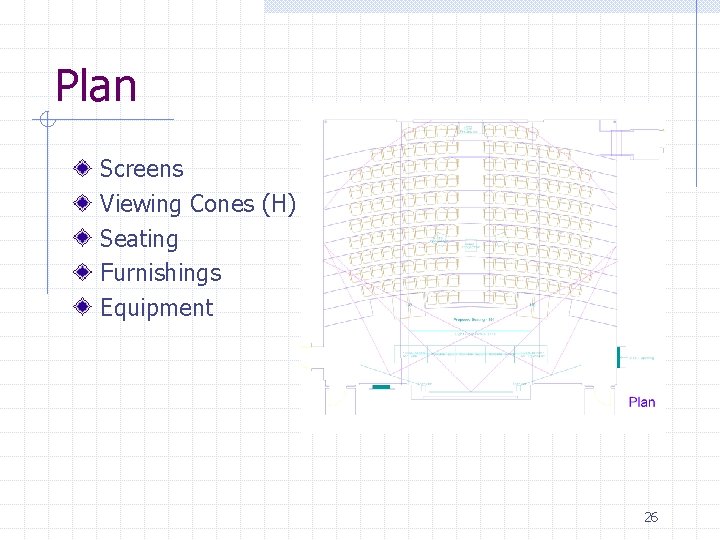
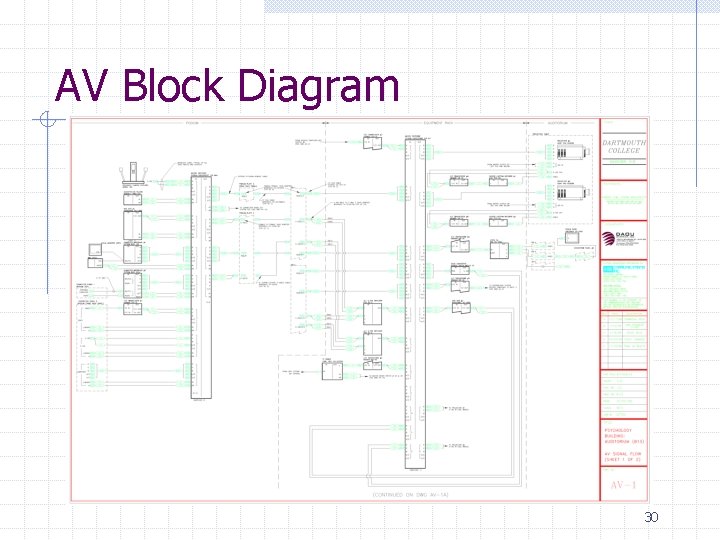
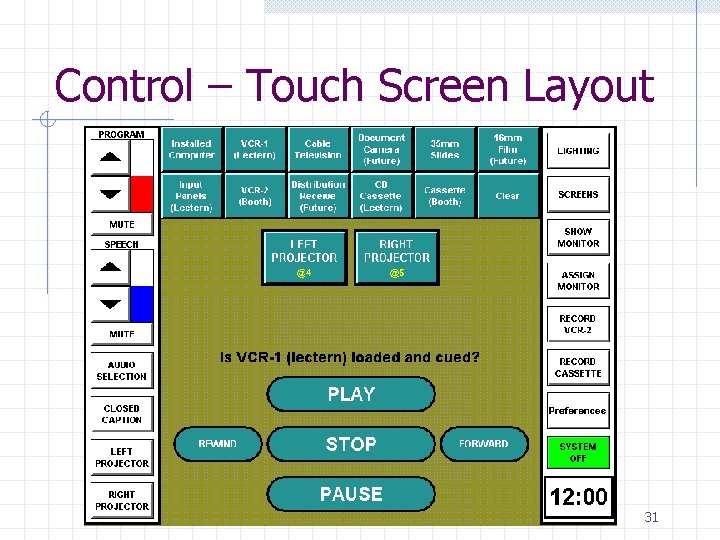
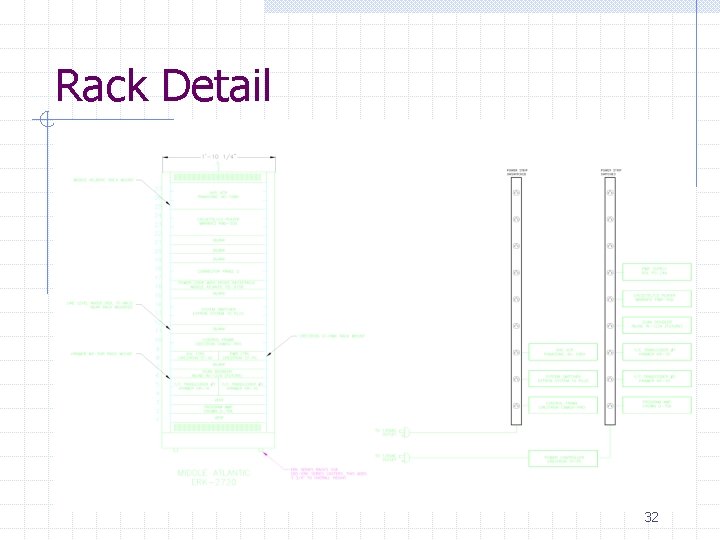
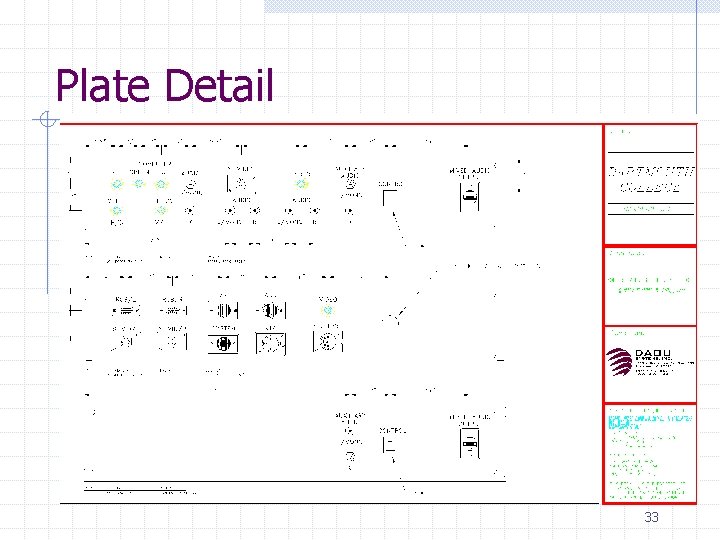
AV Design/Build Package Equipment List AV Block or Flow Diagram Control Block / Touch Screen Layouts Architectural - Plan, Elevations, Section, RCP Details – racks, plates, mounts, casework Riser – conduits, j-boxes, cable Services Provided “By Others” 25
Plan Screens Viewing Cones (H) Seating Furnishings Equipment 26
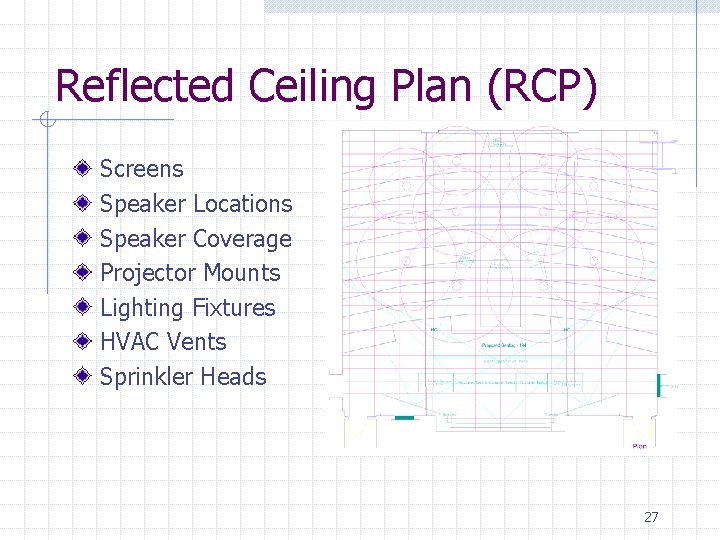
Reflected Ceiling Plan (RCP) Screens Speaker Locations Speaker Coverage Projector Mounts Lighting Fixtures HVAC Vents Sprinkler Heads 27
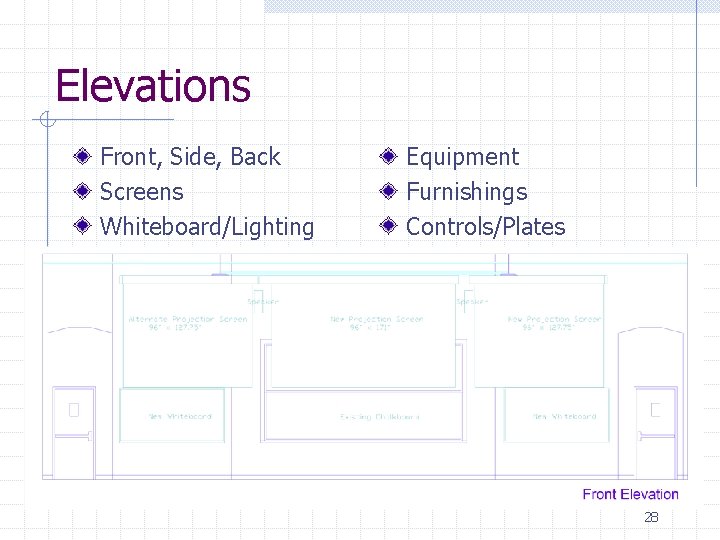
Elevations Front, Side, Back Screens Whiteboard/Lighting Equipment Furnishings Controls/Plates 28
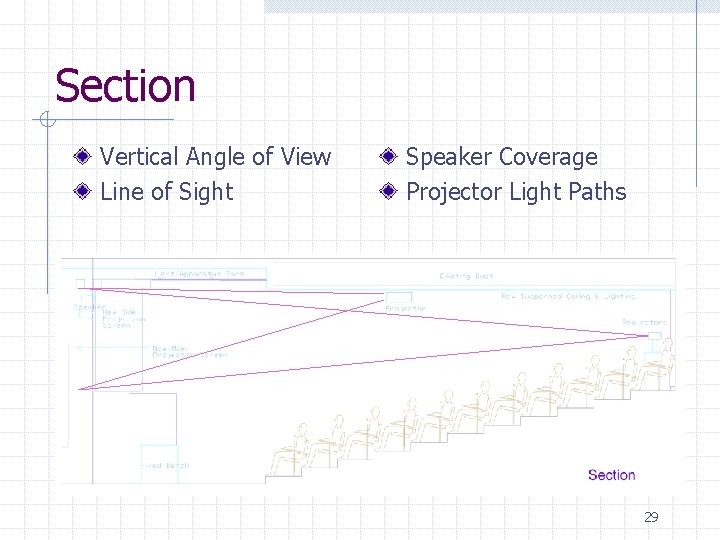
Section Vertical Angle of View Line of Sight Speaker Coverage Projector Light Paths 29
AV Block Diagram 30
Control – Touch Screen Layout 31
Rack Detail 32
Plate Detail 33
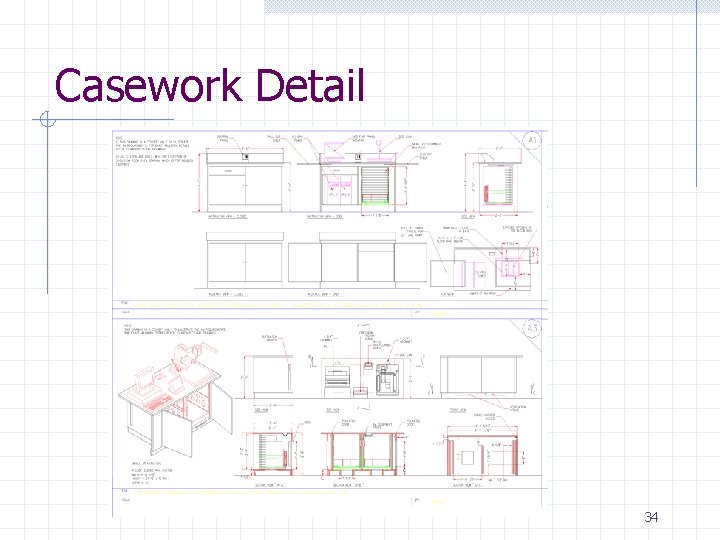
Casework Detail 34
References International Communications Industries Association (ICIA) www. icia. org Angles of View – DA-LITE Screen Company www. da-lite. com Time-Saver Standards for Interior Design and Space Planning, De Chiara 35
Contact Info Andrew Faunce Instructional Services/Computing Services - Dartmouth College 6195 North Fairbanks - Hanover, NH 03755 andrew. g. faunce@dartmouth. edu http: //www. dartmouth. edu/~insvcs/ 603. 646. 3614 voice 603. 646. 1343 fax 36