
The English Renaissance Menegazzo Giulia Pellis Giulia A
- Slides: 7
The English Renaissance Menegazzo Giulia – Pellis Giulia
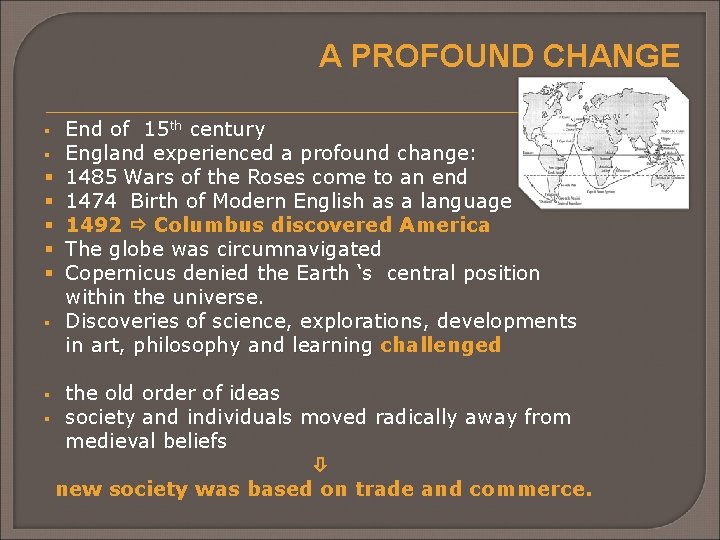
A PROFOUND CHANGE § § § § End of 15 th century England experienced a profound change: 1485 Wars of the Roses come to an end 1474 Birth of Modern English as a language 1492 Columbus discovered America The globe was circumnavigated Copernicus denied the Earth ‘s central position within the universe. Discoveries of science, explorations, developments in art, philosophy and learning challenged the old order of ideas § society and individuals moved radically away from medieval beliefs new society was based on trade and commerce. §
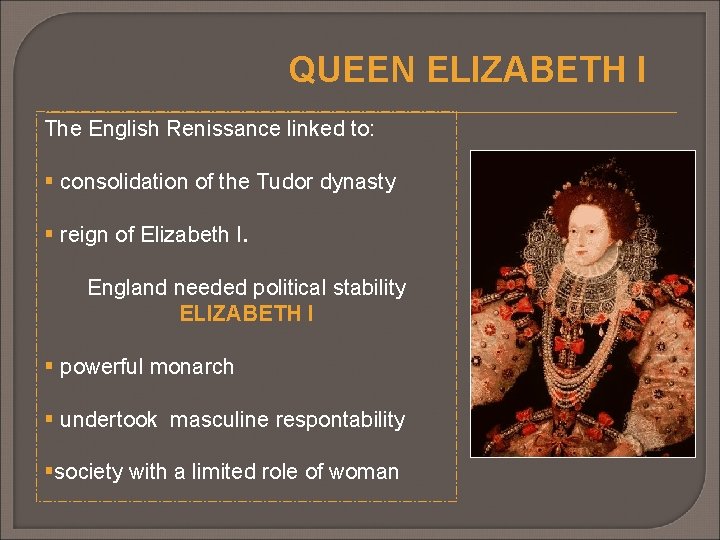
QUEEN ELIZABETH I The English Renissance linked to: § consolidation of the Tudor dynasty § reign of Elizabeth I. England needed political stability ELIZABETH I § powerful monarch § undertook masculine respontability §society with a limited role of woman
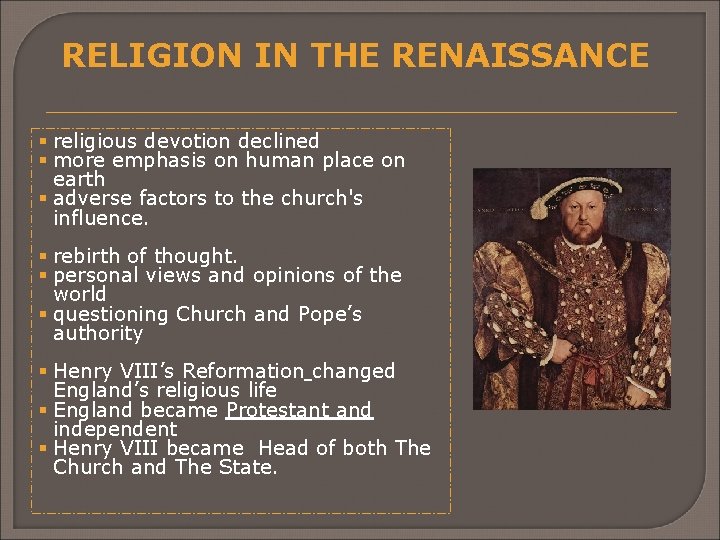
RELIGION IN THE RENAISSANCE § religious devotion declined § more emphasis on human place on earth § adverse factors to the church's influence. § rebirth of thought. § personal views and opinions of the world § questioning Church and Pope’s authority § Henry VIII’s Reformation changed England’s religious life § England became Protestant and independent § Henry VIII became Head of both The Church and The State.
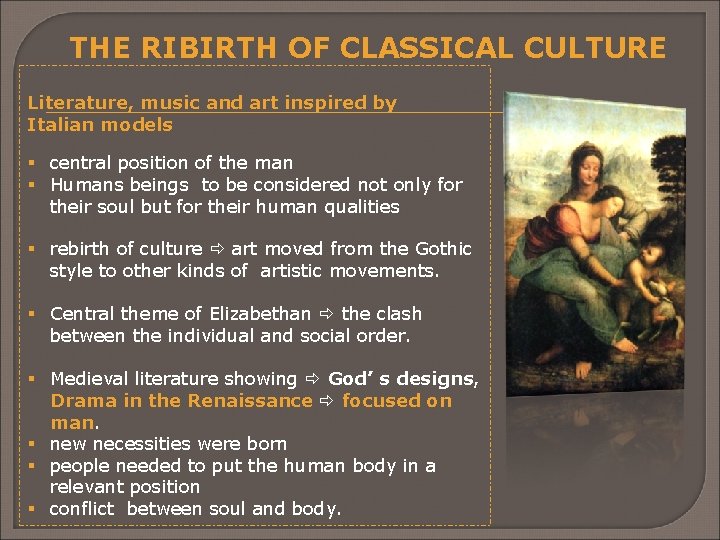
THE RIBIRTH OF CLASSICAL CULTURE Literature, music and art inspired by Italian models § central position of the man § Humans beings to be considered not only for their soul but for their human qualities § rebirth of culture art moved from the Gothic style to other kinds of artistic movements. § Central theme of Elizabethan the clash between the individual and social order. § Medieval literature showing God’ s designs, Drama in the Renaissance focused on man. § new necessities were born § people needed to put the human body in a relevant position § conflict between soul and body.
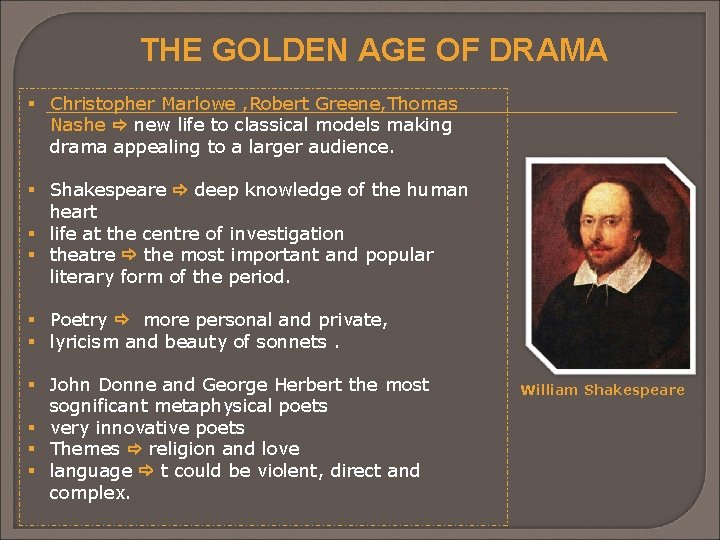
THE GOLDEN AGE OF DRAMA § Christopher Marlowe , Robert Greene, Thomas Nashe new life to classical models making drama appealing to a larger audience. § Shakespeare deep knowledge of the human heart § life at the centre of investigation § theatre the most important and popular literary form of the period. § Poetry more personal and private, § lyricism and beauty of sonnets. § John Donne and George Herbert the most sognificant metaphysical poets § very innovative poets § Themes religion and love § language t could be violent, direct and complex. William Shakespeare
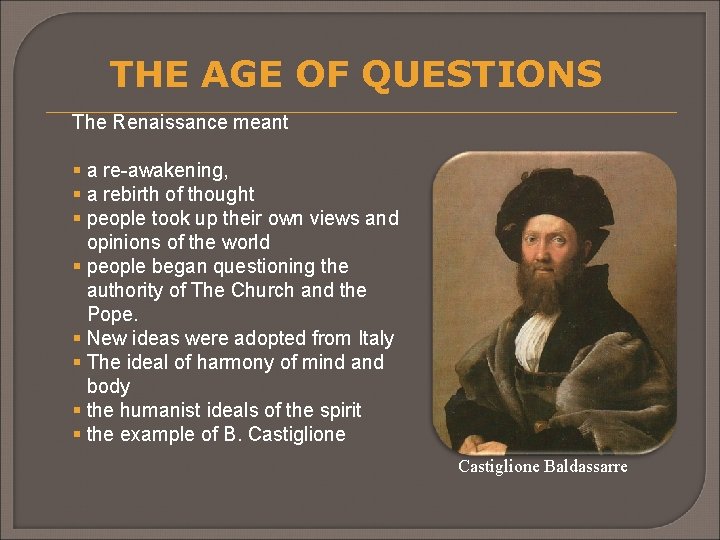
THE AGE OF QUESTIONS The Renaissance meant § a re-awakening, § a rebirth of thought § people took up their own views and opinions of the world § people began questioning the authority of The Church and the Pope. § New ideas were adopted from Italy § The ideal of harmony of mind and body § the humanist ideals of the spirit § the example of B. Castiglione Baldassarre