
The Endocrine System Write White The Endocrine system

- Slides: 23
The Endocrine System Write White
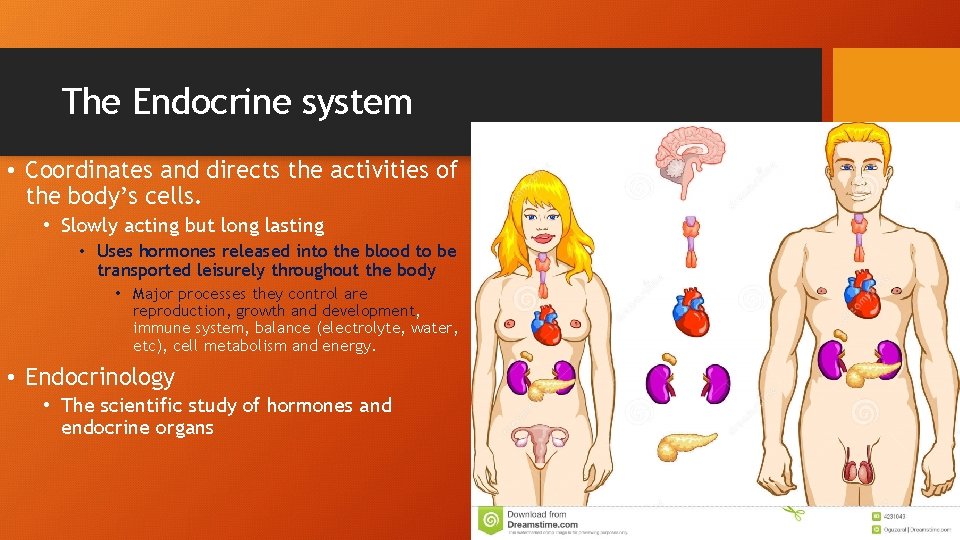
The Endocrine system • Coordinates and directs the activities of the body’s cells. • Slowly acting but long lasting • Uses hormones released into the blood to be transported leisurely throughout the body • Major processes they control are reproduction, growth and development, immune system, balance (electrolyte, water, etc), cell metabolism and energy. • Endocrinology • The scientific study of hormones and endocrine organs
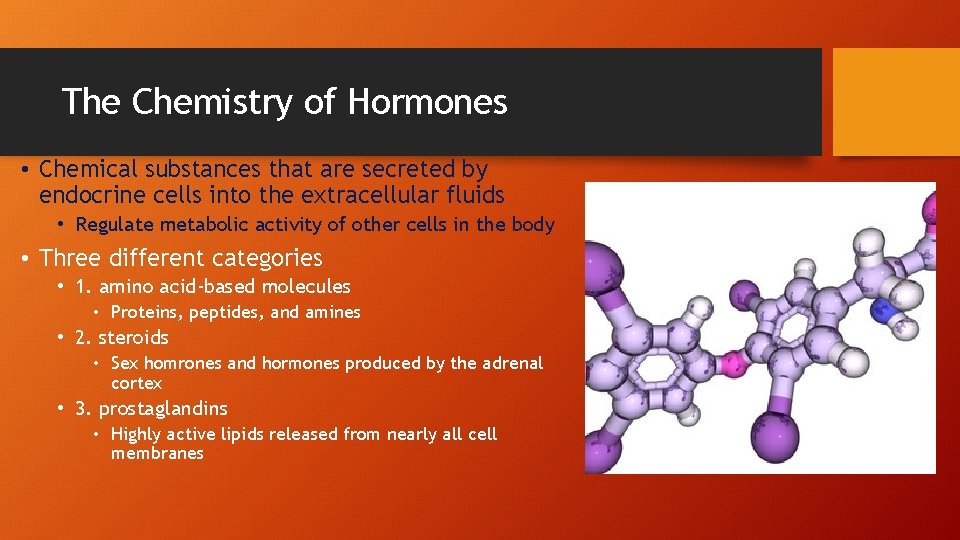
The Chemistry of Hormones • Chemical substances that are secreted by endocrine cells into the extracellular fluids • Regulate metabolic activity of other cells in the body • Three different categories • 1. amino acid-based molecules • Proteins, peptides, and amines • 2. steroids • Sex homrones and hormones produced by the adrenal cortex • 3. prostaglandins • Highly active lipids released from nearly all cell membranes
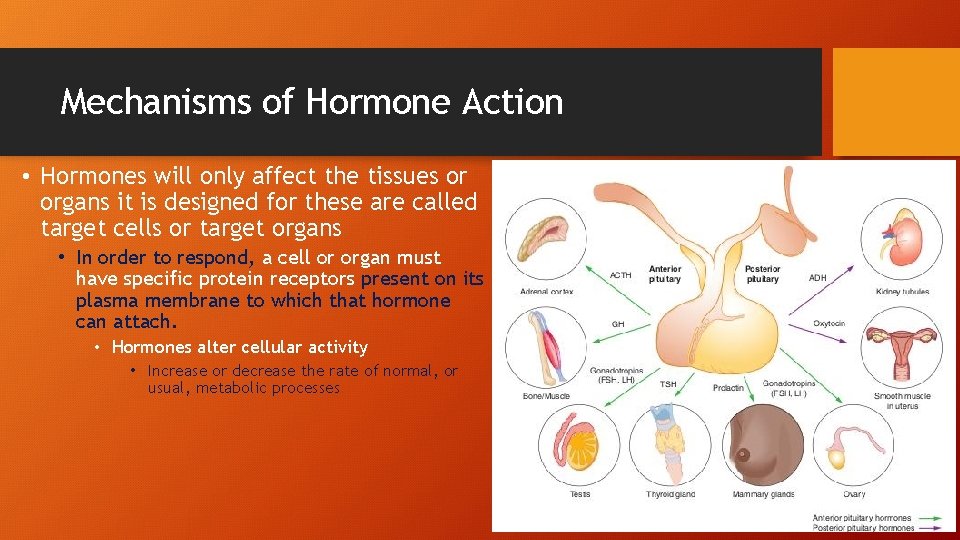
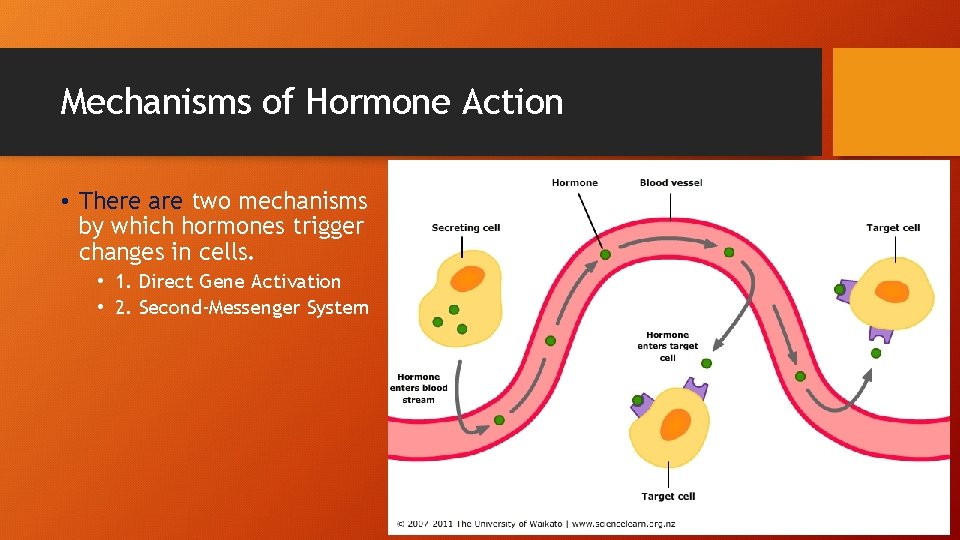
Mechanisms of Hormone Action • Hormones will only affect the tissues or organs it is designed for these are called target cells or target organs • In order to respond, a cell or organ must have specific protein receptors present on its plasma membrane to which that hormone can attach. • Hormones alter cellular activity • Increase or decrease the rate of normal, or usual, metabolic processes
Mechanisms of Hormone Action • Changes that follow hormone binding typically follow one or more of the following: • 1. changes in plasma membrane permeability or electrical state • 2. synthesis of proteins or certain regulatory molecules (such as enzymes) in the cell • 3. activation or inactivation of enzymes • 4. stimulation of mitosis • 5. promotion of secretory activity
Mechanisms of Hormone Action • There are two mechanisms by which hormones trigger changes in cells. • 1. Direct Gene Activation • 2. Second-Messenger System
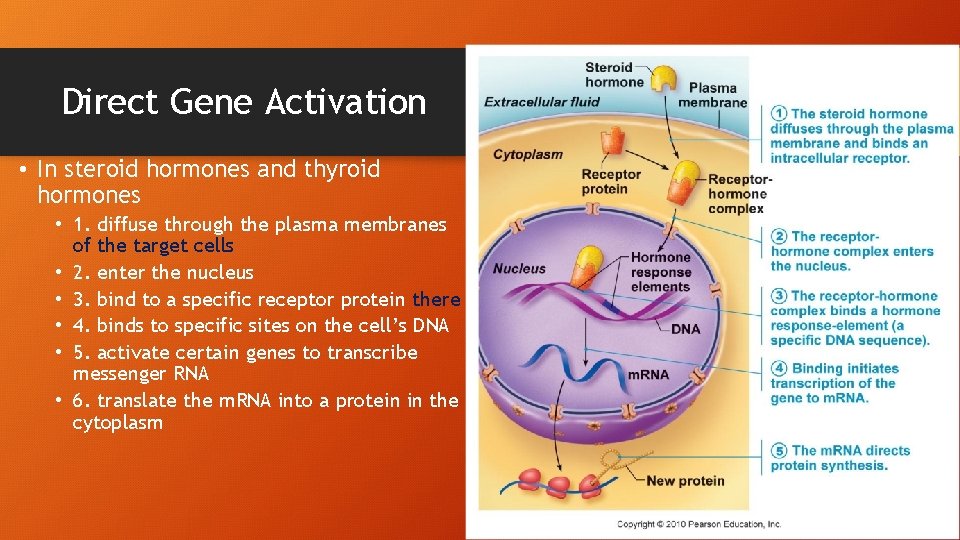
Direct Gene Activation • In steroid hormones and thyroid hormones • 1. diffuse through the plasma membranes of the target cells • 2. enter the nucleus • 3. bind to a specific receptor protein there • 4. binds to specific sites on the cell’s DNA • 5. activate certain genes to transcribe messenger RNA • 6. translate the m. RNA into a protein in the cytoplasm
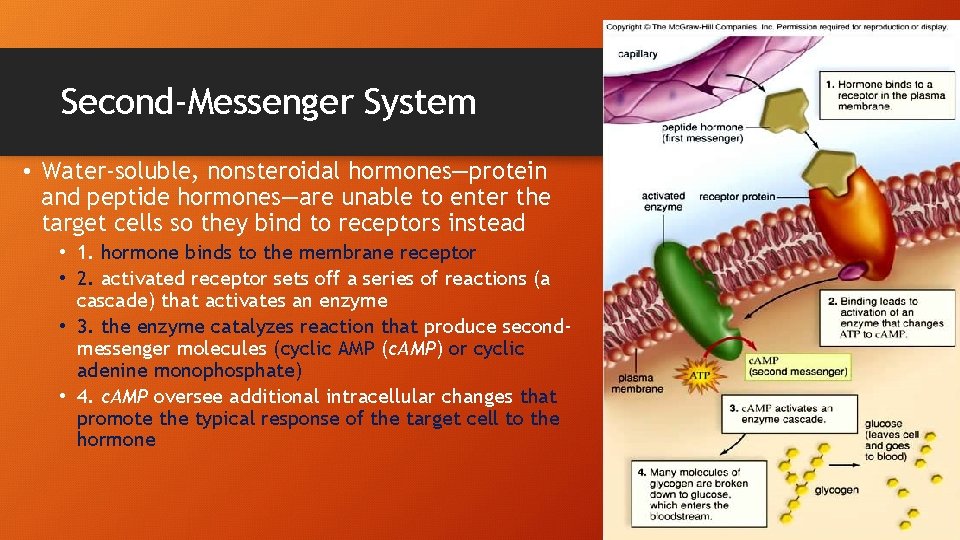
Second-Messenger System • Water-soluble, nonsteroidal hormones—protein and peptide hormones—are unable to enter the target cells so they bind to receptors instead • 1. hormone binds to the membrane receptor • 2. activated receptor sets off a series of reactions (a cascade) that activates an enzyme • 3. the enzyme catalyzes reaction that produce secondmessenger molecules (cyclic AMP (c. AMP) or cyclic adenine monophosphate) • 4. c. AMP oversee additional intracellular changes that promote the typical response of the target cell to the hormone
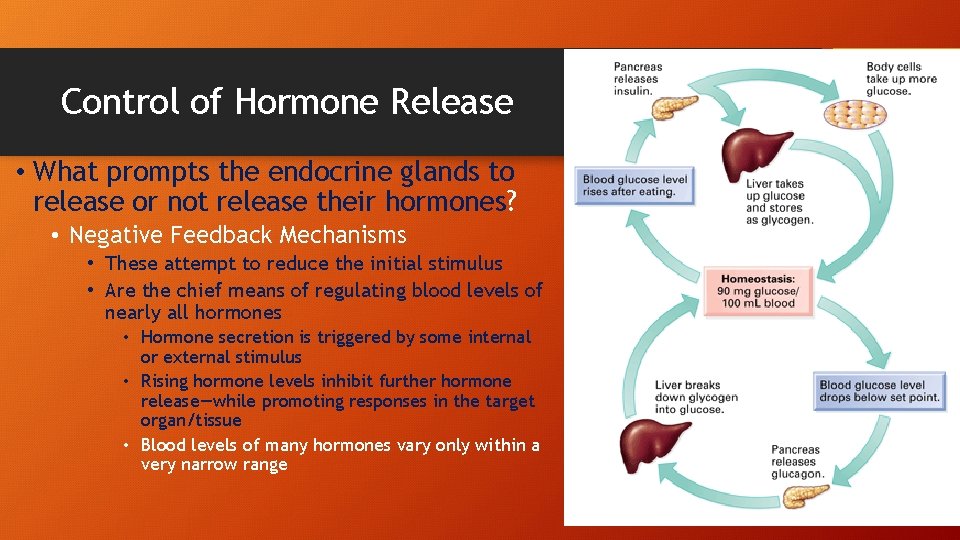
Control of Hormone Release • What prompts the endocrine glands to release or not release their hormones? • Negative Feedback Mechanisms • These attempt to reduce the initial stimulus • Are the chief means of regulating blood levels of nearly all hormones • Hormone secretion is triggered by some internal or external stimulus • Rising hormone levels inhibit further hormone release—while promoting responses in the target organ/tissue • Blood levels of many hormones vary only within a very narrow range
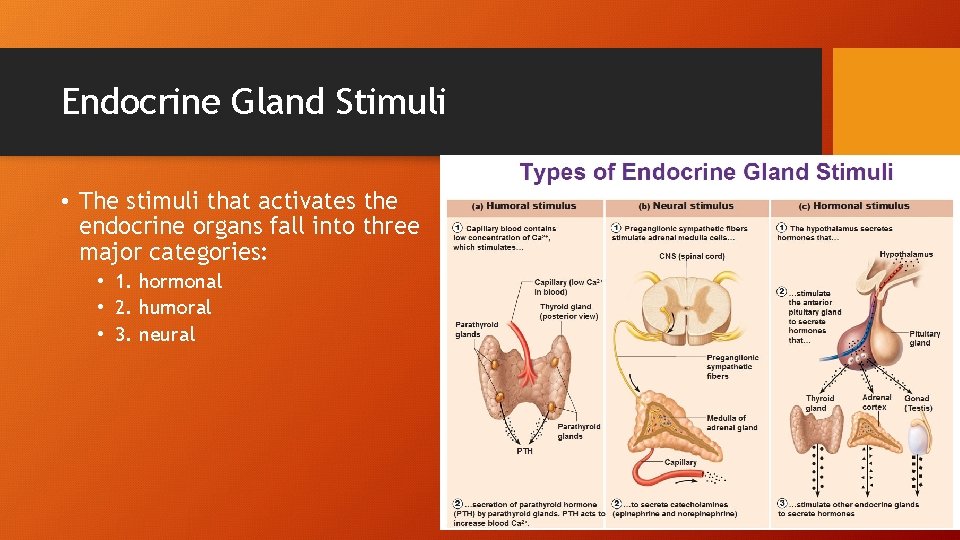
Endocrine Gland Stimuli • The stimuli that activates the endocrine organs fall into three major categories: • 1. hormonal • 2. humoral • 3. neural
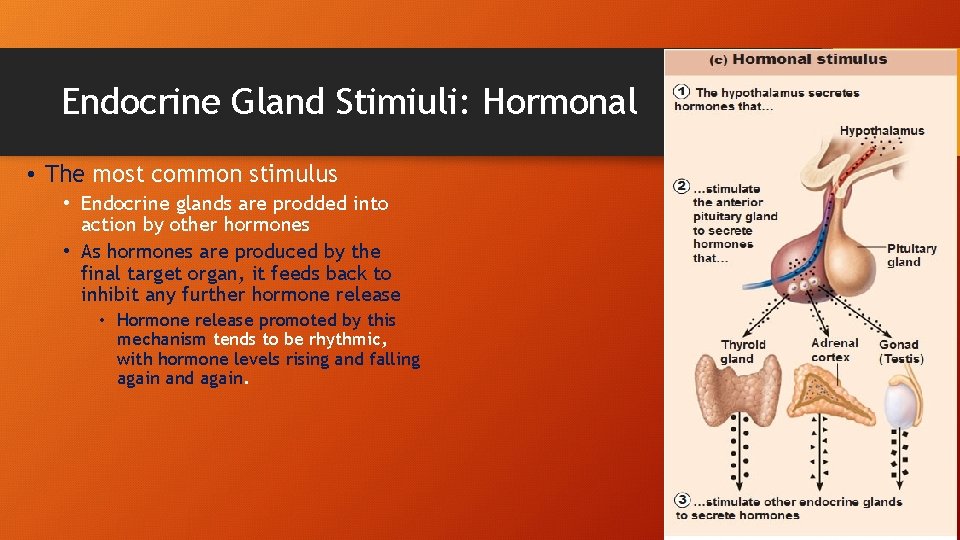
Endocrine Gland Stimiuli: Hormonal • The most common stimulus • Endocrine glands are prodded into action by other hormones • As hormones are produced by the final target organ, it feeds back to inhibit any further hormone release • Hormone release promoted by this mechanism tends to be rhythmic, with hormone levels rising and falling again and again.
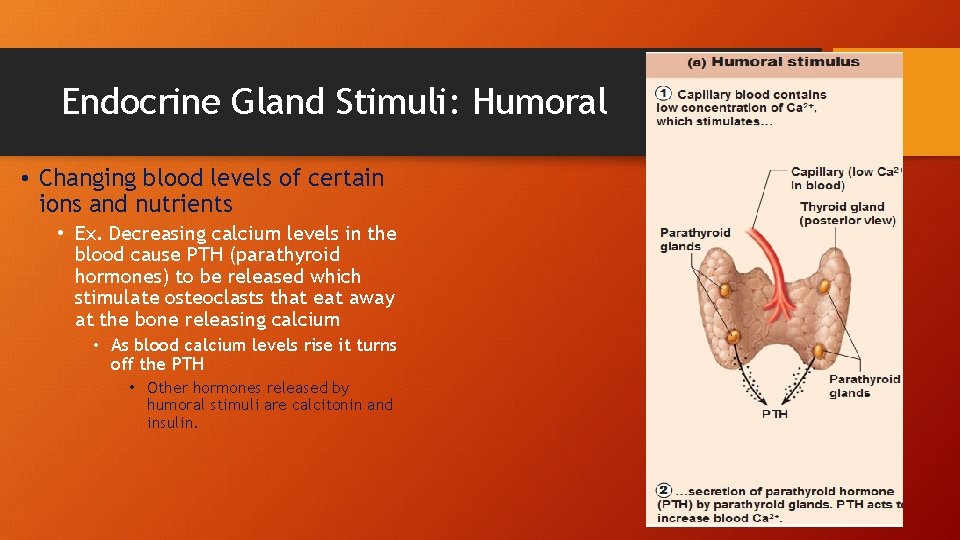
Endocrine Gland Stimuli: Humoral • Changing blood levels of certain ions and nutrients • Ex. Decreasing calcium levels in the blood cause PTH (parathyroid hormones) to be released which stimulate osteoclasts that eat away at the bone releasing calcium • As blood calcium levels rise it turns off the PTH • Other hormones released by humoral stimuli are calcitonin and insulin.
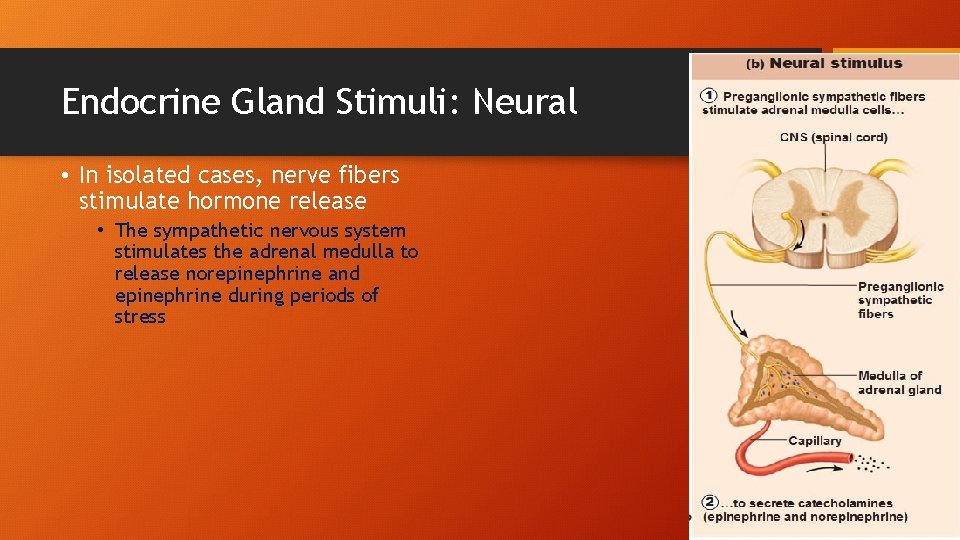
Endocrine Gland Stimuli: Neural • In isolated cases, nerve fibers stimulate hormone release • The sympathetic nervous system stimulates the adrenal medulla to release norepinephrine and epinephrine during periods of stress
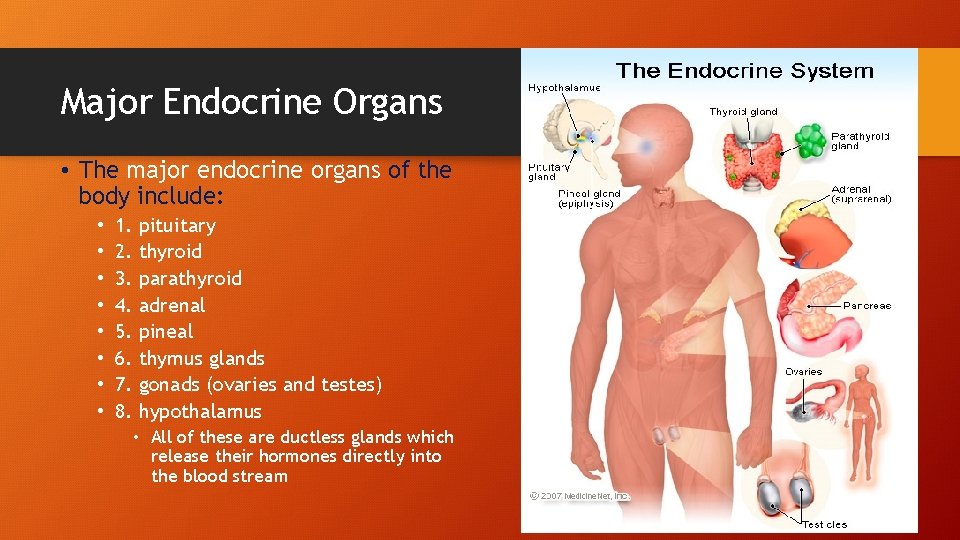
Major Endocrine Organs • The major endocrine organs of the body include: • • 1. 2. 3. 4. 5. 6. 7. 8. pituitary thyroid parathyroid adrenal pineal thymus glands gonads (ovaries and testes) hypothalamus • All of these are ductless glands which release their hormones directly into the blood stream
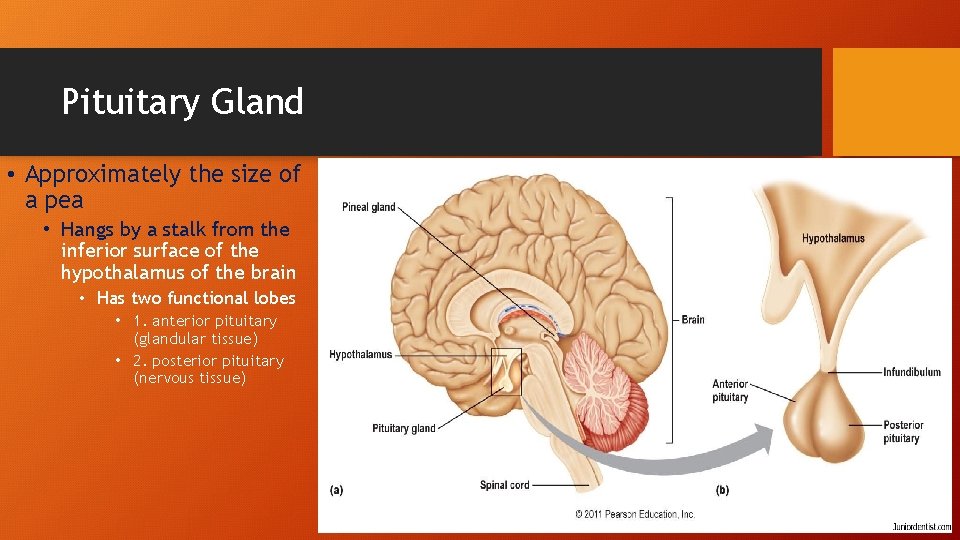
Pituitary Gland • Approximately the size of a pea • Hangs by a stalk from the inferior surface of the hypothalamus of the brain • Has two functional lobes • 1. anterior pituitary (glandular tissue) • 2. posterior pituitary (nervous tissue)
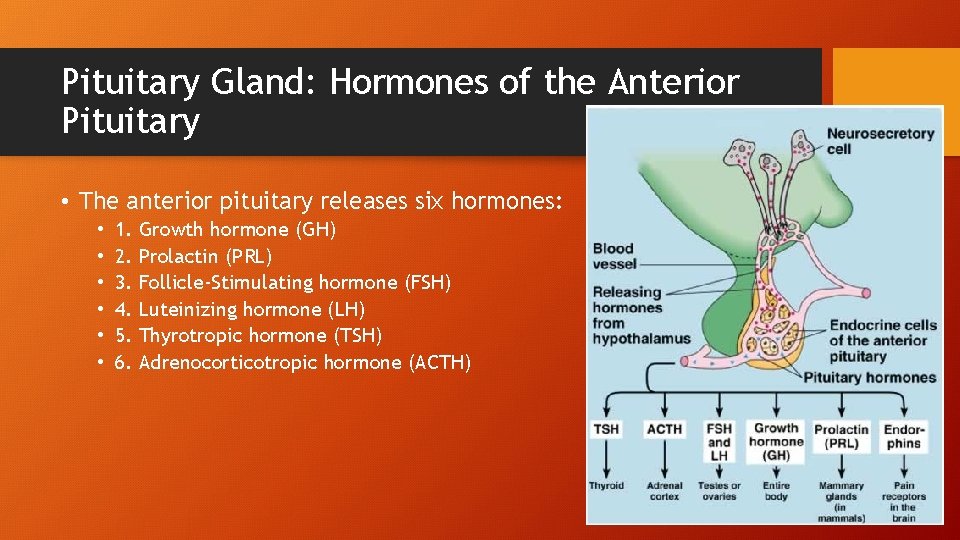
Pituitary Gland: Hormones of the Anterior Pituitary • The anterior pituitary releases six hormones: • • • 1. 2. 3. 4. 5. 6. Growth hormone (GH) Prolactin (PRL) Follicle-Stimulating hormone (FSH) Luteinizing hormone (LH) Thyrotropic hormone (TSH) Adrenocorticotropic hormone (ACTH)
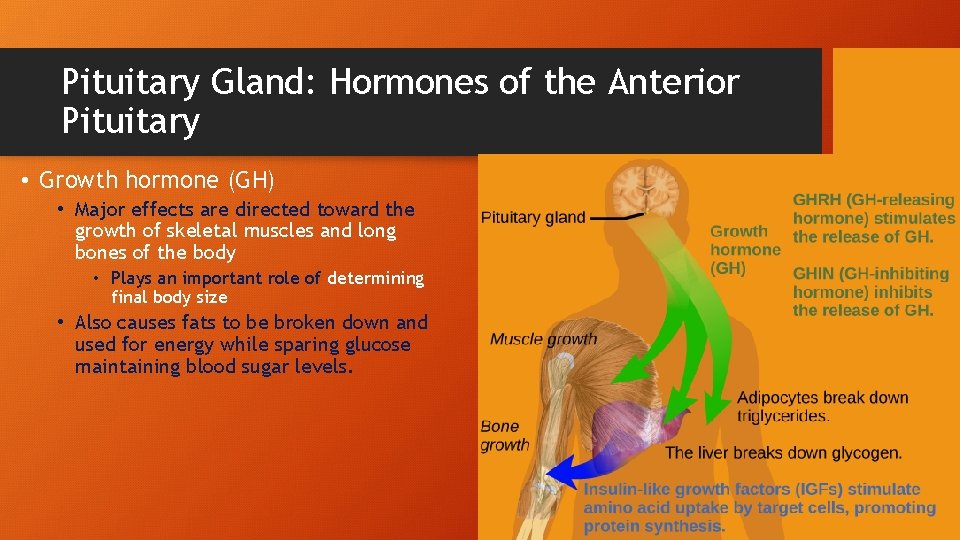
Pituitary Gland: Hormones of the Anterior Pituitary • Growth hormone (GH) • Major effects are directed toward the growth of skeletal muscles and long bones of the body • Plays an important role of determining final body size • Also causes fats to be broken down and used for energy while sparing glucose maintaining blood sugar levels.
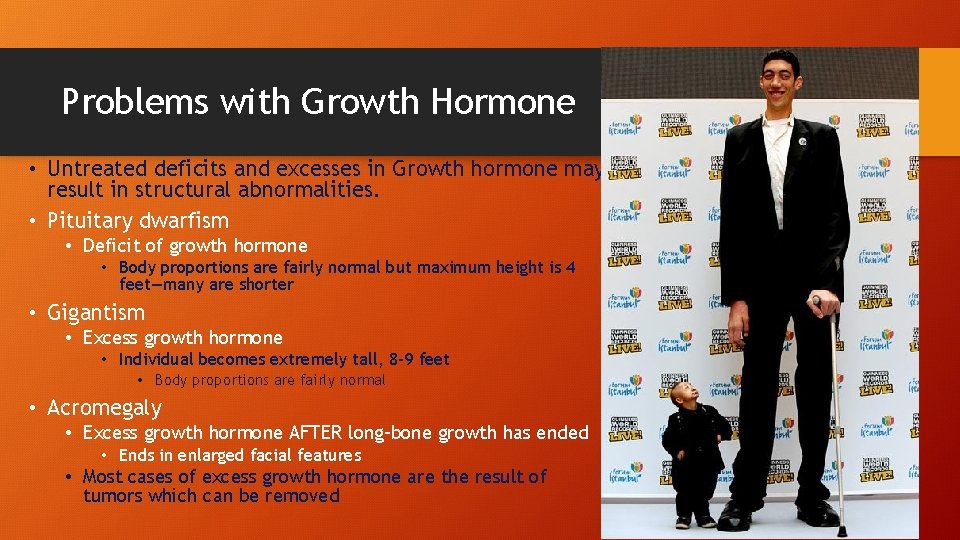
Problems with Growth Hormone • Untreated deficits and excesses in Growth hormone may result in structural abnormalities. • Pituitary dwarfism • Deficit of growth hormone • Body proportions are fairly normal but maximum height is 4 feet—many are shorter • Gigantism • Excess growth hormone • Individual becomes extremely tall, 8 -9 feet • Body proportions are fairly normal • Acromegaly • Excess growth hormone AFTER long-bone growth has ended • Ends in enlarged facial features • Most cases of excess growth hormone are the result of tumors which can be removed
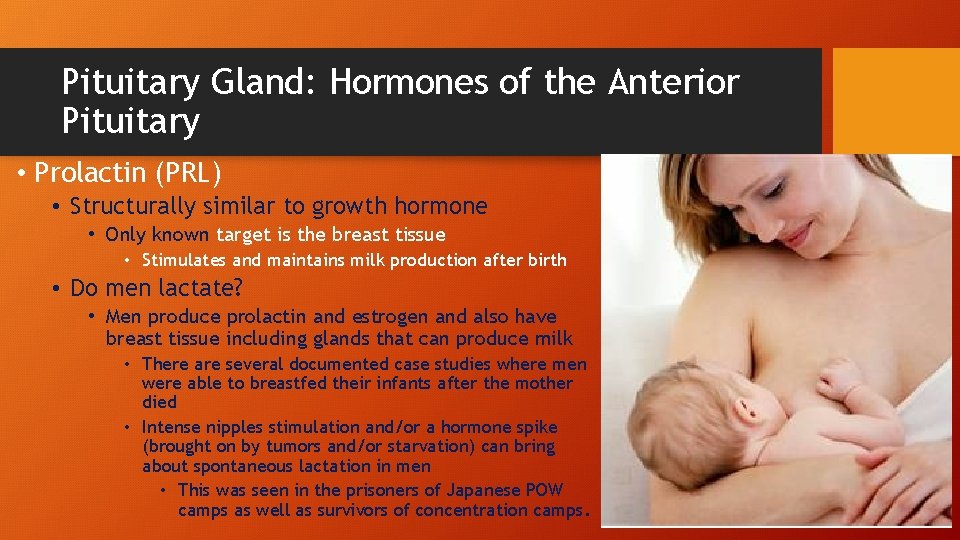
Pituitary Gland: Hormones of the Anterior Pituitary • Prolactin (PRL) • Structurally similar to growth hormone • Only known target is the breast tissue • Stimulates and maintains milk production after birth • Do men lactate? • Men produce prolactin and estrogen and also have breast tissue including glands that can produce milk • There are several documented case studies where men were able to breastfed their infants after the mother died • Intense nipples stimulation and/or a hormone spike (brought on by tumors and/or starvation) can bring about spontaneous lactation in men • This was seen in the prisoners of Japanese POW camps as well as survivors of concentration camps.
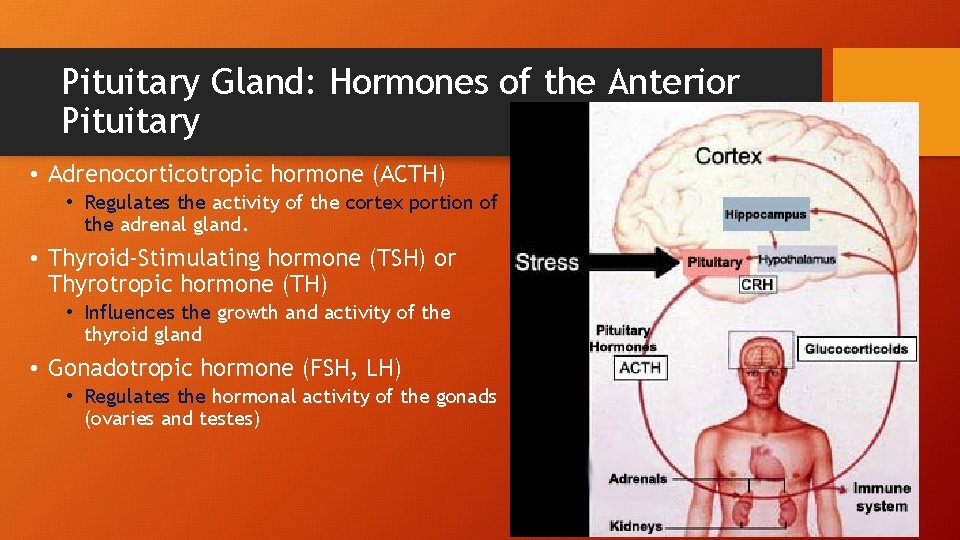
Pituitary Gland: Hormones of the Anterior Pituitary • Adrenocorticotropic hormone (ACTH) • Regulates the activity of the cortex portion of the adrenal gland. • Thyroid-Stimulating hormone (TSH) or Thyrotropic hormone (TH) • Influences the growth and activity of the thyroid gland • Gonadotropic hormone (FSH, LH) • Regulates the hormonal activity of the gonads (ovaries and testes)
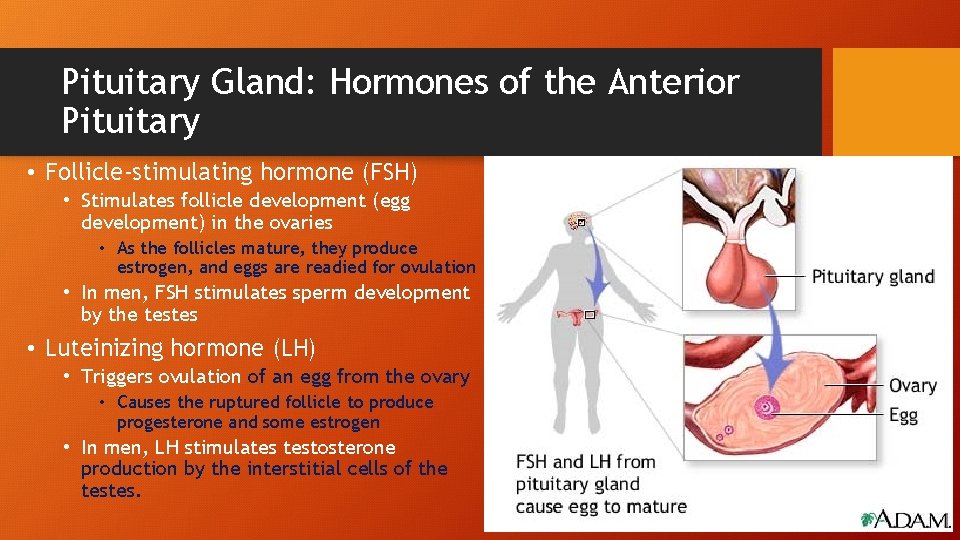
Pituitary Gland: Hormones of the Anterior Pituitary • Follicle-stimulating hormone (FSH) • Stimulates follicle development (egg development) in the ovaries • As the follicles mature, they produce estrogen, and eggs are readied for ovulation • In men, FSH stimulates sperm development by the testes • Luteinizing hormone (LH) • Triggers ovulation of an egg from the ovary • Causes the ruptured follicle to produce progesterone and some estrogen • In men, LH stimulates testosterone production by the interstitial cells of the testes.
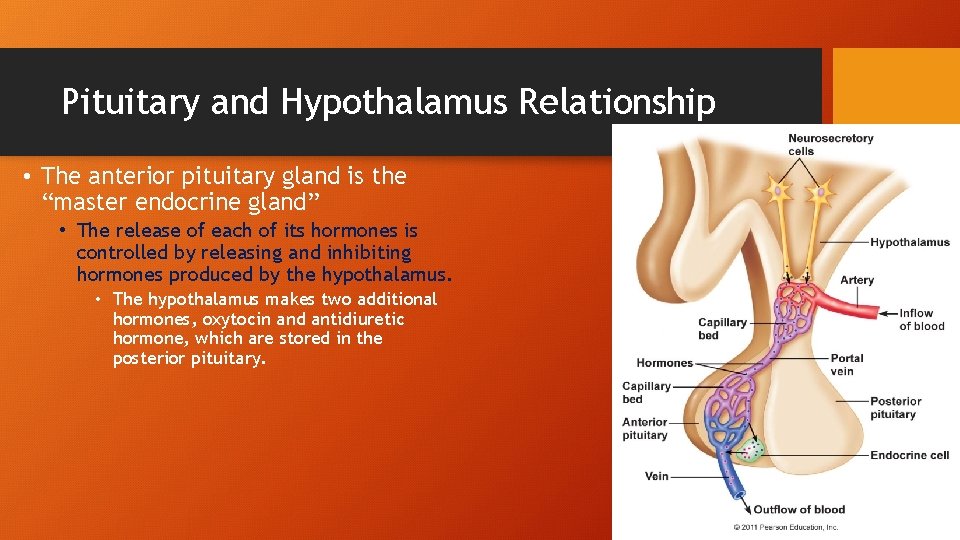
Pituitary and Hypothalamus Relationship • The anterior pituitary gland is the “master endocrine gland” • The release of each of its hormones is controlled by releasing and inhibiting hormones produced by the hypothalamus. • The hypothalamus makes two additional hormones, oxytocin and antidiuretic hormone, which are stored in the posterior pituitary.
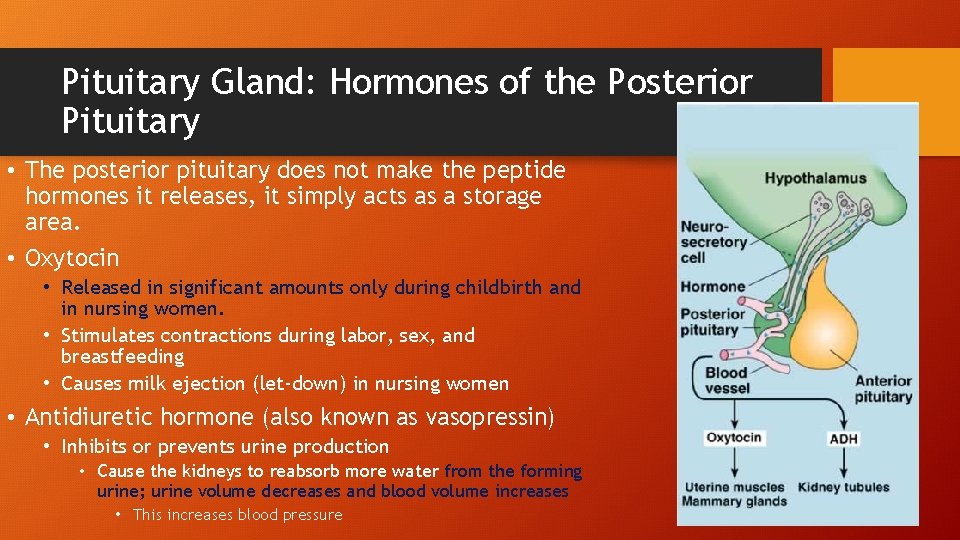
Pituitary Gland: Hormones of the Posterior Pituitary • The posterior pituitary does not make the peptide hormones it releases, it simply acts as a storage area. • Oxytocin • Released in significant amounts only during childbirth and in nursing women. • Stimulates contractions during labor, sex, and breastfeeding • Causes milk ejection (let-down) in nursing women • Antidiuretic hormone (also known as vasopressin) • Inhibits or prevents urine production • Cause the kidneys to reabsorb more water from the forming urine; urine volume decreases and blood volume increases • This increases blood pressure