
The Endocrine System Second messenger system of the
- Slides: 44
The Endocrine System · Second messenger system of the body · Uses chemical messages (hormones) that are released into the blood · Hormones control several major processes · Reproduction · Growth and development · Mobilization of body defenses · Maintenance of much of homeostasis · Regulation of metabolism Copyright © 2003 Pearson Education, Inc. publishing as Benjamin Cummings Slide 9. 1
Hormone Overview · Hormones are produced by specialized cells · Cells secrete hormones into extracellular fluids · Blood transfers hormones to target sites · These hormones regulate the activity of other cells Copyright © 2003 Pearson Education, Inc. publishing as Benjamin Cummings Slide 9. 2
The Chemistry of Hormones · Amino acid-based hormones · Proteins · Peptides · Amines · Steroids – made from cholesterol · Prostaglandins – made from highly active lipids Copyright © 2003 Pearson Education, Inc. publishing as Benjamin Cummings Slide 9. 3
Mechanisms of Hormone Action · Hormones affect only certain tissues or organs (target cells or organs) · Target cells must have specific protein receptors · Hormone binding influences the working of the cells Copyright © 2003 Pearson Education, Inc. publishing as Benjamin Cummings Slide 9. 4
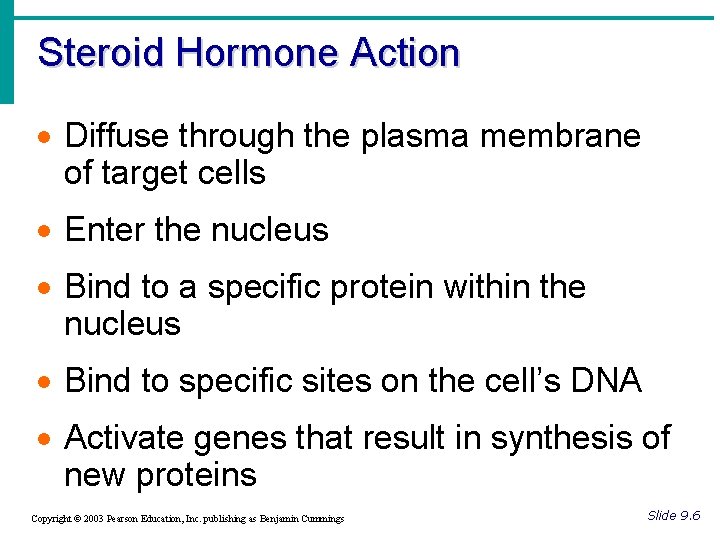
Effects Caused by Hormones · Changes in plasma membrane permeability or electrical state · Synthesis of proteins, such as enzymes · Activation or inactivation of enzymes · Stimulation of mitosis Copyright © 2003 Pearson Education, Inc. publishing as Benjamin Cummings Slide 9. 5
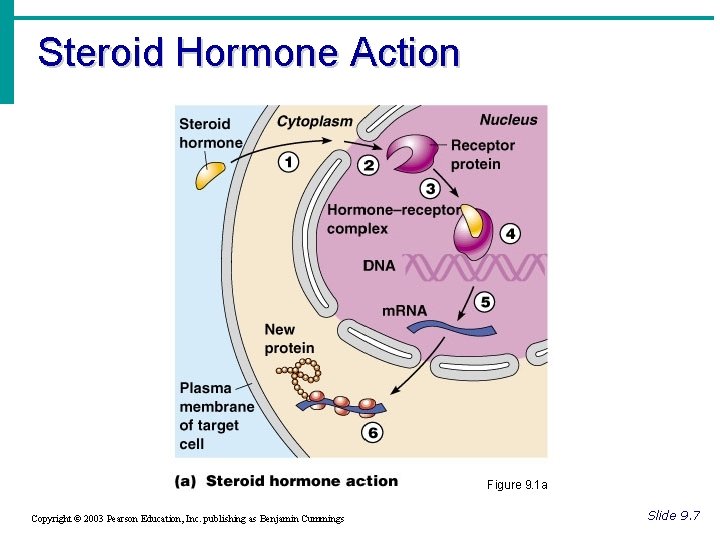
Steroid Hormone Action · Diffuse through the plasma membrane of target cells · Enter the nucleus · Bind to a specific protein within the nucleus · Bind to specific sites on the cell’s DNA · Activate genes that result in synthesis of new proteins Copyright © 2003 Pearson Education, Inc. publishing as Benjamin Cummings Slide 9. 6
Steroid Hormone Action Figure 9. 1 a Copyright © 2003 Pearson Education, Inc. publishing as Benjamin Cummings Slide 9. 7
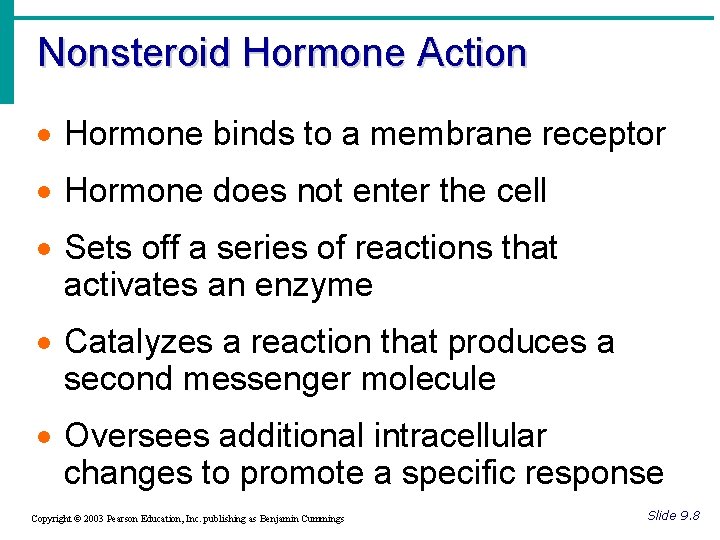
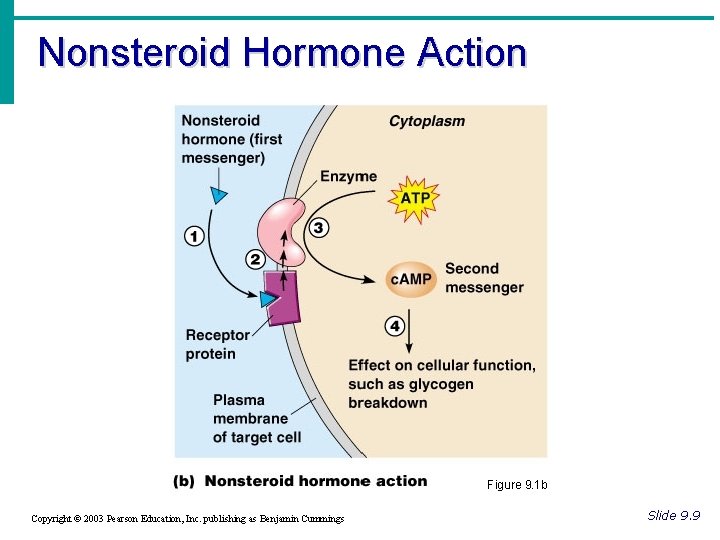
Nonsteroid Hormone Action · Hormone binds to a membrane receptor · Hormone does not enter the cell · Sets off a series of reactions that activates an enzyme · Catalyzes a reaction that produces a second messenger molecule · Oversees additional intracellular changes to promote a specific response Copyright © 2003 Pearson Education, Inc. publishing as Benjamin Cummings Slide 9. 8
Nonsteroid Hormone Action Figure 9. 1 b Copyright © 2003 Pearson Education, Inc. publishing as Benjamin Cummings Slide 9. 9
Control of Hormone Release · Hormone levels in the blood are maintained by negative feedback · A stimulus or low hormone levels in the blood triggers the release of more hormone · Hormone release stops once an appropriate level in the blood is reached Copyright © 2003 Pearson Education, Inc. publishing as Benjamin Cummings Slide 9. 10
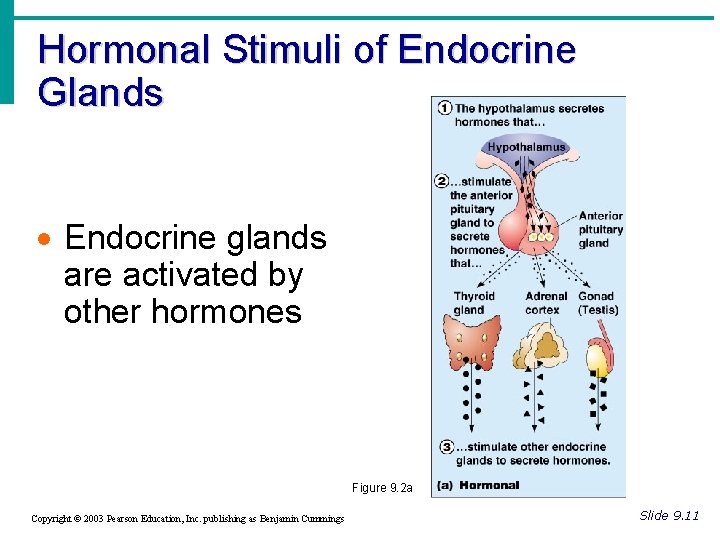
Hormonal Stimuli of Endocrine Glands · Endocrine glands are activated by other hormones Figure 9. 2 a Copyright © 2003 Pearson Education, Inc. publishing as Benjamin Cummings Slide 9. 11
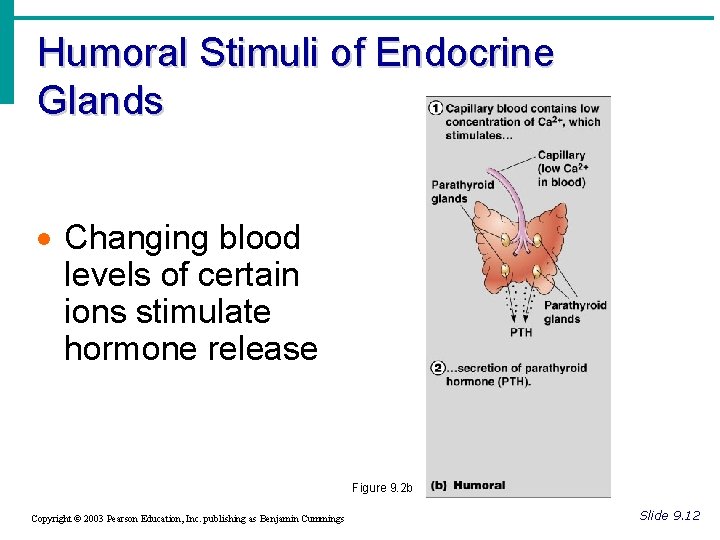
Humoral Stimuli of Endocrine Glands · Changing blood levels of certain ions stimulate hormone release Figure 9. 2 b Copyright © 2003 Pearson Education, Inc. publishing as Benjamin Cummings Slide 9. 12
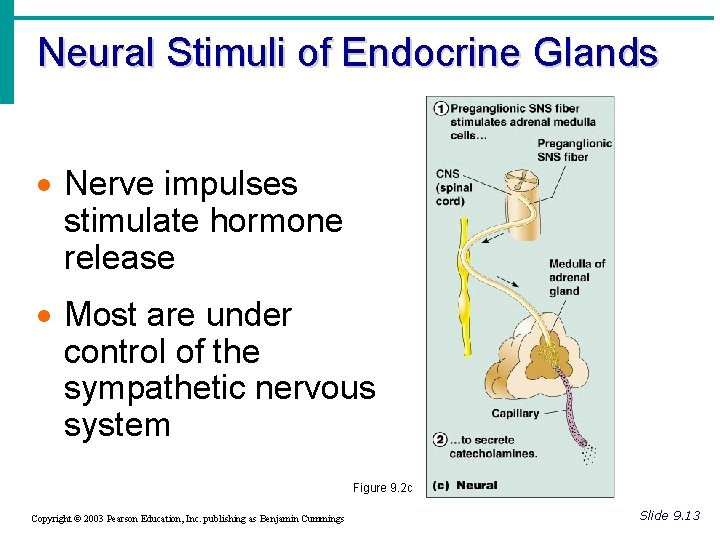
Neural Stimuli of Endocrine Glands · Nerve impulses stimulate hormone release · Most are under control of the sympathetic nervous system Figure 9. 2 c Copyright © 2003 Pearson Education, Inc. publishing as Benjamin Cummings Slide 9. 13
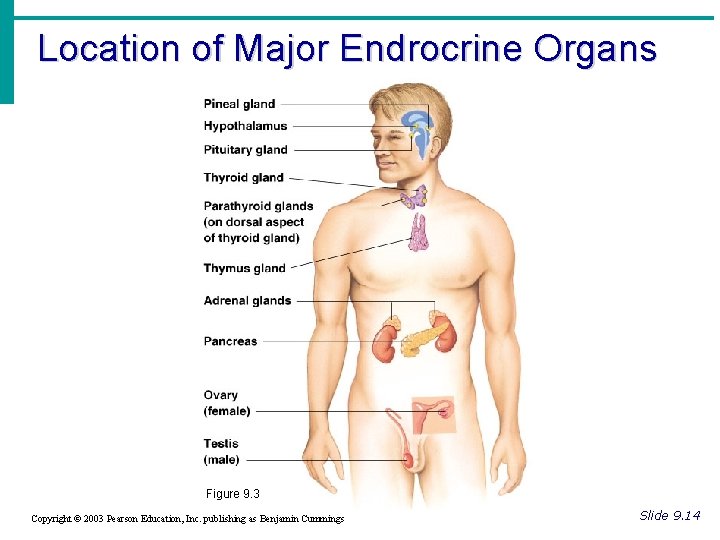
Location of Major Endrocrine Organs Figure 9. 3 Copyright © 2003 Pearson Education, Inc. publishing as Benjamin Cummings Slide 9. 14
Hypothalamus · Major link between nervous system and endocrine system · Releases: · Thyrotropin-releasing hormone (TRH) · Corticotropin-releasing hormone (CRH) · Gonadotropin-releasing hormone (Gn. RH) · Growth hormone-releasing hormone (GHRH) · Somatostatin and Dopamine Copyright © 2003 Pearson Education, Inc. publishing as Benjamin Cummings Slide 9. 15
Pituitary Gland · Size of a grape · Hangs by a stalk from the hypothalamus · Protected by the sphenoid bone · Has two functional lobes · Anterior pituitary – glandular tissue · Posterior pituitary – nervous tissue Copyright © 2003 Pearson Education, Inc. publishing as Benjamin Cummings Slide 9. 15
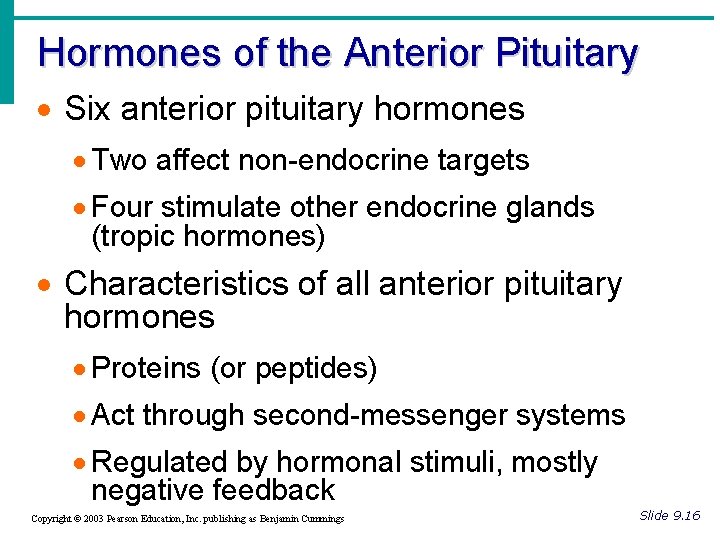
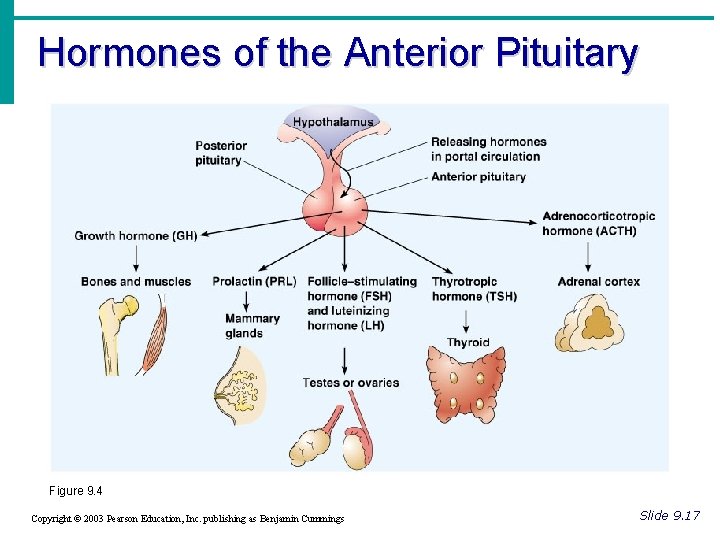
Hormones of the Anterior Pituitary · Six anterior pituitary hormones · Two affect non-endocrine targets · Four stimulate other endocrine glands (tropic hormones) · Characteristics of all anterior pituitary hormones · Proteins (or peptides) · Act through second-messenger systems · Regulated by hormonal stimuli, mostly negative feedback Copyright © 2003 Pearson Education, Inc. publishing as Benjamin Cummings Slide 9. 16
Hormones of the Anterior Pituitary Figure 9. 4 Copyright © 2003 Pearson Education, Inc. publishing as Benjamin Cummings Slide 9. 17
Growth Hormone (GH) · General metabolic hormone · Major effects are directed to growth of skeletal muscles and long bones · Causes amino acids to be built into proteins · Causes fats to be broken down for a source of energy Copyright © 2003 Pearson Education, Inc. publishing as Benjamin Cummings Slide 9. 18
Functions of Other Anterior Pituitary Hormones · Prolactin (PRL) · Stimulates and maintains milk production following childbirth · Function in males is unknown · Adrenocorticotropic hormone (ACTH) · Regulates endocrine activity of the adrenal cortex · Thyroid-stimulating hormone (TSH) · Influences growth and activity of the thyroid Copyright © 2003 Pearson Education, Inc. publishing as Benjamin Cummings Slide 9. 19
Functions of Other Anterior Pituitary Hormones · Gonadotropic hormones · Regulate hormonal activity of the gonads · Follicle-stimulating hormone (FSH) · Stimulates follicle development in ovaries · Stimulates sperm development in testes Copyright © 2003 Pearson Education, Inc. publishing as Benjamin Cummings Slide 9. 20 a
Functions of Other Anterior Pituitary Hormones · Gonadotropic hormones (continued) · Luteinizing hormone (LH) · Triggers ovulation · Causes ruptured follicle to become the corpus luteum · Stimulates testosterone production in males · Referred to as interstitial cell-stimulating hormone (ICSH) Copyright © 2003 Pearson Education, Inc. publishing as Benjamin Cummings Slide 9. 20 b
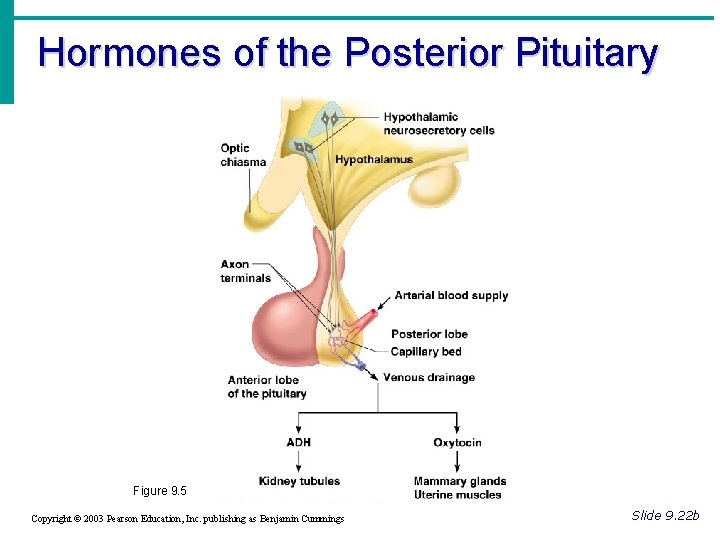
Hormones of the Posterior Pituitary · Oxytocin · Stimulates contractions of the uterus during labor · Causes milk ejection · Antidiuretic hormone (ADH) · Can inhibit urine production · In large amounts, causes vasoconstriction leading to increased blood pressure (vasopressin) Copyright © 2003 Pearson Education, Inc. publishing as Benjamin Cummings Slide 9. 22
Hormones of the Posterior Pituitary Figure 9. 5 Copyright © 2003 Pearson Education, Inc. publishing as Benjamin Cummings Slide 9. 22 b
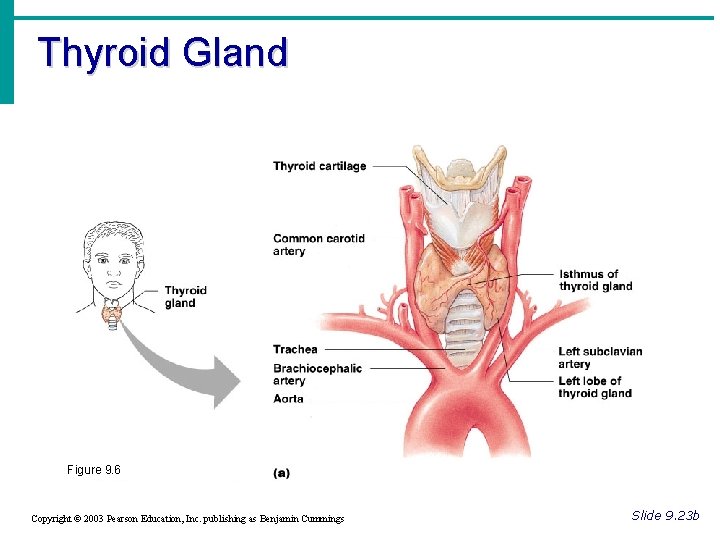
Thyroid Gland · Found at the base of the throat · Consists of two lobes and a connecting isthmus · Produces two hormones · Thyroid hormone · Calcitonin Copyright © 2003 Pearson Education, Inc. publishing as Benjamin Cummings Slide 9. 23 a
Thyroid Gland Figure 9. 6 Copyright © 2003 Pearson Education, Inc. publishing as Benjamin Cummings Slide 9. 23 b
Thyroid Hormone · Major metabolic hormone · Composed of two active iodinecontaining hormones · Thyroxine (T 4) – secreted by thyroid follicles · Triiodothyronine (T 3) – conversion of T 4 at target tissues Copyright © 2003 Pearson Education, Inc. publishing as Benjamin Cummings Slide 9. 24
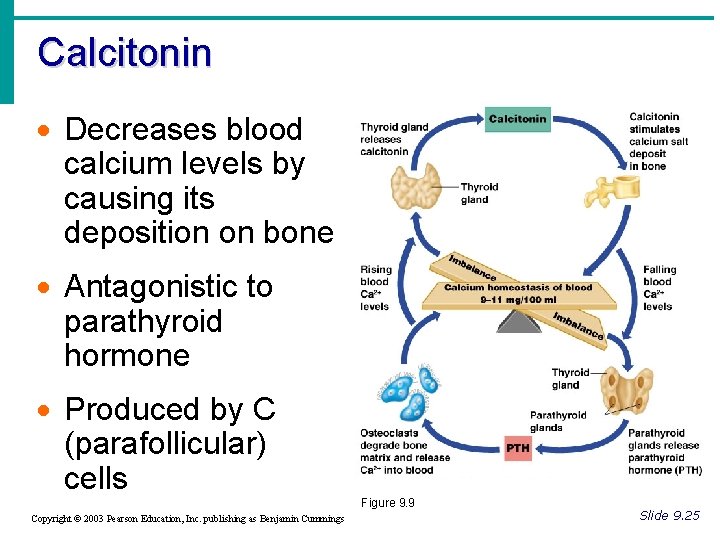
Calcitonin · Decreases blood calcium levels by causing its deposition on bone · Antagonistic to parathyroid hormone · Produced by C (parafollicular) cells Figure 9. 9 Copyright © 2003 Pearson Education, Inc. publishing as Benjamin Cummings Slide 9. 25
Parathyroid Glands · Tiny masses on the posterior of the thyroid · Secrete parathyroid hormone · Stimulate osterclasts to remove calcium from bone · Stimulate the kidneys and intestine to absorb more calcium · Raise calcium levels in the blood Copyright © 2003 Pearson Education, Inc. publishing as Benjamin Cummings Slide 9. 26
Adrenal Glands · Two glands · Cortex – outer glandular region in three layers · Medulla – inner neural tissue region · Sits on top of the kidneys Copyright © 2003 Pearson Education, Inc. publishing as Benjamin Cummings Slide 9. 27
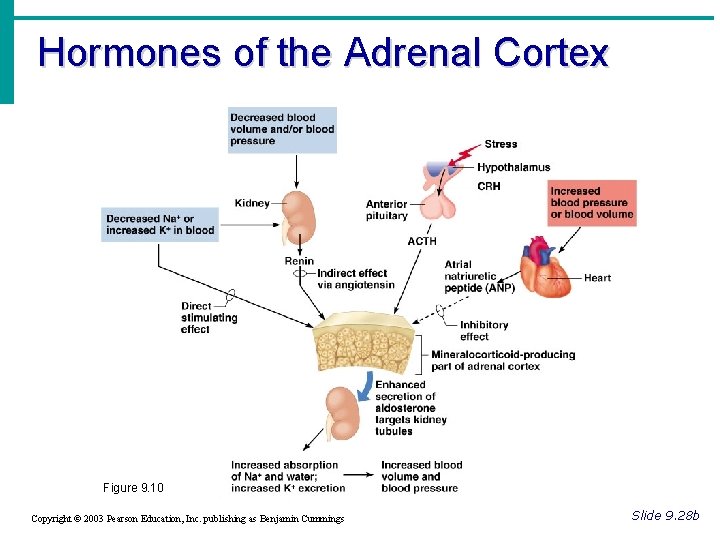
Hormones of the Adrenal Cortex · Mineralocorticoids (mainly aldosterone) · Produced in outer adrenal cortex · Regulate mineral content in blood, water, and electrolyte balance · Target organ is the kidney Copyright © 2003 Pearson Education, Inc. publishing as Benjamin Cummings Slide 9. 28 a
Hormones of the Adrenal Cortex Figure 9. 10 Copyright © 2003 Pearson Education, Inc. publishing as Benjamin Cummings Slide 9. 28 b
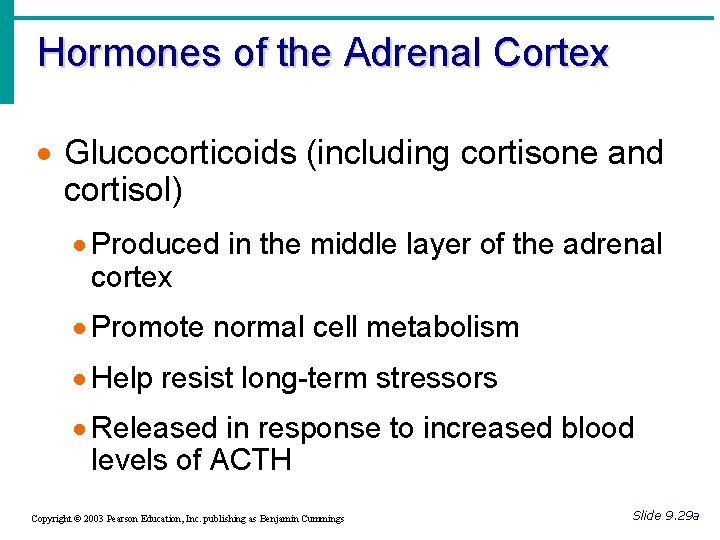
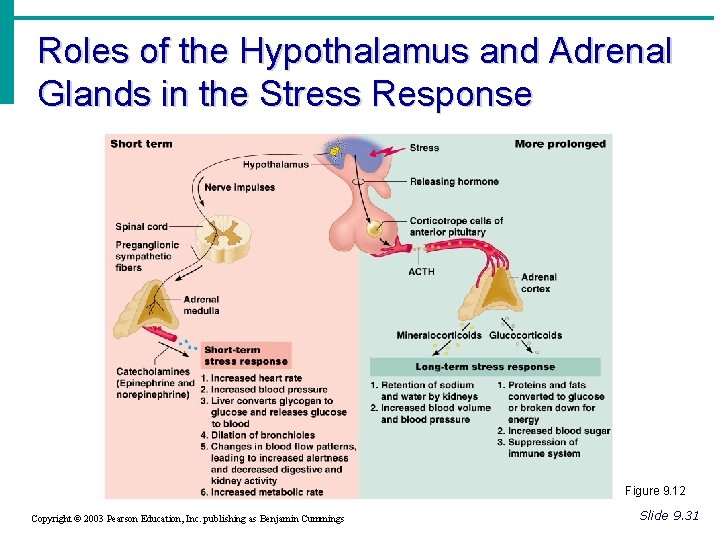
Hormones of the Adrenal Cortex · Glucocorticoids (including cortisone and cortisol) · Produced in the middle layer of the adrenal cortex · Promote normal cell metabolism · Help resist long-term stressors · Released in response to increased blood levels of ACTH Copyright © 2003 Pearson Education, Inc. publishing as Benjamin Cummings Slide 9. 29 a
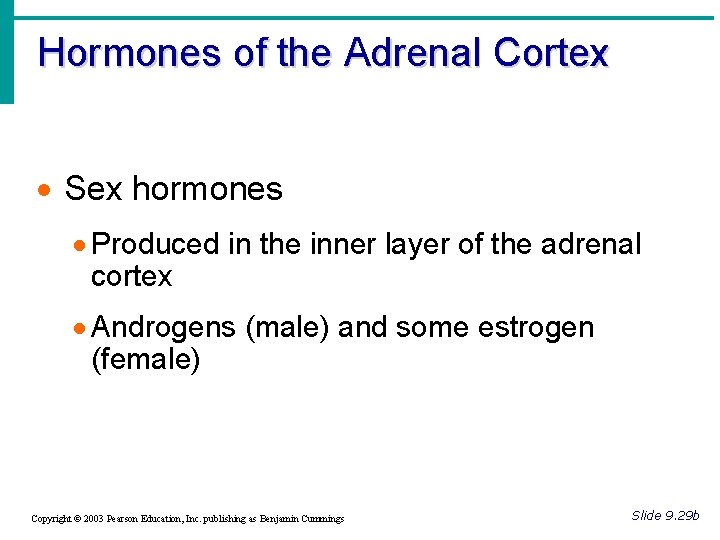
Hormones of the Adrenal Cortex · Sex hormones · Produced in the inner layer of the adrenal cortex · Androgens (male) and some estrogen (female) Copyright © 2003 Pearson Education, Inc. publishing as Benjamin Cummings Slide 9. 29 b
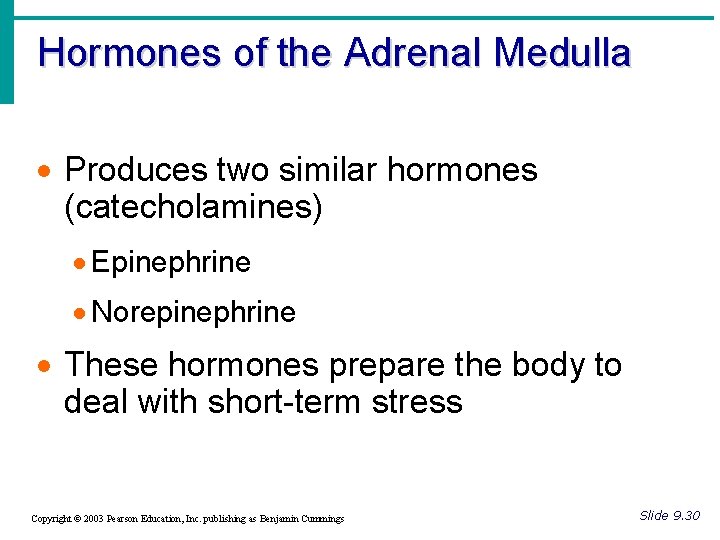
Hormones of the Adrenal Medulla · Produces two similar hormones (catecholamines) · Epinephrine · Norepinephrine · These hormones prepare the body to deal with short-term stress Copyright © 2003 Pearson Education, Inc. publishing as Benjamin Cummings Slide 9. 30
Roles of the Hypothalamus and Adrenal Glands in the Stress Response Figure 9. 12 Copyright © 2003 Pearson Education, Inc. publishing as Benjamin Cummings Slide 9. 31
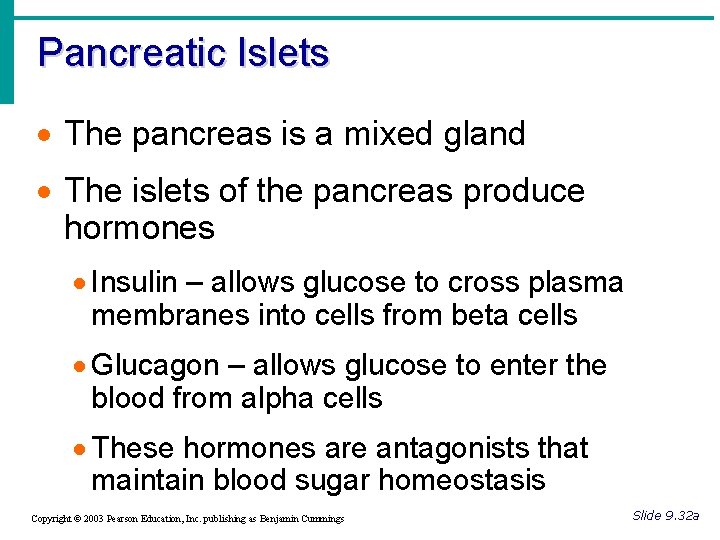
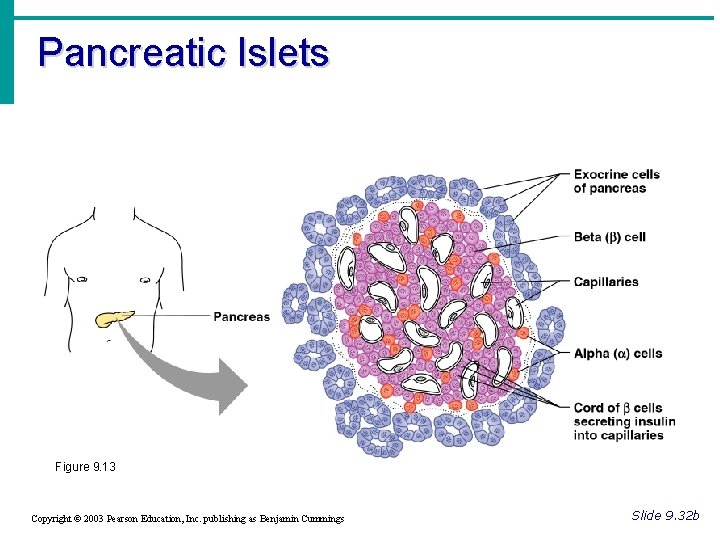
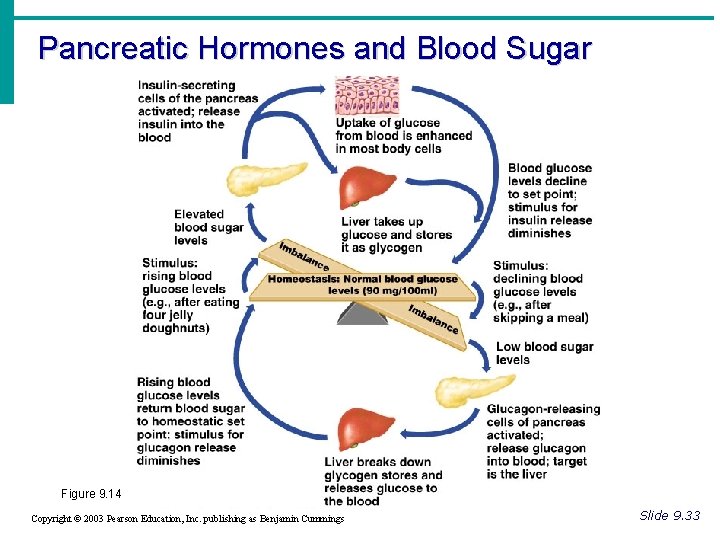
Pancreatic Islets · The pancreas is a mixed gland · The islets of the pancreas produce hormones · Insulin – allows glucose to cross plasma membranes into cells from beta cells · Glucagon – allows glucose to enter the blood from alpha cells · These hormones are antagonists that maintain blood sugar homeostasis Copyright © 2003 Pearson Education, Inc. publishing as Benjamin Cummings Slide 9. 32 a
Pancreatic Islets Figure 9. 13 Copyright © 2003 Pearson Education, Inc. publishing as Benjamin Cummings Slide 9. 32 b
Pancreatic Hormones and Blood Sugar Figure 9. 14 Copyright © 2003 Pearson Education, Inc. publishing as Benjamin Cummings Slide 9. 33
Pineal Gland · Found on the third ventricle of the brain · Secretes melatonin · Helps establish the body’s wake and sleep cycles · May have other as-yet-unsubstantiated functions Copyright © 2003 Pearson Education, Inc. publishing as Benjamin Cummings Slide 9. 34
Thymus · Located posterior to the sternum · Largest in infants and children · Produces thymosin · Matures some types of white blood cells · Important in developing the immune system Copyright © 2003 Pearson Education, Inc. publishing as Benjamin Cummings Slide 9. 35
Hormones of the Ovaries · Estrogens · Produced by Graafian follicles or the placenta · Stimulates the development of secondary female characteristics · Matures female reproductive organs · Helps prepare the uterus to receive a fertilized egg · Helps maintain pregnancy · Prepares the breasts to produce milk Copyright © 2003 Pearson Education, Inc. publishing as Benjamin Cummings Slide 9. 36
Hormones of the Ovaries · Progesterone · Produced by the corpus luteum · Acts with estrogen to bring about the menstrual cycle · Helps in the implantation of an embryo in the uterus Copyright © 2003 Pearson Education, Inc. publishing as Benjamin Cummings Slide 9. 37
Hormones of the Testes · Interstitial cells of testes are hormoneproducing · Produce several androgens · Testosterone is the most important androgen · Responsible for adult male secondary sex characteristics · Promotes growth and maturation of male reproductive system · Required for sperm cell production Copyright © 2003 Pearson Education, Inc. publishing as Benjamin Cummings Slide 9. 38