
The Endocrine System Sabrina Rolz Michelle Pieters Maria
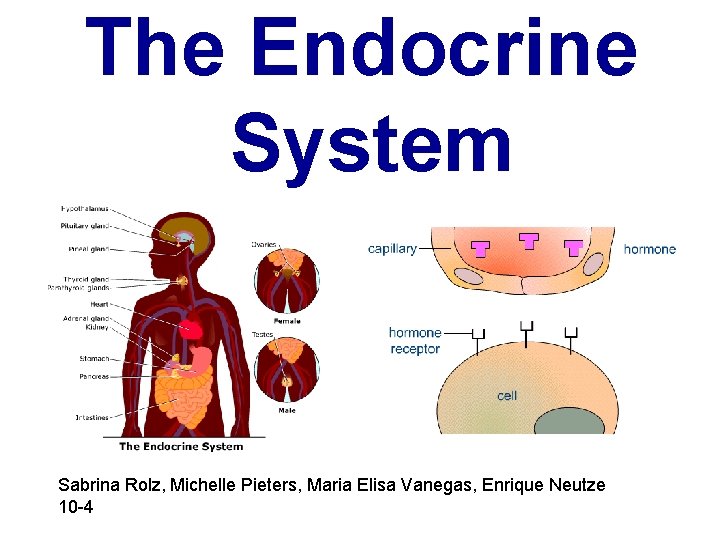
The Endocrine System Sabrina Rolz, Michelle Pieters, Maria Elisa Vanegas, Enrique Neutze 10 -4
1. Bellwork- Endocrine System Labeling (5 min). 2. Watch Introductory Video (10 min). http: //kidshealth. org/kid/htbw/_bfs_ESmoviesource. html 3. Power Point (take notes on power point) (30 min). 4. Activity- Analogy (20 min). 5. Check for Understanding (5 min). 6. Homework- Crossword (5 min).
1. Hormones are substances that help regulate our body’s main activities. 2. Glands are organs that secrete hormones. 3. There are multiple types of hormones that have different tasks in our body. 4. Hormones help maintain homeostasis through mechanisms, such as positive and negative feedback. 5. The Endocrine system supplies hormones for the Reproductive system to function.
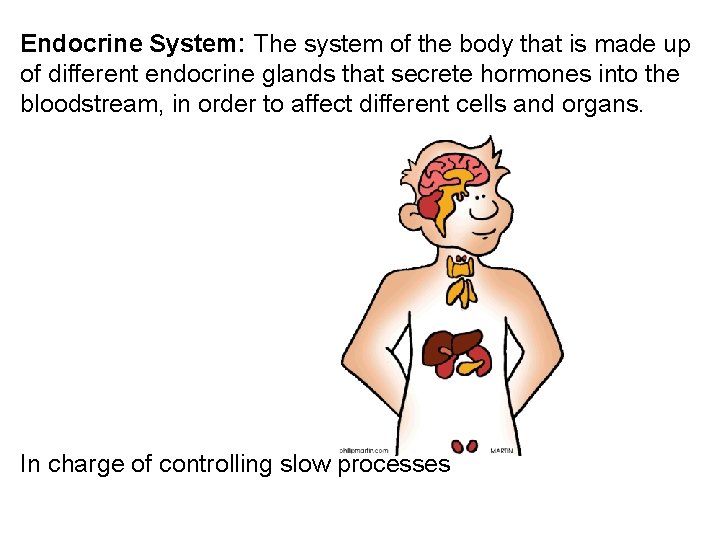
Endocrine System: The system of the body that is made up of different endocrine glands that secrete hormones into the bloodstream, in order to affect different cells and organs. In charge of controlling slow processes
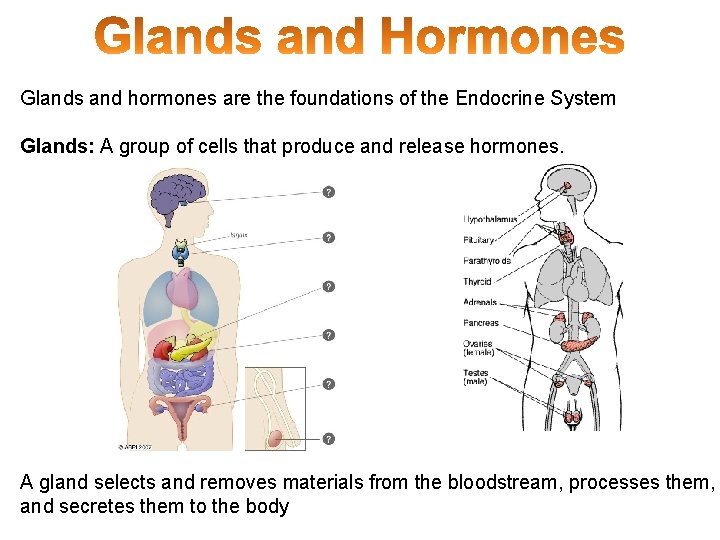
Glands and hormones are the foundations of the Endocrine System Glands: A group of cells that produce and release hormones. A gland selects and removes materials from the bloodstream, processes them, and secretes them to the body
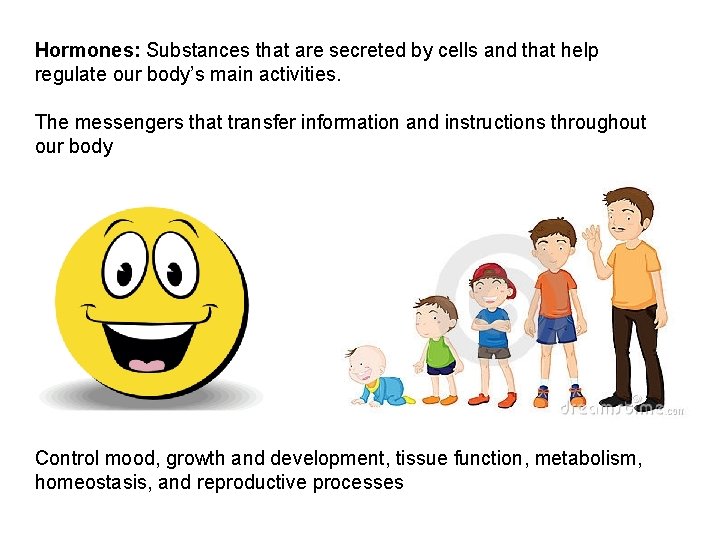
Hormones: Substances that are secreted by cells and that help regulate our body’s main activities. The messengers that transfer information and instructions throughout our body Control mood, growth and development, tissue function, metabolism, homeostasis, and reproductive processes
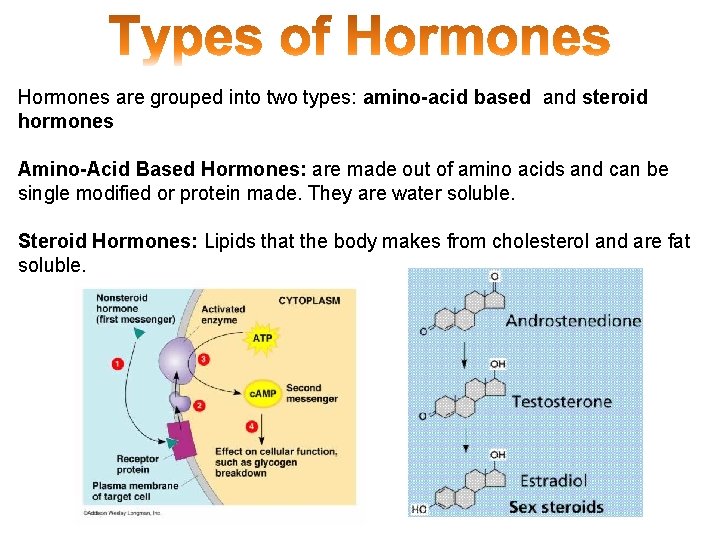
Hormones are grouped into two types: amino-acid based and steroid hormones Amino-Acid Based Hormones: are made out of amino acids and can be single modified or protein made. They are water soluble. Steroid Hormones: Lipids that the body makes from cholesterol and are fat soluble.
Other types of hormones are neuropeptides and prostaglandins Neuropeptides: Hormones secreted by the nervous system that control emotions and behaviors. Prostaglandins: Derive from fatty acids and are secreted by most cells. Affect blood pressure and metabolism.
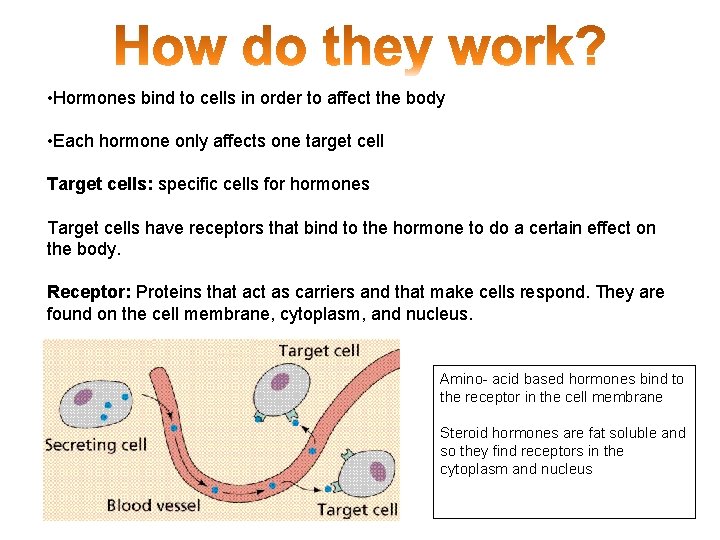
• Hormones bind to cells in order to affect the body • Each hormone only affects one target cell Target cells: specific cells for hormones Target cells have receptors that bind to the hormone to do a certain effect on the body. Receptor: Proteins that act as carriers and that make cells respond. They are found on the cell membrane, cytoplasm, and nucleus. Amino- acid based hormones bind to the receptor in the cell membrane Steroid hormones are fat soluble and so they find receptors in the cytoplasm and nucleus
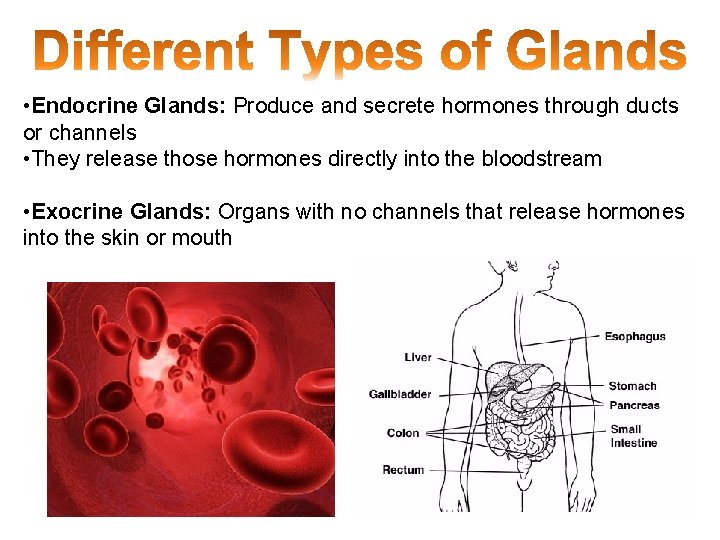
• Endocrine Glands: Produce and secrete hormones through ducts or channels • They release those hormones directly into the bloodstream • Exocrine Glands: Organs with no channels that release hormones into the skin or mouth
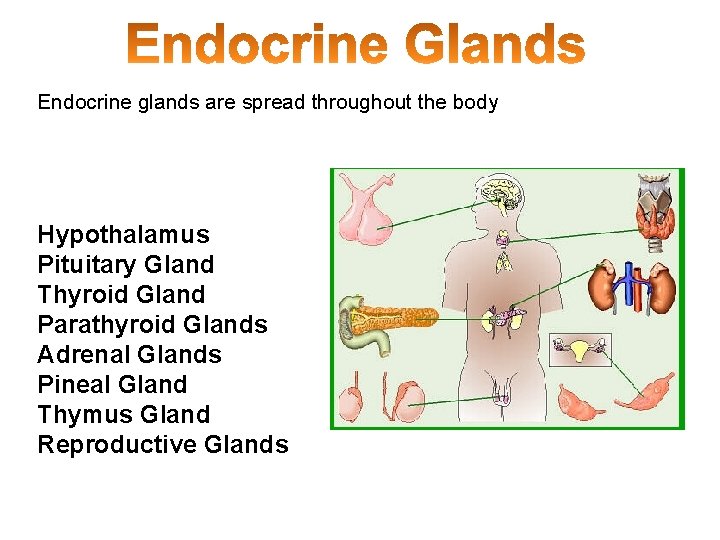
Endocrine glands are spread throughout the body Hypothalamus Pituitary Gland Thyroid Gland Parathyroid Glands Adrenal Glands Pineal Gland Thymus Gland Reproductive Glands
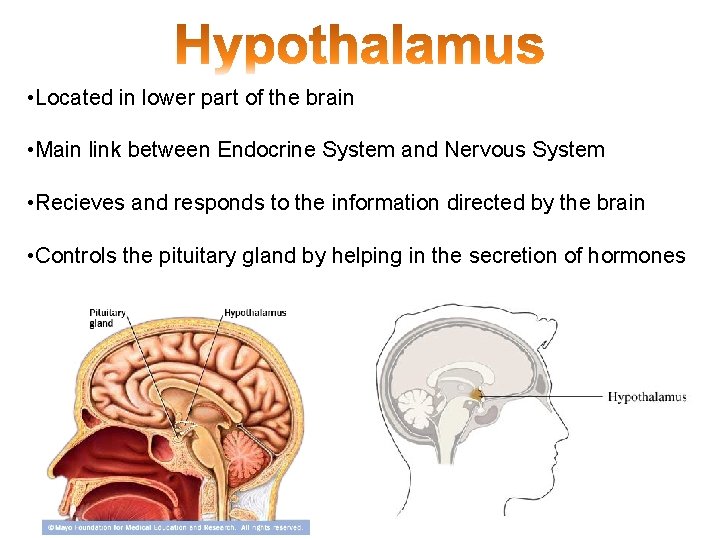
• Located in lower part of the brain • Main link between Endocrine System and Nervous System • Recieves and responds to the information directed by the brain • Controls the pituitary gland by helping in the secretion of hormones
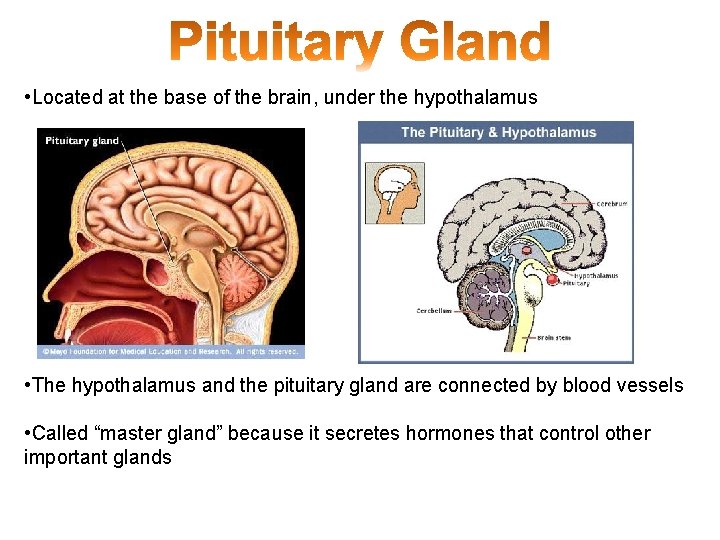
• Located at the base of the brain, under the hypothalamus • The hypothalamus and the pituitary gland are connected by blood vessels • Called “master gland” because it secretes hormones that control other important glands
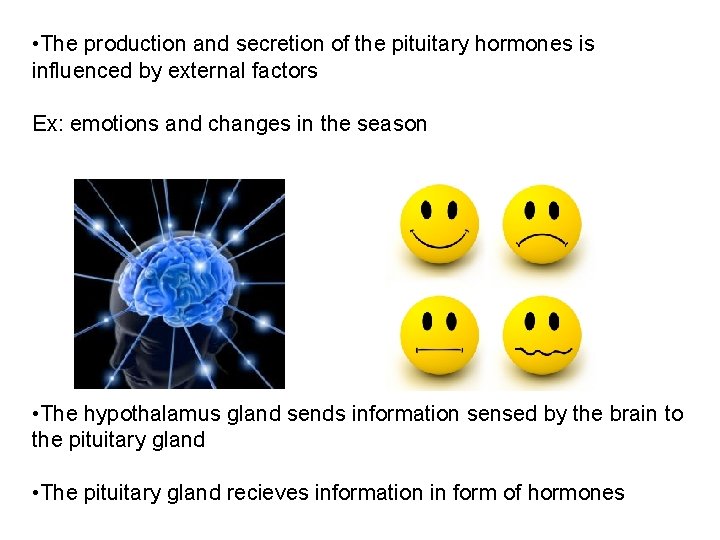
• The production and secretion of the pituitary hormones is influenced by external factors Ex: emotions and changes in the season • The hypothalamus gland sends information sensed by the brain to the pituitary gland • The pituitary gland recieves information in form of hormones

The pituitary gland is divided into two parts: the anterior and posterior lobe Anterior lobe: regulates the activity of the thyroid gland, the adrenal glands, and the reproductive glands Posterior lobe: produces hormones that help mantain water balance and sets off contractions when giving birth
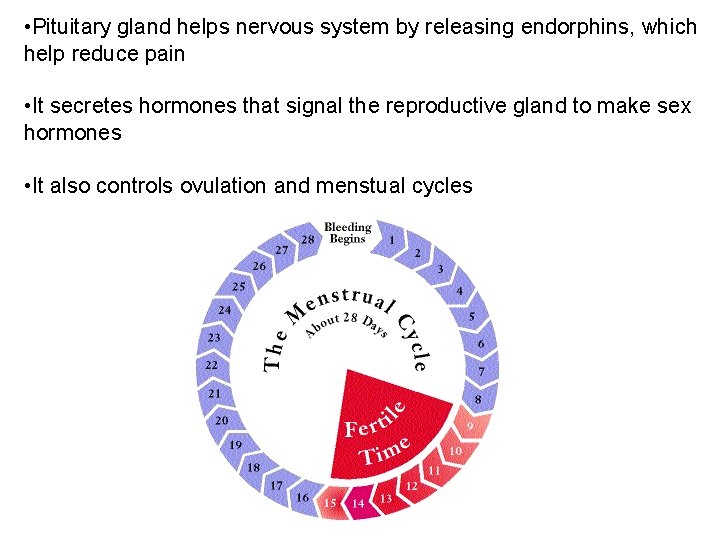
• Pituitary gland helps nervous system by releasing endorphins, which help reduce pain • It secretes hormones that signal the reproductive gland to make sex hormones • It also controls ovulation and menstual cycles
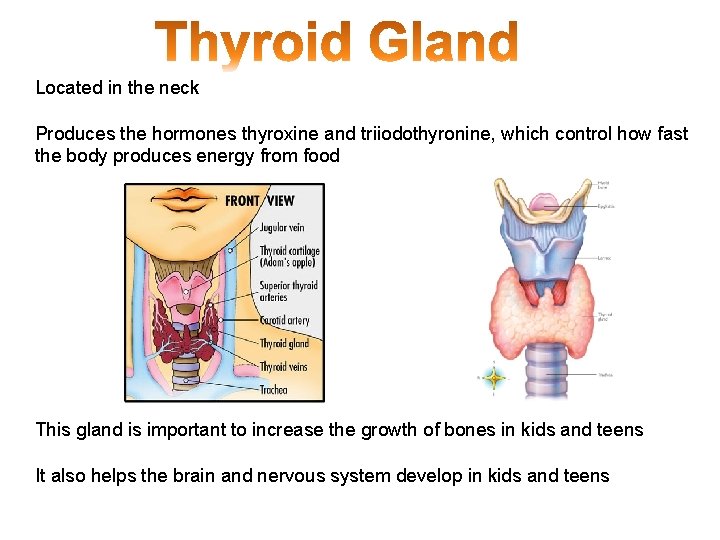
Located in the neck Produces the hormones thyroxine and triiodothyronine, which control how fast the body produces energy from food This gland is important to increase the growth of bones in kids and teens It also helps the brain and nervous system develop in kids and teens
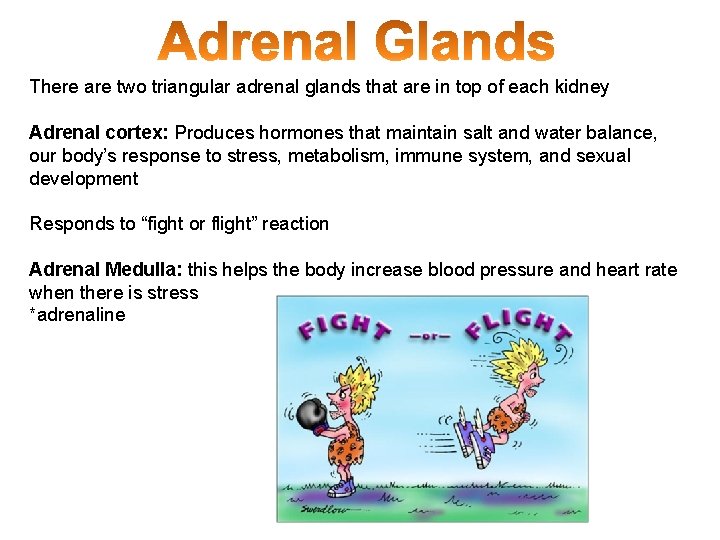
There are two triangular adrenal glands that are in top of each kidney Adrenal cortex: Produces hormones that maintain salt and water balance, our body’s response to stress, metabolism, immune system, and sexual development Responds to “fight or flight” reaction Adrenal Medulla: this helps the body increase blood pressure and heart rate when there is stress *adrenaline
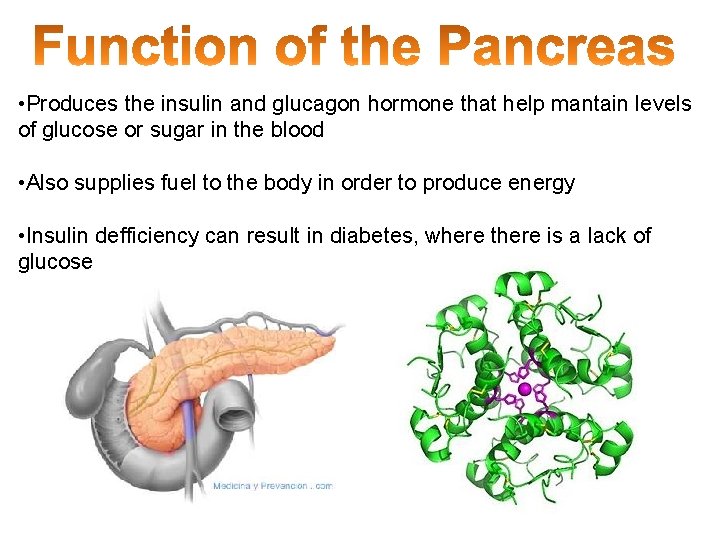
• Produces the insulin and glucagon hormone that help mantain levels of glucose or sugar in the blood • Also supplies fuel to the body in order to produce energy • Insulin defficiency can result in diabetes, where there is a lack of glucose
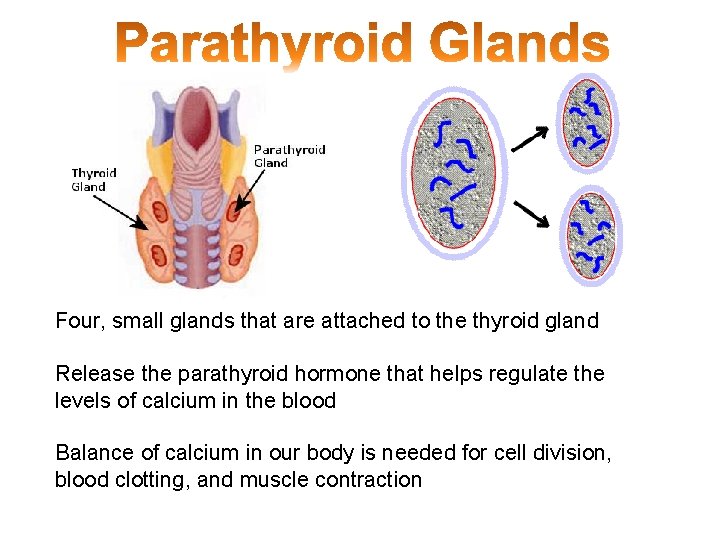
Four, small glands that are attached to the thyroid gland Release the parathyroid hormone that helps regulate the levels of calcium in the blood Balance of calcium in our body is needed for cell division, blood clotting, and muscle contraction
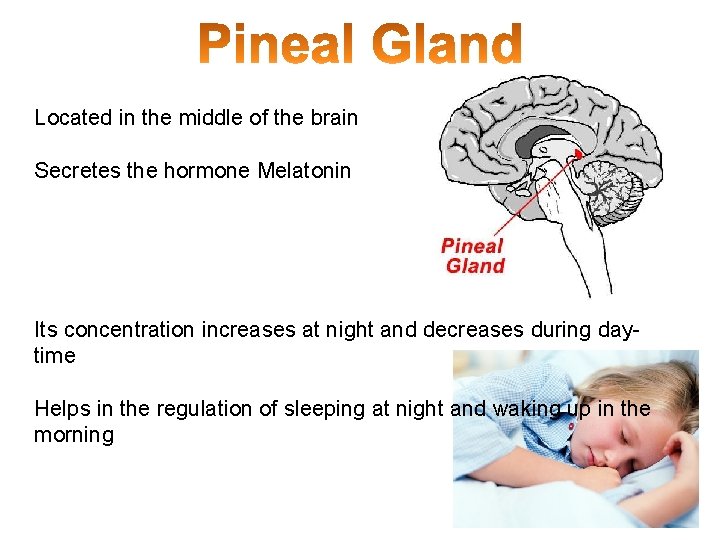
Located in the middle of the brain Secretes the hormone Melatonin Its concentration increases at night and decreases during daytime Helps in the regulation of sleeping at night and waking up in the morning
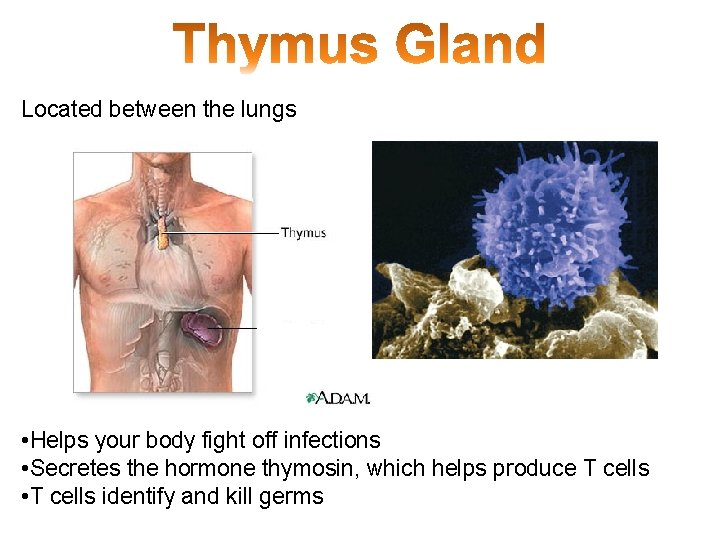
Located between the lungs • Helps your body fight off infections • Secretes the hormone thymosin, which helps produce T cells • T cells identify and kill germs
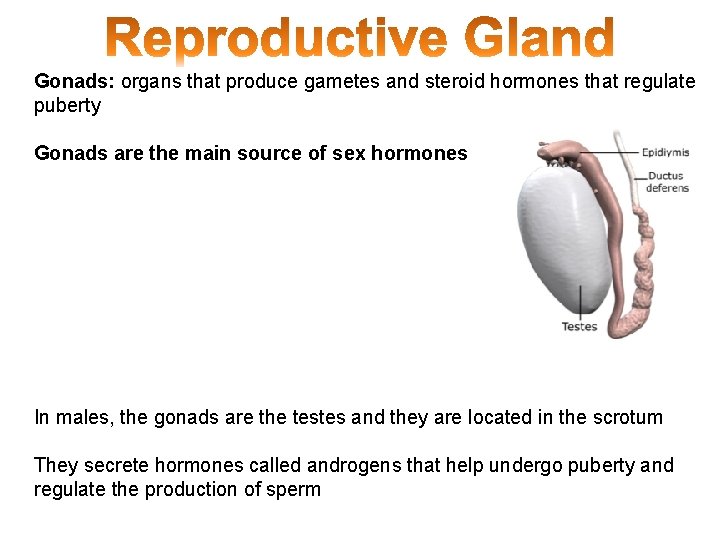
Gonads: organs that produce gametes and steroid hormones that regulate puberty Gonads are the main source of sex hormones In males, the gonads are the testes and they are located in the scrotum They secrete hormones called androgens that help undergo puberty and regulate the production of sperm
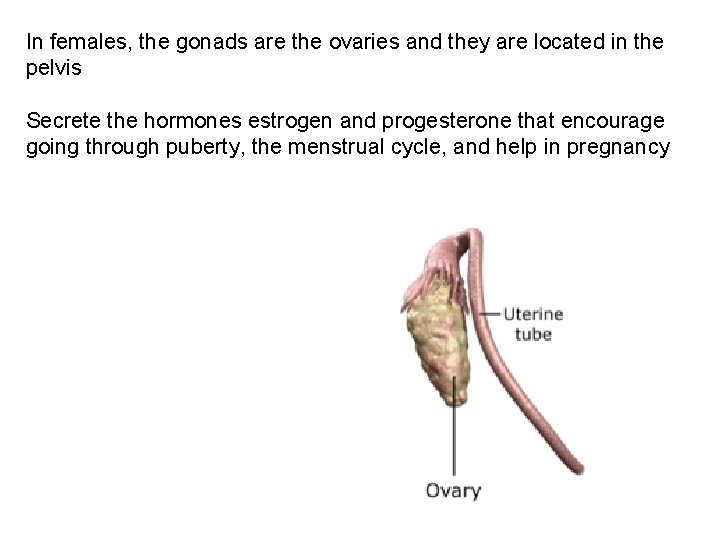
In females, the gonads are the ovaries and they are located in the pelvis Secrete the hormones estrogen and progesterone that encourage going through puberty, the menstrual cycle, and help in pregnancy
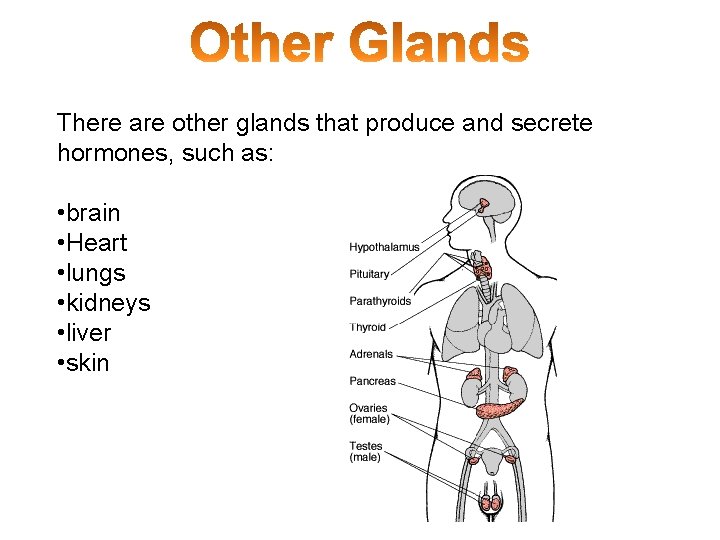
There are other glands that produce and secrete hormones, such as: • brain • Heart • lungs • kidneys • liver • skin
1. Hormone is secreted by the endocrine gland into the bloodstream 2. It recieves its message by a specific cell, called a target cell 3. In its way to the target cells, a special protein that acts as a carrier, binds to the hormone 4. They help control the amount of hormone that the body needs 5. The target cells have receptors that bind only to specific hormones 6. When they bind, the hormone-receptor complex transmit chemical instructions to the inside of the cell 7. Once the appopriate levels of hormones is reached, the endocrine system helps keep that level in the blood
Endocrine system helps maintain homeostasis through the regulation of cells, tissues, and organs Feedback mechanisms help maintain homeostasis Feedback mechanism: Last step in a series of events controls the first step Positive feedback: Occurs when the rate of a process decreases, as the concentrations of the product increases Negative Feedback: Occurs when the rate of the process increases, as the concentrations of the product decreases
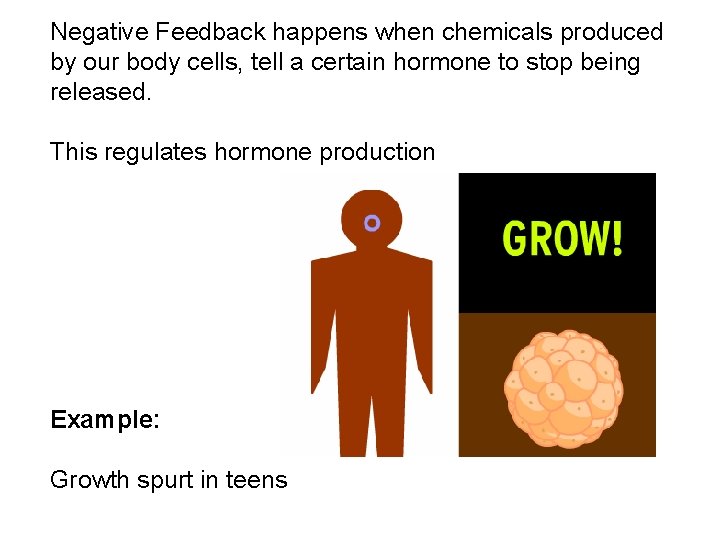
Negative Feedback happens when chemicals produced by our body cells, tell a certain hormone to stop being released. This regulates hormone production Example: Growth spurt in teens
Instructions: In groups of 4, come up with an analogy that best suits the Endocrine System. Remember to include the most important terms related to the topic. These might be the different glands, the types and roles of hormones, target cells and receptors, importance of homeostasis, and feedback mechanisms. Each group will receive a piece of construction paper in order to draw, label, and describe their analogy. You will have 10 minutes to complete the assignment and each group will get 2 minutes to present their analogy to the class.
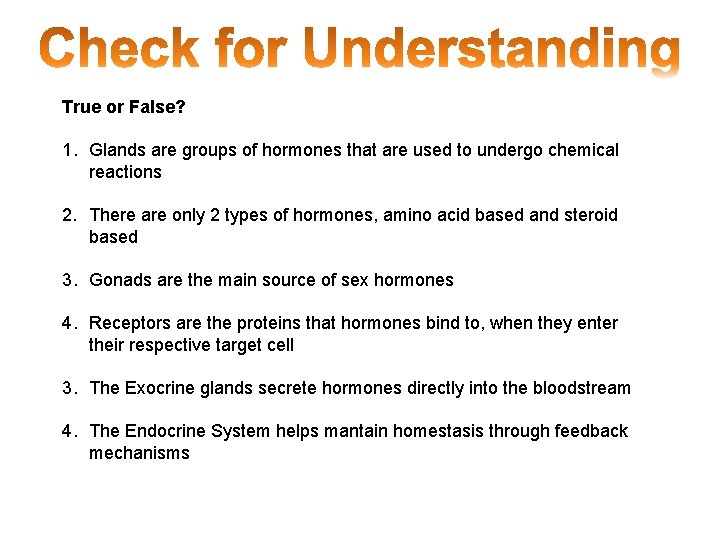
True or False? 1. Glands are groups of hormones that are used to undergo chemical reactions 2. There are only 2 types of hormones, amino acid based and steroid based 3. Gonads are the main source of sex hormones 4. Receptors are the proteins that hormones bind to, when they enter their respective target cell 3. The Exocrine glands secrete hormones directly into the bloodstream 4. The Endocrine System helps mantain homestasis through feedback mechanisms

http: //www. thinglink. com/scene/2579152198738 90304
- Slides: 31