
The Endocrine System Part 3 Integration Control The
- Slides: 50
The Endocrine System Part 3: Integration & Control
The Endocrine System Endocrinology: The study of the endocrine system. n Endocrine System: Communicates with & helps control body systems via hormones. n ¨ Communication is slower than in the nervous system & has longer-lasting effects. n Hormones: Chemicals secreted directly into the bloodstream to affect target cells or organs.
Glands n Exocrine Glands: Secrete hormones into ducts, which then drain the hormones into another structure. ¨ E. g. , salivary and sweat glands.
Glands n Endocrine Glands: Secrete the hormones directly into the bloodstream. Typically rely on… ¨ Negative Feedback Systems: Releases hormones to counteract the effects of other hormones with the goal of maintaining homeostasis.
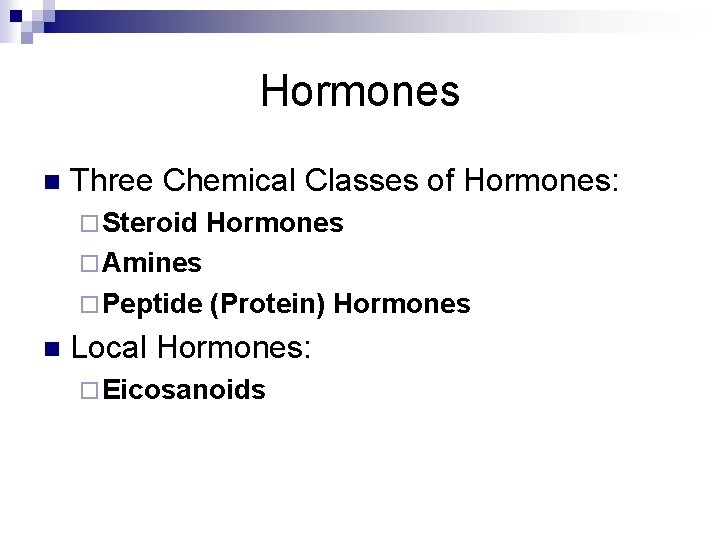
Hormones n Three Chemical Classes of Hormones: ¨ Steroid Hormones ¨ Amines ¨ Peptide n (Protein) Hormones Local Hormones: ¨ Eicosanoids
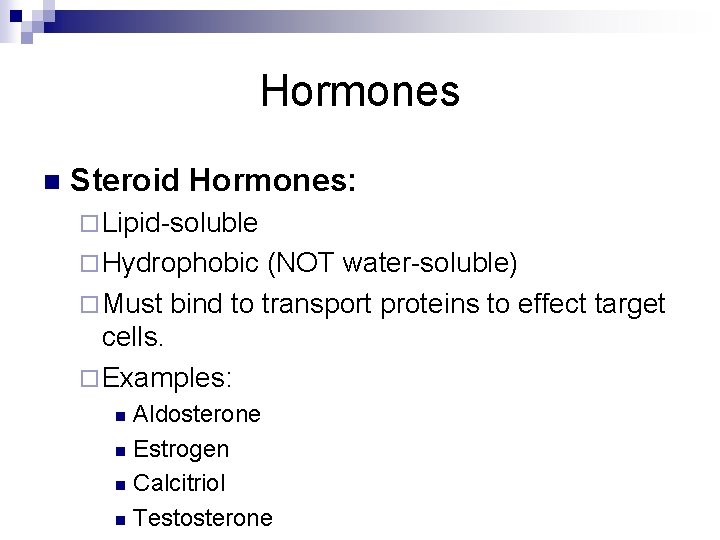
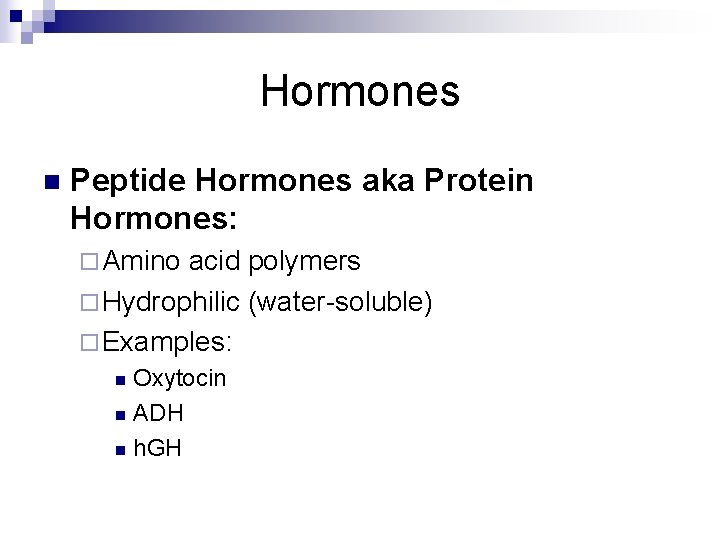
Hormones n Steroid Hormones: ¨ Lipid-soluble ¨ Hydrophobic (NOT water-soluble) ¨ Must bind to transport proteins to effect target cells. ¨ Examples: Aldosterone n Estrogen n Calcitriol n Testosterone n
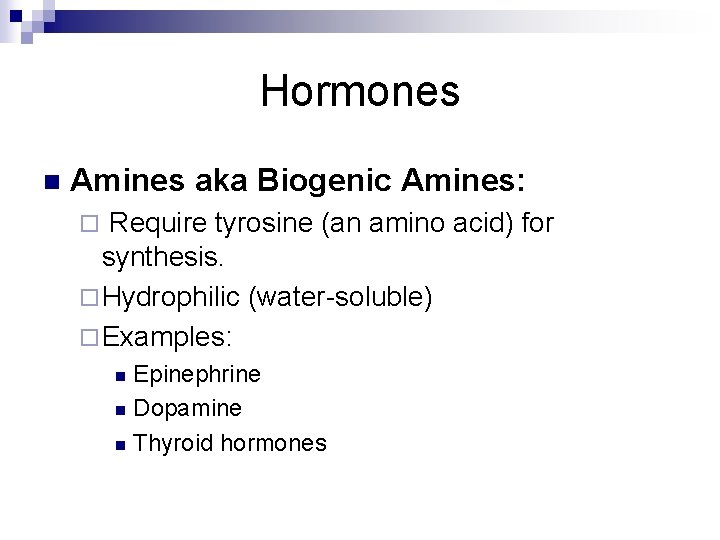
Hormones n Amines aka Biogenic Amines: Require tyrosine (an amino acid) for synthesis. ¨ Hydrophilic (water-soluble) ¨ Examples: ¨ Epinephrine n Dopamine n Thyroid hormones n
Hormones n Peptide Hormones aka Protein Hormones: ¨ Amino acid polymers ¨ Hydrophilic (water-soluble) ¨ Examples: Oxytocin n ADH n h. GH n
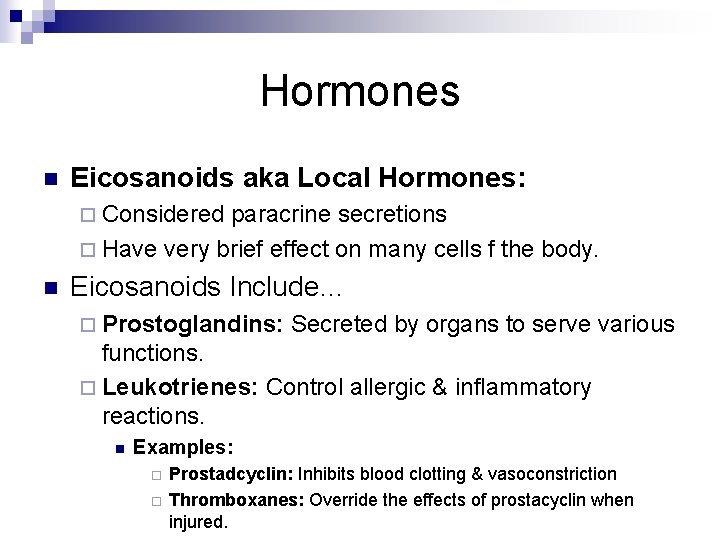
Hormones n Eicosanoids aka Local Hormones: ¨ Considered paracrine secretions ¨ Have very brief effect on many cells f the body. n Eicosanoids Include… ¨ Prostoglandins: Secreted by organs to serve various functions. ¨ Leukotrienes: Control allergic & inflammatory reactions. n Examples: ¨ ¨ Prostadcyclin: Inhibits blood clotting & vasoconstriction Thromboxanes: Override the effects of prostacyclin when injured.
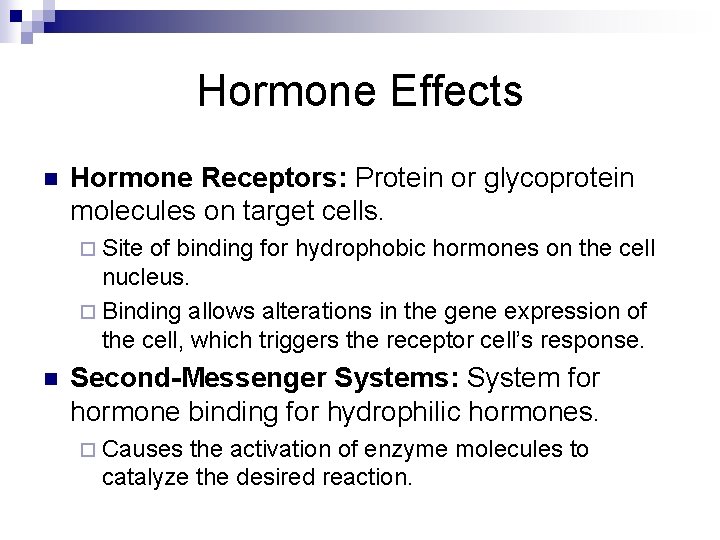
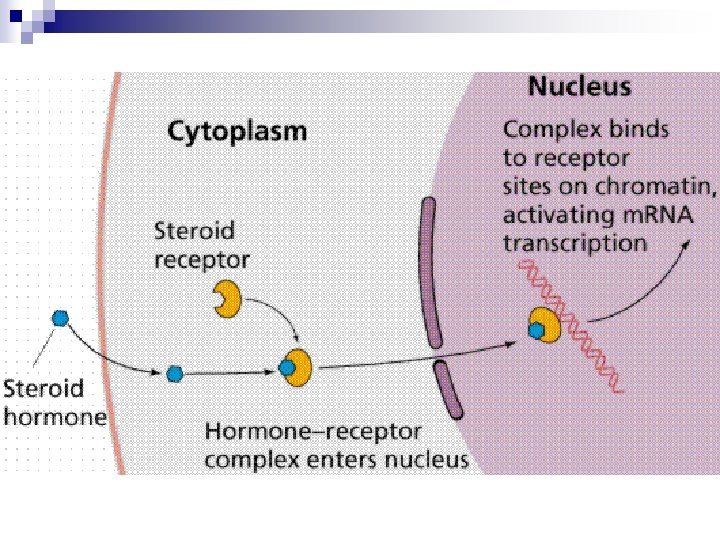
Hormone Effects n Hormone Receptors: Protein or glycoprotein molecules on target cells. ¨ Site of binding for hydrophobic hormones on the cell nucleus. ¨ Binding allows alterations in the gene expression of the cell, which triggers the receptor cell’s response. n Second-Messenger Systems: System for hormone binding for hydrophilic hormones. ¨ Causes the activation of enzyme molecules to catalyze the desired reaction.
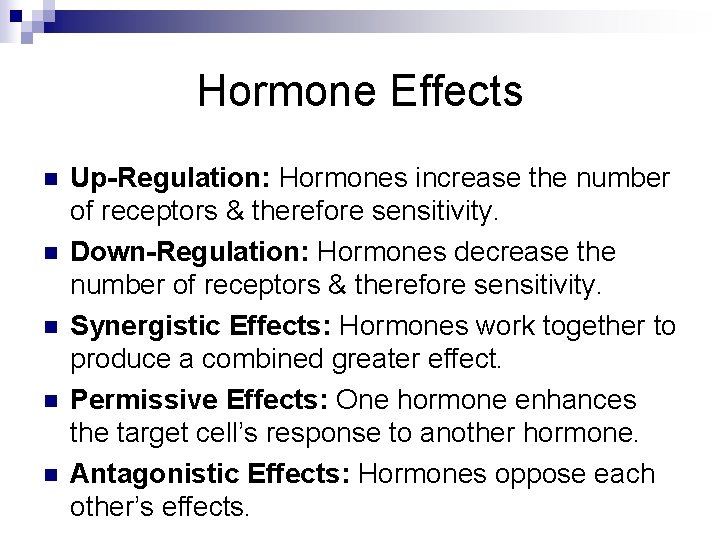
Hormone Effects n n n Up-Regulation: Hormones increase the number of receptors & therefore sensitivity. Down-Regulation: Hormones decrease the number of receptors & therefore sensitivity. Synergistic Effects: Hormones work together to produce a combined greater effect. Permissive Effects: One hormone enhances the target cell’s response to another hormone. Antagonistic Effects: Hormones oppose each other’s effects.
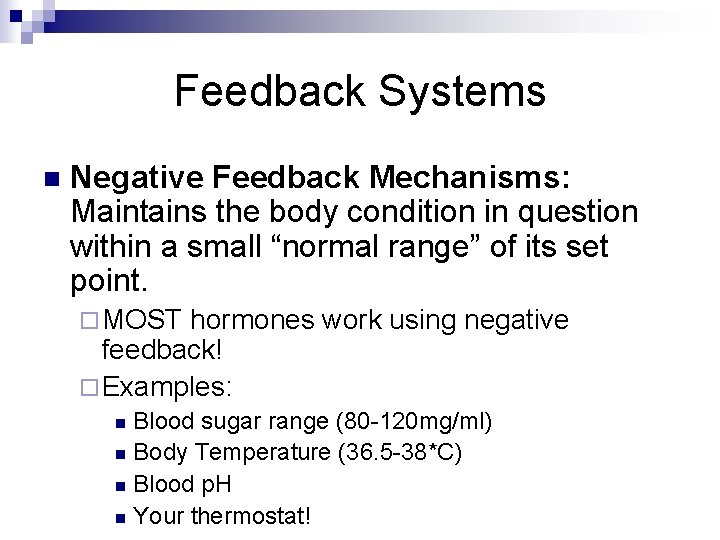
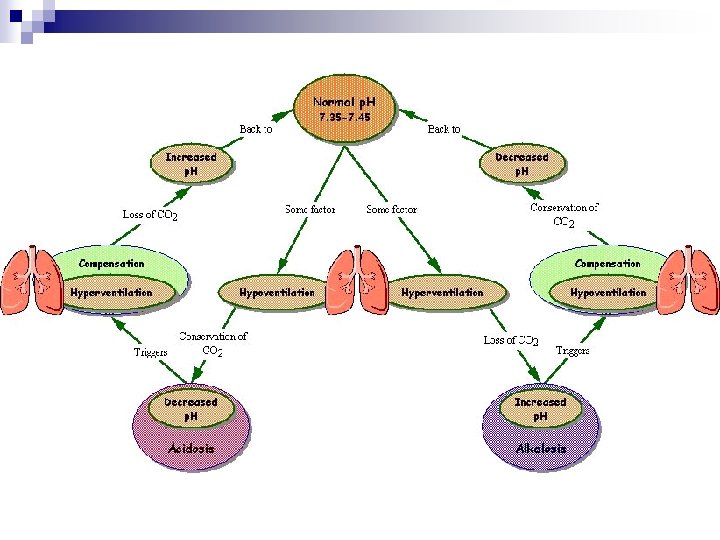
Feedback Systems n Negative Feedback Mechanisms: Maintains the body condition in question within a small “normal range” of its set point. ¨ MOST hormones work using negative feedback! ¨ Examples: Blood sugar range (80 -120 mg/ml) n Body Temperature (36. 5 -38*C) n Blood p. H n Your thermostat! n
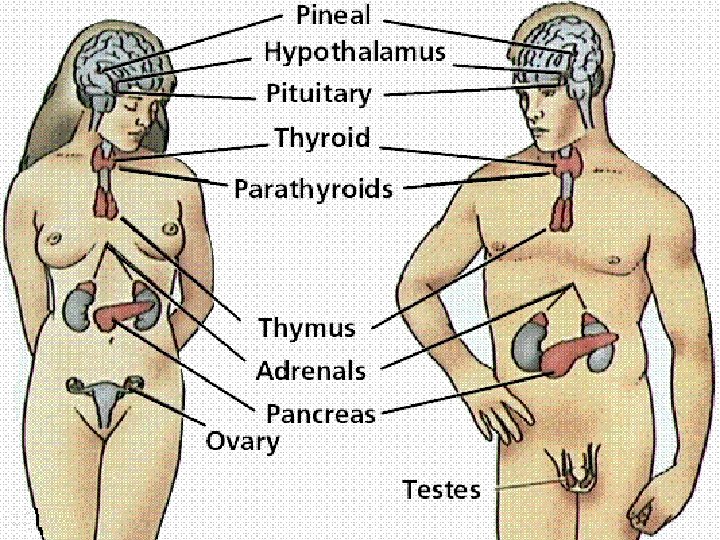
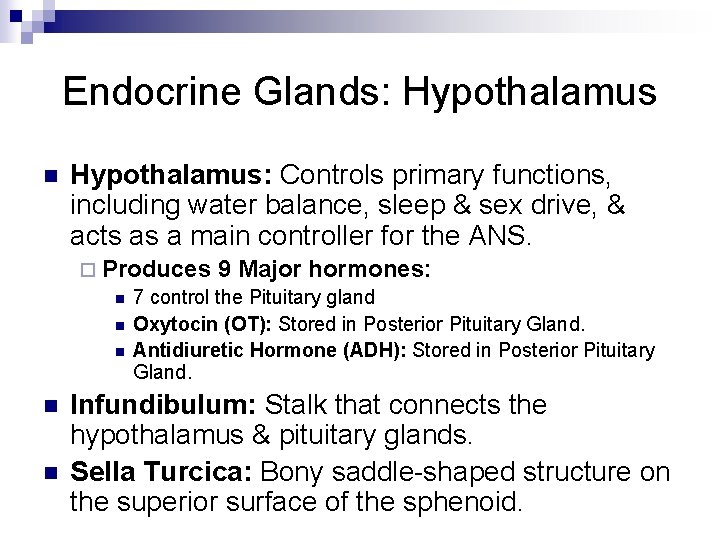
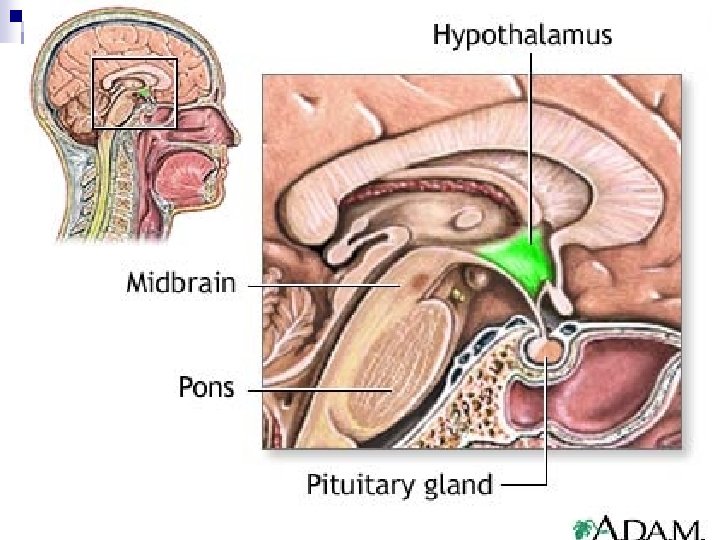
Endocrine Glands: Hypothalamus n Hypothalamus: Controls primary functions, including water balance, sleep & sex drive, & acts as a main controller for the ANS. ¨ Produces 9 Major hormones: n 7 control the Pituitary gland n Oxytocin (OT): Stored in Posterior Pituitary Gland. n Antidiuretic Hormone (ADH): Stored in Posterior Pituitary Gland. n n Infundibulum: Stalk that connects the hypothalamus & pituitary glands. Sella Turcica: Bony saddle-shaped structure on the superior surface of the sphenoid.
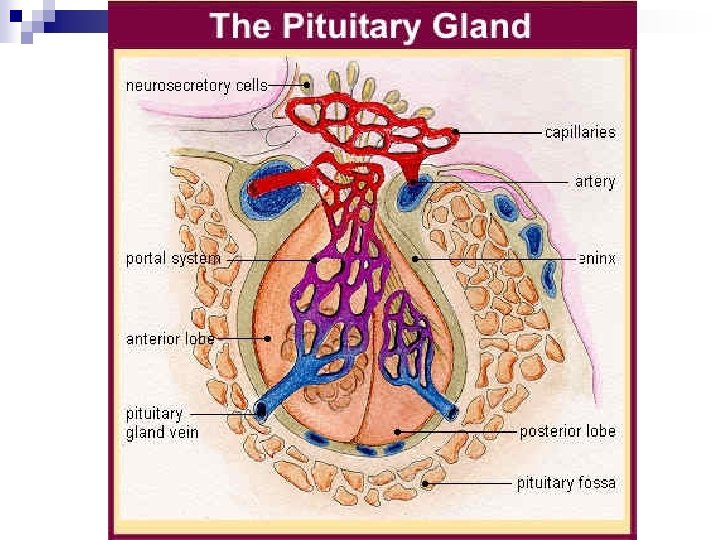
Endocrine Glands: Pituitary n Pituitary Gland aka Hypophysis: The “master gland: of the endocrine system, controlled by the hypothalamus. Two parts: ¨ Anterior Pituitary Gland: aka Adenohypophysis: ¨ Posterior Pituitary Gland: aka Neurohypophysis
Endocrine Glands: Pituitary n Anterior Pituitary Gland: ¨ Made n n n up of. . Anterior Lobe Pars Tuberalis Hypothalamo-Hypophyseal Portal System: Allows blood to flow from capillaries in the hypothalamus into the portal veins of the anterior pituitary. ¨ Transports the inhibitory & releasing hormones from the hypothalamus to control the APG.
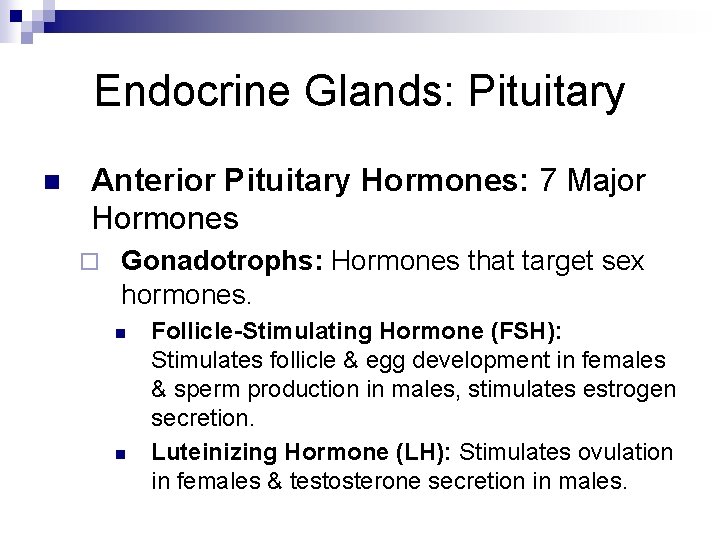
Endocrine Glands: Pituitary n Anterior Pituitary Hormones: 7 Major Hormones ¨ Gonadotrophs: Hormones that target sex hormones. n n Follicle-Stimulating Hormone (FSH): Stimulates follicle & egg development in females & sperm production in males, stimulates estrogen secretion. Luteinizing Hormone (LH): Stimulates ovulation in females & testosterone secretion in males.
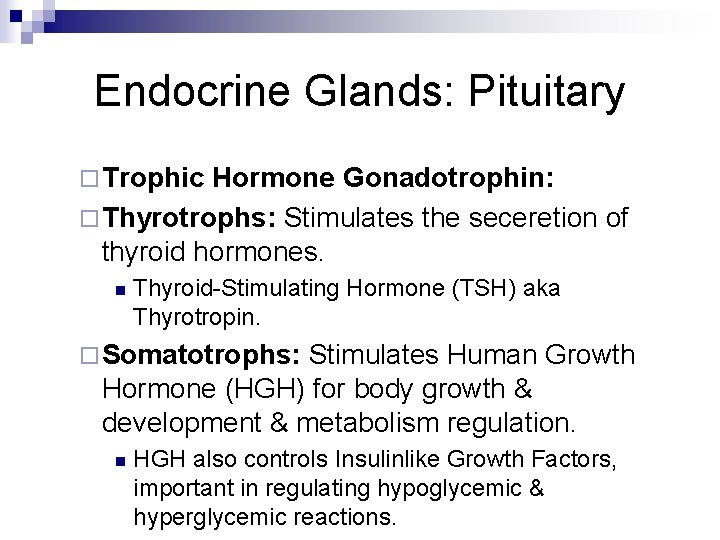
Endocrine Glands: Pituitary ¨ Trophic Hormone Gonadotrophin: ¨ Thyrotrophs: Stimulates the seceretion of thyroid hormones. n Thyroid-Stimulating Hormone (TSH) aka Thyrotropin. ¨ Somatotrophs: Stimulates Human Growth Hormone (HGH) for body growth & development & metabolism regulation. n HGH also controls Insulinlike Growth Factors, important in regulating hypoglycemic & hyperglycemic reactions.
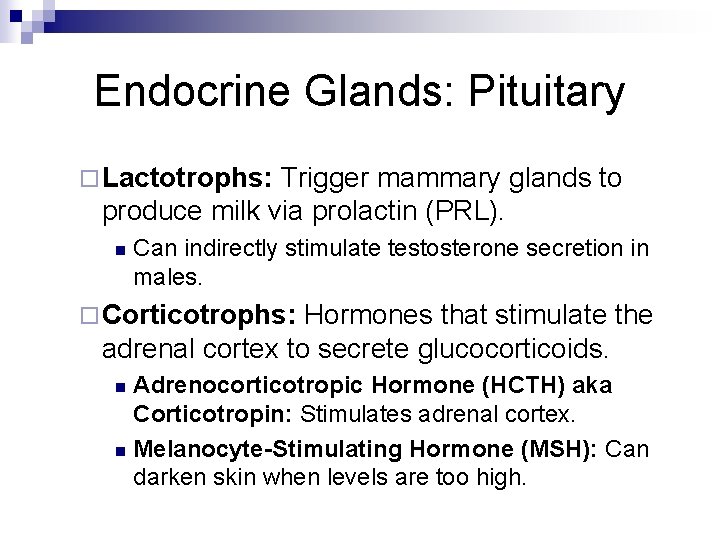
Endocrine Glands: Pituitary ¨ Lactotrophs: Trigger mammary glands to produce milk via prolactin (PRL). n Can indirectly stimulate testosterone secretion in males. ¨ Corticotrophs: Hormones that stimulate the adrenal cortex to secrete glucocorticoids. Adrenocorticotropic Hormone (HCTH) aka Corticotropin: Stimulates adrenal cortex. n Melanocyte-Stimulating Hormone (MSH): Can darken skin when levels are too high. n
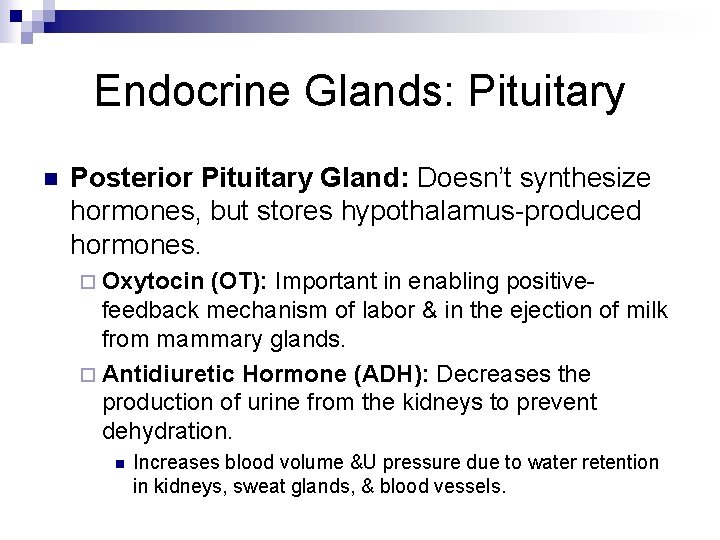
Endocrine Glands: Pituitary n Posterior Pituitary Gland: Doesn’t synthesize hormones, but stores hypothalamus-produced hormones. ¨ Oxytocin (OT): Important in enabling positivefeedback mechanism of labor & in the ejection of milk from mammary glands. ¨ Antidiuretic Hormone (ADH): Decreases the production of urine from the kidneys to prevent dehydration. n Increases blood volume &U pressure due to water retention in kidneys, sweat glands, & blood vessels.
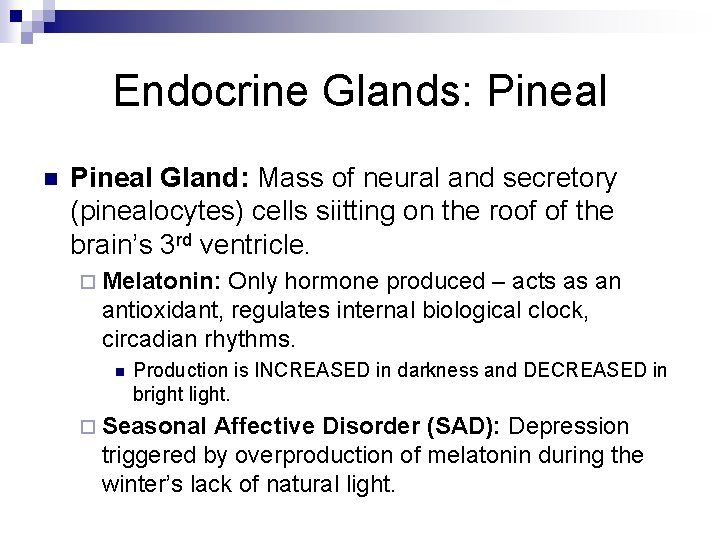
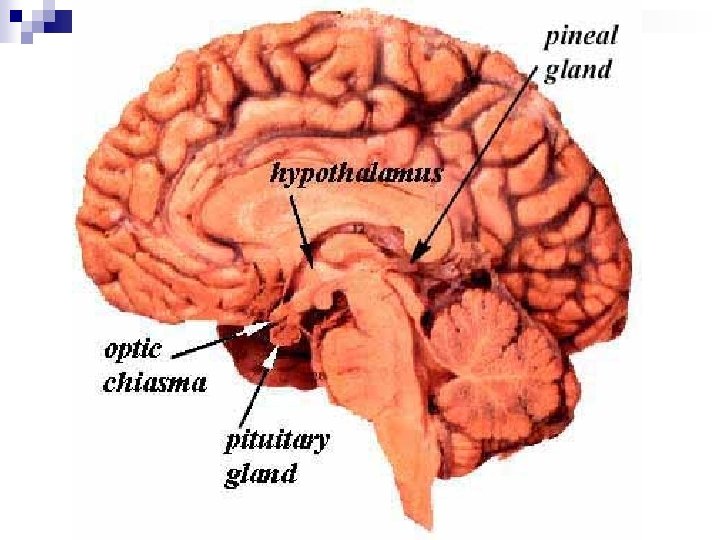
Endocrine Glands: Pineal n Pineal Gland: Mass of neural and secretory (pinealocytes) cells siitting on the roof of the brain’s 3 rd ventricle. ¨ Melatonin: Only hormone produced – acts as an antioxidant, regulates internal biological clock, circadian rhythms. n Production is INCREASED in darkness and DECREASED in bright light. ¨ Seasonal Affective Disorder (SAD): Depression triggered by overproduction of melatonin during the winter’s lack of natural light.
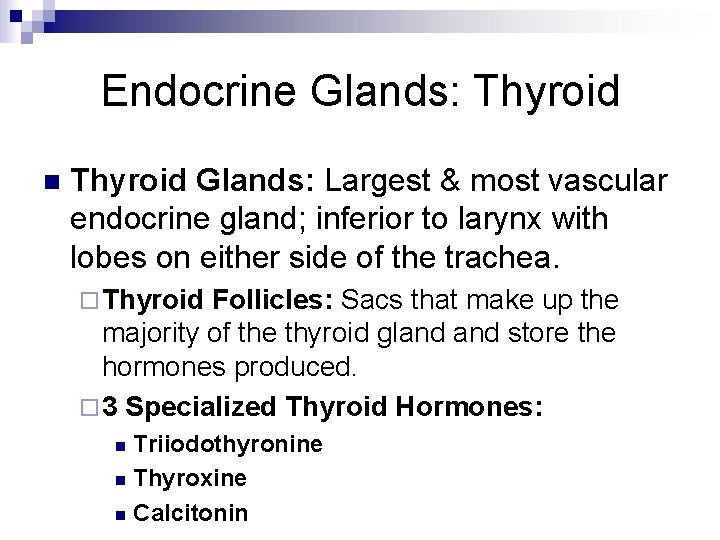
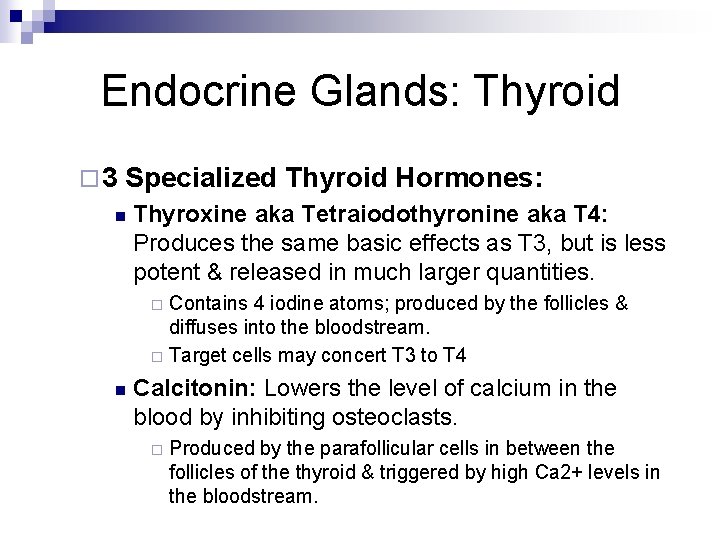
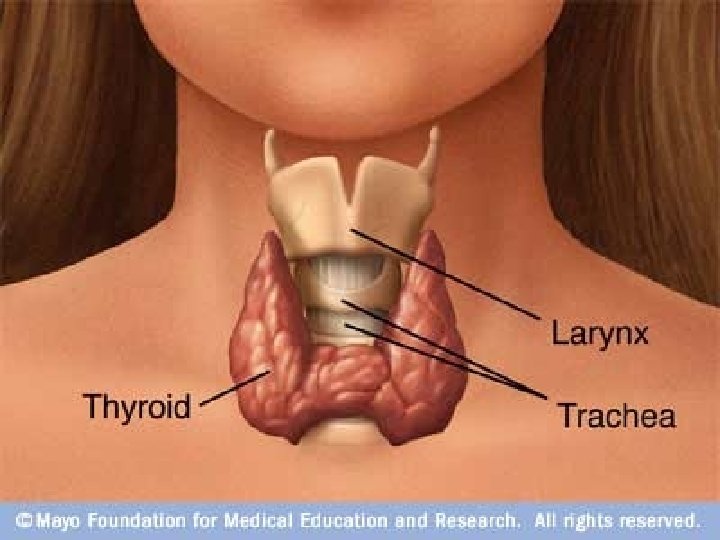
Endocrine Glands: Thyroid n Thyroid Glands: Largest & most vascular endocrine gland; inferior to larynx with lobes on either side of the trachea. ¨ Thyroid Follicles: Sacs that make up the majority of the thyroid gland store the hormones produced. ¨ 3 Specialized Thyroid Hormones: Triiodothyronine n Thyroxine n Calcitonin n
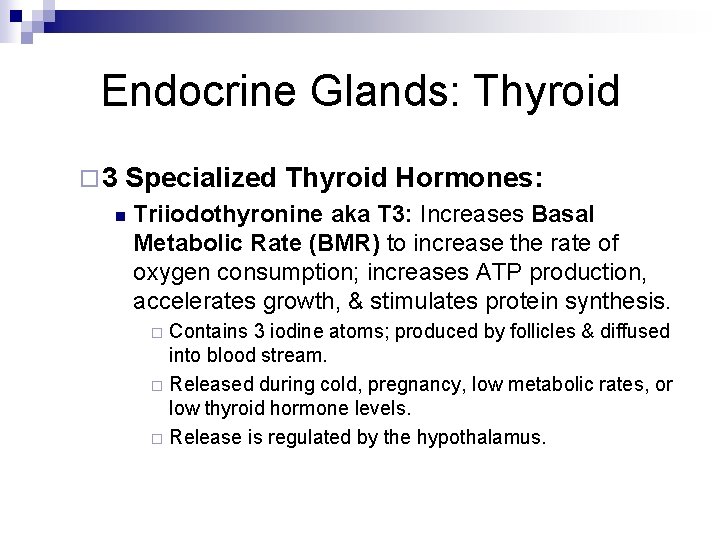
Endocrine Glands: Thyroid ¨ 3 Specialized Thyroid Hormones: n Triiodothyronine aka T 3: Increases Basal Metabolic Rate (BMR) to increase the rate of oxygen consumption; increases ATP production, accelerates growth, & stimulates protein synthesis. Contains 3 iodine atoms; produced by follicles & diffused into blood stream. ¨ Released during cold, pregnancy, low metabolic rates, or low thyroid hormone levels. ¨ Release is regulated by the hypothalamus. ¨
Endocrine Glands: Thyroid ¨ 3 Specialized Thyroid Hormones: n Thyroxine aka Tetraiodothyronine aka T 4: Produces the same basic effects as T 3, but is less potent & released in much larger quantities. Contains 4 iodine atoms; produced by the follicles & diffuses into the bloodstream. ¨ Target cells may concert T 3 to T 4 ¨ n Calcitonin: Lowers the level of calcium in the blood by inhibiting osteoclasts. ¨ Produced by the parafollicular cells in between the follicles of the thyroid & triggered by high Ca 2+ levels in the bloodstream.
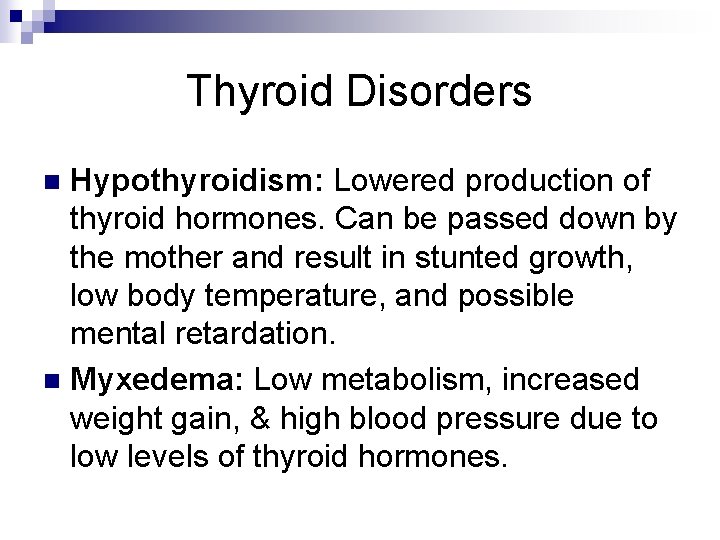
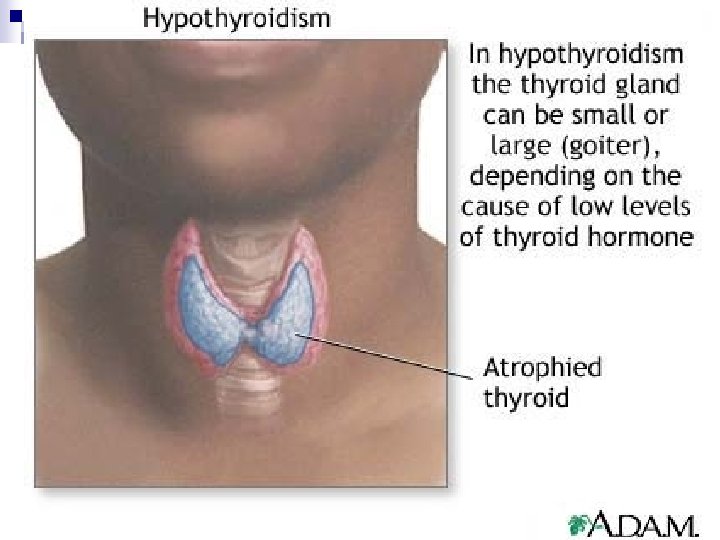
Thyroid Disorders Hypothyroidism: Lowered production of thyroid hormones. Can be passed down by the mother and result in stunted growth, low body temperature, and possible mental retardation. n Myxedema: Low metabolism, increased weight gain, & high blood pressure due to low levels of thyroid hormones. n
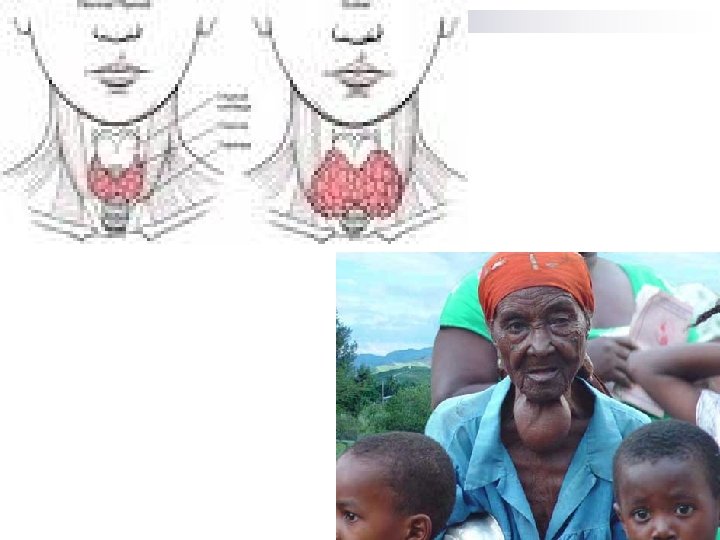
Thyroid Disorders Goiter: Pathological enlargement of the thyroid gland, typically caused by iodine deficiency. n Graves Disease: An autoimmune disease where antibodies cause thyroid to grow abnormally. n ¨ Can lead to elevated heart rates and metabolism. ¨ Triggered by a goiter becoming toxic.
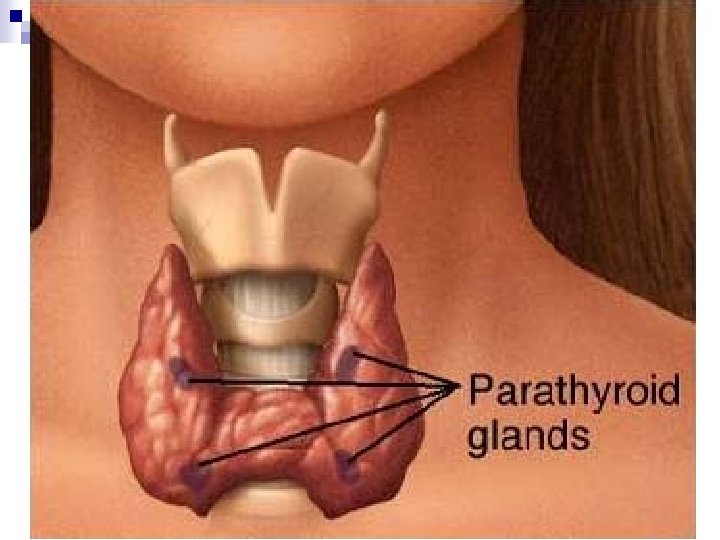
Endocrine Glands: Parathyroid n Parathyroid Glands: Regulates calcium, magnesium, & phosphate ion levels in the blood via parathyroid hormone (PTH). ¨ Found behind the thyroid, attached to the thyroid. ¨ PTH & Calcitonin work together to regulate homeostasis of calcium in the bloodstream. ¨ Stimulates Calcitriol to aid in calcium absorption from food.
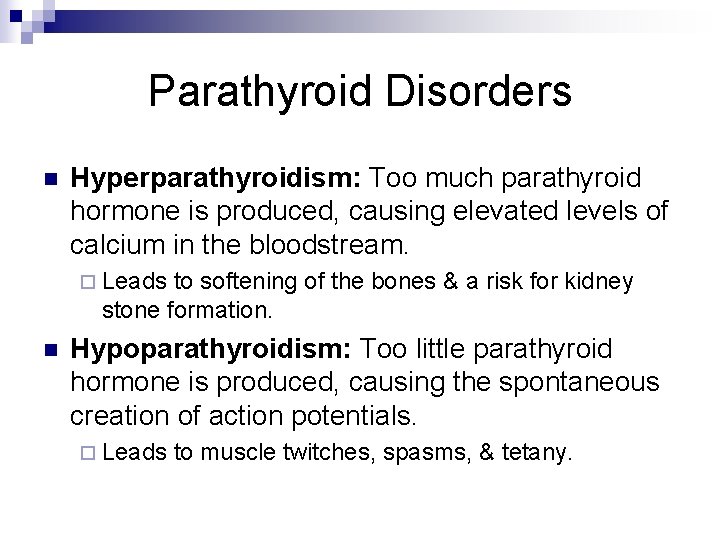
Parathyroid Disorders n Hyperparathyroidism: Too much parathyroid hormone is produced, causing elevated levels of calcium in the bloodstream. ¨ Leads to softening of the bones & a risk for kidney stone formation. n Hypoparathyroidism: Too little parathyroid hormone is produced, causing the spontaneous creation of action potentials. ¨ Leads to muscle twitches, spasms, & tetany.
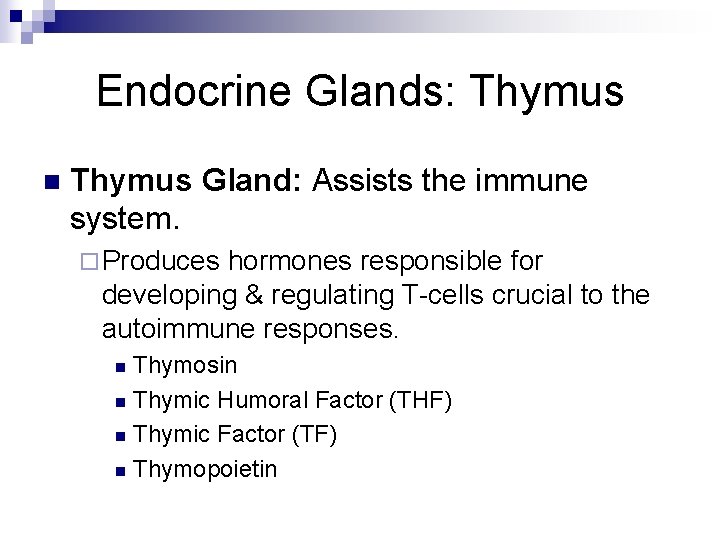
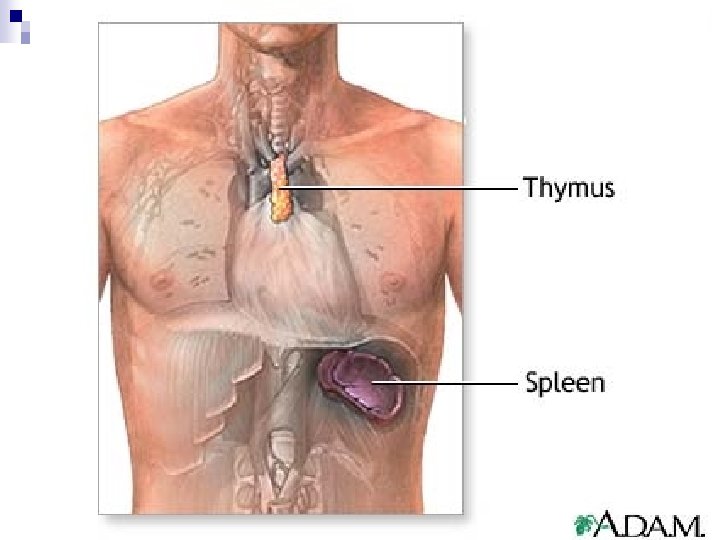
Endocrine Glands: Thymus n Thymus Gland: Assists the immune system. ¨ Produces hormones responsible for developing & regulating T-cells crucial to the autoimmune responses. Thymosin n Thymic Humoral Factor (THF) n Thymic Factor (TF) n Thymopoietin n
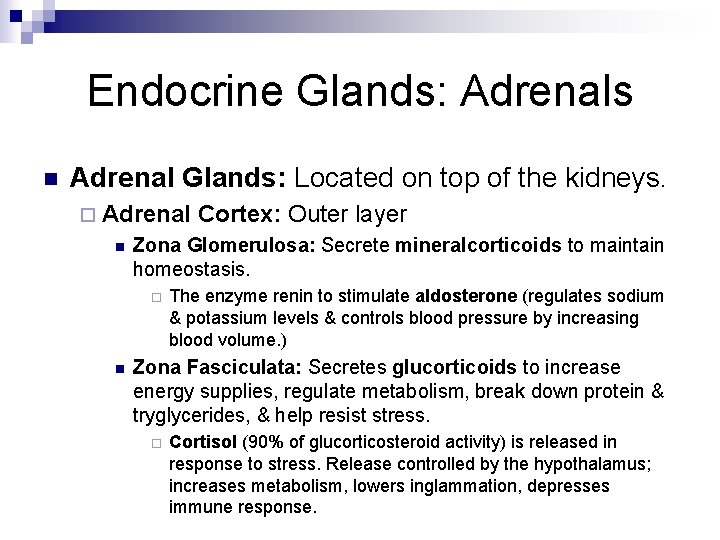
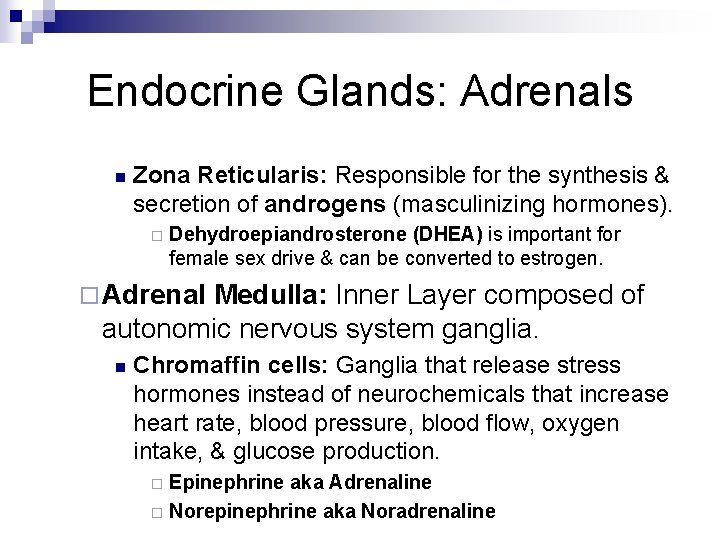
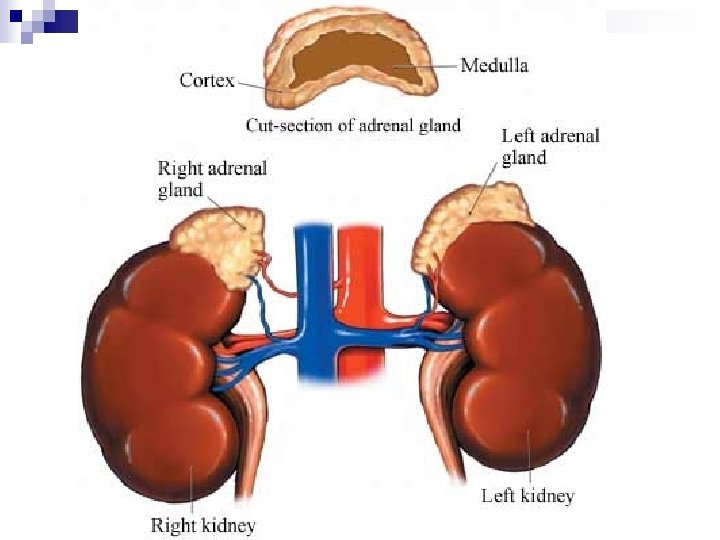
Endocrine Glands: Adrenals n Adrenal Glands: Located on top of the kidneys. ¨ Adrenal n Zona Glomerulosa: Secrete mineralcorticoids to maintain homeostasis. ¨ n Cortex: Outer layer The enzyme renin to stimulate aldosterone (regulates sodium & potassium levels & controls blood pressure by increasing blood volume. ) Zona Fasciculata: Secretes glucorticoids to increase energy supplies, regulate metabolism, break down protein & tryglycerides, & help resist stress. ¨ Cortisol (90% of glucorticosteroid activity) is released in response to stress. Release controlled by the hypothalamus; increases metabolism, lowers inglammation, depresses immune response.
Endocrine Glands: Adrenals n Zona Reticularis: Responsible for the synthesis & secretion of androgens (masculinizing hormones). ¨ Dehydroepiandrosterone (DHEA) is important for female sex drive & can be converted to estrogen. ¨ Adrenal Medulla: Inner Layer composed of autonomic nervous system ganglia. n Chromaffin cells: Ganglia that release stress hormones instead of neurochemicals that increase heart rate, blood pressure, blood flow, oxygen intake, & glucose production. Epinephrine aka Adrenaline ¨ Norepinephrine aka Noradrenaline ¨
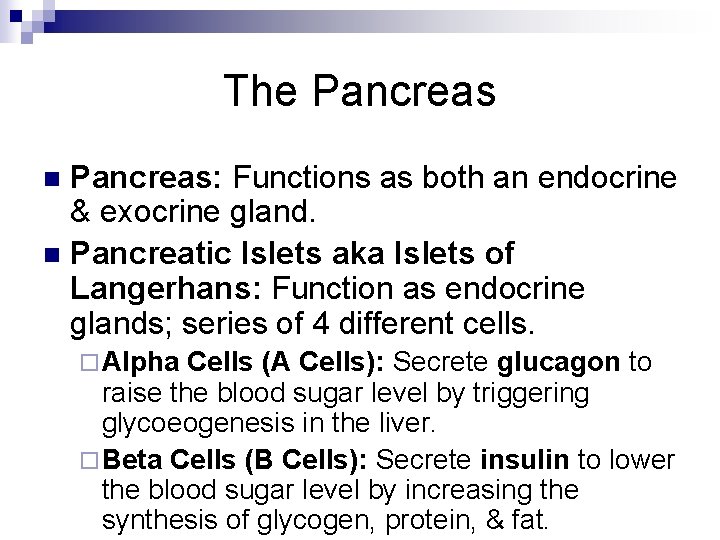
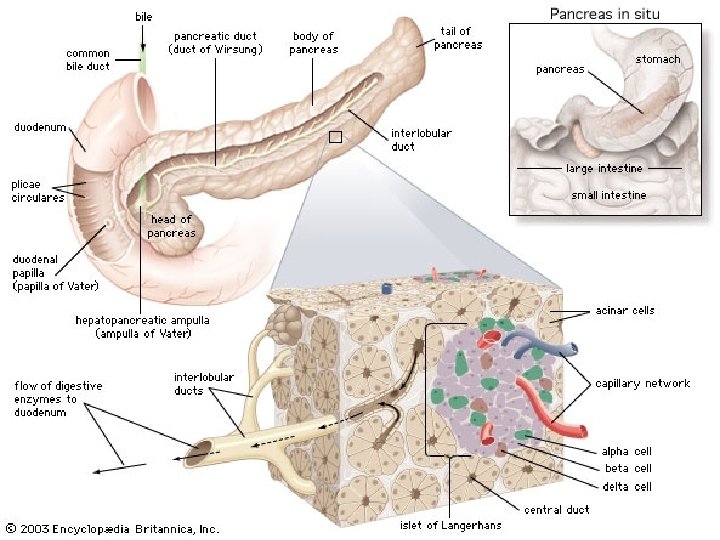
The Pancreas: Functions as both an endocrine & exocrine gland. n Pancreatic Islets aka Islets of Langerhans: Function as endocrine glands; series of 4 different cells. n ¨ Alpha Cells (A Cells): Secrete glucagon to raise the blood sugar level by triggering glycoeogenesis in the liver. ¨ Beta Cells (B Cells): Secrete insulin to lower the blood sugar level by increasing the synthesis of glycogen, protein, & fat.
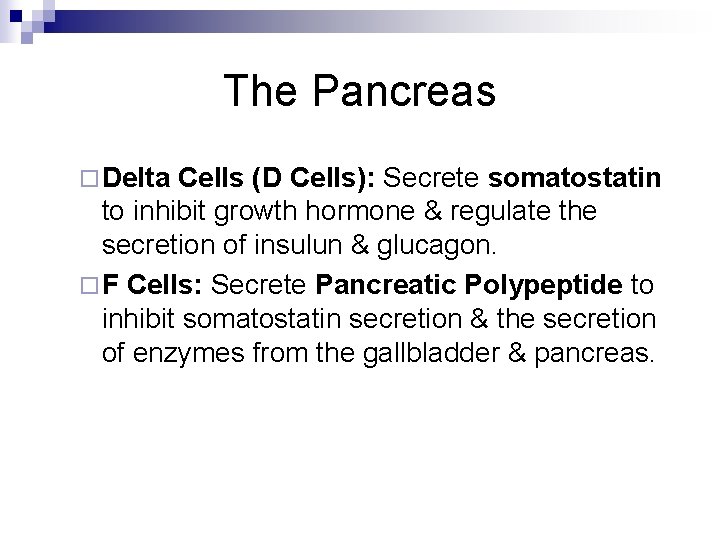
The Pancreas ¨ Delta Cells (D Cells): Secrete somatostatin to inhibit growth hormone & regulate the secretion of insulun & glucagon. ¨ F Cells: Secrete Pancreatic Polypeptide to inhibit somatostatin secretion & the secretion of enzymes from the gallbladder & pancreas.
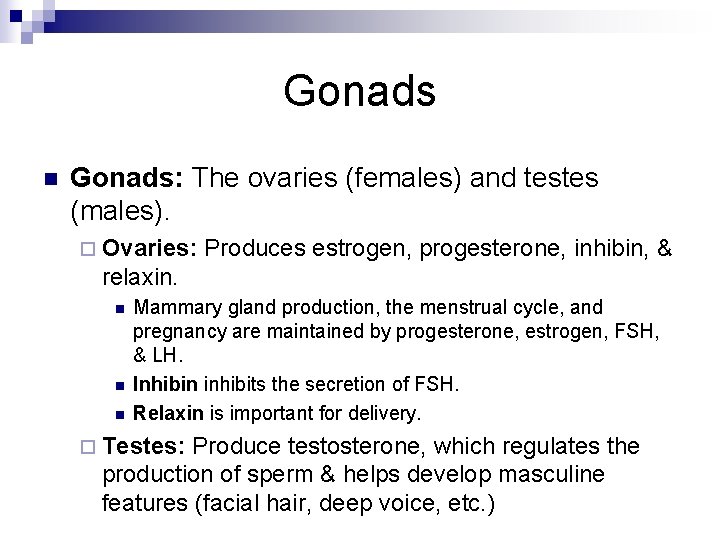
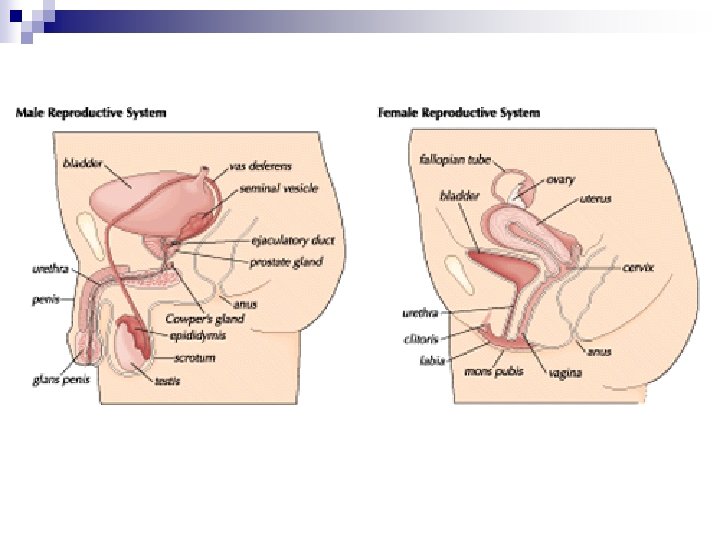
Gonads n Gonads: The ovaries (females) and testes (males). ¨ Ovaries: Produces estrogen, progesterone, inhibin, & relaxin. n n n Mammary gland production, the menstrual cycle, and pregnancy are maintained by progesterone, estrogen, FSH, & LH. Inhibin inhibits the secretion of FSH. Relaxin is important for delivery. ¨ Testes: Produce testosterone, which regulates the production of sperm & helps develop masculine features (facial hair, deep voice, etc. )
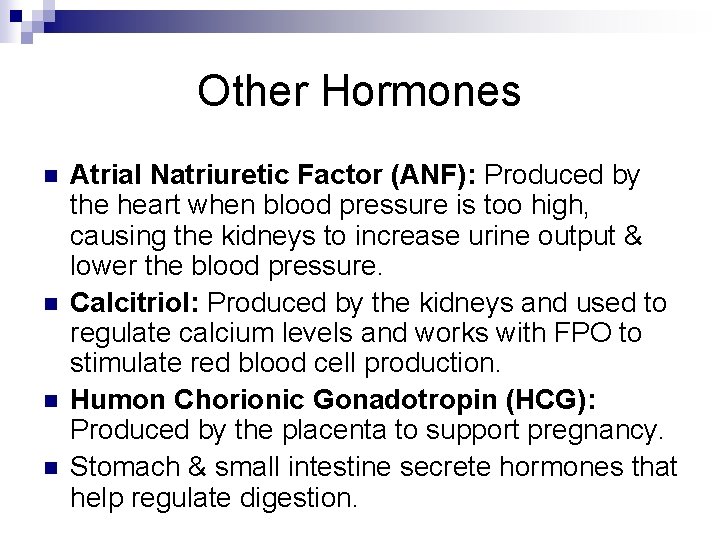
Other Hormones n n Atrial Natriuretic Factor (ANF): Produced by the heart when blood pressure is too high, causing the kidneys to increase urine output & lower the blood pressure. Calcitriol: Produced by the kidneys and used to regulate calcium levels and works with FPO to stimulate red blood cell production. Humon Chorionic Gonadotropin (HCG): Produced by the placenta to support pregnancy. Stomach & small intestine secrete hormones that help regulate digestion.
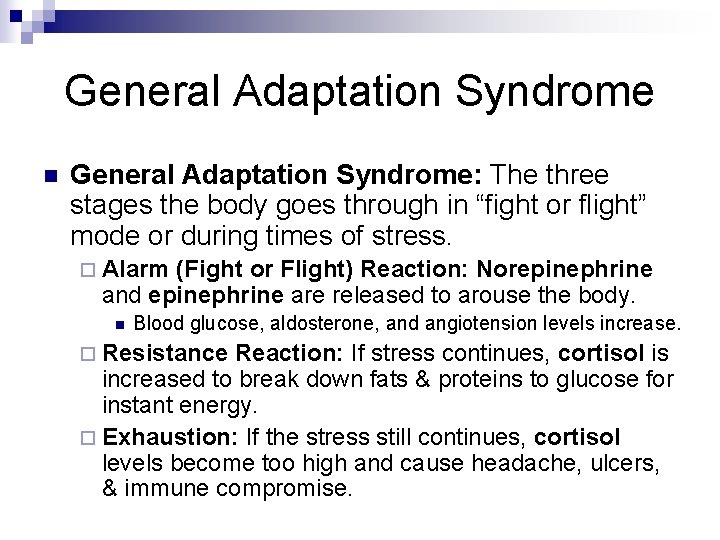
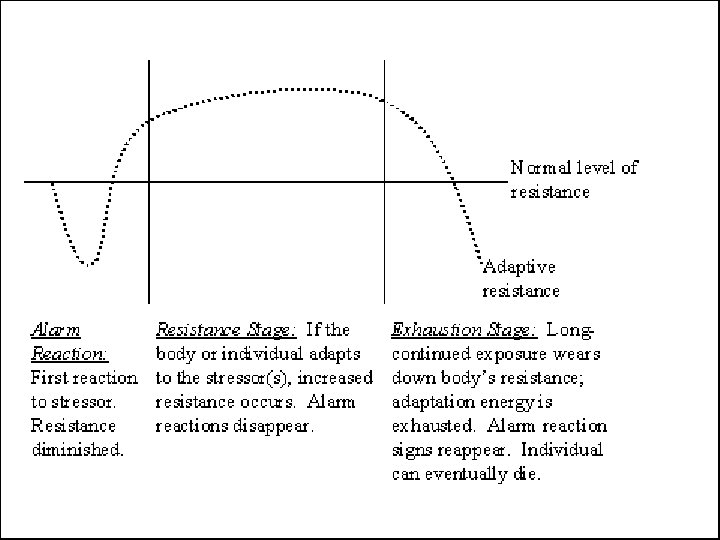
General Adaptation Syndrome n General Adaptation Syndrome: The three stages the body goes through in “fight or flight” mode or during times of stress. ¨ Alarm (Fight or Flight) Reaction: Norepinephrine and epinephrine are released to arouse the body. n Blood glucose, aldosterone, and angiotension levels increase. ¨ Resistance Reaction: If stress continues, cortisol is increased to break down fats & proteins to glucose for instant energy. ¨ Exhaustion: If the stress still continues, cortisol levels become too high and cause headache, ulcers, & immune compromise.