
The Endocrine System I Feedback Mechanisms A Homeostasis
The Endocrine System
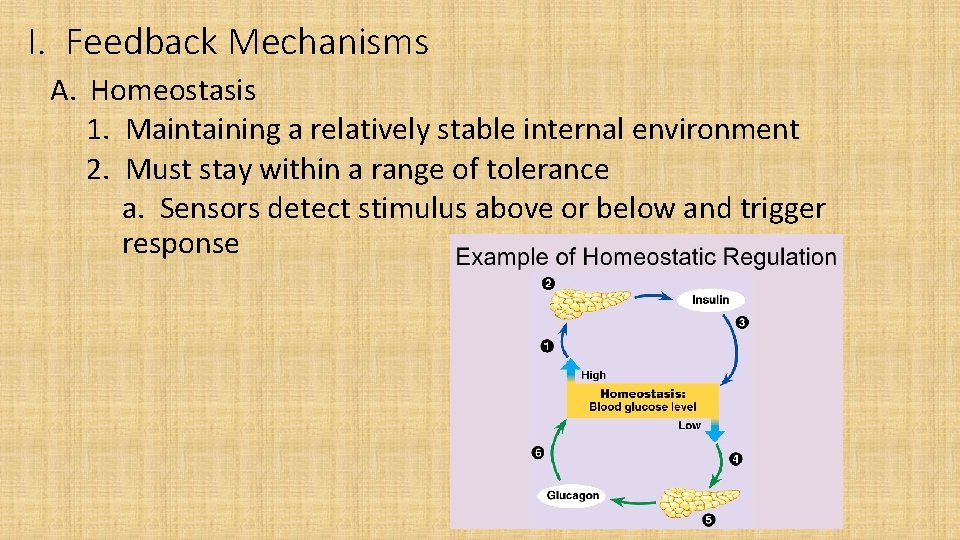
I. Feedback Mechanisms A. Homeostasis 1. Maintaining a relatively stable internal environment 2. Must stay within a range of tolerance a. Sensors detect stimulus above or below and trigger response
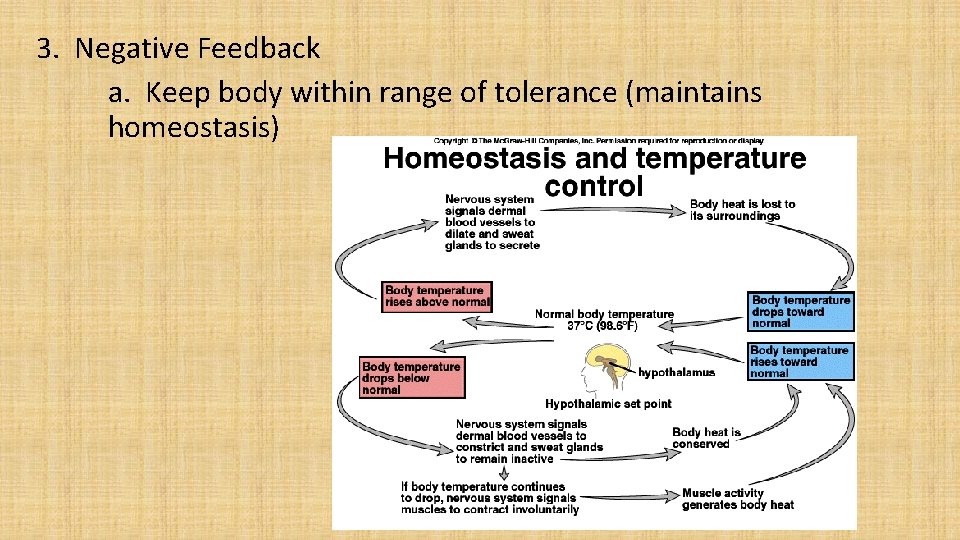
3. Negative Feedback a. Keep body within range of tolerance (maintains homeostasis)
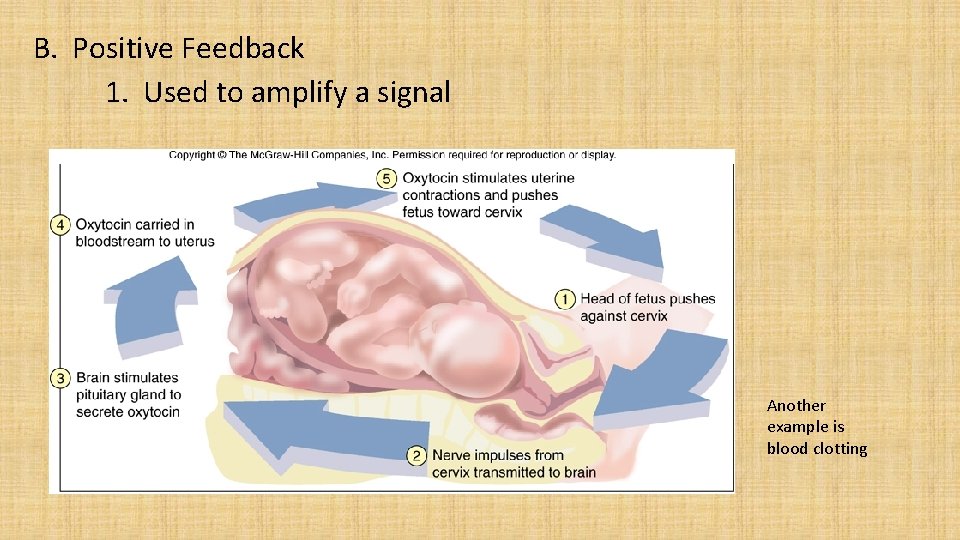
B. Positive Feedback 1. Used to amplify a signal Another example is blood clotting
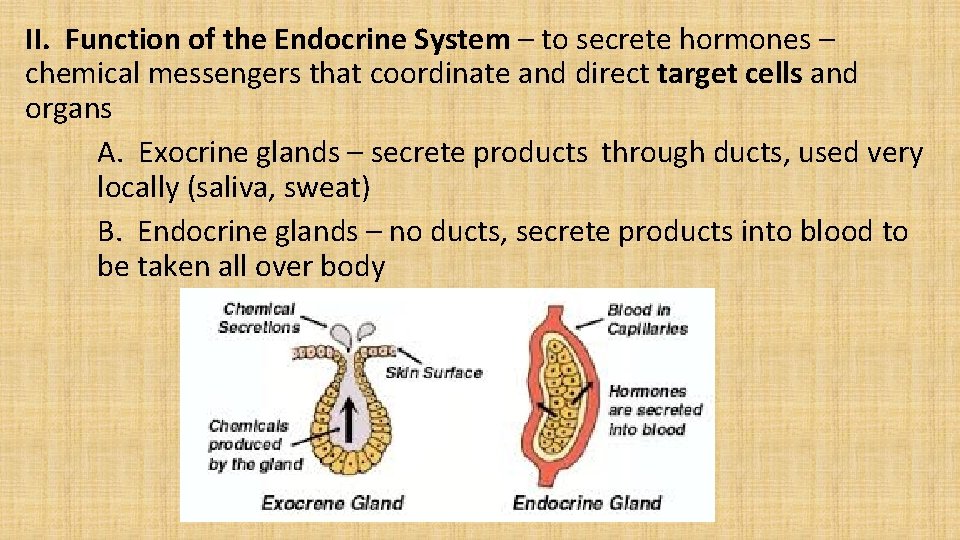
II. Function of the Endocrine System – to secrete hormones – chemical messengers that coordinate and direct target cells and organs A. Exocrine glands – secrete products through ducts, used very locally (saliva, sweat) B. Endocrine glands – no ducts, secrete products into blood to be taken all over body
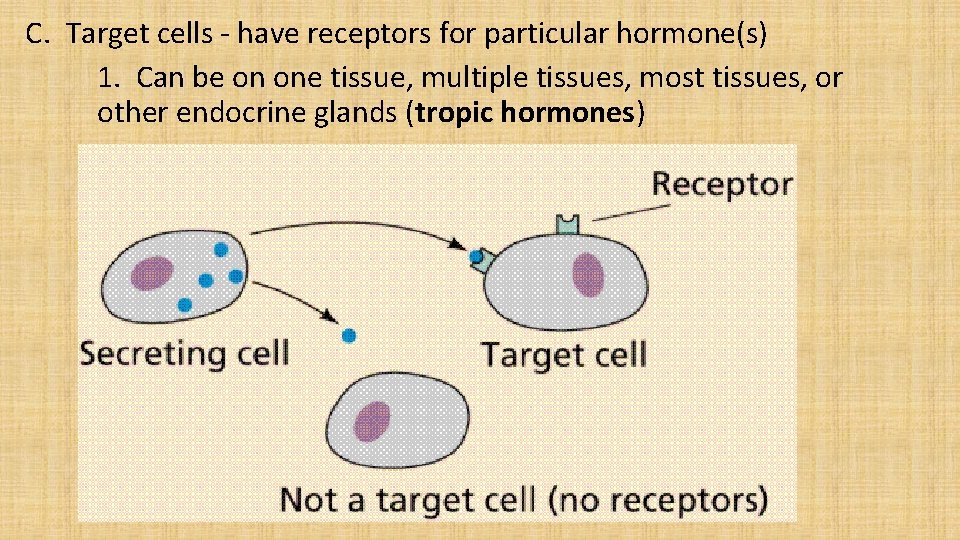
C. Target cells - have receptors for particular hormone(s) 1. Can be on one tissue, multiple tissues, most tissues, or other endocrine glands (tropic hormones)
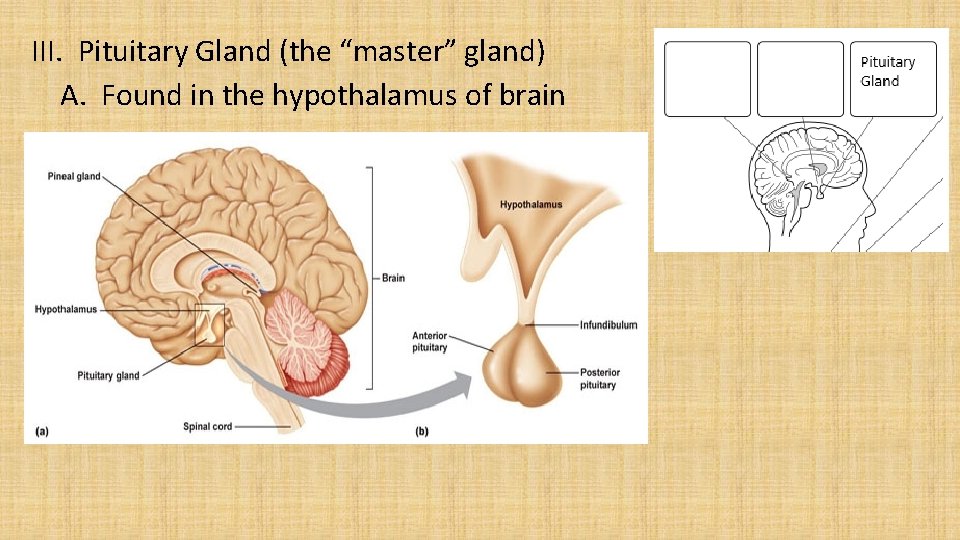
III. Pituitary Gland (the “master” gland) A. Found in the hypothalamus of brain
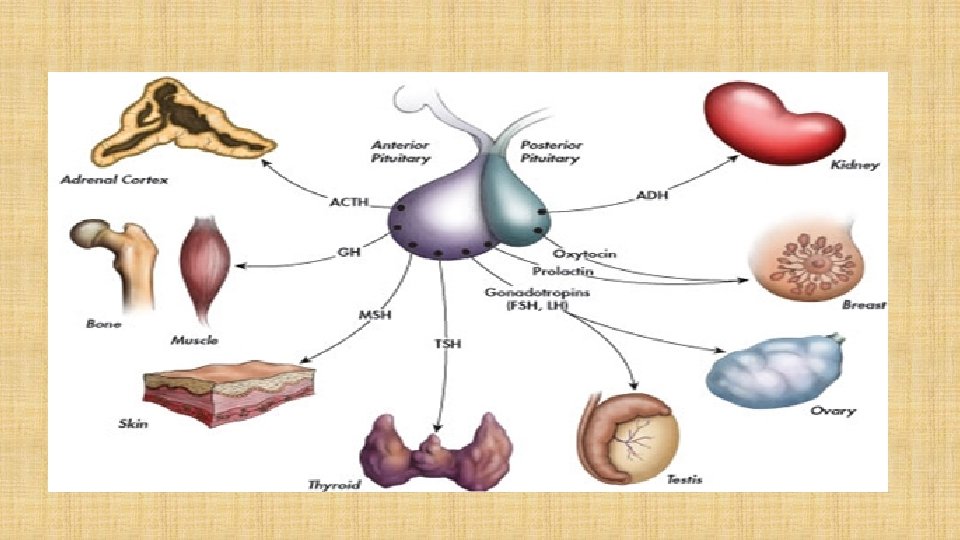
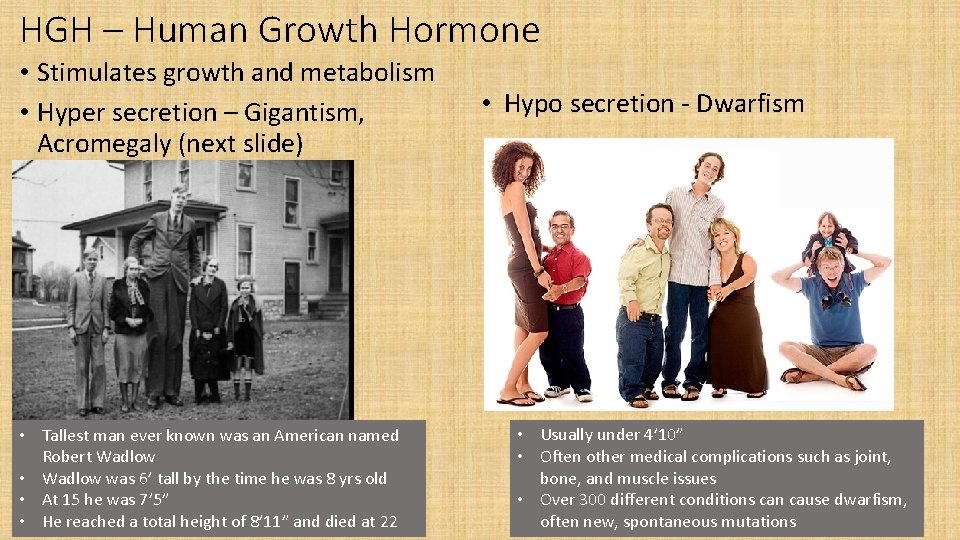
HGH – Human Growth Hormone • Stimulates growth and metabolism • Hyper secretion – Gigantism, Acromegaly (next slide) • Tallest man ever known was an American named Robert Wadlow • Wadlow was 6’ tall by the time he was 8 yrs old • At 15 he was 7’ 5” • He reached a total height of 8’ 11” and died at 22 • Hypo secretion - Dwarfism • Usually under 4’ 10” • Often other medical complications such as joint, bone, and muscle issues • Over 300 different conditions can cause dwarfism, often new, spontaneous mutations
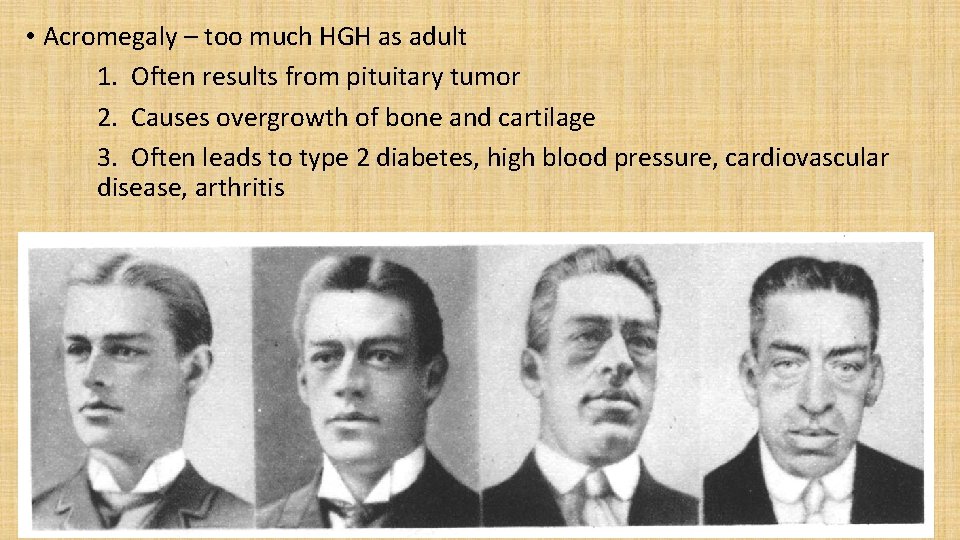
• Acromegaly – too much HGH as adult 1. Often results from pituitary tumor 2. Causes overgrowth of bone and cartilage 3. Often leads to type 2 diabetes, high blood pressure, cardiovascular disease, arthritis
TSH – Thyroid Stimulating Hormone • Stimulates thyroid to produce T 3 and T 4 hormones which stimulate metabolism • Hypersecretion – rare, but can cause hyperthyroidism (see thyroid) • Hyposecretion – rare, but can cause hypothyroidism (see (thyroid) ACTH – Adrenocorticotropic Hormone • Stimulates adrenal gland to produce cortisol • Hypersecretion can result from both Addison’s and Cushing’s syndrome • Hyposecretion can result from Cushing’s syndrome
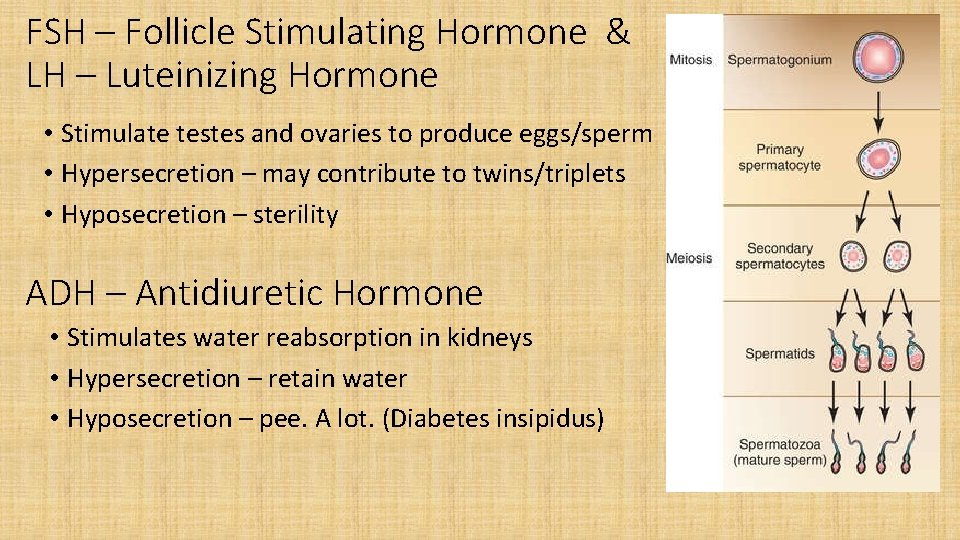
FSH – Follicle Stimulating Hormone & LH – Luteinizing Hormone • Stimulate testes and ovaries to produce eggs/sperm • Hypersecretion – may contribute to twins/triplets • Hyposecretion – sterility ADH – Antidiuretic Hormone • Stimulates water reabsorption in kidneys • Hypersecretion – retain water • Hyposecretion – pee. A lot. (Diabetes insipidus)
Oxytocin • Stimulates contraction of the uterus during childbirth and production of milk in mammary glands after • Hyposecretion – weak contractions (must be given Pitocin – synthetic version) and insufficient milk supply • Hypersecretion can be caused by brain tumor • Also called the “love hormone” – contributes to feelings of attraction and production can be stimulated by chocolate
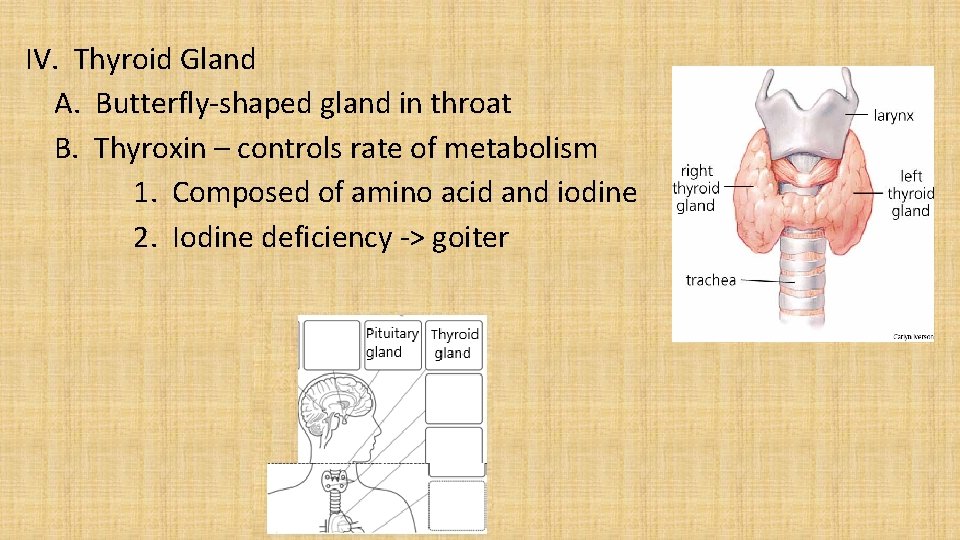
IV. Thyroid Gland A. Butterfly-shaped gland in throat B. Thyroxin – controls rate of metabolism 1. Composed of amino acid and iodine 2. Iodine deficiency -> goiter
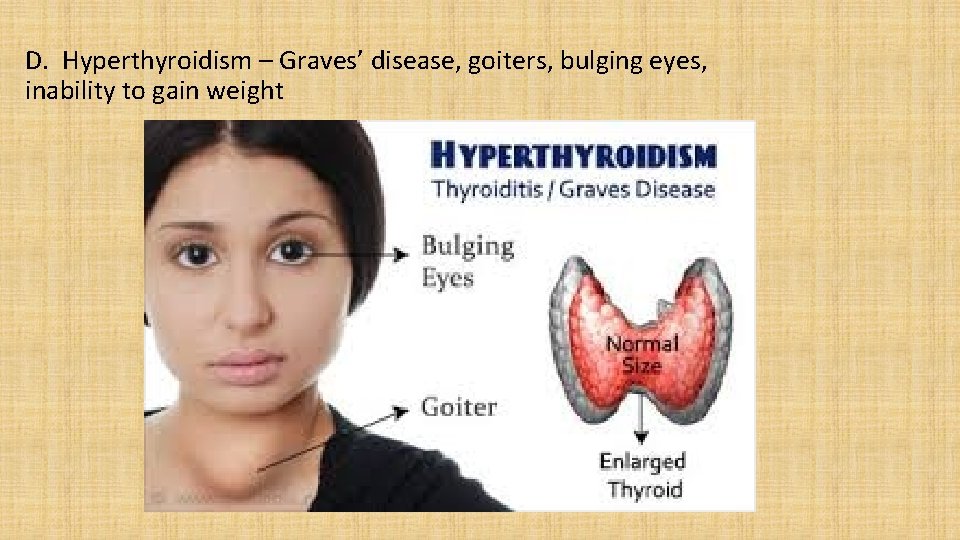
D. Hyperthyroidism – Graves’ disease, goiters, bulging eyes, inability to gain weight
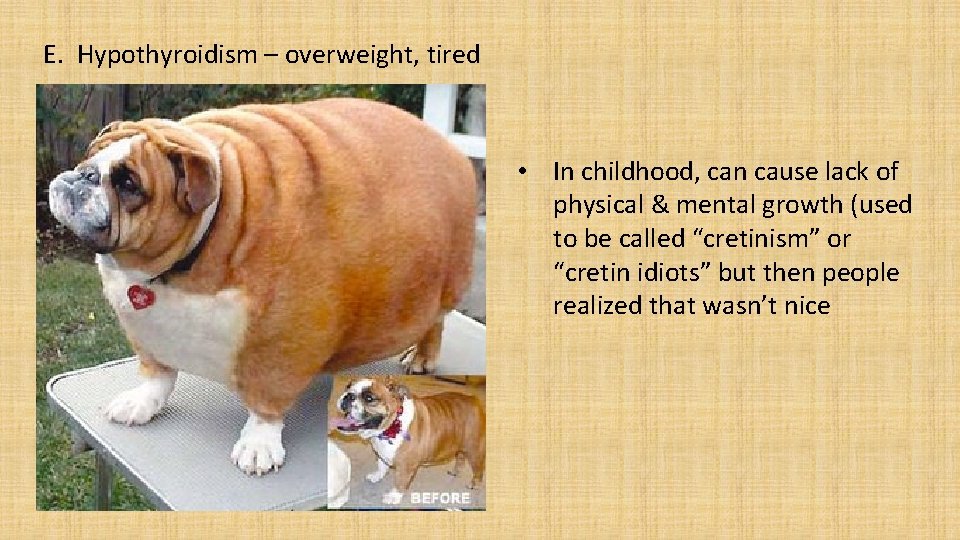
E. Hypothyroidism – overweight, tired • In childhood, can cause lack of physical & mental growth (used to be called “cretinism” or “cretin idiots” but then people realized that wasn’t nice
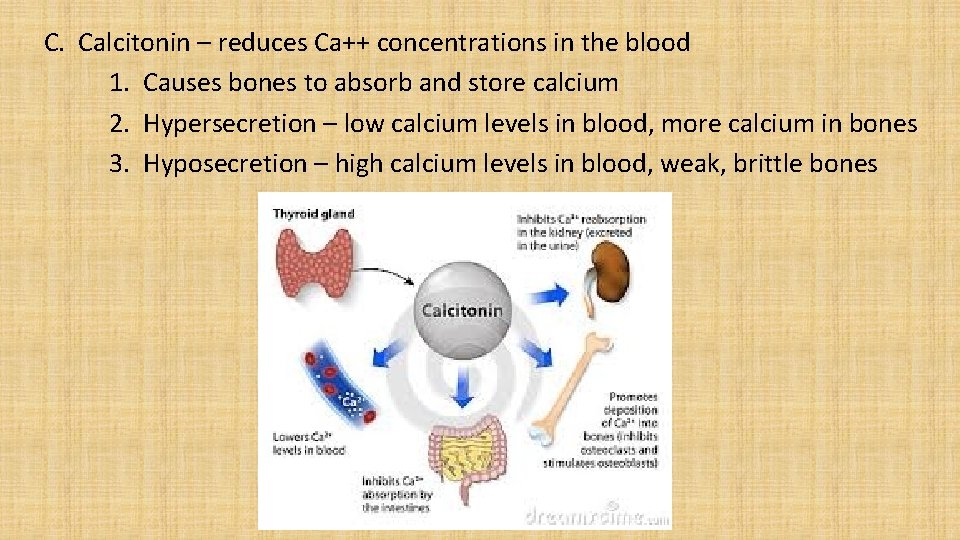
C. Calcitonin – reduces Ca++ concentrations in the blood 1. Causes bones to absorb and store calcium 2. Hypersecretion – low calcium levels in blood, more calcium in bones 3. Hyposecretion – high calcium levels in blood, weak, brittle bones
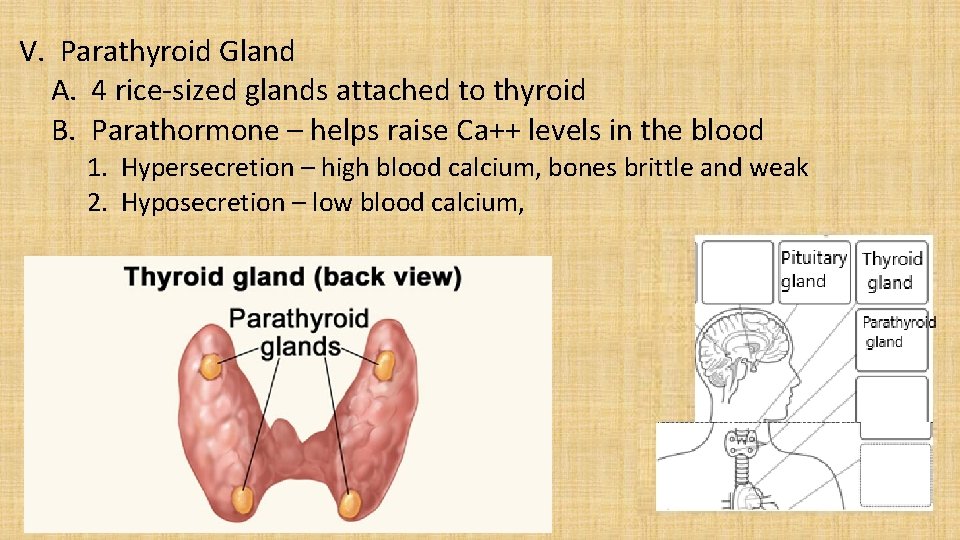
V. Parathyroid Gland A. 4 rice-sized glands attached to thyroid B. Parathormone – helps raise Ca++ levels in the blood 1. Hypersecretion – high blood calcium, bones brittle and weak 2. Hyposecretion – low blood calcium,
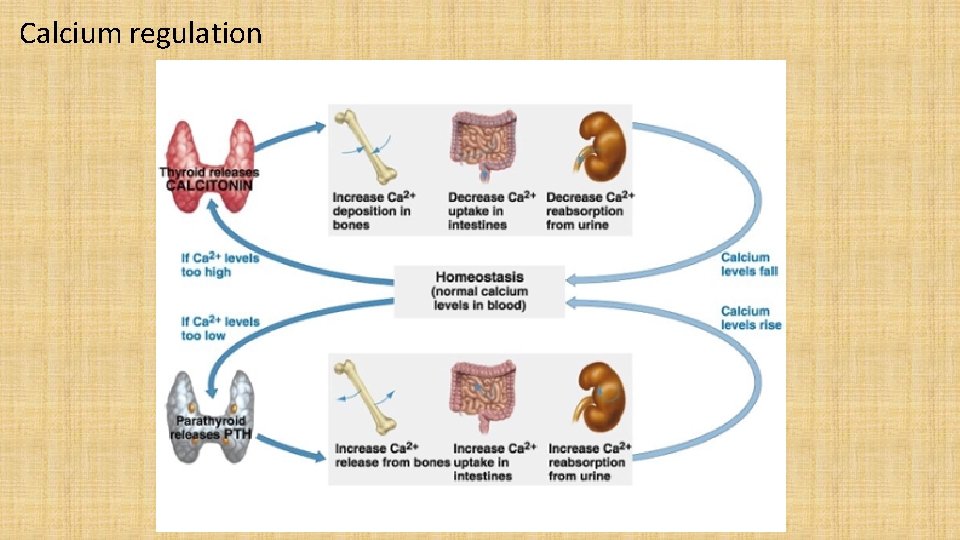
Calcium regulation
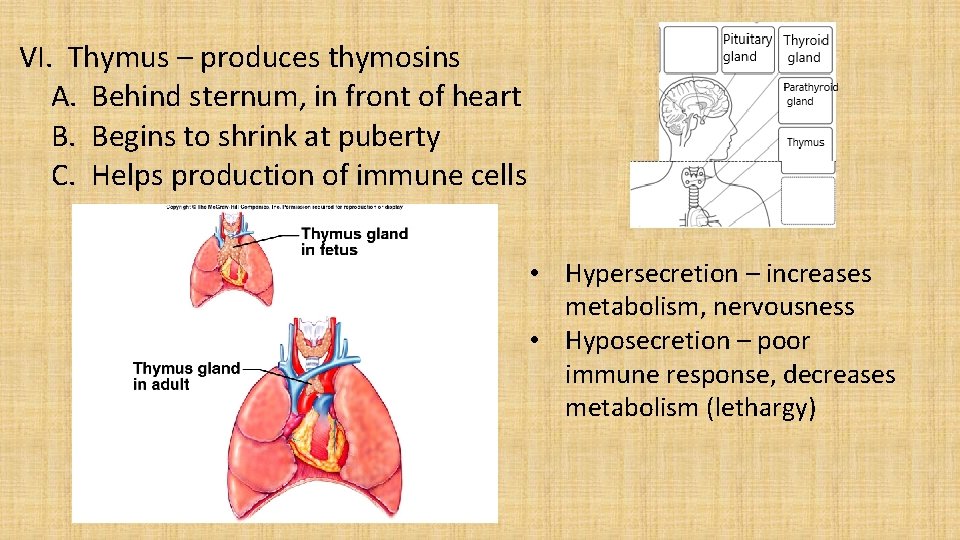
VI. Thymus – produces thymosins A. Behind sternum, in front of heart B. Begins to shrink at puberty C. Helps production of immune cells • Hypersecretion – increases metabolism, nervousness • Hyposecretion – poor immune response, decreases metabolism (lethargy)
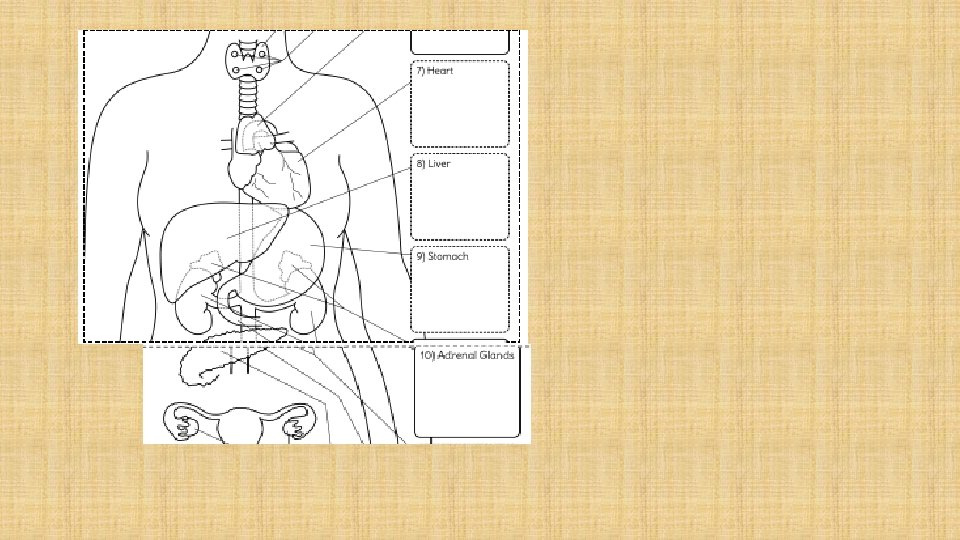
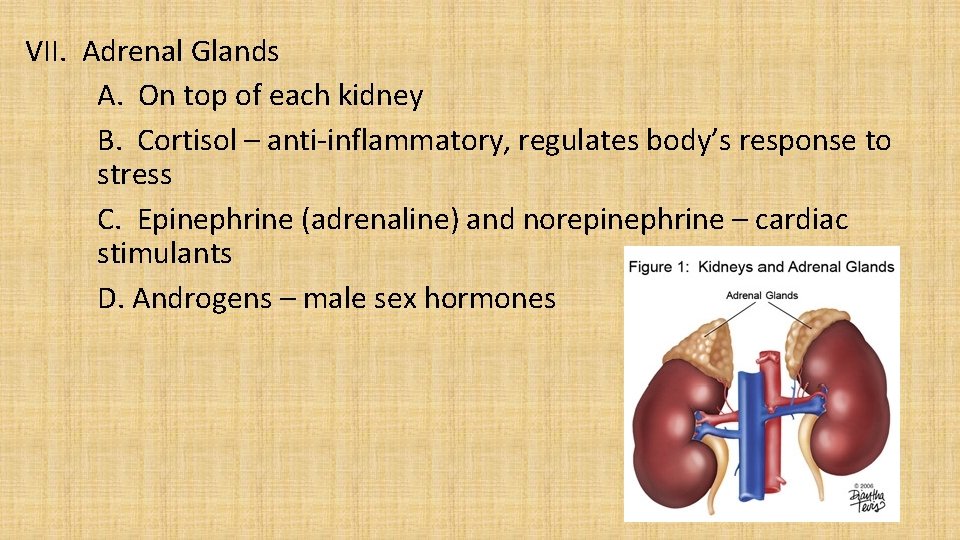
VII. Adrenal Glands A. On top of each kidney B. Cortisol – anti-inflammatory, regulates body’s response to stress C. Epinephrine (adrenaline) and norepinephrine – cardiac stimulants D. Androgens – male sex hormones
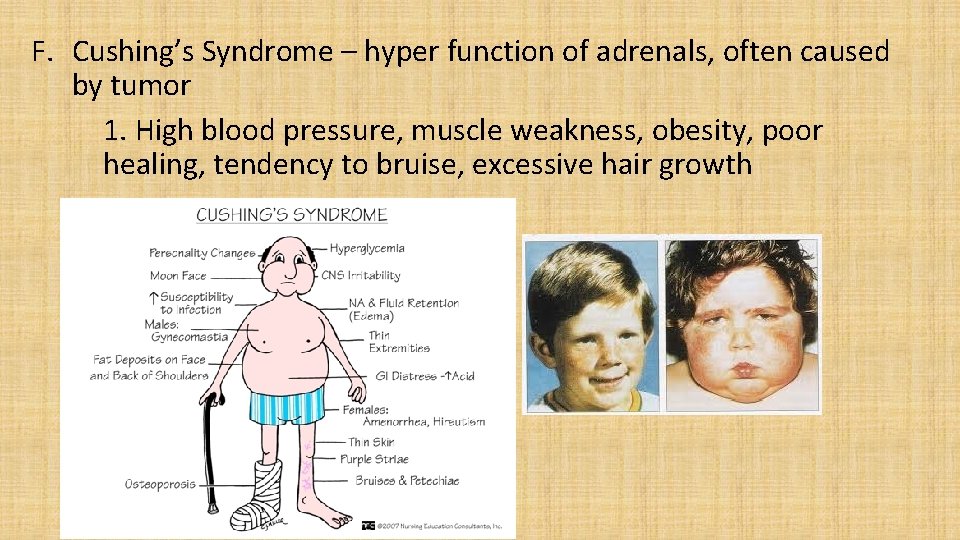
F. Cushing’s Syndrome – hyper function of adrenals, often caused by tumor 1. High blood pressure, muscle weakness, obesity, poor healing, tendency to bruise, excessive hair growth
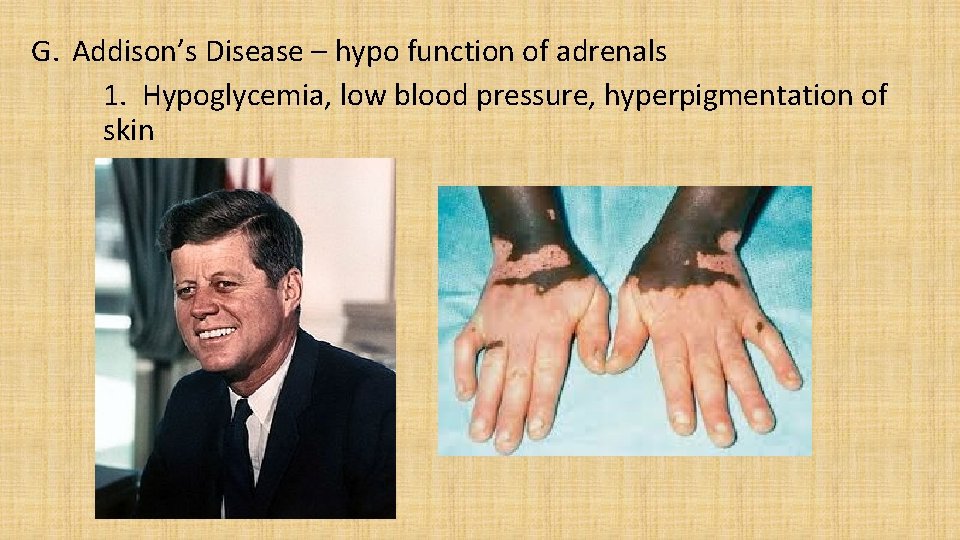
G. Addison’s Disease – hypo function of adrenals 1. Hypoglycemia, low blood pressure, hyperpigmentation of skin
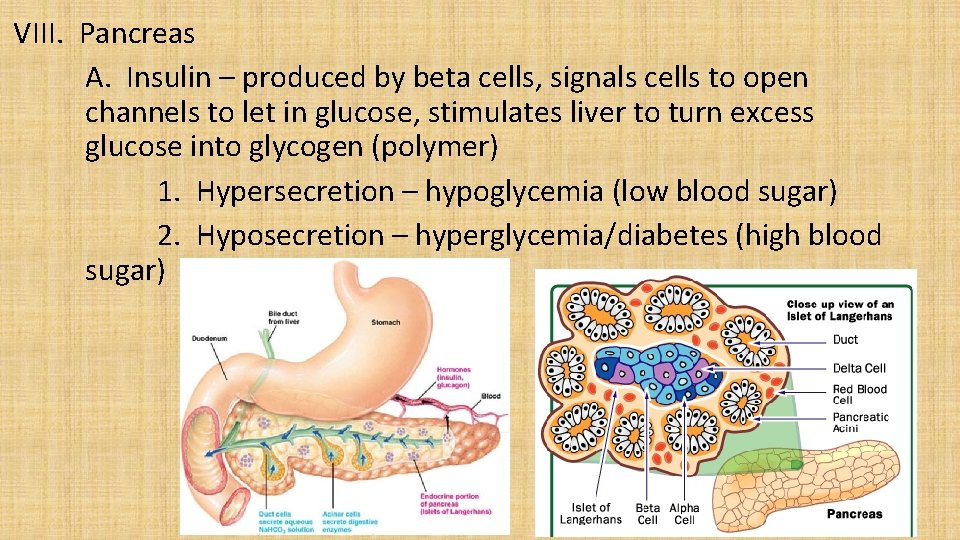
VIII. Pancreas A. Insulin – produced by beta cells, signals cells to open channels to let in glucose, stimulates liver to turn excess glucose into glycogen (polymer) 1. Hypersecretion – hypoglycemia (low blood sugar) 2. Hyposecretion – hyperglycemia/diabetes (high blood sugar)
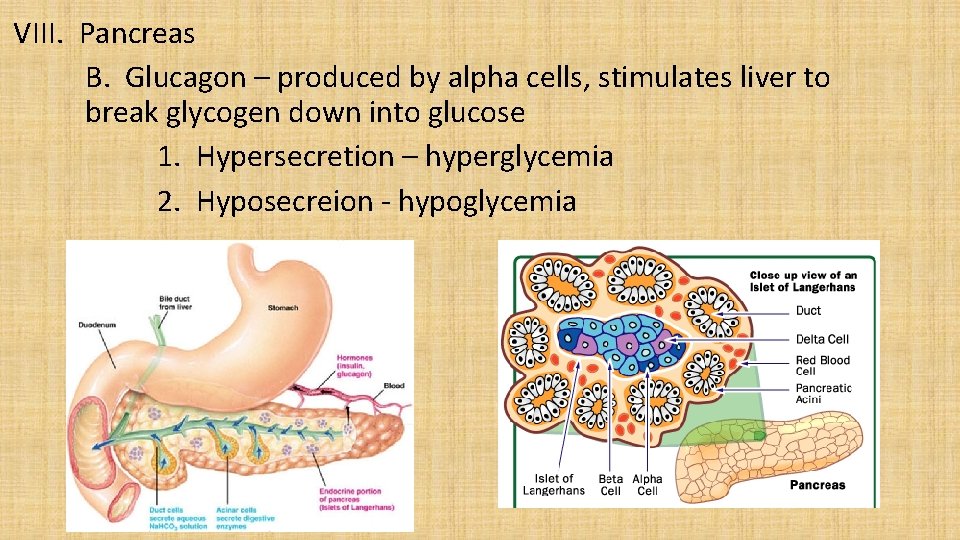
VIII. Pancreas B. Glucagon – produced by alpha cells, stimulates liver to break glycogen down into glucose 1. Hypersecretion – hyperglycemia 2. Hyposecreion - hypoglycemia
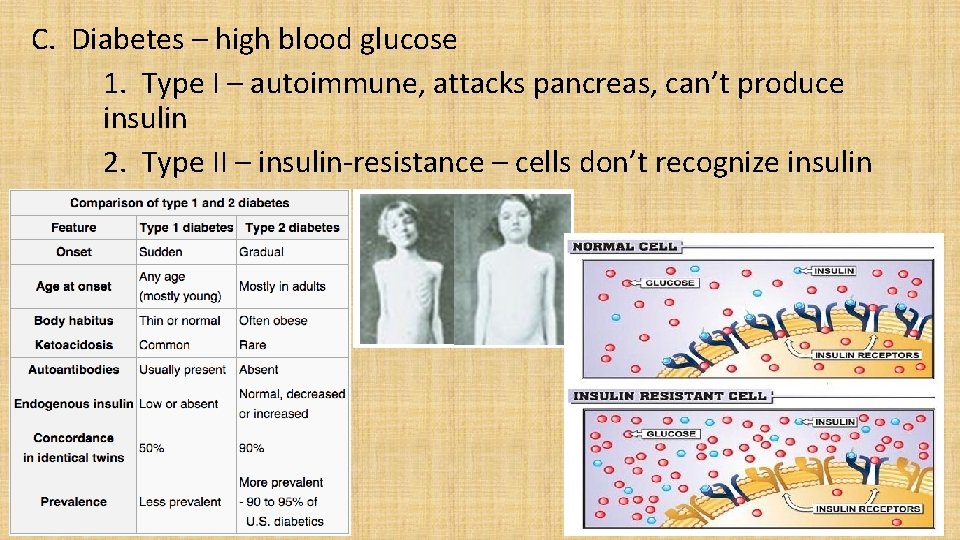
C. Diabetes – high blood glucose 1. Type I – autoimmune, attacks pancreas, can’t produce insulin 2. Type II – insulin-resistance – cells don’t recognize insulin
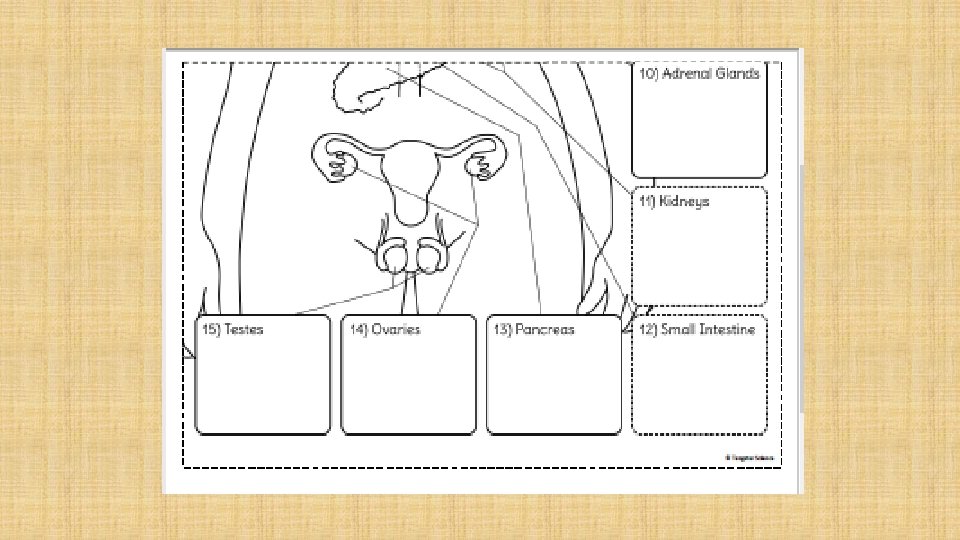
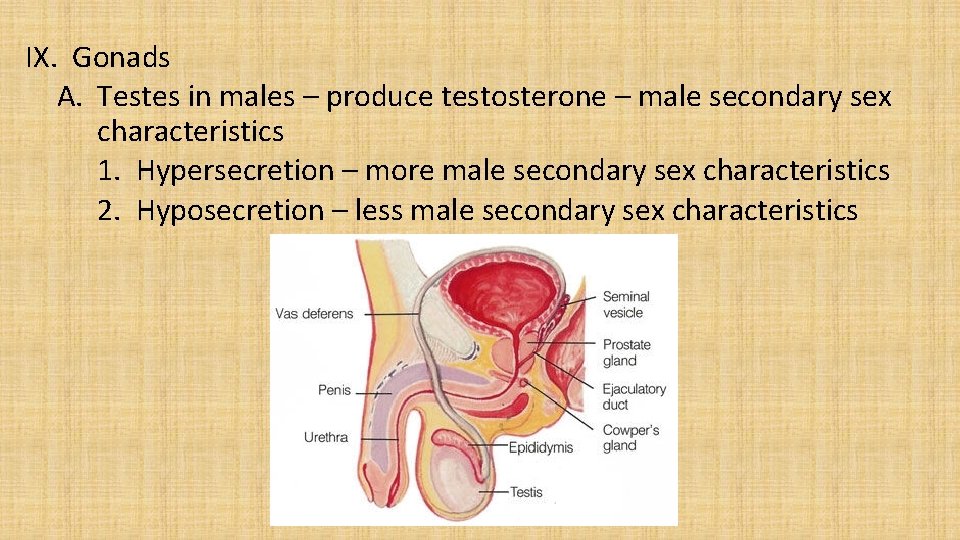
IX. Gonads A. Testes in males – produce testosterone – male secondary sex characteristics 1. Hypersecretion – more male secondary sex characteristics 2. Hyposecretion – less male secondary sex characteristics
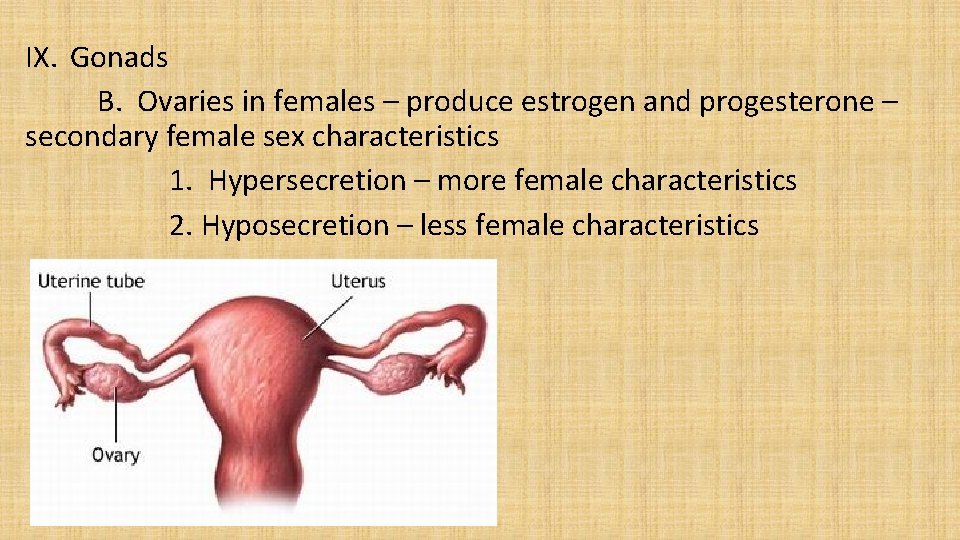
IX. Gonads B. Ovaries in females – produce estrogen and progesterone – secondary female sex characteristics 1. Hypersecretion – more female characteristics 2. Hyposecretion – less female characteristics
- Slides: 31