
The Endocrine System Endocrine and nervous systems work

- Slides: 63
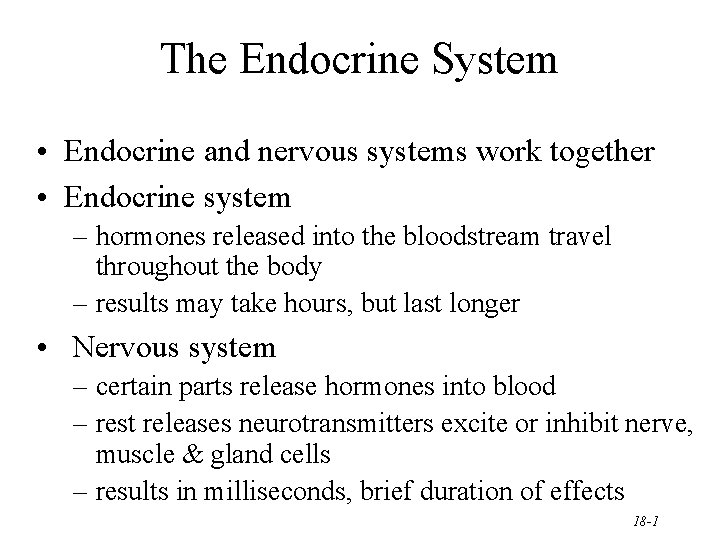
The Endocrine System • Endocrine and nervous systems work together • Endocrine system – hormones released into the bloodstream travel throughout the body – results may take hours, but last longer • Nervous system – certain parts release hormones into blood – rest releases neurotransmitters excite or inhibit nerve, muscle & gland cells – results in milliseconds, brief duration of effects 18 -1
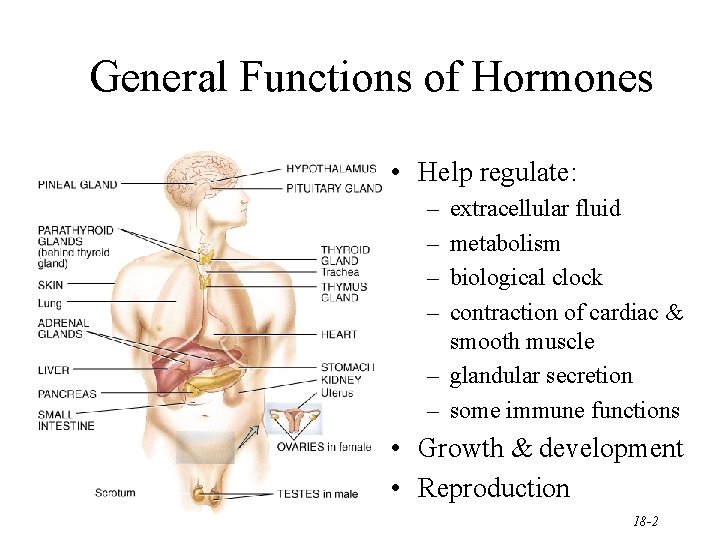
General Functions of Hormones • Help regulate: – – extracellular fluid metabolism biological clock contraction of cardiac & smooth muscle – glandular secretion – some immune functions • Growth & development • Reproduction 18 -2
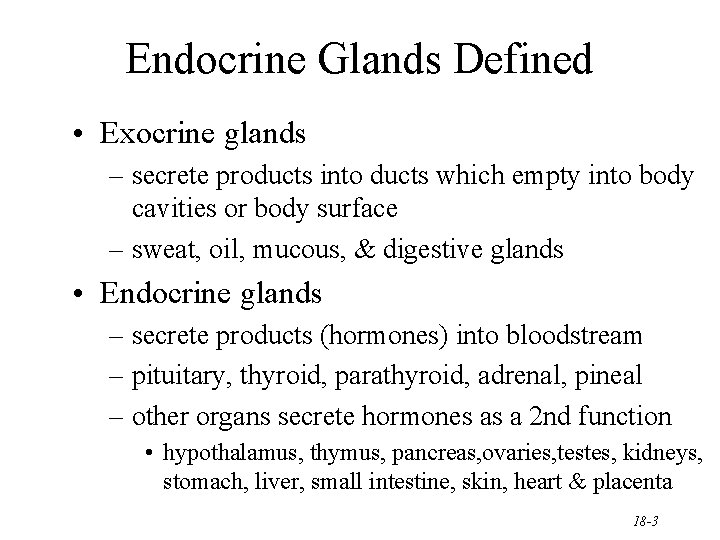
Endocrine Glands Defined • Exocrine glands – secrete products into ducts which empty into body cavities or body surface – sweat, oil, mucous, & digestive glands • Endocrine glands – secrete products (hormones) into bloodstream – pituitary, thyroid, parathyroid, adrenal, pineal – other organs secrete hormones as a 2 nd function • hypothalamus, thymus, pancreas, ovaries, testes, kidneys, stomach, liver, small intestine, skin, heart & placenta 18 -3
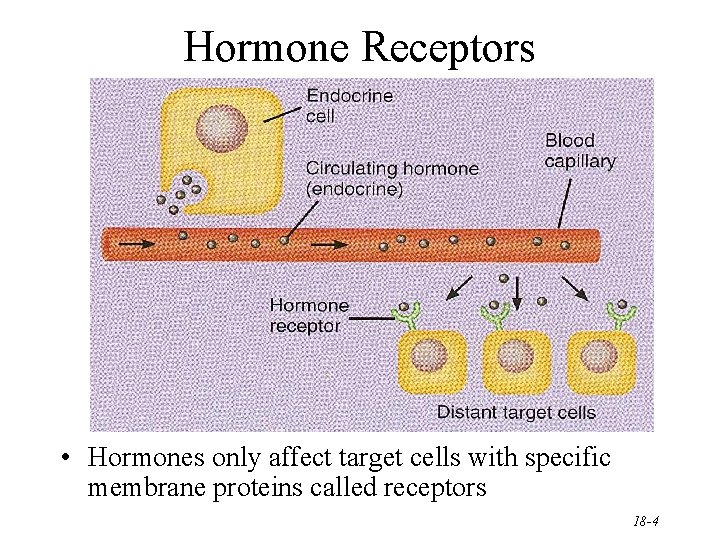
Hormone Receptors • Hormones only affect target cells with specific membrane proteins called receptors 18 -4
Role of Hormone Receptors • Constantly being synthesized & broken down • A range of 2000 -100, 000 receptors / target cell • Down-regulation – excess hormone, produces a decrease in number of receptors • receptors undergo endocytosis and are degraded – decreases sensitivity of target cell to hormone • Up-regulation – deficiency of hormone, produces an increase in the number of receptors – target tissue more sensitive to the hormone 18 -5
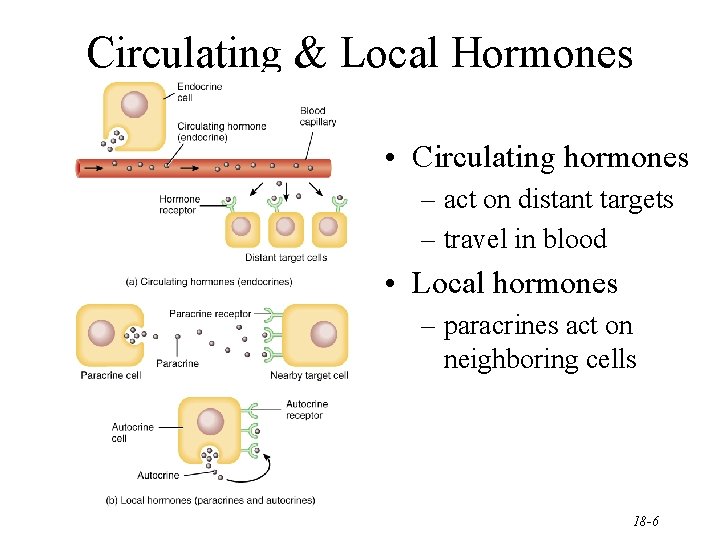
Circulating & Local Hormones • Circulating hormones – act on distant targets – travel in blood • Local hormones – paracrines act on neighboring cells 18 -6
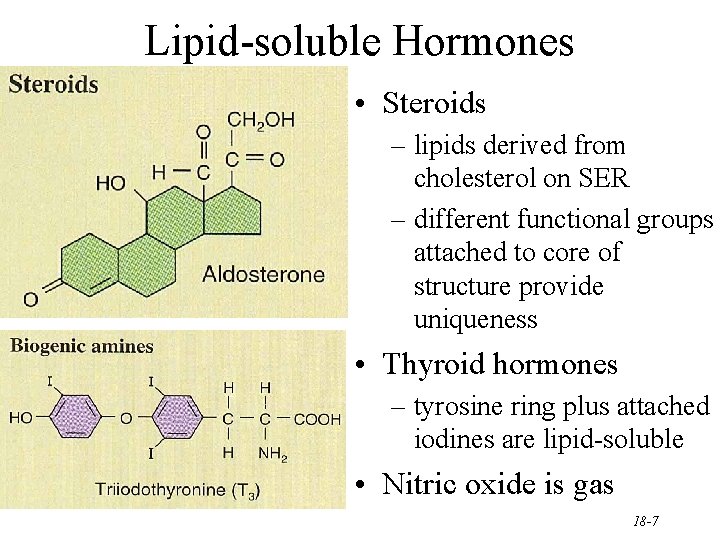
Lipid-soluble Hormones • Steroids – lipids derived from cholesterol on SER – different functional groups attached to core of structure provide uniqueness • Thyroid hormones – tyrosine ring plus attached iodines are lipid-soluble • Nitric oxide is gas 18 -7
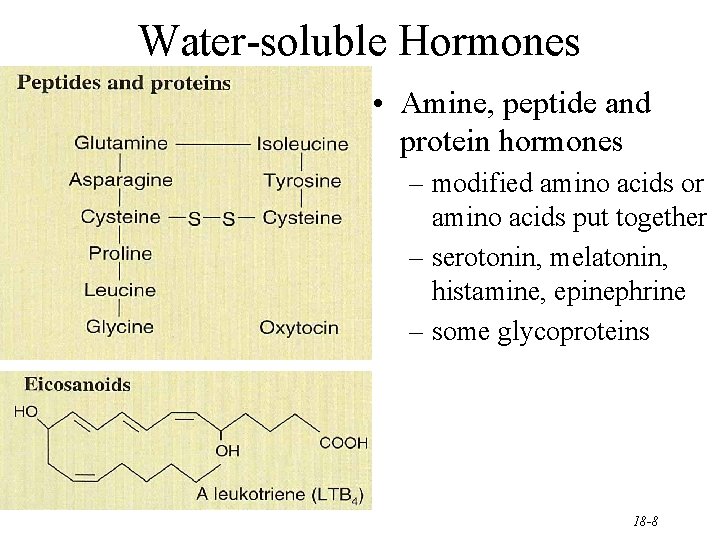
Water-soluble Hormones • Amine, peptide and protein hormones – modified amino acids or amino acids put together – serotonin, melatonin, histamine, epinephrine – some glycoproteins 18 -8
Hormone Transport in Blood • Protein hormones circulate in free form in blood • Steroid (lipid) & thyroid hormones must attach to transport proteins synthesized by liver – improve transport by making them water-soluble – slow loss of hormone by filtration within kidney – create reserve of hormone • only. 1 to 10% of hormone is not bound to transport protein = free fraction 18 -9
General Mechanisms of Hormone Action • Hormone binds to cell surface or receptor inside target cell • Cell may then – synthesize new molecules – change permeability of membrane – alter rates of reactions • Each target cell responds to hormone differently – liver cells---insulin stimulates glycogen synthesis – adipose---insulin stimulates triglyceride synthesis 18 -10
Hormonal Interactions • Permissive effect – a second hormone, strengthens the effects of the first – thyroid strengthens epinephrine’s effect upon lipolysis • Synergistic effect – two hormones acting together for greater effect – estrogen & LH are both needed for oocyte production • Antagonistic effects – two hormones with opposite effects – insulin promotes glycogen formation & glucagon stimulates glycogen breakdown 18 -11
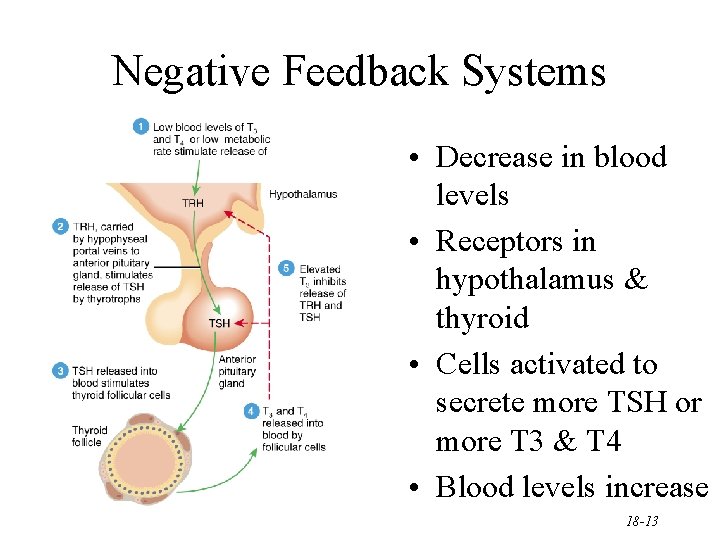
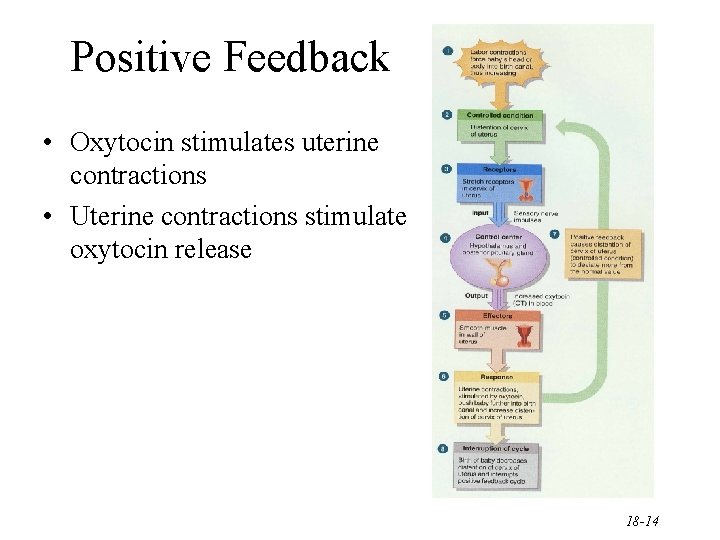
Control of Hormone Secretion • Regulated by signals from nervous system, chemical changes in the blood or by other hormones • Negative feedback control (most common) – decrease/increase in blood level is reversed • Positive feedback control – the change produced by the hormone causes more hormone to be released • Disorders involve either hyposecretion or hypersecretion of a hormone 18 -12
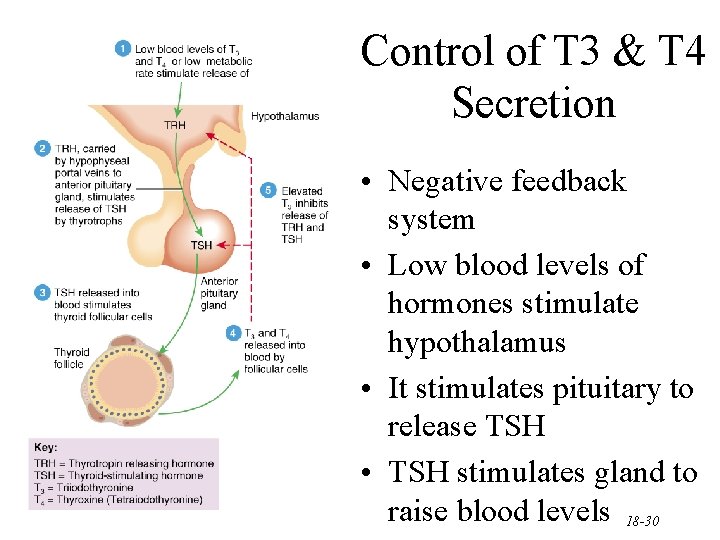
Negative Feedback Systems • Decrease in blood levels • Receptors in hypothalamus & thyroid • Cells activated to secrete more TSH or more T 3 & T 4 • Blood levels increase 18 -13
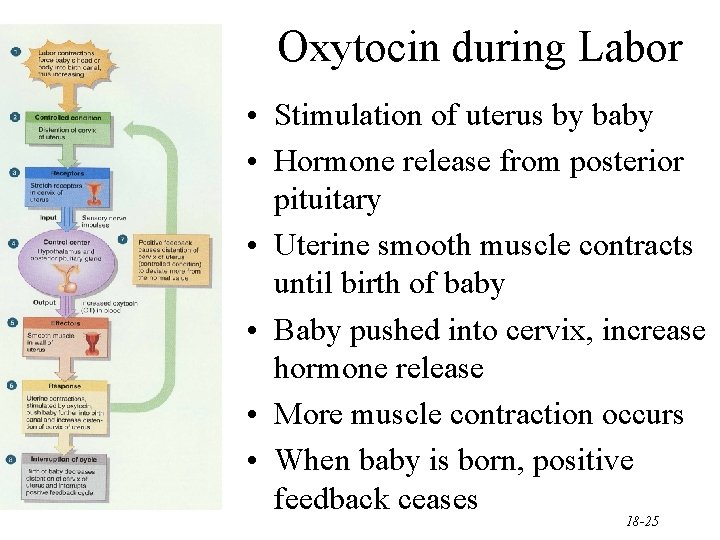
Positive Feedback • Oxytocin stimulates uterine contractions • Uterine contractions stimulate oxytocin release 18 -14
Hypothalamus and Pituitary Gland • Both are master endocrine glands since their hormones control other endocrine glands • Hypothalamus is a section of brain above where pituitary gland is suspended from stalk • Hypothalamus receives input from cortex, thalamus, limbic system & internal organs • Hypothalamus controls pituitary gland with 9 different releasing & inhibiting hormones 18 -15
Anatomy of Pituitary Gland • Pea-shaped, 1/2 inch gland found in sella turcica of sphenoid • Infundibulum attaches it to brain • Anterior lobe = 75% develops from roof of mouth • Posterior lobe = 25% – ends of axons of 10, 000 neurons found in hypothalamus – neuroglial cells called pituicytes 18 -16
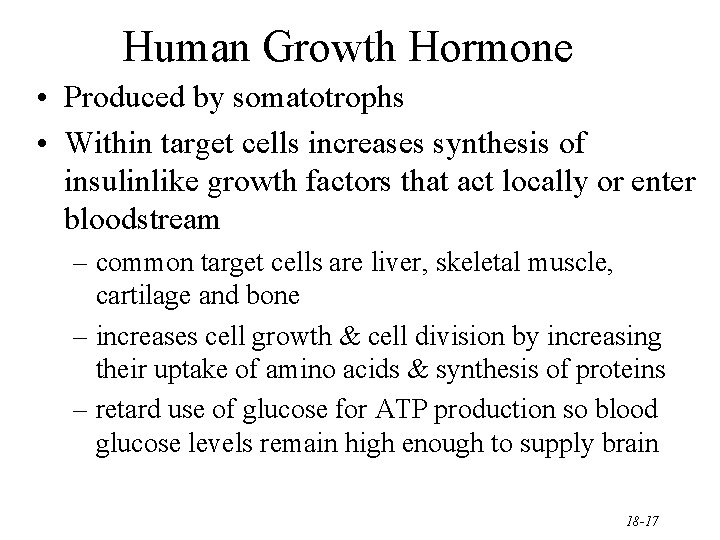
Human Growth Hormone • Produced by somatotrophs • Within target cells increases synthesis of insulinlike growth factors that act locally or enter bloodstream – common target cells are liver, skeletal muscle, cartilage and bone – increases cell growth & cell division by increasing their uptake of amino acids & synthesis of proteins – retard use of glucose for ATP production so blood glucose levels remain high enough to supply brain 18 -17
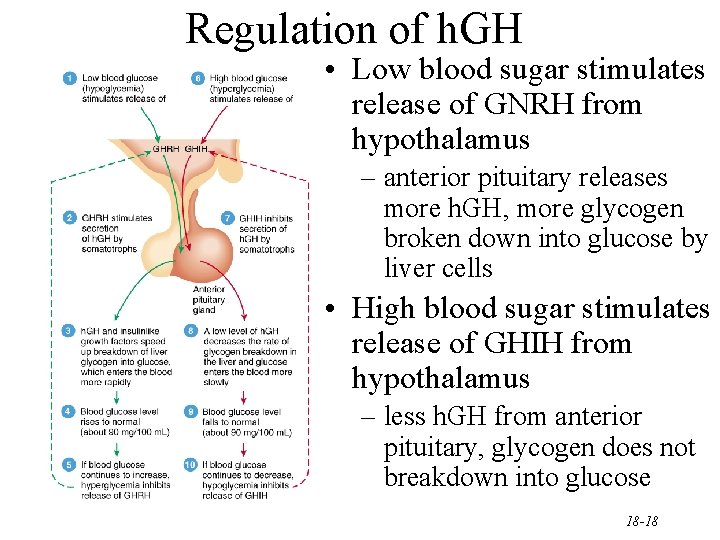
Regulation of h. GH • Low blood sugar stimulates release of GNRH from hypothalamus – anterior pituitary releases more h. GH, more glycogen broken down into glucose by liver cells • High blood sugar stimulates release of GHIH from hypothalamus – less h. GH from anterior pituitary, glycogen does not breakdown into glucose 18 -18
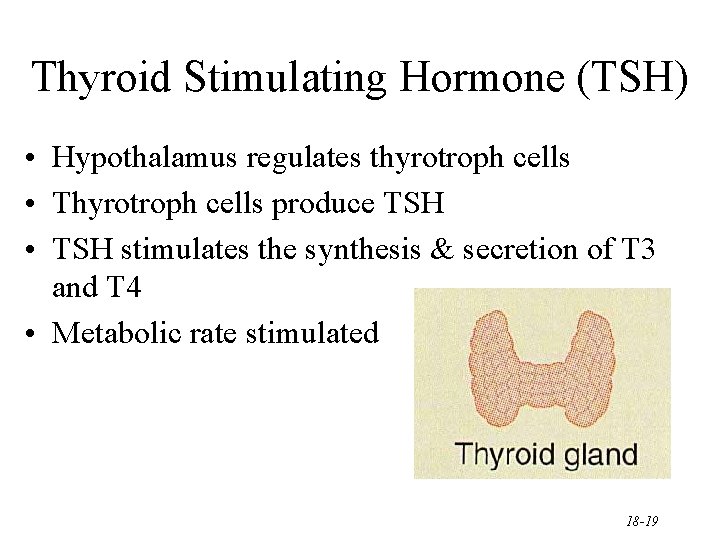
Thyroid Stimulating Hormone (TSH) • Hypothalamus regulates thyrotroph cells • Thyrotroph cells produce TSH • TSH stimulates the synthesis & secretion of T 3 and T 4 • Metabolic rate stimulated 18 -19
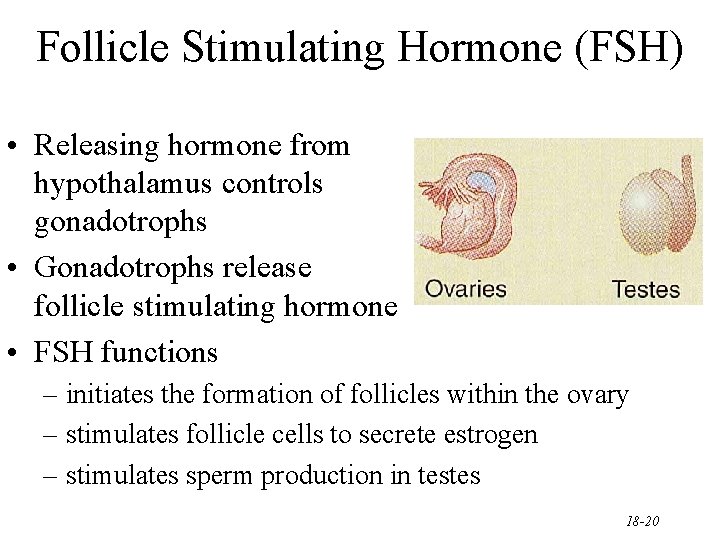
Follicle Stimulating Hormone (FSH) • Releasing hormone from hypothalamus controls gonadotrophs • Gonadotrophs release follicle stimulating hormone • FSH functions – initiates the formation of follicles within the ovary – stimulates follicle cells to secrete estrogen – stimulates sperm production in testes 18 -20
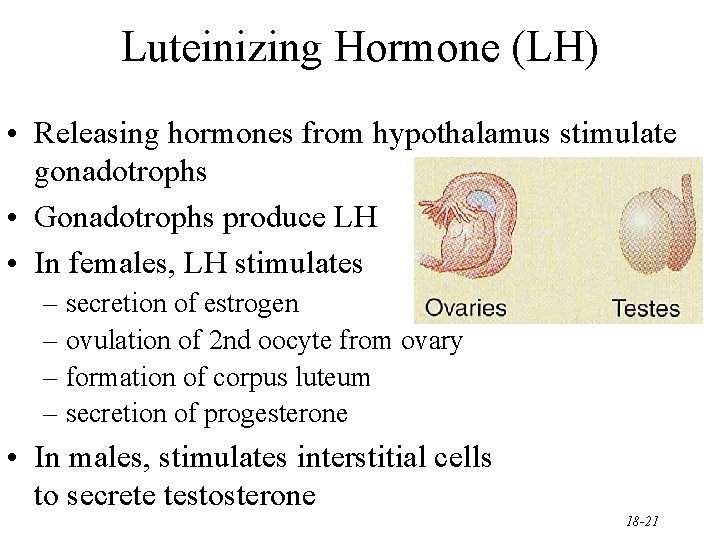
Luteinizing Hormone (LH) • Releasing hormones from hypothalamus stimulate gonadotrophs • Gonadotrophs produce LH • In females, LH stimulates – secretion of estrogen – ovulation of 2 nd oocyte from ovary – formation of corpus luteum – secretion of progesterone • In males, stimulates interstitial cells to secrete testosterone 18 -21
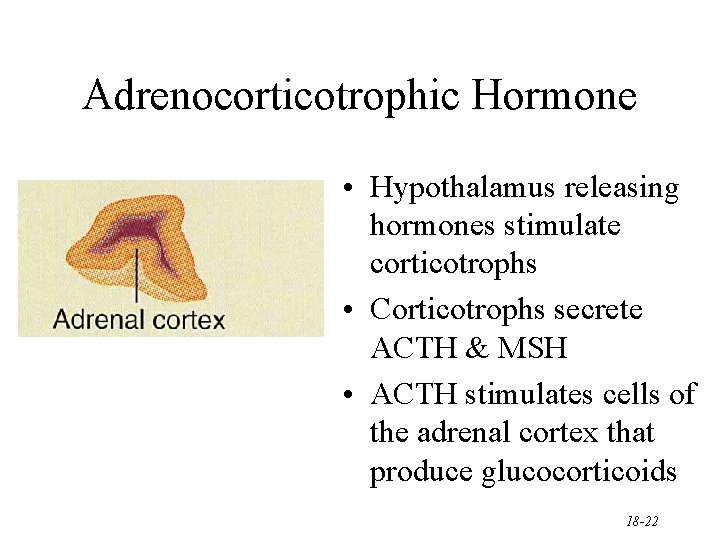
Adrenocorticotrophic Hormone • Hypothalamus releasing hormones stimulate corticotrophs • Corticotrophs secrete ACTH & MSH • ACTH stimulates cells of the adrenal cortex that produce glucocorticoids 18 -22
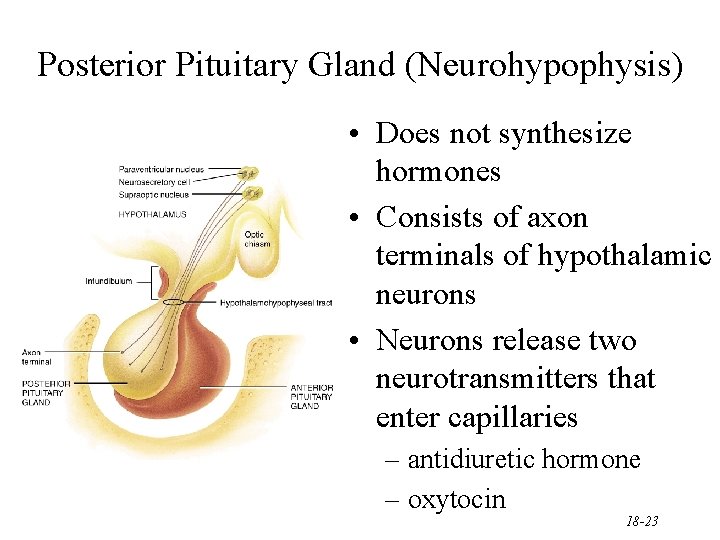
Posterior Pituitary Gland (Neurohypophysis) • Does not synthesize hormones • Consists of axon terminals of hypothalamic neurons • Neurons release two neurotransmitters that enter capillaries – antidiuretic hormone – oxytocin 18 -23
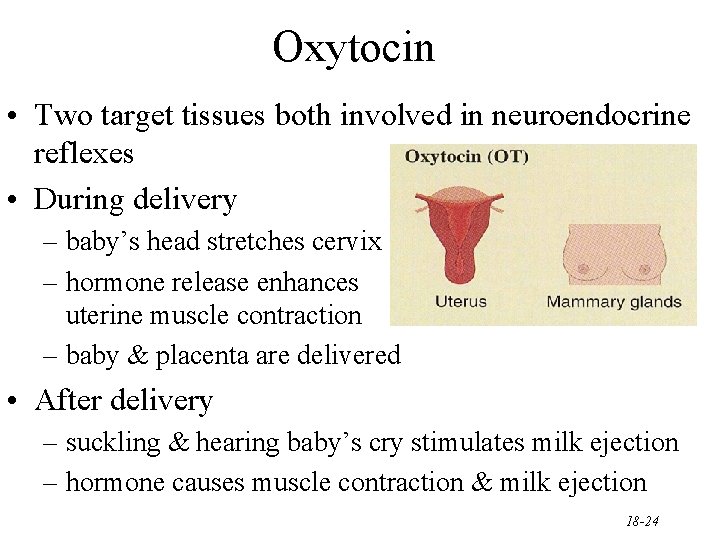
Oxytocin • Two target tissues both involved in neuroendocrine reflexes • During delivery – baby’s head stretches cervix – hormone release enhances uterine muscle contraction – baby & placenta are delivered • After delivery – suckling & hearing baby’s cry stimulates milk ejection – hormone causes muscle contraction & milk ejection 18 -24
Oxytocin during Labor • Stimulation of uterus by baby • Hormone release from posterior pituitary • Uterine smooth muscle contracts until birth of baby • Baby pushed into cervix, increase hormone release • More muscle contraction occurs • When baby is born, positive feedback ceases 18 -25
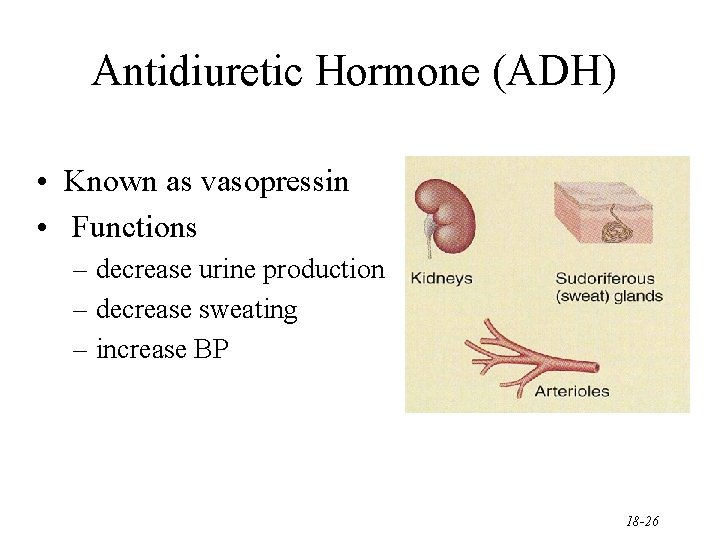
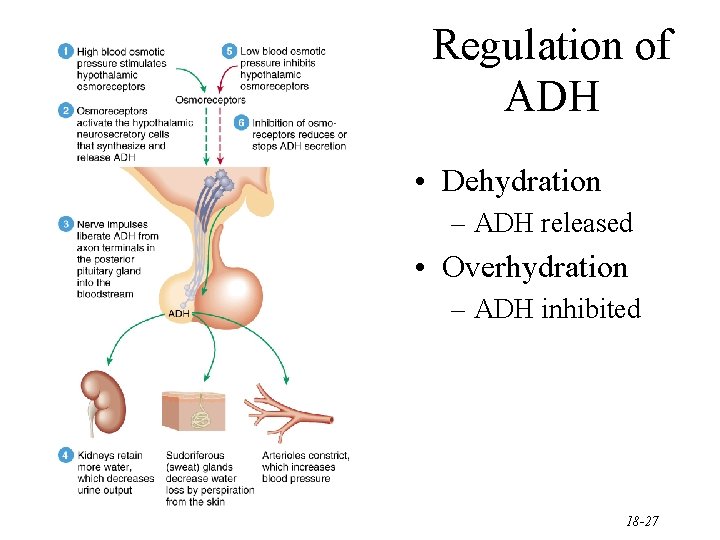
Antidiuretic Hormone (ADH) • Known as vasopressin • Functions – decrease urine production – decrease sweating – increase BP 18 -26
Regulation of ADH • Dehydration – ADH released • Overhydration – ADH inhibited 18 -27
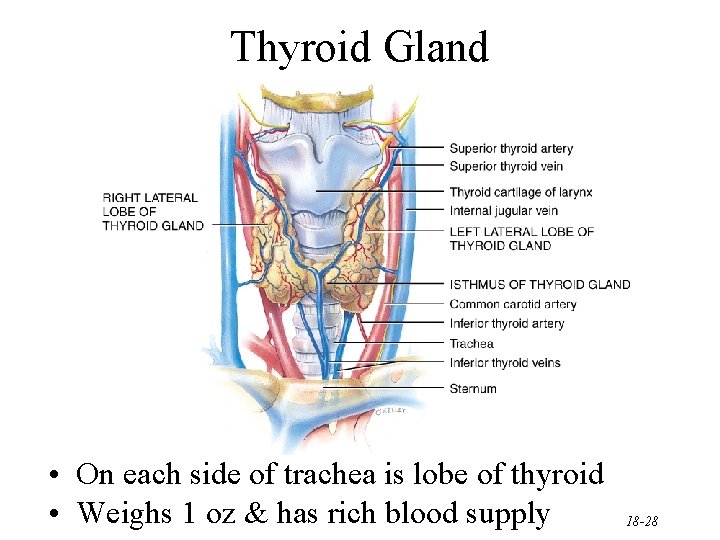
Thyroid Gland • On each side of trachea is lobe of thyroid • Weighs 1 oz & has rich blood supply 18 -28
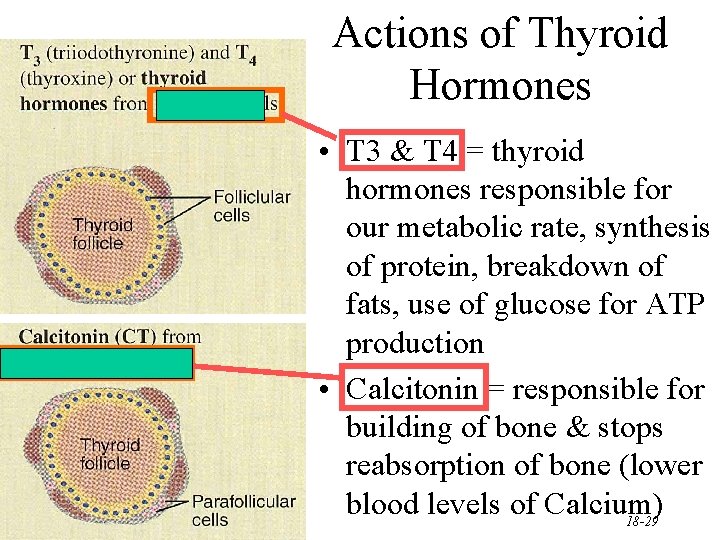
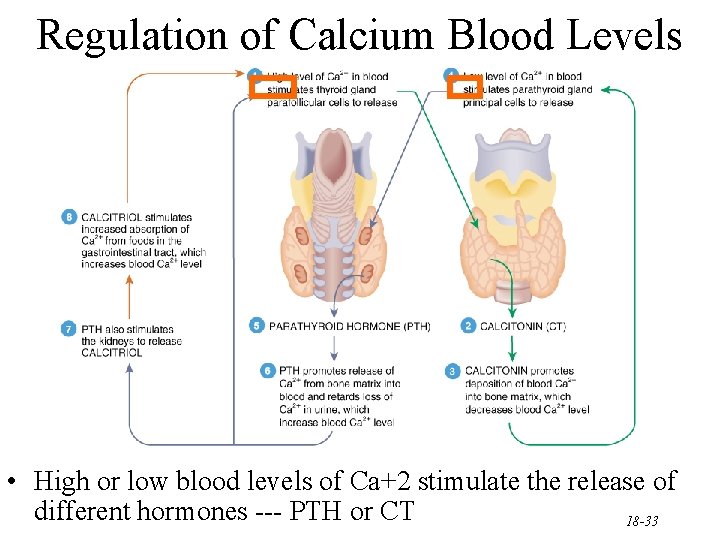
Actions of Thyroid Hormones • T 3 & T 4 = thyroid hormones responsible for our metabolic rate, synthesis of protein, breakdown of fats, use of glucose for ATP production • Calcitonin = responsible for building of bone & stops reabsorption of bone (lower blood levels of Calcium) 18 -29
Control of T 3 & T 4 Secretion • Negative feedback system • Low blood levels of hormones stimulate hypothalamus • It stimulates pituitary to release TSH • TSH stimulates gland to raise blood levels 18 -30
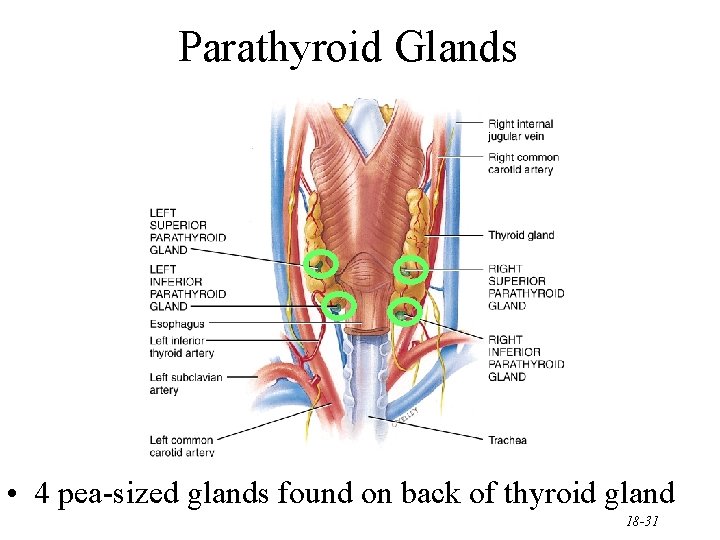
Parathyroid Glands • 4 pea-sized glands found on back of thyroid gland 18 -31
Parathyroid Hormone • Raise blood calcium levels • Opposite function of calcitonin 18 -32
Regulation of Calcium Blood Levels • High or low blood levels of Ca+2 stimulate the release of different hormones --- PTH or CT 18 -33
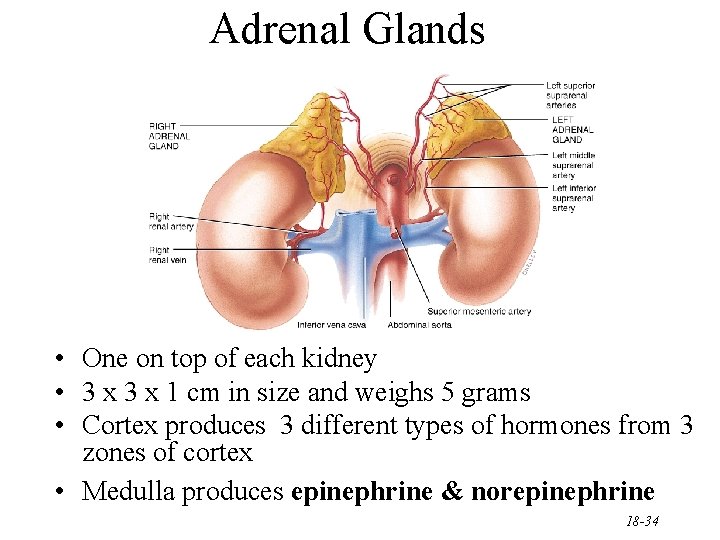
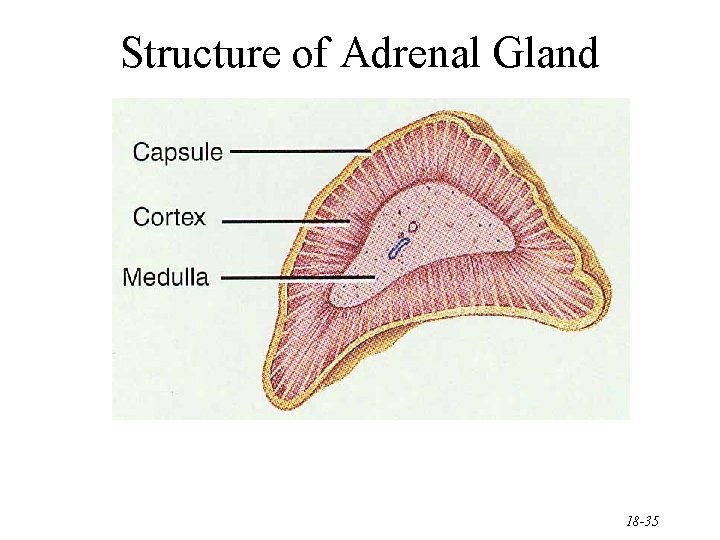
Adrenal Glands • One on top of each kidney • 3 x 1 cm in size and weighs 5 grams • Cortex produces 3 different types of hormones from 3 zones of cortex • Medulla produces epinephrine & norepinephrine 18 -34
Structure of Adrenal Gland 18 -35
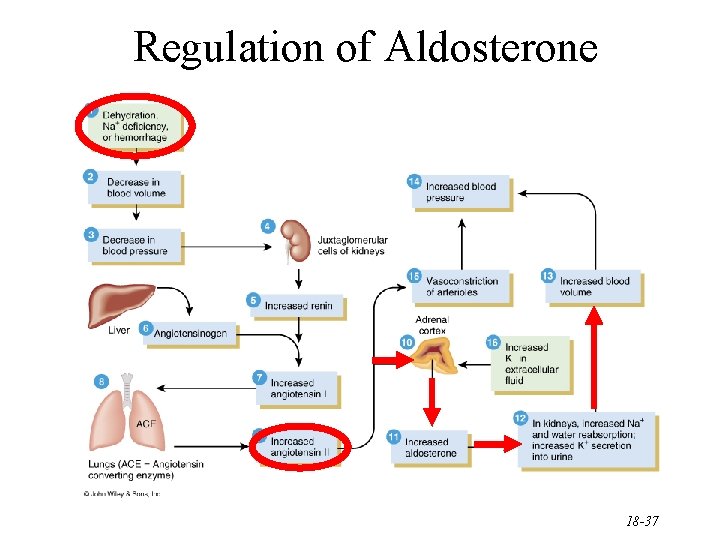
Mineralocorticoids • 95% of hormonal activity due to aldosterone • Functions – increase reabsorption of Na+ with Cl- , bicarbonate and water following it – promotes excretion of K+ and H+ • Hypersecretion = tumor producing aldosteronism – high blood pressure caused by retention of Na+ and water in blood 18 -36
Regulation of Aldosterone 18 -37
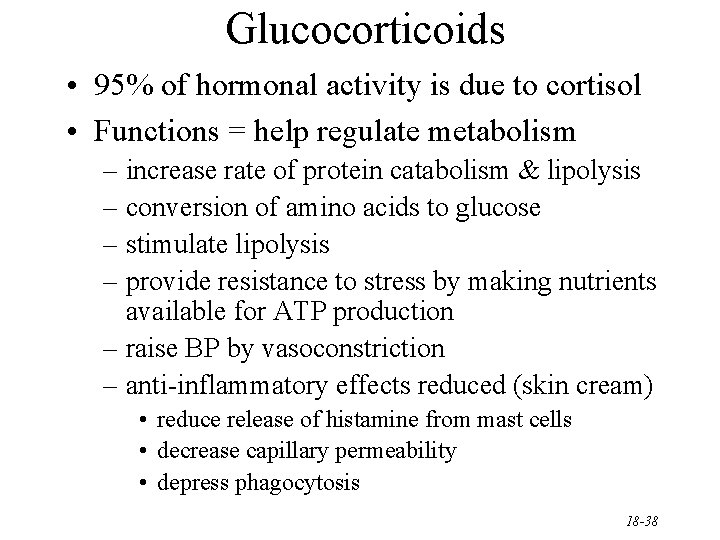
Glucocorticoids • 95% of hormonal activity is due to cortisol • Functions = help regulate metabolism – increase rate of protein catabolism & lipolysis – conversion of amino acids to glucose – stimulate lipolysis – provide resistance to stress by making nutrients available for ATP production – raise BP by vasoconstriction – anti-inflammatory effects reduced (skin cream) • reduce release of histamine from mast cells • decrease capillary permeability • depress phagocytosis 18 -38
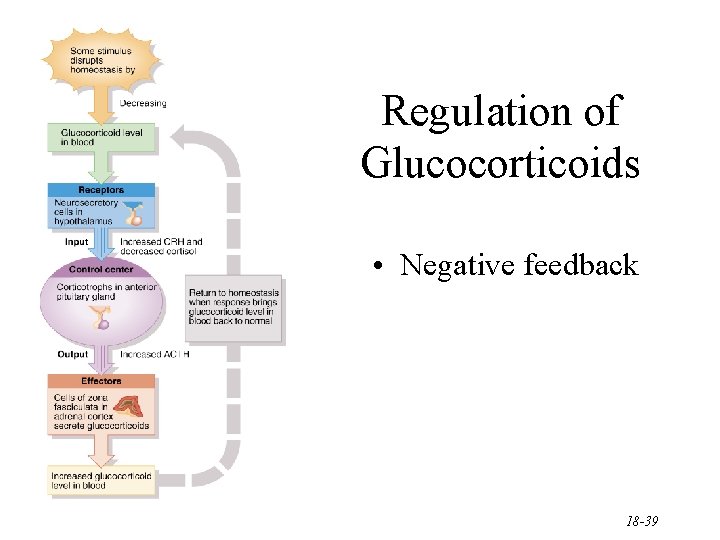
Regulation of Glucocorticoids • Negative feedback 18 -39
Androgens from Zona Reticularis • Small amount of male hormone produced – insignificant in males – may contribute to sex drive in females – is converted to estrogen in postmenopausal females 18 -40
Adrenal Medulla • Chromaffin cells receive direct innervation from sympathetic nervous system – develop from same tissue as postganglionic neurons • Produce epinephrine & norepinephrine • Hormones are sympathomimetic – effects mimic those of sympathetic NS – cause fight-flight behavior • Acetylcholine increase hormone secretion by adrenal medulla 18 -41
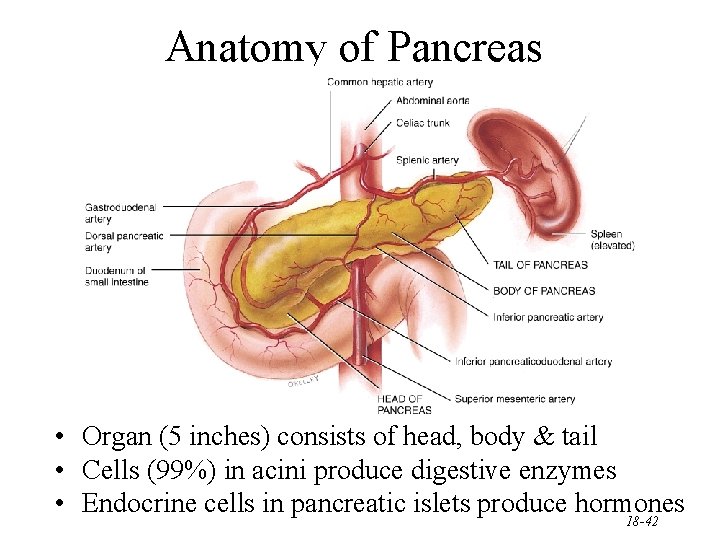
Anatomy of Pancreas • Organ (5 inches) consists of head, body & tail • Cells (99%) in acini produce digestive enzymes • Endocrine cells in pancreatic islets produce hormones 18 -42
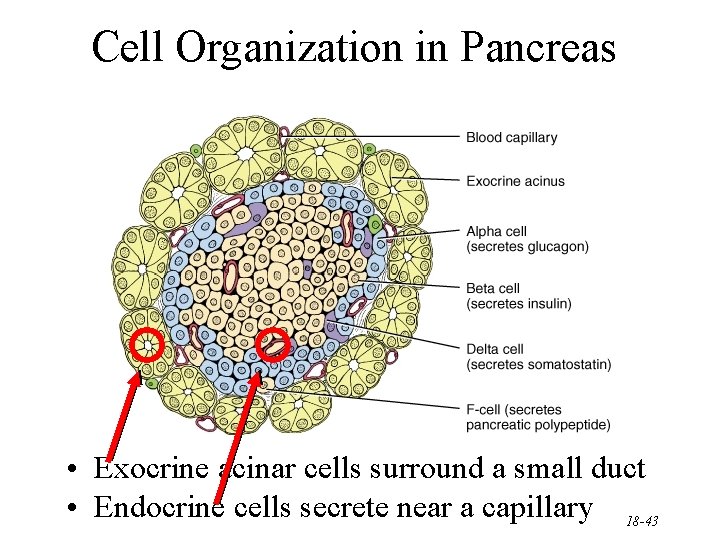
Cell Organization in Pancreas • Exocrine acinar cells surround a small duct • Endocrine cells secrete near a capillary 18 -43
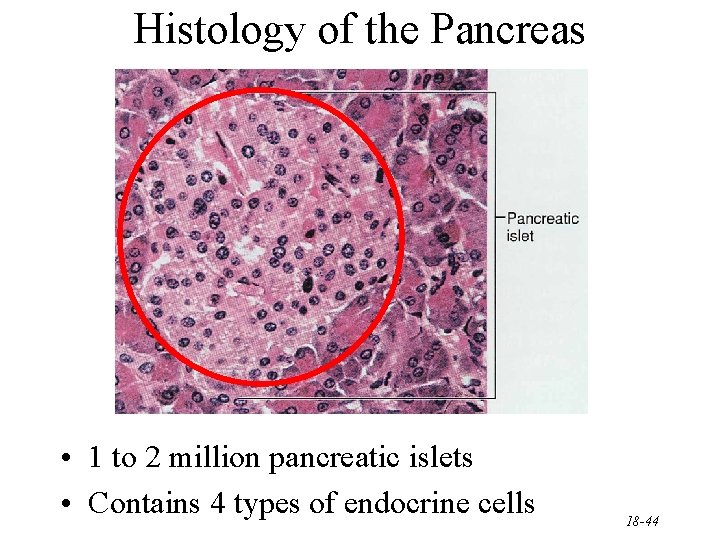
Histology of the Pancreas • 1 to 2 million pancreatic islets • Contains 4 types of endocrine cells 18 -44
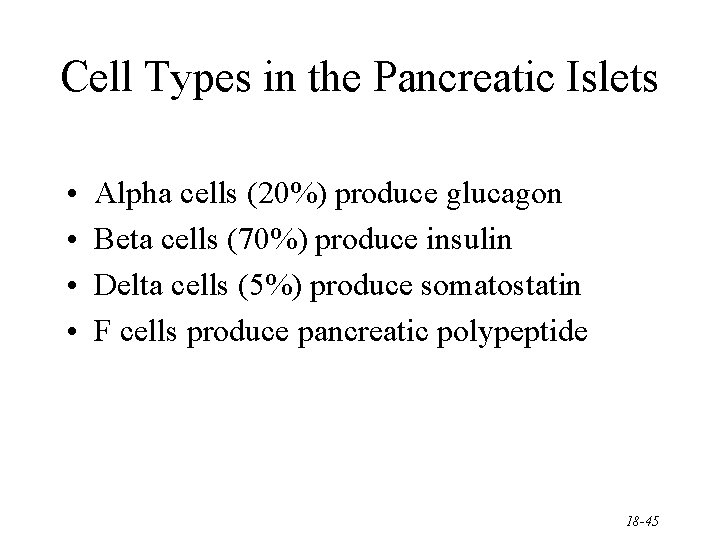
Cell Types in the Pancreatic Islets • • Alpha cells (20%) produce glucagon Beta cells (70%) produce insulin Delta cells (5%) produce somatostatin F cells produce pancreatic polypeptide 18 -45
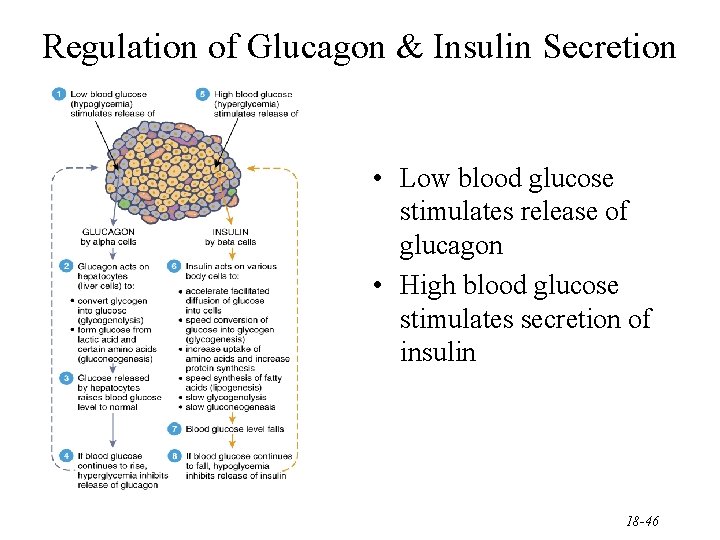
Regulation of Glucagon & Insulin Secretion • Low blood glucose stimulates release of glucagon • High blood glucose stimulates secretion of insulin 18 -46
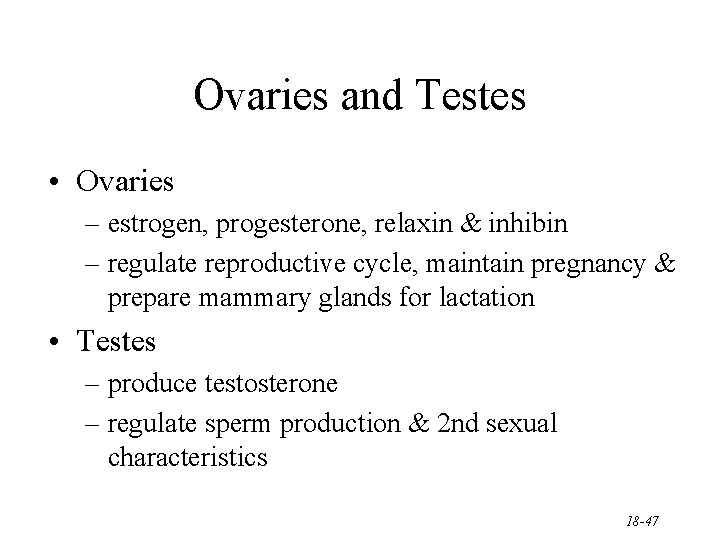
Ovaries and Testes • Ovaries – estrogen, progesterone, relaxin & inhibin – regulate reproductive cycle, maintain pregnancy & prepare mammary glands for lactation • Testes – produce testosterone – regulate sperm production & 2 nd sexual characteristics 18 -47
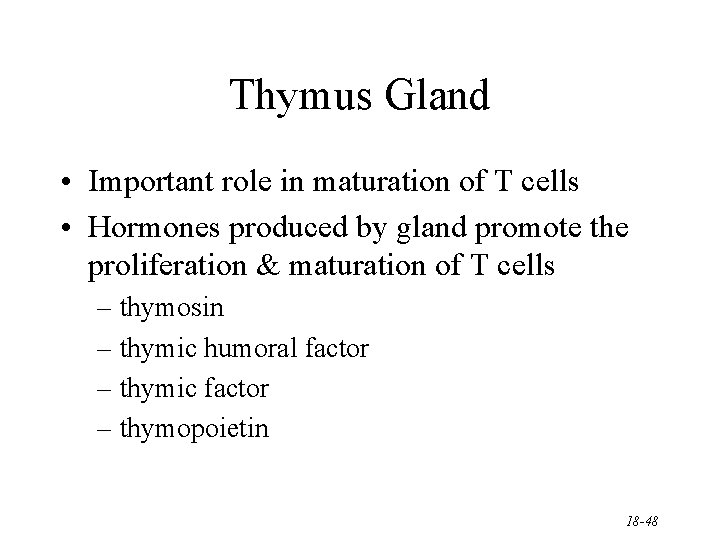
Thymus Gland • Important role in maturation of T cells • Hormones produced by gland promote the proliferation & maturation of T cells – thymosin – thymic humoral factor – thymic factor – thymopoietin 18 -48
Miscellaneous Hormones Eicosanoids • Local hormones released by all body cells • Leukotrienes influence WBCs & inflammation • Prostaglandins alter – smooth muscle contraction, glandular secretion, blood flow, platelet function, nerve transmission, metabolism etc. • Ibuprofen & other nonsteroidal anti-inflammatory drugs treat pain, fever & inflammation by inhibiting prostaglandin synthesis 18 -49
Nonsteroidal Anti-inflammatory Drugs • Answer to how aspirin or ibuprofen works was discovered in 1971 – inhibit a key enzyme in prostaglandin synthesis without affecting the synthesis of leukotrienes • Treat a variety of inflammatory disorders – rheumatoid arthritis • Usefulness of aspirin to treat fever & pain implies prostaglandins are responsible for those symptoms 18 -50
Stress & General Adaptation Syndrome • Stress response is set of bodily changes called general adaptation syndrome (GAS) • Any stimulus that produces a stress response is called a stressor • Stress resets the body to meet an emergency – eustress is productive stress & helps us prepare for certain challenges – distress type levels of stress are harmful • lower our resistance to infection 18 -51
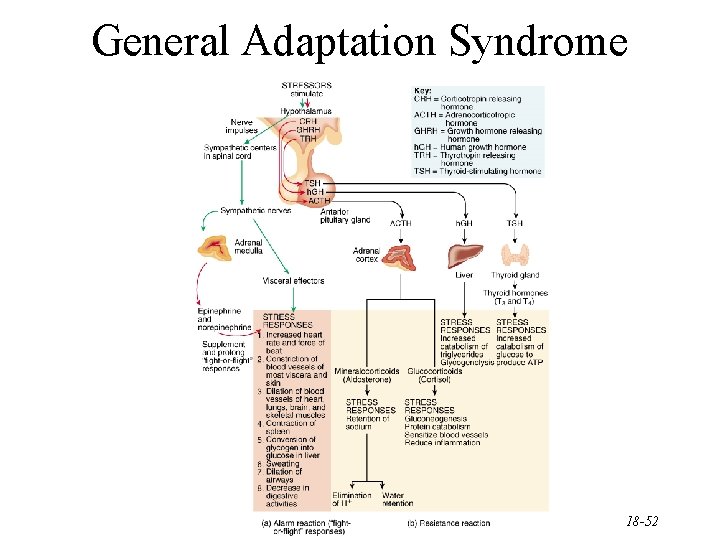
General Adaptation Syndrome 18 -52
Alarm Reaction (Fight-or-Flight) • Initiated by hypothalamic stimulation of sympathetic portion of the ANS & adrenal medulla • Dog attack – increases circulation – promotes ATP synthesis – nonessential body functions are inhibited • digestive, urinary & reproductive 18 -53
Resistance Reaction • Initiated by hypothalamic releasing hormones (long-term reaction to stress) – corticotropin, growth hormone & thyrotropin releasing hormones • Results – increased secretion of aldosterone acts to conserve Na+ (increases blood pressure) and eliminate H+ – increased secretion of cortisol so protein catabolism is increased & other sources of glucose are found – increase thyroid hormone to increase metabolism • Allow body to continue to fight a stressor 18 -54
Exhaustion • Resources of the body have become depleted • Resistance stage can not be maintained • Prolonged exposure to resistance reaction hormones – wasting of muscle – suppression of immune system – ulceration of the GI tract – failure of the pancreatic beta cells 18 -55
Stress and Disease • Stress can lead to disease by inhibiting the immune system – hypertension, asthma, migraine, gastritis, colitis, and depression • Interleukin - 1 is secreted by macrophages – link between stress and immunity – stimulates production of immune substances – feedback control since immune substance suppress the formation of interleukin-1 18 -56
Aging and the Endocrine System • Production of human growth hormone decreases – muscle atrophy • Production of TSH increase with age to try and stimulate thyroid – decrease in metabolic rate, increase in body fat & hypothyroidism • • Thymus after puberty is replaced with adipose Adrenal glands produce less cortisol & aldosterone Receptor sensitivity to glucose declines Ovaries no longer respond to gonadotropins – decreased output of estrogen (osteoporosis & atherosclerosis) 18 -57
Pituitary Gland Disorders • Hyposecretion during childhood = pituitary dwarfism (proportional, childlike body) • Hypersecretion during childhood = giantism – very tall, normal proportions • Hypersecretion as adult = acromegaly – growth of hands, feet, facial features & thickening of skin 18 -58
Thyroid Gland Disorders • Hyposecretion during infancy results in dwarfism & retardation called cretinism • Hypothyroidism in adult produces sensitivity to cold, low body temp. weight gain & mental dullness • Hyperthyroidism (Grave’s disease) – weight loss, nervousness, tremor & exophthalmos (edema behind eyes) • Goiter = enlarged thyroid (dietary) 18 -59
Cushing’s Syndrome • Hypersecretion of glucocorticoids • Redistribution of fat, spindly arms & legs due to muscle loss • Wound healing is poor, bruise easily 18 -60
Addison’s disease • Hyposecretion of glucocorticoids – hypoglycemia, muscle weakness, low BP, dehydration due to decreased Na+ in blood – mimics skin darkening effects of MSH – potential cardiac arrest 18 -61
Diabetes Mellitus & Hyperinsulinism • Diabetes mellitus marked by hyperglycemia – excessive urine production (polyuria) – excessive thirst (polydipsia) – excessive eating (polyphagia) • Type I----deficiency of insulin (under 20) • Type II---adult onset – drug stimulates secretion of insulin by beta cells – cells may be less sensitive to hormone 18 -62
Homework 18 -63