
The Endocrine System Diseases Disorders What do these
- Slides: 14
The Endocrine System: Diseases & Disorders
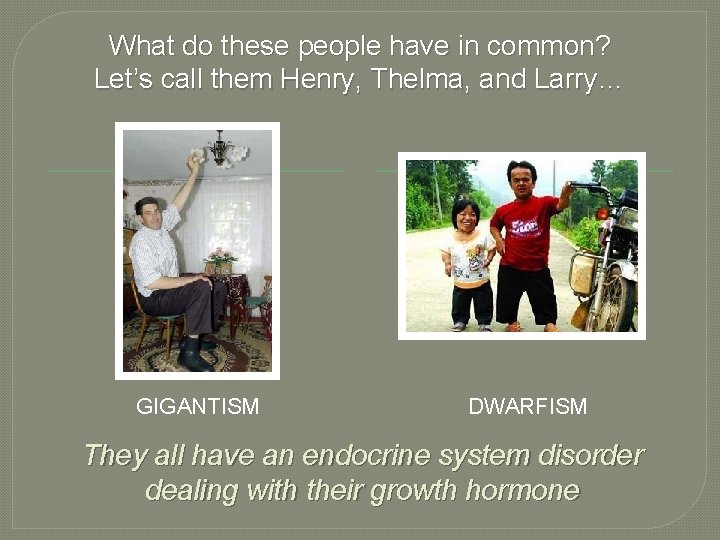
What do these people have in common? Let’s call them Henry, Thelma, and Larry… GIGANTISM DWARFISM They all have an endocrine system disorder dealing with their growth hormone
Pathology �Disorders: caused by hyposecretion (underproduction) or hypersecretion (overproduction) of hormones �Diseases: an impairment of health or a condition of abnormal functioning �Diseases are often caused by disorders
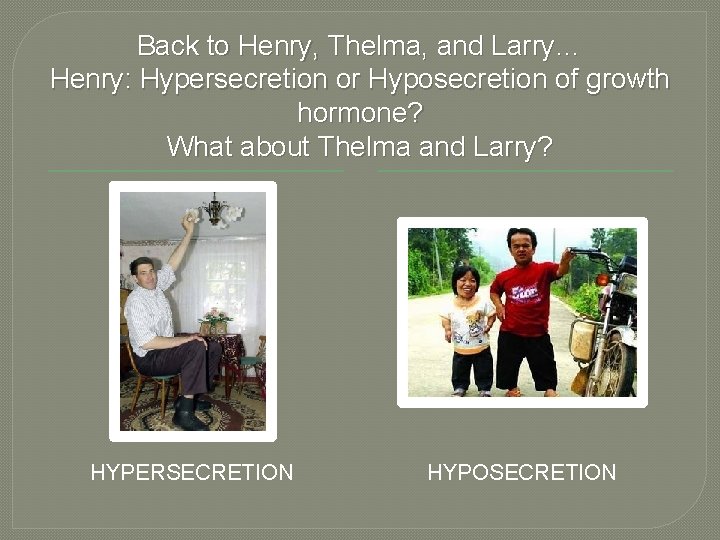
Back to Henry, Thelma, and Larry… Henry: Hypersecretion or Hyposecretion of growth hormone? What about Thelma and Larry? HYPERSECRETION HYPOSECRETION
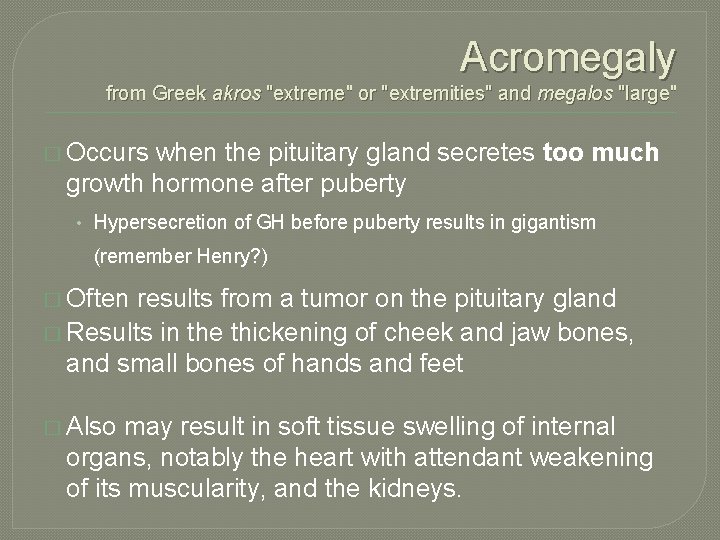
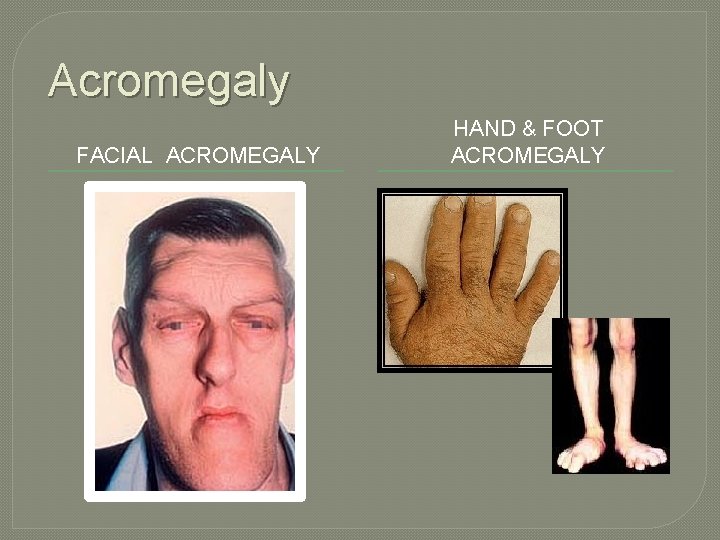
Acromegaly from Greek akros "extreme" or "extremities" and megalos "large" � Occurs when the pituitary gland secretes too much growth hormone after puberty • Hypersecretion of GH before puberty results in gigantism (remember Henry? ) � Often results from a tumor on the pituitary gland � Results in the thickening of cheek and jaw bones, and small bones of hands and feet � Also may result in soft tissue swelling of internal organs, notably the heart with attendant weakening of its muscularity, and the kidneys.
Acromegaly FACIAL ACROMEGALY HAND & FOOT ACROMEGALY
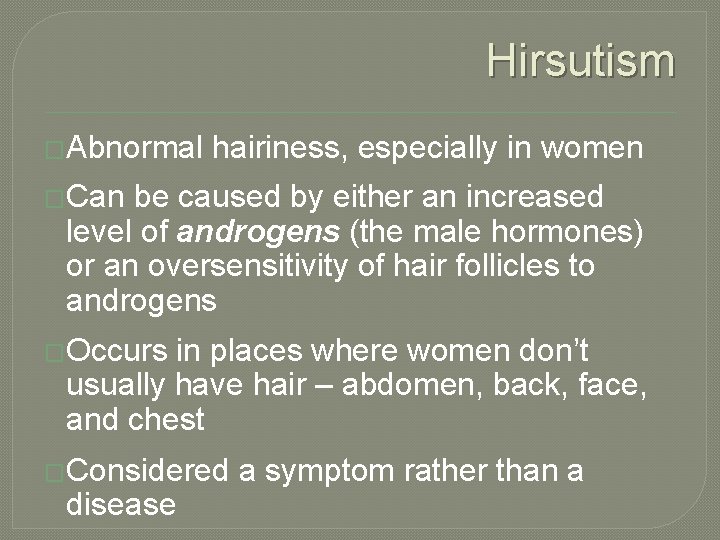
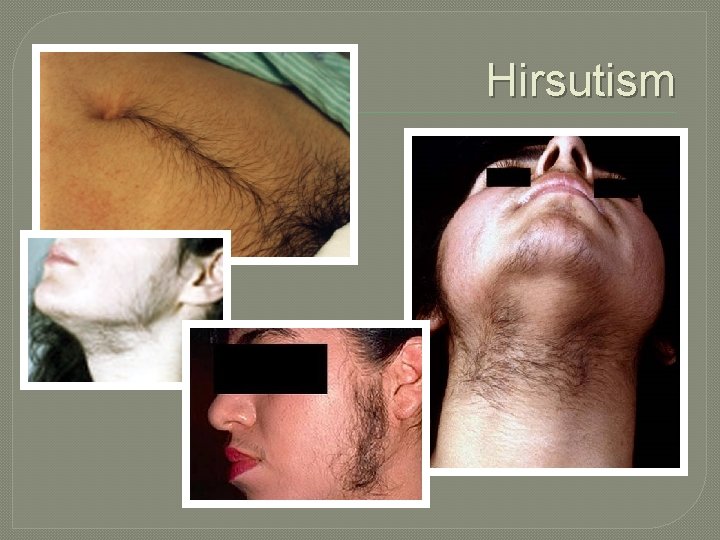
Hirsutism �Abnormal hairiness, especially in women �Can be caused by either an increased level of androgens (the male hormones) or an oversensitivity of hair follicles to androgens �Occurs in places where women don’t usually have hair – abdomen, back, face, and chest �Considered disease a symptom rather than a
Hirsutism
Virilism � Masculinization in a woman • Development of male secondary sex characteristics in the woman � Virilization is esentailly hirsutism with signs of masculinization in a woman. • Virilization is not as common as hirsutism, the physical changes associated with virilization is indicative of androgen levels that are extremely high. � Virilization may include an increase in body hair, facial hair, deepening of the voice, male pattern baldness, and the cessation of the menstrual cycle. � Virilization may be caused by either an adrenal or ovarian tumor which may be malignant.
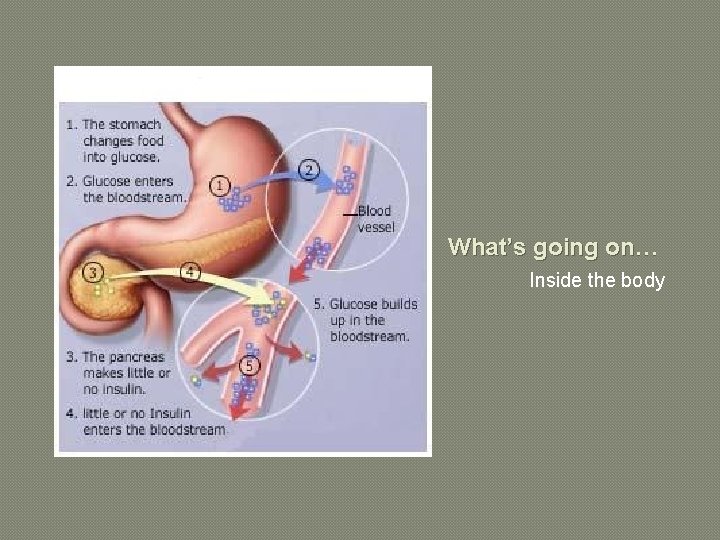
� Diabetes is a disorder characterized by hyperglycemia � Our bodies function best at a certain level of sugar in the bloodstream. If the amount of sugar in our blood runs too high or too low, then we typically feel bad. • Diabetes is the name of the condition where the blood sugar level consistently runs too high. African-Americans, Hispanics, and Native Americans have a higher rate of developing diabetes during their lifetime. � Diabetes has potential long term complications that can affect the kidneys, eyes, heart, blood vessels, and nerves �
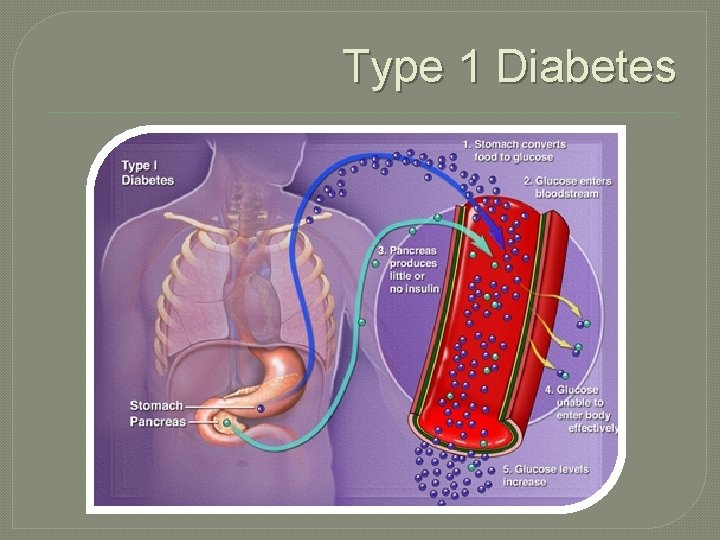
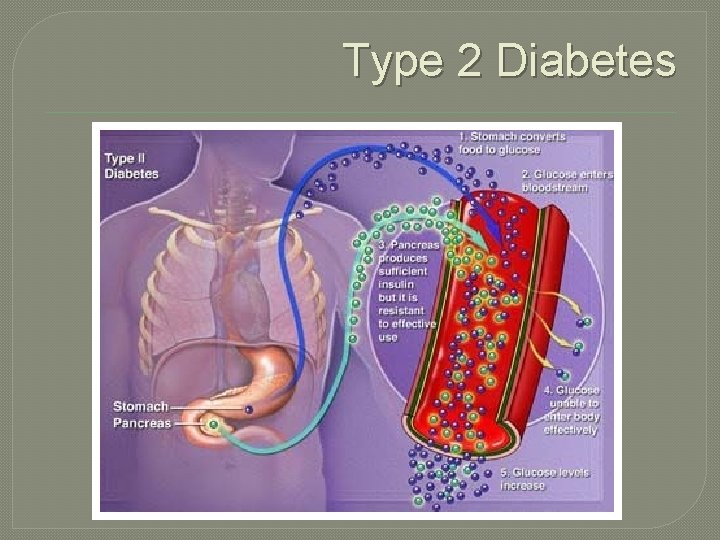
Two types of diabetes… TYPE 1 DIABETES � � Caused by an insulin deficiency Insulin deficiency means there is not enough insulin being made by the pancreas due to a malfunction of their insulin producing cells Average of diagnosis: 14 Type 1 diabetes usually develops due to an autoimmune disorder. TYPE 2 DIABETES � � � Caused by insulin resistance Insulin resistance occurs when there is plenty of insulin made by the pancreas (it is functioning normally and making plenty of insulin), but the cells of the body are resistant to its action which results in the blood sugar being too high Usually diagnosed in middleaged adults and is more common that Type 1
What’s going on… Inside the body
Type 1 Diabetes
Type 2 Diabetes