
The Endocrine System By Jonathan Gonzalez Aaron Mednick
The Endocrine System By Jonathan Gonzalez, Aaron Mednick, Matt Solórzano, Grant Zitomer

What Does It Mean? • Endo: within • Crinis: secrete Opposed to exocrine system, which excretes substances into external environment such as sweat and saliva


Physiology • Releasing hormones into bloodstream • Many organs and glands work in tandem • Functions: o Controlling internal chemical environment o Responding to change in case of emergency (i. e. infection) o Regulating metabolism and energy balance o Contributing to growth and development

Important Glands and Organs • Hypothalamus: part of brain, secretes hormones; controls homeostasis • Pineal Body/Gland: produces melatonin • • • (helps regulate circadian rhythm [i. e. sleep]) Pituitary Gland: regulates all endocrine gland functions Thyroid Gland: important for regulating metabolism Ovaries: produce egg cells, estrogen, and

Important Glands and Organs, cont'd • Parathyroid Glands: regulate body calcium balance • Thymus: trains T-Lymphocytes (WBC) • Adrenal Glands: produce and release adrenaline & cortisol responding to stress • Kidneys: process blood to filter out waste products • Pancreas: assists in digestion and hormone production • Testes: produce testosterone and sperm

Hypothalamus • Located within the brain near optic chiasm • Secretes hormones which control anterior pituitary • Controls: o Water Balance o Sleep o Temperature o Appetite o Blood Pressure
Hypothalamus, cont'd • Releases into the pituitary gland o Dopamine o Thyrotropin-releasing hormone o Corticotropin-releasing hormone o Gonadotropin-releasing hormone o Growth hormone-releasing hormone o Somatostatin
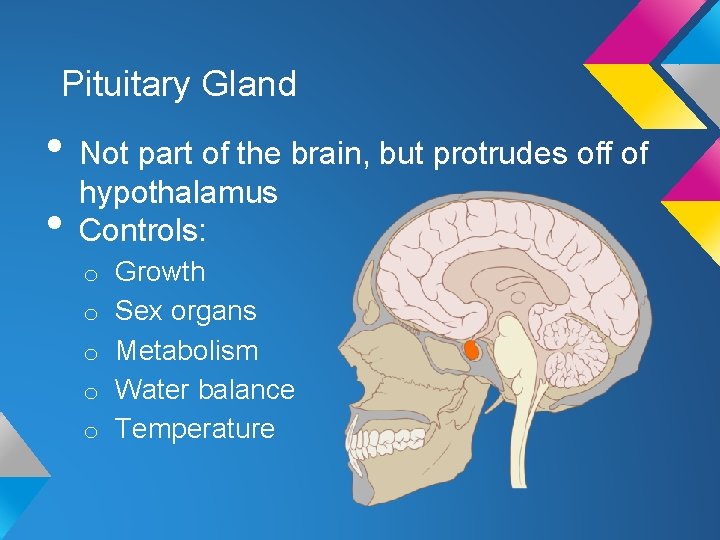
Pituitary Gland • Not part of the brain, but protrudes off of hypothalamus • Controls: o Growth o Sex organs o Metabolism o Water balance o Temperature
Pituitary Gland, cont'd • Prolactin o Stimulates mammary glands o Causes sexual arousal • Thyrotropin o Stimulates thyroid • Growth hormone o Stimulates development and growth

Pineal Body/Gland • Located in the brain • Produces melatonin that affects: o Sleep/wake patterns o Seasonal functions

Thyroid Gland • Located below the Adam's Apple in the neck • Controls metabolism o How fast the body reacts to hormones o Protein production rate o Energy usage speed

Thyroid Gland, cont'd • Thyroid stimulating hormone (TSH) activates: o Triiodothyronine (T 3) which controls § Body temperature § Heart rate § Growth • o Thyroxine (T 4) which controls § Rate of protein synthesis § Growth § Produces ATP from glucose These two hormones affect almost all physiological processes in the body

Parathyroid Glands • Located behind to the thyroid gland • Regulates all calcium in the body o Calcium is the only mineral that has its own regulatory system. • Provides electrical energy to muscles and • nervous system (via calcium regulation) Provides strength to skeletal system (via calcium regulation)

Parathyroid Glands, cont'd • Produces Parathormone o Increases concentration of calcium in blood o Stimulates osteoclasts o Increases calcium reabsorption in kidneys (to the bloodstream) • Produces Calcitonin o decreases concentration of calcium in blood o Inhibits osteoclast activity in bones o Increases amount of calcium in urine

Thymus • Trains T-Lymphocytes (also known as TCells) • Part of immune system as well • Part of endocrine for use of hormones in training

Adrenal (Suprarenal) Glands • Located superior to both kidneys • Responsible for releasing hormones in response to stress o Cortisol: stress and low glucose o Epinephrine: "fight or flight" • Produce androgen o Controls and maintains development of male characteristics in vertebrates (primary androgen is testosterone)
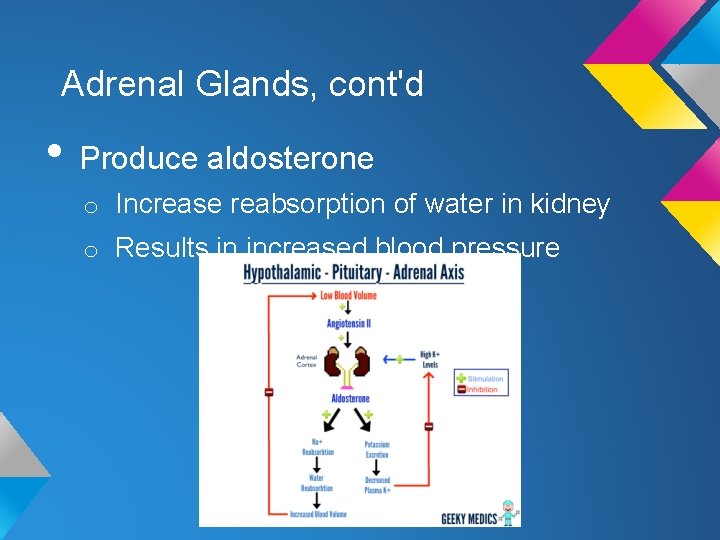
Adrenal Glands, cont'd • Produce aldosterone o Increase reabsorption of water in kidney o Results in increased blood pressure
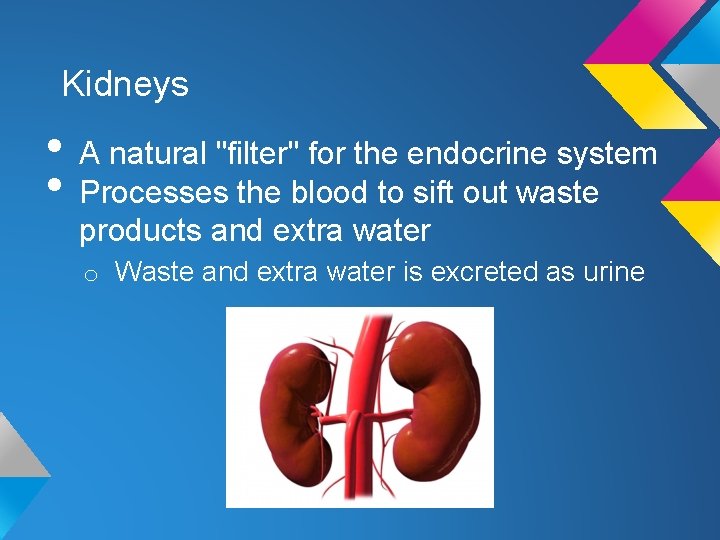
Kidneys • A natural "filter" for the endocrine system • Processes the blood to sift out waste products and extra water o Waste and extra water is excreted as urine

Pancreas • A dual function organ • Produces several important hormones o Insulin: lowers blood glucose levels o Glucagon: raises blood glucose levels • Also secretes digestive enzymes which assist the stomach
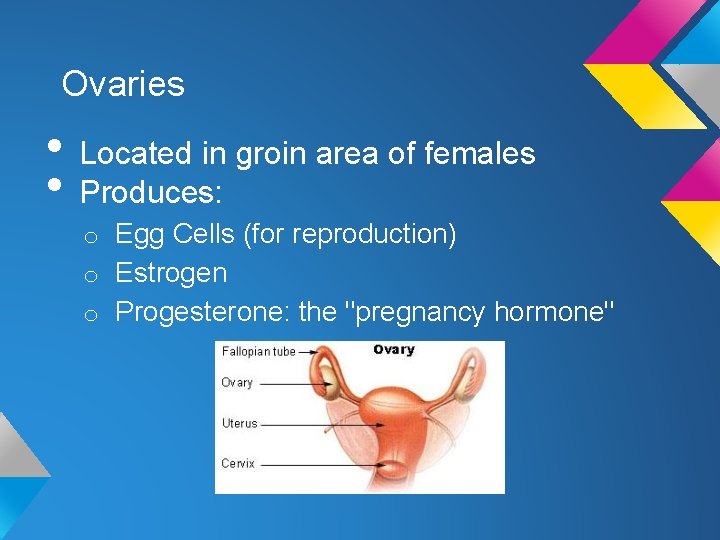
Ovaries • Located in groin area of females • Produces: o Egg Cells (for reproduction) o Estrogen o Progesterone: the "pregnancy hormone"
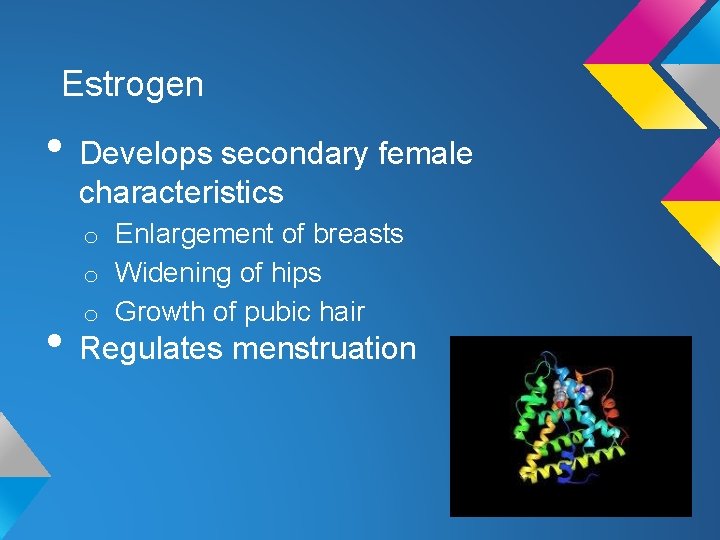
Estrogen • Develops secondary female characteristics o Enlargement of breasts o Widening of hips o Growth of pubic hair • Regulates menstruation
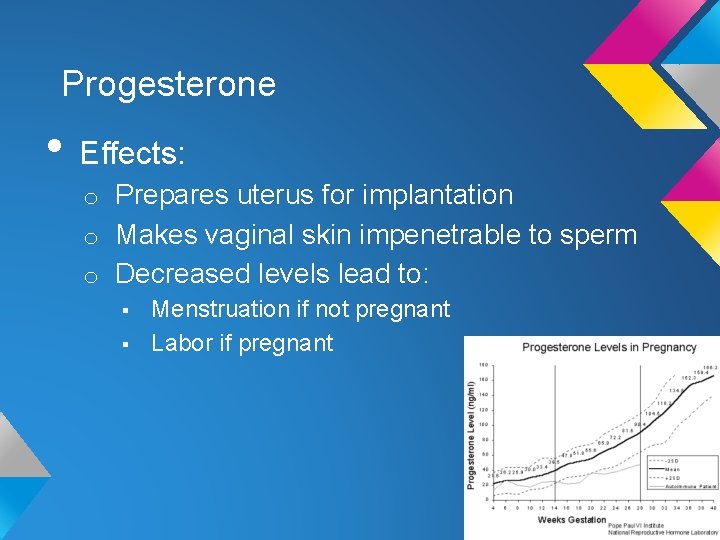
Progesterone • Effects: o Prepares uterus for implantation o Makes vaginal skin impenetrable to sperm o Decreased levels lead to: § Menstruation if not pregnant § Labor if pregnant
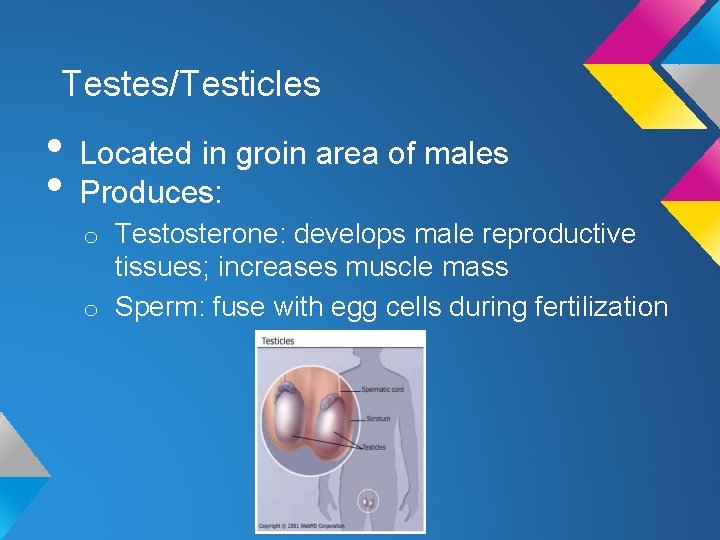
Testes/Testicles • Located in groin area of males • Produces: o Testosterone: develops male reproductive tissues; increases muscle mass o Sperm: fuse with egg cells during fertilization
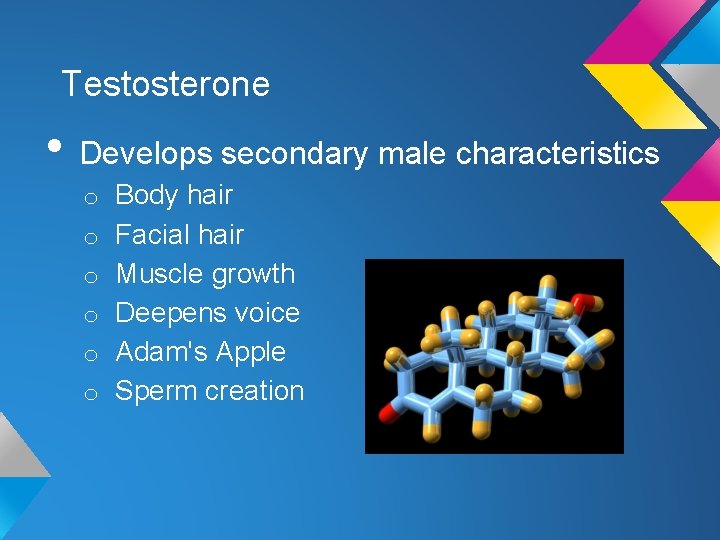
Testosterone • Develops secondary male characteristics o Body hair o Facial hair o Muscle growth o Deepens voice o Adam's Apple o Sperm creation
Disorders • Occur due to the increase or decrease of endocrine hormones, which may be caused by: o Problems with endocrine feedback o Failure of a gland to stimulate another gland to release its hormone o Genetics o Infection o Injury to an endocrine gland

Adrenal Insufficiency • The adrenal glands do not release • enough cortisol and sometimes aldosterone Symptoms: o Muscle weakness, loss of appetite, weight loss o Nausea, vomiting, diarrhea, headache, sweating o Low blood pressure, low blood glucose
Hyper/Hypothyroidism • Hyperthyroidism o High heart rate o Tremors o Weight loss • Hypothyroidism o Low heart rate o Fatigue o Weight gain o Growth stunting

Gigantism and Acromegaly • Caused by the secretion of excess growth hormone from the pituitary gland o Gigantism: during childhood o Acromegaly: during adulthood • Usually tumors in the gland cause these disorders
Multiple Endocrine Neoplasia (MEN) • Rare genetic disorder • Causes tumors which cause overproduction in affected glands: o Parathyroid o Adrenal o Thyroid
Testing for Disorders • Visit an Endocrinologist: o Conduct urine and blood tests o Imagine test pinpoint tumors o Check hormone levels • Treatment o Difficult because complication with one hormone balance affects other hormone balances o Routine blood work to track imbalance

Relationship Between Endocrine System and Other Systems • • • Reproductive System - hormones control development of reproductive organ; regulates production of gametes Respiration System - hormones regulate breathing rate Skeletal System - hormones regulate bone growth/ calcium concentration Muscular System - hormones regulate muscle metabolism Excretory System - hormones control water conservation in kidneys Immune System - parathyroid regulates calcium levels; cortisol can be used as an immunosuppressant
To Recap. . . • Regulates homeostasis • Is in control of the body's hormones • These hormones tell many things in the body what to do, from growing to breathing to giving birth So remember to thank your endocrine system

Works Cited http: //www. medterms. com/script/main/art. asp? articlekey=3791 http: //www. britannica. com/EBchecked/topic/118220/circadian-rhythm http: //www. britannica. com/EBchecked/topic/460967/pineal-gland http: //www. medterms. com/script/main/art. asp? articlekey=3791 http: //www. yourhormones. info/hormones/calcitonin. aspx http: //www. britannica. com/EBchecked/topic/186893/human-endocrine-system http: //www. nlm. nih. gov/medlineplus/ency/article/001174. htm http: //women. webmd. com/guide/understanding-thyroid-problems-basics http: //www. webmd. com/digestive-disorders/picture-of-the-pancreas http: //www. britannica. com/EBchecked/topic/435788/ovary http: //www. nlm. nih. gov/medlineplus/ency/article/002380. htm http: //www. hormone. org/Pituitary/overview. cfm
- Slides: 34