
THE ENDOCRINE SYSTEM AP Biology Ms Day WHAT
THE ENDOCRINE SYSTEM AP Biology Ms. Day
WHAT IS THE ENDOCRINE SYSTEM? • A 2 nd means of sending messages around the body (1 st is the nervous system). • Nervous system sends high speed signals • Endocrine system sends slower signals • All of an animal’s hormone secreting cells make up its endocrine system. • Hormone secreting organs are called endocrine glands
WHAT IS A HORMONE? • A chemical signal (ligand) secreted into the body fluids • Can be polar or non-polar! • Effective in TINY amounts • Each hormone has a specific shape that is recognized by its target cell
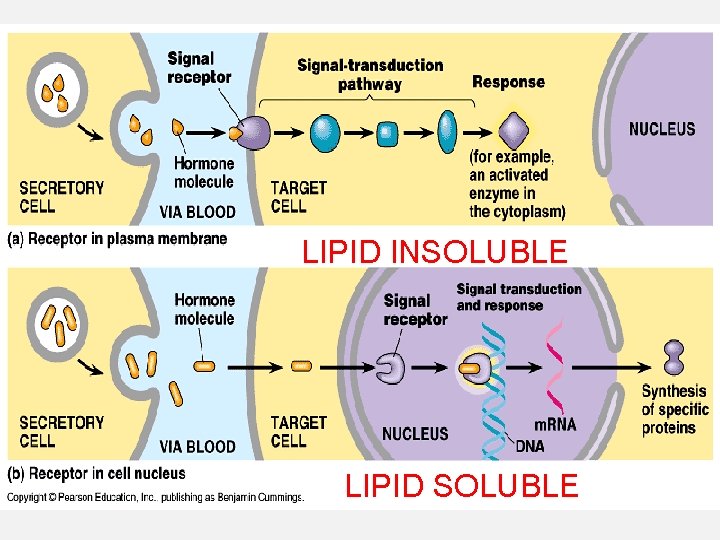
LIPID INSOLUBLE LIPID SOLUBLE
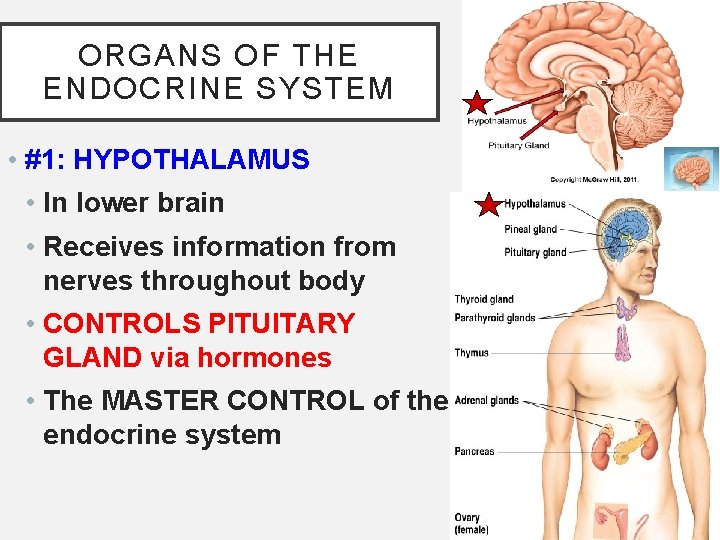
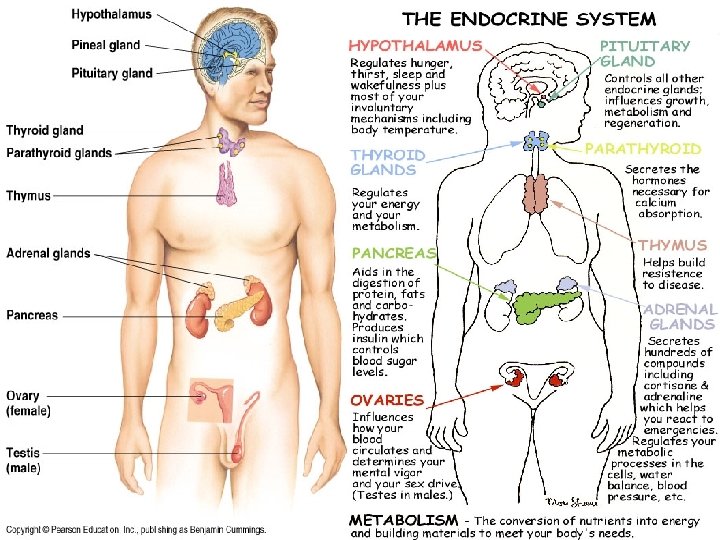
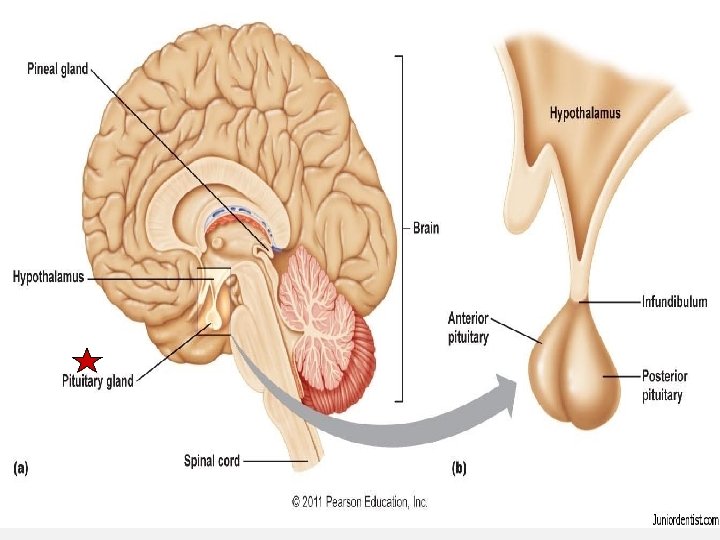
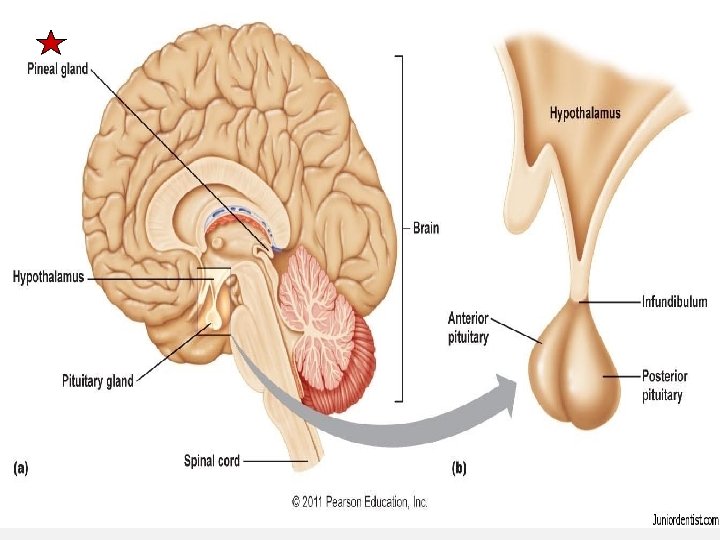
ORGANS OF THE ENDOCRINE SYSTEM • #1: HYPOTHALAMUS • In lower brain • Receives information from nerves throughout body • CONTROLS PITUITARY GLAND via hormones • The MASTER CONTROL of the endocrine system
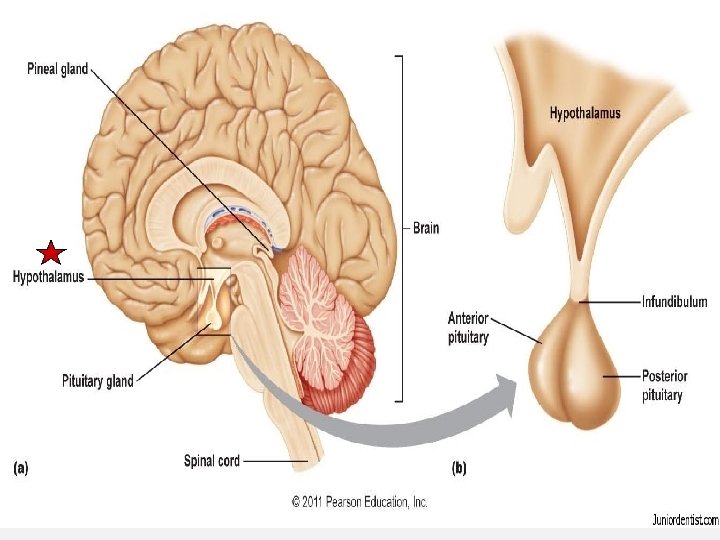
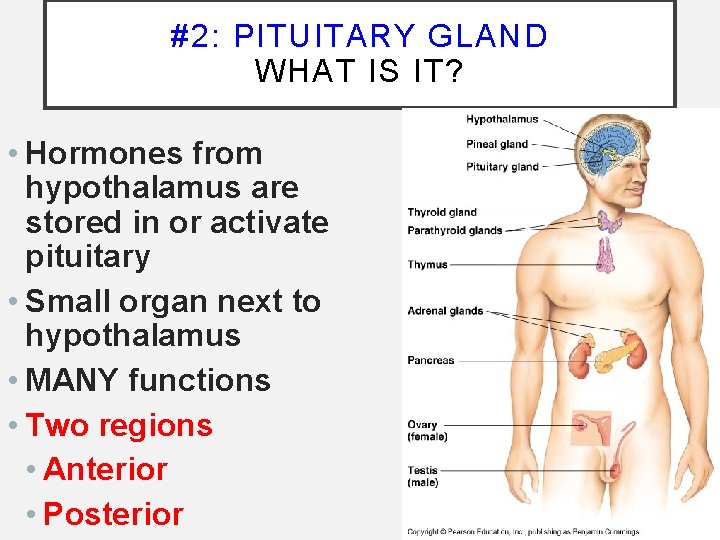
#2: PITUITARY GLAND WHAT IS IT? • Hormones from hypothalamus are stored in or activate pituitary • Small organ next to hypothalamus • MANY functions • Two regions • Anterior • Posterior
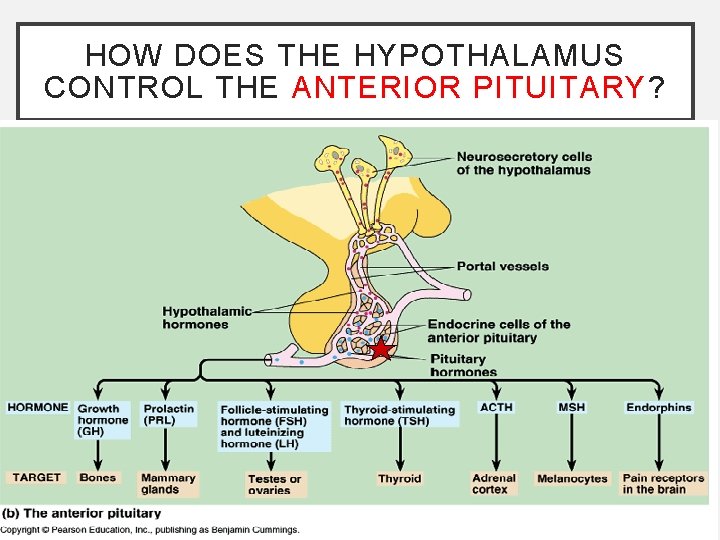
HOW DOES THE HYPOTHALAMUS CONTROL THE ANTERIOR PITUITARY? • By secreting (releasing) hormones • Makes the anterior pituitary secrete its own hormones
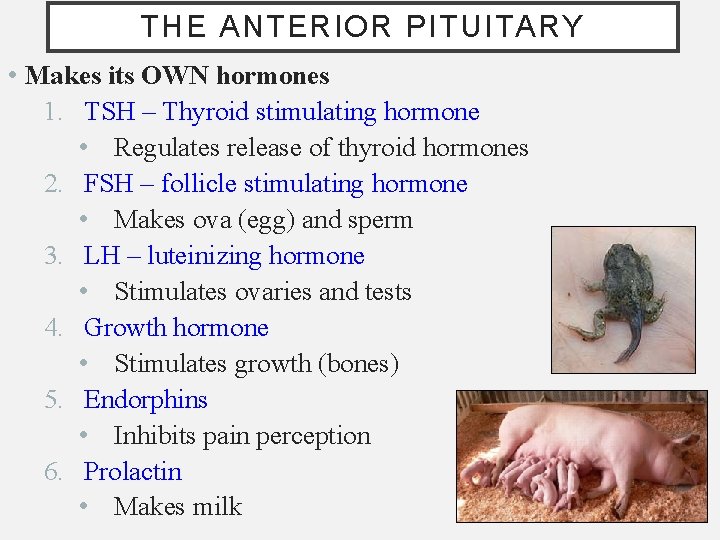
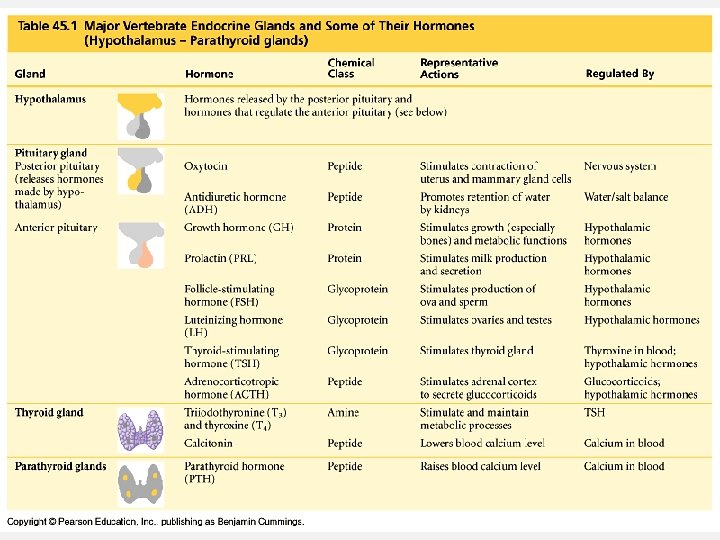
THE ANTERIOR PITUITARY • Makes its OWN hormones 1. TSH – Thyroid stimulating hormone • Regulates release of thyroid hormones 2. FSH – follicle stimulating hormone • Makes ova (egg) and sperm 3. LH – luteinizing hormone • Stimulates ovaries and tests 4. Growth hormone • Stimulates growth (bones) 5. Endorphins • Inhibits pain perception 6. Prolactin • Makes milk

The Posterior Pituitary
THE POSTERIOR PITUITARY Stores/secretes 2 hormones o. Act DIRECTLY on: othe uterine muscles (target cell) o Oxytocin hormone oon kidneys (target cell) o Antidiuretic hormone (ADH) hormone

THE HORMONES OF THE POSTERIOR PITUITARY • ADH – antidiuretic hormone • Regulates kidney INCREASES water retention • A diuretic is something that causes body to LOSE water. • Obviously, an ANTIdiuretic would have the opposite effect. • DECREASES urine volume • Oxytocin • Causes uterine muscle contractions
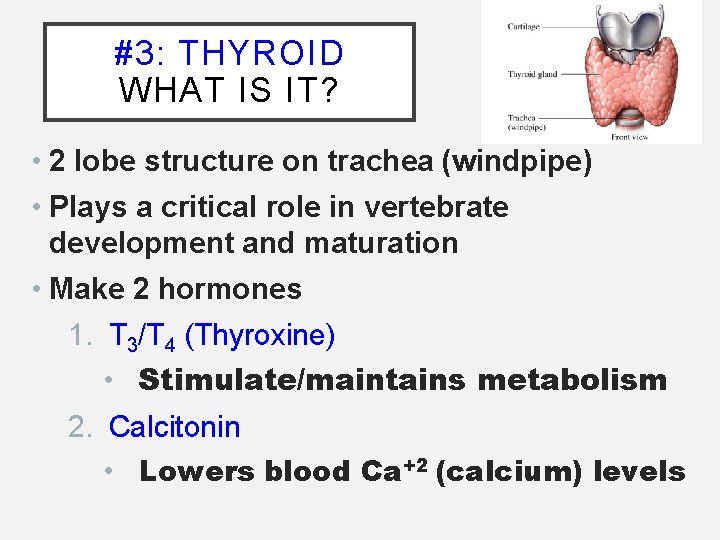
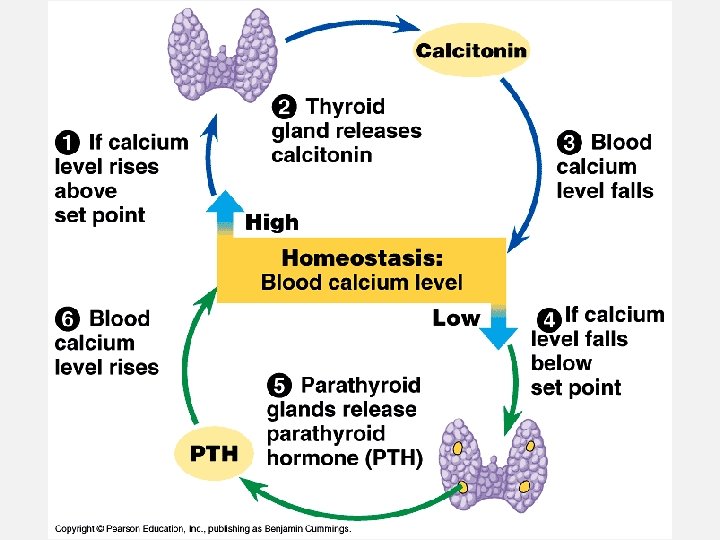
#3: THYROID WHAT IS IT? • 2 lobe structure on trachea (windpipe) • Plays a critical role in vertebrate development and maturation • Make 2 hormones 1. T 3/T 4 (Thyroxine) • Stimulate/maintains metabolism 2. Calcitonin • Lowers blood Ca+2 (calcium) levels
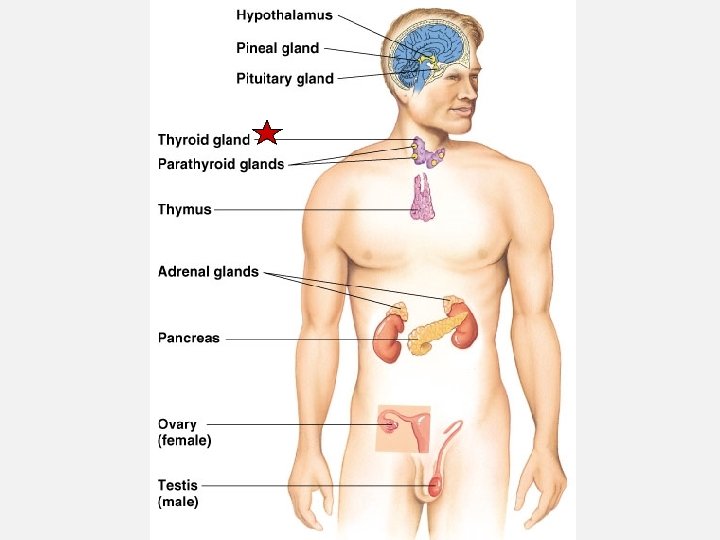
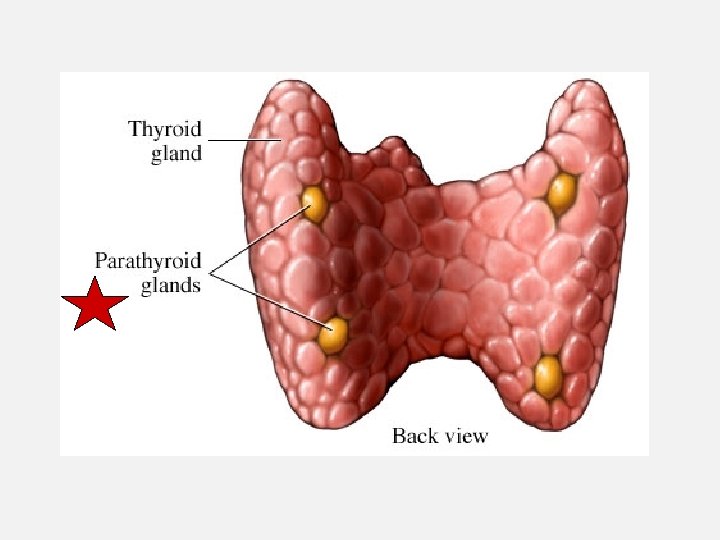
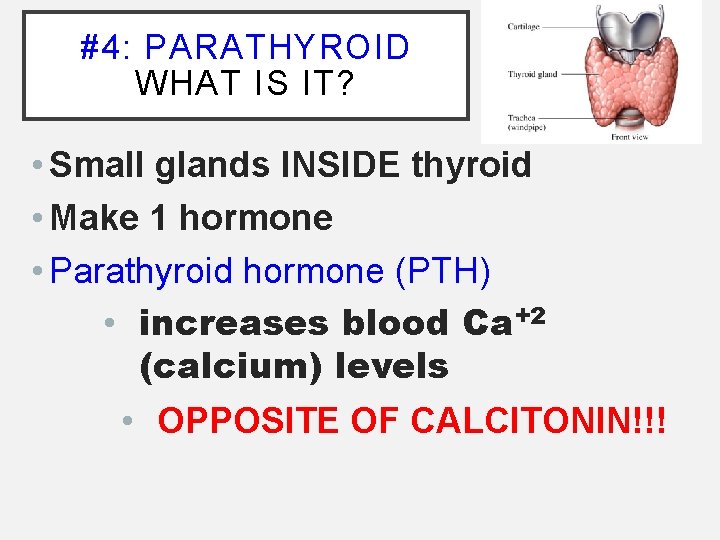
#4: PARATHYROID WHAT IS IT? • Small glands INSIDE thyroid • Make 1 hormone • Parathyroid hormone (PTH) • increases blood Ca+2 (calcium) levels • OPPOSITE OF CALCITONIN!!!
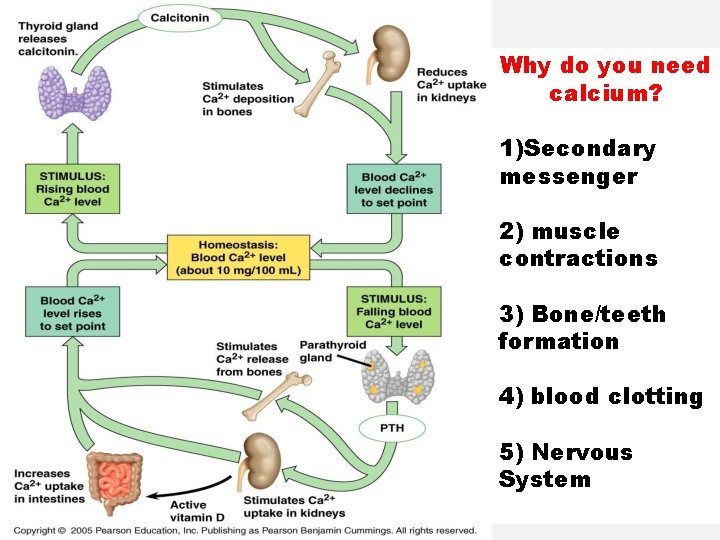
Why do you need calcium? 1)Secondary messenger 2) muscle contractions 3) Bone/teeth formation 4) blood clotting 5) Nervous System
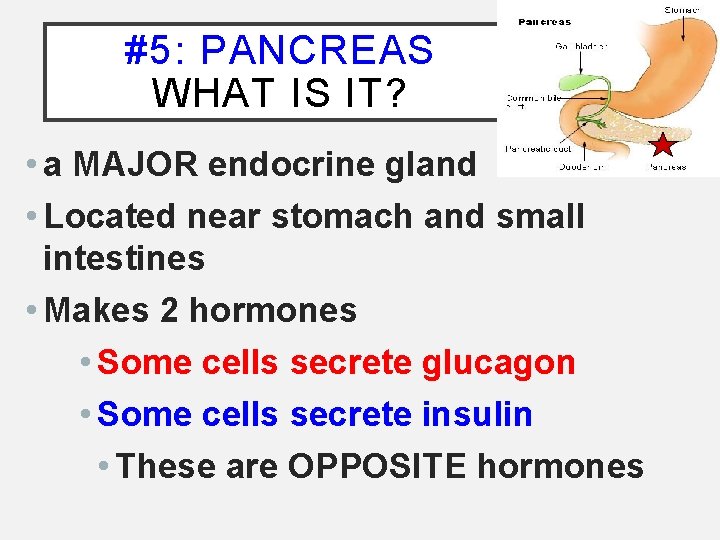
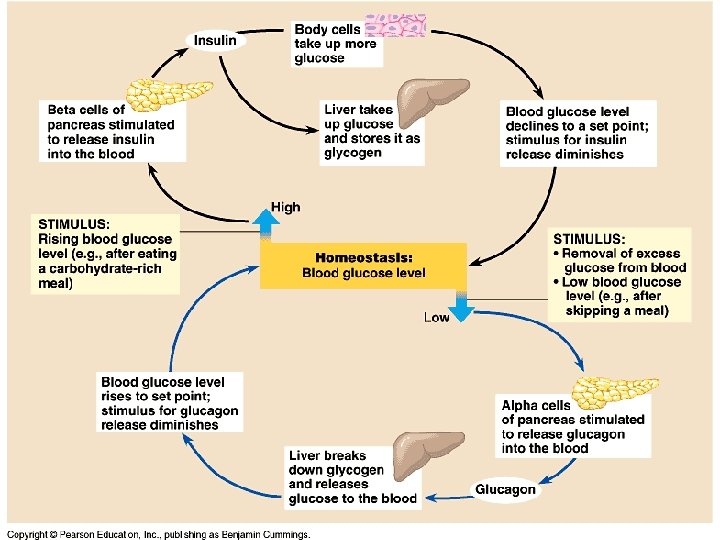
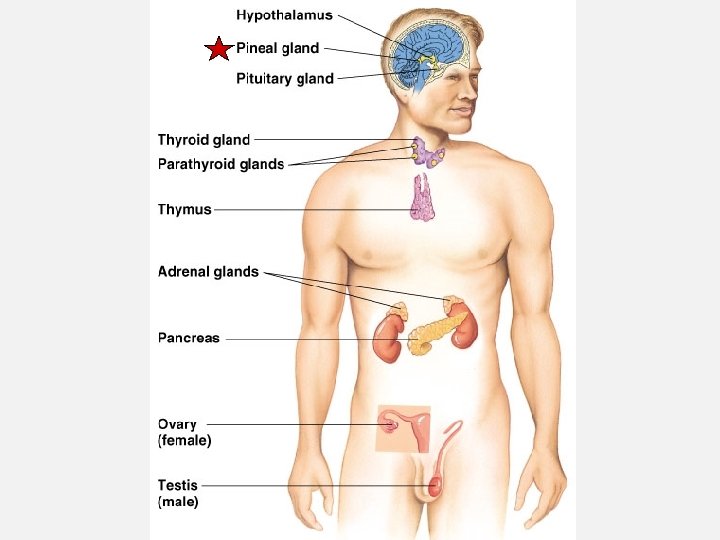
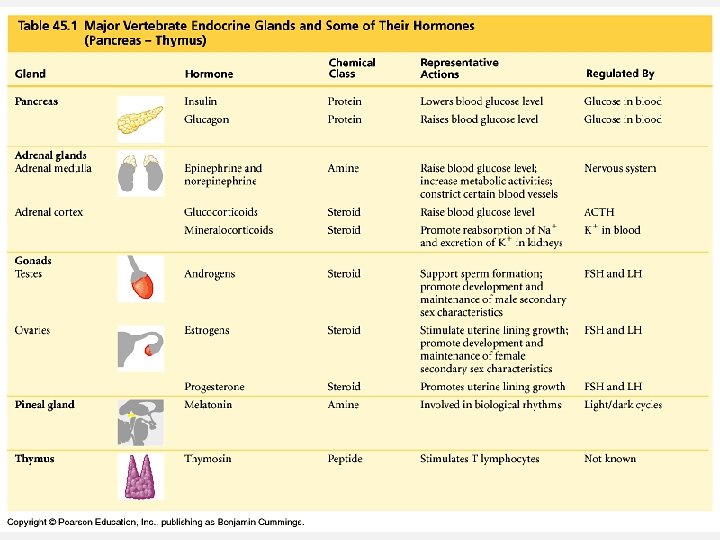
#5: PANCREAS WHAT IS IT? • a MAJOR endocrine gland • Located near stomach and small intestines • Makes 2 hormones • Some cells secrete glucagon • Some cells secrete insulin • These are OPPOSITE hormones
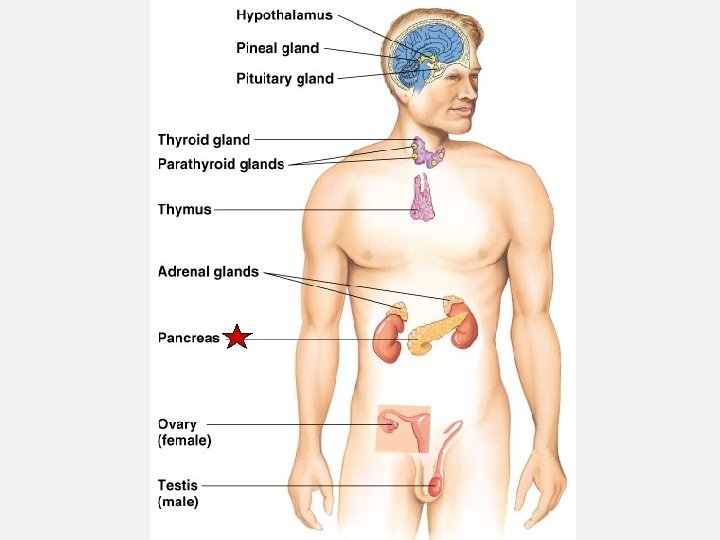
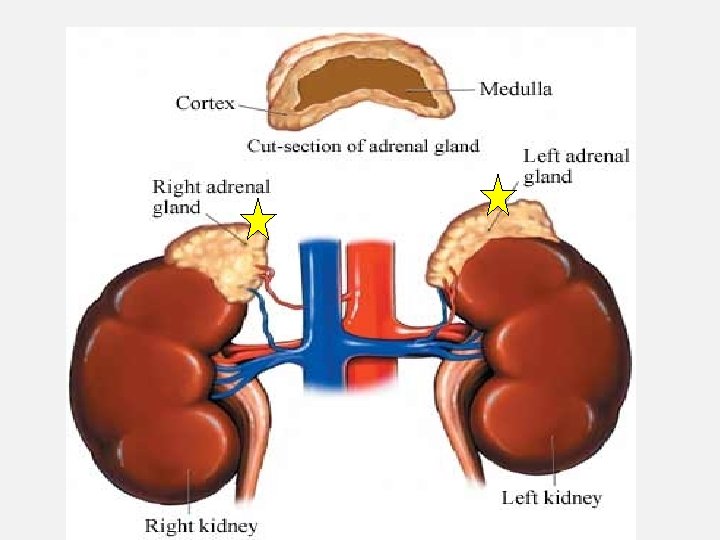
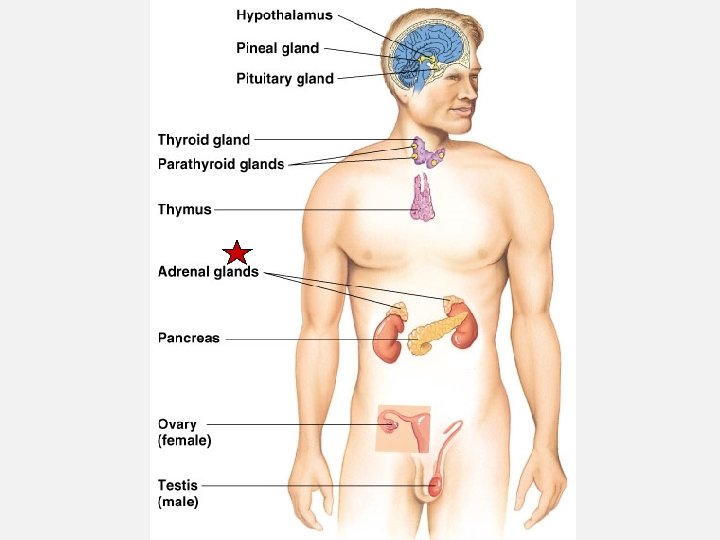
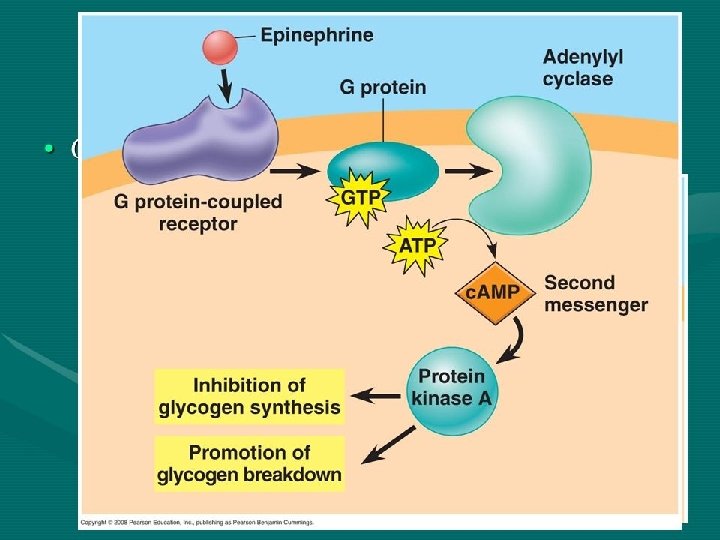
#6: ADRENAL GLANDS WHAT ARE THEY? • On top of each kidney • Involved in the “Fight or flight” response • Hormones 1. Epinephrine • Secreted in response to stress Cause rapid ATP boost • REMEMBER: Signal transduction pathway for epin!!! 2. Glucocorticoids (cortisol) • Help regulate blood sugar and salt levels, helps with inflammation 3. Mineralocorticoids (Aldosterone) • Help in kidney filtering
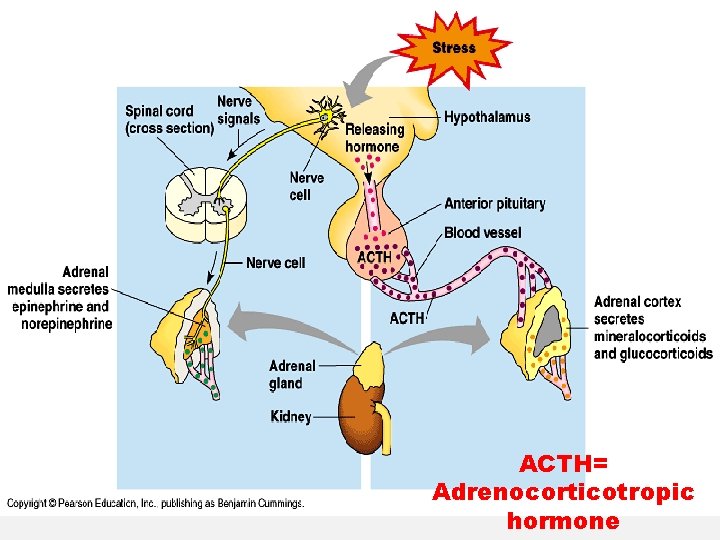
ACTH= Adrenocorticotropic hormone
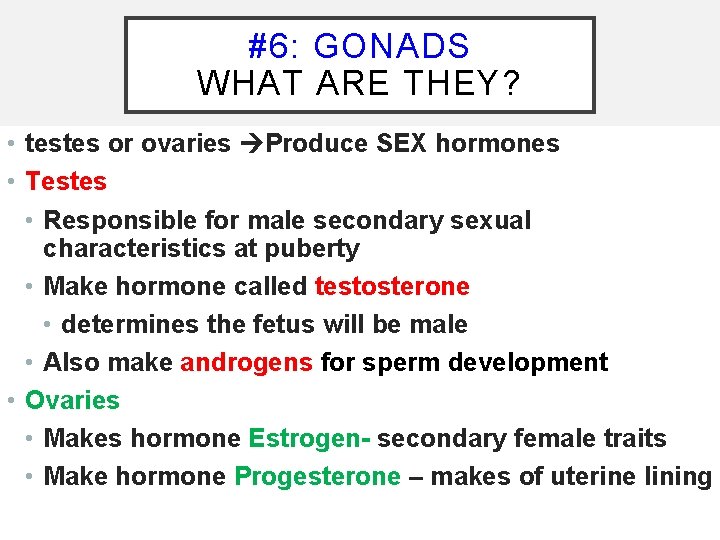
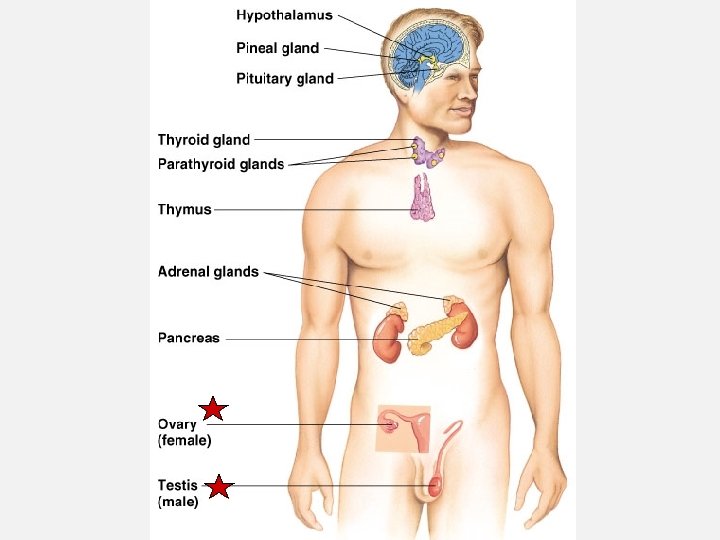
#6: GONADS WHAT ARE THEY? • testes or ovaries Produce SEX hormones • Testes • Responsible for male secondary sexual characteristics at puberty • Make hormone called testosterone • determines the fetus will be male • Also make androgens for sperm development • Ovaries • Makes hormone Estrogen- secondary female traits • Make hormone Progesterone – makes of uterine lining
#7: PINEAL GLAND WHAT IS IT? • Near center of brain • Make hormone called melatonin • Helps maintain biological rhythms • Melatonin secreted at night • linked to biological clock

Review Animations • https: //www. youtube. com/watch? v=S_v. QZDH 9 h. Y
- Slides: 36