
The Endocrine System An Introduction The Endocrine System
- Slides: 30
The Endocrine System An Introduction
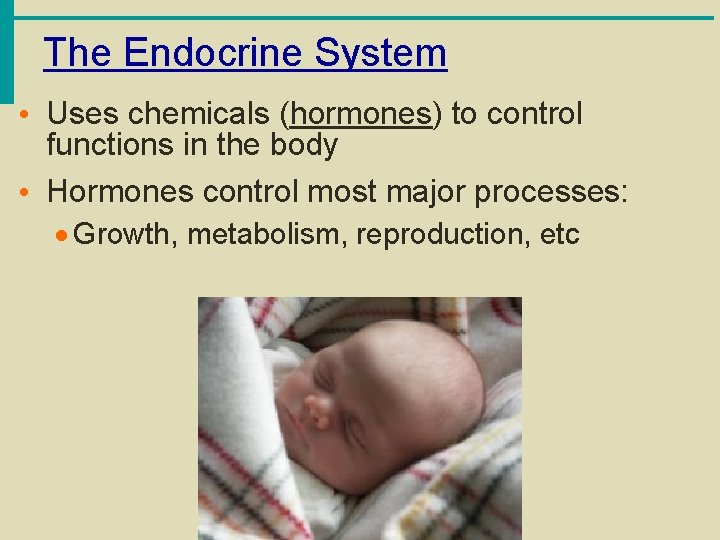
The Endocrine System • Uses chemicals (hormones) to control functions in the body • Hormones control most major processes: · Growth, metabolism, reproduction, etc
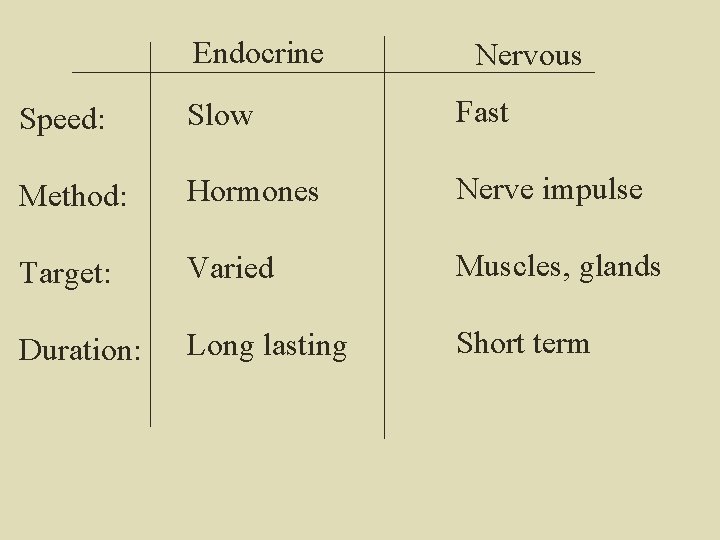
Endocrine Nervous Speed: Slow Fast Method: Hormones Nerve impulse Target: Varied Muscles, glands Duration: Long lasting Short term
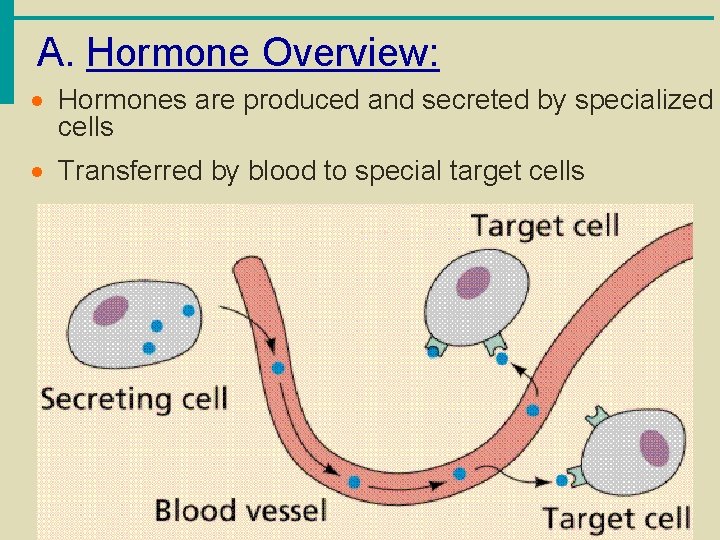
A. Hormone Overview: · Hormones are produced and secreted by specialized cells · Transferred by blood to special target cells
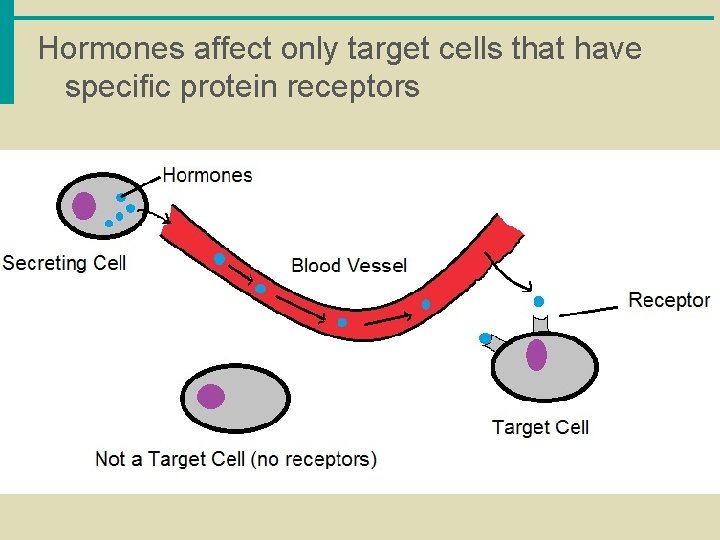
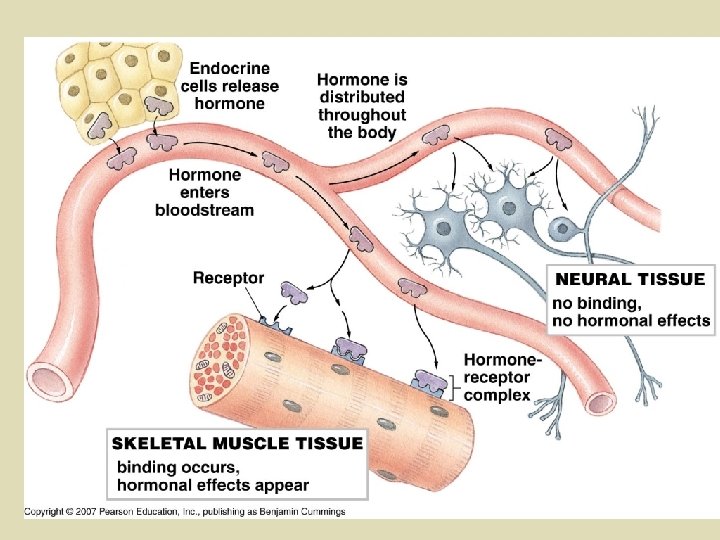
Hormones affect only target cells that have specific protein receptors
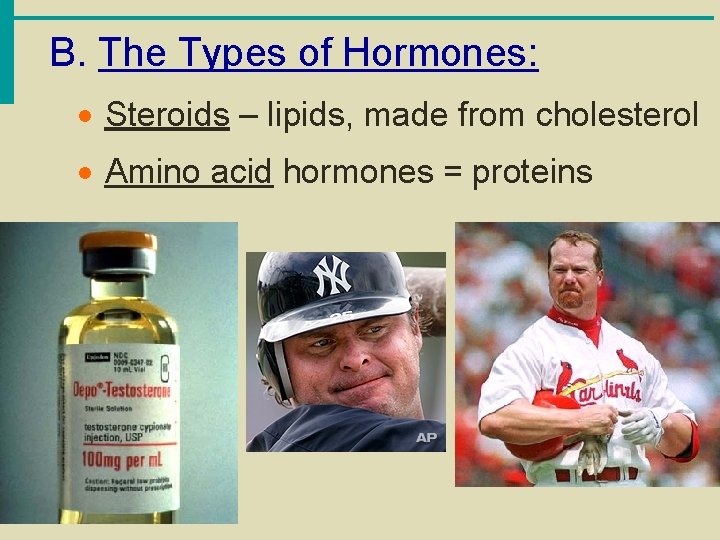
B. The Types of Hormones: · Steroids – lipids, made from cholesterol · Amino acid hormones = proteins
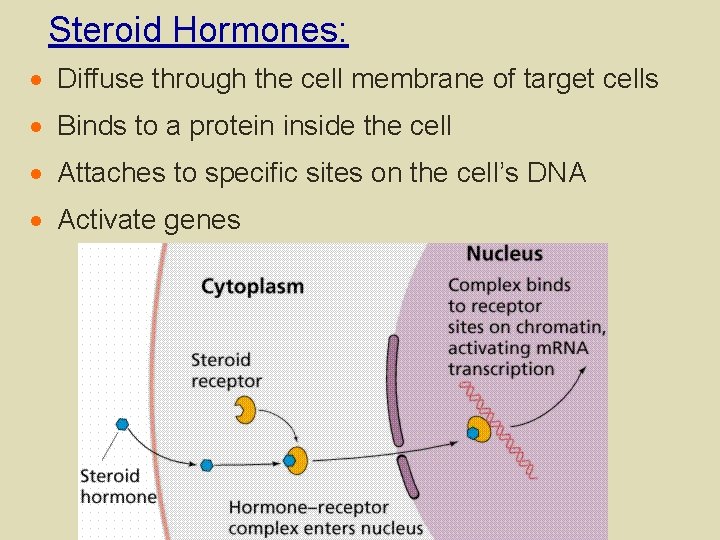
Steroid Hormones: · Diffuse through the cell membrane of target cells · Binds to a protein inside the cell · Attaches to specific sites on the cell’s DNA · Activate genes
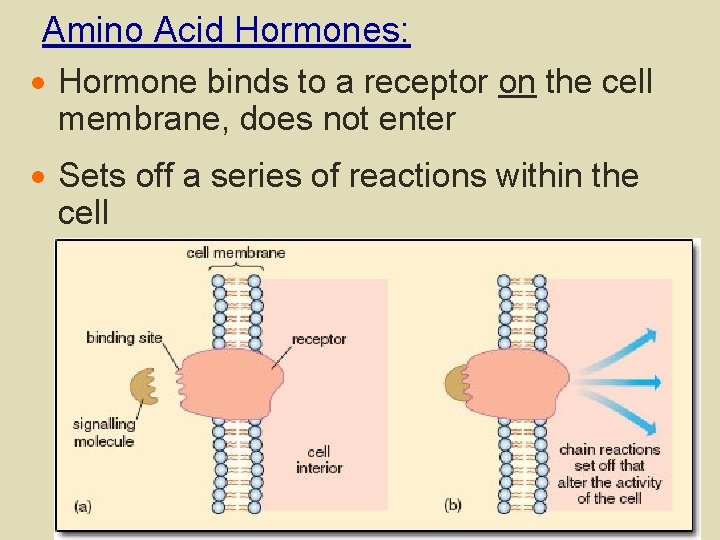
Amino Acid Hormones: · Hormone binds to a receptor on the cell membrane, does not enter · Sets off a series of reactions within the cell Slide 9. 8
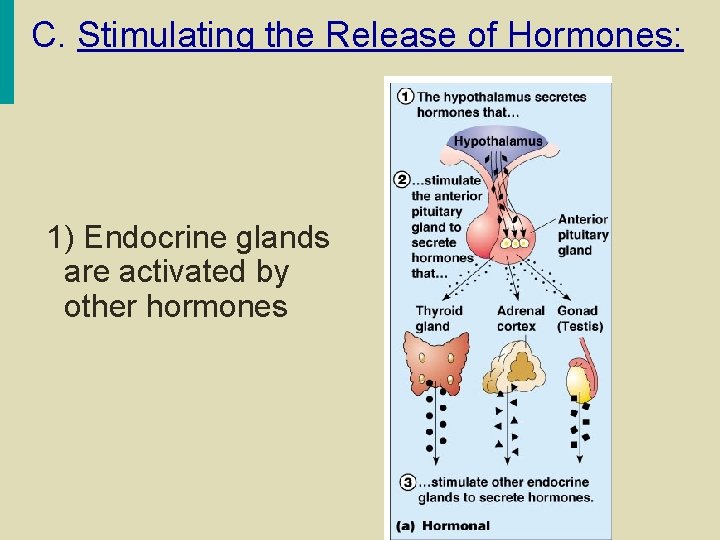
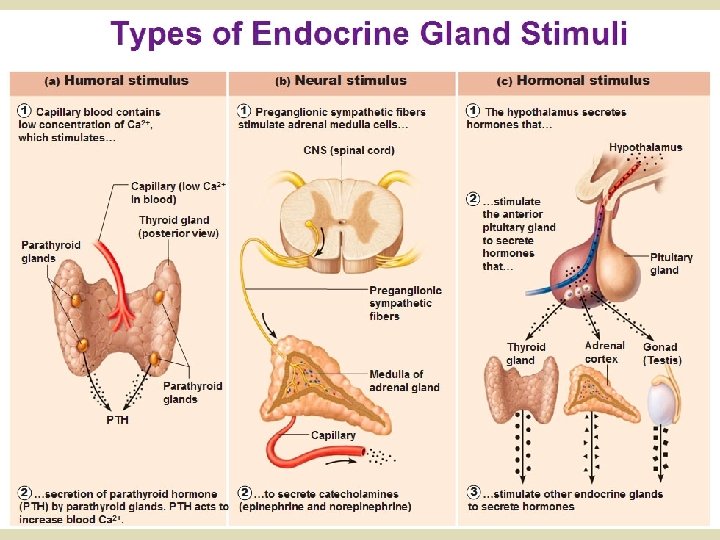
C. Stimulating the Release of Hormones: 1) Endocrine glands are activated by other hormones
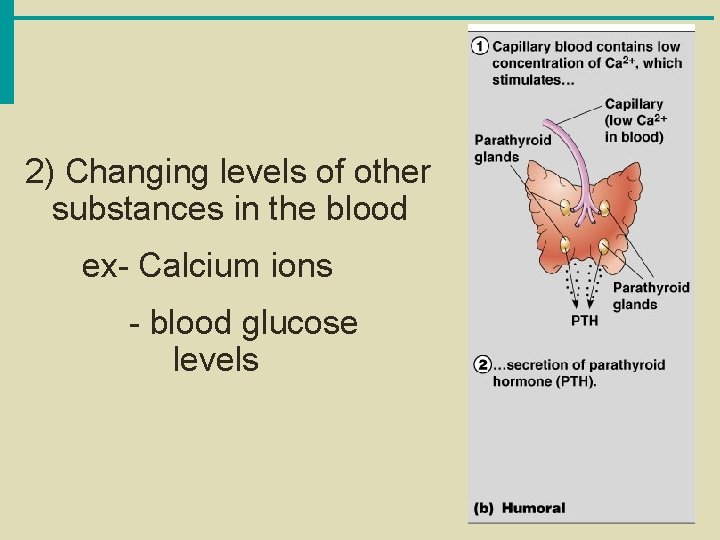
2) Changing levels of other substances in the blood ex- Calcium ions - blood glucose levels
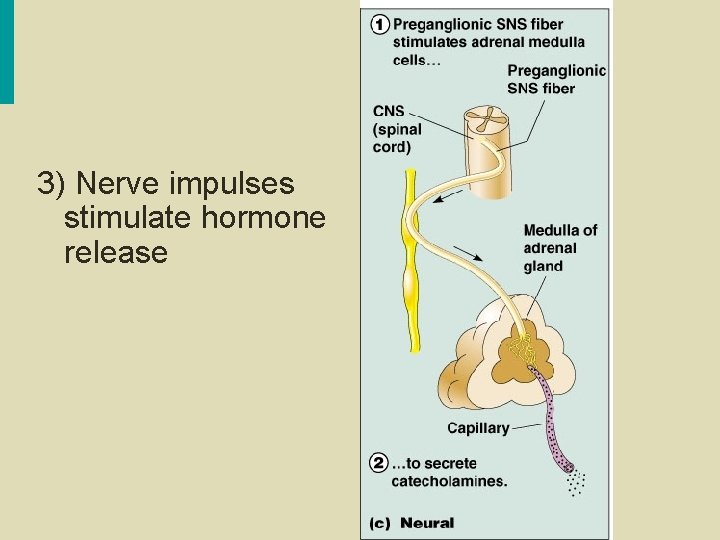
3) Nerve impulses stimulate hormone release
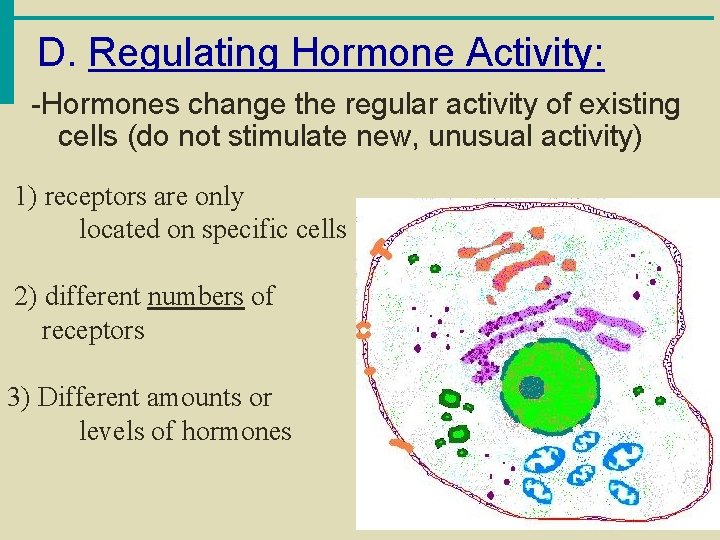
D. Regulating Hormone Activity: -Hormones change the regular activity of existing cells (do not stimulate new, unusual activity) 1) receptors are only located on specific cells 2) different numbers of receptors 3) Different amounts or levels of hormones Slide 9. 5
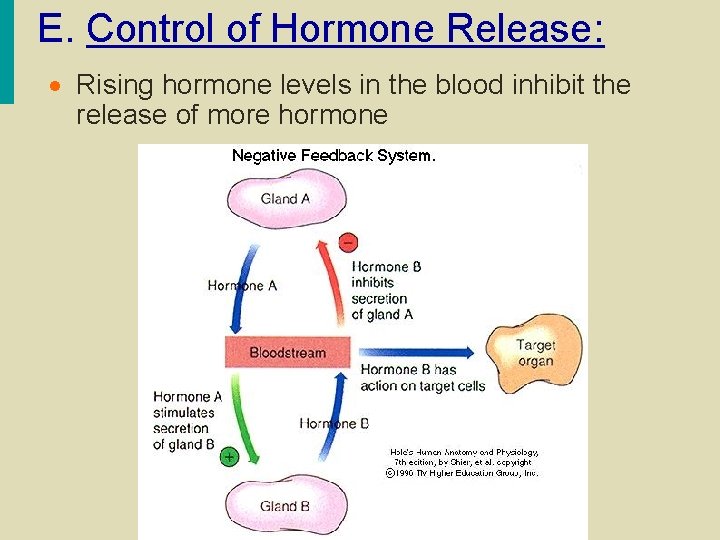
E. Control of Hormone Release: · Rising hormone levels in the blood inhibit the release of more hormone
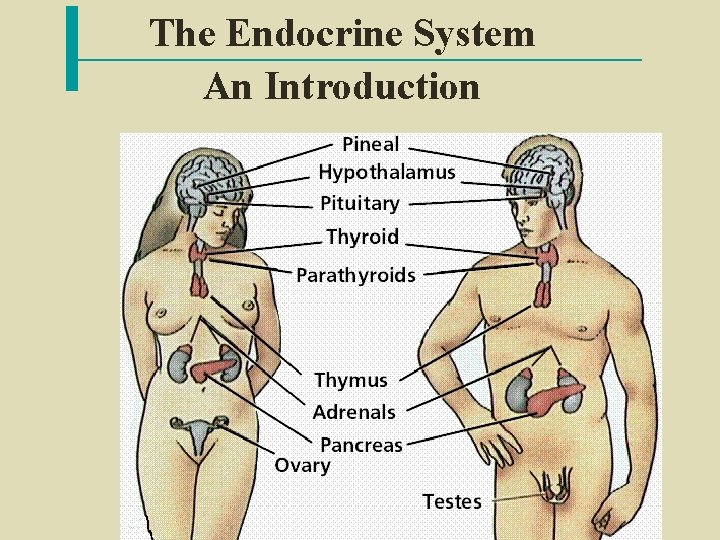
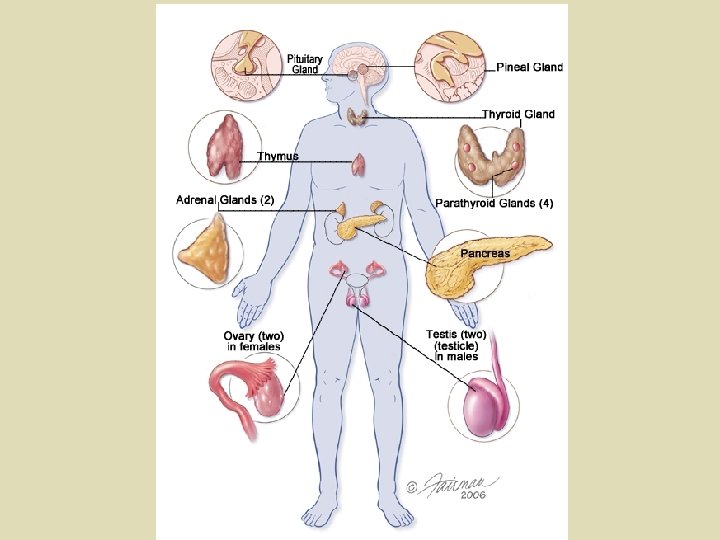
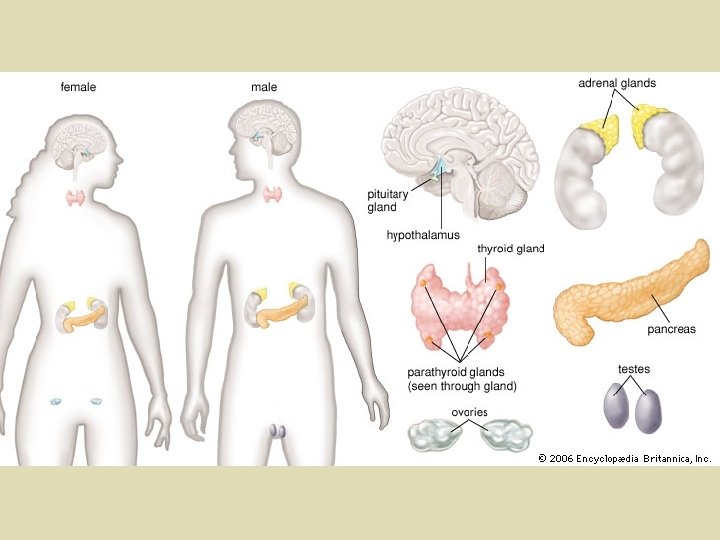
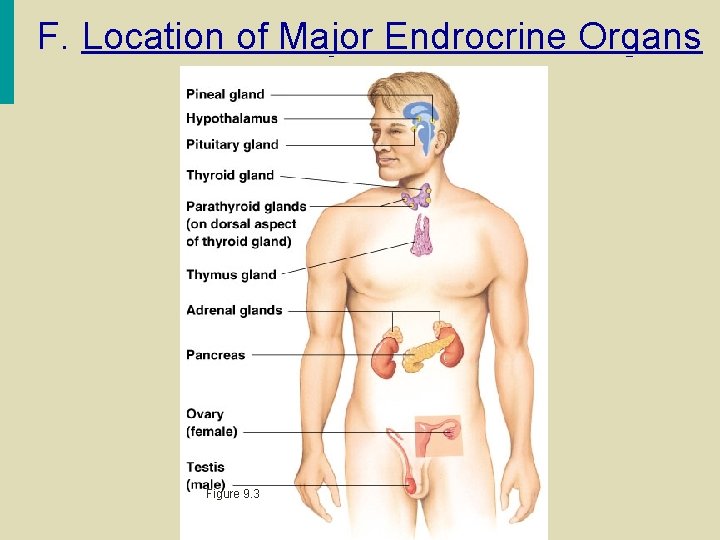
F. Location of Major Endrocrine Organs Figure 9. 3
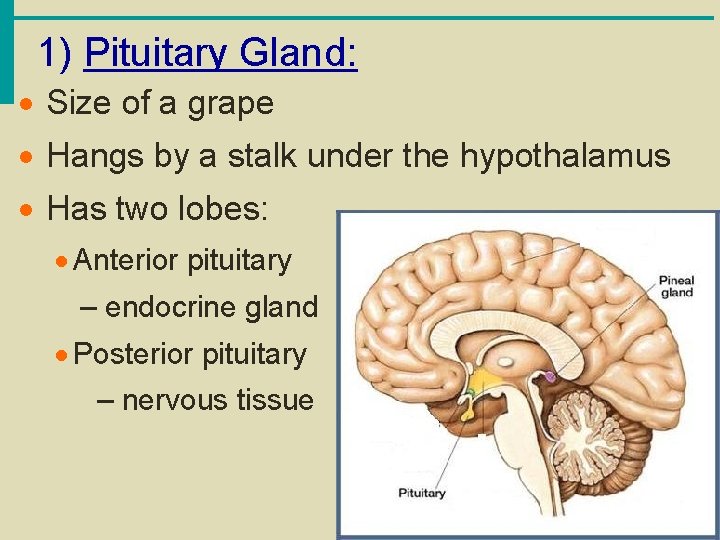
1) Pituitary Gland: · Size of a grape · Hangs by a stalk under the hypothalamus · Has two lobes: · Anterior pituitary – endocrine gland · Posterior pituitary – nervous tissue Slide 9. 15
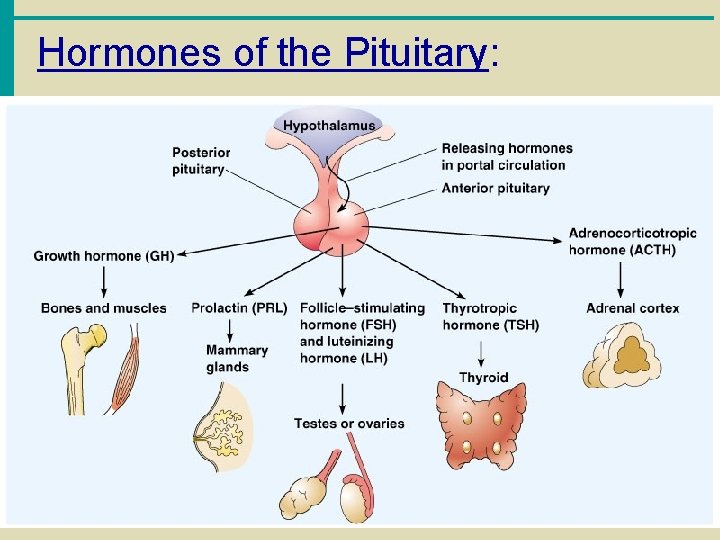
Hormones of the Pituitary: Slide 9. 17
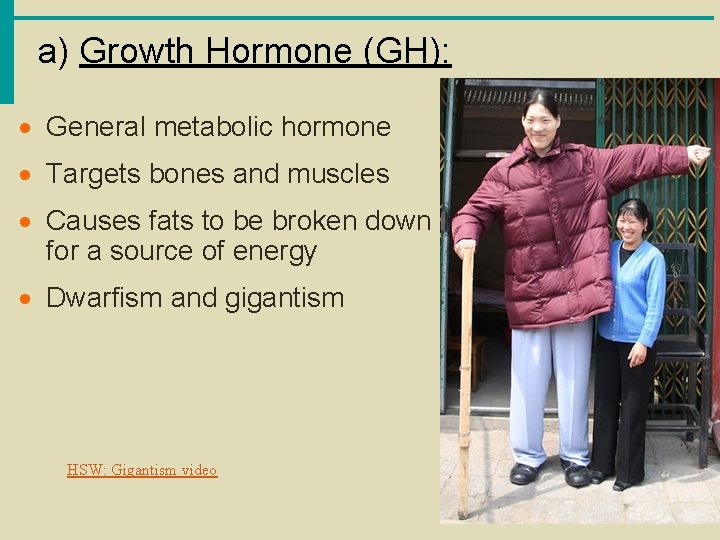
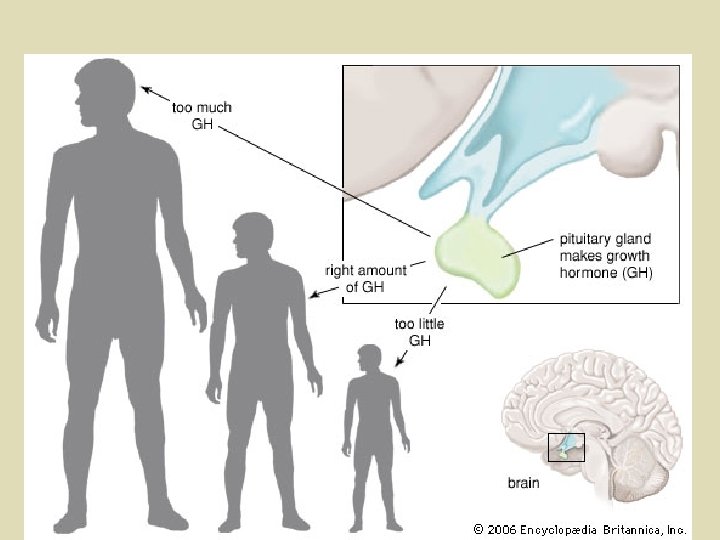
a) Growth Hormone (GH): · General metabolic hormone · Targets bones and muscles · Causes fats to be broken down for a source of energy · Dwarfism and gigantism HSW: Gigantism video Slide 9. 18
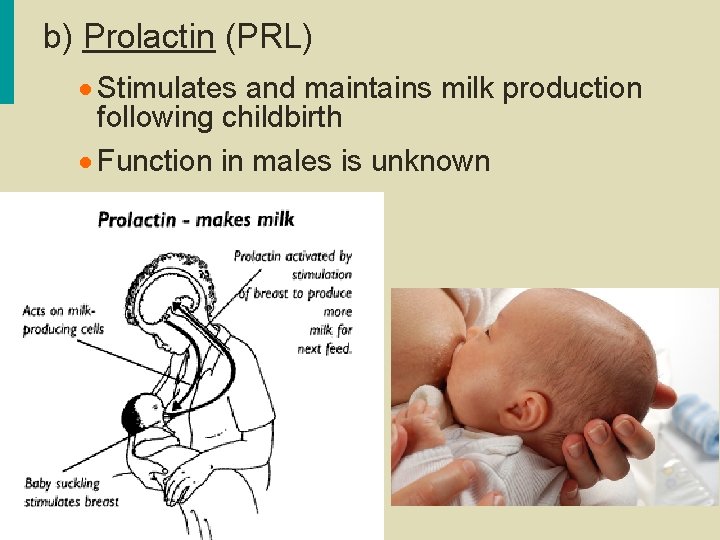
b) Prolactin (PRL) · Stimulates and maintains milk production following childbirth · Function in males is unknown
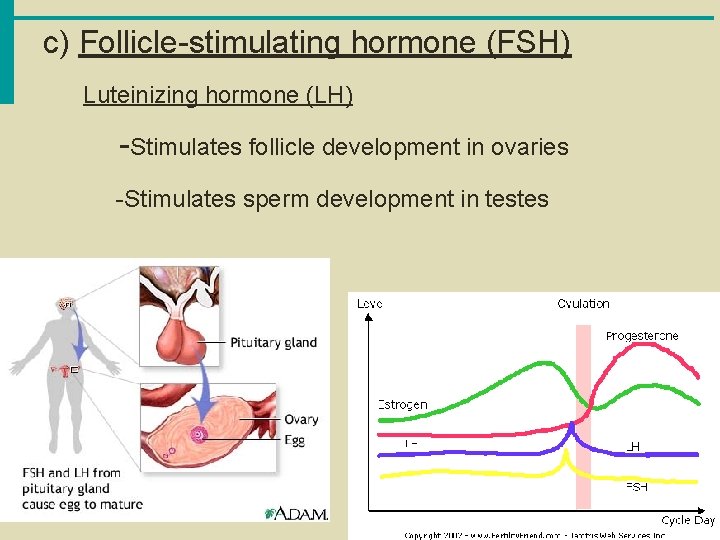
c) Follicle-stimulating hormone (FSH) Luteinizing hormone (LH) -Stimulates follicle development in ovaries -Stimulates sperm development in testes Slide 9. 20 a
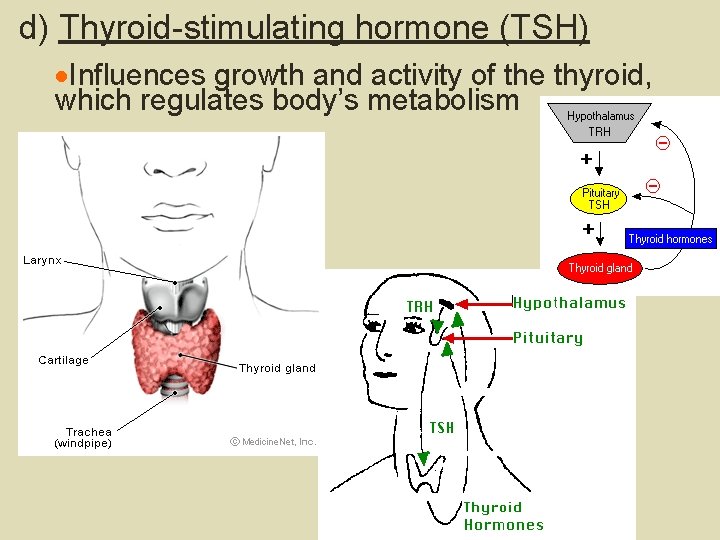
d) Thyroid-stimulating hormone (TSH) ·Influences growth and activity of the thyroid, which regulates body’s metabolism
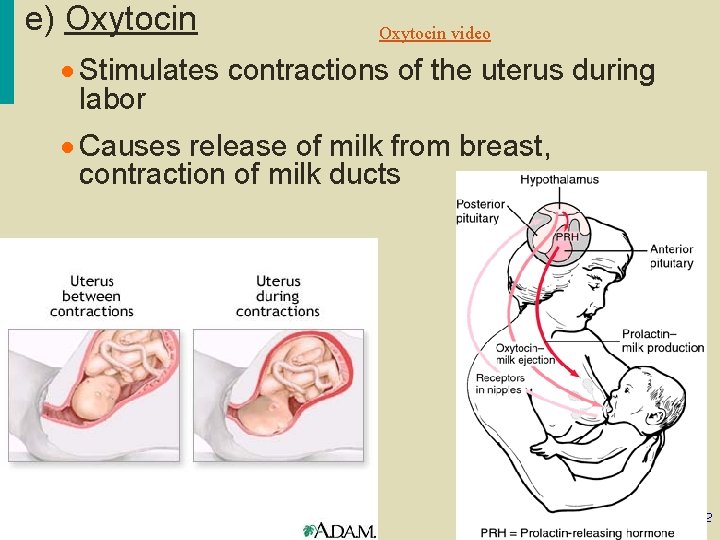
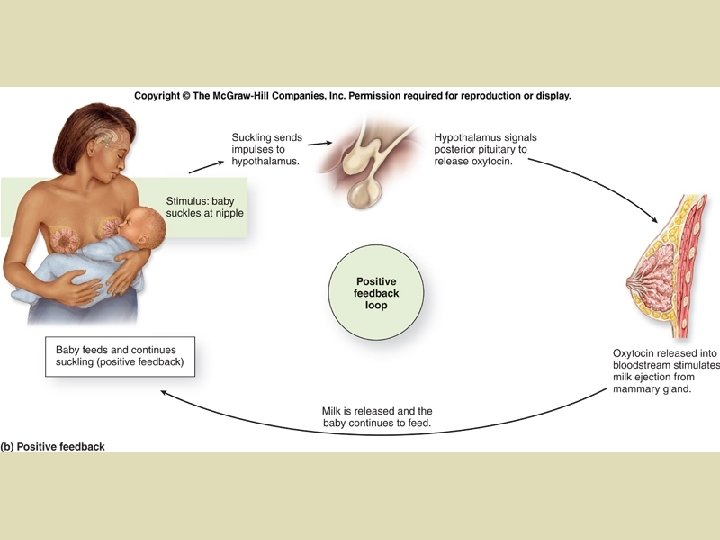
e) Oxytocin video · Stimulates contractions of the uterus during labor · Causes release of milk from breast, contraction of milk ducts Slide 9. 22
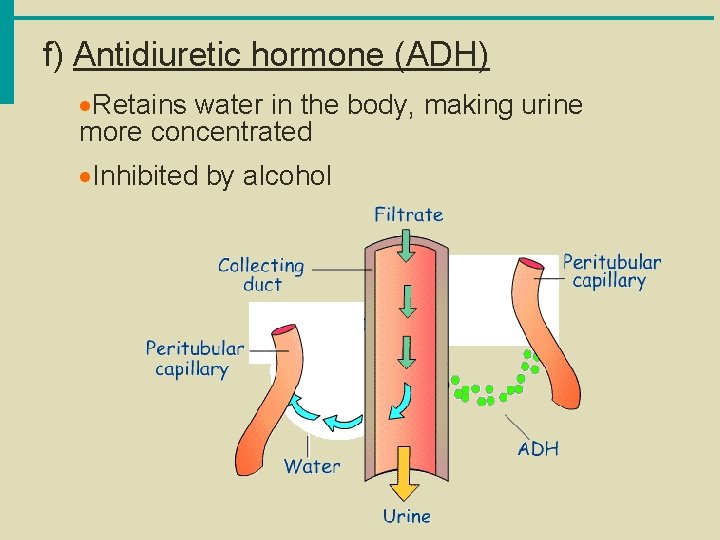
f) Antidiuretic hormone (ADH) ·Retains water in the body, making urine more concentrated ·Inhibited by alcohol