
The End TB Strategy Strengthening Expanding and Innovating
The End TB Strategy Strengthening, Expanding and Innovating the Global TB Response Muhammad Akhtar October 2017
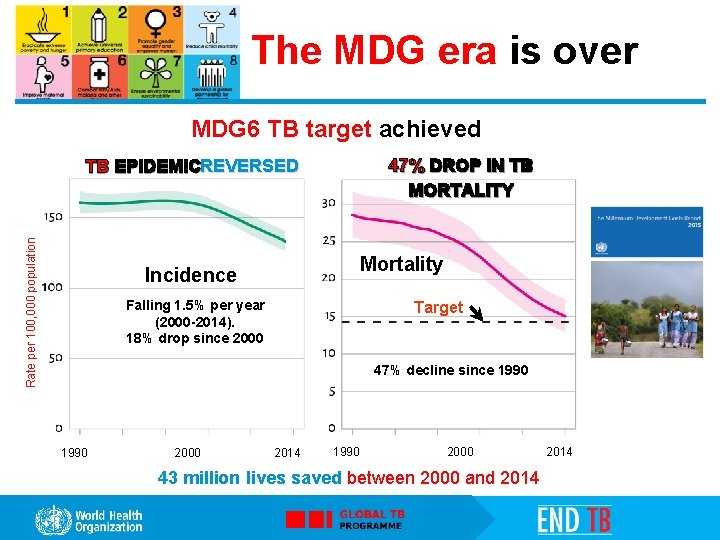
The MDG era is over MDG 6 TB target achieved Rate per 100, 000 population TB EPIDEMICREVERSED Incidence Falling 1. 5% per year (2000 -2014). 18% drop since 2000 47% DROP IN TB MORTALITY Mortality Target 47% decline since 1990 2000 2014 43 million lives saved between 2000 and 2014
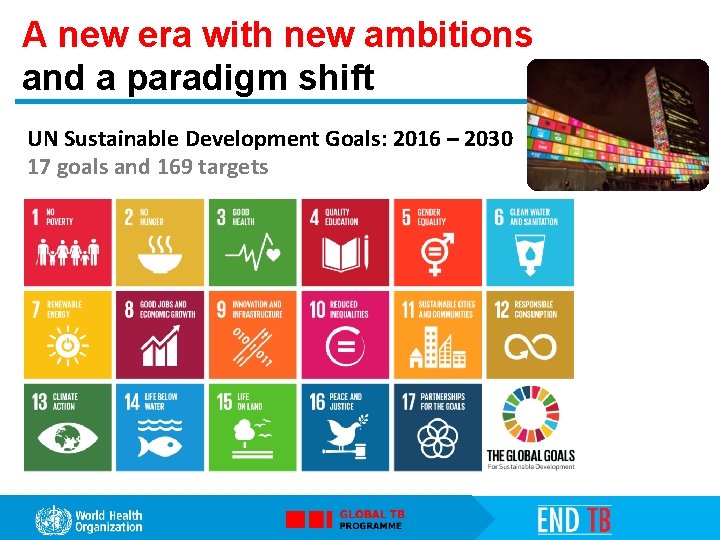
A new era with new ambitions and a paradigm shift UN Sustainable Development Goals: 2016 – 2030 17 goals and 169 targets
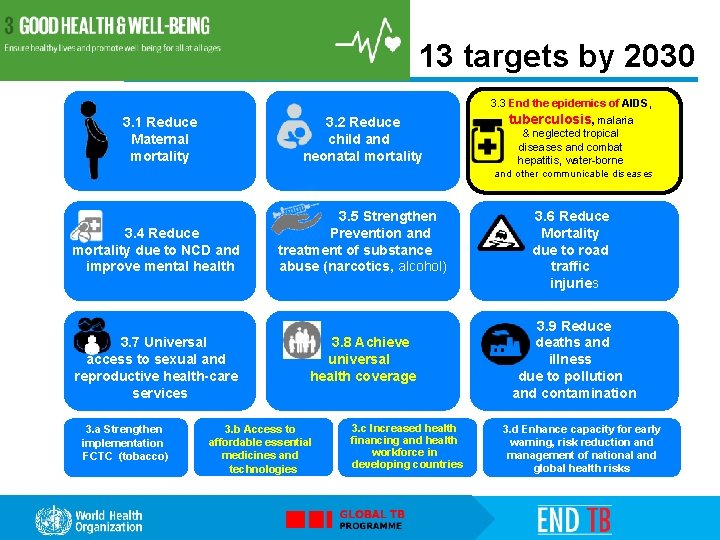
13 targets by 2030 3. 1 Reduce Maternal mortality 3. 2 Reduce child and neonatal mortality 3. 4 Reduce mortality due to NCD and improve mental health 3. 5 Strengthen Prevention and treatment of substance abuse (narcotics, alcohol) 3. 7 Universal access to sexual and reproductive health-care services 3. a Strengthen implementation FCTC (tobacco) 3. 8 Achieve universal health coverage 3. b Access to affordable essential medicines and technologies 3. c Increased health financing and health workforce in developing countries 3. 3 End the epidemics of AIDS, tuberculosis, malaria & neglected tropical diseases and combat hepatitis, water-borne and other communicable diseases 3. 6 Reduce Mortality due to road traffic injuries 3. 9 Reduce deaths and illness due to pollution and contamination 3. d Enhance capacity for early warning, risk reduction and management of national and global health risks
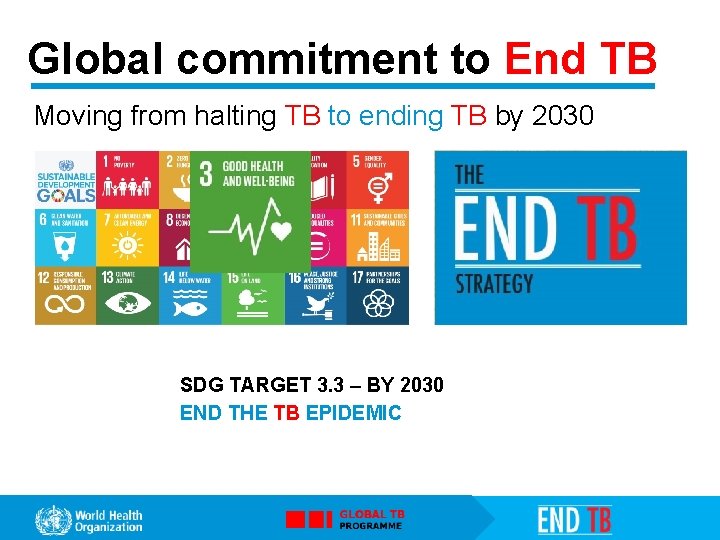
Global commitment to End TB Moving from halting TB to ending TB by 2030 SDG TARGET 3. 3 – BY 2030 END THE TB EPIDEMIC
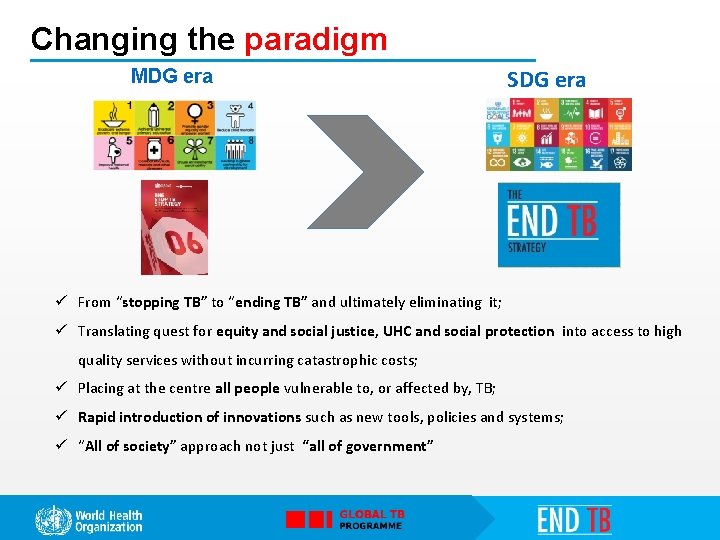
Changing the paradigm MDG era SDG era ü From “stopping TB” to “ending TB” and ultimately eliminating it; ü Translating quest for equity and social justice, UHC and social protection into access to high quality services without incurring catastrophic costs; ü Placing at the centre all people vulnerable to, or affected by, TB; ü Rapid introduction of innovations such as new tools, policies and systems; ü “All of society” approach not just “all of government”
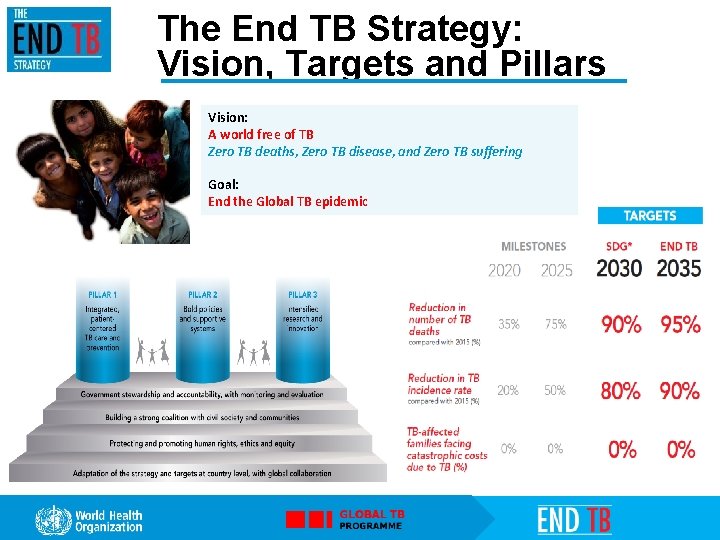
The End TB Strategy: Vision, Targets and Pillars Vision: A world free of TB Zero TB deaths, Zero TB disease, and Zero TB suffering Goal: End the Global TB epidemic
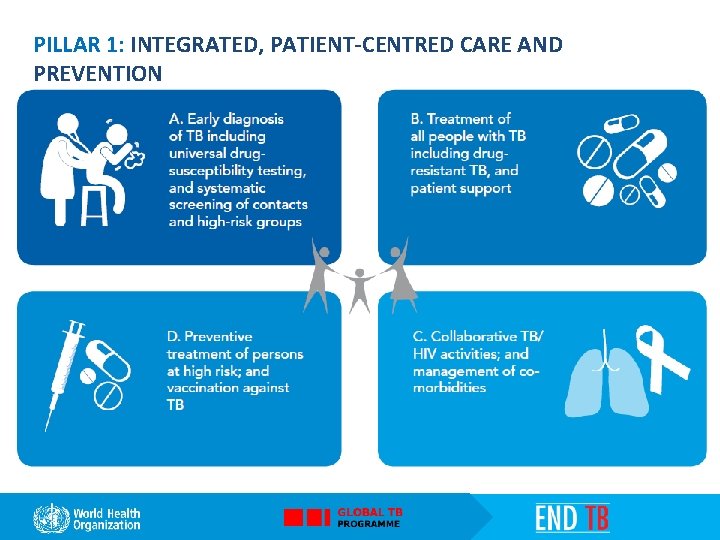
PILLAR 1: INTEGRATED, PATIENT-CENTRED CARE AND PREVENTION
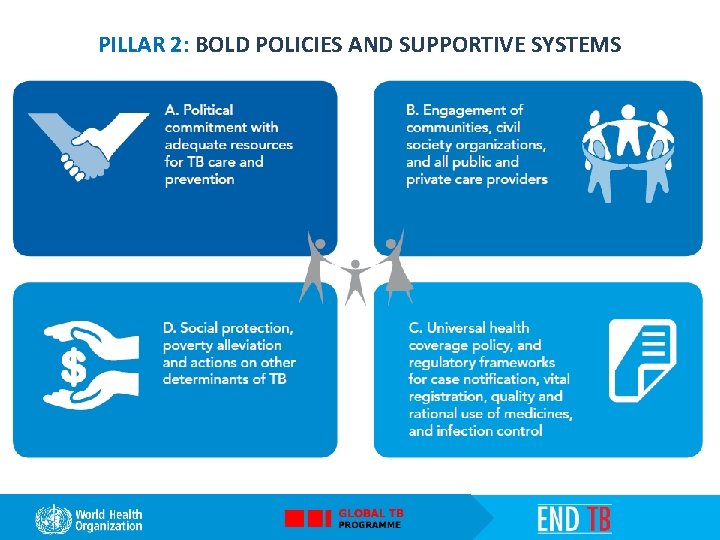
PILLAR 2: BOLD POLICIES AND SUPPORTIVE SYSTEMS
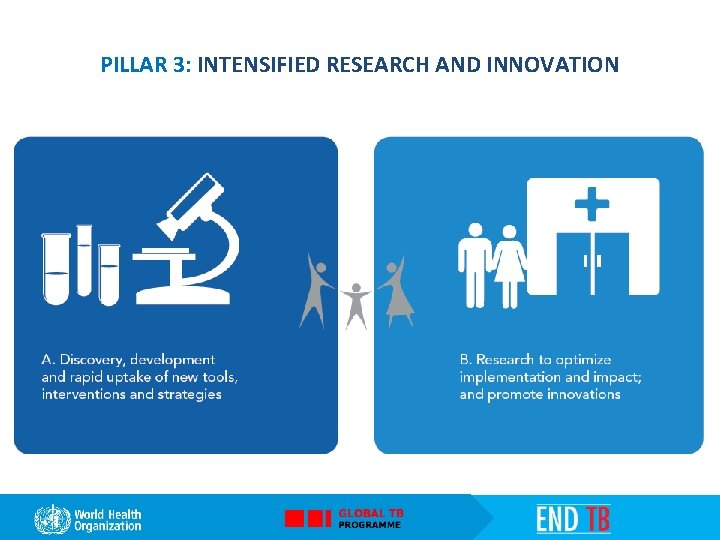
PILLAR 3: INTENSIFIED RESEARCH AND INNOVATION
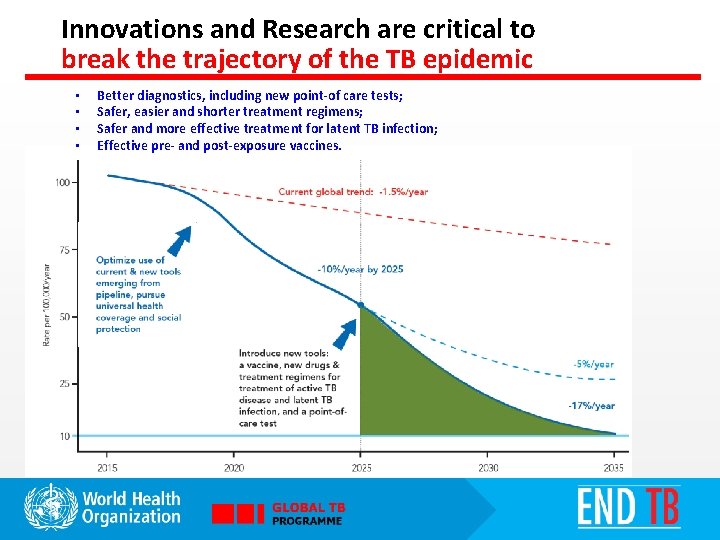
Innovations and Research are critical to break the trajectory of the TB epidemic • • Better diagnostics, including new point-of care tests; Safer, easier and shorter treatment regimens; Safer and more effective treatment for latent TB infection; Effective pre- and post-exposure vaccines.
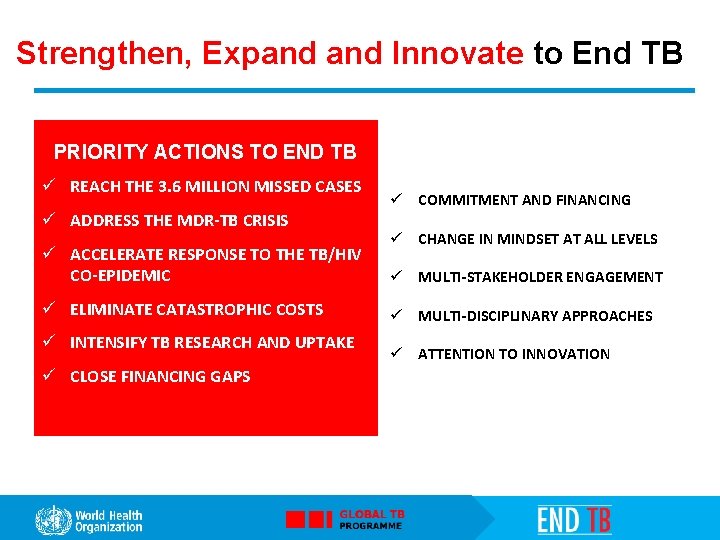
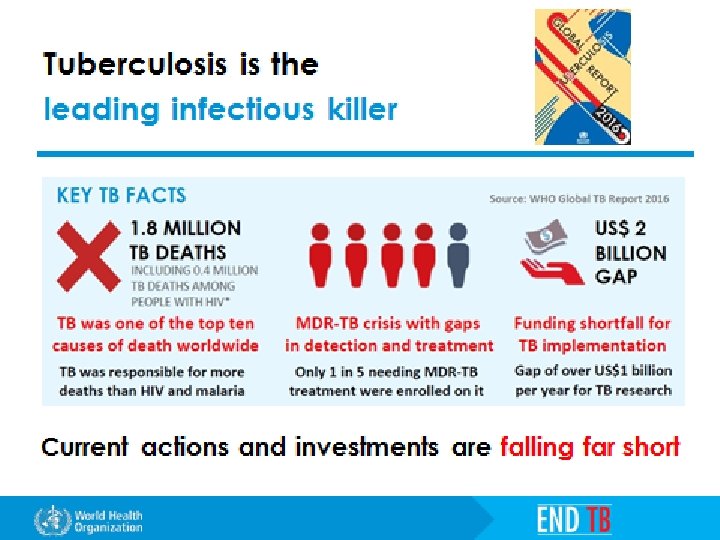
Strengthen, Expand Innovate to End TB STOP TB PRIORITY ACTIONS TO END TB ü REACH THE 3. 6 MILLION MISSED CASES ü ADDRESS THE MDR-TB CRISIS ü ACCELERATE RESPONSE TO THE TB/HIV CO-EPIDEMIC ü ELIMINATE CATASTROPHIC COSTS ü INTENSIFY TB RESEARCH AND UPTAKE ü CLOSE FINANCING GAPS ü COMMITMENT AND FINANCING ü CHANGE IN MINDSET AT ALL LEVELS ü MULTI-STAKEHOLDER ENGAGEMENT ü MULTI-DISCIPLINARY APPROACHES ü ATTENTION TO INNOVATION
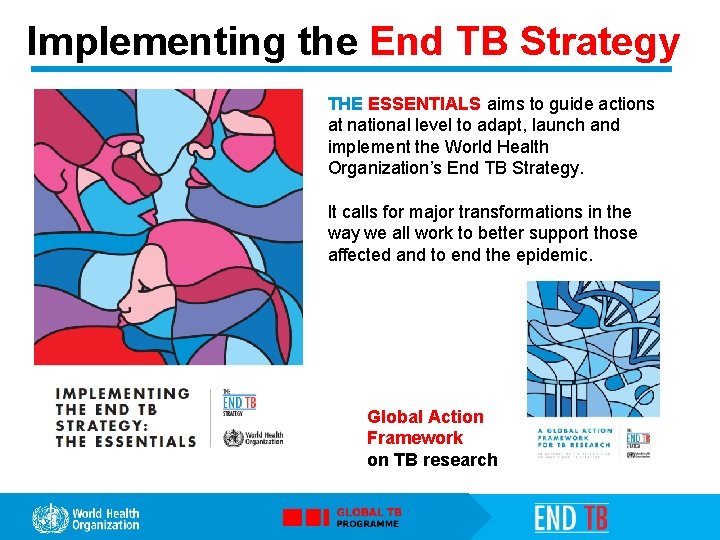
Implementing the End TB Strategy STOP TB THE ESSENTIALS aims to guide actions at national level to adapt, launch and implement the World Health Organization’s End TB Strategy. It calls for major transformations in the way we all work to better support those affected and to end the epidemic. Global Action Framework on TB research
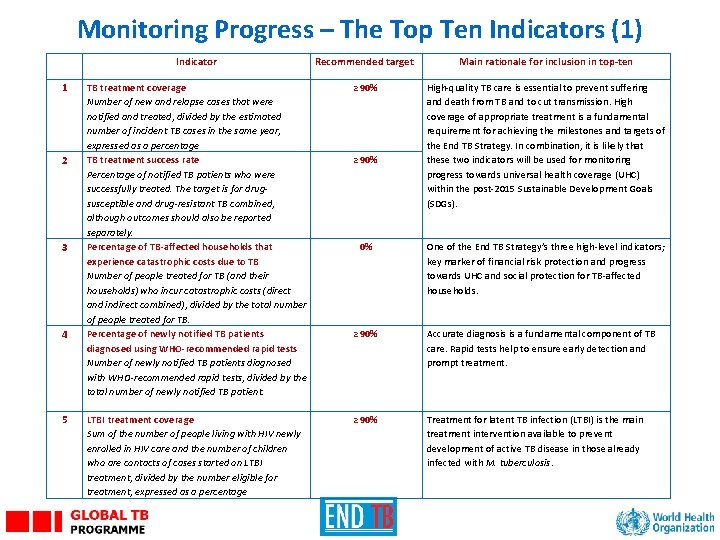
Monitoring Progress – The Top Ten Indicators (1) 1 2 3 4 5 Indicator Recommended target Main rationale for inclusion in top-ten TB treatment coverage Number of new and relapse cases that were notified and treated, divided by the estimated number of incident TB cases in the same year, expressed as a percentage TB treatment success rate Percentage of notified TB patients who were successfully treated. The target is for drugsusceptible and drug-resistant TB combined, although outcomes should also be reported separately. Percentage of TB-affected households that experience catastrophic costs due to TB Number of people treated for TB (and their households) who incur catastrophic costs (direct and indirect combined), divided by the total number of people treated for TB. Percentage of newly notified TB patients diagnosed using WHO-recommended rapid tests Number of newly notified TB patients diagnosed with WHO-recommended rapid tests, divided by the total number of newly notified TB patient. ≥ 90% High-quality TB care is essential to prevent suffering STOP TB and death from TB and to cut transmission. High coverage of appropriate treatment is a fundamental requirement for achieving the milestones and targets of the End TB Strategy. In combination, it is likely that these two indicators will be used for monitoring progress towards universal health coverage (UHC) within the post-2015 Sustainable Development Goals (SDGs). ≥ 90% Accurate diagnosis is a fundamental component of TB care. Rapid tests help to ensure early detection and prompt treatment. LTBI treatment coverage Sum of the number of people living with HIV newly enrolled in HIV care and the number of children who are contacts of cases started on LTBI treatment, divided by the number eligible for treatment, expressed as a percentage ≥ 90% Treatment for latent TB infection (LTBI) is the main treatment intervention available to prevent development of active TB disease in those already infected with M. tuberculosis. ≥ 90% 0% One of the End TB Strategy’s three high-level indicators; key marker of financial risk protection and progress towards UHC and social protection for TB-affected households.
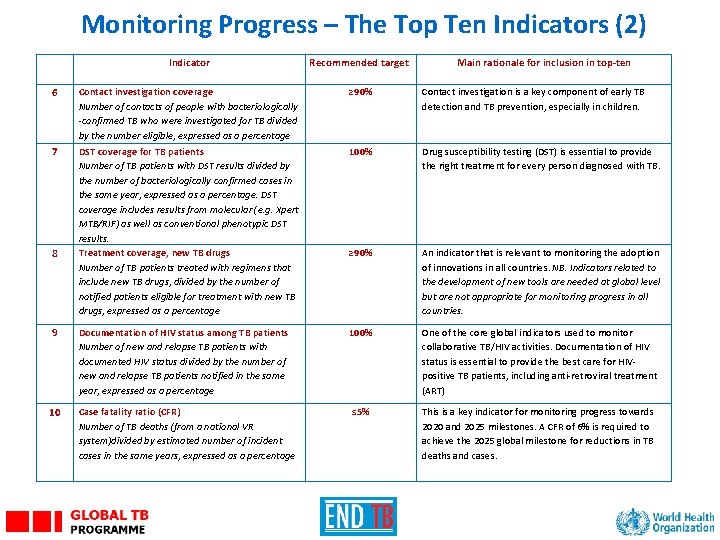
Monitoring Progress – The Top Ten Indicators (2) 6 7 8 Indicator Recommended target Main rationale for inclusion in top-ten Contact investigation coverage Number of contacts of people with bacteriologically -confirmed TB who were investigated for TB divided by the number eligible, expressed as a percentage DST coverage for TB patients Number of TB patients with DST results divided by the number of bacteriologically confirmed cases in the same year, expressed as a percentage. DST coverage includes results from molecular (e. g. Xpert MTB/RIF) as well as conventional phenotypic DST results. Treatment coverage, new TB drugs Number of TB patients treated with regimens that include new TB drugs, divided by the number of notified patients eligible for treatment with new TB drugs, expressed as a percentage ≥ 90% Contact investigation is a key component of early STOP TBTB detection and TB prevention, especially in children. 100% Drug susceptibility testing (DST) is essential to provide the right treatment for every person diagnosed with TB. ≥ 90% An indicator that is relevant to monitoring the adoption of innovations in all countries. NB. Indicators related to the development of new tools are needed at global level but are not appropriate for monitoring progress in all countries. 9 Documentation of HIV status among TB patients Number of new and relapse TB patients with documented HIV status divided by the number of new and relapse TB patients notified in the same year, expressed as a percentage 100% One of the core global indicators used to monitor collaborative TB/HIV activities. Documentation of HIV status is essential to provide the best care for HIVpositive TB patients, including anti-retroviral treatment (ART) 10 Case fatality ratio (CFR) Number of TB deaths (from a national VR system)divided by estimated number of incident cases in the same years, expressed as a percentage ≤ 5% This is a key indicator for monitoring progress towards 2020 and 2025 milestones. A CFR of 6% is required to achieve the 2025 global milestone for reductions in TB deaths and cases.
Let us UNITE TO END TB
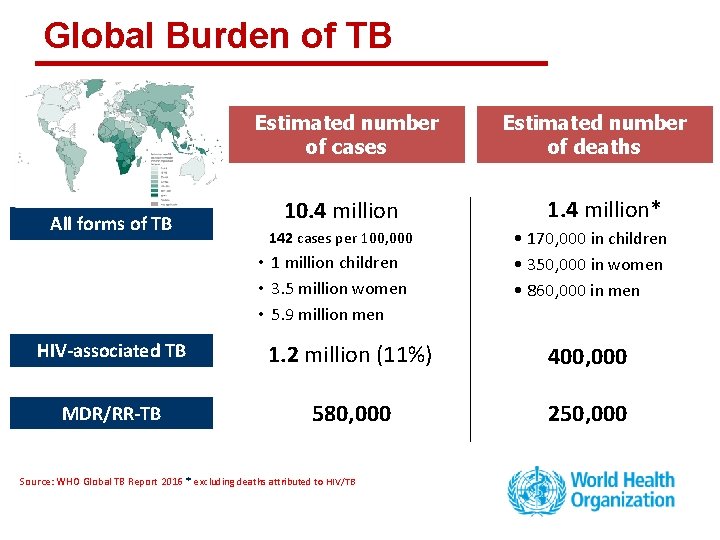
Global Burden of TB Estimated number of cases All forms of TB 10. 4 million 142 cases per 100, 000 • 1 million children • 3. 5 million women • 5. 9 million men HIV-associated TB MDR/RR-TB Estimated number of deaths 1. 4 million* • 170, 000 in children • 350, 000 in women • 860, 000 in men 1. 2 million (11%) 400, 000 580, 000 250, 000 Source: WHO Global TB Report 2016 * excluding deaths attributed to HIV/TB
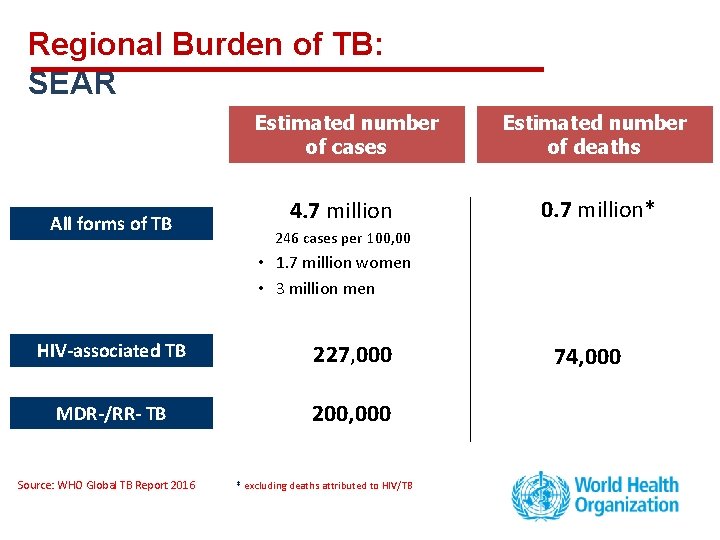
Regional Burden of TB: SEAR All forms of TB Estimated number of cases Estimated number of deaths 4. 7 million 0. 7 million* 246 cases per 100, 00 • 1. 7 million women • 3 million men HIV-associated TB MDR-/RR- TB Source: WHO Global TB Report 2016 227, 000 200, 000 * excluding deaths attributed to HIV/TB 74, 000
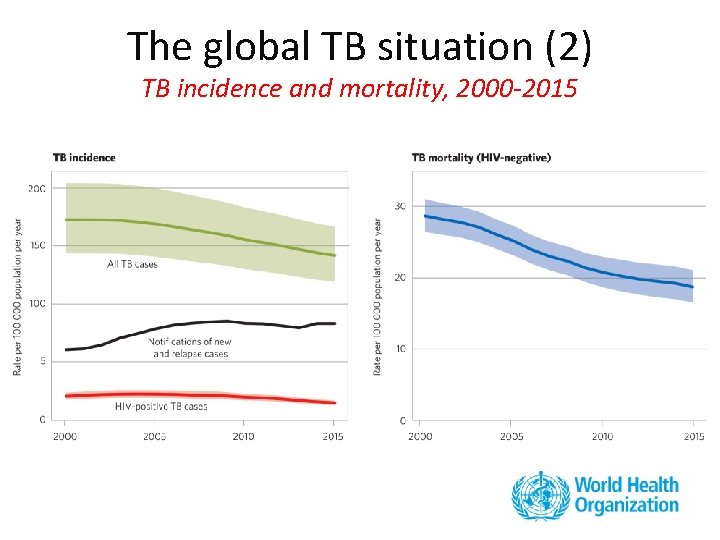
The global TB situation (2) TB incidence and mortality, 2000 -2015
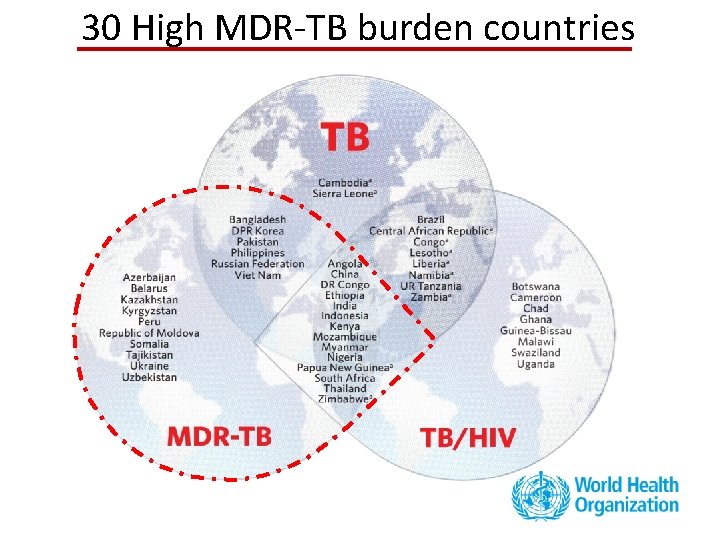
30 High MDR-TB burden countries
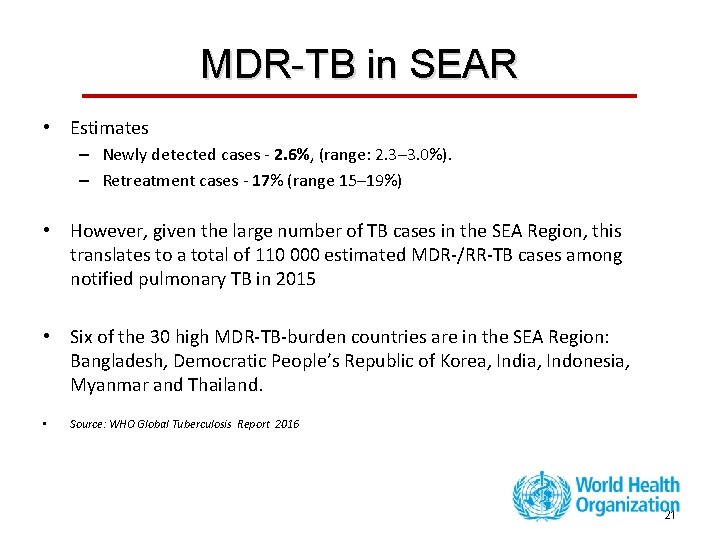
MDR-TB in SEAR • Estimates – Newly detected cases - 2. 6%, (range: 2. 3– 3. 0%). – Retreatment cases - 17% (range 15– 19%) • However, given the large number of TB cases in the SEA Region, this translates to a total of 110 000 estimated MDR-/RR-TB cases among notified pulmonary TB in 2015 • Six of the 30 high MDR-TB-burden countries are in the SEA Region: Bangladesh, Democratic People’s Republic of Korea, India, Indonesia, Myanmar and Thailand. • Source: WHO Global Tuberculosis Report 2016 21
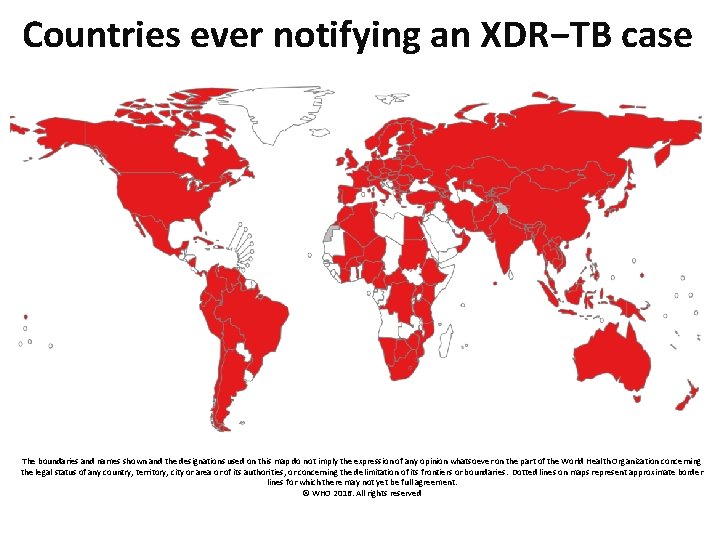
Countries ever notifying an XDR−TB case The boundaries and names shown and the designations used on this map do not imply the expression of any opinion whatsoever on the part of the World Health Organization concerning the legal status of any country, territory, city or area or of its authorities, or concerning the delimitation of its frontiers or boundaries. Dotted lines on maps represent approximate border lines for which there may not yet be full agreement. WHO 2016. All rights reserved
16 - 17 NOVEMBER 2017, MOSCOW, RUSSIAN FEDERATION OVERVIEW PRESENTATION
FIRST WHO GLOBAL MINISTERIAL CONFERENCE ENDING TB IN THE SUSTAINABLE DEVELOPMENT ERA: A MULTISECTORAL RESPONSE Conference Vision The WHO Global Ministerial Conference “Ending TB in the Sustainable Development Era: A Multisectoral Response” aims to accelerate implementation of the WHO End TB Strategy - with immediate action addressing gaps in access to care and the MDR- TB crisis - in order to reach the End TB targets set by the World Health Assembly and the United Nations (UN) Sustainable Development Goals (SDGs) through national and global commitments, deliverables and accountability. The Ministerial Conference will inform the UN General Assembly High-Level Meeting on TB in 2018.
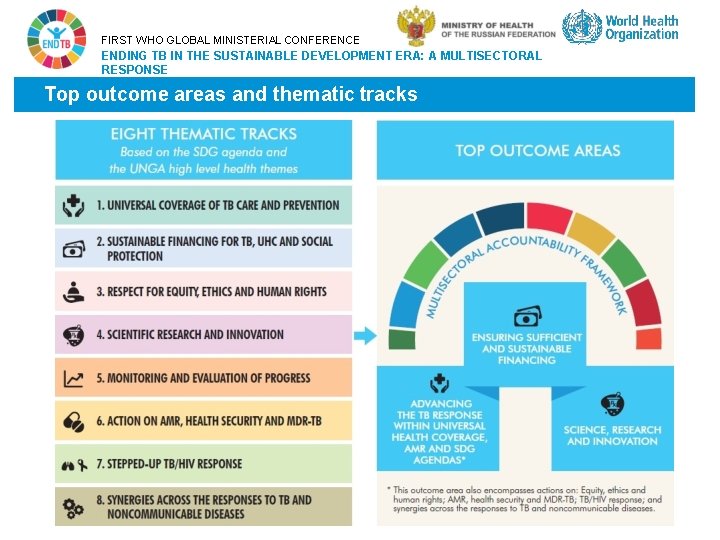
FIRST WHO GLOBAL MINISTERIAL CONFERENCE ENDING TB IN THE SUSTAINABLE DEVELOPMENT ERA: A MULTISECTORAL RESPONSE Top outcome areas and thematic tracks
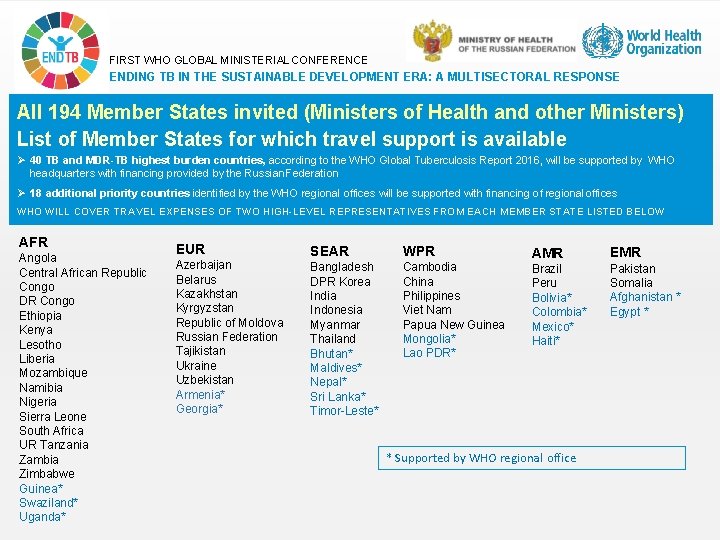
FIRST WHO GLOBAL MINISTERIAL CONFERENCE ENDING TB IN THE SUSTAINABLE DEVELOPMENT ERA: A MULTISECTORAL RESPONSE All 194 Member States invited (Ministers of Health and other Ministers) List of Member States for which travel support is available 40 TB and MDR-TB highest burden countries, according to the WHO Global Tuberculosis Report 2016, will be supported by WHO headquarters with financing provided by the Russian Federation 18 additional priority countries identified by the WHO regional offices will be supported with financing of regional offices WHO WILL COVER TRAVEL EXPENSES OF TWO HIGH-LEVEL REPRESENTATIVES FROM EACH MEMBER STATE LISTED BELOW AFR Angola Central African Republic Congo DR Congo Ethiopia Kenya Lesotho Liberia Mozambique Namibia Nigeria Sierra Leone South Africa UR Tanzania Zambia Zimbabwe Guinea* Swaziland* Uganda* EUR Azerbaijan Belarus Kazakhstan Kyrgyzstan Republic of Moldova Russian Federation Tajikistan Ukraine Uzbekistan Armenia* Georgia* SEAR WPR Bangladesh DPR Korea India Indonesia Myanmar Thailand Bhutan* Maldives* Nepal* Sri Lanka* Timor-Leste* Cambodia China Philippines Viet Nam Papua New Guinea Mongolia* Lao PDR* AMR EMR Brazil Peru Bolivia* Colombia* Mexico* Haiti* Pakistan Somalia Afghanistan * Egypt * * Supported by WHO regional office
FIRST WHO GLOBAL MINISTERIAL CONFERENCE ENDING TB IN THE SUSTAINABLE DEVELOPMENT ERA: A MULTISECTORAL RESPONSE All partners invited UN organizations Multilateral agencies Bilateral agencies International development agencies Regional bodies Partnerships Nongovernmental organizations; faith-based organizations Civil society representatives; affected people and communities Professional societies Academic and research institutions Philanthropic foundations Private sector entities Bilateral discussions and consultations with all key partners Partners Group Consultation held on 21 May 2017
Decision by the UN General Assembly for a High-Level Meeting on TB in 2018 High Level Meeting on TB UNITED NATIONS GENERAL ASSEMBLY RESOLUTION A/RES/71/159 - 15 DECEMBER 2016 Global health and foreign policy: Health Employment and Economic Growth The General Assembly, (. . . ) 21. Takes note of the initiative to hold, in Moscow in November 2017, a global ministerial conference on the fight against tuberculosis in the context of public health and the Sustainable Development Goals; 22. Decides to hold a high-level meeting in 2018 on the fight against tuberculosis, and requests the Secretary-General, in close collaboration with the Director-General of the World Health Organization and in consultation with Member States, as appropriate, to propose options and modalities for the conduct of such a meeting, including potential deliverables, building on existing efforts in this regard; (. . . )
THANK YOU
- Slides: 30