
The End of the Civil War The Tide
- Slides: 5
The End of the Civil War
The Tide Turns • After the success at Gettysburg, the Union is now winning and on the offensive. • The Union employs a Scorched Earth Policy – anything that can be used for the war effort ( Farms, Factories and Homes) will be burned! • This hurts Southern Morale and decreases their will to fight. • By 1865, the North controls the Mississippi River and their Army is moving through the South with impunity. • The Anaconda Plan is working.
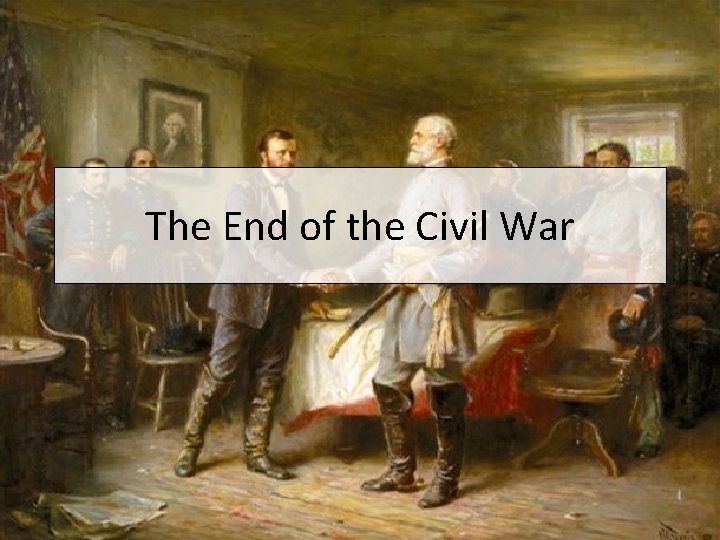
The End • Grant breaks through Southern Lines on April 2 nd , 1865 and Richmond (Capital of the Confederacy) is captured on April 3. • Exhausted, starving and undersupplied, Robert E. Lee and the Army of Northern Virginia surrenders on April 9. • Individual Confederate states surrender one by one. • May 10 – Jefferson Davis is captured, some holdouts continue to fight on. • August 20, 1866 – Official final day of the war
Lasting Effects of the Civil War • 620, 000 dead, 17% of the population. • New military tactics, deadly weapons meant the military had to adapt to avoid the same bloodshed. – Trenches and Barbed Wire • The War effort in the North encouraged factory construction and industrial expansion. • Southern Economy and Society is devastated – 2/3 rds of their railroads are destroyed. – Countless Plantations and farms are burned. – ¼ of the military age white population in the Confederacy is dead. – 4 Million slaves are now free.
The Human Cost • How to deal with the carnage: – Department of Veteran’s Affairs is founded. – Mississippi – 1/5 th of the state budget will be spent on artificial limbs. – 800, 000 men returning to the North in need of work – No war effort = less jobs. – Freedman’s Bureau is established – encourages Southern Plantation owners to rebuild their plantations and to use paid labour instead of slaves.