
The End of Simulation Mike Payne If we


- Slides: 28
The End of Simulation? Mike Payne
If we are honest about the usefulness of simulations they should be: Genuinely predictive Free of adjustable parameters Computationally tractable and affordable. . . and if you want lots of people to use them then running the simulations should be as simple as possible – ideally nothing beyond specifying the system.
ONETEP Linear scaling quantum mechanical calculations Peter Haynes Arash Mostofi Imperial College, London Chris Kriton Skylaris University of Southampton
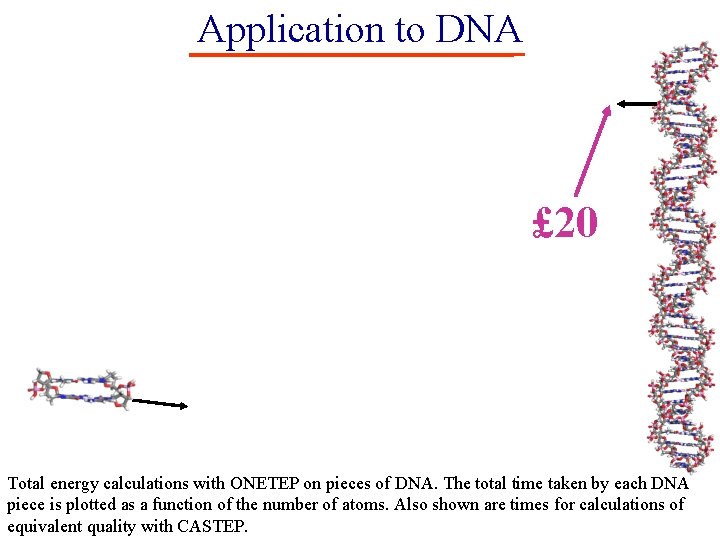
Application to DNA £ 20 Total energy calculations with ONETEP on pieces of DNA. The total time taken by each DNA piece is plotted as a function of the number of atoms. Also shown are times for calculations of equivalent quality with CASTEP.
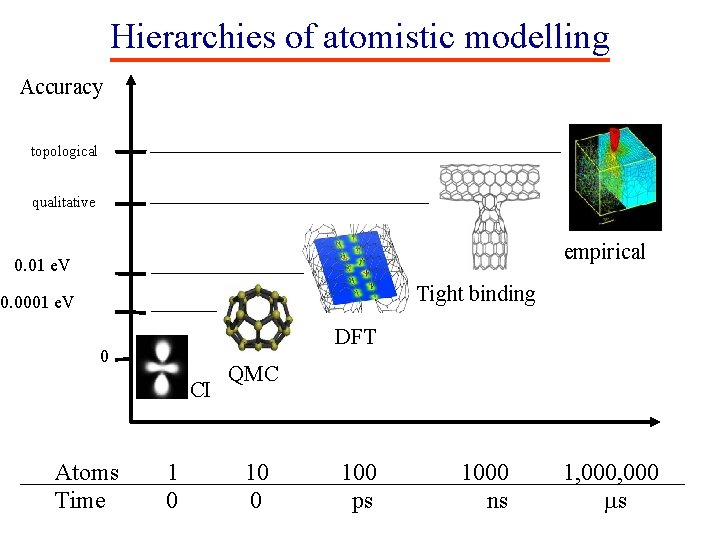
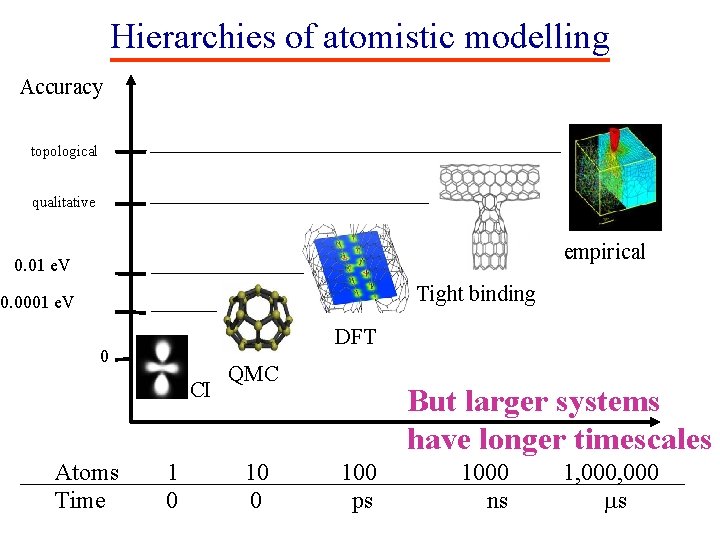
Hierarchies of atomistic modelling Accuracy topological qualitative empirical 0. 01 e. V Tight binding 0. 0001 e. V DFT 0 CI Atoms Time 1 0 QMC 10 0 100 ps 1000 ns 1, 000 ms
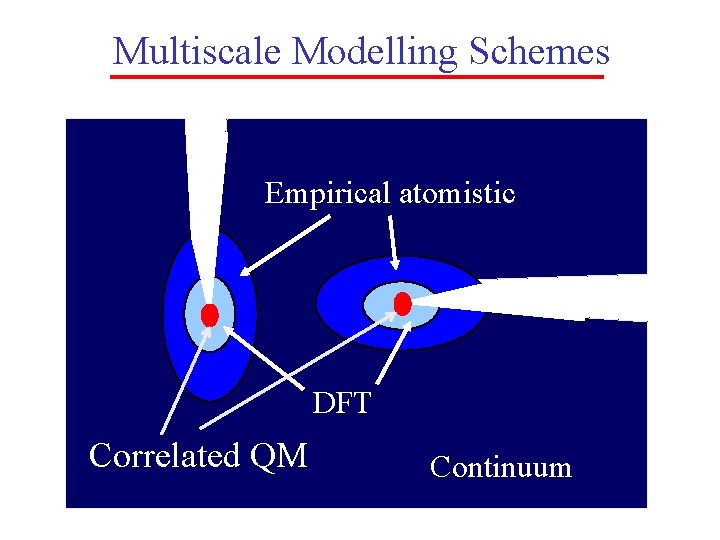
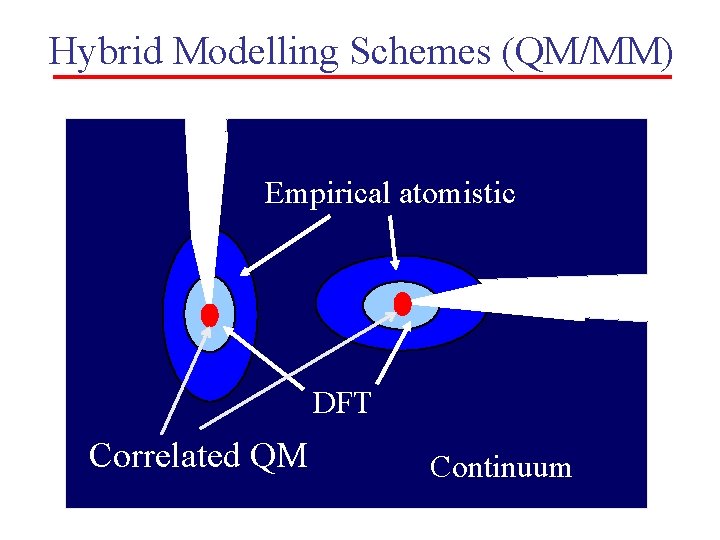
Multiscale Modelling Schemes Empirical atomistic DFT Correlated QM Continuum
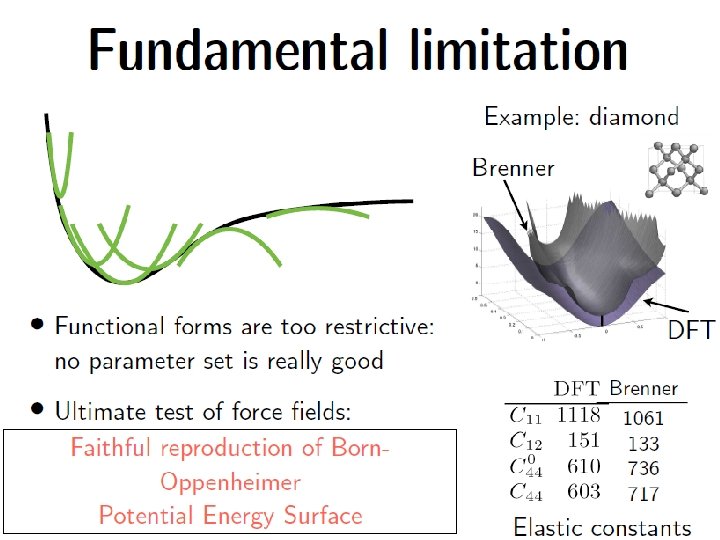
Scheme to couple continuum simulations to empirical simulations developed by Peter Gumbsch and co-workers in 1991. Many similar examples: electrostatics, solvation, . . . What about coupling DFT (or cheap QM) atomistic and empirical atomistic simulations. ? Many so-called QM/MM schemes - few of them suitable for dynamicalyl evolving systems – let alone being parameter-free, predictive and usable.
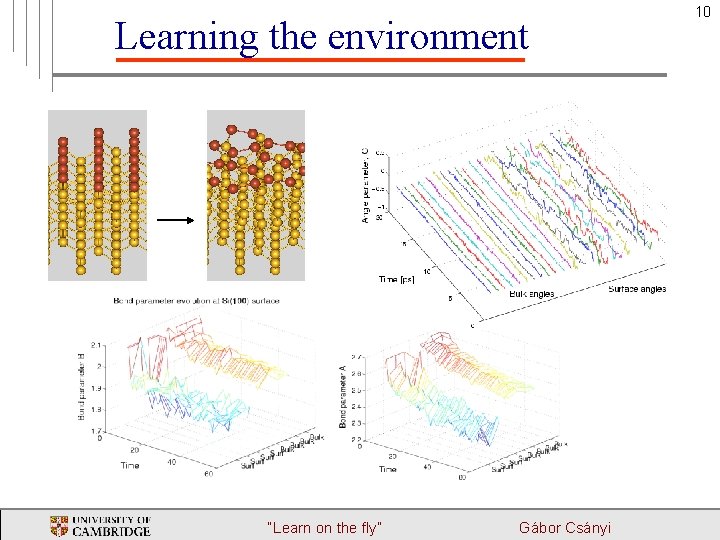
“Learn on the fly” - Hybrid classical/ quantum molecular dynamics simulation Gábor Csányi Engineering, Cambridge Alessandro De Vita King’s College, London
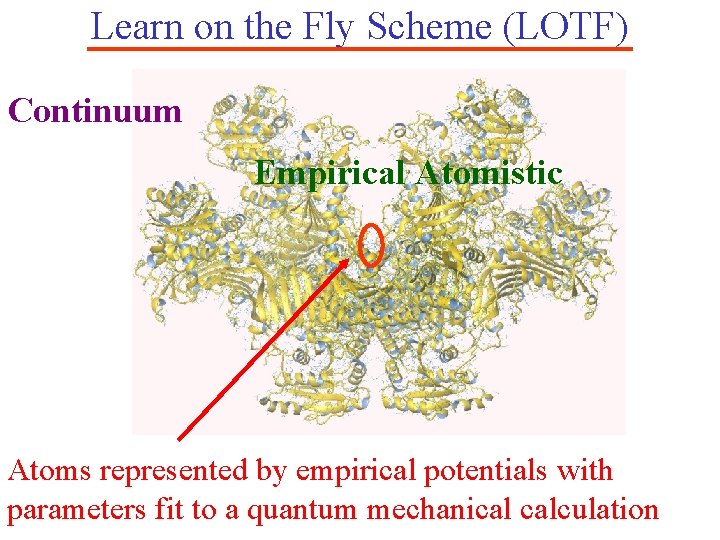
Learn on the Fly Scheme (LOTF) Continuum Empirical Atomistic Atoms represented by empirical potentials with parameters fit to a quantum mechanical calculation
Learning the environment “Learn on the fly” Gábor Csányi 10
Crack Propagation in Silicon J. R. Kermode 1, T. Albaret 2, D. Sherman 3, N. Bernstein 4, P. Gumbsch 5, 6, MCP, G. Csányi 7 & A. De Vita 8, 9 1. TCM Group, Cavendish Laboratory 2. Université de Lyon 1, 3. Department of Materials Engineering, Technion–Israel Institute of Technology, 4. Center for Computational Materials Science, NRL, 5. Institut für Zuverlässigkeit von Bauteilen und Systemen, Universitat Karlsruhe 6. Fraunhofer–Institut für Werkstoffmechanik Freiburg 7. Engineering Laboratory, University of Cambridge. 8. Dept. of Physics, King’s College London, 9. INFM–DEMOCRITOS CENMAT, University of Trieste
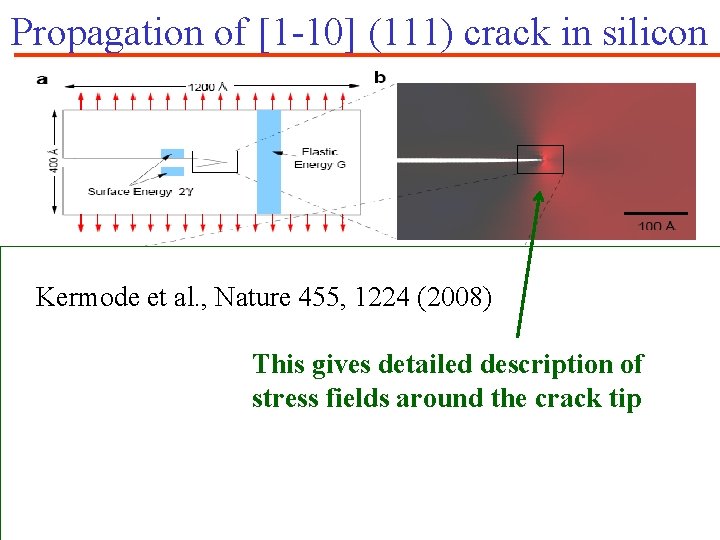
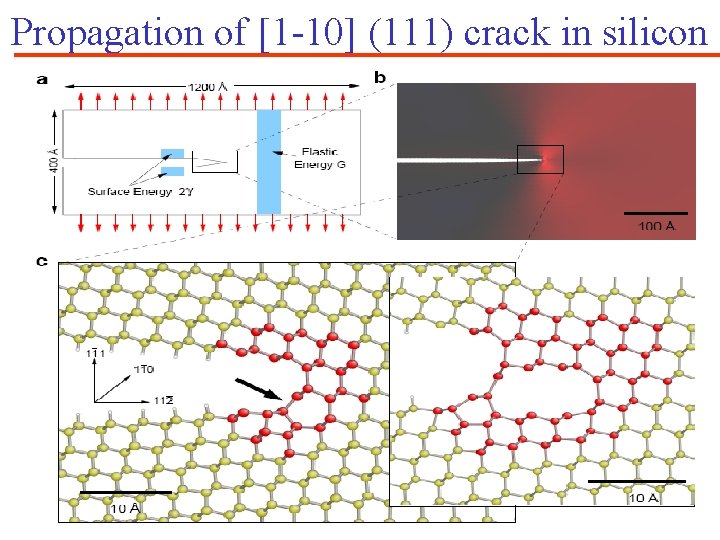
Propagation of [1 -10] (111) crack in silicon Kermode et al. , Nature 455, 1224 (2008) This gives detailed description of stress fields around the crack tip
Propagation of [1 -10] (111) crack in silicon
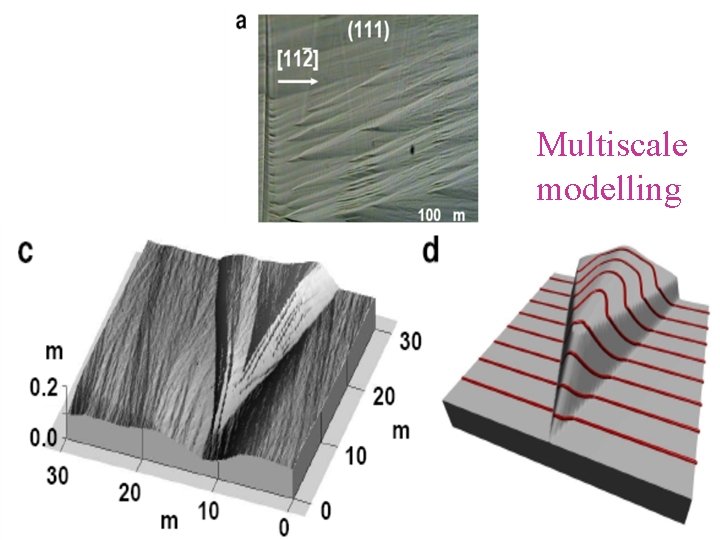
Multiscale modelling
BUT
Albert Bartok-Partay & Gabor Csanyi, Engineering, Cambridge Imre Risi Kondor, Caltech
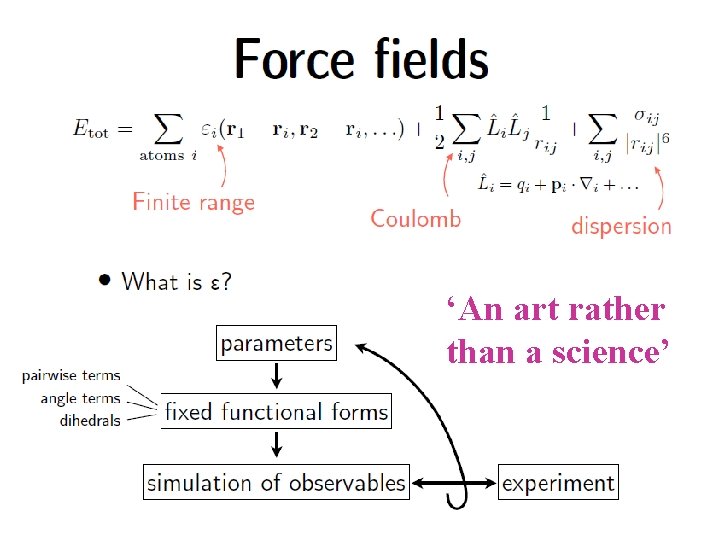
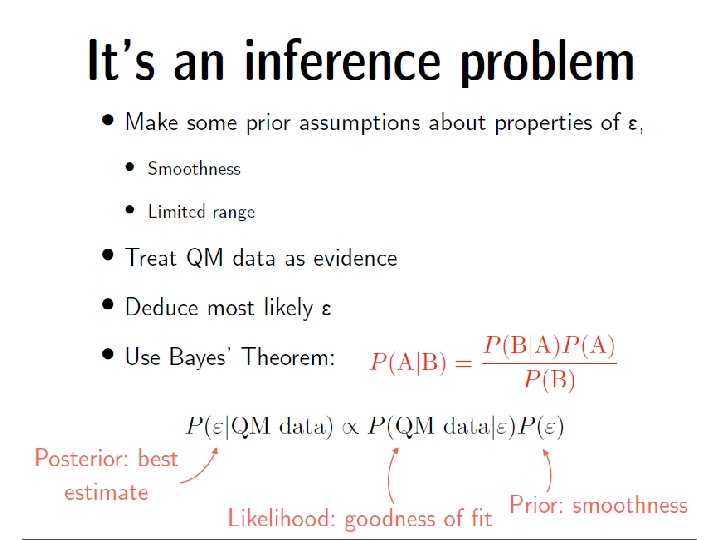
‘An art rather than a science’
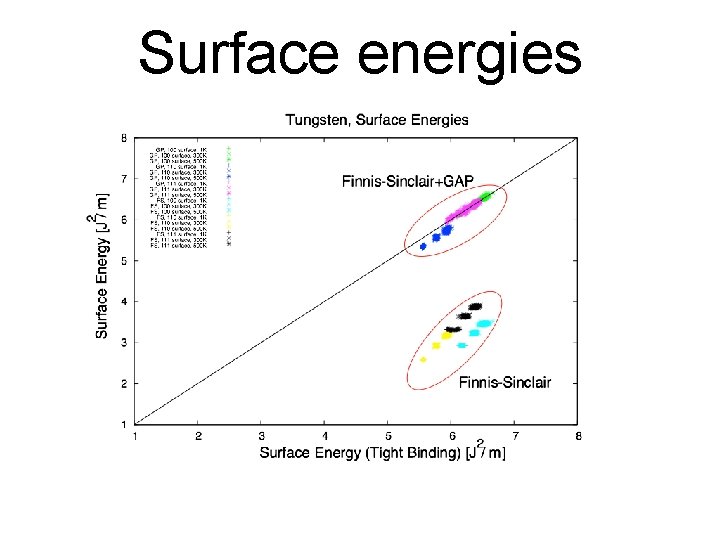
Surface energies • MEAM error ≈ 20 -30%
Considerable recent progress by empirically correcting the limitations of DFT – DFT-D, LDA+U, . . What about when you do need properly correlated QM methods coupled to DFT simpler QM? Simple in the case of, say CI, region within Hartree-Fock calculation. Alternative approach – DMFT (Cedric Weber).
Hybrid Modelling Schemes (QM/MM) Empirical atomistic DFT Correlated QM Continuum
BUT
Hierarchies of atomistic modelling Accuracy topological qualitative empirical 0. 01 e. V Tight binding 0. 0001 e. V DFT 0 CI Atoms Time 1 0 QMC 10 0 But larger systems have longer timescales 100 ps 1000 ns 1, 000 ms
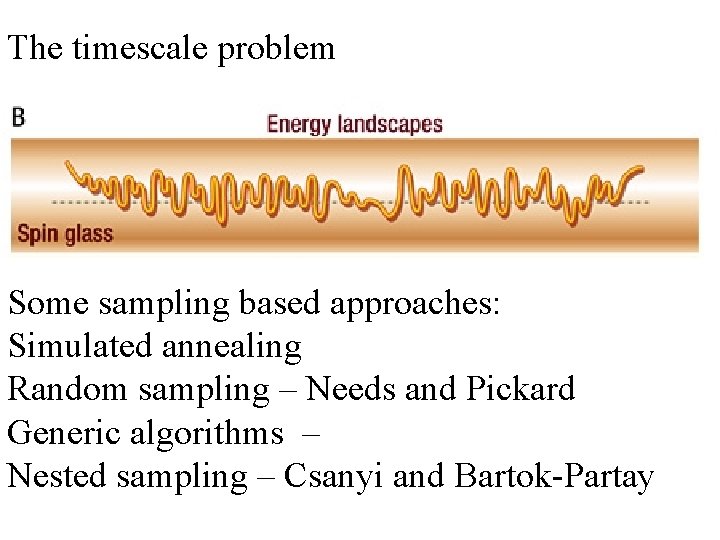
The timescale problem Some sampling based approaches: Simulated annealing Random sampling – Needs and Pickard Generic algorithms – Nested sampling – Csanyi and Bartok-Partay Mark Buchanan, New Scientist, p 42 Vol. 2157
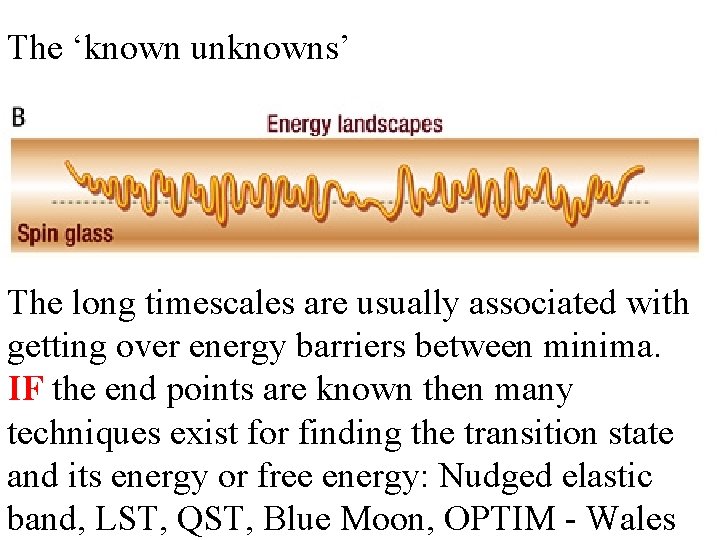
The ‘known unknowns’ The long timescales are usually associated with getting over energy barriers between minima. IF the end points are known then many techniques exist for finding the transition state and its energy or free energy: Nudged elastic Mark Buchanan, New Scientist, p 42 - Vol. 2157 band, LST, QST, Blue Moon, OPTIM Wales
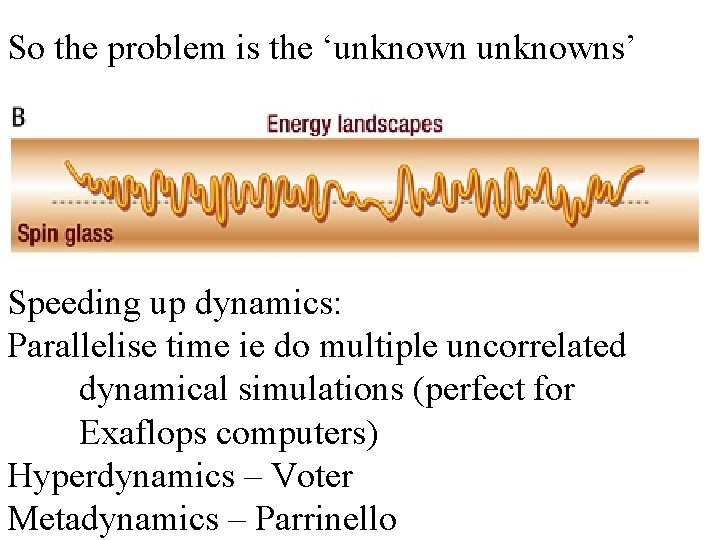
So the problem is the ‘unknowns’ Speeding up dynamics: Parallelise time ie do multiple uncorrelated dynamical simulations (perfect for Exaflops computers) Hyperdynamics – Voter Mark Buchanan, New Scientist, p 42 Vol. 2157 Metadynamics – Parrinello
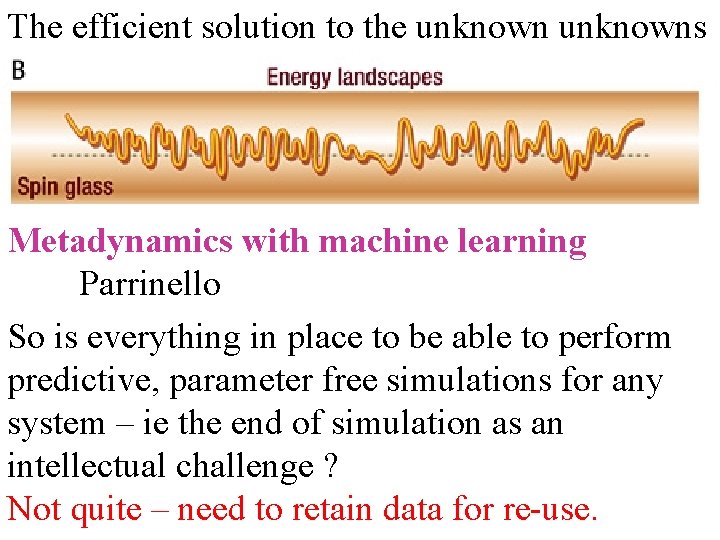
The efficient solution to the unknowns Metadynamics with machine learning Parrinello So is everything in place to be able to perform predictive, parameter free simulations for any system – ie the end of simulation as an intellectual challenge ? Not. Mark quite. Buchanan, – need to retain data for re-use. New Scientist, p 42 Vol. 2157