
The Emerging trends of Disaster Management in India
- Slides: 20
The Emerging trends of Disaster Management in India Issues and Challenges vis-a-vis the roles of Stakeholders Dr. R Ranjan Senior Consultant Disaster Risk Management dr. rajnishranjan@gmail. com Contact - 99717167760
What is Disaster? The word “Disaster” derives from the 16 th century French word ‘DESASTRE’. ‘DES’=Bad or Evil ; ‘Astre’= Star Loss or Damage occurring due to some unfavourable star. Alternative meanings – Cataclysm, Catastrophe, Tragedy or Devastation
Internationally accepted definition “An occurrence arising with Ø little or no warning Ø which causes or threatens serious disruption of the functioning of a community or society Ø causing widespread Human, Material , Economic or Environmental losses. Ø which is beyond the coping capacity of society
Hazard ? n. A Rare or Extreme Events in the natural (or man made) environment that adversely affects human lives, properties or activities to the extent of causing a disaster is known as Hazard. n
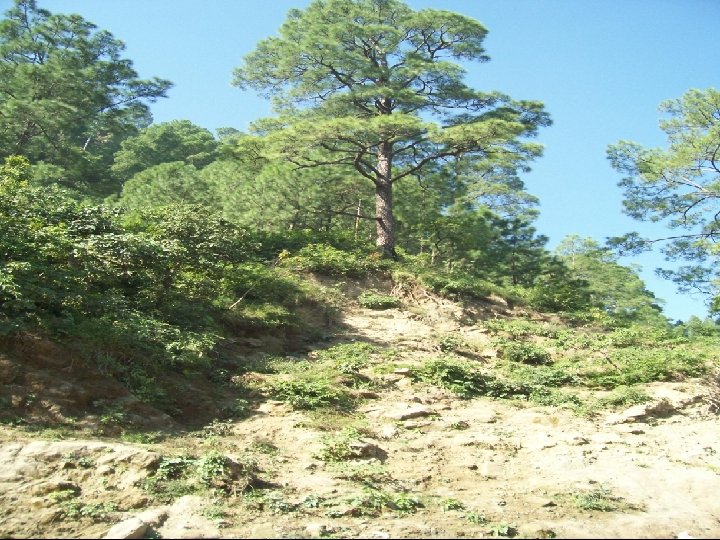
Vulnerability? Degree of loss resulting from a potentially damaging phenomenon. n The area may be called high or low vulnerable depending upon geological & geographical condition. n
Risk? Expected losses ( Human, Properties, Disruption of eco- activity) due to a particular hazard Therefore Hazard + Vulnerability = Risk
Disaster Management n n n n Continuous and Integrated process of Planning , Organizing, Coordinating and Implementing measures which are necessary for— Prevention Mitigation Capacity building Preparedness Prompt Response Search, Evacuation , Rescue and Relief Rehabilitation and Reconstruction
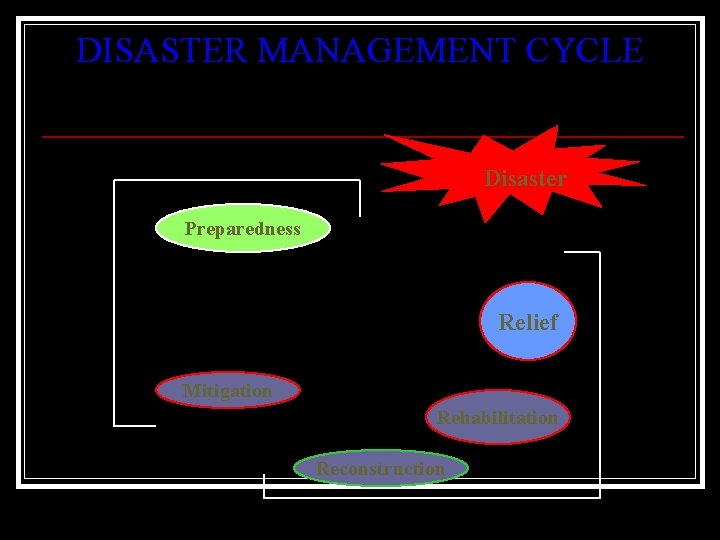
DISASTER MANAGEMENT CYCLE Disaster Preparedness Relief Mitigation Rehabilitation Reconstruction
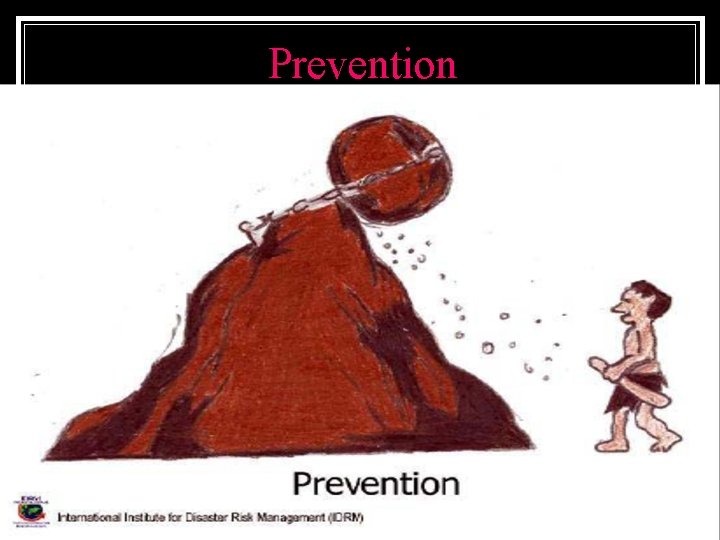
Prevention
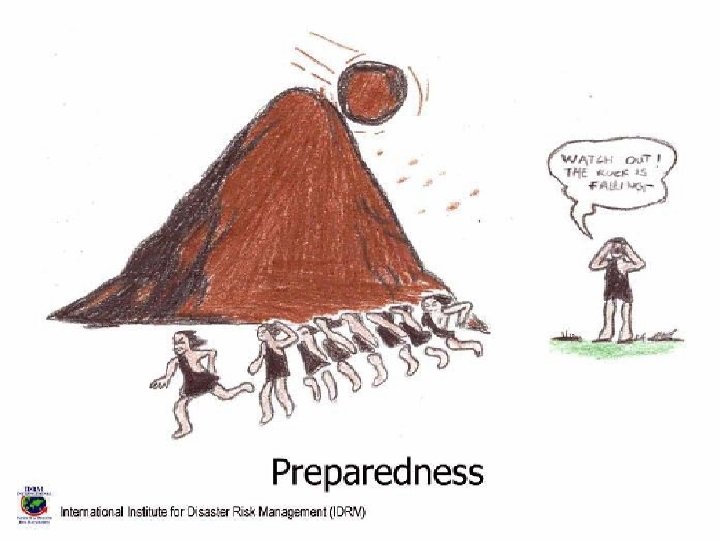
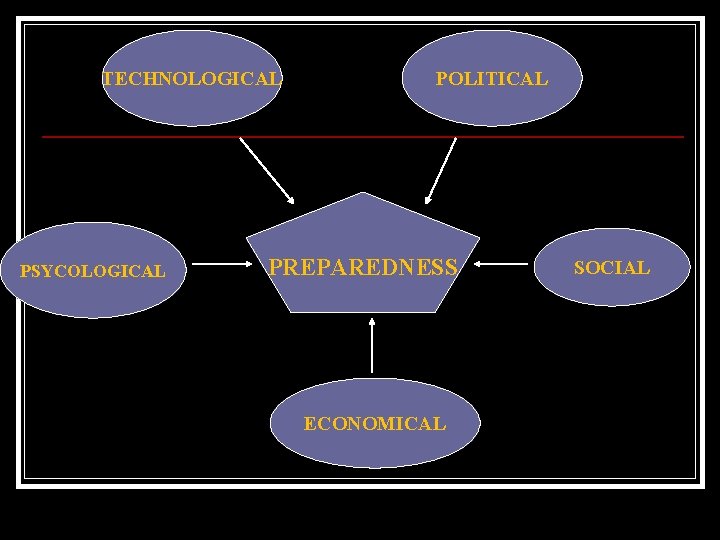
Preparedness n The State of Readiness to deal with a Threatening Disaster Situation or Disaster.
TECHNOLOGICAL PSYCOLOGICAL POLITICAL PREPAREDNESS ECONOMICAL SOCIAL
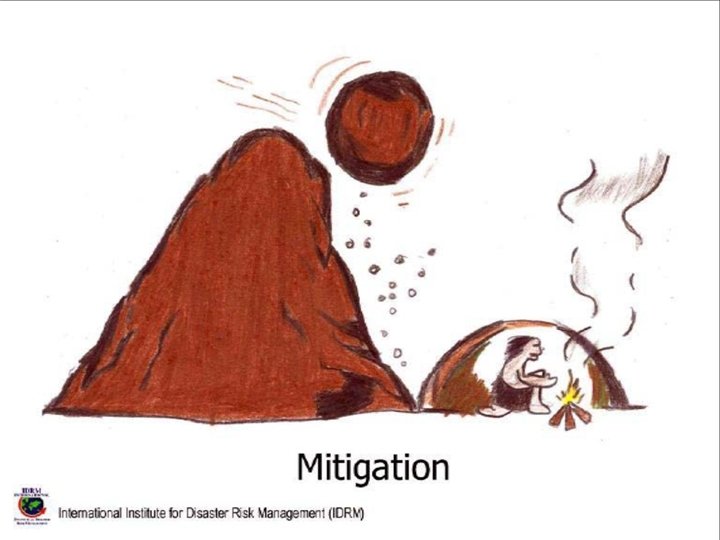
Mitigation n Measures aimed at reducing the risk impacts or effects of a disaster or threatening disaster situation
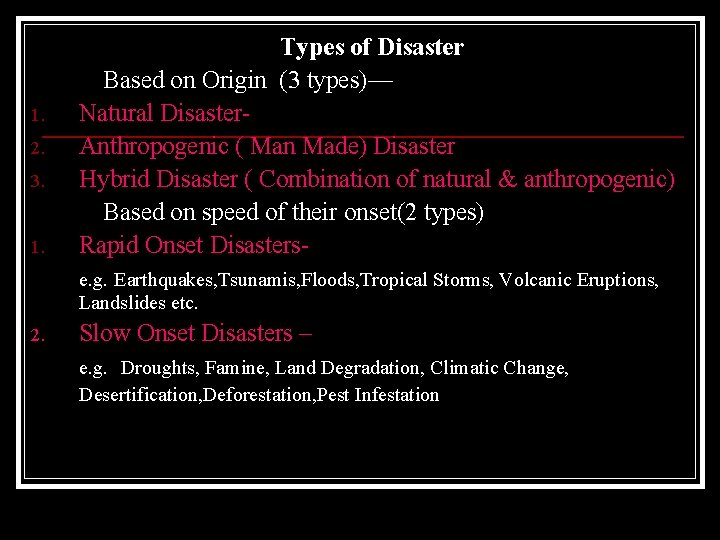
1. 2. 3. 1. Types of Disaster Based on Origin (3 types)— Natural Disaster. Anthropogenic ( Man Made) Disaster Hybrid Disaster ( Combination of natural & anthropogenic) Based on speed of their onset(2 types) Rapid Onset Disasterse. g. Earthquakes, Tsunamis, Floods, Tropical Storms, Volcanic Eruptions, Landslides etc. 2. Slow Onset Disasters – e. g. Droughts, Famine, Land Degradation, Climatic Change, Desertification, Deforestation, Pest Infestation
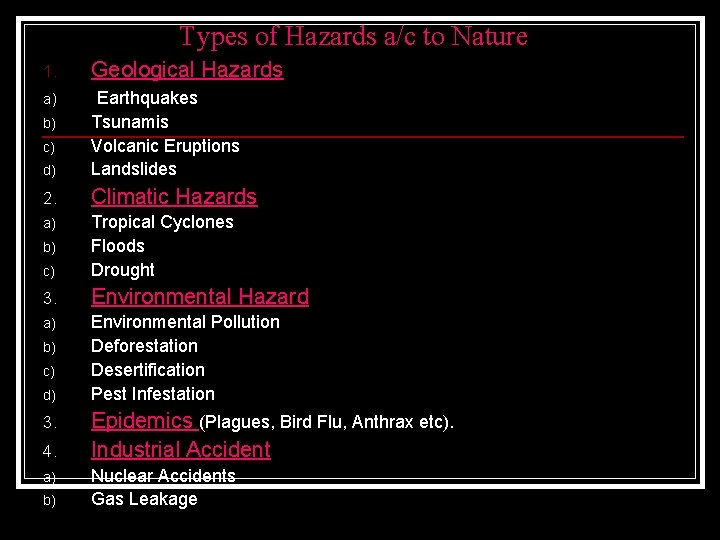
Types of Hazards a/c to Nature 1. Geological Hazards a) d) Earthquakes Tsunamis Volcanic Eruptions Landslides 2. Climatic Hazards a) c) Tropical Cyclones Floods Drought 3. Environmental Hazard a) Environmental Pollution Deforestation Desertification Pest Infestation b) c) b) b) c) d) 3. 4. a) b) Epidemics (Plagues, Bird Flu, Anthrax etc). Industrial Accident Nuclear Accidents Gas Leakage
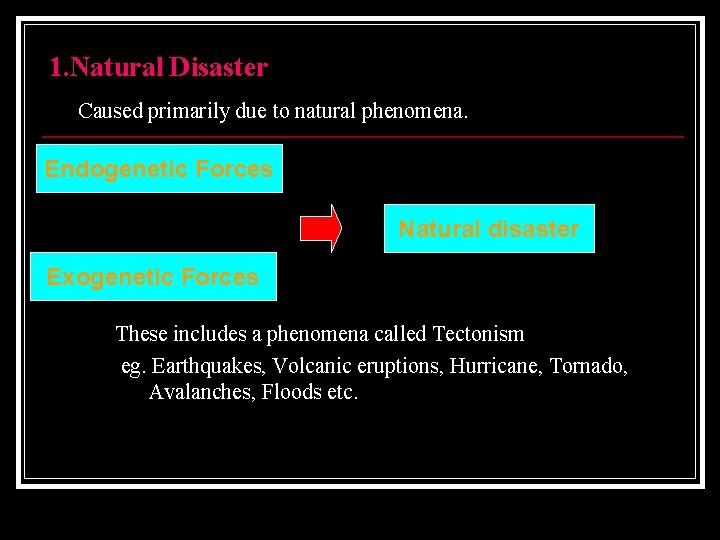
1. Natural Disaster Caused primarily due to natural phenomena. Endogenetic Forces Natural disaster Exogenetic Forces These includes a phenomena called Tectonism eg. Earthquakes, Volcanic eruptions, Hurricane, Tornado, Avalanches, Floods etc.
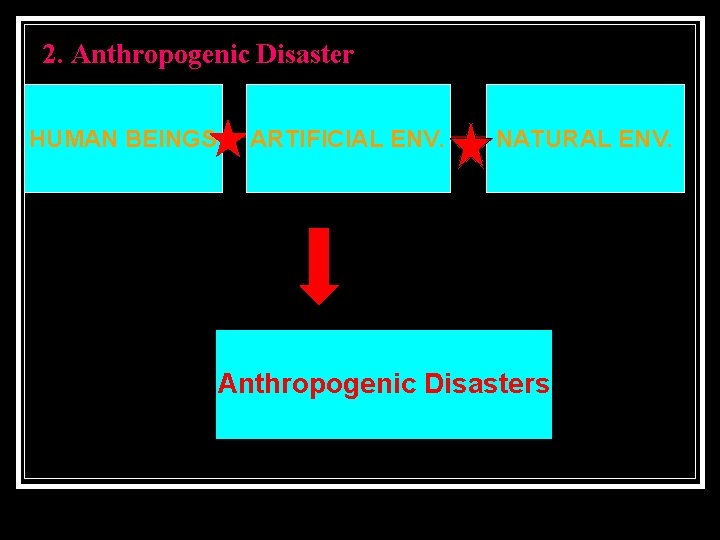
2. Anthropogenic Disaster HUMAN BEINGS ARTIFICIAL ENV. NATURAL ENV. Anthropogenic Disasters
Thanks