
The Elements of Design The elements of design
- Slides: 29
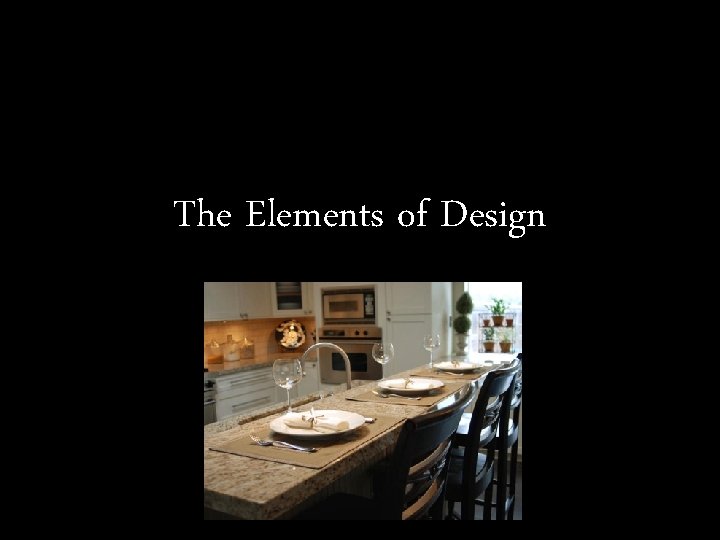
The Elements of Design
The elements of design include. . . • Color • Shape • Line • Texture
Color • The most significant element of design is color. • Color can affect the way you feel. • Colors can be either warm or cool.
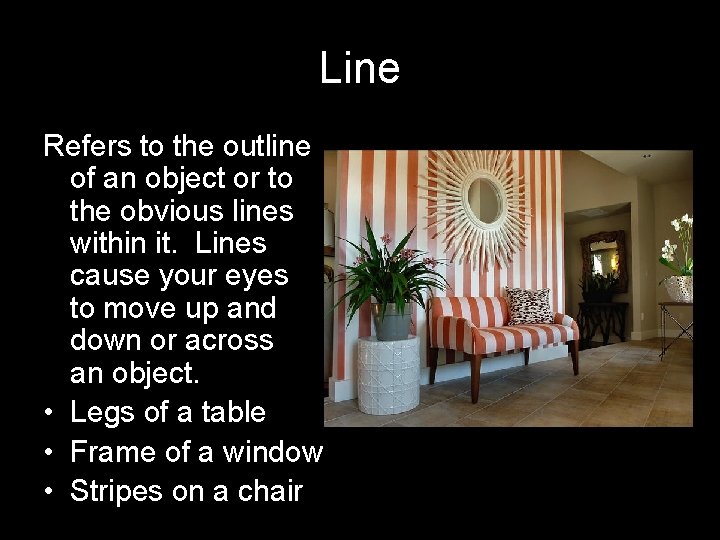
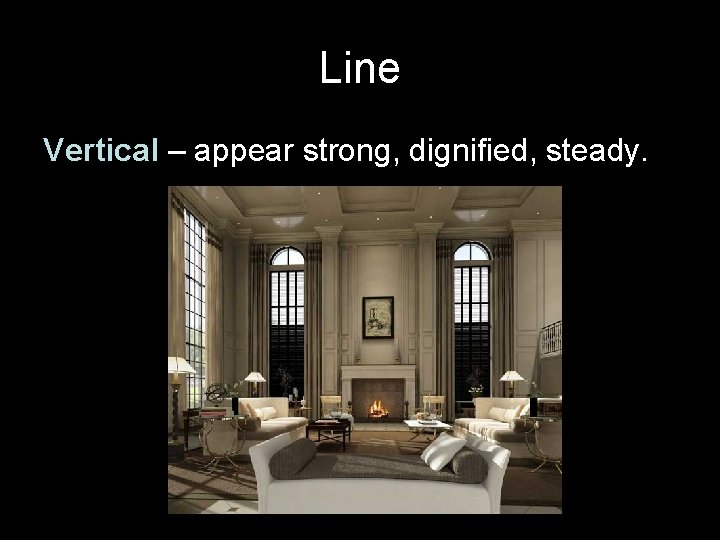
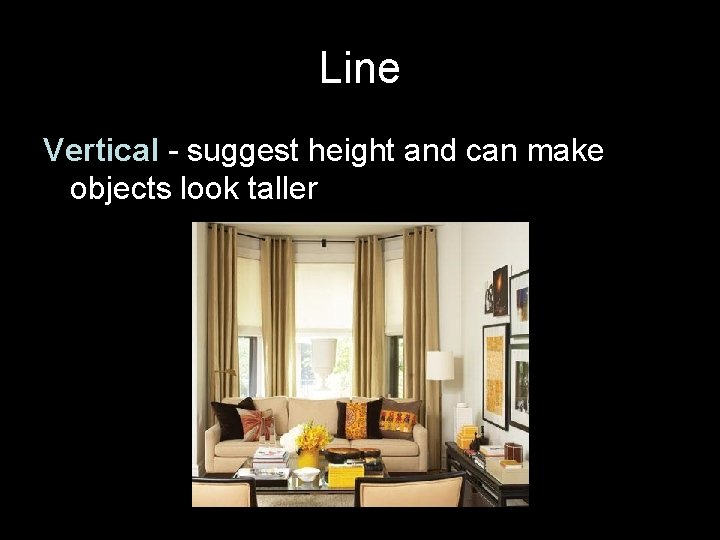
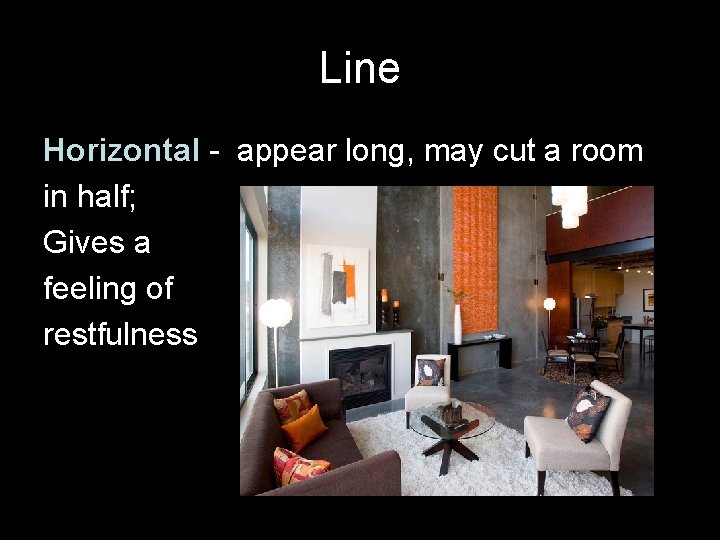
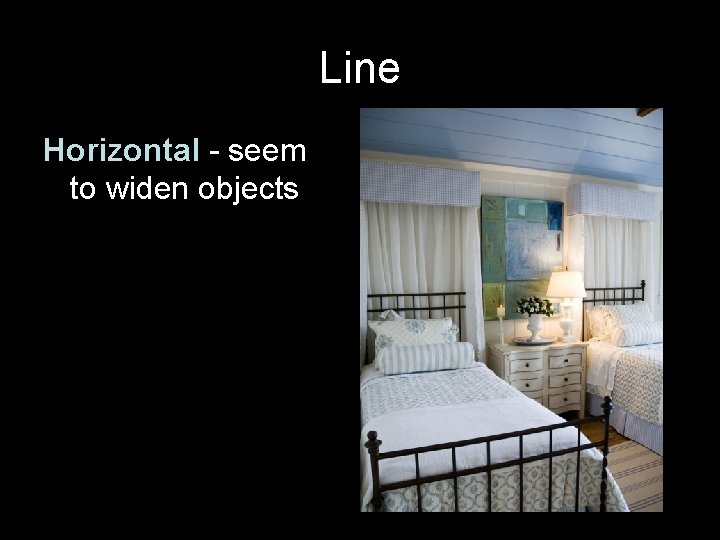
Line Refers to the outline of an object or to the obvious lines within it. Lines cause your eyes to move up and down or across an object. • Legs of a table • Frame of a window • Stripes on a chair
Line Vertical – appear strong, dignified, steady.
Line Vertical - suggest height and can make objects look taller
Line Horizontal - appear long, may cut a room in half; Gives a feeling of restfulness
Line Horizontal - seem to widen objects
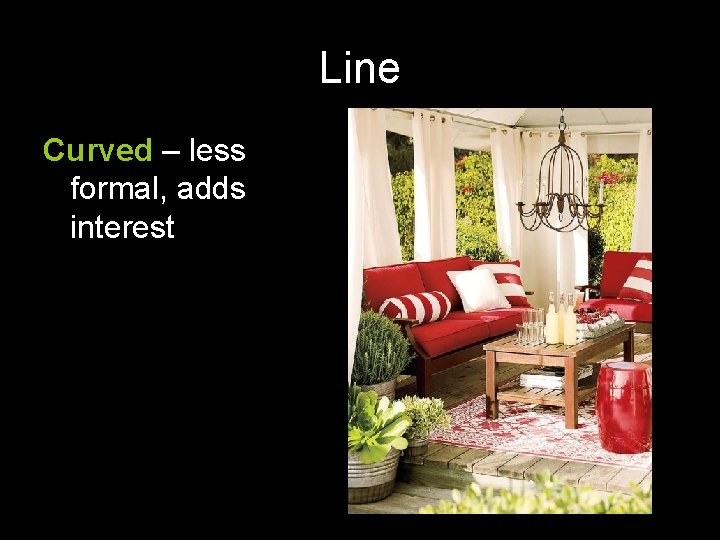
Line Curved – less formal, adds interest
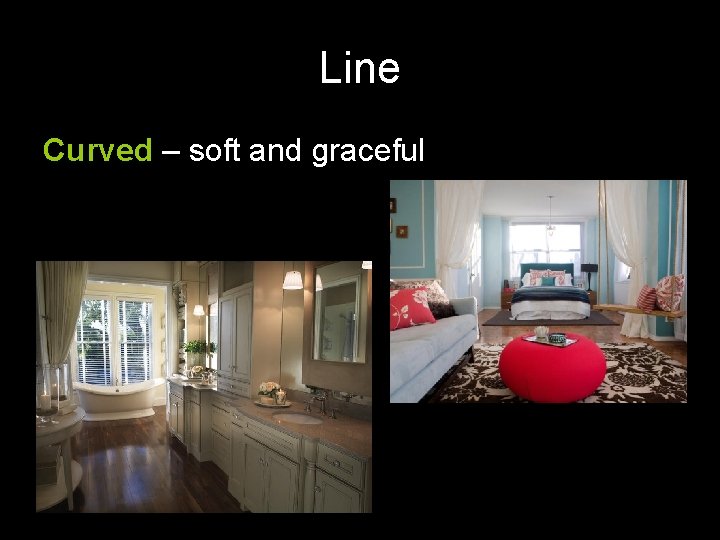
Line Curved – soft and graceful
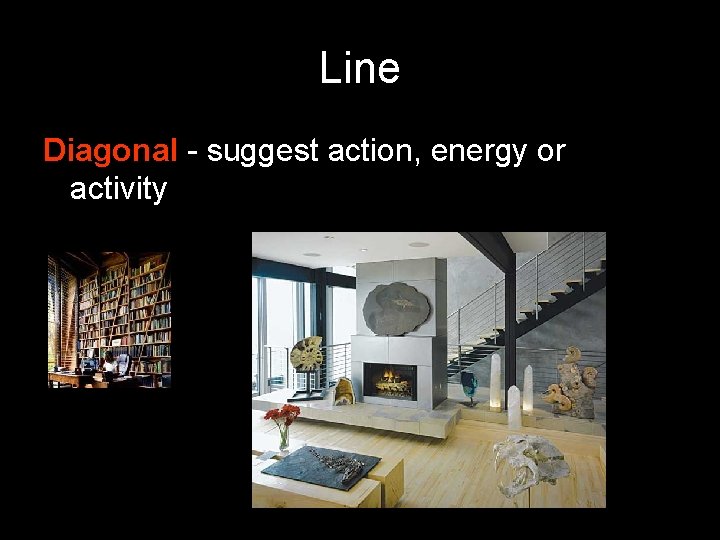
Line Diagonal - suggest action, energy or activity
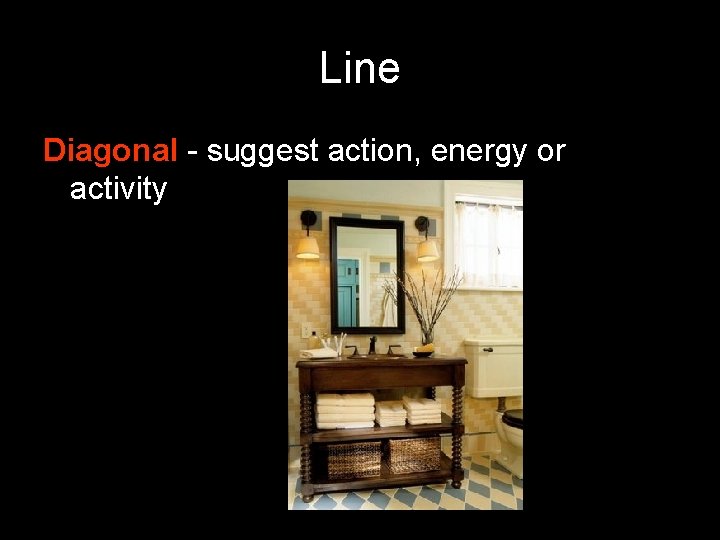
Line Diagonal - suggest action, energy or activity
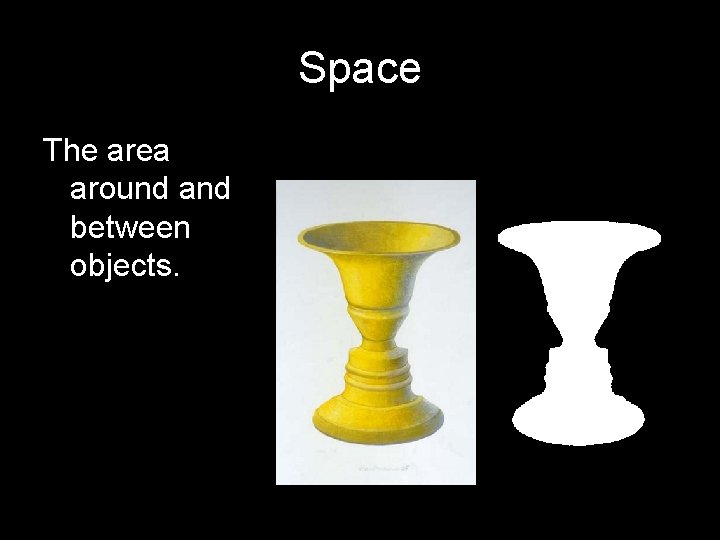
Space The area around and between objects.
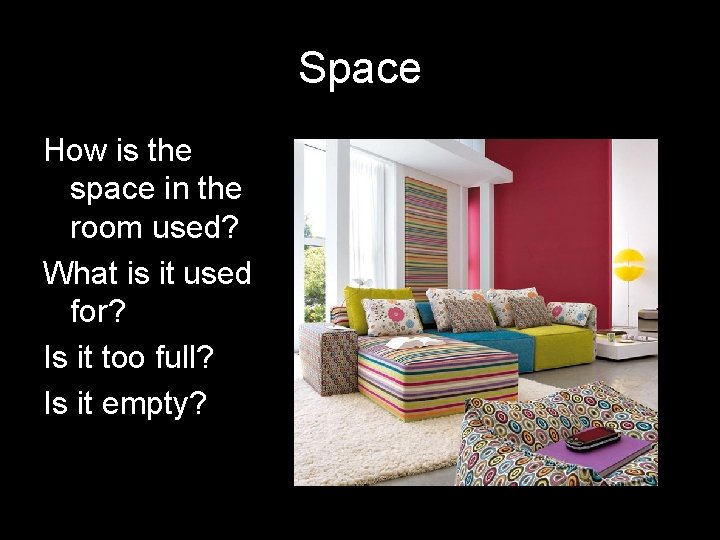
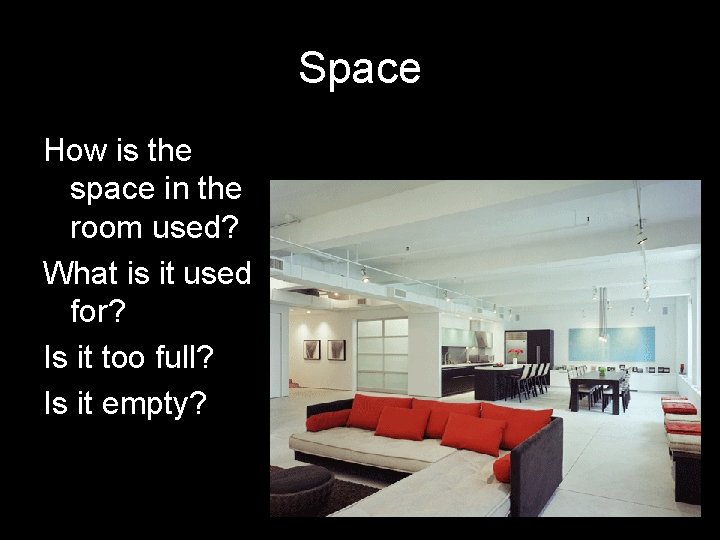
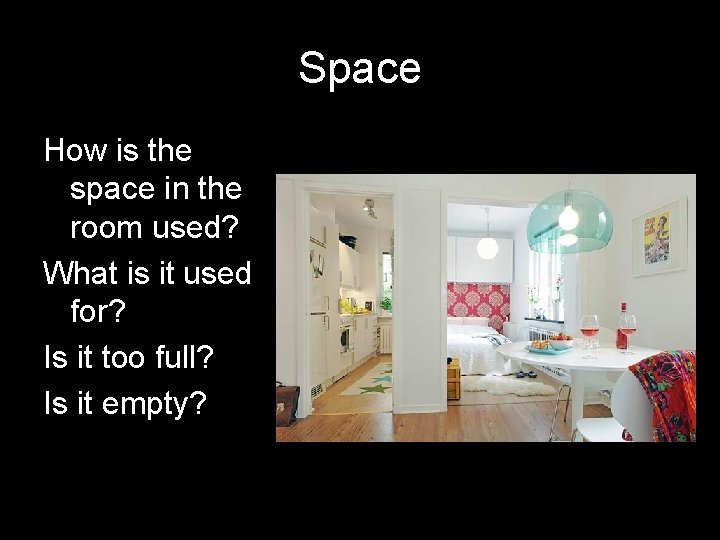
Space How is the space in the room used? What is it used for? Is it too full? Is it empty?
Space How is the space in the room used? What is it used for? Is it too full? Is it empty?
Space How is the space in the room used? What is it used for? Is it too full? Is it empty?
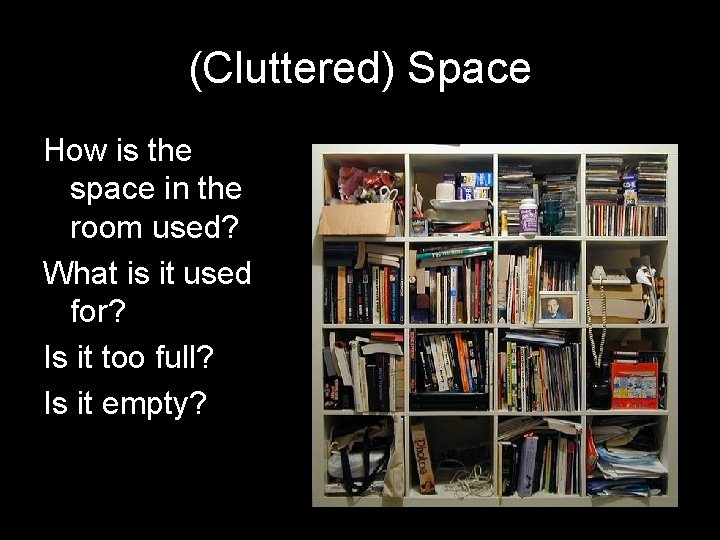
(Cluttered) Space How is the space in the room used? What is it used for? Is it too full? Is it empty?
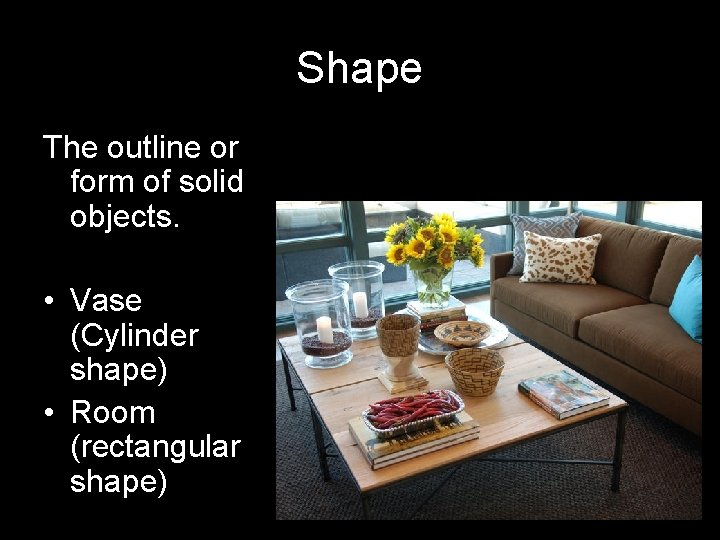
Shape The outline or form of solid objects. • Vase (Cylinder shape) • Room (rectangular shape)
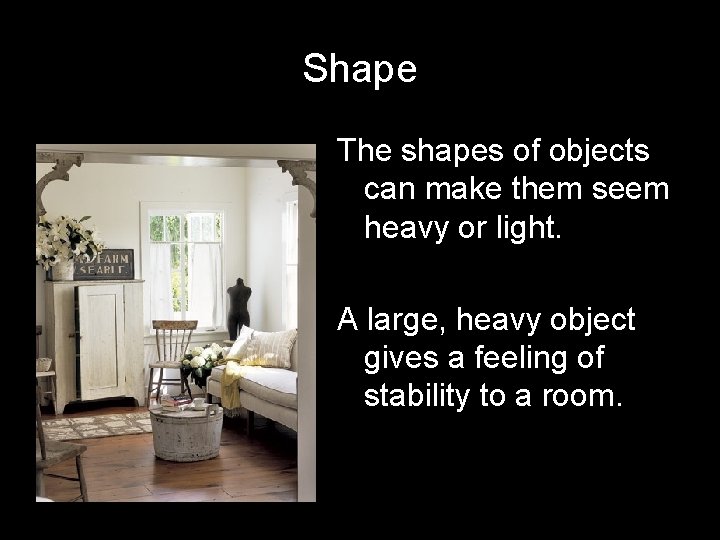
Shape The shapes of objects can make them seem heavy or light. A large, heavy object gives a feeling of stability to a room.
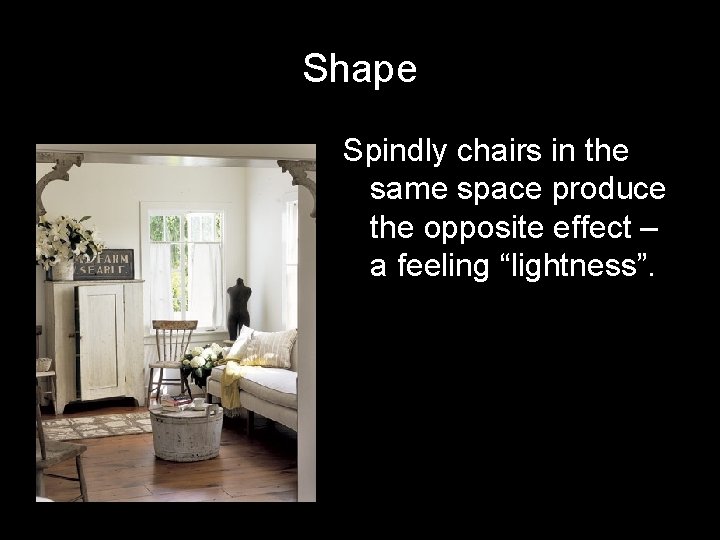
Shape Spindly chairs in the same space produce the opposite effect – a feeling “lightness”.
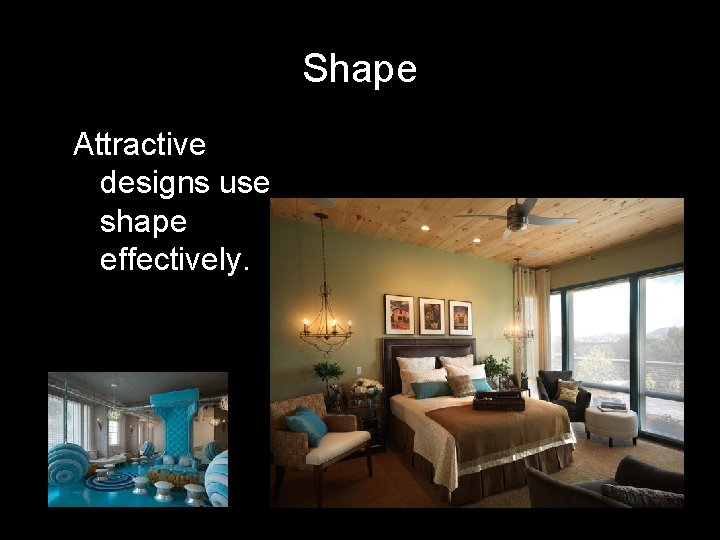
Shape Attractive designs use shape effectively.
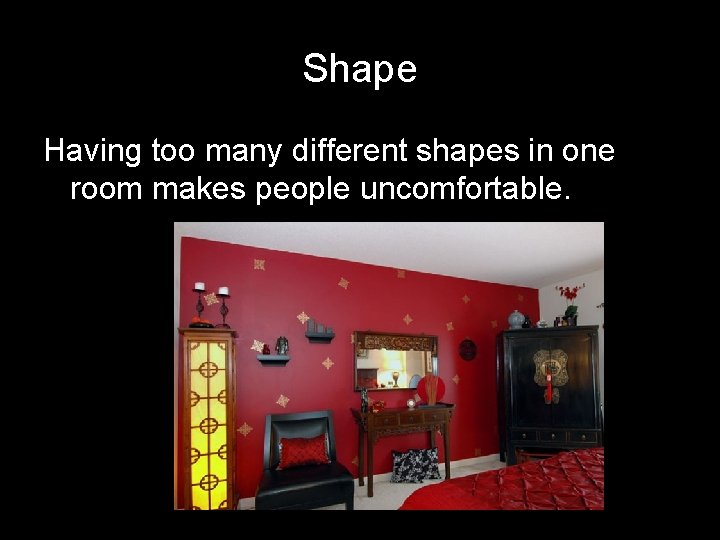
Shape Having too many different shapes in one room makes people uncomfortable.
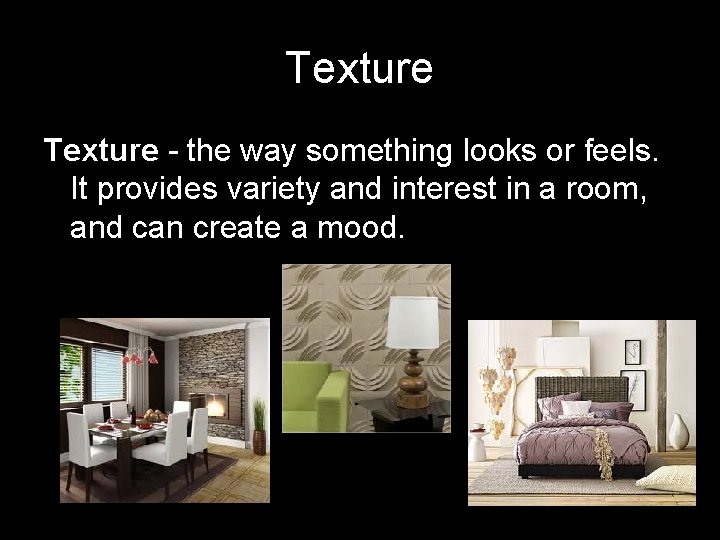
Texture - the way something looks or feels. It provides variety and interest in a room, and can create a mood.
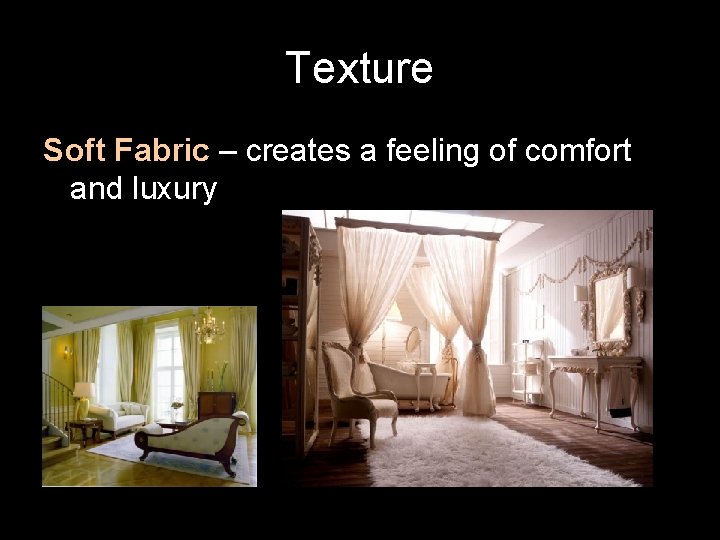
Texture Soft Fabric – creates a feeling of comfort and luxury
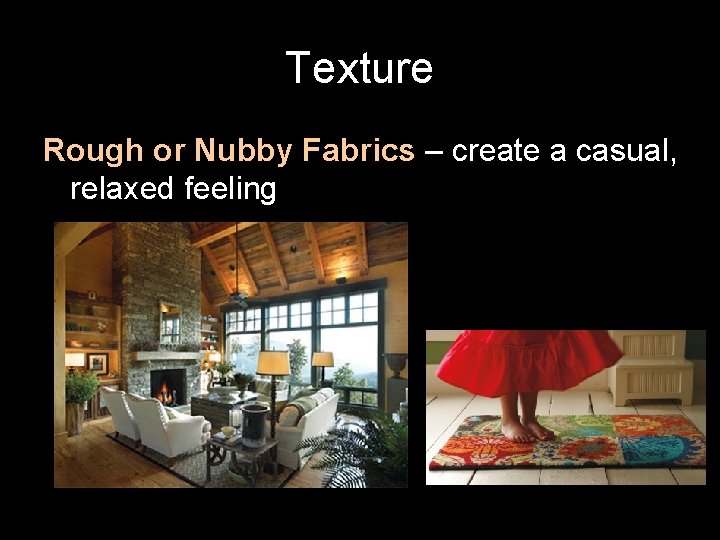
Texture Rough or Nubby Fabrics – create a casual, relaxed feeling
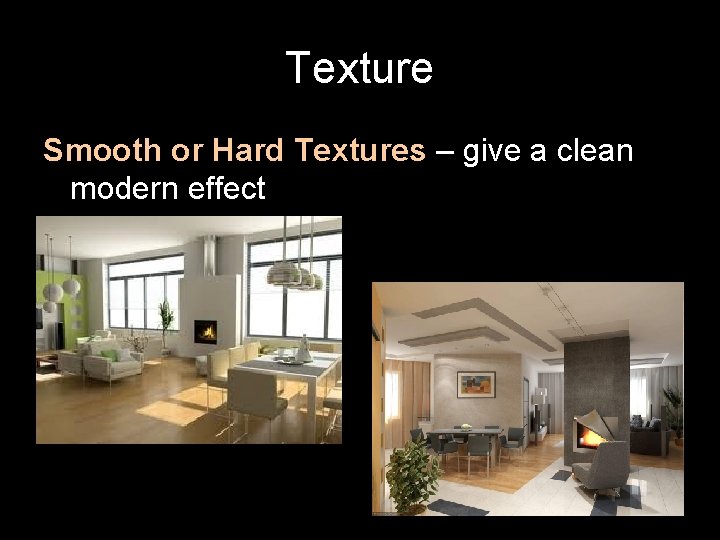
Texture Smooth or Hard Textures – give a clean modern effect
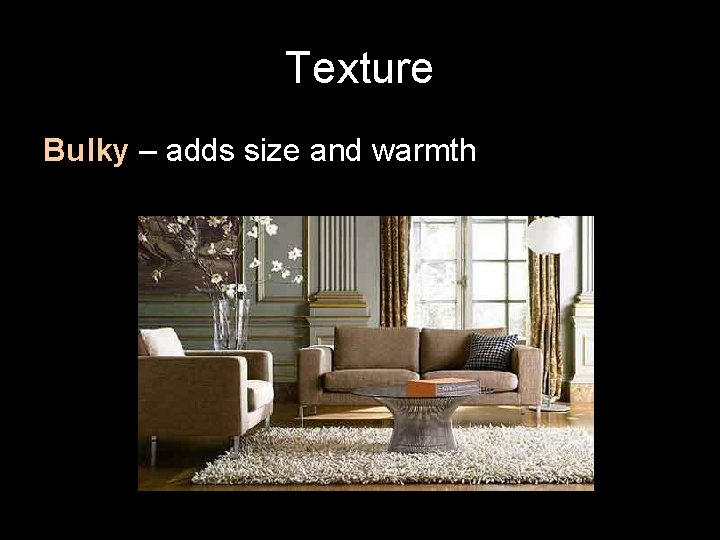
Texture Bulky – adds size and warmth
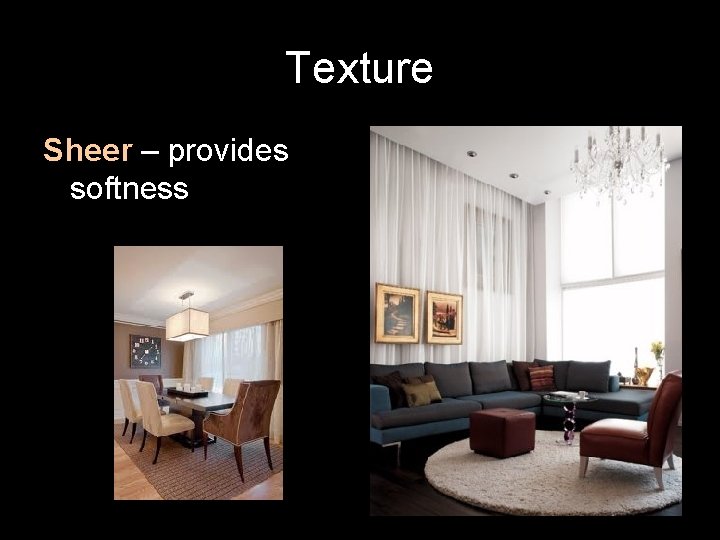
Texture Sheer – provides softness
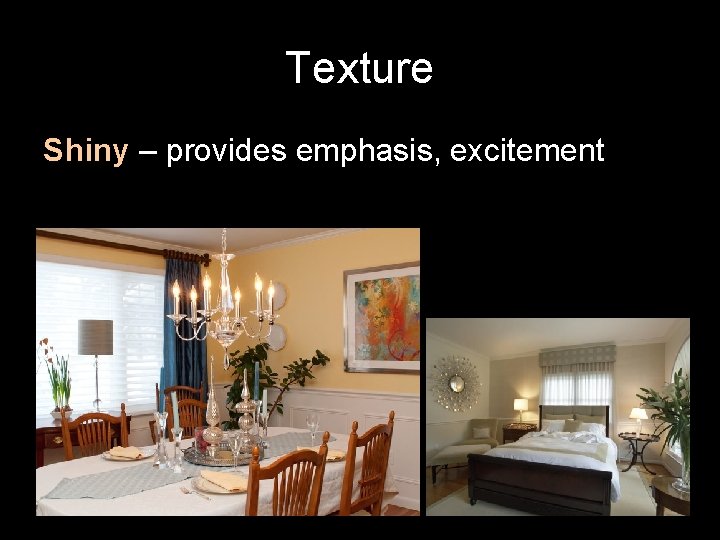
Texture Shiny – provides emphasis, excitement