
The Elements of Design Line Form Texture Color
- Slides: 12
+ The Elements of Design Line, Form, Texture, & Color
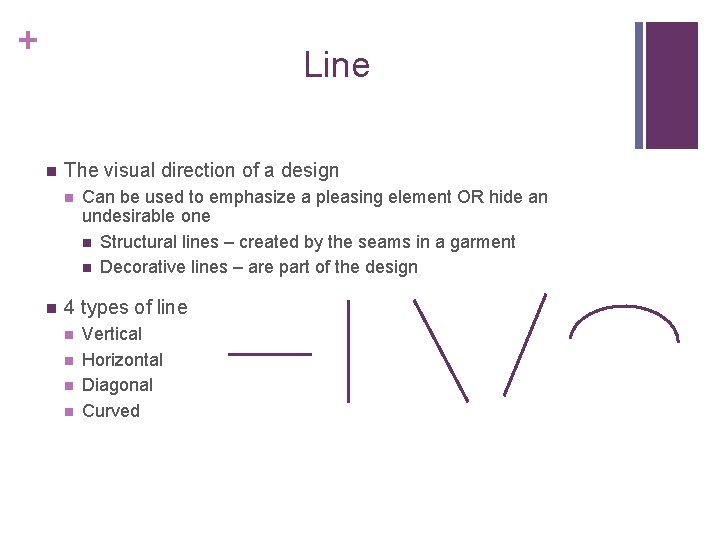
+ Line n The visual direction of a design n n Can be used to emphasize a pleasing element OR hide an undesirable one n Structural lines – created by the seams in a garment n Decorative lines – are part of the design 4 types of line n n Vertical Horizontal Diagonal Curved
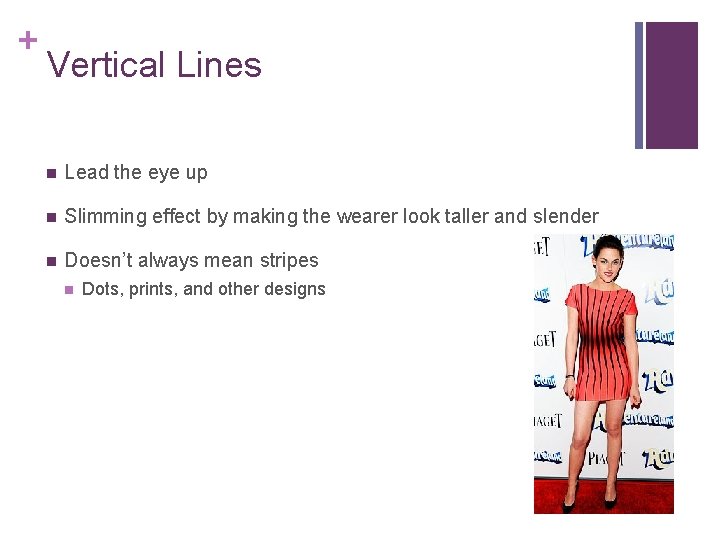
+ Vertical Lines n Lead the eye up n Slimming effect by making the wearer look taller and slender n Doesn’t always mean stripes n Dots, prints, and other designs
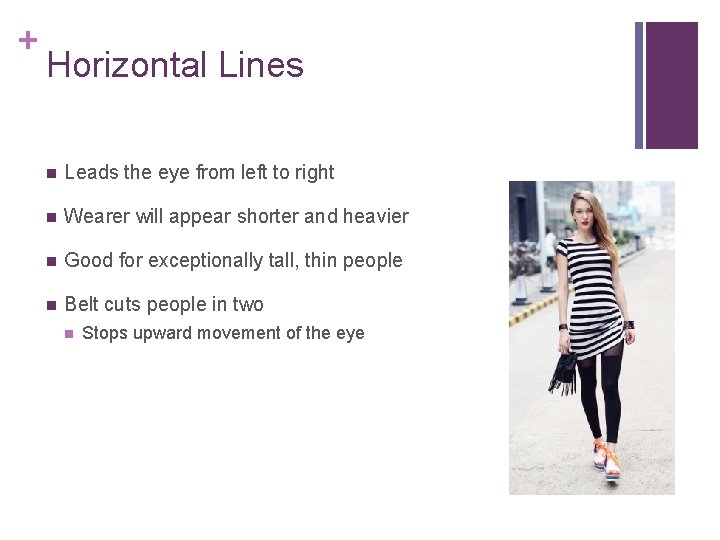
+ Horizontal Lines n Leads the eye from left to right n Wearer will appear shorter and heavier n Good for exceptionally tall, thin people n Belt cuts people in two n Stops upward movement of the eye
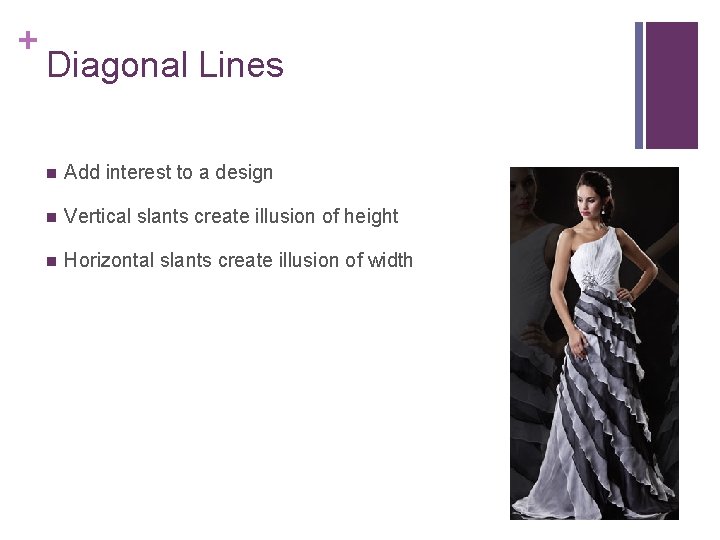
+ Diagonal Lines n Add interest to a design n Vertical slants create illusion of height n Horizontal slants create illusion of width
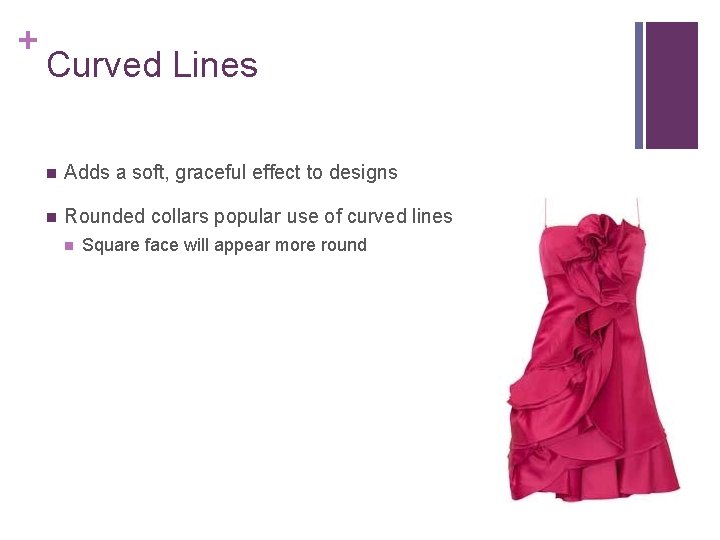
+ Curved Lines n Adds a soft, graceful effect to designs n Rounded collars popular use of curved lines n Square face will appear more round
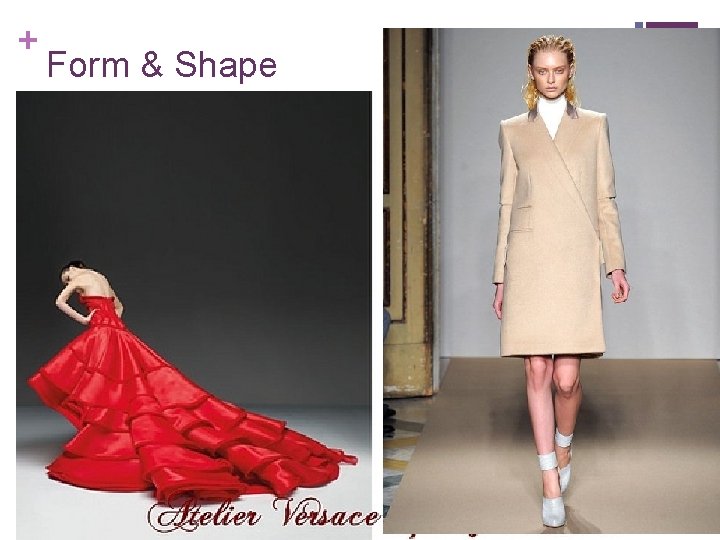
+ Form & Shape n Clothes create silhouette n Creates a shadow n Shape of an object is flat and 2 dimensional n Form is 3 dimensional and takes up space n Clothes that have full form make wearer look larger and heavier n Clothes that have a tubular form make wearer look taller and thinner
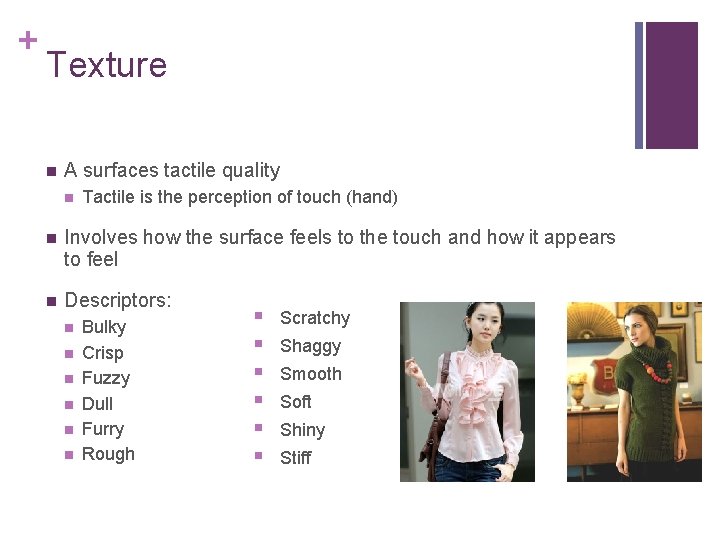
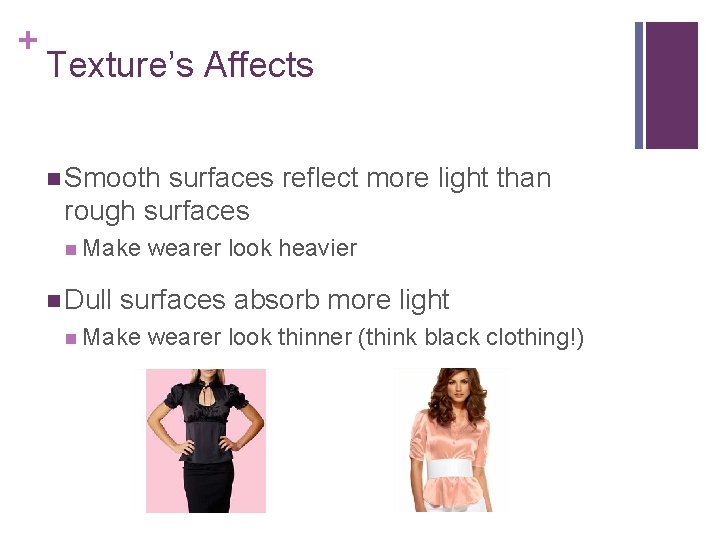
+ Texture n A surfaces tactile quality n Tactile is the perception of touch (hand) n Involves how the surface feels to the touch and how it appears to feel n Descriptors: n n n Bulky Crisp Fuzzy Dull Furry Rough § § § Scratchy Shaggy Smooth Soft Shiny Stiff
+ Texture’s Affects n Smooth surfaces reflect more light than rough surfaces n Make n Dull wearer look heavier surfaces absorb more light n Make wearer look thinner (think black clothing!)
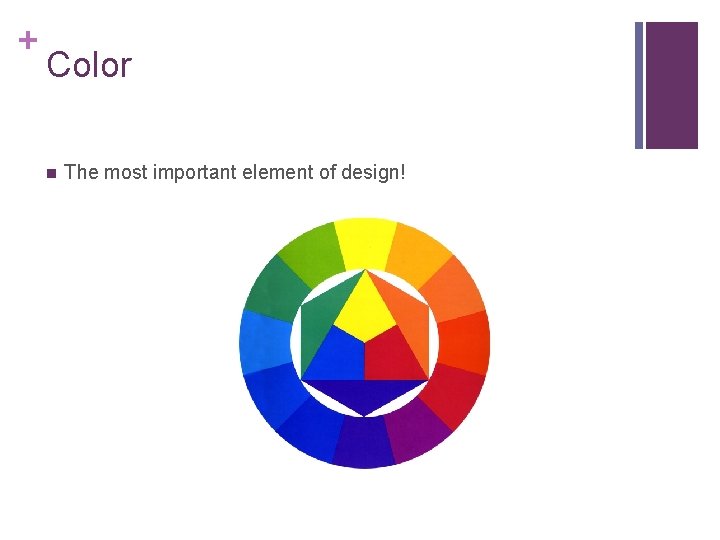
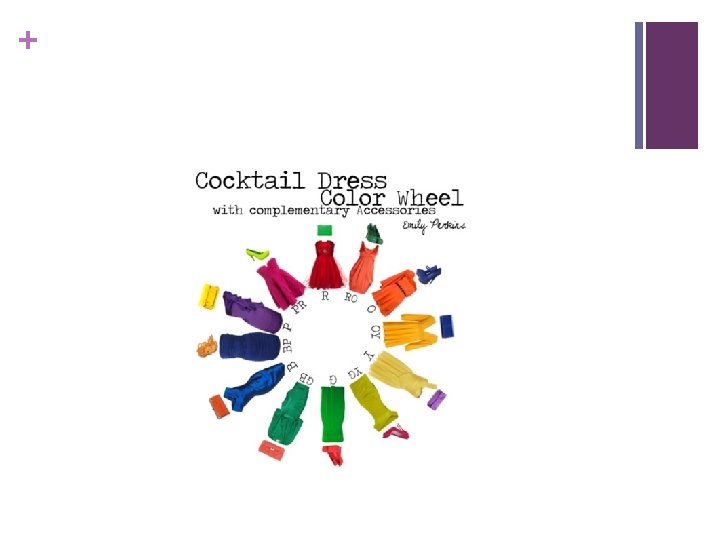
+ Color n The most important element of design!
+ Main Ideas n Line – gives direction to a design n Horizontal – left to right n Veritcal – up and down n Curved n Diagonal n Texture – how fabric feels when you touch it and how it looks on the surface n Form – shape of an object