
The Elements of Art Line Line Element of
- Slides: 25
The Elements of Art: Line
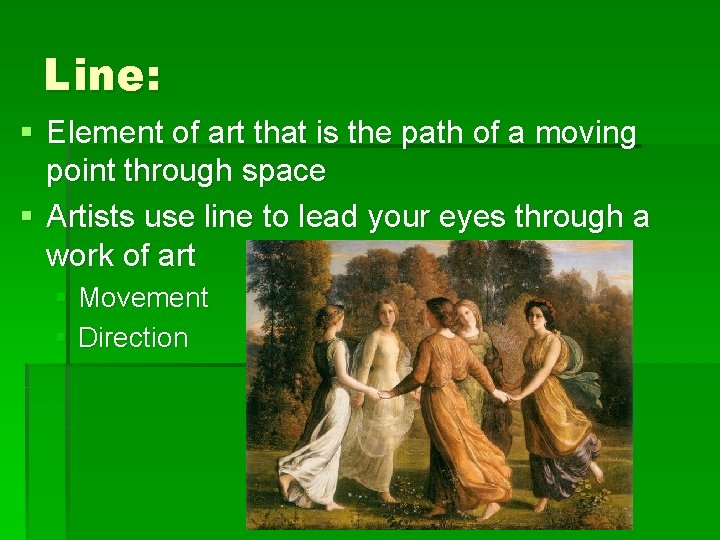
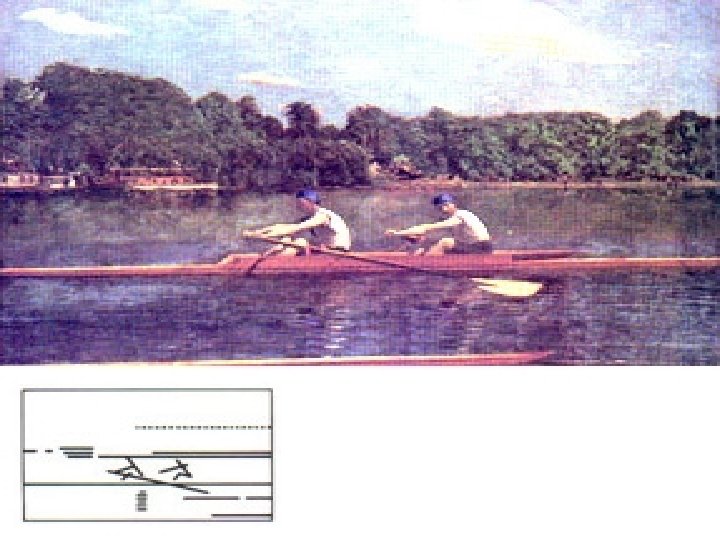
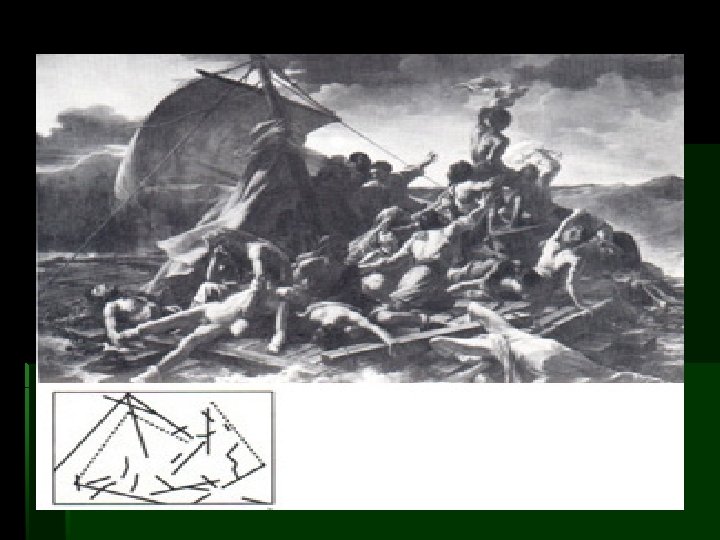
Line: § Element of art that is the path of a moving point through space § Artists use line to lead your eyes through a work of art § Movement § Direction
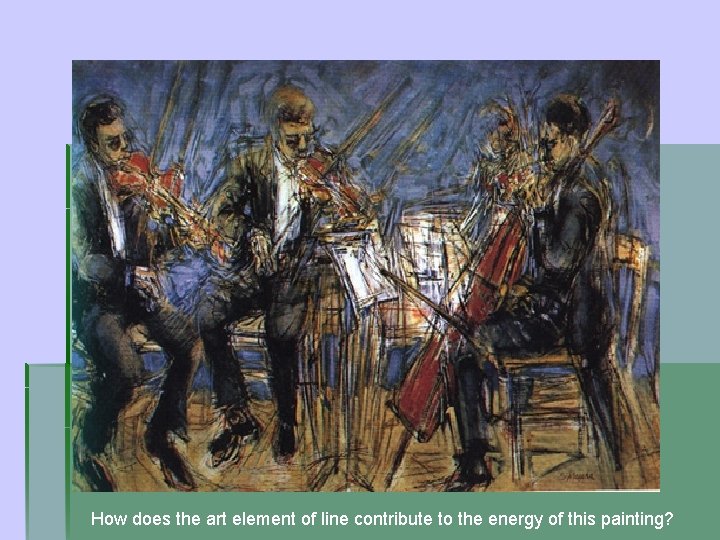
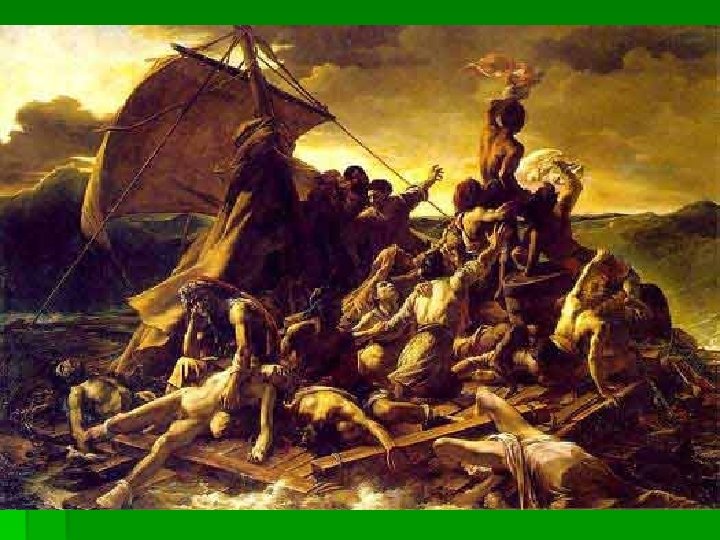
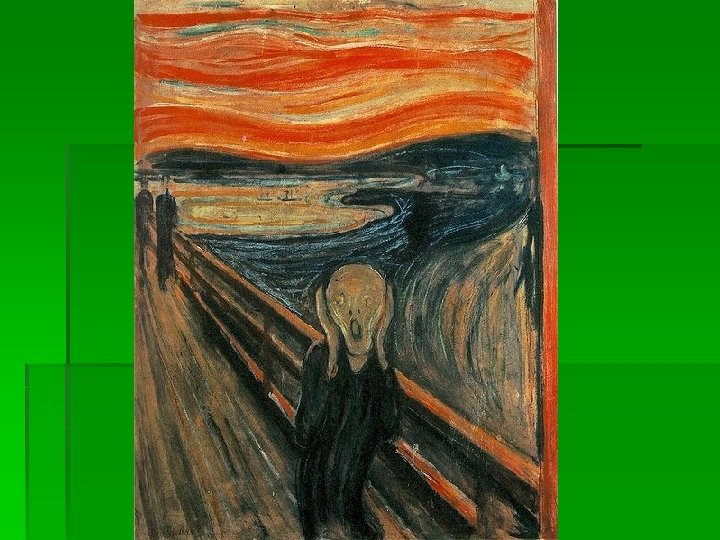
How does the art element of line contribute to the energy of this painting?
Line: § Lines have width as well as length (wow, right? ) § Dimension: § The amount of space an object takes up in one direction § 2 -D, 3 -D……………. 4 -D? § Some thin solid objects are perceived as lines § Length is their most important dimension
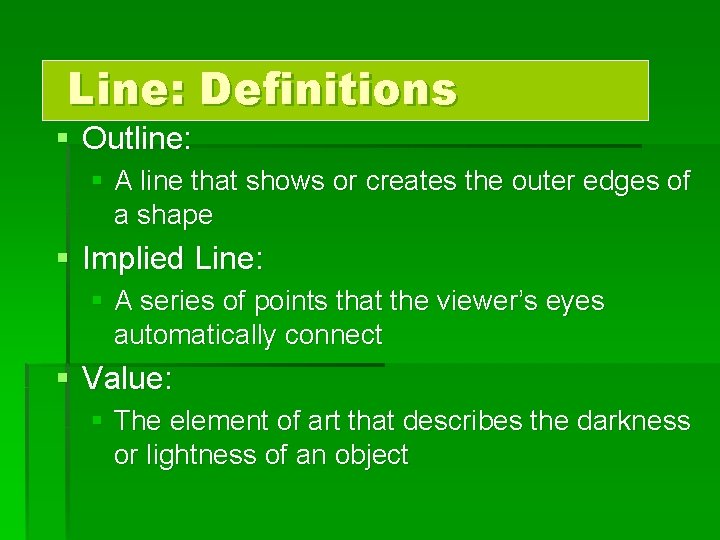
Line: Definitions § Outline: § A line that shows or creates the outer edges of a shape § Implied Line: § A series of points that the viewer’s eyes automatically connect § Value: § The element of art that describes the darkness or lightness of an object
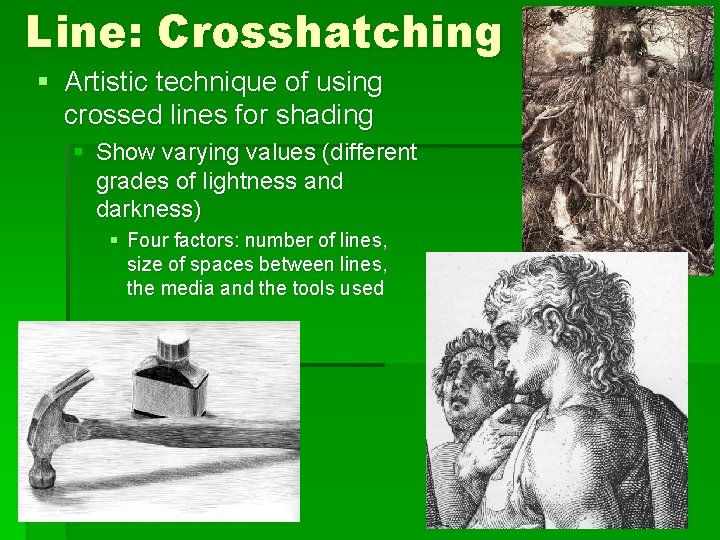
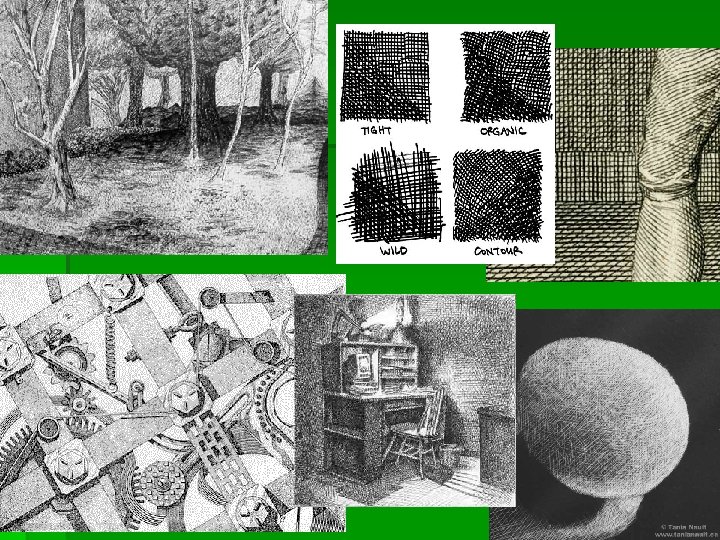
Line: Crosshatching § Artistic technique of using crossed lines for shading § Show varying values (different grades of lightness and darkness) § Four factors: number of lines, size of spaces between lines, the media and the tools used
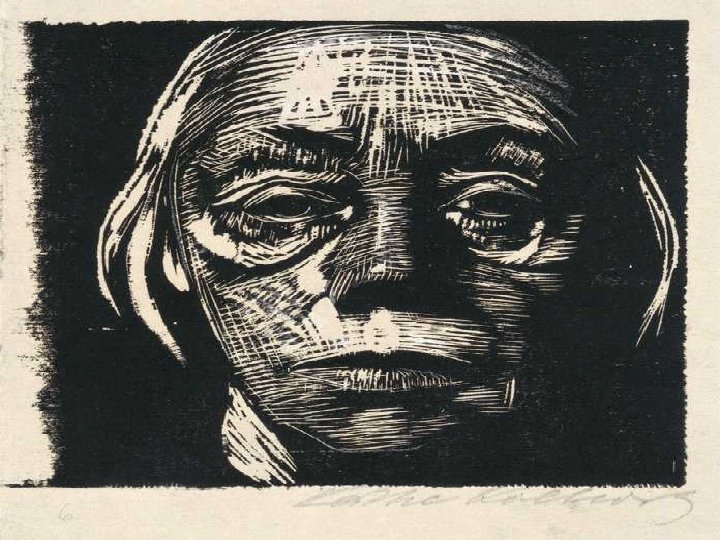
Self-Portrait by Kathe Kollwitz Woodcut proof, 1923
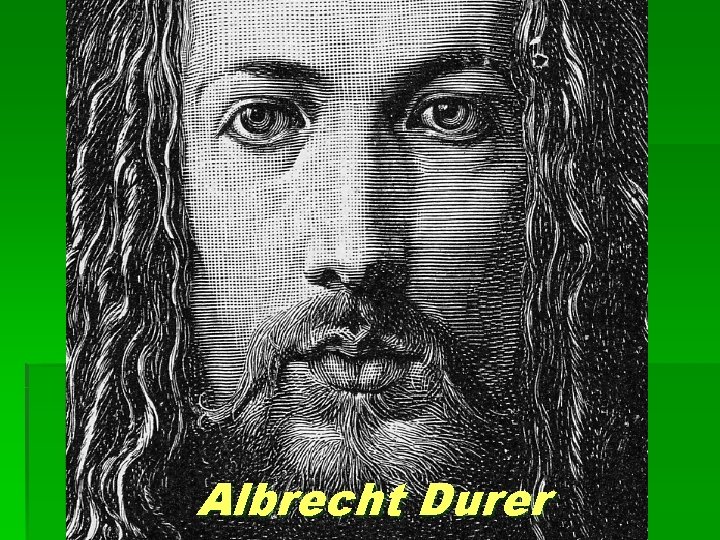
Albrecht Durer
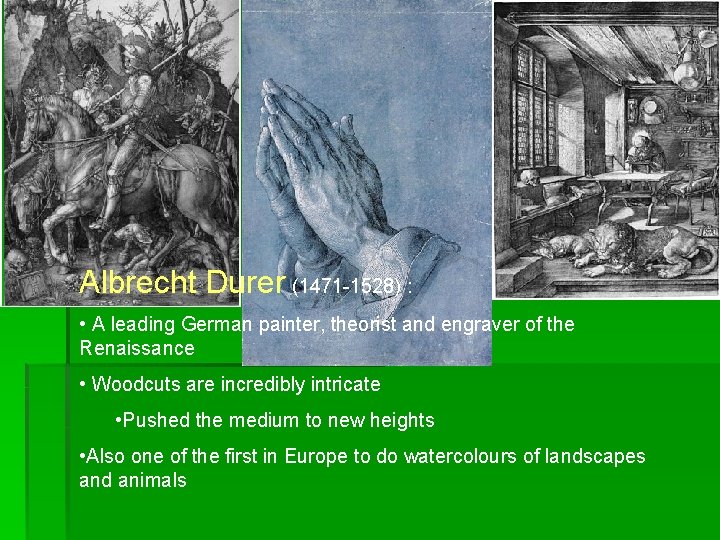
§ a Albrecht Durer (1471 -1528) : • A leading German painter, theorist and engraver of the Renaissance • Woodcuts are incredibly intricate • Pushed the medium to new heights • Also one of the first in Europe to do watercolours of landscapes and animals
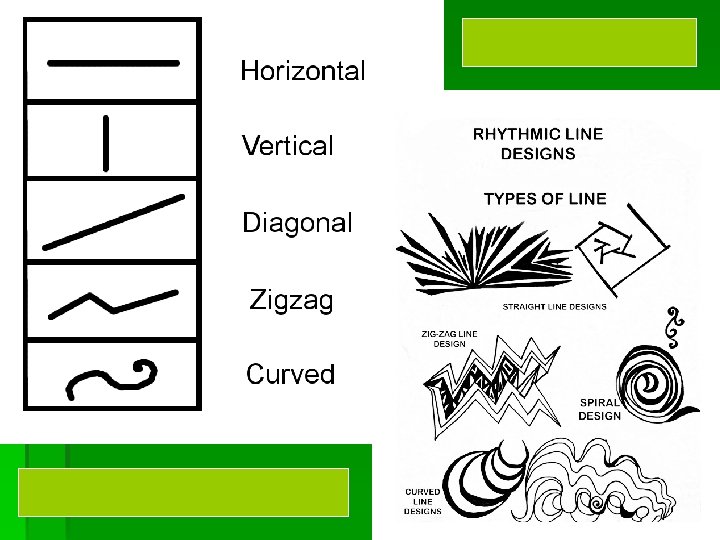
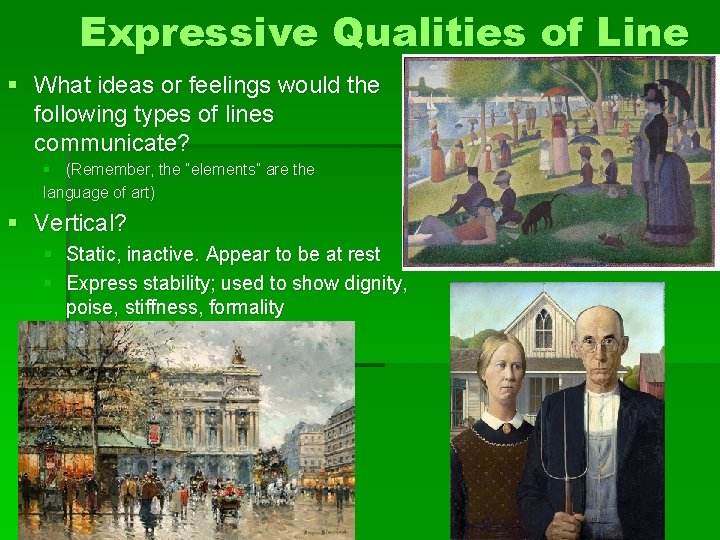
Expressive Qualities of Line § What ideas or feelings would the following types of lines communicate? § (Remember, the “elements” are the language of art) § Vertical? § Static, inactive. Appear to be at rest § Express stability; used to show dignity, poise, stiffness, formality
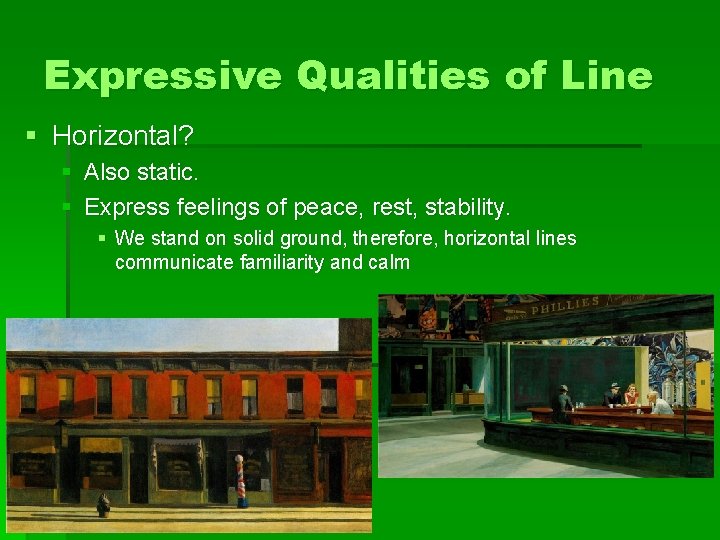
Expressive Qualities of Line § Horizontal? § Also static. § Express feelings of peace, rest, stability. § We stand on solid ground, therefore, horizontal lines communicate familiarity and calm
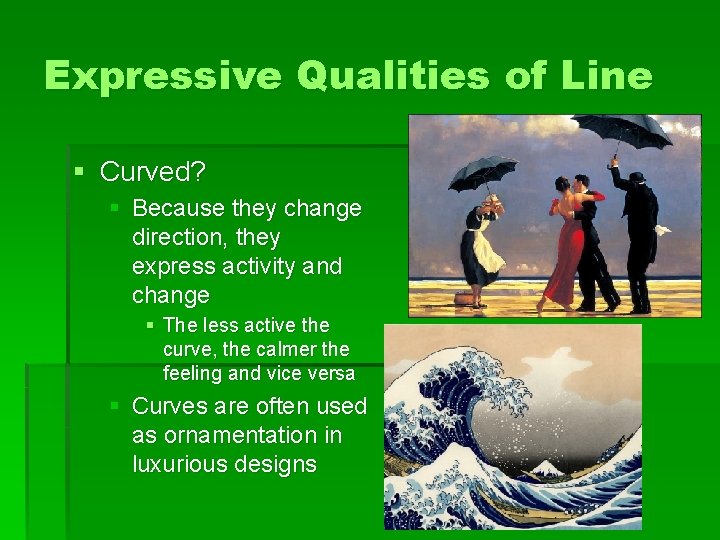
Expressive Qualities of Line § Curved? § Because they change direction, they express activity and change § The less active the curve, the calmer the feeling and vice versa § Curves are often used as ornamentation in luxurious designs
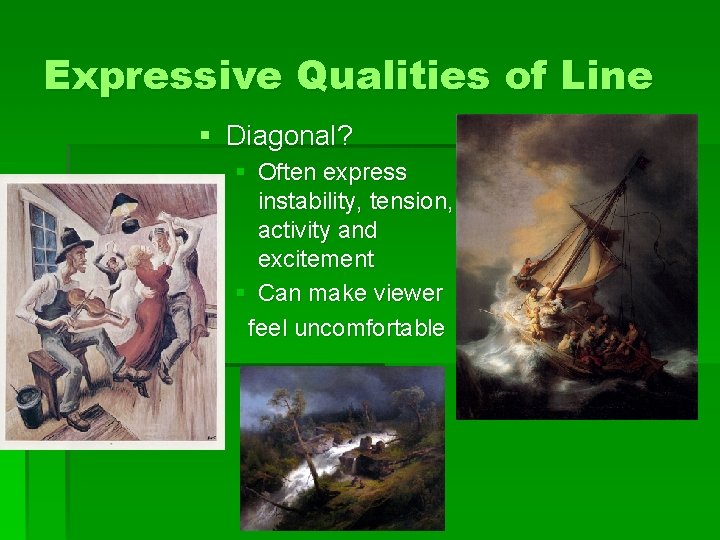
Expressive Qualities of Line § Diagonal? § Often express instability, tension, activity and excitement § Can make viewer feel uncomfortable
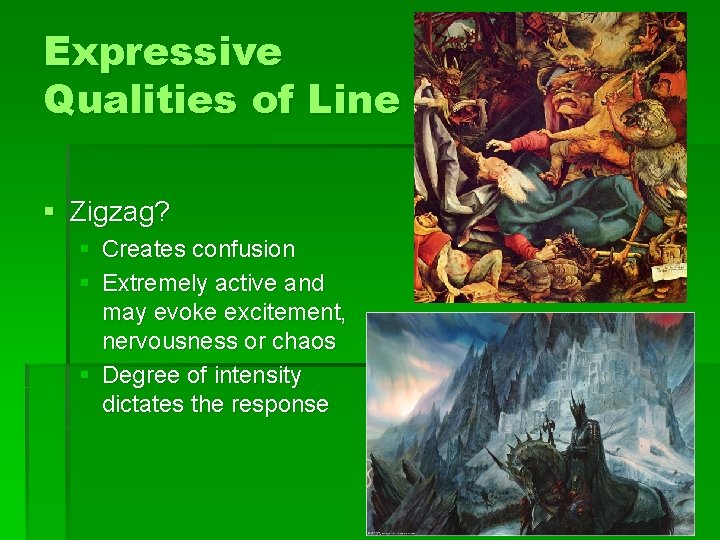
Expressive Qualities of Line § Zigzag? § Creates confusion § Extremely active and may evoke excitement, nervousness or chaos § Degree of intensity dictates the response
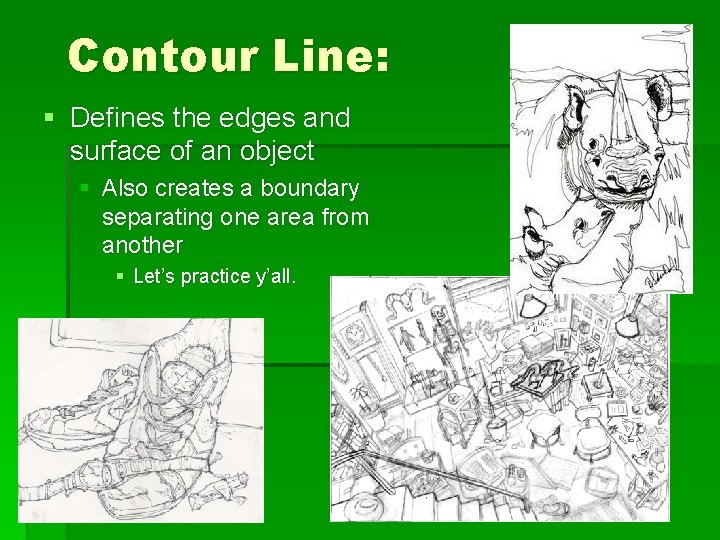
Contour Line: § Defines the edges and surface of an object § Also creates a boundary separating one area from another § Let’s practice y’all.
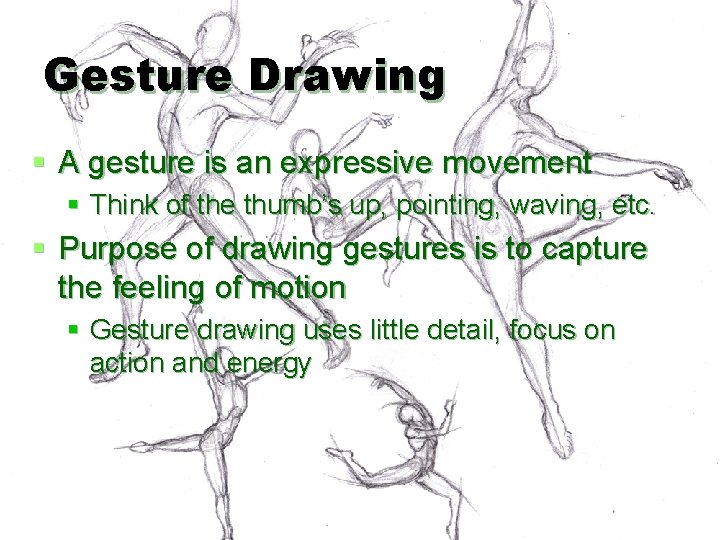
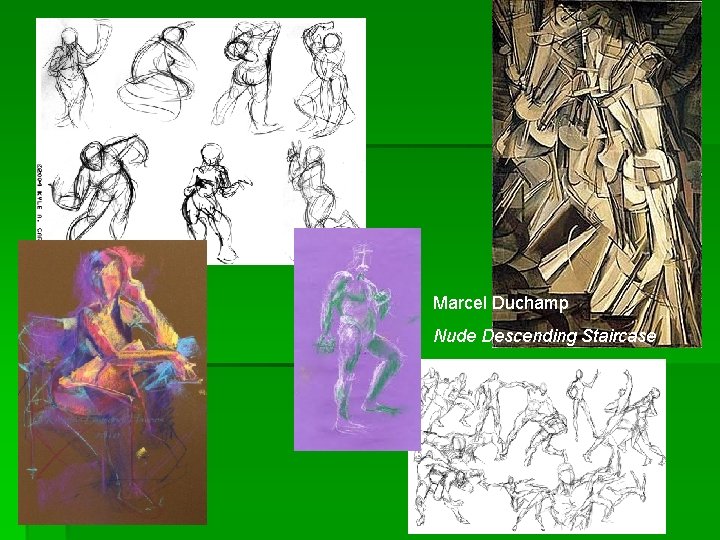
Gesture Drawing § A gesture is an expressive movement § Think of the thumb’s up, pointing, waving, etc. § Purpose of drawing gestures is to capture the feeling of motion § Gesture drawing uses little detail, focus on action and energy
Marcel Duchamp Nude Descending Staircase